
bout de papier, Vol. 3, No. 3 (1985) — Fall 1985 // Automne 1985, p. 6
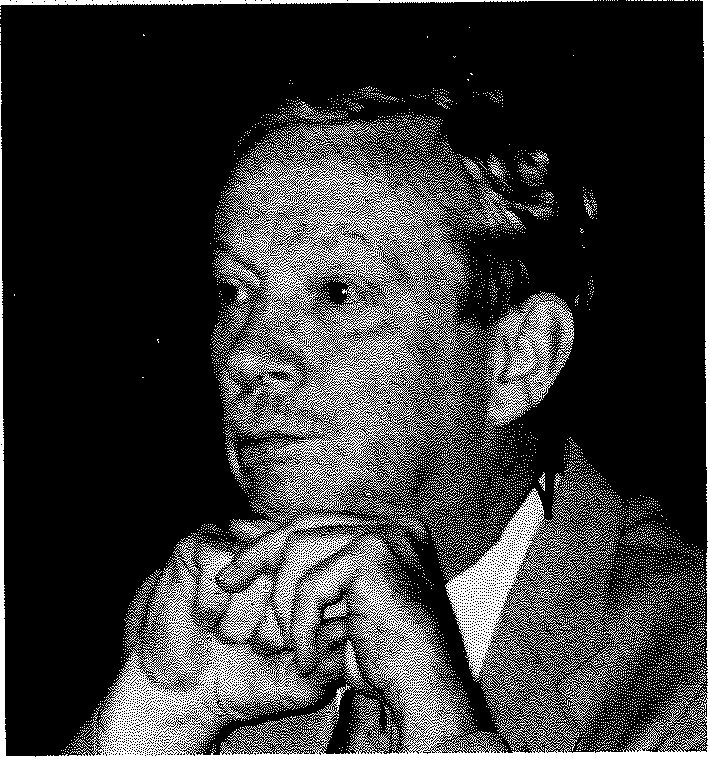
Richard Doyle was named to the Senate in March by Prime Minister Mulroney after a long career with the Globe and Mail. He is a member of the parliamentary committee looking at the foreign policy review. We asked him for his impressions on the process.
Tuesday morning and rain. October in Ottawa.
The mail brings a recent issue of Behind the Headlines, published by The Canadian Institute of International Affairs. It comes with the compliments of Tom Hockin, M.P., who, with Senator Jacques Flynn, chairs the Special Joint Committee on Canada’s International Relations.
The committee interim report went to the printers in late August – a somewhat breathless account of opinions derived from 120 invited witnesses and 200 citizens who came to testify on their own or on behalf of organizations who quite fervently believed they had something to say about Canadian foreign policy, and the right to say it to the six Senators and 13 Members of Parliament, who were committee members, and the 15 parliamentary representatives who joined them along the way.
Gutsy stuff, eh? An unexpected offspring of the Green Paper, Competitiveness and Security: Directions for Canada’s International Relations.
In phase one, the committee would look at two issues, bilateral trade with the United States and Canada’s participation in research on the strategic defence initiative.
Was the committee’s appointment simply a device to buy time while the government considered the advice of others reporting directly to the Cabinet? There were critics who made this argument and demanded that all relevant studies be placed before the committee, where Cabinet had received them or not.
The arrival of the Institute of International Affairs’ compendium of last summer’s response to the Green Paper puts the mind back to early doubts.
Consider: John Best, Canada World News, “It is hard to conceive of a Canadian government making foreign policy on the basis of a parliamentary committee’s recommendations — based in turn on the input of rank-and-file Canadians … There is no shortage of foreign affairs questions for a committee of parliamentarians to look at. The unkown factor is whether either Canadians or their government will be that interested in what it has to say at the end.”
And consider: John Harker, Canadian Labour Congress, “I have a strong interest in the Green Paper serving its promised purpose: to facilitate a full review by a special parliamentary committee of the main components and obiectives of Canada’s international relations. This review must be a public process … the more union halls, service clubs and church basements reached by the Green Paper, the better. Let those who gather there, read (the Green Paper) and frame questions or shape conclusions; let them press them.”
Was Mr. Best right in questioning what importance the government might place on the committee’s hurried look at Canadian attitudes in the summer of 1985? Who knows about such things. Perhaps a political road show at election time can measure the impact of its deliberations but I doubt if that is so when three parties (all with some predetermined views) go from Halifax to Vancouver and listen more than they talk. There are possiblities that the exercise can be effective.
There is no news now in the fact that the committee (which often worked 12-hour days) came down on the warm side of freer trade with the United States and a “no” vote for direct involvement in the strategic defense initiative. Was our report entirely a reflection of what we heard on the road? Of course, it wasn’t (any more than it was unanimous on all aspects of the issues we examined). But, as much as a rookie can reflect on these matters, I am certain no one of us came back with the same conclusions we might have packed with our pyjamas and tooth brushes on the first trip out.
Was Mr. Harker right in arguing that, whatever we did, we had to communicate with people who want to be part of the process? He was absolutely right. The most vigorous complaints the committee heard were from the provinces where we did not meet. And there were grumbles, too, from the places where time was short to hear everything people wanted to tell us. If I were starting out again in the newspaper business, I’d open a few more pages to foreign affairs and the Canadian concern.
The need for some improvement in the communication of the pros and cons of foreign policy issues was noted in the committee’s report. Regret was expressed that so many witnesses had relied on other (primarily American) sources for information on the issues at hand. Canada does not lack its own expertise, but that expertise is not always given the showcase it deserves or the attention it merits.

View the original scanned pages →
Originally published in bout de papier, Vol. 3, No. 3 (1985) — Fall 1985 // Automne 1985, p. 6. Read the rest of this issue →



