
bout de papier, Vol. 3, No. 2 (1985) — Summer 1985 // Été 1985, pp. 32–35
The PAFSO Professional Committee’s 1984-1985 season closed with a flurry of events, including two evening seminars (on the future of the Foreign Service and on the Green Paper) and a long roster of major Breakfast Seminar speakers: four departmental deputy ministers; representatives of the Swiss, Hong Kong, Singapore and Nicaraguan Governments; and speakers on Canadian security, relations with the United States, the African drought and “Star Wars”
Greater Efficiency Call
The best-attended Breakfast Seminar of the period was presented by Under- Secretary Massé, who stressed that recent budget cuts in PY and financial resources for the department would necessitate greater efficiency in program development and delivery. Time management would be increasingly important, he asserted, as would improved information flow. The increased complexity of the department since reorganization, and the increased demands the department faced, called for a clearer definition of goals and greater sensitivity to priorities defined by the political leadership. While Mr. Massé emphasized that there would continue to be a strong requirement for good analysts and functional experts, he also noted that future decisions on promotion and senior appointments would include stronger emphasis on good systems management. Asserting that “foreign policy will become central” to government decision making in a wide variety of apparently domestic fields (such as industrial policy), he called on PAFSO members to train themselves in the new skills and expand the scope of their expertise, to ensure that External Affairs’ influence would continue to be felt, and in stronger fashion than previously. Mr. Massé also indicated that he would personally be reviewing the streaming system and rotationality policies with the goal of increasing the department’s flexibility in meeting both its own personnel requirements and the legitimate career development aspirations of its employees.
Forward Approach Needed
CIDA President Margaret Catley- Carlson stressed the need for a more forward-looking approach to foreign policy, including better strategies for forecasting global trends and the demands they will place on government resources. Emphasizing the importance of not regarding the ideal future as a return to the past, she noted that the future will likely be sharply different from the first 70 or 80 years of this century, and may not be entirely comfortable for those now “on top”. By way of illustration she noted that by the year 2000, 90 per cent of the world’s population of six billion would be in the LDC’s, including four billion in Asia producing half the world’s GNP and enjoying a comparative (Canadian interwar) level of affluence. Canada’s relative importance, by contrast, would likely have dropped, Mrs. Catley-Carlson noted; what will then be our role in the world? In this context, she stressed Canadian activity in such areas as global food production/ distribution, the development/ecology nexus (particularly soil degradation) and forging of more numerous and closer international linkages in the non-governmental sectors. She also predicted that relations between CIDA and External Affairs would be both close and confrontational — in other words, business as usual.
Trade Proirity
Deputy Minister for International Trade Robert L. Richardson stated that the government sees trade as a major means for achieving its priority objective of creating jobs. In response, the Department has developed a set of trade promotion initiatives, concentrating initially on the markets of highest potential, the Pacific Rim and the United States, and on initiatives to expand technology transfers and investment promotion efforts at key posts. Discussions on the future of Canada/United States trade relations are also a high priority and a further MTN round may become another. Trade is thus one of the highest profile subjects on the Government’s agenda.
A management approach is necesary both to ensure delivery of the trade priority and to demonstrate the extent of delivery. The “front end” must be clearly in place, i.e., clear priorities and direction from the top down – Ministers, Deputy Ministers, etc. “Feedback”,, evaluation and adjustment are also important to close the loop of the process. Much of the planning and execution process in the middle is already in place, and the system is “at least 85 percent effective”
Mr. Richardson flagged the importance of missions abroad, suggesting that overseas staffing levels dedicated to trade were too low and that resources would have to be found to add to the present External Affairs complement. Asked whether there would be further reorganization involving the trade stream, he gave the personal view that reorganization was often undertaken as a substitute for directly tackling the basic problems involved.
Unemployment to Continue
Dr. Sylvia Ostry, speaking as the PM’s Personal Representative for the Economic Summit, addressed a seminar just after the Bonn meetings closed. Reviewing recent global economic developments, Mrs. Ostry stressed the positive forecasts for GNP but warned that growth rates might differ widely among Summit participants, that unemployment would likely continue to be a problem, and that continuation of the current “unprecedented” imbalance in international payments could be damaging. She also referred to the major shift in political-economic philosophy among the major industrial powers since the last Bonn Summit, particularly the substitution of conservative “neoclassical” programs for Keynesian liberalism. Dr. Ostry stressed the on-going importance of the U.S. “locomotive” but also expressed concern over the effects of exchange rate imbalances and protectionism involving a number of major trading nations. She continued with a discussion of prospects for the new MIN round and the link with the French proposal for a “new Bretton Woods” ’ concluding with a strong statement of support for the Summit mechanism as a flexible and transparent mechanism for considering world economic problems.
Attacks Protectionism
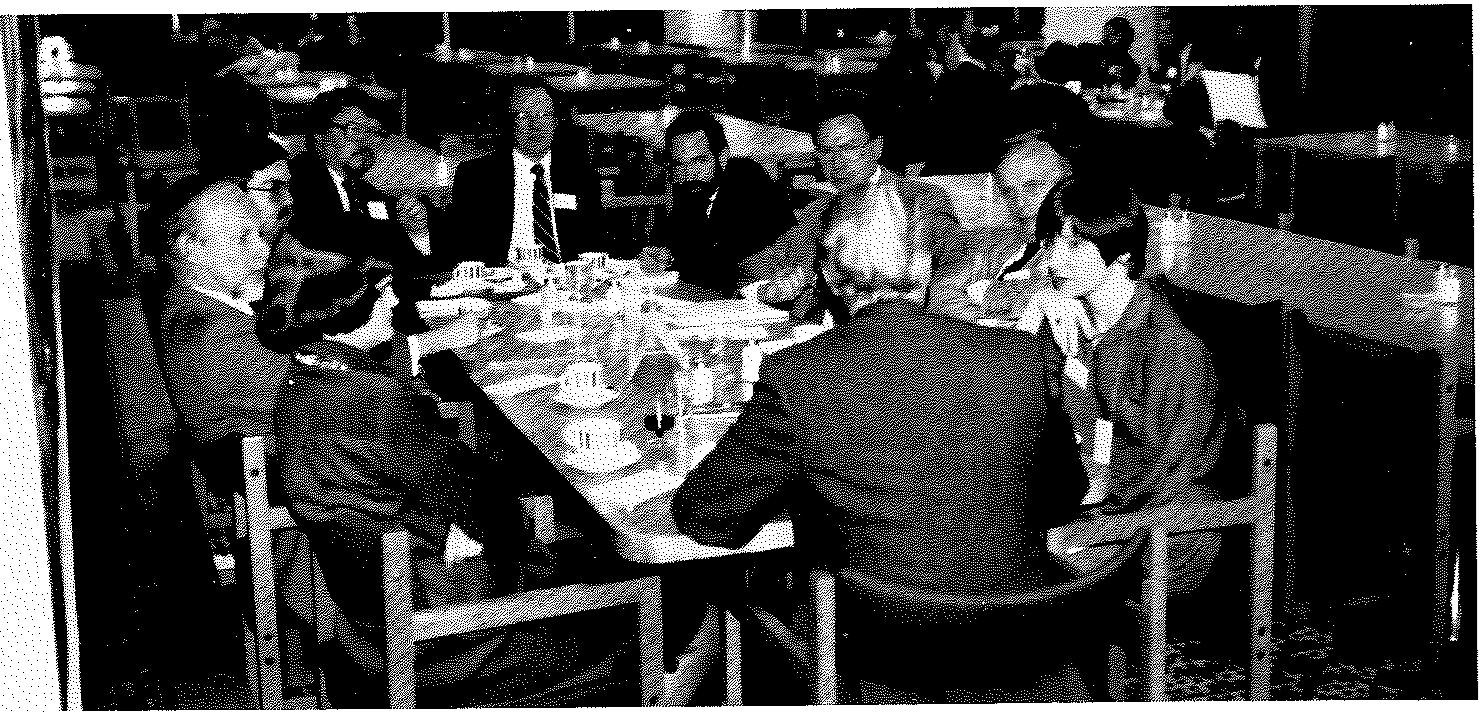
At her suggestion, Dr. Ostry was followed the next week by Swiss State Secretary Cornelio Sommaruga. Speaking as the representative of a small (population six million) state that nevertheless ranked 12th among world trading nations, Dr. Sommaruga stressed the need for economic rationalization through free trade. Attacking the rising tide of global protectionism, he called for greater coordination by individual governments of their own aid/trade/ industrial/financial policies, combined with a new cycle of GATT negotiations; these, he added, should be granted an expanded mandate covering trade in agricultural products, counter-trade, trade in services, data transmission and investment flows as well as the more traditional sectors. The new MTN round, he said, must reflect changes in the world economy and create a framework to deal with the new realities. One major thrust should be greater participation by LDC’s, starting with the newly-industrialized countries which might otherwise continue to fall prey to strong protectionist pressure. Non-market economies, however, should be approached with caution, although some provision might be made for China given its recent attempts to integrate market elements in its economy. Close attention would also have to be paid by outside parties to the smoother integration of the EEC into the MTN process.
Hong Kong Future
Hong Kong’s Chief Secretary (second-in-command) Designate, David Akers- Jones, addressed another seminar on the future of the Colony in the wake of the recent Sino-British agreement returning sovereignty to China in 1997 under guarantees of local autonomy. Mr. Akers- Jones discussed the increase in business confidence in Hong Kong since the agreement was concluded, described the rise of responsible government in the Colony over the last few years (predicting a stable democratic regime post-1997), and flagged the parallels Beijing (Peking) itself has drawn between the Hong Kong settlement and the Taiwan reunification problem. In conclusion, he stressed the economic vitality of the Asia-Pacific region and predicted that Hong Kong would continue to serve as a major trade and investment entrepôt for the region to the end of the century and beyond.
Indochina Future
Singapore’s High Commissioner to Canada, Kishore Mahbubani, proposed the following analogy: “When two elephants fight, the grass gets trampled; when two elephants make love, the grass also gets trampled.” Vietnam, he claimed, had allowed itself in Cambodia to become the grass between Soviet and Chinese elephants.
Mahbubani characterized himself as basically optimistic on the long-term situation in Indochina, despite recent Vietnamese military successes; in the ten years since the fall of Saigon, ASEAN had prospered and coalesced despite strong expectations to the contrary, whereas Vietnam had become “the Chad of Asia”, ’ economically speaking, and had lost the high moral standing it once enjoyed in much of the Third World. Eventually, he predicted, Hanoi would come to the negotiating table, although it might take another ten years. One open question, however, was the orientation of the (largely unknown) Vietnamese successor generation.
Embargo Hurts
Nicaragua’s Vice Minister of Foreign Affairs, Victor Hugo Tinoco, stressed the hardships suffered by his country under the United States embargo, the cut-off of access to international financial institutions, and contra activities. He blamed these recent developments on a polarization between American conservative tendencies and socialist revolutionary trends in Central America, and called for a return to bridge-building attempts at the bilateral Manzanillo talks. Mr. Tinoco predicted that the embargo would hurt the Nicaraguan private sector more than the government, since spare parts was the big problem and the public sector was much less dependent on U.S. machinery. He also emphasized that his country would be working hard to diversify both import sources and export markets (with Canada as a major target), while mentioning that Nicaragua would not significantly increase its economic ties with the USSR unless forced to do so. Forecasting continued development of a mixed private/socialized economy, pluralized politics (within the limits of a state of emergency) and non-alignment, Mr. Tinoco rejected comparison with Cuba, which he considered had unique and different advantages and disadvantages in its revolutionary struggle. He also discussed relations with Nicaragua’s neighbours, which ranged from tense (Honduras) to fairly good but potentially unstable (Costa Rica).
Government Security
In a strictly “off-the-record” session, Mr. T. D’Arcy Finn, Director of the Canadian Security and Intelligence Service (CSIS) briefing another seminar on the mandate, powers and operations of his agency under last year’s legislation. Among other topics, he discussed the maintenance of government security against foreign espionage, the rise in international terrorism, the increase in enemy targetting of advanced Canadian science and technology, the broad investigative capability granted CSIS under the constant surveillance of its Inspector General and Review Committee, relations with External Affairs and the Agency’s staffing program.
U.S. Attitude to Canada
New York Times Chicago Bureau Chief Andrew Malcolm characterized current U.S. attitudes towards Canada as tabula rasa, a state which combined a traditional lack of information with a new higher level of interest. He called upon Canada not to miss this opportunity for closer and more beneficial links through continuation of its own traditional patterns of adolescent foot-shuffling vis-à-vis the United States. He did, however, note the significant increase in Canadians’ assertiveness over the last 20 years in dealing with their neighbours to the south. In calling for greater maturity and confidence on our side of the relationship, Mr. Malcolm also emphasized the primary importance of non-governmental ties.
Foreign Interest Up
Canada’s Emergency Coordinator for the African Famine, David MacDonald, emphasized how strongly public interest in foreign policy had risen since the mid-1960s as the result of events such as Biafra and the Vietnam War. Both the public and the politicians they had elected were now calling for an end to inspired ad-hocery and damage limitation, in favour of a shift to clearer long-term directions and a stronger role for Canada abroad. In this context, Mr. MacDonald called for a review in three major areas – peace and security, development and ecology, and the effectiveness of large international institutions. Referring to Africa specifically, he called for a better understanding of the links between short-term humanitarian relief measures, long-term development needs and the local political situation. He also warned seminar participants not to over-estimate the problem of “donor fatigue” given the strong public response on Ethiopia.
Arms Control
Two consecutive Breakfast Seminar leaders discussed recent developments in arms control and disarmament. The RAND Corporation’s Russell D. Shaver examined the Strategic Defence (“Star Wars”) Initiative from the standpoint of offense-based as opposed to defense-based deterrent capability. Current strategies are offense-based (mutual assured destruction), but Shaver noted prevalent arguments at certain levels of the United States administration to the effect that defense-based systems might now be becoming more cost-effective; that an effective active defense would be more acceptable politically than depending on the threat of nuclear retaliation; and that in any event SDI development was a necessary part of an arms control negotiating package vis-à-vis the USSR. On the negative side, Mr. Shaver mentioned uncertainties as to the technical perfectability of the SDI, the vulnerability of satellite-based systems to destruction in situ, and the possible destabilizing effects of an effective defense system both in its implementation phase and over the long run. In summary, he advocated accelerating research on the SDI, if only to balance parallel Soviet developments in the same area, but delaying a decision on the development phase until a clearer picture is obtained of the technological and strategic uncertainties involved.
Canadian Ambassador for Disarmament Douglas Roche characterized the SDI as a destabilizing element in the arms control equation and expressed the hope that it would be satisfactorily handled by the Geneva talks. Although much talk and some valuable conclusions (such as the 1978 UNSSOD document) had resulted over the past decade from increased concern over disarmament, Mr. Roche noted, there was still a strong need for political will to breath genuine life and substance into arms control. The superpowers, he added, were the only real players in this game but multilateral forums should continue to be used to mobilize outside opinion in favour of greater movement on the USA/USSR front. With 50,000 warheads in the world today, he argued for a turn from the search for nuclear “superiority”,, or even “parity”, to the acceptance of “sufficiency” He also called for a continued active program by the Canadian government in promoting current multilateral and bilateral disarmament efforts and in encouraging an active public role on the question. He cautioned, however, that progress would be gradual: “Those who argue for a quantum jump in security today are whistling in the dark.”
FS Future
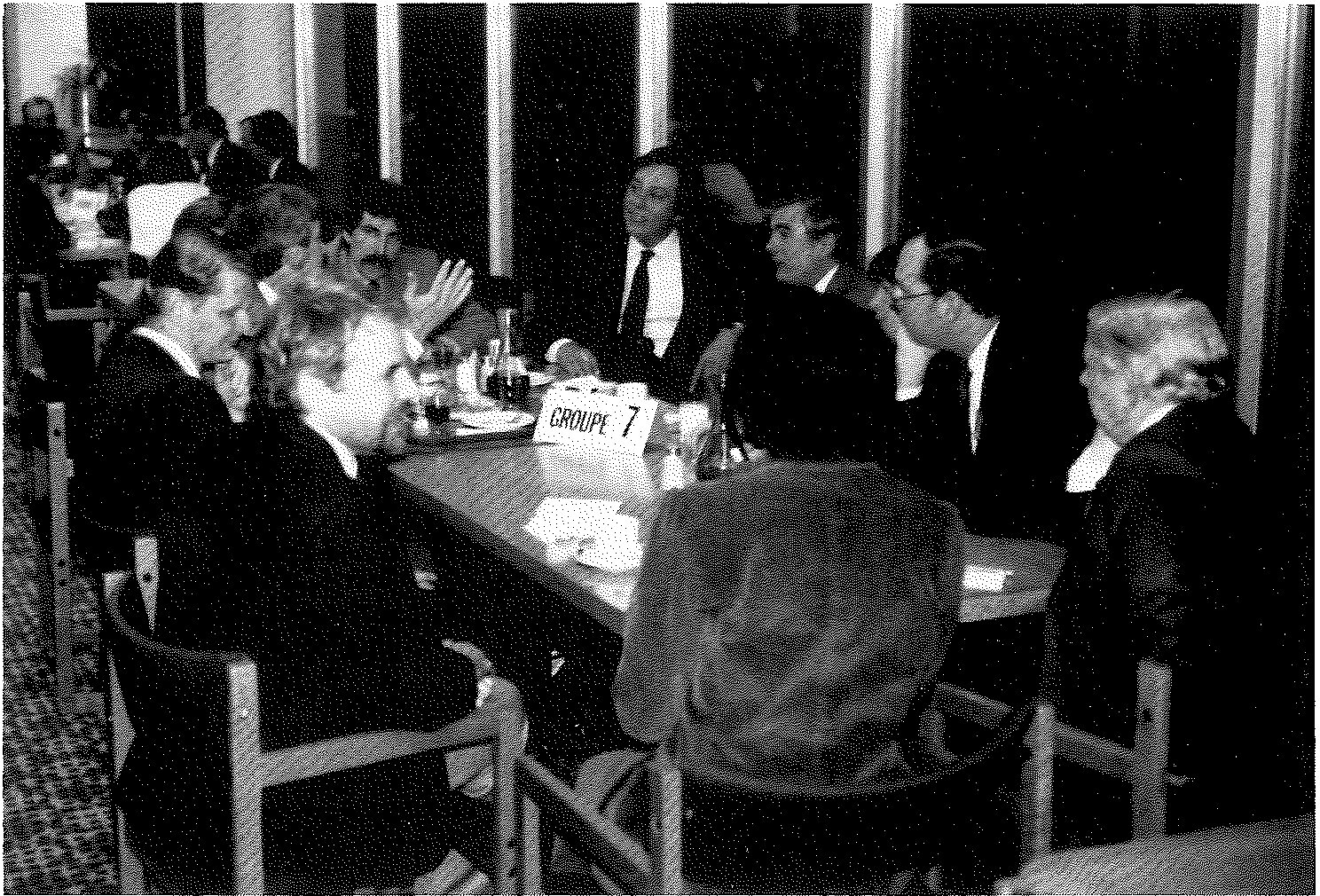
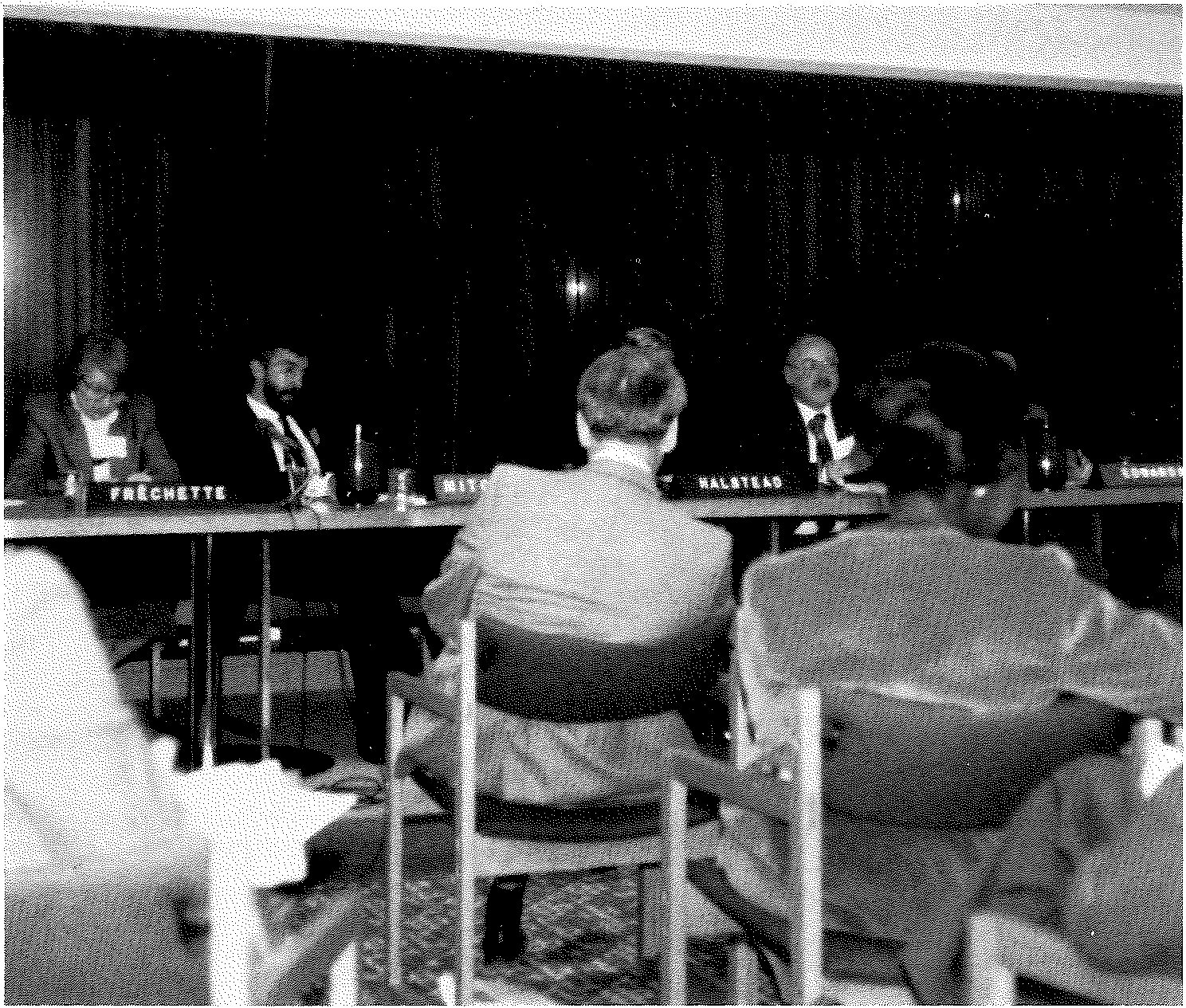
The evening seminar on the Future of the Foreign Service drew over a hundred participants for dinner and discussion on April 18. Under the chairmanship of Ambassador-Designate Louise Fréchette, a panel composed of Jim Mitchell (PCO), former Ambassador John Halstead, Under -Secretary Massé and Lucie Edwards (CMA) led off. Mr. Mitchell stressed the breadth of skills and knowledge required to cope with foreign policy issues in the 80s, called for better “Ottawa players” who could maximize the department’s influence, and suggested a better-designed package of secondments in both directions to fill the department’s short-and long-term needs for new type of expertise. Mr. Halstead (who last year completed a study on training for the department) called for greater flexibility in career development to produce the right combination of specialist knowledge and good management skills. He recommended devotion of 10 per cent of the department’s PY’s to training annually. The Under- Secretary stressed the need for new management skills in carrying out policy formulation and program implementation at senior levels in a highly-competitive interdepartmental environment; substance and process were indivisible, he asserted, since substance has to be applied through skillful application of process or the most brilliant ideas would get nowhere. Ms. Edwards called for less “type X” or “good grey” behaviour in External Affairs, with more emphasis on creativity, on training, on computers and other “liberating” systems and on non-traditional areas of expertise such as biotechnology and pollution. The extensive response from the floor included comments regarding evolving demands on the department, the specialist/generalist/ manager controversy, the perils/benefits of conformism, the career effects of secondments and lateral transfers, different approaches to training, “young Turks” early retirement, recruitment patterns, streaming and rotationality, criteria for promotion, the department’s role vis-à-vis public opinion on foreign policy, the relative importance of headquarters and post assignments and the “democratizing” effect of computers on the information monopoly. Participants enjoyed the evening both on professional and on social terms.
Green (Grey) Paper
The June 20 evening seminar on Future Directions in Canadian Foreign Policy closed the Professional Committee’s 1984- 1985 season. The panel was chaired by John Higginbotham and included Paul Heinbecker (CPD), Bernard Wood (North- South Institute), Gary Smith (IDA), John Noble (URR) and Ari Abonyi (FIRA). In discussing the paper, Mr. Heinbecker emphasized the twin themes of increased competitiveness and increased national security. Other panelists stressed such themes as the need to retain a broad multilateral perspective in the face of bilateralist “fads” “, the importance of the bilateral relationship with the United States, the necessity for improving Canada’s military “credentials” if we are to be heard on peace and security issues, the futility of assuming a necessary correlation between military power and global influence, and the importance of considering non-traditional factors (such as technology, sectoral flexibility, innovative capabilities and the entrepreneurial talent-pool) in evaluating our “competitiveness”. From the floor came inter alia a call for clearer leadership and more coherent directions to evolve from the broad general approach of the paper.
More detailed reports on the two evening seminars are expected to appear in later editions of bout de papier.
Breakfast Seminar participants should note that Robert Desjardins of APG will be taking over the series next fall, as the present writer is being posted this summer. Suggestions and other comments, much appreciated in the past by this coordinator, will be welcomed equally by his successor or by Committee Chairman Higginbotham. An organizational meeting for the Committee’s 1985-86 season will be held in early September.
View the original scanned pages →
Originally published in bout de papier, Vol. 3, No. 2 (1985) — Summer 1985 // Été 1985, pp. 32–35. Read the rest of this issue →



