
bout de papier, Vol. 3, No. 2 (1985) — Summer 1985 // Été 1985, p. 16
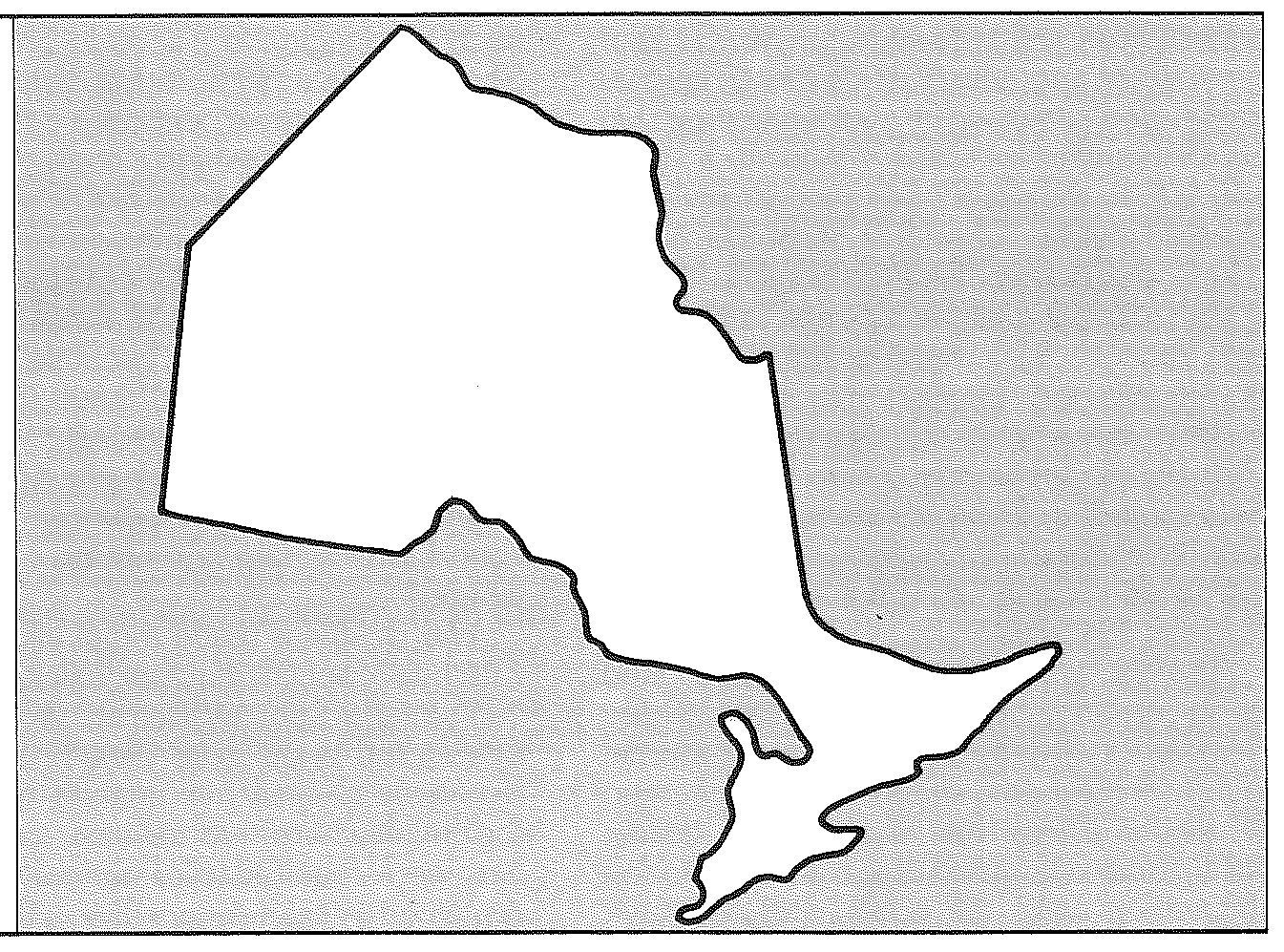
Canada’s largest province is receiving unprecedented scrutiny by pundits and political watchers in the wake of the May 2 Ontario election and the subsequent change in government, the first in 43 years. Ontario has a significant presence abroad and bout de papier invited representatives from Ontario Hydro and TVOntario to describe their activities.
Spurred by the growing United States appetite for inexpensive electric power, Ontario Hydro has emerged as one of Canada’s largest energy exporters. As one of the world’s largest utilities, Ontario Hydro is looking to export to markets further afield, promoting its technological know-how and utility management expertise to expanding utilities in developing countries. This marketing effort is being undertaken with the backing and cooperation of private sector Canadian contractors, manufacturers and consultants.
Joint ventures and consortium arrangements are a key part of our marketing strategy. The total package approach is an absolute necessity in the highly competitive electric industry market.
Hydro engineers and technicians have been applying their expertise to projects in other countries, mostly in the developing world, for the past 20 years. They have supervised construction and commissioning of generating stations, trained local people to run them, and planned and developed electricity distribution systems in countries such as South Korea, Argentina, Nigeria, Ghana, Kenya, and Indonesia.
Most of these activities were the result of invitations by the host countries and many were funded by the Canadian International Development Agency (CIDA). But early in 1984, Hydro formed its financially autonomous New Business Ventures Division, under the direction of Don Anderson, to bring together under a common banner its many existing projects and to aggressively promote Hydro expertise in world markets.
By the end of its first year, New Business Ventures held 20 active contracts in seven countries, five of which are joint ventures with other Canadian firms. Included also is Hydro’s first major contract awarded by the World Bank. This is to supply training and manpower expertise to the Turkish Electricity Authority – the first phase in an ambitious program by the Authority to modernize its electrical system.
Hydro’s know-how can complement the products or construction skills of other Canadian companies in the industry. It can advise on a broad range of necessary activities without competing with other Canadian consultants. This could mean designing a procurement and inventory system for an expanding utility, training management, operations or maintenance staff in the latest techniques and technology, or auditing the operation of existing stations to improve efficiency.
In the past when the utility has worked overseas, it has been primarily in the areas of utility management, power system maintenance and trades and technical training. While these consulting services still remain a large part of what the new division has to sell, some new skills and products have been added to the international marketing efforts.
Among these are isotopes and new technology. Ontario Hydro has been selling one nuclear isotope, Cobalt-60, for many years. This nuclear byproduct is used to treat cancer, sterilize medical supplies and irradiate food for long-term preservation.
Now, some new isotopes have been added. These are tritium, heavy water, deuterium gas, Helium-3, and Iridium-192. Tritium, already used in the manufacture of self-illuminating signs, digital display panels and calculators, has many new future applications. These include self-illuminating airport runway lights for isolated areas and other safety products such as exit lights in aircraft or on floating oil rigs.
Hydro, which now produces 85 per cent of the world’s Cobalt, expects to become a world leader in the production of tritium with the long-term view of using it as a fuel source for fusion reactors.
Hydro’s New Business Ventures group will also be marketing, through Canadian companies, an impressive range of high technology products and services developed wholly or jointly by the utility. This transfer of Ontario Hydro technology to Canadian companies achieves both profits for the utility through royalty payments and job creation in Canadian industry.
One recent example is nuclear control-room simulators developed with CAE Electronics Ltd. Supported by Hydro’s technical and marketing expertise, CAE broke into the U.S. simulator market with three sales worth $30 million. Hydro, in turn, will receive about $1 million in royalties.
Through this transfer of unique Hydro technology, Canadian jobs in the high technology field are created and utilities around the world benefit.
View the original scanned pages →
Originally published in bout de papier, Vol. 3, No. 2 (1985) — Summer 1985 // Été 1985, p. 16. Read the rest of this issue →



