
bout de papier, Vol. 3, No. 1 (1985) — March 1985 // Mars 1985, pp. 13–18
With this issue we begin a series of interviews with former Secretaries of State for External Affairs. Paul Martin was SSEA during the Pearson years (1963-68). Member of Parliament since 1935, Paul Martin was later Government Leader in the Senate (1968-75) and then Canadian High Commissioner to the Court of St-James (1975-79). bout de papier interviewed Mr. Martin at his home in Windsor where he is working on the final drafts of the second volume of his memoirs. A Very Public Life, the first volume, was published in 1984 and covered the years from his birth until the beginning of the St. Laurent Government.
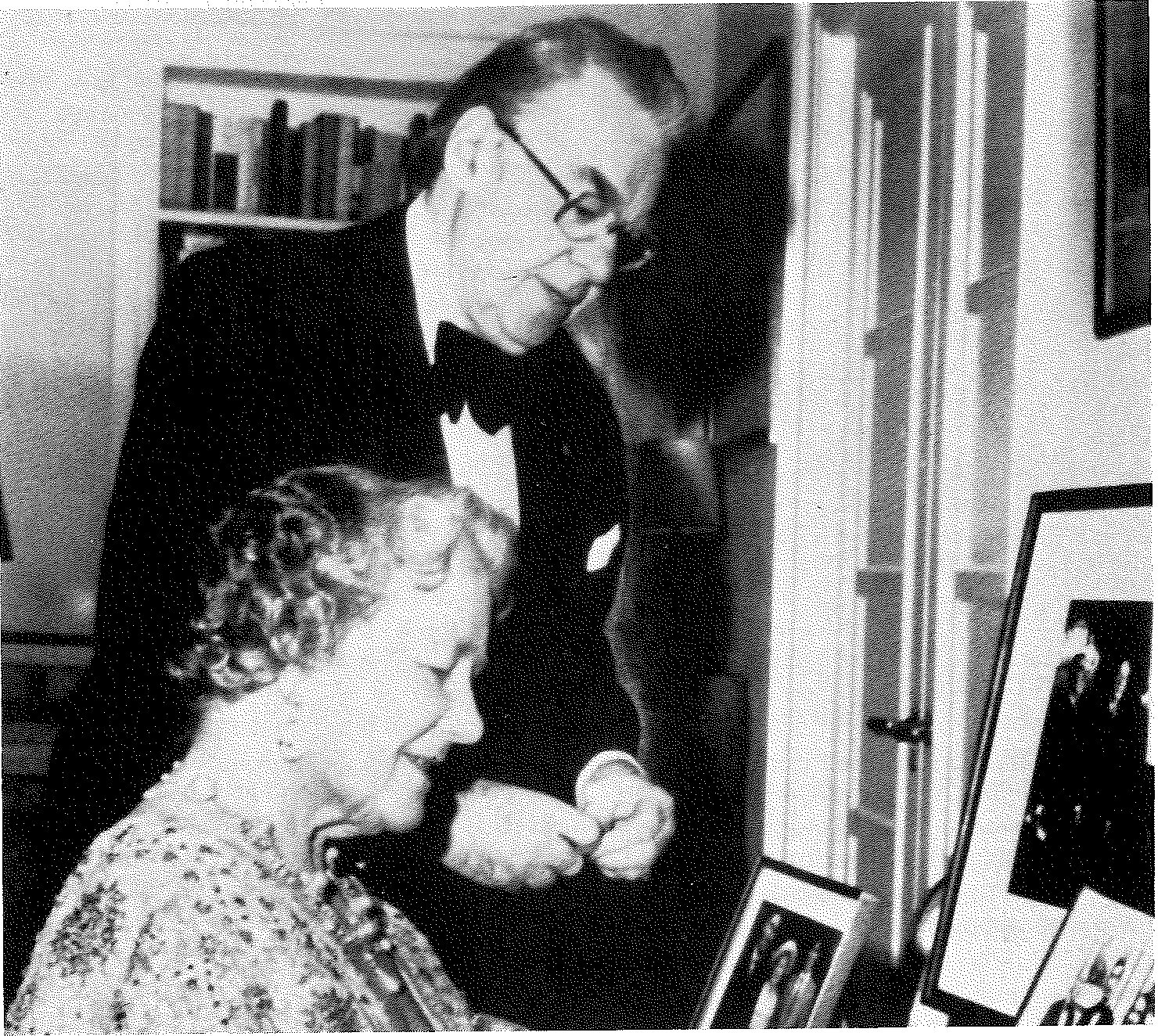
bout de papier: One of the things that struck me after reading your book was that your involvement in foreign policy goes back a long way.
PAUL MARTIN: I used to tell Pearson: “I’ve been in this business longer than you.” I really wasn’t, but I got interested in the League of Nations in 1925 and Mike was then a lecturer in history at the University. I remember meeting him in Ottawa in June, 1926. I was on my way home to Pembroke, where I lived – for the summer holidays and where I did a stint at the Pembroke Lumber Company. He was on his way to the archives. I know that was the time he saw Dr. Skelton and either that fall, or the following spring, he went to External. That was a period that I won’t forget because he said to me “Where are you going?” I replied “I’m going to Pembroke because that’s where I live.” He replied “You’d better stay here for the day. I’m going to go up to the House of Commons. It’s going to be a very exciting day. Mr. King is going to explain his reasons for not accepting the refusal of Lord Byng to dissolve Parliament. There would be a general election and prior to that, a debate in the house.” I said “Can we go there?” I didn’t know at that time that you could go to the House of Commons. So we went and heard King. At six o’clock, when it was all over, — I didn’t know any Members of Parliament — Mike said he knew one, J.S. Woodsworth. We went to Woodsworth’s room and stayed for a Woodsworthian dinner. I remember we had brown bread, a cold egg, some ham and tea. Woodsworth explained all that had gone on. That was my first day in the House of Commons and it was with Pearson. We used to often comment on that day, when we sat together in the House of Commons. “Remember when we were up there just over the clock (in what was then the diplomatic gallery or what became the diplomatic gallery, facing the speaker.)”
I think what set me off on foreign affairs was not my studies (English, history and philosophy) but a speech I heard by Dr. Riddell, our advisory officer in Geneva, on the League of Nations. Undoubtedly, I had heard of the League of Nations but I knew nothing about it. He wasn’t a good speaker but he inspired me and I just devoured everything I could about the League. Shortly thereafter I went to Geneva on my own. Then I went over to the Zimmern High School in 1929 in Geneva, and back there again in 1930 and gave some lectures at that time. I went to Geneva again in 1936 and became a delegate in 1938. I suppose I am the only living Canadian who was ever a delegate at the League of Nations.
Pearson’s interest was more professional right from the beginning. He went into External Affairs as a young foreign service officer. Norman Robertson came in late 1929 or early 1930. I knew Norman when I was at Harvard Law School.
I shared fully the views that Pearson had about collective security and about Canada’s role in international affairs, basing our policy primarily on the covenant and then later on the charter. Only now have I become convinced, not that it has changed my loyalty to collective security, to the charter, to the covenant, but I realize now for the first time more particularly than ever, what a long road ahead there is for the realization of what I thought was going to happen in 1925. As a young man I felt there was simply no other answer — we simply had to make the League of Nations a success. We had to make the charter operate successfully.
Former Secretary General Waldheim, a friend whom I have known for a long time, wrote a very good article recently in Foreign Affairs. It is a very good appraisal of the U.N. including its shortcomings. The reason for its failure – if you interpret it as failure — is because its members failed to live up to their obligations. It must mean that the realization of that ideal is a long way off. But that’s no reason for not trying to make the U.N. work, and it is no reason for Canada changing or altering its support.
bout de papier: What about organizations like UNESCO?
MARTIN: UNESCO, I think, is good in ideal form. I think UNESCO, as it was originally conceived, is valid. It would be a great mistake to the international system to just strip it of its authority and its existence because of American dissatisfaction.
If the abuse lies with the present Secretary General, Mr. Bow, he is not going to be there very long. The origins of UNESCO are very important in historic terms. Some of the great scholars of the 1919 period were behind the original organization under the League. If you can make it work there is a place for intellectual cooperation — that’s what it was originally called you know: Zimmern, Toyubee, Maritain, Butler, Cassin, Trevelyan, etc. I just mention those that I know best but there were other scholars of note.
bout de papier: You later proposed as Governor General, G.M. Trevelyan.
MARTIN: I mentioned it in Cabinet in 1945. King was very annoyed that I had raised the issue – something that tradition recognized as with his exclusive authority. But when he heard my proposal he thought it was a good one, tried to bring it about, but Trevelyan was too old then or so he thought.
bout de papier: When you were Secretary of State for External Affairs what was the area on which you devoted the most time?
MARTIN: U.S. affairs! I had to work on meeting with President Johnson in Washington in the fall, 1963. Our main preoccupation was with the Americans — over Vietnam in particular, and our overall interest in changing our China policy. I had four long discussions with Dean Rusk in the fall of 1963 and 1964 on China, directed towards changing our policy on the admission of China and ultimately its recognition. Only the cultural revolution stopped the realization of the latter. Then we had discussions with the Americans on Rhodesia and on developments in South Africa. These talks changed our policy about condemning South Africa directly. But even that was a great upheaval as far as the Americans were concerned. When I told Adlai Stevenson that we were going to vote to condemn South Africa not just to express disagreement with apartheid in theory, he was surprised.
I have just been reading a book called “The Office”. It is a book written by a British parliamentary secretary on the history of the “Foreign Office”. He dealt with seven or eight different foreign ministers. Michael Stewart said in that book that the most worrisome problem that he ever had in his life was the time that he had to spend on Vietnam. Well, that was my experience. It was the most worrying matter I ever dealt with when I was Secretary of State for External Affairs.
Then, of course, we had tense relations with the French not only because of DeGaulle but because of NATO. Then there was the Cyprus peace force and the situation there. It still goes on — its unbelievable and we’re there still. And I’m the one that put us there.
bout de papier: Do you think we should still be in Cyprus?
MARTIN: I think we should try and get out some way. We can’t leave the job undone but some other nation ought to take our place. It’s not good for peacekeeping to have the same country there that length of time. We had 17 years in Indo-China and now we are over 20 years in Cyprus. That’s not good. But there wouldn’t have been a peace force if it hadn’t have been for Canada. U Thant failed in some ways in his assignment on Cyprus. He did not move quickly to get it set up. I went to New York and said surely this is a situation where we ought to act. Finally he was persuaded. We drew up the resolution which the Security Council accepted, not a formal vote but by consensus. But no action was taken to get contributing forces, and we were forced to become responsible for getting them. Ross Campbell, who was one of our great foreign service officers, and the undersecretary, Marcel Cadieux, were with me. I said we’ve got to do something. Marcel said that was not our business but rather the responsibility of the Secretary General. I said, “He’s not acting. Why shouldn’t I call countries?” And Ross Campbell said: “Well, why shouldn’t you?” Ross was a real foreign service officer. So I got on the phone and that’s how we got the countries. Within an hour we had commitments from four countries to join the peace force providing somebody would pay their way.
bout de papier: On something like this, how closely would you work with Prime Minister Pearson and the Cabinet?
MARTIN: Pearson called me one day – I was making a speech at the University of Western Ontario and he said what are you doing there? I said I was there making a speech before the University. He asked if I had been thinking about Cyprus and I said very much. I said I had a damn good notion to go down and see the Secretary General and he observed “I was just going to suggest that — it wouldn’t hurt to go down and have a talk with him.”
When the time came to get a resolution through Parliament, (it was early in my period as External Affairs minister), I talked to Diefenbaker about it. You never knew where you were with him you know… even on things that he claimed as being of primary interest to him. I had a feeling that if I wanted to get that resolution through quickly I had better turn it over to Pearson as Prime Minister, which I did. We got it through quickly, thanks to Pearson and of the Creditistes party — Rhéal Caouette. I went to the latter because he was under an obligation to me. I had done something for him at one time. I told him about this and said “You get up and support this because there will be somebody from the Liberal Party in Quebec that will complain about sending soldiers overseas” and he got up and he made a wonderful speech.
I never undertook any operation that was unique without discussing it with Pearson. We didn’t always raise the matter in Cabinet but I never proceeded with anything – for instance our efforts at mediation through Seaborn and Chester Ronning in Vietnam; that was done only after getting Pearson’s consent. Not so much his consent as his approval. You had to carry a Prime Minister with you, before you even attempted to go to Cabinet, if and when you did. I wanted to raise matters in Cabinet more often than he did, but he had had the experience as a former Secretary of State for External Affairs. He noted “I don’t think you should take everything to Cabinet. You won’t get them through because every Cabinet minister is a potential foreign minister” and how true that was. That doesn’t satisfy the idealist but that’s how it works in government. I told this to Joe Clark not long ago. I think he is likely finding out that I am right. He has the advantage of having an able Prime Minister, but not one that is experienced in foreign affairs as Pearson was.
bout de papier: I spoke with Charles Ritchie and he suggested two primary qualifications for an effective foreign minister was that one should have the ear of the Prime Minister and the second was to have weight in the Cabinet. John Holmes added a third: to have a vision of foreign affairs.
MARTIN: That’s a pretty good characterization. A really great foreign minister was Michael Stewart. He was the British foreign minister for a year and a half.
bout de papier: Tell me about Vietnam and Pearson’s speech at Temple University.
MARTIN: Vietnam was most difficult and in some ways the most important problem we faced. But the Temple University speech – that was a big mistake!
bout de papier: Did Pearson consult with you before he made it?
MARTIN: Yes, he told me he was planning to make it after having discussed the idea with others including his son. He told me he had sent it to me. When I came back to my office, (my office was right next to his) the speech was there. I read the speech and I was horrified. I went into his office right away and said “you can’t make that. “ He got a little impatient. He said “You know we are on the spot. “ I said: “You’re on the spot but I am on the spot more than you are. I’m catching hell. You’re catching it too. But I’m catching it in the House, in committees, from the academics, from the young people, from the clergymen, from the teachers — I’m getting it. But that isn’t the point, if you make that speech you are going to interfere with the process of mediation. If you criticize the United States publicly — what is North Vietnam going to say. They are going to say — those Canadians don’t have much influence in Washington. The only reason that they have agreed to the channel that we have set up is because they think we have some extraordinary influence in Washington. And they would be right in that judgement and it would be unfair to the United States, to the American government. The Lord knows that you and I told Johnson when we first saw him – I told Dean Rusk I don’t know how many times what I thought of the war but I had done it quietly and privately. Where would we be on the auto pact — we would never have got it, if they knew you were going to make that kind of a speech.” I begged him not to make the speech. However, he felt that he was Prime Minister, he was Leader of the Party, that he had to do something to ingratiate himself and his party.
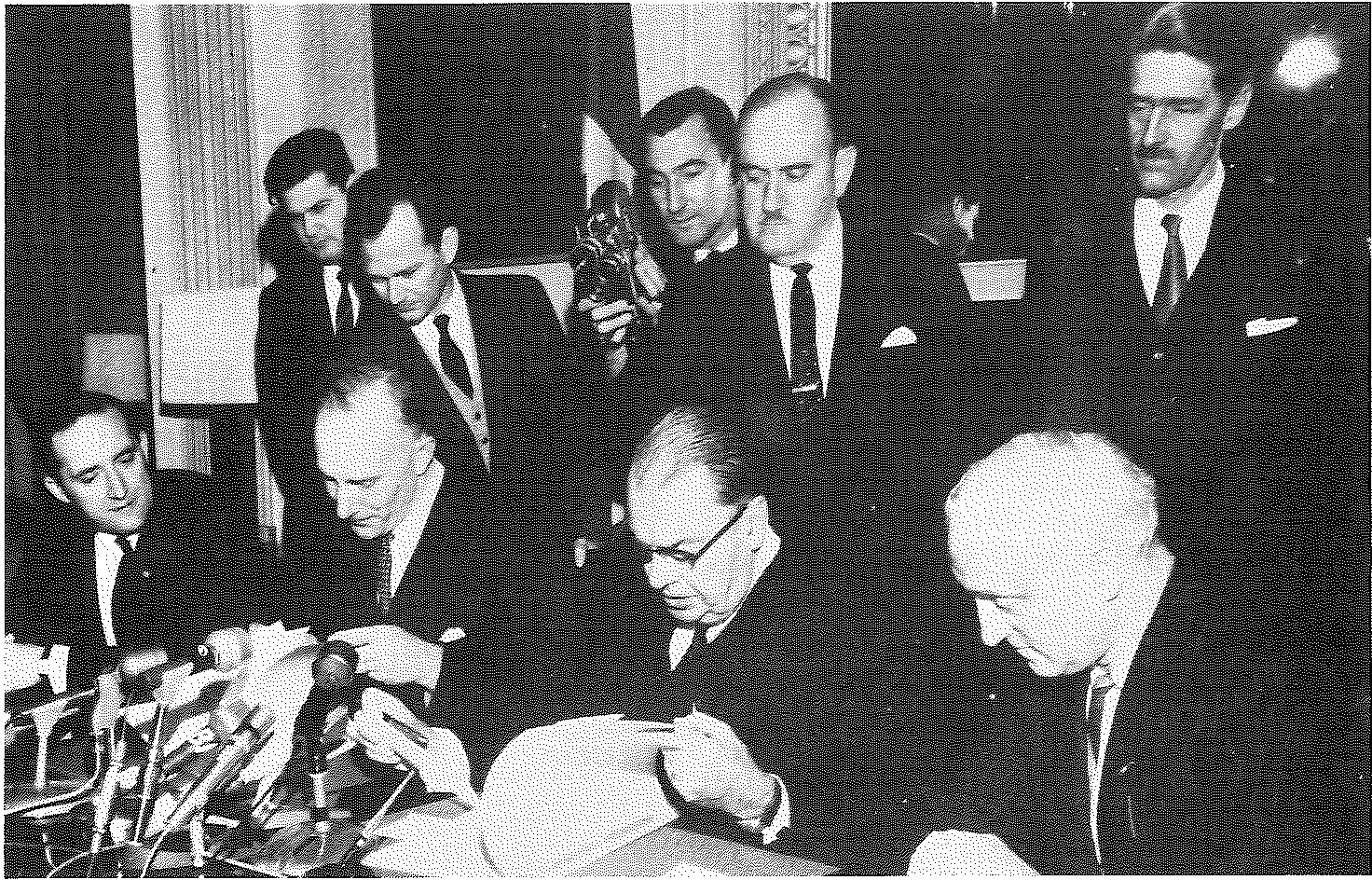
But he didn’t ingratiate himself and he certainly didn’t help the party and he hurt himself for the whole length of his remaining period in office. He didn’t have the same influence that he had before with Johnson. The party liked it, they said he was a courageous leader. Well that wasn’t courage. I was very annoyed about it. He felt the pressure just as I did a year and a quarter later when I said the same thing in the General Assembly. But that was only after we had made two efforts at mediation through Seaborn and Chester Ronning and following visits to Warsaw and Moscow trying to get them to agree to the use of the Commission as a means of trying to bring the two parties together for initial talks which we hoped might lead to a ceasefire. I can understand as a leader he would feel he had to speak but I could never understand how as an experienced man in foreign affairs, he would want to speak as he proposed
bout de papier: The government says now that it is going to conduct a foreign policy review. Any areas that you would advise them, or any lessons to be learned, from the experience you have had in the past with reviews?
MARTIN: A review is good from time to time. I don’t think any minister really should fear a review even if changes are recommended in policy. It isn’t necessarily a reflection on a government or a minister or a Prime Minister. It’s a good thing to have a second thought. I had thought in my time of doing it much earlier than the one we did in late 1967 or early 68. Pearson didn’t think that was wise. He said: “You know we have critics in our government – there’s Trudeau, Marchand, Walter Gordon, Donald MacDonald — they don’t believe in NATO, particularly the last three. They think our Vietnam policy is bad in spite of the fact that they know that we are doing everything that we can to get the Americans to desist.” People who were not born at the establishment — Marchand, Pelletier, Trudeau – these fellows didn’t know the history of NATO and Pearson was one of the authors of NATO, one of the great three. All of that happened a long time before they came on the scene and it was understandable that they, and the younger generations in the country, would wonder — ’what is this thing NATO?’ They didn’t know anything about it. I knew about it. Pearson knew about it. St. Laurent knew about it. Some of the older ministers knew about it. They were contemporary with NATO’s establishment.
However, by 1967 the criticisms became too much and Mike said he thought a review would be a good idea. But he didn’t want me (continued on page 18)
Martin (from page 15) to get any outsiders, and maybe that was wise. We got Norman Robertson, his own son and Geoff Murray — who wrote the report. Then Trudeau came along and he had promised, during the leadership race, that he would have a re-examination made of foreign policy. His effort with Mitchell Sharp was a fulfillment of that promise. I was a member of the sub-committee of the Cabinet that dealt with foreign affairs and reviewed that report from beginning to end I could see nothing in it that objectionable. There were innuendos there that were a reflection on Pearson and me, but they weren’t fundamental and I didn’t raise hell about them. I simply pointed out that this was a fact and so on. I knew nothing would come of it. You can’t change foreign policy that way.
Did Trudeau understand foreign policy? He was never a technician. He knew how to make good speeches on great occasions about the third world and about the need for avoiding nuclear war. He was too busy as a Prime Minister, and his intentions were always good – the motive was always very good. But he reduced these things to very simple terms and they were not simple issues. I don’t think anything happened as a result of his review. His review was more formal – more comprehensive, more elegant. There was little recommended change.
bout de papier: There is some talk that the foreign service, rather than being simply a career foreign service, would benefit by bringing in people from outside.
MARTIN: Well, we had some of that you know. Take George Davidson, who was Deputy Minister of Health and Welfare. He served on the Economic and Social Council at the U.N. for many sessions. We had people who served on the sub-committee on disarmament. But I don’t think that that is entirely practical. I think that you can bring in people to do ad hoc assignments.
But what of a foreign service? A foreign service is essentially a body of people —men and women – who have received a basic training and joined the public service to become specialists in particular fields in Canada’s foreign relations. I don’t think you can beat that. These people are the means by which the jurisprudence of a country’s attitude on foreign affairs is formulated. It’s very important to have that. I sometimes think we go too far in taking men from outside to head missions. It seems unfair to those who come in as pioneers. Nonetheless, there is a certain amount that is both desirable and inevitable. But basically, I think you have to keep the foreign office as an office made up of specialists; some of whom will rise to the top, others will continue to be well informed and capable of writing good briefs that lie on the shelf for perhaps a long time but ultimately when you want to go to the basic history – there it is.
View the original scanned pages →
Originally published in bout de papier, Vol. 3, No. 1 (1985) — March 1985 // Mars 1985, pp. 13–18. Read the rest of this issue →



