
bout de papier, Vol. 3, No. 1 (1985) — March 1985 // Mars 1985, pp. 28–29
On January 11, 1985, PAFSO’s Professional Committee held its second “Ministerial” breakfast meeting since September 4, 1984. The Minister for International Trade, the Hon. James Kelleher agreed to participate and did a “tour d’horizon” of the international trade scene for the benefit of members. Following are some extracts of his initial remarks and answers to questions.
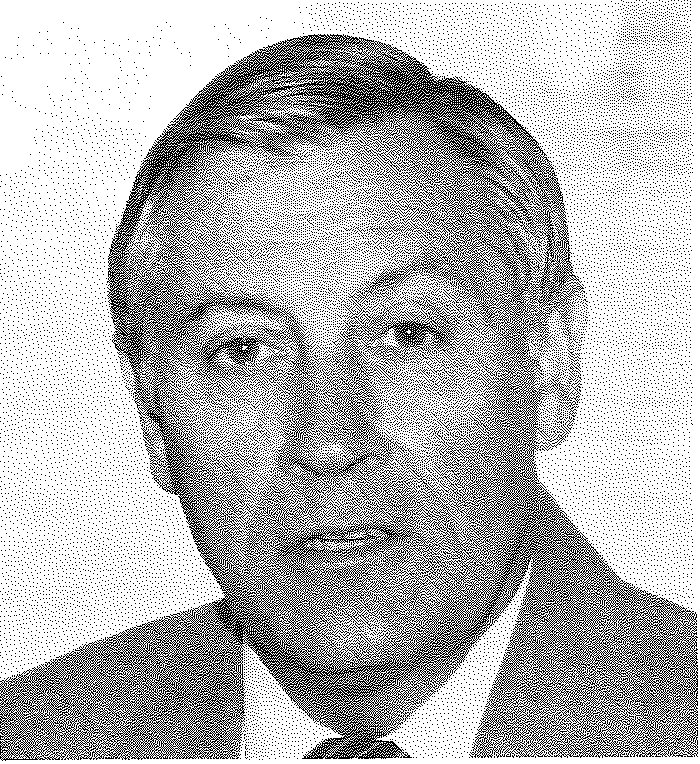
On Trade and External Affairs:
“I am pleased to say, and I think it has now become clear, that the Prime Minister is making this particular ministry and trade a very important part of his strategy for the economic renewal of this country. There is no doubt in my mind that he is attaching a very high priority to trade and I hope that if we find it necessary he will give us the resources to see that the job can be properly carried out
“Contained in my mandate letter from the Prime Minister was a direction to myself and the other Ministers that trade would in fact remain here with External Affairs, and personally I have no problem whatsoever with that direction from the Prime Minister. I think this is probably a good place for it to be and personally I am happy that it’s here. I think that we can, and will, and in fact are going to make it work over at this ministry. I heard, from time to time, that it was a difficult marriage and being a lawyer by training, divorces can be very difficult and messy. I think that the proper decision was made to get on with the job and certainly that’s what we intend to do.”
On Federal-Provincial Relations:
“At the December 19 Federal-Provincial Trade Ministers Conference two of the items that we discussed were the development, if at all possible, of a national trade policy or strategy and I am happy to say that they endorsed that principle… Also discussed at the conference was the problem of every province and the federal government having trade missions abroad, and the rather excessive duplication in some areas of those missions, and of course there is also the additional cost to the taxpayer. Believe it or not, there was a consensus that that is something we should attempt to discuss to see what we can do to rationalize the operation of these offices.
On Consultations:
“As you know, a number of papers are coming out — policy papers, discussion papers on various initiatives of this new government. The Prime Minister has set up a four-man committee to guide the direction and prioritizing of these papers. Mr. Wilson had been made the chairman and there is Mr. Epp, Mr. Stevens and myself. Again, I believe that this is in recognition of the importance that he is continuing to give to trade. We have two discussion papers which are presently going through this process. One is on export financing, which is a joint paper of ourselves and Finance, and we hope to have that paper released by the end of the month. We are going to examine all aspects of export financing and where we think we should be going, with particular emphasis in looking at the activities of EDC and CCC and the relationship of CIDA to fit in with those particular areas of financing. We hear from time to time complaints that we are not being competitive in the market place, or that we’re not matching the competition or that we should be involving the private sector — the banking and insurance industries — a little more in the process. We hope to have a full discussion on that to see what we can do in that particular area. The other paper that is going to be released is a trade policy paper and it comprises two sections, one on Canada/US and one on the GATT. These two in a sense will be parallel, although their time frames obviously are different.”
On The Next Round of MTN:
“I can tell you that Canada is committed to the next round of GATT and we are very interested in seeing that it move forward… The United States and ourselves are going to do everything we can to try and get the next round of discussions going. Certain countries don’t seem to be enamored with the idea of further talks because high on the agenda we want to discuss trade in services. We want to discuss the agricultural problems; we want to discuss the safeguards and we also want to discuss looking at a new tariff arrangement for some of the less developed countries who are frankly more developed in some of their industries than our own are and causing us a great deal of trouble. I think it is fair to say that the United States is looking at alternatives. If the other countries are not prepared to move to discuss these areas, as far as the United States is concerned, the tariff rounds are over. The United States would then seriously be looking at sitting down with whatever country wishes to discuss those items with them, and negotiating their own agreements in those areas. So I think that we are going to see the United States playing a little hardball with respect to the next round.”
On Canada/US Trade Relations:
“As far as the Canada/US paper goes it will primarily be a discussion paper. It will discuss options. We’ve tried to keep a level hand in what’s contained in the paper so that we can in fact provoke a discussion across the country, and we hope that all of the options are clearly and concisely set out in that paper. It would be our hope, if at all possible, that following those discussions we would come back to Cabinet in the late spring, very early summer, make our recommendations to Cabinet as to the areas in which we feel we should be going in our discussions with the United States, and then in fact, open discussions with them some time this summer. Mr. Brock reconfirmed to me that the United States is prepared to sit and wait until Canada is ready to initiate these discussions. They are not going to either publicly or privately attempt to prod us into discussions. They are going to wait for us and they are prepared to negotiate in whatever areas we feel are best for this country.”
On Trade Commissioners:
“I am happy to report that we foresee an enhanced role for the Trade Commissioners, of course, without any enhanced pay! But we do have the enhanced role and as far we are concerned, we’re giving you the better half. I am sure you would also prefer the money but we don’t have the extra money at this time. But that doesn’t bother us — investment. We’re going to get our people more involved in seeking we are going to give them the additional roles to play, namely in out investment abroad. In technology and technology transfer, we are going to have to do additional work. If we intend to remain competitive then we are going to have to get more foreign technology into this country and utilized by our industries. We are setting up a new division in the Department, and believe it or not, we’re even going to hire some extra people to do it. We realize that there just aren’t the manpower resources here, so we are actually going to hire some additional people and some of those people will in fact be sent abroad to perform these duties for us.”
Priority of Trade:
Cabinet discussions interesting, and I guess one would have to wait “All I can say is that if conflictual situations arise, that’s what make and see and weigh the relative merits at that time. Obviously, I would think in situations of that nature I would be putting forth a position that trade is important, because that’s my ministry. Of course, the other people would be putting forth their positions and then undoubtedly a decision would be made. But I am not terribly concerned about that. I think that there is a very strong desire on the part of the United States to reach some sort of agreement with Canada, if for no other reason then to demonstrate to the rest of the world that in order for the world economy to function properly, there is going to have to be a lowering of barriers of all kinds – tariff and non-tariff and I think they are anxious to conclude some sort of an arrangement with Canada, whatever it may be, as a spur to the rest of the world to get on with the new round of GATT discussions.”
Import Quotas:
It would appear that some of our industries in textiles and in shoes are perhaps not as world competitive as they should be. I think that this is a problem that is going to have to be addressed. Mr. Stevens, myself and Mr. Wilson are going to have to sit down and take a long hard look at those areas. I think we are the three ministers primarily involved in those industries and something has got to be done, not only for the LDCs but for the Canadian consumer as well. I don’t think it is good for a country to protect any industry and not at the same time initiate some steps to encourage those industries to become more competitive. I think perhaps in the past we have been a little too content just to sit back and erect the trade barriers without doing anything to encourage those industries to become world competitive. We are going to have to examine the problem seriously solutions at this time but at least I am aware there is a problem. I and quickly to see what we can do to remedy it. I don’t have any personally am committed to seeing that something is done to attempt to correct the problem, and not just throw tariffs at it as a method of dealing with it because you aren’t getting at the root cause of the problem.”
The Minister’s Visibility:
“Mr. Mulroney has told his Cabinet ministers that he expects them to run their ministries. There is a difference in management style (with the former government). Mr. Mulroney wants to utilize the corporate management style where he sees himself as the chairman and I guess we are the presidents of the various operations out there. He expects us to run our own show and I agree with that philosophy. If you are going to attempt to run your ministry you have got to spend some time at home attempting to run it. As I explained to my new Deputy, Mr. Richardson, the other day, that doesn’t mean that I intend to try and run the Department or the bureaucracy and get involved in the day-to-day operations. It does mean that I should be spending more time at home being involved in the policy direction that I want my ministry to go and to see that those thrusts are implemented. But having said that, I certainly intend to travel around. I have already made two trips to Europe, Central Europe and then France, Germany and England. I have been to Washington several times. I have been across Canada a couple of times. Prior to my talks in Kyoto I am dropping into Korea for a number of days. I’m coming back and at the first of March again I’m going to more trade talks over in Germany, again preparatory to the GATT. We are looking seriously at going to the Soviet Union. We have some trade talks there. I am intending to look at a trade swing through Southeast Asia, and possibly later on in the year take a swing down through South America. I think that I want to shift the emphasis of my travels. We’re trying now to do some prioritizing. We want to take the initiative and we want to decide where we’re going. We’re going to target areas. We want to stop what I have seen in the past as perhaps a bit of reacting to problems and situations and dashing off without any concrete plan as to where we are going. So I think you’ll see me travelling around the world. I hope to be highly visible, but certainly I don’t intend to be out of the country three weeks out of four. Perhaps one or two weeks out of four.
The Government’s Mandate:
“I sense that the Canadian people are prepared to make some adjustments. My reading, for example, of the universality debate is that while the journalists and the opposition may be caught up in it, my people back home where we have a high unemployment rate, agree that some adjustments should be made. The poor should get more and those who are well off should take a little less. I think the people are prepared to make adjustments…
“On export trade, I don’t think that the average Canadian is aware of our problems yet. I think those of us sitting here are aware that there are problems and that to increase our export trade there are going to have to be fundamental shifts, and there are going to have to be some hard decisions made. I don’t think the public out there yet is aware of that but I think they want us to increase our exports. They feel it will make our standard of living better but I don’t think they realize what the painful adjustments will have to be to do that. That the longer addressing problems are put off in ones political mandate, the more difficult they become as election day approaches. A

View the original scanned pages →
Originally published in bout de papier, Vol. 3, No. 1 (1985) — March 1985 // Mars 1985, pp. 28–29. Read the rest of this issue →



