
bout de papier, Vol. 28, No. 2 (2014) — Summer 2014 // Été 2014, pp. 24–25
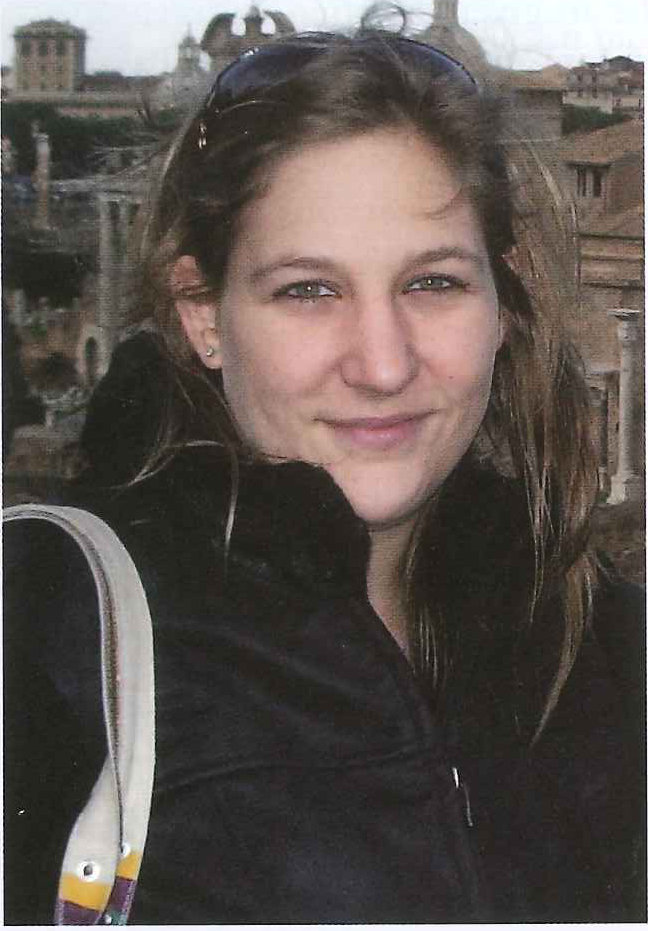
Note de la rédaction : Le 21 septembre a marqué l’anniversaire du décès de notre collègue de l’immigration, Annemarie Desloges, victime d’une attaque terroriste à Nairobi. Agée d’a peine 29 ans, professionnelle d’avenir et personne très appréciée, elle est la deuxième diplomate du Canada à perdre la vie dans une attaque de ce genre après Glynn Berry, décédé en Afghanistan en 2006. Ses parents, Michel et Madeleine Desloges, membres à la retraite de la famille du service extérieur canadien, étaient invités d’honneur au dîner de remise des prix de l’APASE en juin dernier. Nous remercions sa collègue, Eilis Pourbaix, d’avoir compilé cet hommage personnel que ses nombreux amis et collègues lui ont rendu.
The VIP lounge at the Kinshasa airport was crammed with giant overstuffed furniture and glass tables, and was relatively calm compared to the cacophony and general chaos of the airport. She was happy to flop herself into its unconvincing opulence at the end of a long work week. The posting list for 2014 had come out, and the down time until the flight back to Nairobi seemed a perfect occasion to narrow her choices for her next posting. She had a system that involved several coloured pens and grids. She was excited about the many prospects, from Beijing to Beirut, and with each opening she highlighted came an exclamation about the possibilities for travel in the region, or the type of work Robert, her husband, might find there. When asked about the logic behind what seemed like a complicated exercise, she laughed: “It’s not that complicated in the end. I would pretty much go anywhere!”
Annemarie Desloges was born in Bogota, diplomats Michel and Madeleine Desloges and spent most of her life abroad. From Bogota she followed her parents and sister Julie from Aylmer to Jamaica (1984—86), to Ivory Coast (1989-92), France (1996-01) and India (2001—02). She returned to Canada to study at Carleton University in 2002 and then at the University of Ottawa where she graduated in 2007 with honours in Health Sciences. She joined the Department of Citizenship and Immigration as a Foreign Service Officer in 2008. She was posted to Delhi in 2009 and to Nairobi in 2011.
Au retour de sa famille au Canada après une affectation en Jamaïque, Annemarie avait deux ans. Ses parents n’arrivaient pas à la convaincre de s’habiller chaudement. La première neige venue, elle s’est promenée pieds nus dehors. Après cet épisode, ils n’ont plus eu de difficulté à lui faire porter ses bottes et son habit de neige!
A gifted and observant child, she learned to read and write with flash cards at four years of age (in order to be accepted in grade in Abidjan). Annemarie could memorize almost anything, absorb it, understand it and play it back in a manner any layman could understand. She adapted easily to every move, and looked forward to them — each one a new adventure. Elle profitait de tout ce que le pays ou elle se trouvait avait a offrir.
Annemarie avait 12 ans lorsque sa famille est partie pour Paris. Pendant son séjour en France, elle remportait 4 chaque année une médaille d’or dans la competition de natation de son école, et enseignait la natation aux jeunes aveugles une fois par semaine. She was kind and generous, volunteered for the United Way campaign, walked for breast cancer, and would go out of her way to help anyone. Her best friend Jennifer remembers “Annie” showing up at her door with a comfort pie when she was down during exams and needed some TLC. It was just what the doctor ordered.
Annemarie venait tout juste de graduer du bac international à l’école américaine de New Delhi quand elle a rencontré Robert Munk, l’amour de sa vie. They were an idéal couple and completed each other perfectly: one and one made at least three!
Jeune femme, Annemarie est devenue la meilleure amie de ses parents. Ils partageaient beaucoup ensemble. Ils pouvaient discuter de tout — religion, sexe, politique, etc. Il n’y avait pas de sujets tabous. Peu importe où elles se trouvaient, s’il y avait un cinéma, Annemarie et sa mère y allaient, et parfois elles visionnaient des films un après l’autre. Annemarie appelait sa famille tous les 2-3 jours pour lui donner de ses nouvelles et partager avec eux ses bons et mauvais moments. At home visiting she never failed to get up a dozen times, unexpectedly, to give Family members a hug. She loved to play board and card games — she would lose on purpose just to entice her opponents to keep playing because, if she set her mind to it, she would win them all.
Wise, mature and perspicacious wherever there was trouble brewing, at home or at work, Annemarie could see it coming and would take the lead in trying to mitigate if not eliminate it. She would make you think and question your beliefs and prejudices. She excelled at presenting a very reasoned but opposite point of view even if it was not necessarily her own, just to make one reflect. She was a born diplomat.
On her first posting in New Delhi, Annemarie helped introduce a new way of working and a new computer system to the immigration section. The project involved a huge amount of work, and Annemarie thrived on the challenge, putting ideas into practice. Annemarie possédait beaucoup d’énergie, ne craignait pas les responsabilités et relevait avec plaisir de nouveaux défis. The connections she and Robert made with people on posting set them apart. They were experts at living abroad, and took it upon themselves to welcome newcomers, guiding them, hosting them at home and checking in on them. Having learnt from her father, a longtime MCO, Annemarie would discreetly make sure the safe havens and other features met established standards when visiting staff quarters. She had a talent for easing people through bewildering transitions and had sound advice for newly arrived diplomats’ children navigating unfamiliar environments. She delighted in surprising you with a huge bouquet of flowers on special occasions or by showing up with champagne to mark your last night at a mission.
On her second posting in Nairobi, Annemarie helped to reunite families and resettle thousands of refugees from across East Africa. For many newcomers to Canada, fleeing war and persecution in their home countries, she was the first Canadian they would meet. That their first impression of Canada would be of a vibrant and confident young woman who embodied values that Canadians hold dear is something that we can all be proud of. She had a natural curiosity about and respect for other cultures and a deep and abiding belief in fairness that guided her work.
Annemarie appreciated the finer things in life but was also very down to earth, ready to roll up her sleeves in less than ideal surroundings. She was undaunted by travelling in tiny UN chartered flights to dusty refugee camps in remote and sometimes dangerous locations. She worked long, often thankless days without a break in hot, overcrowded rooms, eating stale granola bars between interviews, but always kept things in perspective. She spent many hours packing and unpacking, travelling to and from airports in armoured vehicles across East Africa. She listened to the stories of peoples’ lives; their fears, their transgressions, their hopes, and also made hard decisions, balancing Canada’s commitment to protect the world’s most vulnerable populations, while keeping Canadians safe.
She grew into different roles and duties at work, and so did her abilities. Her instincts were sharp and her capacity to assess complex situations quickly and act with sound judgement made her a remarkable Foreign Service officer. She never took for granted the impact that her work in immigration had on individuals’ lives. Because she took her job seriously, she demanded a lot of herself and set a high standard for those she worked with. Local staff in New Delhi and Nairobi remember her as hardworking and truly committed to improving her area of operations at mission. If you wanted an honest opinion, Annemarie would give it you, even when it was hard to hear.
For all of her strength and sometimes intimidating intelligence, those closest to her remember her gentle side, her humour, and her sense of romance. Inside that self assured woman who commanded an authority beyond her years, was the exuberant, tender heart of a girl. Her sense of adventure knew no geographical bounds, she was full of imagination and mischief. A loving and playful spouse, she laid elaborate plans to take her husband on a mystery trip to China. She made him apply for visas for different parts of the world and pack clothes for different climates, just so he wouldn’t know where he was going until the last minute.
Those fortunate enough to be part of Annemarie’s life knew how funny she could be. Her retorts, so to the point, left anyone defeated or in stiches. Annemarie lived the motto of “work hard, play hard”, and whether she was raising a stein at Oktoberfest in Nairobi, lighting up the dance floor in New Delhi, or captivating an audience with one of her many tales of adventures around the globe, her energy and enthusiasm were contagious.
At one of the last office outings (before many Canadian officers left Kenya in 2013), immigration officers, new and departing, were seated at the bar before dinner. Annemarie had just come back from her first deportation experience at the airport. It had lasted most of the previous evening and well into the morning. She described the ordeal with humour. The person being deported was toying with the immigration officers and resisted boarding the flight from Nairobi as one would expect. Annemarie kept her cool and followed him between his “trips” among Kenyan immigration offices trying to convince them to let him enter the country, the smoking lounge, the shops, etc. in those long airport corridors. She talked with him for hours, trying to convince him that it was in his best interest to board that flight and return home. She used her full battery of wits, charm, and resourcefulness, and in the end, the deportation was completed. What struck her peers was how professionally she had handled such a complex and sensitive situation almost by herself — and only a few days into her new role as the Migration Integrity Officer. At 29, she was a rising star with a promising career ahead of her.
Some days it seems as if she might careen around the corner at the office, excited or exasperated, effortlessly elegant in her high heels and jeans. It is easy to picture her flashing that brilliant grin and making a clever quip when things don’t go as planned. But it was her caring and ever smiling eyes that defined her. She lived life to the fullest. She was cherished by her partner Robert, who often said that she was the best thing that ever happened to him. Even knowing the pain that her loss would bring, he wouldn’t take back single a moment of the I years they shared. Annemarie et ses gros câlins manquent énormément a sa famille. Pour ses amies, ce sont ses fous rires, ses incertitudes, sa vivacité et son amitié profonde et sincere.
Though the flag no longer flies at half mast at the Canadian High Commission in Nairobi, a Jacaranda tree, her favourite, now grows on the sloping hill behind the building. The tree will be there long after those who knew her leave. It will flower, like her, bright and beautiful and strong, branches outstretched to the horizon.
Eilis Pourbaix collated this commemorative article, was a colleague of Annemarie Desloges, and is on her first posting (with the Refugee Unit of the Immigration Section of the High Commission in Nairobi).
View the original scanned pages / Voir les pages numérisées →
Originally published in / Publié à l’origine dans bout de papier, Vol. 28, No. 2 (2014) — Summer 2014 // Été 2014, pp. 24–25. Read the rest of this issue / Lire le reste de ce numéro →



