
bout de papier, Vol. 28, No. 1 (2014) — Spring 2014 // Printemps 2014, pp. 5–9
Note de la rédaction : Dans l’ensemble, les viticulteurs du Canada étaient plus ou moins une source nationale d’embarras (nous produisions effectivement une boisson à base de vin appelée « Lonesome Charlie » — offerte en cinq saveurs de fruits)… jusqu’à ce que nous prenions conscience que nous étions capables de produire de manière fiable des vins de glace de classe mondiale. Allez donc savoir pourquoi! Cela, jumelé au choc de la concurrence provoqué par l’ALE en 1988, a obligatoirement révolutionné l’industrie. De nos jours, l’industrie vinicole en C.-B, en Ontario, au Québec et en Nouvelle-Écosse approvisionne près de la moitié de notre demande nationale et exporte plus de 40 millions de dollars par année à des marchés aussi diversifiés que les É.-U, l’Europe et l’Asie. Elle compte pour au moins cinq milliards de dollars de notre économie. John Sloan, « vrai » ambassadeur récemment à la retraite, nous en dit davantage sur l’essentiel du vin dans son nouveau rôle d’ambassadeur « discret » de produits canadiens haut de gamme.
It’s “Red, White and Drunk All Over” according to the extremely humourous and knowledgeable Canadian author and critic, Natalie MacLean. Wine has always had an important international angle since the first accidental fermentations in ancient Georgia, Armenia or Iran (where the town of Shiraz is found) — depending on whose foundation myths you believe. Its subsequent spread via the Mediterranean and Black Sea trade routes to Phoenicia, Greece and eventually throughout the Roman Empire powered much of early commerce. Trade protectionism is by no means a new phenomenon — recall Gaul’s early experience with blatant Roman discrimination when, in AD 92, the Emperor Domitian ordered the uprooting of half the vines in Rome’s overseas provinces, including the Greek-planted vineyards of the lower Rhone, in order to protect the wine producers of the Italian peninsula. The edict was not rescinded until nearly 200 years later.
Copious amounts of wine have greased the paths of international diplomacy for centuries if not millennia. The Persians are reported by Petrarch to have made all-important decisions at drunken revelries only to review them stone cold sober the morning after. Thomas Jefferson amassed a notable collection of fine French wines during his stint as the new Republic’s ambassador in Paris and shortly thereafter Talleyrand attempted to conduct the Concert of Europe from his dining table. Before the 1917 revolution the Tsars sipped sweet Yquem and Tokaj wines while the Swiss sent vignerons to tend the imperial vineyards at the mouth of the Dnieper.
More recently the great trans-Atlantic tasting of 1976, celebrated in the film Bottle Shock, announced the definitive arrival of the Yanks at the very gates of French civilization. Appellations and rules of origin still bedevil trade talks (not least the Canada—EU Comprehensive Economic Trade Agreement negotiations). Wine wars also still break out from time to time, viz. freedom fries and Beaujolais in American streets after France’s refusal to join the coalition invasion of Iraq or Russia’s ban on the sale of Georgian wine and the Politburo’s favourite mineral water, Borjomi, in the aftermath of their 2008 mini-war.
So what does the aspiring Canadian diplomat need to know about wine in the 21st century? As much or as little as you want is the simple, if not simplistic answer. Will knowing about wine advance my career, asks the ambitious careerist?
Probably not, but you never know. Is a knowledge of wine, and Canada’s contribution to the international world of wine, in the “national interest”? Today, most definitely so as, after many years of growing pains, Canadian wines now increasingly compete with the established vineyards around the world. But more on that below.
As this is a personal reflection, perhaps a few historical details are in order. My childhood exposure to wine came quite early as my Europhile father joined with Vancouver neighbours in importing wines more interesting than those available to customers of British Columbia’s abstemious LCB. In those days B.C. wines were not worth contemplating. New World exposure, with a definitely California twist, arrived via a wine course during my first year of university at Stanford. However, tasting my first really great wine was not until a sojourn at Stanford in France in 1970 where, courtesy of a wine-mad teaching assistant, I partook of a Chateau Latour 1959. A Masters’ degree at the LSE allowed me to pursue my interest via a Higher Certificate from London’s Wine & Spirit Educational Trust. But equally important were the tasting rooms at Christie’s auction house where, every Tuesday morning before the weekly wine auctions, anyone off the street could sample great wines (particularly Bordeaux) that were to go under the hammer the following Thursday.
My interest in wine continued after joining the Foreign Service in 1975. I can remember early on in my career in Japan buying a duty free case of Chateau Margaux from a not very good year (1967) for $12.00 a bottle. Nothing like that is available today but one bottle from that case still remains in Vancouver, waiting for an appropriate occasion — if my housesitting daughter hasn’t drunk it already.
However, this curiosity and background learning really came together during our posting to Geneva. At first, I was not particularly impressed by most Swiss wines — tart, thin and seemingly expensive. When I discovered some wines that merited further exploration, I found that nothing existed in English or French, or German for that matter, that could explain Swiss wines to the interested amateur. A six-month project stretched into five years but eventually, from my tasting notes, The Surprising Wines of Switzerland emerged in 1996 and remains, even today, the only unbiased (and therefore definitive) book on the subject. At first self-published, the second edition, hardback with professional photographs, was brought out by Bergli Books in Basel. At one point my book was listed as the 536,000+ all-time best seller on Amazon! Needless to say it was never a moneymaking proposition — the joy was in finally seeing the book published. But crisscrossing Switzerland on the weekends in search of material and insight was a superb and unique way to discover a country, its traditions, culture and people.
There is all manner of levels of sophistication when it comes to wine and one need only indulge as far as your desire takes you. You can learn about terroire, typicity, extraction, structure and aromatics. You can also argue about 20 or 100 point rating scales for assessing wines. You can try to detect sweaty saddles, cat’s piss, barnyards, violets, apricots, cedar or pencil shavings in the glass. The more you are exposed to various wines, the more you can become comfortable with such terms of art. But fundamentally, wine comes down to colour, bouquet and aroma, taste and an overall personal impression. Throw in concentration, balance, complexity and longevity and you have the basics. Not so tough.
There are, however, two indisputable facts about wine. First, wine is a diminishing quality. Eventually it all ends up oxidized or vinegar — that’s assuming it wasn’t vinegar in the first place. And you can’t take it with you. But equally, such an end shouldn’t prevent someone from keeping the right wine for 50 years or more in the right conditions. Basically wine is a substance to be enjoyed on its own or to enhance the enjoyment of other materials, i.e. food. Although many traditions have grown up over the years and many of these traditions are based on a combination of experimentation and local practice, in the end there are no hard and fast “rules” on how to serve or enjoy wine. Wine has to be what you like and how you like it. Red wine with fish, so be it. Would I serve a sweet Sauternes with a steak? Unlikely, but in world where great chefs have produced bacon and eggs ice cream, I’d never say never. But a sparkling Shiraz — I’m sure some Australian creative genius has made it work!
And second, wine can be so much more than just the final product. In addition to the colour, bouquet, taste, balance and length of the liquid that emerges from the bottle, cast or flask, wine is history, economics, psychology, sociology, urban and rural planning, environmentalism, etc. Knowing a country’s wines can impart something quite fundamental about the country, its people, its culture and its history. Isn’t that understanding what diplomacy is, at least in part, supposed to be about?
As I discovered when doing the research for my book on Swiss wines, getting to know a country’s wines is a great way to discover a country. On this I speak from experience. In general nasty people don’t make wines although they certainly can own vineyards. However, once you show an intelligent interest in their creations, their “babies”, wine makers have a habit of opening up and proactively want to demonstrate what they have done and the challenges they have overcome with the hand that nature and technology have dealt them.
In the pantheon of great pronouncements the five principles of vinous enlightenment below don’t hold a candle to China’s five principles of peaceful co-existence, but for the budding diplomatic oenophile, here are a few thoughts based on 40+ years of searching, slurping, sipping and spitting:
1. Don’t be shy More specifically, don’t be intimidated. There are more different wines made today than ever before and increasingly it is difficult to get a really bad bottle. Price is a guide, but not the only one. There are always new emerging regions producing interesting, attractive, intriguing wines. Canada, over the past two decades, is an excellent illustration of this phenomenon. Experiment and keep trying something different — wines from the same grapes or cepages from different regions or the different wines from the same regions. Try both old and young wines by the same producer — wines really do change with bottle age. Few things are more satisfying than finding a wine on a wine list or in a store or restaurant that clearly exceeds its simple appellation and properly gives value for money.
2. Do your homework Learn about fermentation. Learn about grape types. Learn a little geography and why it might matter. Establish benchmarks so you know what a good cabernet sauvignon, pinot noir, sauvignon blanc or sangeovese should taste like. Compare Australian shiraz with French syrah and then California’s version (multiple spellings). And read. Books or the internet, your choice. You can’t really go wrong with the likes of Jancis Robinson, Hugh Johnson, Stephen Brook, Nicholas Faith, Robert Parker, Clive Coates or Burgundhound. Visit vineyards and ask questions every chance you get. But above all, taste.
3. Taste is personal No one can tell you what you like except you yourself. For example, many people today don’t like sweet wines. All well and good but for me a good sweet wine, on the right occasion, can be the best value for money wine around, and no-one is going to convince me to the contrary. But you have to like what you drink and serve, so make it personal and find wines that you really like. It isn’t that hard.
4, Avoid wine snobbery Don’t buy the label; buy the wine and the people that produced it. Find good value-for-money workhorse wines that will do for various different occasions. A reception wine is not necessarily a good dinner wine. And what you drink on your own is not necessarily what you would present to promote Canadian wines. Find vignerons, producers, négociants or chateau that you are comfortable with at price levels appropriate for the occasion. The vagaries of the market and the deep pockets of arriviste Asian (and Russian) trophy collectors have put the possibility of buying the traditional grand cru wines beyond the means of most of us. This is not new. Thirty years ago the English sulkingly lamented the arrival of the Americans’ purchasing power on the international scene. But the wine market is sufficiently creative and innovative that there will always be good if not great wines available at all price points for those willing to make the effort to search them out. In their time, the emergence of Australia, New Zealand, Chile, Argentina, South Africa and Canada prove the point.
5, Be proudly Canadian When I was first posted to Japan in 1976 I took no Canadian wine with me. Our wines just weren’t good enough. And growing up in Vancouver with some exposure to early Okanagan vinous efforts, wasn’t going to be embarrassed by serving Baby Duck or “Herb Capozzi’s socks” to invited guests. How things have changed. We often forget that it was to a considerable degree the competition induced by the 1988 Canada— USA FTA that forced the Canadian wine industry to improve its competitiveness and attractiveness in order to withstand the anticipated tsunami of imports coming from south of the border. I would argue, admittedly with hindsight, that the FTA was the best thing that ever happened to the Canadian wine industry. As Senior Departmental Assistant in Pat Carney’s office at the time, I certainly recall how strong the opposition to the FTA was among Canada’s wine producers.
At times, however, Canada has seemed to be in a trough where the only wines we were known for internationally were ice wines, which, unlike in Germany, we are able to produce, year in, year out. The success of our ice wines was certainly important in getting the Canadian wine industry established, but somehow it could have become a dead end over time, despite being commercially successful. However, in 2005 a Mission Hill Chardonnay was awarded “Best Chardonnay in the World” at a major London wine competition. That caught the attention of the critics and since then, our dry white table wines, and increasingly our reds, keep getting better to the extent that we can put our best up against anything from anywhere — so long as we get rid of the embarrassing and deceptively labelled imports that are just bottled in Canada. So now, the real competition between B.C. and Ontario, not to mention Quebec and Nova Scotia can properly be engaged. Burrowing Owl, Blue Mountain, Hillside, Tantalus, Osoyoos Larose versus Cave Spring, Thirty Bench, Chateau des Charmes, Stratus and Clos Jordanne versus Jost — a fair and exciting competition. Ontarians, who have been at a disadvantage because of the lack of availability of the really good B.C. wines through the LCBO, are slowly discovering just how good the domestic competition really is. But the point is, you will be very surprised how appreciative the uninitiated are to learn that Canada can produce some incredibly interesting, honest, drinkable wines. We are seen in a new light.
Five small vignettes to illustrate this last point:
1. Many years ago I accompanied Donald Ziraldo of Inniskillin Wines on an evening of tasting in Tokyo’s Ginza area with one of Japan’s great wine collectors. I was along as the interpreter and colour commentator. At one point we put Inniskillin’s Reserve Pinot Noir against a quality Premier Cru Burgundy. Clearly the burgundy had more class, as one would have expected, but the Inniskillin held its own and demonstrated the promise of Canada’s vinous future.
2. Inmy APEC days, our team cosseted six bottles of Okanagan Tantalus Riesling in our luggage to Arequipa, Peru for the annual APEC wine competition. We didn’t win but we certainly gave the Aussies and Kiwis a run for their money.
Plus the jury was rigged!
3. During my time in Moscow I hosted a dinner for a group that included ambassadors from Germany, Austria, South Africa and Chile, all well-established wine producers, and, as usual, served only Canadian wines. My colleagues were completely bowled over, virtually all of them admitting that they had no idea that Canada produced wines — from sparkling, to dry whites, to serious reds to ice wines — of such quality.
4. To celebrate the 70th Anniversary of Diplomatic Relations between Canada and Russia in 2012 the embassy commissioned a special bottling of a chardonnay, merlot and sparkling brut from B.C.’s Summerhill Pyramid Winery with a front label incorporating a painting by Robert Bateman of the Moscow embassy’s facade. It was a huge hit with all our Russian contacts.
5. And finally, the example of the forced improvements in Canada’s wine industry post-FTA provided a compelling and attractive argument as to why, long-term, Russian entry into the WTO might not be so bad after all for Russian agriculture. On a personal note, wine has provided me with a great deal of pleasure over the last 38+ years of globetrotting. But it has also provided important access, cachet and surprises. Saving my first ambassador’s small collection of precious Mazis- Chambertin from the rapacious thirst of a visiting naval ship crew certainly earned me kudos with my first ambassador’s wife. Visiting a “vineyard” in the middle of the Gobi Desert near Hami in China, where summer temperatures can exceed 50 degrees, proved how resilient the grape vine can be. And you’d be amazed how many senior members of Japan’s Finance and Foreign Ministries are extremely knowledgeable on their wines. Serving Quebec vodka (admittedly not wine) to a Russian First Deputy Prime Minister during the visit of a Canadian minister had its risks, but it certainly made for a more relaxed conversation. Finally, holding tutored tastings of Canadian wine for charity events or organizing a wine auction have been credible and enjoyable contributions to various benevolent activities.
So what advice to give to the aspiring Canadian diplomat? In moderation, in context and used intelligently, wine, and particularly Canadian wine, is a useful and enjoyable tool in your professional arsenal. Promoting Canadian success is good in and of itself. But equally important, understanding wine, and its cultural and social underpinnings, can be one of the many ways to discover the creativity, variety and vitality of individuals and countries around the world. In turn such understanding, in some small way, gives our diplomats greater credibility when we analyze complex societies or situations for our domestic constituents. So drink up, slurp, spit (where appropriate), enjoy and question.
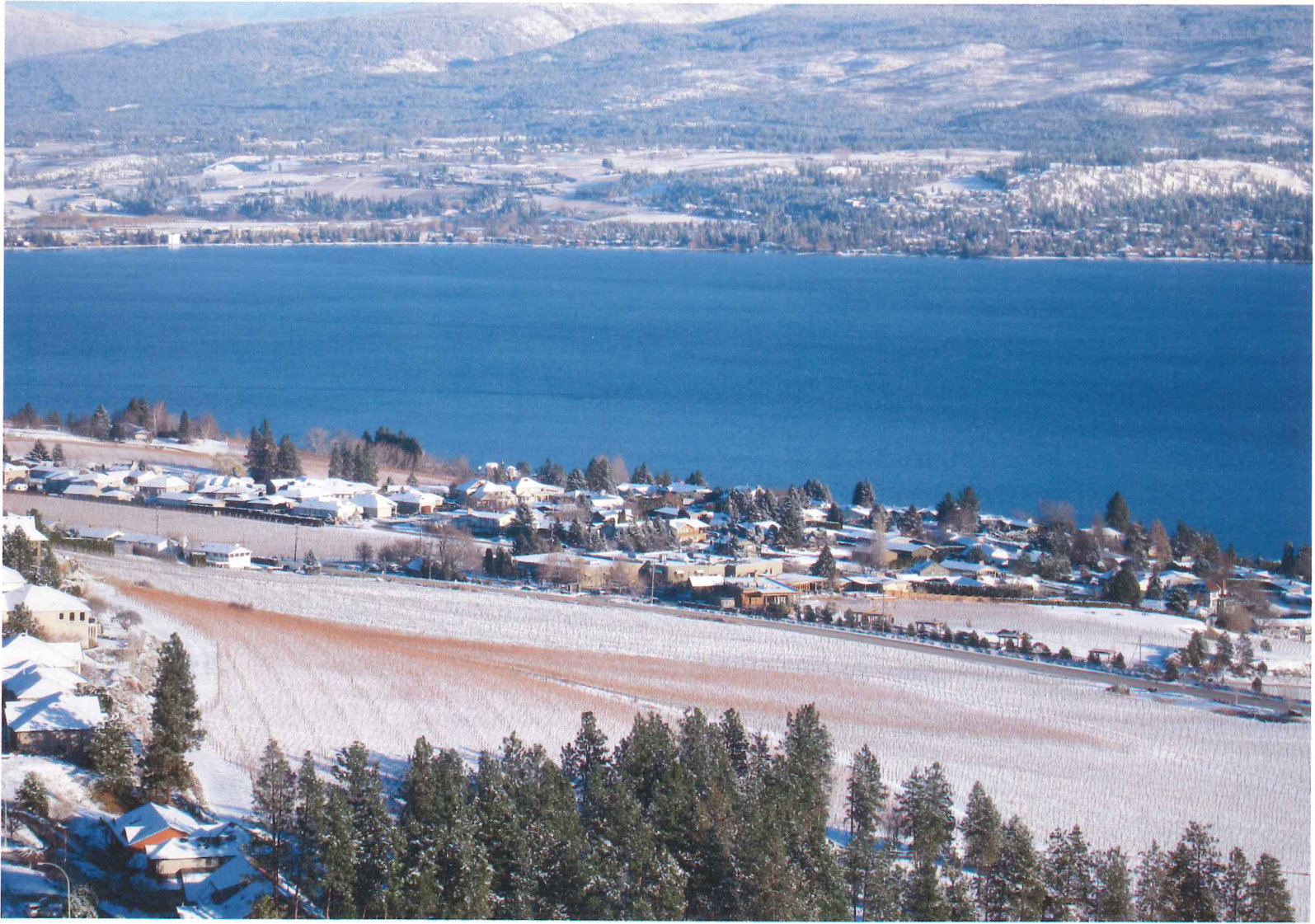
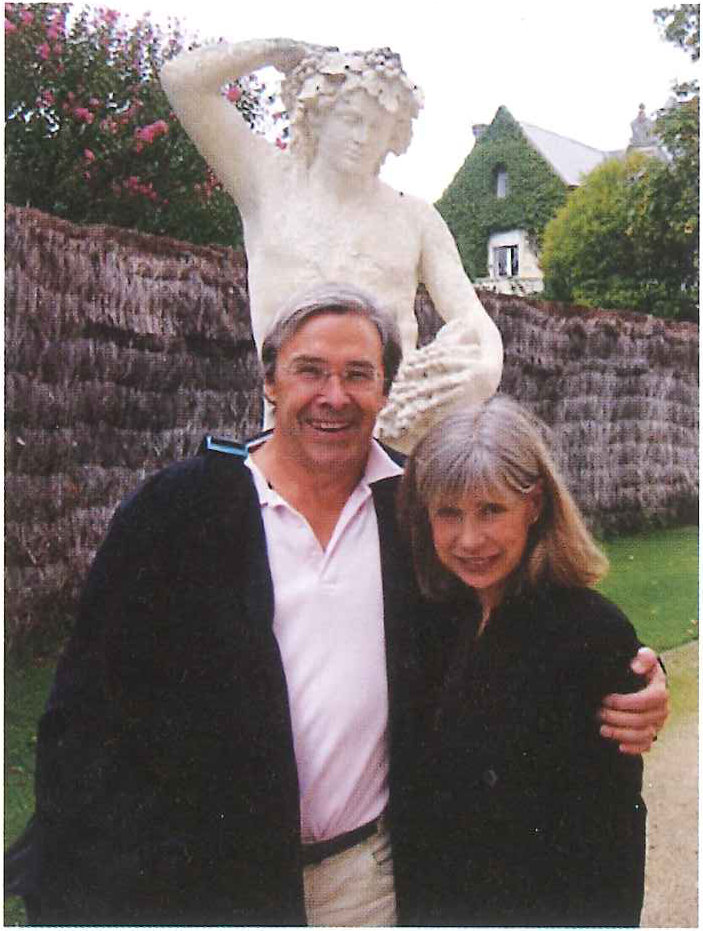
John Sloan was Canada’s ambassador to the Russian Federation, Armenia and Uzbekistan from August 2010 till September 2013. He retired from the department in October 2013. He has served Canada in Japan, China, Switzerland, the United Kingdom and Russia. He was Senior Departmental Assistant to Minister of International Trade, Pat Carney, at the time of the FTA negotiations. From 2000 to 2006 he left the Government of Canada and worked for the U.K. Financial Services Authority. John and wife Martine dream of producing great wine for family and friends at their retirement home in Kelowna, overlooking the stunning Quails’s Gate vineyard and nearby Mission Hill.
View the original scanned pages →
Originally published in bout de papier, Vol. 28, No. 1 (2014) — Spring 2014 // Printemps 2014, pp. 5–9. Read the rest of this issue →



