
bout de papier, Vol. 27, No. 3 (2013) — Autumn 2013 // Automne 2013, pp. 20–21
In my many years as a Science & Technology Counsellor with Canada’s diplomatic service I was always struck by the vast allocation of resources to military establishments and related technology, understandable given global security concerns. However, it always begged the question: would ordinary people not be better off if these resources had been directed toward the critical issues in people’s daily lives, in the sheer survival of the poorest? Can we, as a global community, not re-order our priorities?
As we all know, the cost of maintaining armed forces around the world, not least in developing countries, has been one of the great impediments to development. The cost of conflicts themselves in human terms is incalculable (I myself come from a family of refugees, survivors of the partition of India after independence which displaced some 12 million people and cost upwards of a million lives). In terms of dollars and cents the rough figures are even more difficult to grasp. Thus far the US is estimated to have spent 1.5 trillion in taxpayer dollars in conflicts it cannot resolve in Iraq and Afghanistan — enough, I am told, to provide every American with all the free health care and education they could hope for, and then some.
To put matters in perspective, what has been spent by one country on two conflicts alone represents almost seven times the funding needed for meeting global Millennium Development Goals. While it is easy to draw conclusions about our skewed priorities here in the West, and the waste they generate, how do we stimulate new thinking and solutions for the 21st century? You have to start somewhere and I concluded that the international movement to create Ministries of Peace (to supersede Ministries of War) made sense. Happily, perhaps even surprisingly, I was not alone in Canada with that thought. The history of Bill C-373 (“An Act to Establish a Department of Peace”) is proof of it.
With the Federal Government making organizational changes in the name of budget crises, improved efficiency and by Bill Bhaneja policy effectiveness, it would be timely to ask whether Canada needs a Federal Department of Peace to meet those priorities. It is hardly a radical thought. Today, the global movement for Departments/ Ministries of peace exists in 30 countries, including the USA, UK, Europe, Japan, and Australia. There are already Departments of Peace in three countries: Costa Rica (2009), Nepal (2007) and Solomon Islands (2004). In the USA, since 2001, a “Department of Peace Bill” (HR 808) has been tabled in the House of Representatives. Democrat Rep. Denis J. Kucinich in the last House garnered 64 votes in Congress in support of his bill. Over the past decade other approaches to creating civil peace infrastructure have been pursued in Europe, notably in Germany through the government’s Zivilian friedendienst program. In the UK, a Peace Ministry initiative was introduced by MP John McDonnell in October 2003.
In Canada, Bill C-373 is awaiting second reading in Parliament. It was introduced in the House on November 30th, 2011 by NDP MP Alex Atamanenko and is co-sponsored by Green Party MP Elizabeth May and Liberal Party MP Jim Karygiannis. In the previous House, a similar “non-partisan” bill received the support of 23 NDP and Liberal MPs, including that of late NDP leader Jack Layton.
The mission of the proposed Department would be to work towards “developing a culture of peace and nonviolent ways of conflict resolution”. Bill C-373 provides a strategic focus for peace building. This is through developing competencies, institutions, and programs preparing Canada for peace, in the same way public funds are devoted to prepare expertise and structures for fighting wars.
Peace and Security related programs are currently managed in eight federal departments and agencies: DND, DFATD including former CIDA, Citizenship and Immigration, Health Canada, Finance Canada, IDRC, Public Safety, and Justice. However, there is no department devoted to the science of fostering the general rule (peace) as opposed to the exception (war). A plethora of federal programs deal with human rights, genocide prevention, democratic governance, and post-conflict reconstruction. However these programs, without links to a cohesive strategy of peace-building, appear to have had little impact on Canada’s peace or security concerns.
What Bill C-373 is meant to achieve
The Peace Department, as outlined in the bill, would be headed by a Cabinet level Minister. Its responsibilities would include: + Promote justice and democratic principles to expand human rights;
+ Strengthen non-military means of
peace-making;
Take pro-active approaches to promote
national and international conflict prevention programs through nonviolent
intervention;
Support development of initiatives from
local communities, faith groups and
non-governmental organizations; and e Assume leadership role among federal
departments in addressing matters of peace, justice and good governance to protect Canadians from harm.
Building a Civil Peace Service
The most innovative component in the bill seeks to create a Civil Peace Service comprising 500 to 700 peace specialists trained in prevention, mediation, and reconciliation to work in conflict zones. Past and current practice has focused almost exclusively on “suits” and “boots” where suits (diplomats) go and talk to other suits and boots (soldiers) whose expertise is fighting wars, face other boots. However, in conflicts, near and far, the problems are more complex.
We have 192 sovereign nation-states worldwide, but these contain over 7,000 cultures within their boundaries. It is at the level of cultural communities that conflict is most likely to occur. Most of the West’s military interventions (often justified on humanitarian grounds) have failed because of lack of understanding of the grassroots issues of history, language, and culture of the parties involved — Iraq and Afghanistan being two obvious and painful examples.
The competencies required to understand conflict-related issues comprehensively do not fall within the scope of any of the individual Departments and agencies mentioned above. Sections 14, 15, and 16 of Bill C-373 underscore the importance of creating a Civil Peace Service going from candidates’ education and training as peace specialists to development of peace-related strategies and the deployment of such at home and abroad in all phases of conflict through “early detection, assessment and response mechanisms”. The latter requires, as pointed out earlier, a different skill set and a different type of engagement than current Departmental approaches.
When it comes to focus, leadership skills, and other expertise there is no concerted effort at present for peace-building in the Federal Government as is envisaged by the Department of Peace legislation. Unlike leading edge peace-building initiatives of the late 1990s (e.g. Human Security, the Land Mines Treaty or the International Criminal Court of Justice) which benefitted from strong Canadian leadership, the impetus for new program structures such as START and the Office of Religious Freedom seems to have come primarily from Washington and Westminster, with an eye to domestic politics.
Ironically, Canada now seems behind the US in refocusing our efforts. In November 2011, the US State Department announced a new Bureau of Conflict and Stabilization Operations (CSO), which aims to adopt the security of challenges of the 21st century through “integrated civilian-led efforts to prevent, respond to, and stabilize crises in priority states, setting conditions for longterm peace”. The new Bureau aims for solutions guided by local dynamics and actors. This in its intent bears a strong resemblance to the Civil Peace Service in Bill C-373.
A consultative role for the Minister of Peace
Currently, the Prime Minister is meant to receive counsel on matters of peace and security from Ministers of National Defence and Foreign Affairs; however, there is little professional advice available to him on how to make use of alternate peaceful approaches to prevent conflict. The bill gives a Peace Minister a mandate for an objective review of armed interventions to assess their effectiveness in resolution of conflicts and to assess the lessons learnt in related circumstances.
The Peace Minister also would be empowered to initiate a consultative process with fellow ministers to address any issues that may arise in respect of: (a) potential or ongoing armed conflict involving Canada and another nation; and (b) use of Department of National Defence personnel within Canada for maintaining peace and order. Other Ministers would be required to consult the Peace Minister before entering into any pertinent treaty or peace agreement.
To the best of my knowledge, no major effort has been made since the early 1970s to look at the adequacy of machinery of government with respect to peace building. The last time a concerted review of any major sort was undertaken was in the post- War era as the government sought to respond to social and political crises of the day which resulted in the creation of new departmental structures such as Environment; Industry, Science and Technology; Regional Economic Expansion, and others. We need a similar effort to meet new challenges of the 21st century including new thinking and new machinery of government to deal with Canada’s future role in the rising number of conflicts worldwide. It also should be kept in mind that the quality of our political discourse is shaped by the kind of systemic structures and institutions in place, and if Iraq and Afghanistan teach us anything, the breadth and quality of that discourse needs major improvement.
Financial impact of Bill C-373
There have been concerns raised about the cost of creating yet another new Departmental structure. In my view it should be minimal as the proposed Department would be based on reallocating funds from existing departments (notably DFATD and DND), except for resources needed for a new Civilian Peace Service program. Such a civil service program could be phased in over a five-year period.
The idea of a Department of Peace came long before the latest wars in Afghanistan and Iraq. Had such a Department been in place, perhaps our interventions in foreign conflicts would have been different. Imagine the financial costs and lives saved through utilizing violence prevention competencies. A Peace Department will contribute to better accountability and transparency for peace building and security work in the federal government. It will also better define our ethics and values, and raise our profile as an authentic global peace-builder. In short, this seems an idea whose time has already come even if we are slow to understand as much.
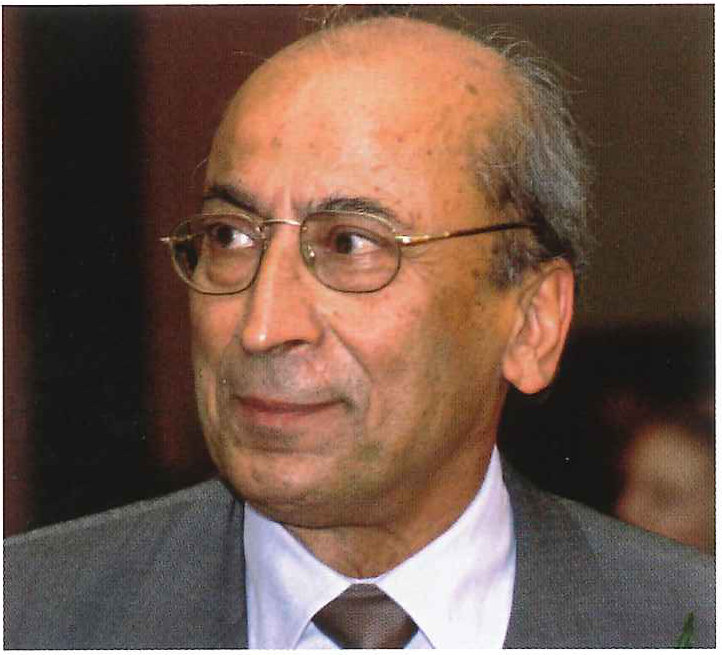
Bill Bhaneja holds a Ph.D. in science policy from University of Manchester and served in London, Berlin and Bonn. Following retirement, he was a Senior Research Fellow at the University of Ottawa (2003-08). Related publications include: Journal of Parliamentary and Political Law, vol. 6. No. 3, Oct. 2012, pp. 572-581 and Nonkilling Security & the State, Creighton University and Center for Global Nonkilling, 2013.
View the original scanned pages →
Originally published in bout de papier, Vol. 27, No. 3 (2013) — Autumn 2013 // Automne 2013, pp. 20–21. Read the rest of this issue →



