
bout de papier, Vol. 2, No. 2 (1984) — June 1984 // Juin 1984, p. 10
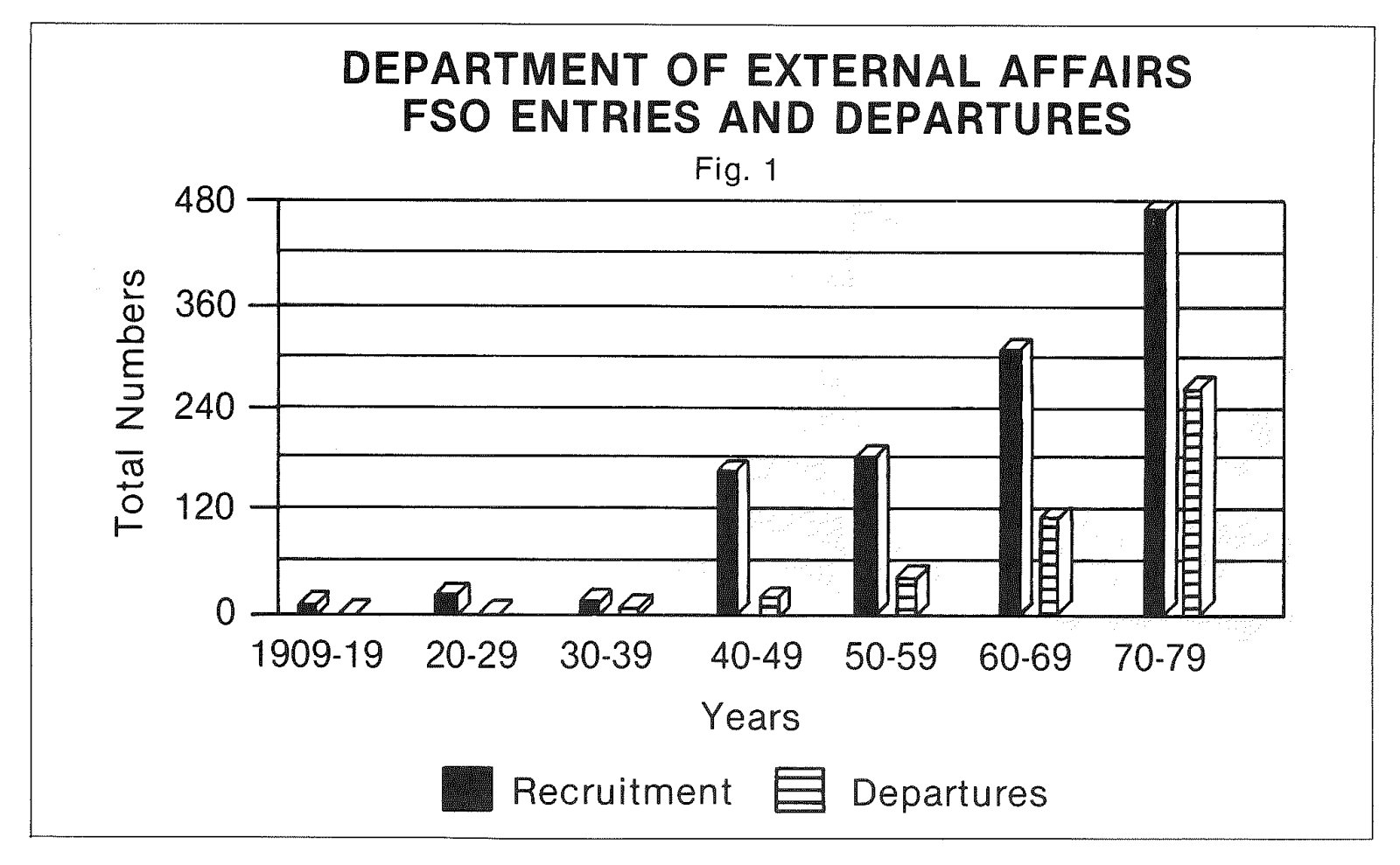
Comings and Goings — Figure 1
The higher level of departures in the 1960s and 1970s is mainly attributable to retirement of many of those who joined earlier. The statistics, however, reflect a definite trend to a higher degree of mobility beginning in the decade of the ’60’s which increased the number of those leaving after a short period in the department well beyond the trends established in the earlier periods.
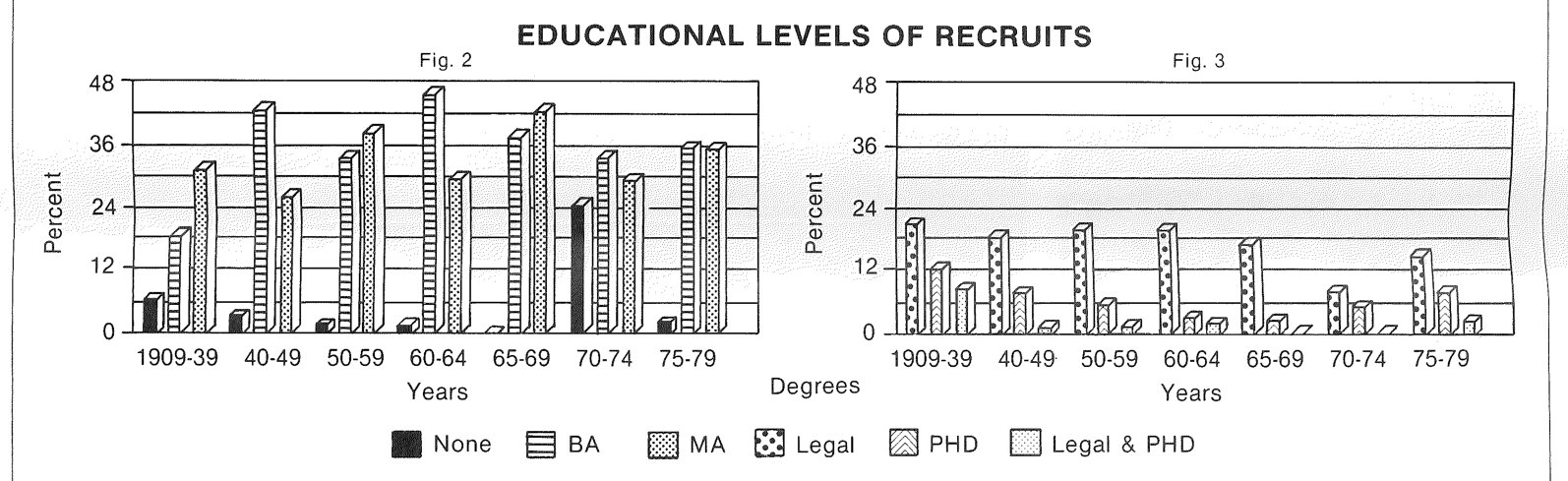
Educational Entrance Levels — Figure 2
An unusually high percentage of the ’none’ column in 1909-1939 is due to the lack of formal standards in the Canadian educational system of the nineteenth century than to low minimum requirements of academic qualifications during this period of recruitment. After World War Il veterans who joined brought maturity, experience, organizational capabilities and decision making competence to the department even though they often had only a basic degree. In 1973 the rotational administrative officer group (AS) was amalgamated with the foreign service officer group. This explains the surge to 24 per cent of those at the ’none’ level.
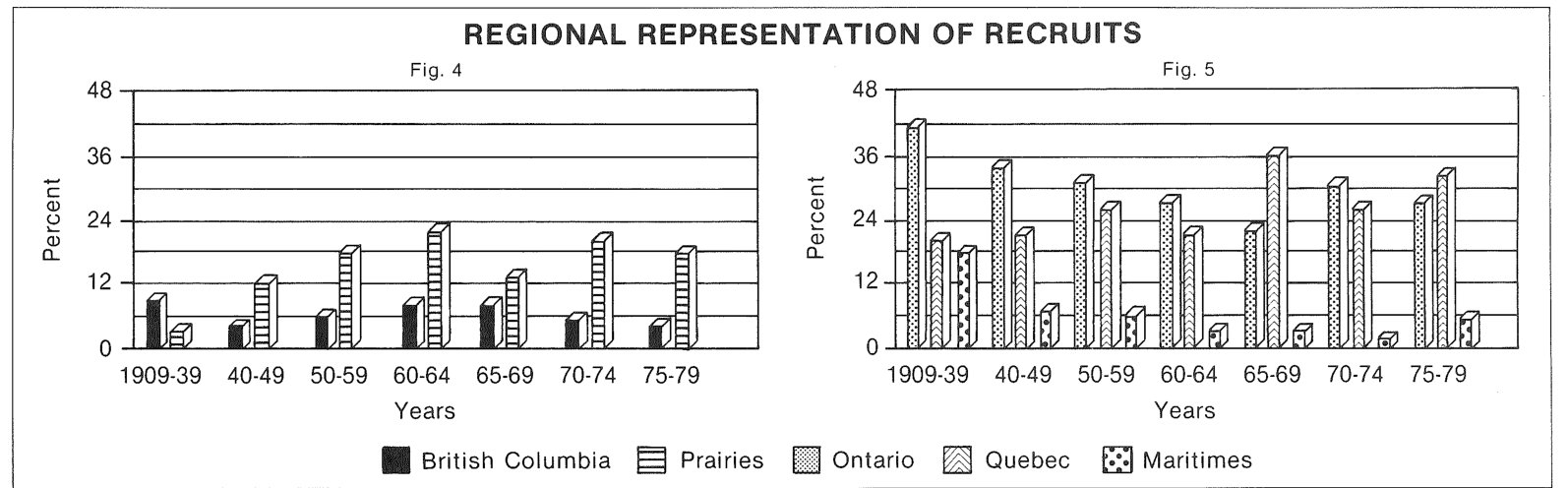
Regional Representation — Figure 5
The surge in recruitment from Quebec between 1965-1969 was not intentionally reversed in 1970-1974, since during the latter period 74 new recruits from Quebec joined the department as opposed to 57 from Ontario. The AS/FS conversion in 1973 (mentioned under figure 2) explains the apparent anomaly since a great proportion of the AS staff had originally come from Ontario.
Quebec recruitment levels are not synonymous with francophone representation in the department In fact, the department recruited Quebec anglophones at a higher ratio than that which existed between the two language groups in the province.
View the original scanned pages →
Originally published in bout de papier, Vol. 2, No. 2 (1984) — June 1984 // Juin 1984, p. 10. Read the rest of this issue →



