
bout de papier, Vol. 24, No. 2 (2009) — Spring 2009 // Printemps 2009, pp. 26–31
here are few historical analogies to the Anglo-American “special relationship” where a Tee colony eventually overshadows the mother country. Some Greek colonies in Italy,
Sicily and Asia Minor did become much richer and more powerful than their mother cities in Greece. Carthage in North Africa became mistress of the western Mediterranean, while its mother city Tyre fell under foreign control. Perhaps the closest analogy is the thousand-yearlong relationship between Venice and Constantinople. The Venetian frontier Duchy grew into a major naval and mercantile power, evolving over time from subject, to ally, to enemy and finally becoming the dying Roman (Byzantine) Empire’s last support against the rising Ottoman Turks.
The Venetians take their name from the Venetae, who inhabited the area north of the mouth of the Po, between the Alps and the Adriatic. In 181 BC, the Romans founded the colony of Aquileia at the head of the Adriatic sea. With extensive military and commercial port facilities, Aquileia grew to become the third largest city in Italy, a major communications hub, the supply centre for Rome’s Danubian armies and the entrepot for trade between the Mediterranean and central Europe. This strategic importance had its downside. Any invader or usurper entering Italy from the north-east had to pass Aquileia, and the city endured many sieges. It finally succumbed to Attila when he invaded Italy in 452. Many of the inhabitants fled to the marshy safety of the island of Grado, which had been Aquileia’s maritime port. There, they found a livelihood exploiting the salt and fishing resources of the lagoon which runs from the mouth of the Po to the northern tip of the Adriatic. In 567, Lombards, a Germanic people, invaded and overran much of Italy. The invasion drove more refugees from cities such as Padua to the muddy safety of the lagoon. These island refuges and a few mainland strongholds remained under the control of the Roman Exarch of Ravenna. Local defence of the lagoon islands became the responsibility of the Dux Venetae. Over time the local dialect mutated the pronunciation of his title from Dux (leader)
In 751, Ravenna finally fell to the Lombards. Byzantine (as we will now call it) Italy was now largely confined to the heel and toe of the peninsula. Venice (Venetia), however, still remained loyal to the Empire. The Doge was usually appointed locally, but maintained contact with Constantinople, often receiving an imperial title such as Spatharius (bodyguard), Protospatharius (chief bodyguard) or Hypatos (Consul). Many Venetian nobles sent their sons to be educated in Constantinople, often marrying them to members of the Byzantine nobility. (This had its perils; one legend relates the divine wrath that befell a Byzantine bride — and her groom — because she insisted on taking regular baths and eating with a fork.) The Venetians developed a lively trade supplying luxury goods from the east to the kings and nobles of dark age Europe, in exchange for raw materials — salt, fish, timber, metalware and above all, slaves. Nor did the Venetians confine their eastern trade to Constantinople. Lucrative markets were found in Egypt and other parts of the Islamic world. This was in breach of a Byzantine trade embargo. Timber, metalware, slaves (and indeed Constantinople’s high quality silk textiles) were all deemed to be strategic goods, whose export to the infidel was banned. While on occasion the Venetians deemed it prudent to respect this embargo, usually they ignored it, as links with Constantinople became increasingly tenuous. With most of Italy under Lombard and later Frankish control and the Dalmatian coast beset by pirates, the Venetians needed to develop their naval power in order to protect their merchant shipping. Constantinople was largely content with this situation. Only a few cities along the eastern Adriatic remained under its nominal control, and when the Doge arrogated the title of Duke of Dalmatia for his efforts in suppressing piracy, no objections were raised.
More delicate was the question of Venice’s relations with the rising power of the Carolingian Franks. The Lombard conquest of Ravenna had alarmed the Papacy (which had broken its ties with Constantinople over a religious dispute). Pope Stephen II travelled to Francia, confirmed Pepin the Short as King of the Franks and invited him to drive the Lombards out of Ravenna and the Exarchate. Pepin obliged and the liberated territories were handed over to the Papacy. Pepin’s son Karl (Charlemagne) carried on the war with the Lombards. He conquered the rest of their territories and incorporated them into what he claimed — with his coronation as Emperor, on Christmas Day 800 — to be a revived Western Roman Empire. This left Venice with a new dilemma, they were subjects to the Roman Empire — but which one? The Carolingians were nearby and very powerful, Constantinople was comfortably far away. Some factions favoured submission to the Franks, others continued loyalty to Constantinople. For the first time in many decades the Imperial fleet reappeared in the northern Adriatic to help deter the Franks. The Franks had no naval force to match this, and their efforts to subdue the islands of the Venetian lagoon literally bogged down. In the end a compromise was achieved. Constantinople recognized Charlemagne as Emperor (albeit not as Emperor of the Romans) while the Venetians agreed to pay a tribute to him. In return the Franks accepted Constantinople’s sovereignty over Venice.
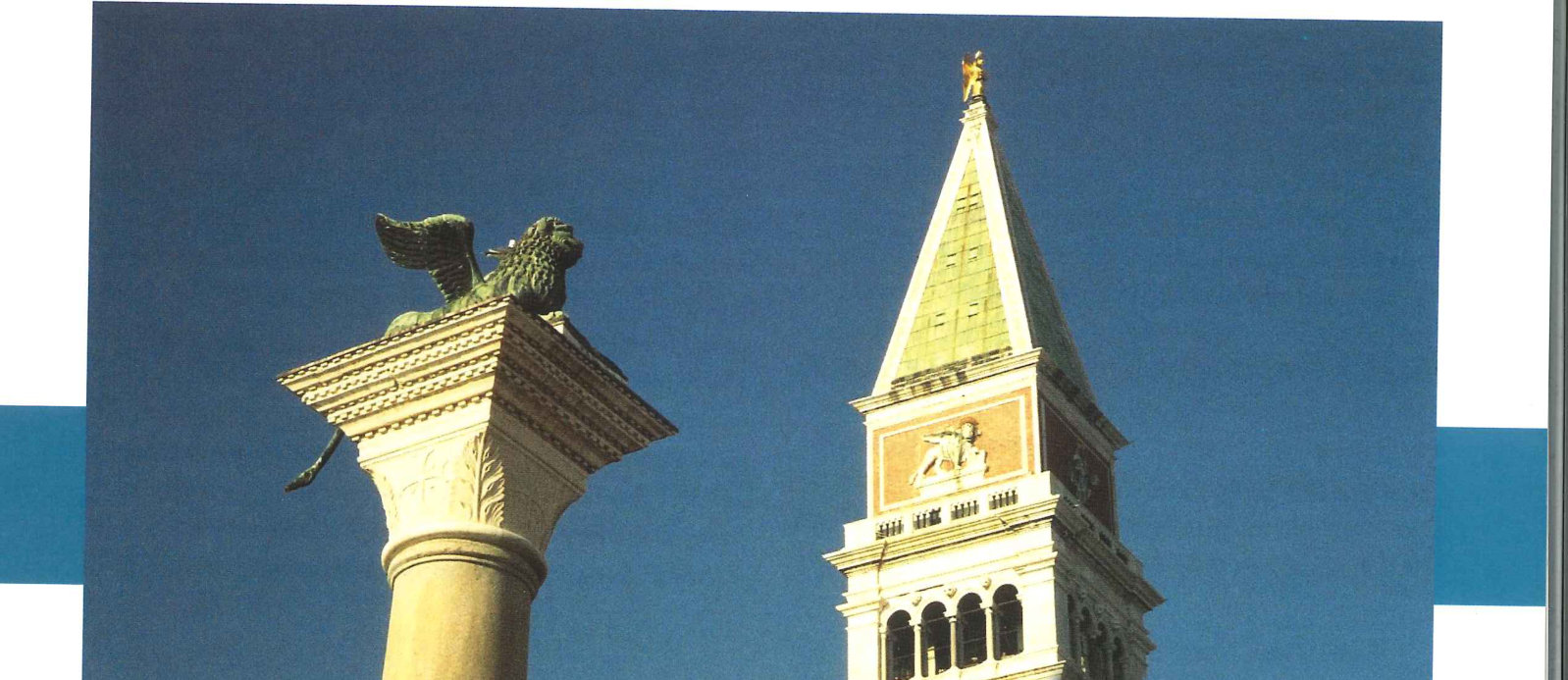
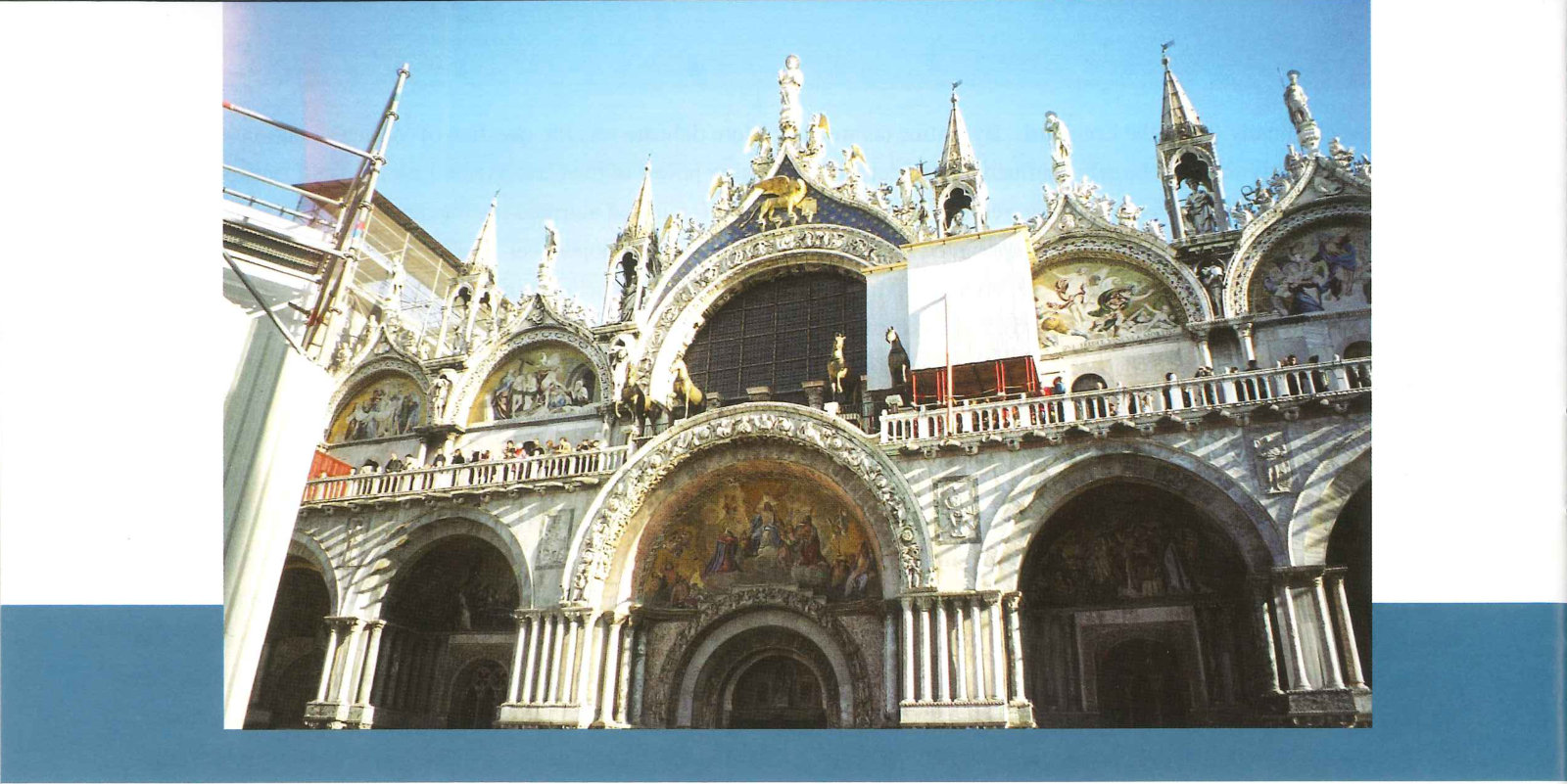
The failed Frankish land invasion however concentrated the Venetians’ minds on the weakness of their physical defences. A new concentration of settlement began to emerge, centred on the island of Rialto, this was to become the heart of the modern city of Venice. The muddy islands were extended by use of piles, and coffer-dams. These provided a foundation for more substantial buildings, which gave the now emerging city a monumental aspect commensurate with its growing wealth. The jewel in Venice’s crown, St. Mark’s Cathedral, was erected to house the evangelist’s relics (purloined from Alexandria by Venetian slave traders in 828, and hidden from Arab customs officials under a load of hams). St. Mark’s was closely modelled on the church of the Holy Apostles in Constantinople. The mid 9th century saw a new threat to Venice. Arab raiders seized Crete and gained a foothold first in Sicily and then Bari in southern Italy. They began to raid the Adriatic coast, even sacking Grado. Any threat to Venice’s ability to navigate the Adriatic was of particular sensitivity and the Venetians readily assisted the Imperial efforts to stop these raids and restore Byzantine control over the straits of Otranto. Otherwise the Venetians continued to pursue their traditional foreign policy of maintaining good relations with their neighbours on the Italian mainland and with whoever claimed the title of western Emperor.
Relations with Constantinople came under strain in the 10th century. The Empire was on a roll. Having regained control over the Balkan side of the Adriatic as well as expanding its holdings in southern Italy, it was suddenly no longer so distant, and no longer willing to take a laissez-faire approach to Venetian claims of sovereignty over Dalmatia. Venice’s flourishing trade in arms and timber with Egypt and Syria also became the object of Imperial wrath. In 971, the Doge was informed by a Byzantine embassy that any Venetian ship caught carrying such cargo to a Moslem port would be set afire — with its crew still on board. The Doge quickly issued a decree that any Venetian plying such trade would be fined 100 Ibs of gold, or if he could not pay, be put to death.
Another irritant was the seemingly arbitrary Byzantine treatment of Venetian merchants, who were being charged excessive dues when they entered the Dardanelles. In 992 Emperor Basil II issued a Chrysobull (Imperial decree) limiting these payments, and stipulating that they were to be made directly to the Logothete of the Dromos (a cross between Postmaster General and Minister of Foreign Affairs). He alone could inspect Venetian ships and assess the value of their cargoes and even he could not detain a Venetian ship for more than three days. The office of the Prefect of the City (responsible for regulating all commercial activities there) was ordered to ensure that no other officials interfered with Venetian ships.
A century later Venetian trade with the Empire received an even more important boost. In the 11th century Byzantine fortunes began to decline. A succession of ineffectual emperors, poor financial management, conflict between the civil and military aristocracies, and the appearance of new enemies, the Normans in the west and the Seljuk Turks in the east, had drained the treasury, undermined the currency, and degraded the army’s effectiveness. In 1071 came two disasters. Bari — the last Byzantine foothold in Italy — was lost to the Normans, while in the east at Manzikert, the Imperial field army was scattered and the Emperor Romanos III taken prisoner by the Turks. A power struggle ensued, where competing Byzantine factions sought Norman or Turkish support in exchange for territorial concessions. When a stable candidate, Alexios Comenos, finally took power in 1081, virtually all of Anatolia had been overrun by the Turks, while the Normans had crossed the Adriatic and taken Corfu and Dyrrhachium (Durres) in what is now Albania, and had advanced as far as Larisa in Macedonia.
The Doge acted generously when Alexios appealed for help to expel the Normans from Corfu and Albania. The struggle was protracted and cost Venice heavily in men and ships, but once the Normans had been expelled Alexios’ promise of a generous reward was met (no doubt after some hard negotiations). His Chrysobull issued in 1082 essentially gave the Venetians duty-free access to every port in the Empire, except for Crete and Cyprus. In addition Venetians were granted their own quarter in Constantinople along the Golden Horn, including wharves, houses, a bakery and churches where they could celebrate the Latin rite. This gave Venetian merchants a significant financial advantage over their native Byzantine and Italian competitors. The Chrysobull has been seen by many Byzantine scholars as a grave blow both to the power of the Byzantine state (which heavily regulated all forms of commerce) and to the Empire’s tax base. More recently it has been seen as yielding enormous economic benefits to both Venice and Byzantium — particularly after Alexios’s successor John II also exempted the Venetians’ Byzantine suppliers from the tax. Venetian merchants stimulated a boom in agricultural and industrial production as they hoovered up great quantities of agricultural produce: grain, wine and oil. In the short term Byzantine manufacturers also benefitted from increased demand for their fine textiles, glasswares, ceramics, and metalwork. The region around Athens, Corinth and Thebes quickly became a manufacturing hub which benefitted particularly from Venetian demands for their products. In the short term, whatever sales tax revenue was lost to the Byzantine state was more than compensated by increases in other tax revenues. Despite these economic benefits, and the continued military assistance provided by Venice, the Venetians became increasingly unpopular. Venetians were brash, quarrelsome and often contemptuous of their hosts. Many Byzantine as well as other Italian merchants found they could not compete with the Venetians’ duty-free cost advantage. Nor did just the merchants suffer. Over the longer term, Venetian manufacturers mastered many Byzantine production techniques and were able to produce comparable goods more cheaply. Byzantine manufacturers of fine pottery and glassware, enamelware, cameos, woolen and even silk textiles, found they were being undercut in both their domestic and export markets by Venetian knock-offs. Indeed they soon found they could not even compete with the Venetians in gaining access to locally produced raw materials.
The Chrysobull lapsed on the death of its issuer, but was renewed (after some delays) by both John II and his son and successor Manuel I. Manuel extended the size of the Venetians’ quarter in Constantinople and allowed them to trade with all cities of the empire including Crete and Cyprus (of great advantage to Venice’s trade with the Levant) but relations continued to sour. The Doge was granted the title of Protosebastos — continuing the fiction that the Venetians were still loyal Byzantine subjects — but this loyalty became increasingly doubtful. Participants in a joint Venetian/Byzantine expedition against the Normans came to blows. The Venetians pillaged Manuel’s flagship, crowning a Moorish slave with his Imperial regalia. Venetian and Byzantine interests also clashed over Manuel’s alliance with Hungary — which contested Venice’s control of Dalmatia. Manuel’s efforts to reestablish Byzantine power in southern Italy also ran counter to Venetian interests, and the Venetians pointedly refused to support his expedition. To counter Venice’s commercial influence, Manuel granted similar concessions to its commercial rivals Genoa and Pisa. The Venetian colony in Constantinople reacted by sacking the Genoese and Pisan quarters. This was the final straw; in 1171 Manuel ordered the arrest of all Venetian nationals (reportedly numbering 10,000) on Byzantine soil and the confiscation of their property.
A Venetian naval expedition was mounted in retaliation but withdrew after it was decimated by an epidemic. Long negotiations to find a settlement followed. Venetian captives were finally released in 1179, but the question of compensation — Venice claimed damages amounting to 1,500 Ibs of gold — remained unresolved when Manuel died. In 1182, Manuel’s infant son and successor Alexios II was overthrown by his cousin Andronikos, an anti-western populist who encouraged the wholesale massacre of the western community in Constantinople. When Andronikos was overthrown in 1185 by Isaac Angelos, negotiations regarding the restoration of Venice’s commercial privileges were resumed. Agreement was reached, initial compensation payments were made, but Isaac, in turn, was overthrown by his brother Alexios. Undaunted, the Venetians renegotiated the terms even agreeing to an elaborate naval alliance (it collapsed the one and only time it was invoked), in exchange for a very detailed charter listing all the cities under Imperial control where they could freely trade. Payment of the compensation rapidly foundered because the once immensely wealthy and powerful Byzantine state was now effectively broke, unable to persuade major landowners and regional magnates to pay their taxes.
It is likely that the tragedy of the Fourth Crusade unfolded more by accident than design. Unlike previous Crusades there were no royal participants, nor much enthusiasm outside the usual crusading heartland of northern France and Flanders. The Crusade’s organizers who went to Venice in 1201 to negotiate for shipping greatly overestimated the numbers who would join the crusade, and undertook financial commitments which the Crusaders who did join could not hope to meet. The Venetians therefore sought payment in kind. The Crusaders finally set sail in late 1202 after the half-blind 90-year-old Doge, Dandolo, persuaded them to help Venice retake the rebellious Dalmatian town — Zara. The Pope was horrified, but his legate wanted the Crusade to succeed at any cost, and suppressed his efforts to excommunicate the Crusaders or the Venetians. While overwintering at Zara the Crusade was approached by Alexios Angelos, son of the deposed Emperor Isaac II. Alexios had been wandering the courts of Europe seeking backers to regain the throne from his uncle Alexios III. Alexios made extravagant offers to the Crusaders of military and financial support, as well as promising to return the Eastern Church to its allegiance to Rome. Dandolo, who knew the Empire well, would have known that Alexios could not meet such promises, but nonetheless endorsed his proposal. Whether he already envisaged a takeover of the Byzantine Empire, or simply hoped to put a compliant puppet on its throne can never be known. The crusading fleet appeared before Constantinople in June 1203. The hoped-for internal uprising to oust Alexios III did not occur but when an assault gained a lodgement on the city’s sea walls, resistance collapsed. Alexios III fled and Alexios IV, along with his blinded father Isaac, resumed the throne. In the process many districts of Constantinople were destroyed by fire. It was not long before it became apparent that Alexios’ promises were indeed empty. Both the Crusaders and the people of Constantinople became increasingly dissatisfied with him. In January 1204, a palace coup overthrew the Angeloi bringing yet another Alexios — Alexios V Ducas to power. At this point Dandolo proposed that Crusaders take the city again and elect one of their own as “Emperor of Romania”. A division of spoils was agreed. The new Emperor would get one-quarter of Constantinople and of the Empire, the other three-quarters would be split between the Venetians and the remaining Crusaders. As part of its portion, Venice would get Hagia Sophia and the right to appoint the Patriarch of Constantinople. On 13 April 1204 Constantinople was stormed again. Again resistance collapsed and Alexios V fled. For three days the Queen of Cities was brutally sacked. Priceless relics of antiquity which had long adorned Constantinople, and many other works of art and literature, were looted or destroyed. This crime against civilization has embittered relations between Orthodox and Catholic Christendom ever since.
Venice’s hoped-for territorial share of the spoils (“a quarter and half of a quarter of the Roman Empire”) included part of what is now Turkish Thrace; modern Albania and the western mainland of Greece; Corfu and the lonian islands; Crete; the island of Euobea and much of the Aegean. Actually taking possession of these territories proved far more problematic. Venice was renowned for its fleet rather than its army. On the mainland the Venetians contented themselves with securing some key ports, while subcontracting the conquest of the rest to land-hungry Crusaders. Licence was given to any aspiring Venetian subject to take what they could of the Aegean and Ionian islands. Nominally Venetian freebooters rapidly grabbed what they could, turning many islands into pirates’ nests which did little to ease Venetian commerce. Venice’s main effort concentrated on securing Crete, bitterly contested by the native Cretans supported by Venice’s arch rivals the Genoese. Eventually the island was secured and remained Venetian until 1668. This scattering of ports and islands (and the loot which today still adorns St. Mark’s Cathedral) were Venice’s only long term gains. Still the chain of ports linking the Adriatic to the eastern Mediterranean did allow Venice to weld northern Italy, both sides of the Aegean and the Levant into what essentially became an integrated market.
If Venice had found the Byzantine Empire difficult to deal with, its Latin successor was an utter liability. Most of the territories allotted to the Latin Emperor were quickly lost, respectively, to the Bulgarians and a Byzantine successor state centered in Nicaea. Worse, the first Latin Emperor Baldwin was captured by the Bulgarians and never seen again. A successor, Peter of Courtney, who tried to take the overland route to Constantinople fell captive to another Byzantine successor state, the Despotate of Epirus (which had seized the Albanian territories Venice had hoped to gain), and also vanished without a trace. Subsequent Latin Emperors died more peaceably, after leading lives of quiet desperation, selling off Constantinople’s collection of holy relics, and the timber supports and lead from the roofs of its public buildings. Meanwhile the rulers of Nicaea and Epirus contested to see which successor state would regain Constantinople. In 1261 the Nicaeans won the race and the Roman Empire — what was left of it — was reborn. Emperor Michael VII’s successful efforts to fend off a western reconquista have been recounted elsewhere. Michael VII had granted trading privileges to Venice’s arch-rivals Pisa and Genoa, and in 1268 Venice decided to cut its losses and came to terms with him. In exchange for recognizing his territorial gains, Venice’s free trade privileges were restored. Michael also got Venice, Genoa and Pisa to promise not to conduct their quarrels in Byzantine waters.
Michael VII’s efforts to ward off an attack from the west bankrupted the treasury, alienated the populace and clergy and worse still neglected the defence of his Anatolian frontiers from Turkish incursions. After his death in 1282 the Empire’s territories and resources began to crumble. His successors lacked his skill at statecraft, while the Byzantine decline was further exacerbated by a series of civil wars. In 1354 the Ottoman Turks gained a foothold in the Balkans at Gallipoli, one which they continued to expand until they were turned back from the gates of Vienna in 1529. Emperor Andronicus II was unwisely persuaded to disband the Byzantine Navy as an economy measure, entrusting his naval defence to his Italian allies. Needless to say this ended any restraint on Venice, Genoa and Pisa’s settling their differences in Byzantine waters, even under the very walls of the Imperial Palace. Andronicus’ discharged sailors sought other employment — some joined the Turks, some freelanced as pirates. Depredations by pirates of nominal Byzantine citizenship had long been a source of friction between Constantinople and Venice, and of Venetian claims for compensation. Claims Andronicus had no hope of paying.
As Andronicus and his successors’ position weakened, Venice continued to demand ever greater privileges, further undermining the Empire’s dwindling tax base. Any hesitation on the part of the Byzantines to sign on or to pay the mounting Venetian claims for reparations were met with threats that Venice would withdraw its merchants altogether. Byzantine dependance on Venice was now so great that it could not afford to call the Venetian bluff, but its finances were so strained that in 1342, Andronicus III pawned the Imperial crown jewels to Venice. They were never redeemed. The end finally came on 29 May 1453. The Venetian colony in Constantinople with a dozen warships, trapped in Constantinople or forced to take refuge there, resisted alongside Emperor Constantine IX and his troops until overwhelmed. The response from Venice herself was less inspiring; a diplomatic mission was sent to the Ottoman court offering to mediate (while exploring the terms and conditions under which Venice would be able to continue to trade with Constantinople, should it fall). A relief expedition was rather lackadaisically assembled. If it had gotten to Constantinople in time, it could well have saved the city. But, if not too little, it was too late. The Venetian fleet reached the Straits in time to meet the few Venetian vessels which had escaped the fall of Constantinople. A millennium-long “special relationship” had ended.
View the original scanned pages →
Originally published in bout de papier, Vol. 24, No. 2 (2009) — Spring 2009 // Printemps 2009, pp. 26–31. Read the rest of this issue →


