
bout de papier, Vol. 13, No. 2 (1996) — Summer 1996 // Été 1996, pp. 12–16
From Scimitars to Gallipoli
Turkey and the Turks conjure up many images and passions in western minds.
Scimitars, ruthlessness, and a determination to conquer allowed these nomadic Asians to strike at Constantinople, the heart of Christendom and western consciousness. The root meaning of the word “Turk” is “power,” and Turkish languages are spoken from Siberia to Macedonia.
In the seventh century, Muslim Arabs conquered major portions of the world previously hellenized by Alexander the Great.
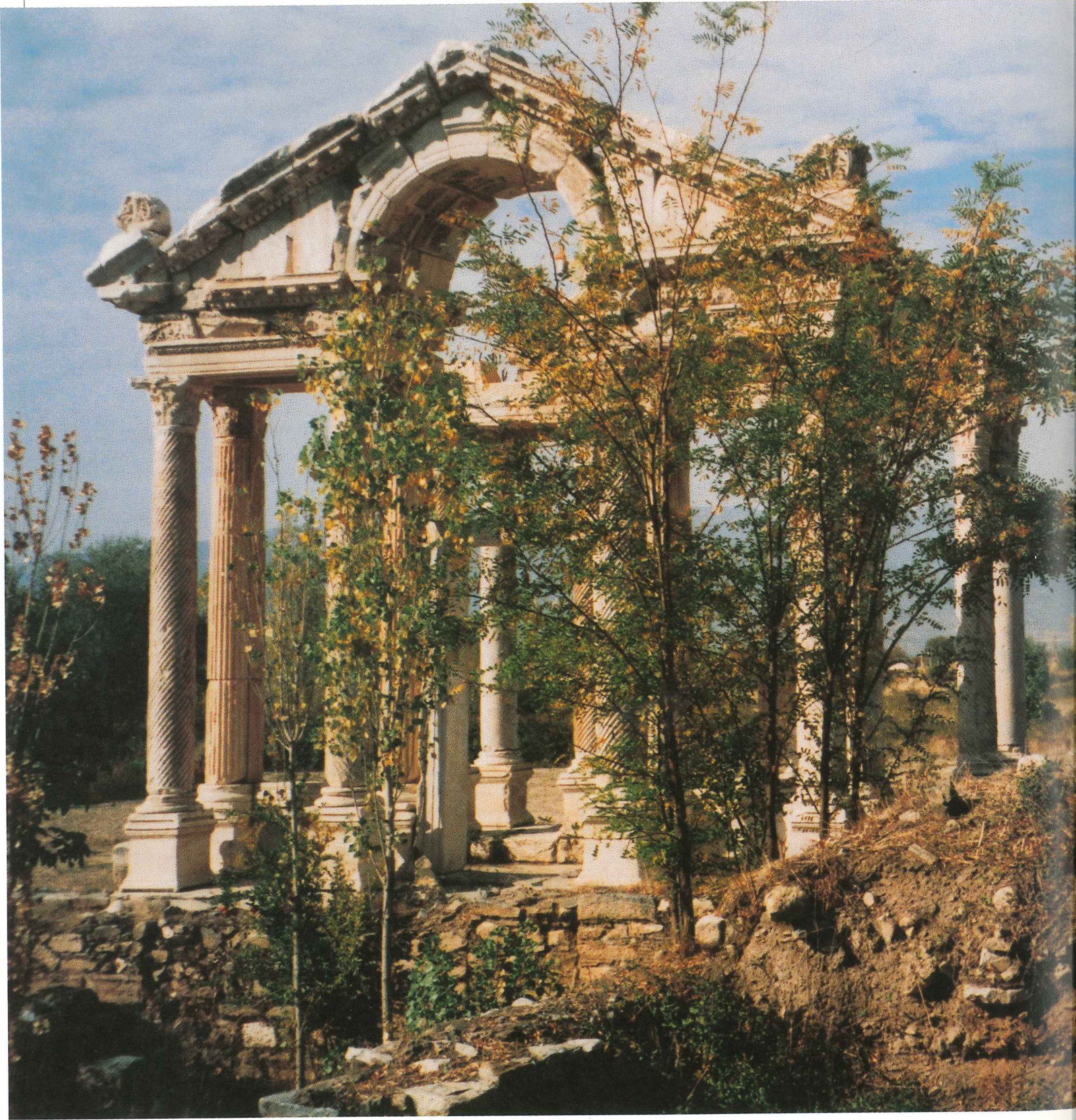
In the mid 10th century the Seljuk Turks conquered Anatolia. In the fourteenth and fifteenth centuries the Ottoman Turks conquered the Eastern Orthodox Christian world and its sacred capital Constantinople.
Seljuk Turks “provoked the crusading counterattack of our western society,” wrote Arnold Toynbee. Yet the conqueror of Constantinople, Mehmet II, saw his Empire as the extension of the power of Rome. portrait by Bellini portrays him in western perspective as a renaissance ruler of the eastern empire.
The two-headed eagle of the Rome- Constantinople axis remains today above the door of the Greek church in the compound of Patriarch Bartholomew of the Orthodox Church in Istanbul. Nearby is the rusty locked gate that legend says will be opened when the Christians return to Turkey.
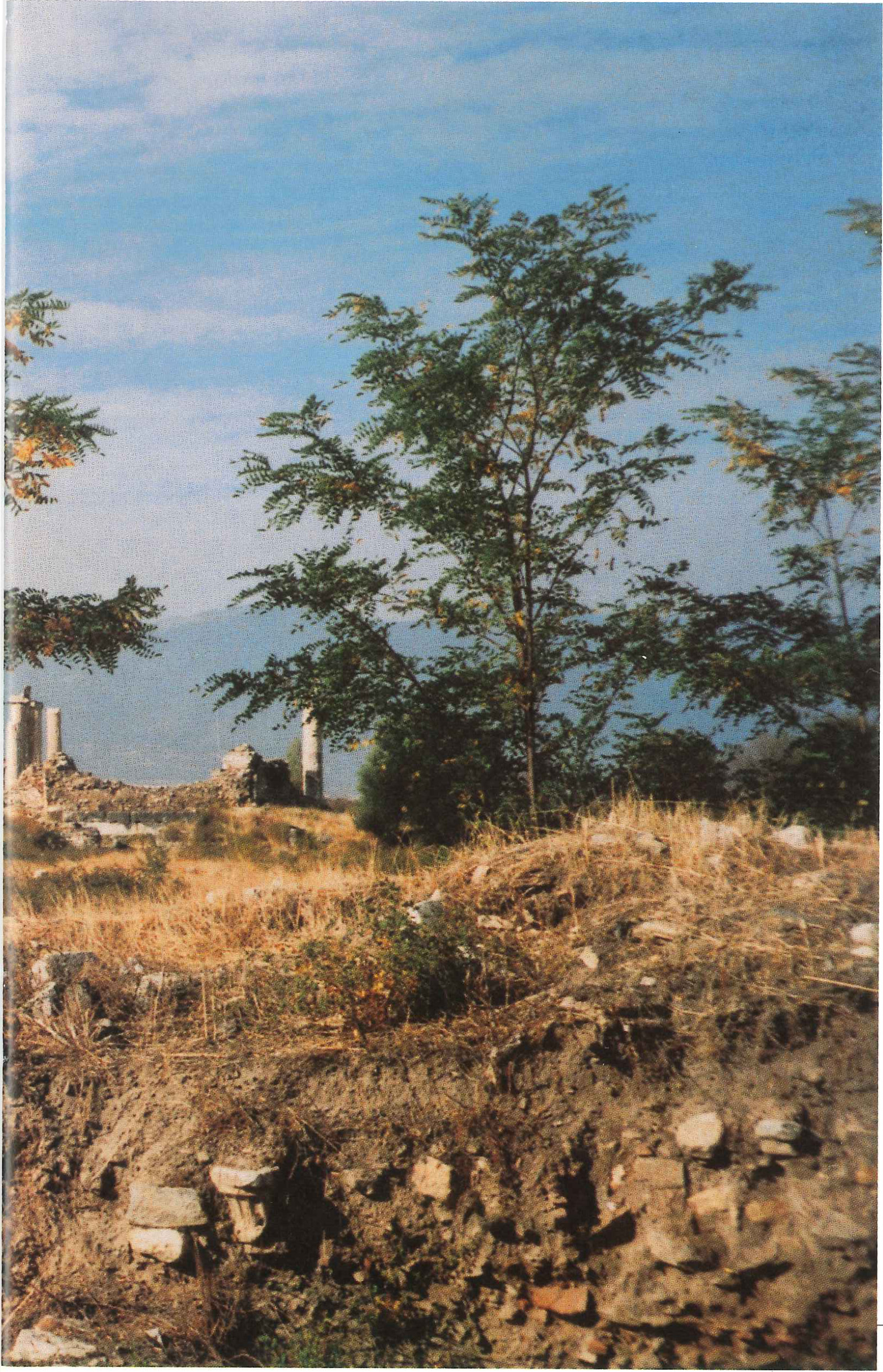
At Gallipoli in 1915 the blood of New Zealanders and Australians was shed between Turkish ferocity and Churchillian miscalculation. In Cyprus in 1974 a Turkish invasion divided an island, while at home, Turkey, the NATO ally, provided the alliance with a forward listening post on the Soviet Union.
Homer, Mark Twain and Kemal Ataturk
Homer’s Iliad is arguably the first great work of western literature. It is the story of an attack by the Greek King Agamemnon on the Anatolian city of Troy where Paris had kidnapped the femme fatale Helen – “the face that launched a thousand ships and burned the topless towers of Ilium.” Such was the bellicose reputation of the inhabitants of Asia Minor long before the Turks arrived.
Shakespeare’s third witch in Hamlet mixed,
Gall of goat and slips of yew
Slivered in the moon’s eclipse
Nose of Turk and Tartar’s lips.
And Othello, the Moor of Venice, stabs himself to death with the words:
Set you down this:
And say besides in Aleppo once
Where a malignant and a turban’d Turk
Beat a Venetian and traduc’d the state
I took by the throat the circumcised dog
And smote him – thus. (stabs himself)
Mark Twain, in The Innocents Abroad, temporarily loses his (Clemens’) wit on a visit to Constantinople;
…the men were dressed in all the outrageous outlandish, idolatrous, extravagant, thunder-and-lightning costumes that ever a tailor with the delirium tremens and seven devils could conceive of.
Even the magnificent, if desecrated, church of St. Sophia is described by Twain as “the rustiest old barn in heathendom.” And, while “mosques… churches…graveyards are plenty,…morals and whisky are scarce.” The wit returns when “they say the Sultan has eight hundred wives. This almost amounts to bigamy.”
Mustafa Kamal Ataturk took up the challenge of constituting modern Turkey in 1923 when the Ottoman Empire was still reeling from its collapse after the first world war. He rejected Arabic script and the fez, and introduced the Latin alphabet and western clothing so that the Turkish language and people looked western.
Ataturk drove the Greek community into the sea, thus ensuring there would be no love lost between these two neighbours. Today in Istanbul the derelict apartments of former Greek residents stand forlorn and abandoned on the hilly streets near the Golden Horn. The cultural tectonic plate between Hellenism and Asia begins at the Turkish border.
Ataturk oriented the Turkish constitution towards the western model. His clairvoyance, despite western xenophobia, was to be rewarded by what has happened long since his death as Turkey joins the European customs union on its way to full membership in the European Community.
Turkey at the Crossroads of Conflict
What does Turkey mean and matter to Canada and the west? There are many dimensions to consider in answer – strategic, political, economic, cultural and religious. More than any other country in Eurasia, Turkey inspires passion in anyone who wants to discuss history or geopolitics. Its image of toughness, difference, and history as a crossroads of conflict from Alexander to Ataturk, makes Turkey all the more fascinating and controversial.
Myth and religion conjure cloudy and volatile thoughts and instincts. Turkey is not as well known to Canadians as are Italy, Greece or Egypt. The xenophobia aimed at Islam in the west, and the ever-present mystification of Asia, present a double jeopardy for Turkey. The sense of the alien, with a language as cryptic as Magyar, Basque, or Finnish, instils cultural and religious prejudice.
There are also human rights issues that raise warning flags in the west. A twelve year war has been fought by the Kurds who want an independent Kurdistan that would include parts of Turkey, Iraq and Syria.
Kurdish rebel leader Abdullah Ocalan, protected by Syria and banned from Germany, has threatened terrorist attacks against tourists if the Turkish government does not stop military operations against the Kurds. Ocalan and his PKK guerrillas have accused western countries of supplying weapons to the Turkish armed forces for use against the Kurds.
The Kurds exemplify a people caught between and behind the borders of nation states. They are first mentioned in history by Xenophon in The Anabasis (The March of the Ten Thousand) as the nomadic Carduchi tribe tending to their cattle and sheep. 2,400 years later they seek a homeland. The political ramifications are complex, both from the viewpoint of a search for statehood, and the interests of neighbours such as Syria. Syria claims the province of Hatay, incorporated into the Republic of Turkey in 1936, where Antioch is situated.
Prime Minister Mesut Yilmaz sees Kurdish peace as a priority. The twelve-year war has taken a toll of 20,000 troops and civilians and sorely tarnished Turkey’s human rights record. Over fifty journalists are in jail, which constitutes a grave debit for Turkey’s human rights reputation. The Turkish Antiterrorism law is draconian, and has been a mainstay of Ankara’s battle with the PKK. But ongoing international pressure on Turkey to adopt democratic principles and actions seems to be having slow effect.
Much has changed in the world since the collapse of the Berlin Wall, and Turkey stands on the threshold of one of the most important geopolitical stages on the planet. Turks are sensitive to what the world thinks of their country, and there can be no doubt that alienation by the west would cause great resentment. For Canadians, among whom there is a growing number of fellow citizens of Turkish origin, knowledge of modern Turkey — its history, aspirations, cultures, and its people — is a vital investment. Canada can play a significant role as a broker promoting good relations without compromising Canadian values on human rights and peaceful behaviour.
Asian prosperity and culture, and Islam, are powerful forces in the post Cold War period. The Turkish government makes it clear that its policy is of a secular, indivisible, and democratic Turkey with a Moslem majority. There is no state religion, and the trade pact with the European Union will add an official third dimension to Turkey’s Asian and Islamic connections.
Prime Minister Mesut Yilmaz has called for pro-western social and economic reforms. His coalition partner and former prime minister, western-educated Tansu Ciller, is known as a free-market conservative and mainstream politician. Her political instincts tell her that most Turks, while considering themselves Moslem, want to help build a strong secular state.
The fifteen governments of the European Union worry about Turkey’s human rights record and military-written constitution. But even hardliners recognize the existence of strengthening democratic forces in Turkey.
Former prime minister Ciller is honest about the “tough Kurdish problem” but she asks for support and encouragement from Europe, not condemnation. Turkey, for the first time in its history, has seen seventy-five years of peace and has proven its solidarity with democracy during the Cold War.
The Rise of Islam…or of the Orthodox Christian Church?
The end of the Cold War has seen more talk of the rise of Islam but it is too easily forgotten that Islam has been a powerful force since the seventh century. Moreover, Islam is a worldwide religion, growing in North America and elsewhere. Arabic is the third language of Ottawa, and new mosques are built across the continent as the third great monotheistic religion takes its place beside Judaism and Christianity.
Another religious influence is having major impact on the Eastern Mediterranean and the Middle East. Since 1991, the revival of the Orthodox Christian Church has been rediscovered by the faithful in former communist countries. Marlene Simons of the New York Times describes the revival as “unmatched in the rest of the world as thousands flock to reopen churches.” (NYT 10 November, 1995). There are over 200 million orthodox Christians in 15 independent churches.
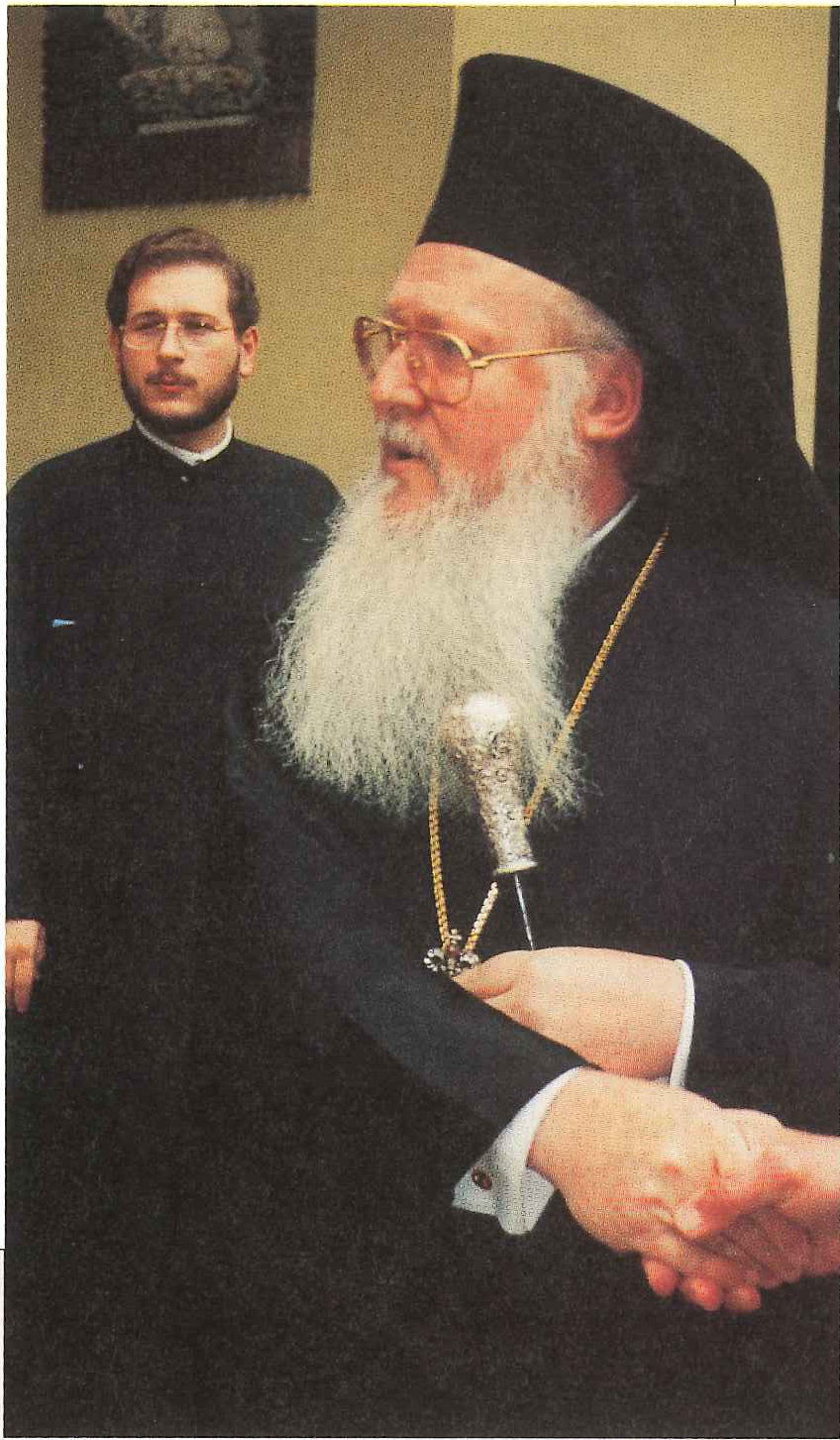
Right: Ecumenical Patriarch Bartholomew. Below:
Patriarch Bartholomew I leads this revival as Archbishop of Constantinople, New Rome and Ecumenical Patriarch. Recently, on the island of Patmos in Greece, Patriarch Bartholomew brought together most of the fifteen Primates of the Orthodox Church, some of whom represented congregations from countries newly freed from communism and searching for new ideals.
Stark reminders of dissension have been seen in former Yugoslavia where Orthodox Serbs have been accused of using religious fervour to fight, rape, and murder Catholic Croats and Slavic Muslims. The dark cavern of Europe’s nast, like a dormant volcano, erupts to haunt the dream of democracy, harmony and a united Europe. But Patriarch Bartholomew claims only to be a “first among equals.” The Patriarch has visited Pope John Paul in Rome as a sign of the broadening ecumenical vision of Christianity, and has followed the example of Pope John Paul in travelling, speaking out, and raising the profile of his faith. With only about 2000 faithful left in Istanbul, Bartholomew seeks a wider congregation.
The Turkish government is concerned that the Patriarch’s initiatives might impinge on Turkey’s relations with Greece. The powerful Greek-American lobby concerns Turkish officials who see the Orthodox Church as a potential wedge that will open the locked, symbolic, gate in the ecumenical Patriarch’s courtyard.
The government places high emphasis on the fact that Turkey is secular, albeit with a Moslem majority and tiny Jewish and Christian minorities. Turkish angst over religion was heightened in March 1994 when United States President Bill Clinton suggested that Turkey take certain symbolic steps to improve relations with Greece by involving Patriarch Bartholomew. The suggestion raised the hackles of Turkish authorities because it related to the status of Bartholomew in Istanbul (the Treaty of Lausanne, signed in 1923, permitted the ecumenical Patriarch to remain in Istanbul as long as his activities were purely religious and related exclusively to the Greek Orthodox minority in Turkey).
The Turkish government points out that it once abolished the Islamic Caliphate, and cannot contemplate the establishment of an equivalent to Vatican City in Istanbul. Also, the Turks believe that the Greek government will use Orthodox expansion to further Greece’s influence over Turkey. There is even the suggestion that the three million Americans of Greek origin, who severed their ties with the Greek Church in 1930 to join the Patriarchate of Istanbul, will adversely affect Turkish sovereignty.
There are no easy answers, particularly when religion is involved with secular government. But answers must be found both to diffuse the animosity between Greece and Turkey, and to strengthen democracy. Greece is better known to Canadians, it seems, than is Turkey, and no decline in affection for Greece must ever be considered as increased interest in Turkey is encouraged. The resolution of the Cyprus question, so visceral and complex, could help replace recidivist instincts with democratic solutions agreeable to both Turkey and Greece.
East Is East…or Is It?
Turkey stands in a strategic position, geopolitically, culturally, and religiously. It is a country reaching out to the west without deracinating its Asian origins. Turkey adds the vital dimension that might be called “the bridge” between east and west.
The recent dispute between Greece and Turkey over the islet of Simia reopened old territorial rivalries. Islands are controversial across the world so the tensions are not unique, but the Gulf War illustrated the tensions that also exist on Turkey’s eastern border. Turkey will defend its security, and the world must be vigilant in reminding Turkey of the importance of respect for human rights in the equation of self-defence. What must change is the deep-seated, anachronistic attitude that the Turks are, by nature, more brutal than most people. Europe’s acceptance of Turkey as a partner will go far to strengthen democracy in the world.
As a NATO ally, Turkey, like Greece, is seen as a friend in arms whose culture deserves much greater attention to obviate the old prejudices of Macbeth’s witches and the crusaders. The Turkish government is wisely encouraging tourism and cultural exchanges which permit individuals from other countries to see the country for themselves.
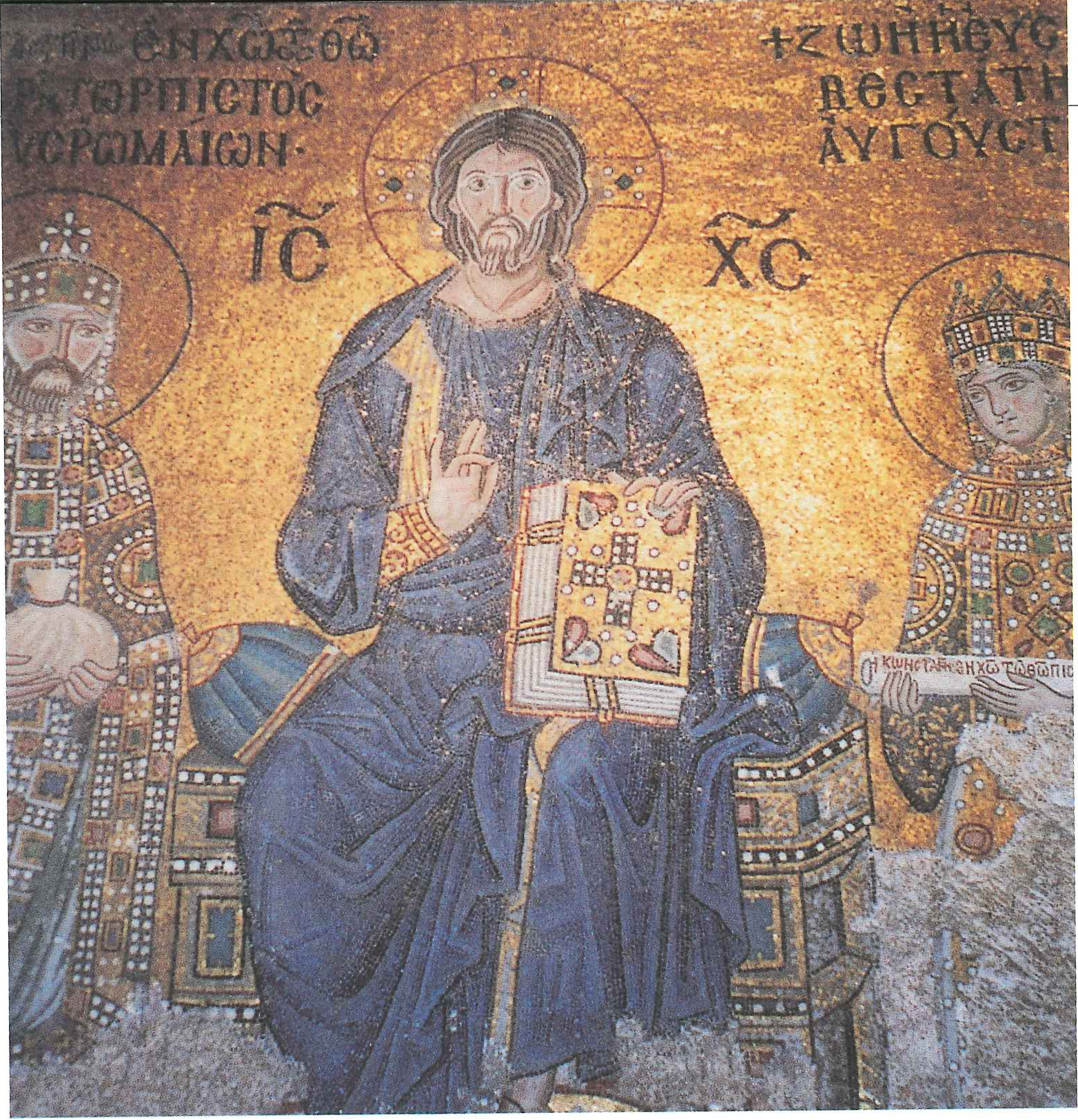
Turkey’s tourism industry is on the verge of a boom as westerners discover the ancient sites of Greek and Roman settlements, the battlegrounds of Alexander and Darius, and the modern coastal resorts on the Mediterranean and Aegean seas. New official interest in renovating and protecting the huge number of untouched and damaged historic sites is being shown. The once mutilated Christian symbols in the caves of Cappadocia, and the hidden images in the great churches of the Aya Sofya (Hagia Sophia) and Chora help to tie the history of western culture with modern Turkey through the history of hellenism and monotheism.
Turkey’s youth seeks places in western universities to expand their knowledge of languages and ideas. It is with them, as with youth elsewhere in the world, that the hopes of the future will replace the stupidities and prejudices of the past.
A major part of the soul of western culture rests in Turkey’s Anatolian soil. The ancient cities, monasteries, and settlements of antiquity — Ephesus, Antioch, Pergamon, Termessos, Aphrodisias, Alahan, and Troy — link modern Turkey with the cherished western history of ancient Greece, Macedon and Rome.
Canadians, perhaps more than any other people, are less likely to succumb to volatile behaviour over religion and culture. Our contribution to world peace, human rights, and economic welfare places us in a helpful position to reach out to Turkey as a profoundly interesting ally, partner, and democratic fellow traveller. The Europeans are ready to do the same. There are over 30,000 Canadians of Turkish origin who can help bridge the two countries personally and culturally.
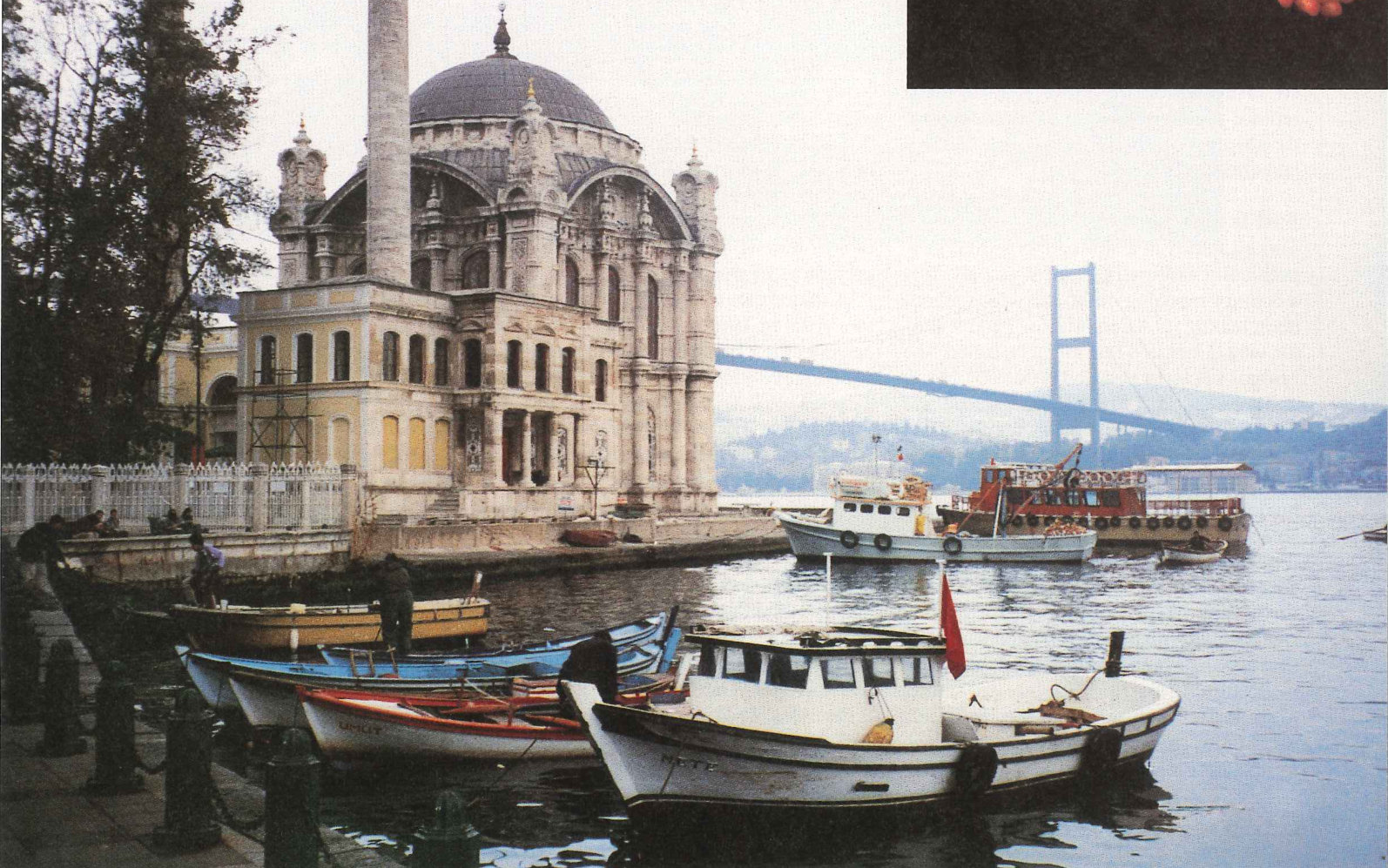
Meanwhile, in the shadow of the massive transcontinental Bosphorus bridge, in Istanbul’s Ortakoy district, a synagogue is being renovated with three spaces — one for Sephardim; one for Ashkenazim; and one for Oriental rites. A Christian church opens for prayers a stone’s throw from the neighbouring Mosque while ferries ply the harbour.
A street vendor sells the Turkish translation of Shakespeare’s sonnets, and a squad of heavily armed paramilitary police stands alert and ready beside their BMW motorcycles. I ask the commander what he is waiting for. In excellent English he replies, “Istanbul is a peaceful city,” he says, “we are just here to impress visitors like you.”
Turkey is worth knowing and understanding. Canada must encourage cultural, humanistic, educational, and tourism exchanges with Turkey. By doing so we will help enhance our political and business relations with a modern country, rich in ancient traditions, and proud of its capacity to join the new world.
View the original scanned pages →
Originally published in bout de papier, Vol. 13, No. 2 (1996) — Summer 1996 // Été 1996, pp. 12–16. Read the rest of this issue →



