
bout de papier, Vol. 11, No. 2 (1994) — Summer 1994 // Été 1994, pp. 36–39
The journey along the Trans-Siberian Railroad is the foremost train trip in the world.
David Edwards takes us aboard.
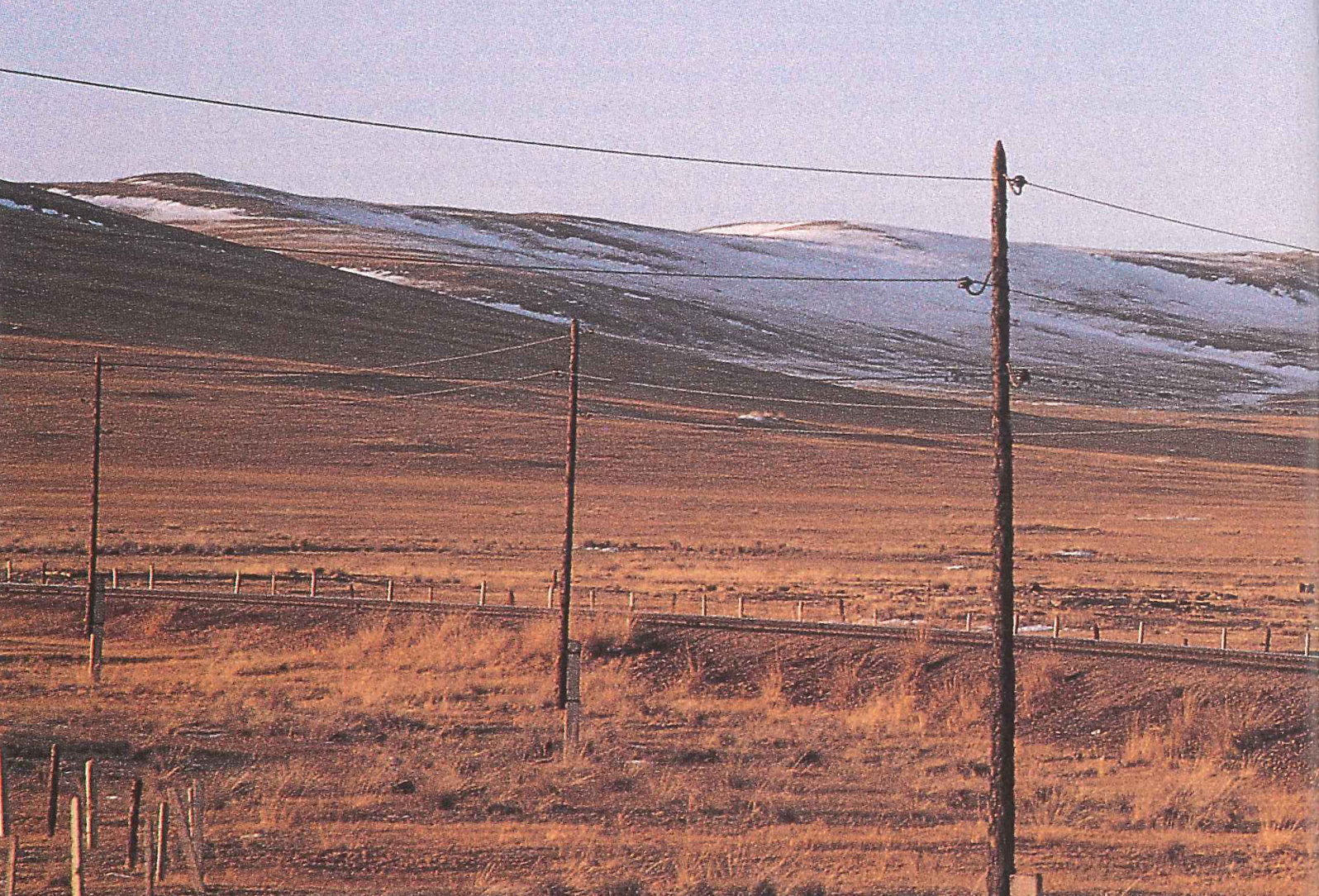
The journey along the Tra Trans-Siberian Railroad is the foremost train trip in the world. I had the great fortune to make the trip in December, and thus got to traverse Siberia in its most typical season.
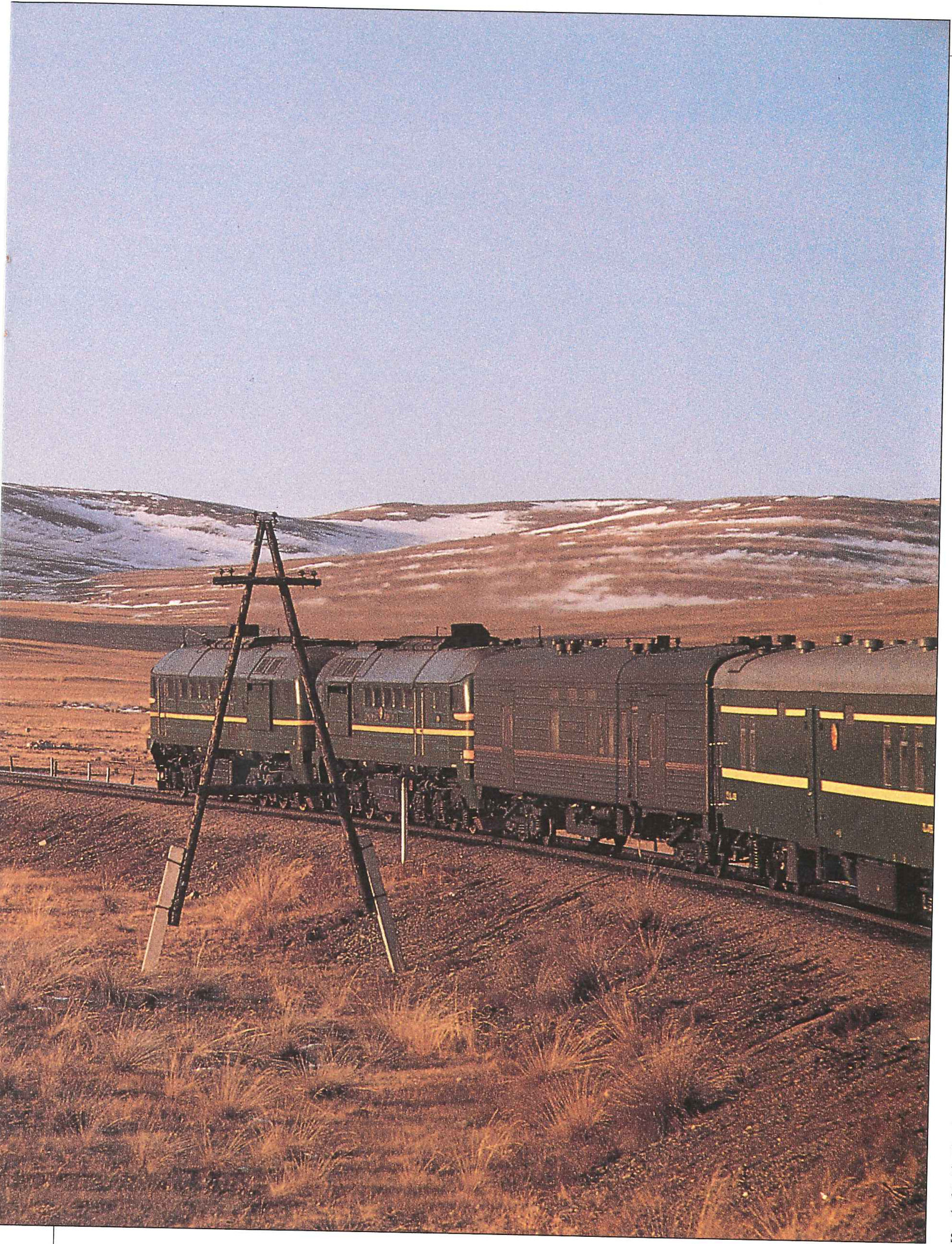
There are, in fact, three branches of the famous journey. The first goes from Moscow to Khabarovsk and on to Vladivostok and Nakhodka on the Pacific Ocean. The second breaks off at Ulan Ude, continuing through Mongolia to Beijing. The third goes to Beijing also, but through Harbin in Manchuria. I took the second route in reverse, sometimes referred to as the Trans- Mongolian which took six days from Beijing to Moscow.
The days prior to departure in Beijing had been spent buying food supplies and preparing for the journey ahead. My enthusiasm for the trip, though still high, was being replaced by foreboding with each unnerving update I received on how the journey had changed. Russia’s descent into economic and social chaos had made the journey more difficult and dangerous. Food on the Mongolian and Russian sections were described as inedible, unhygienic, and frequently unavailable at all. The trip was now a smugglers route; fellow passengers could be unruly and dangerous, with theft and occasional violence on the train a significant risk.
Yet as I boarded the train on a grey December morning at Beijing railway station, I was quickly reassured by the other passengers. I shared a compartment with a young British woman returning home after two years in Beijing, an elderly Ukrainian man and a middle aged Chinese-Ukrainian. The compartment itself was a little tight for four people, but otherwise reasonably comfortable. In our carriage were twelve other Westerners with the rest being Chinese and a smattering of Russians and Eastern Europeans. There were perhaps another fifteen international travellers in different parts of the train.
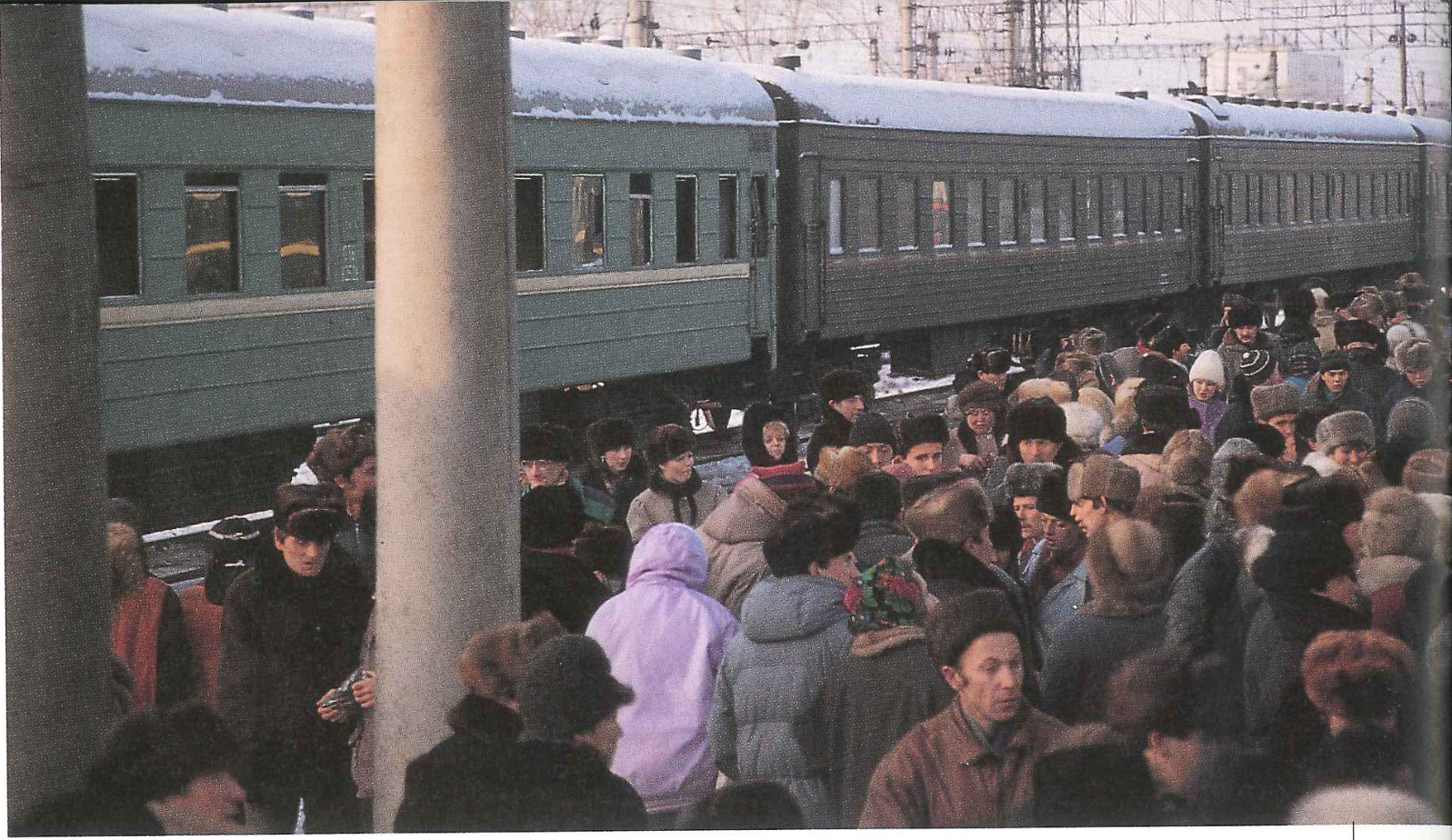
As we were boarding at the station, all of the Chinese and Russian passengers were loading enormous suitcases and bags onto the train. By the time we reached Moscow, their bags and suitcases would be almost empty. The majority of the passengers were on the train for business reasons, making their living by selling goods to the desperate population in Russia. It has radically altered the nature of the train trip. The train passes through once per week, and has become perhaps the foremost mobile shopping mall in Russia, a country of chronic shortages. Although many of the people on the platforms in Russia were there simply to buy the goods on sale, there were less salubrious types waiting to take advantage of the unwary.
The following incidents illustrate some of the problems that passengers faced on the journey. In Ulan Bator railway station, a Japanese traveller was set upon by thieves. He was kicked in the groin and had mace sprayed in his face. As he and his girlfriend screamed for help he was roughed up by the police and held in a room for a few minutes. Other travellers came to his assistance and helped him back on the train amidst chaos on the platform. As we went out on the railway platform in Ulan Ude for a ten minute walk, someone entered two of the cabins in our carriage. A camera, a walkman and three small backpacks were stolen. In Krasnoyarsk, a Chinese woman was punched and knocked down as a Russian stole her wares. There were at least three railway stops in Siberia where the mob scene was so severe that no passengers were able to descend. In Sverdlovsk we had mace sprayed at us by a man who tried to rush the cabin. On a couple of occasions burly and drunk Russians attempted to board our carriage which we had to physically block. A Dutch person was shot in the hand with a pellet gun as he was helping some of the Chinese traders. There were undoubtedly more incidents of which I was not aware. Recounting this litany of events makes the trip sound rather horrific. To be fair, the major risks were almost all outside the train, and only at some of the stops. Arriving at a station, the train was from three to seven hours late. The people on the platform, often numbering in the hundreds, or even thousands, had from four to twenty minutes to cut their deal with the traders on the train. In Siberia, especially in winter, the economic situation was clearly desperate. The scenes situation was clearly desperate. The scenes were frequently chaotic and out of control. Thieves within the crowd would attempt to take advantage of those who descended from the train. Those who stayed in their cabins did not have the same experiences. Moreover, the sense of shared threat solidified our cohesion as a group, and passengers were invariably willing to help each other if there were any difficulties.
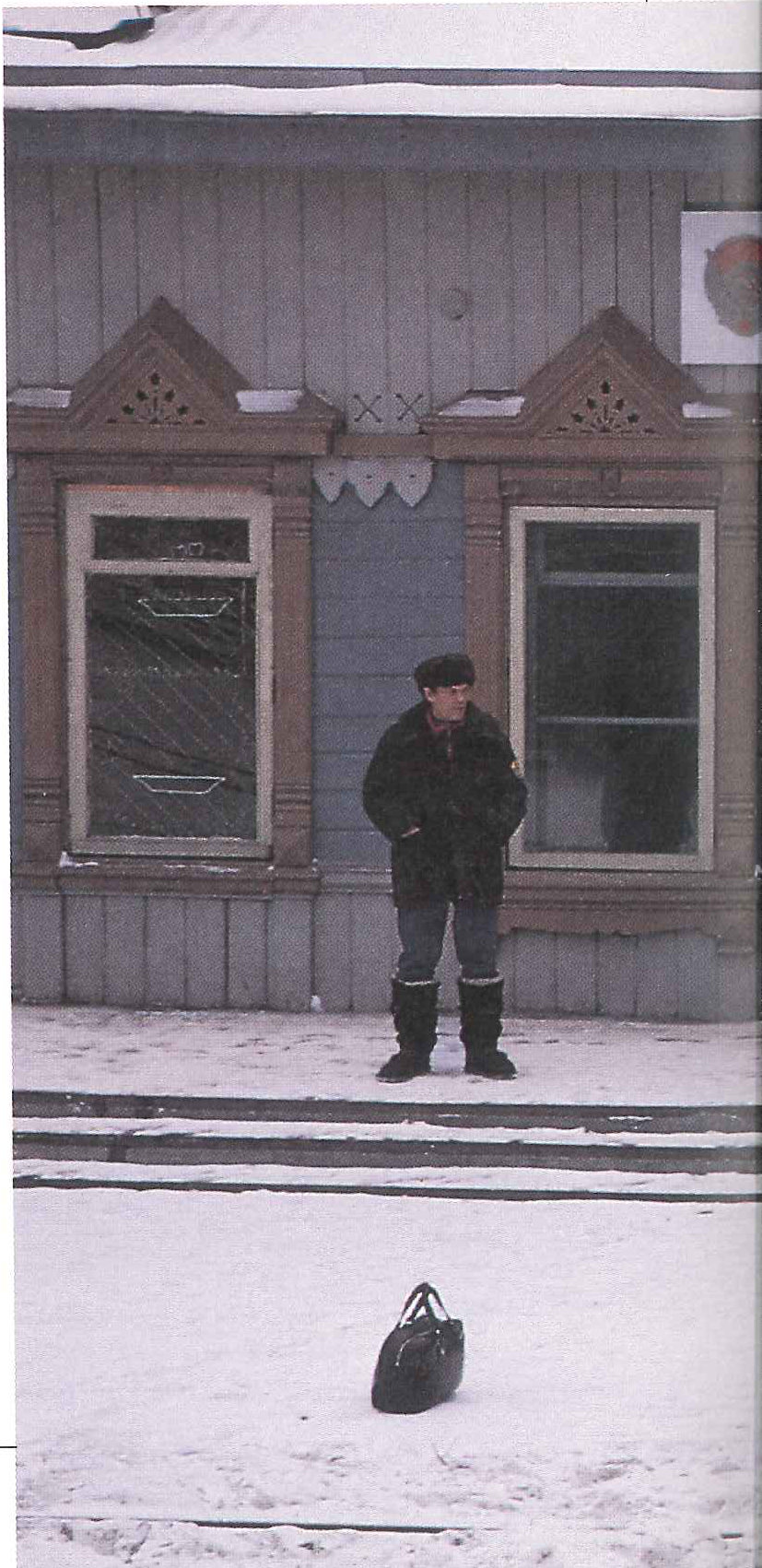
Since it was mid- December and we were going through Siberia, I was prepared for cold temperatures during the journey. I was slightly less prepared for it to be dark. As we were chasing the sun and shifting over one time zone per day, the days would be slightly longer than six hours followed by an eighteen hour night. At that latitude, in Siberia, the sun never climbs very high over the horizon before slipping back again into the long night. The outside temperatures were coldest at Erenhot, Ulan Bator and central Siberia, though no more fearsome than a cold snap during an Ottawa winter. I would estimate the coldest temperatures we experienced to be in the range of minus 25 degrees.
It is a cliché, but what made the journey so enjoyable were the fellow passengers. Boredom was never a factor. I brought along two novels and read perhaps fifty pages during the entire trip. Passengers formed instant friendships, learned about each others’ lives, shared meals, drinks and tales of travel together. We learned about the lives of some of the Chinese traders, Russian travellers, and others on the train. There was usually a cheerful party atmosphere and people constantly dropped into other cabins to chat, play games, or drink beer or tea. The train became a warm and comforting cocoon, with the passing scenery a backdrop to the often more interesting interactions on the train.
The first day of the train journey was spent in China. The dining car (which was changed in each country had reasonable and varied fare. As we continued past Datong and then north toward the Mongolian border at Erenhot, Northern China’s desiccated landscape looked even more desolate than normal in the grey haze of December and the weather grew colder. North from Datong toward the Mongolian border, the air cleared and blue sky appeared overhead. In the evening we arrived at the border station of Erenhot.
We had a long wait of several hours as the carriage wheels had to be adjusted due to the different railway gauges. We went to the bar for beer; others made last minute purchases of food and drink in the comparative plenty of China before crossing the border in to Mongolia. Pooling the residual Chinese money, we brought twelve cases of Chinese beer on to the train.
This was to see us most of the way to Moscow.
Erenhot was fiercely cold – perhaps minus 20 degrees with a strong and biting wind. We were at the two borders for about eight hours, far longer than scheduled and from that point to the end of our journey, the train ran several hours late. Through Mongolia. It was one of the major highlights of the trip. The high treeless plateau was almost unpopulated and the air was very clear and bracing. Occasionally one could see a few lonely yurts or Bactrian camels in the far horizon. A faint dusting of snow over the desert and grasslands gave it a magical appearance. There were a couple of stops where we were able to get out on the platform to the crisp bright air of Mongolia. The few small towns were simple frontier outposts. The dining car was basic — eggs, coffee and soup was all that was available. We entered Ulan Bator railway station late at night. It was the first of the “wild” stops we were to experience. Late that night we reached Mongolia’s northern border with Russia. Again, the process of crossing the borders took a few hours.
Once the border was crossed, and the Russian crew came on the train, the wheeling and dealing began in earnest. Virtually all the crew and some of the Russian passengers were changing money, trying to sell military watches and now unwanted Communist memorabilia at fire sale prices and offering to buy anything we wanted to sell. The collapse of the value of the rouble (it was 400 to the dollar at the beginning of the trip and 450 by the end) made prices in Russia ludicrously cheap. At each of the stops, and even on the train the traders sold items such as gloves, jackets, shoes, sweaters, and tote bags. As we continued into Siberia, Russian ladies would walk up and down the carriages, with one or two male escorts, offering their services to prospective clients.
The Russian menu in the dining car was an impressive sixteen pages with such delicacies as caviar and Baikal sturgeon. Of the perhaps one hundred items on the menu there were only about a dozen with a price tag next to them and only a few that were available — eggs, thin sliced sausage, runny soup and stale bread, potatoes and some tough stroganoff, and limitless quantities of vodka. That was it. Fortunately most of the passengers had also brought some food supplies which we shared together.
Smoking was forbidden in the compartments on the train, but since the vast majority of the passengers were either Chinese or Russians, this regulation was, of course, completely ignored. Once inside Russia, vodka was the drink of choice, and Plains, trains and czars — the story of the Trans-Sil easily affordable at one dollar for a bottle. Some Russians consumed vodka in prodigious and almost unbelievable quantities. It was not unusual to see three Russians in the dining car working on their fourth or even fifth bottle. Their objective seemed to get not merely drunk, but to become totally bliterated until they passed out and had to e dragged back unconscious to their cabin
On the third day we reached Ulan Ude junction at which point the Trans-Mongolian joins the Trans-Siberian route from s-Siberian Khabarovsk. That afternoon we went along the shores of Lake Baikal, a large and beautiful lake with a backdrop of mountains at the far shore, and not yet frozen despite the cold because of its extreme depth. The combination of clear crisp air, a moderate blanket of snow, and the quaint wooden villages and horse drawn carriages gave much of central Siberia the romantic atmosphere reminiscent of Dr. Zhivago.
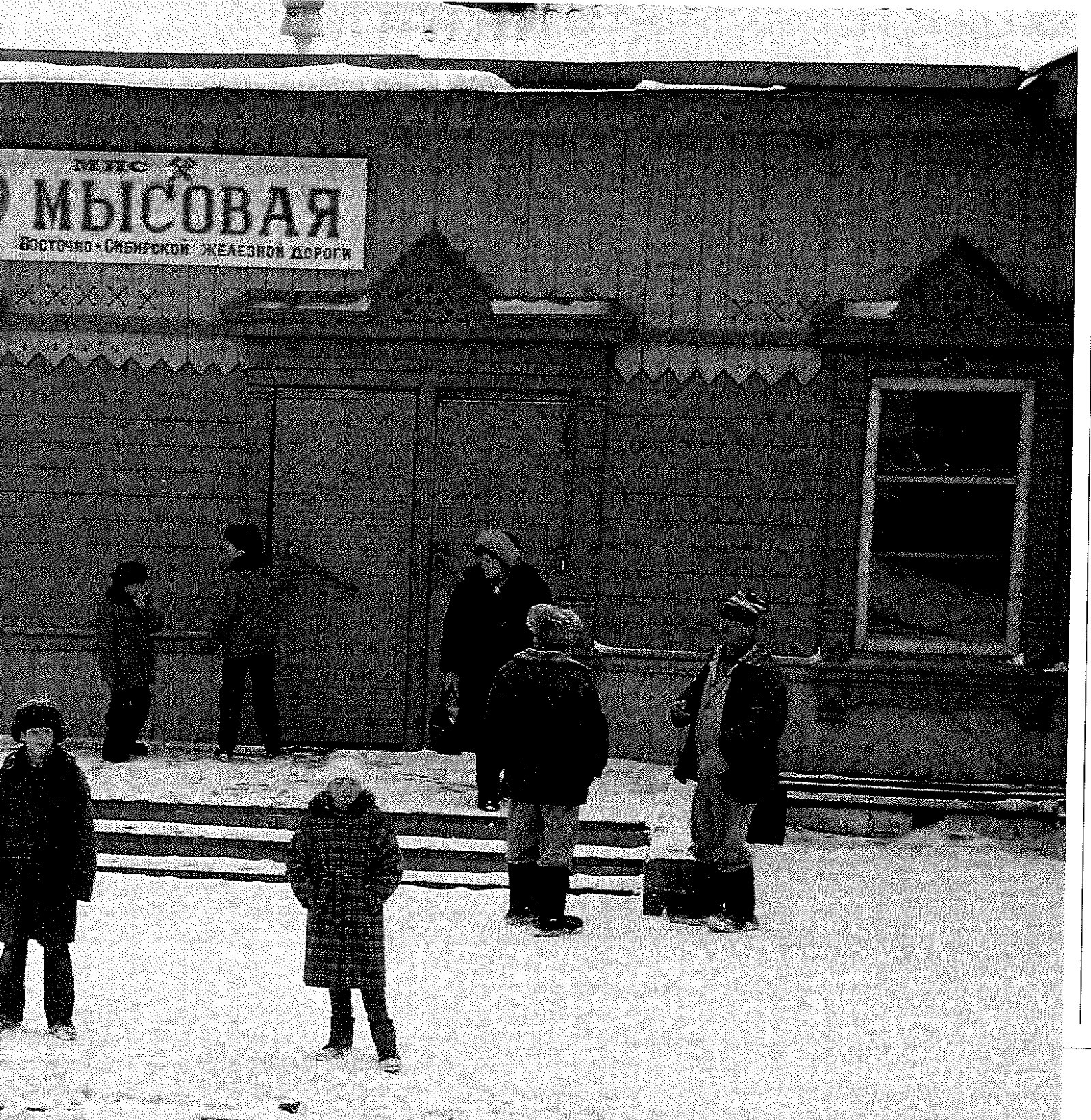
Urban Siberia was far less romantic. The cities were gray, industrial and drab. In these central Siberian towns, particularly between Krasnoyarsk and Sverdloysk, that the atmosphere on the platforms was most chaotic. We went out on the platforms in groups aware that we were literally surrounded by thieves, thugs and pickpockets. We would post people to stay inside and guard the cabins as others would get out to stretch and walk around. Fistfights broke out at a couple of stops, and police could occasionally be seen flailing away at people with their batons.
Beyond Baikal and Irkutsk, the major areas of topographical interest were behind us. Yet the almost unchanging scene of Siberia had its own hypnotic charm — an endless expanse of scrub, taiga, birch trees and open fields as the hours and days passed by.
On the fifth day in the early evening we passed the small obelisk at the point in the Ural mountains marking the separation of Asia from Europe. The Urals were nondescript gentle hills rather than mountains in the area that we passed. The severe cold softened as we entered European Russia, and the beautiful coloured domes of the Orthodox churches enlivened the otherwise drab cities. We had been rather hardened by the wild scenes and experiences in Siberia and found the last stops as we neared Moscow reassuring, civilized and tranquil in comparison. The stations were uncrowded and snow fell gently with the temperatures just below freezing.
On the last day a number of us began to wax philosophically about the journey. Surprisingly, no one was particularly anxious to leave. We savoured the last hours on the train, talking about the experience and exchanging addresses. We had gone almost one third of the way around the world when we pulled into Moscow’s Yaroslavl railway station at 21h30, almost six hours behind schedule.
View the original scanned pages →
Originally published in bout de papier, Vol. 11, No. 2 (1994) — Summer 1994 // Été 1994, pp. 36–39. Read the rest of this issue →



