
Lester B. Pearson
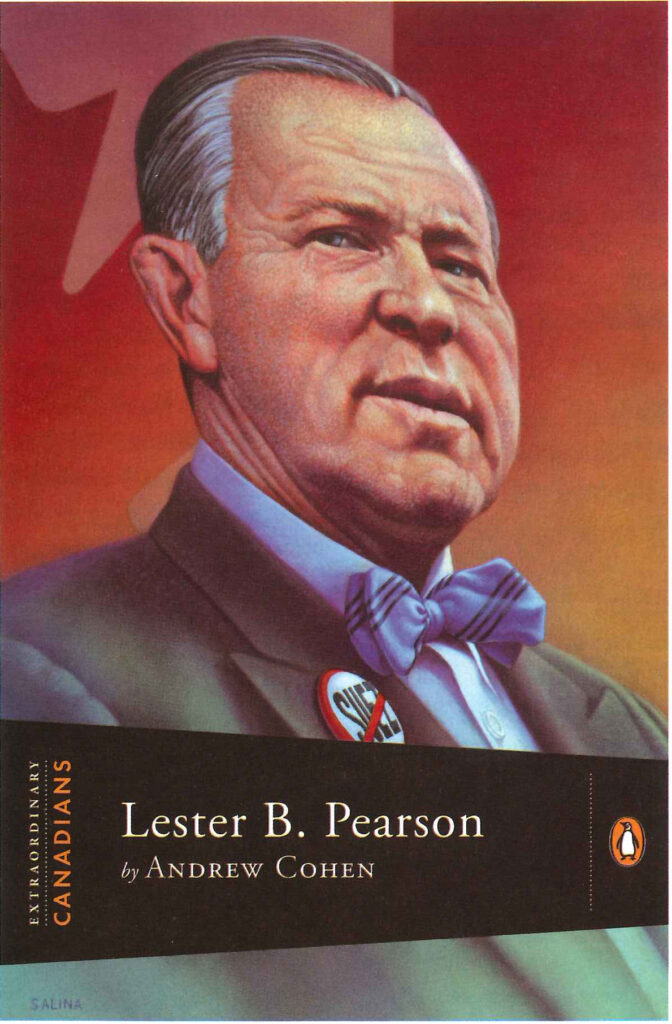
In the spring of 1947, the year after Mike Pearson returned from his glorious American summer, he turned 50. There is no suggestion that he suffered a mid-life crisis — if such an
Editorial // Éditorial
We are all delighted that our two colleagues, Louis Guay and Robert Fowler, have been released by their kidnappers and have now returned home to Canada to be with their families, friends and colleagues. Their kidnapping last year, while on a UN…
An Unhealthy Place to Work?

Readers of bout de papier, particularly those now regarding a snow-swept landscape from a cubicle in Fort Pearson, may not be surprised to learn that a distinguished Canadian diplomat once declined a very senior appointment in the Department of External Affairs on…
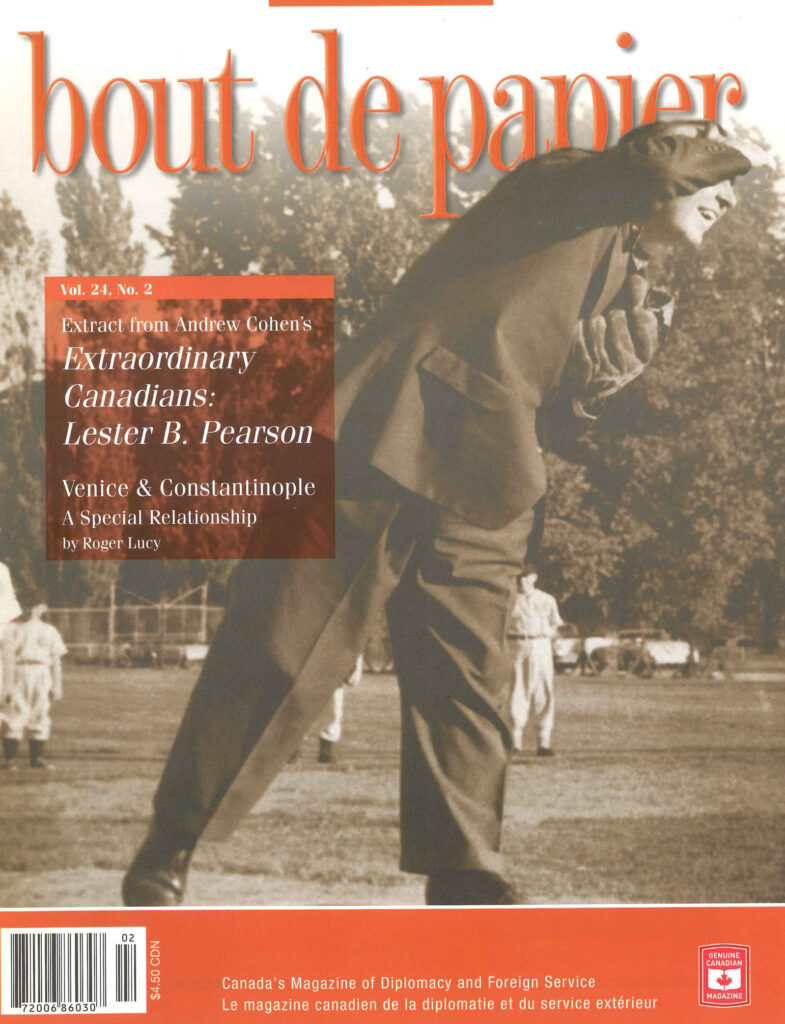
Relief (Pitcher) in Hyannis Port

There was a new prime minister in Canada, who had promised decisive action (“Sixty Days of Decision”) on a wide range of issues, including relations with the United States, which had deteriorated under his predecessor. The American president, who had been narrowly…
Pearson’s Prize: Canada and the Suez Crisis

Over the last few years, it has become almost de rigueur for world weary policymakers and hip international analysts to dismiss Pearsonian peacekeeping as quaintly old-fashioned. In the post-Cold War, post-9/11 world, peacekeeping has been replaced by peace building and peace enforcement…
Party Lines from Moscow

“I was sent there as an insult — not just to deliver an insult, a mission for a more senior diplomat, but to be one,” John Holmes later recalled of his posting to Moscow as Chargé d’Affaires in 1947. In the wake…
From Nihon to Nasser: Herbert Norman’s Diplomacy During the Suez Crisis

FROM TOKYO TO CAIRO Much has been written about Herbert Norman in the context of his contributions to our understanding of Japanese history and the extended anti-Communist witch hunt in the United States that eventually caused him to take his own life.…
While Canada Slept: How We Lost Our Place in the World

In this issue bout de papier presents two viewpoints on Andrew Cohen’s discussion of the Foreign Service
Ormond Wilson Dier

On a cold grey January morning in 1949, my wife, Marcelle, and I had been waiting for many hours in the Mexico City railway station for the arrival of the train from Chicago, where Orme had been vice-consul. It was due in…
Why Not An Ideal Canadian Foreign Policy?

In an earlier issue of bout de papier (Vol. 18, No. 2), we reprinted one of a series of papers from a “Re-Examination of Canadian Foreign Policy” that was initiated at the request of the minister, Lester B. Pearson, and under the…
