
bout de papier, Vol. 27, No. 4 (2013) — Winter 2013–14 // Hiver 2013-2014, pp. 24–25
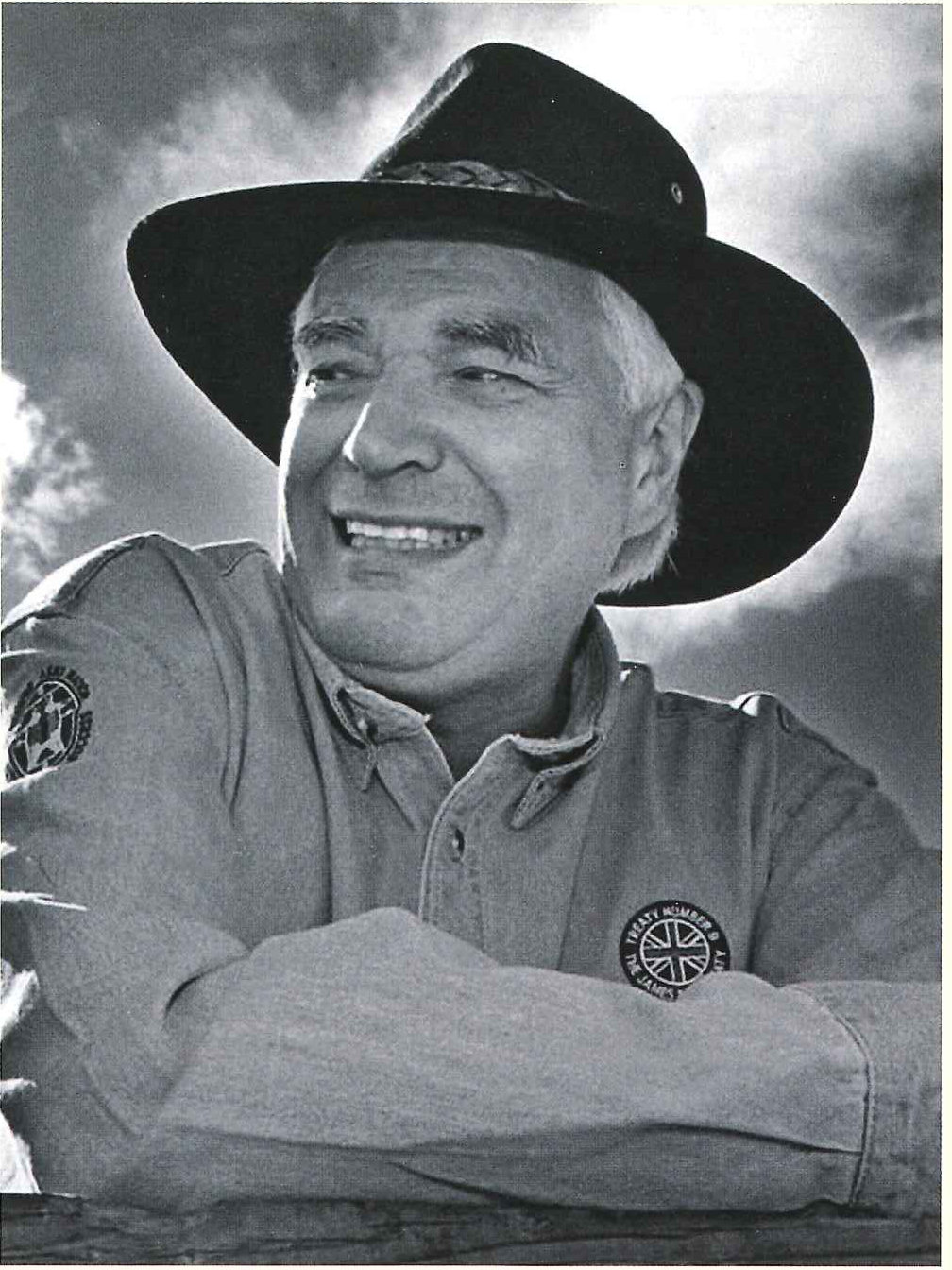
James Bartleman is a member of the Chippewas of Rama First Nation. A much-admired public servant, now retired, he was aptly described by the Globe and Mail as one of Canada’s “most distinguished elders.”
Following graduation from the University of Western Ontario, he served thirty five years with Foreign Affairs and worked closely with the country’s top leaders. He was later appointed Lieutenant Governor of Ontario from 2002 to 2007, is an Officer of the Order of Canada and an Officer of the Order of Ontario, as well as a recipient of the Aboriginal Achievement Award. He has been awarded 14 honourary doctorates, the latest from Carleton University in Ottawa. That might be enough for some, but “Jim” Bartleman is also the author of six books, the latest of which is The Redemption of Oscar Wolf, an excerpt in” with the larger Canadian from which follows. leads to a career in the coun
The theme for his acceptance speech at matic service but hopes raised s Carleton University speaks volumes about Bartleman notes that even Jim Bartleman’s vision and mission — Canada children on reserves ci “Aboriginal Canadians: The struggle to be receive between 50 and 80 pei seen as human”. As he explained to bout, support that non-native child his books were written for social causes. for education and child well Redemption is no exception. Wolf, it seems, has no mono,
Set in the period prior to and following need for redemption; the k World War II, Oscar suffers frustration, whether redemption is to be : the sense of injustice and the humiliation fitting in or in the fight for fi that prompt a horrible act — an act that social change in Canada. leads to his need to redeem himself, to “fit
Thinking about Victoria, BC & Vancouver Island?
Numerous satisfied Foreign Service clients… in” with the larger Canadian society. It leads to a career in the country’s diplomatic service but hopes raised soon wither. Bartleman notes that even in today’s Canada children on reserves can expect to receive between 50 and 80 per cent of the support that non-native children receive for education and child welfare. Oscar Wolf, it seems, has no monopoly on the need for redemption; the key issue is whether redemption is to be achieved by fitting in or in the fight for fundamental social change in Canada.
Excerpted from The Redemption of Oscar Wolf 2013 by Ja All rights reserved. Published by Dundurn Press (dundurn.co
Oscar Wolf Extract
The boys were horsing around, playing marbles and kicking around a soccer ball, but they would not invite Oscar to join in. He would go inside and ask the teacher if he could attend classes for the rest of the term. The teacher would say yes, as he always did when Oscar appeared at his door at this time of year. He seemed to like Oscar, but, with a mocking smile never called him by his name, always addressing him as Chief. The kids called him Chief, as well, but never with a smile. To them, he was the outsider, even if most of them treated him with good-natured tolerance. Several others, big raw-boned members of an old pioneer family, however, called him a dirty Indian and had been bullying him for years. Once when he was a seven-year-old in grade two and fought back, they had ganged up on him, threw him to the ground, and pushed his face into the dirt.
“Say ‘I’m a dirty Indian,” they said, “and we’ll let you go.” But Oscar refused to give in, and his tormentors yanked him to his feet, and two of them held his arms, a third pulled down his pants to show off his underwear.
“Wanna see this Redskin’s dick?” the older of the two asked the kids who had gathered around.
“I would,” Gloria Sunderland, the butcher-shop owner’s daughter said with a smirk. And after the big boys pulled down his underwear, Oscar ran back to the shack at the Indian Camp in tears to tell his grandfather what had happened. He expected Jacob would immediately go up to school to tell those kids never to touch his grandson again or he would teach them a lesson they would never forget. And if their fathers got mad and came down to the Indian Camp to complain, his grandfather would pull their pants down to let them know how his grandson had felt when their sons had done that to them. After all, Jacob had killed Germans with his bare hands and was a war hero and had the medals to prove it. Dealing with the fathers of a couple of bullies in Port Carling shouldn’t be all that hard.
But his grandfather took him by the hand and led him to the shore and sat down with him on a piece of driftwood. “I have seen and learned a lot of things in my life,” he said. “To avoid torturing and poisoning myself with feelings of hatred, I banished from my heart the bitterness I once felt toward the people who expelled my people from Obagawanung. I discovered that the best way Indians can survive in the world of the white man is to fit in and wait for better days. I sent your mother to residential school so she would learn to fit in; I joined the army and fought the white man’s war so I would fit in; and to fit in today, I smile and say nothing when youngsters half my age call me Chief at the guest house. That’s why I think you should say nothing when the white children give you a hard time at school. Just remember: keep your heart free from anger, fit in, and wait for a better day and all will be well.”
Oscar would never forget his grandfather’s words, but as he grew older and listened to Old Mary’s stories about the deeds of the ancestors in past wars, and to veterans talking in the evenings around the campfires at the Indian Camp about their exploits in the Th Great War, he grew more and Redemption af more ashamed of his grand- Oscar Wolf father for not coming to his A NOVEL. defence. If his father were alive, Oscar was sure that he wouldn’t have let anyone push his son around. And he vowed to get even, not just with the two white boys and Gloria Sunderland, but with everyone in the village, no matter how long it took.
View the original scanned pages →
Originally published in bout de papier, Vol. 27, No. 4 (2013) — Winter 2013–14 // Hiver 2013-2014, pp. 24–25. Read the rest of this issue →



