
bout de papier, Vol. 23, No. 1 (2007) — Spring/Summer 2007 // Printemps/Été 2007, pp. 18–21
To the World’s Only Superpower, Iran is a “rogue state,” a threat to world peace and security. Ironically, 2500 years ago, when Iran was the World’s Only Superpower, it had its own problems with rogue states, in particular Athens and Sparta. How the Iranians tried to subdue and — when that failed — contain these rogue states is an interesting case study in the exercise of military, political and diplomatic options.
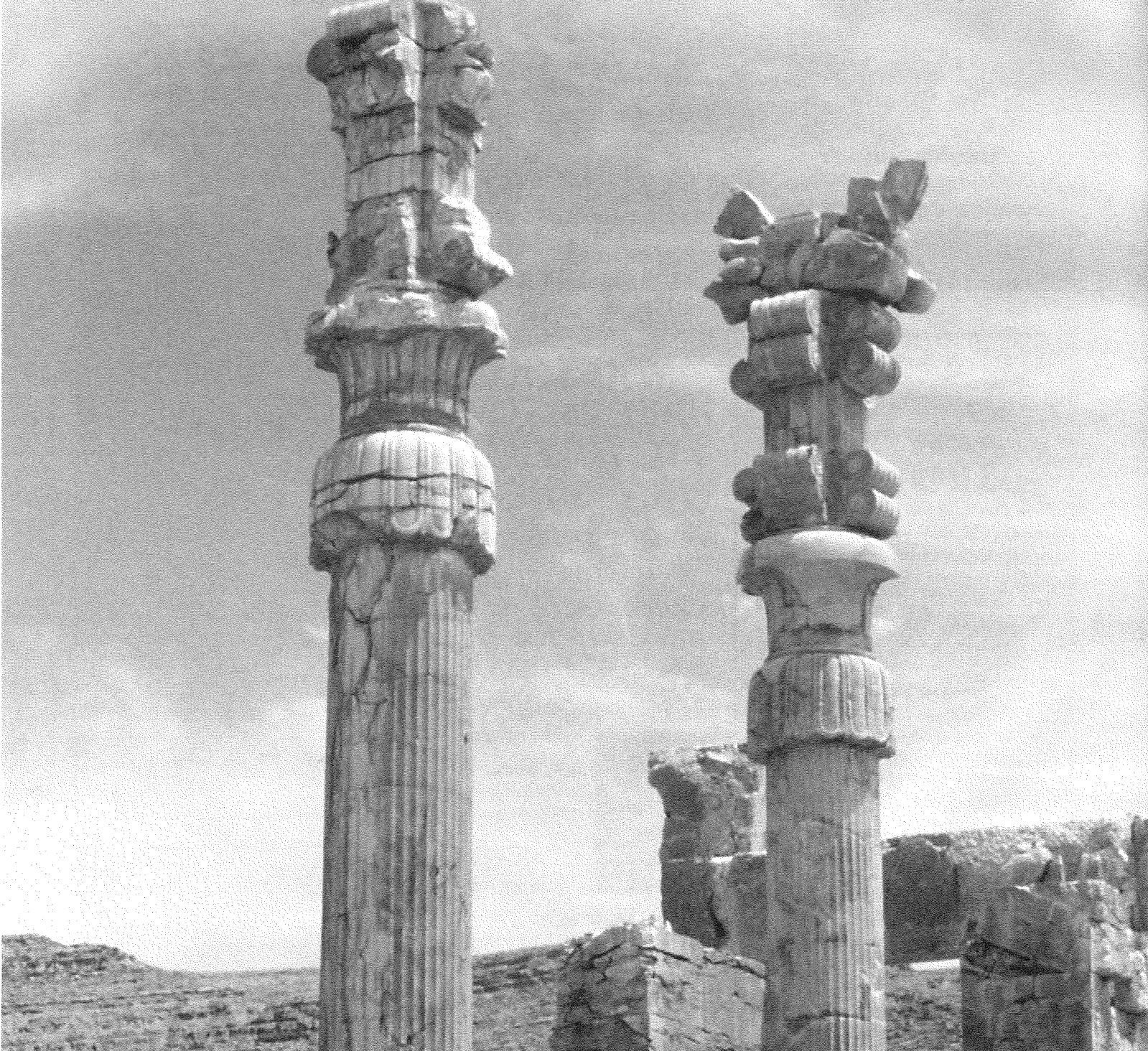
The Persian or Achaemenid empire was formed around 550 BC by Cyrus (Kurosh) of Anshan, who ruled a principality in what is now Fars province in Iran. From this small beginning, he formed the biggest empire the world had yet seen, by conquering, en bloc, the three biggest states in the Near East. First, he revolted against his overlord, the Median king, Astyages, and was able to take over the entire Median kingdom. This gave him control of the Iranian plateau and eastern Anatolia. Cyrus then turned his attention to the conquest of Lydia — which brought most of the rest of Anatolia under his power, including lonia, a number of Greek city-states along the Aegean coast of Asia Minor. In 539, he overthrew the Babylonian empire, which made Cyrus master of the entire Fertile Crescent from Gaza to the Persian Gulf. Cyrus did not rest there; he tried to bring under his control the nomadic Iranian tribes which then dominated the steppes of eastern Europe and central Asia. In 529, he fell in a battle against them, somewhere on the steppes between the Caspian and Aral Seas. His son and successor, Cambyses, found it more profitable to direct the Persian conquests to less war-like regions. He rapidly conquered Egypt, although his efforts to expand into what are now Libya and the Sudan met with failure. Atter a reign of seven years, Cambyses (who rightly or not has received very bad press) was assassinated in a palace coup. A period of instability followed, marked by civil war between rival claimants and uprisings among the subject peoples. The eventual victor, Darius (Daryawush), came from a junior branch of the royal Achaemenid house. He retroactively legitimized the coup and commemorated his triumph over his adversaries in monumental reliefs, characterizing them as a struggle of “the truth against the lie.”
Darius consolidated the frontiers of his empire, securing the wild highlands of Anatolia and the Caucasus and bringing many of the nomadic Iranian tribes, who had defied Cyrus, under – at least nominal – Persian suzerainty- He also extended his empire into what is now Pakistan, and across the Bosporus into the Balkans, making Thrace and Macedonia Persian vassals. However, his efforts in 512 to defeat the Scythians — Iranian nomads who then dominated the Black Sea steppes — met with near disaster. But, unlike Cyrus, he escaped with his life and with his army more or less intact. As well as rounding out the Persian Empire’s frontiers Darius reorganized its finances and administration. The Empire was divided into satrapies, placed under a reliable official (usually from his own Achaemenid clan or from one of the noble families which had supported his bid for power), with a garrison strong enough to repel small scale invasions or local uprisings. At the local level, indigenous populations were allowed to live as they had before, often under their own local rulers or oligarchies. Local languages, customs and religions were respected. The demands on the subject peoples were generally not onerous, the only expectations being that they pay the tribute levied on them, provide troops when required and, needless to say, remain loyal to the Great King. Overall, the system worked well enough most of the time, but it was a rather one-sided arrangement — the wealth from the provinces flowed into Persepolis but few benefits trickled the other way. Unlike the Roman Empire, which, over time, was able to evolve into what was in effect a nation state in which virtually all inhabitants, regardless of their origins, saw themselves as Romans, there was no real glue holding the Persian empire together. No attempt was made to enforce, or even encourage, Iranianization, and there was no concept of a common Iranian citizenship, nor any effort to put in place some sort of common ideology. As a result, especially whenever Persian power seemed to weaken or the Great King’s attention slacken, revolts would break out in the peripheral provinces (especially Egypt).
In 499, one such revolt broke out in Ionia. The lonians appealed for help from the European Greek states. Most of these had the good sense to stay out of it the Spartans would have intervened, but begged off when they learned that Persepolis lay two months’ march inland. The Athenians were less reticent and sent an expeditionary force. It was a little too successful. Sardis, the seat of the Satrap of Lydia, was sacked. The full might of Persian power now descended on lonia. By 494 the revolt was crushed, and Darius (who allegedly had never heard of the place before) vowed to punish Athens for assisting the rebels. The results are well known. In 492, the Persian fleet carrying a punitive expedition was wrecked off Mount Athos. In 490, another expeditionary force was defeated at Marathon.
Darius died in 485, before he could mount a new effort, and it was left to his son Xerxes (Khashayarsha) to finish the jolo. Xerxes first had to suppress revolts in Egypt and Mesopotamia, but in 480, after three years of preparations, he launched a massive attack on mainland Greece. While Greek claims that the Persian army mustered over two million men is a logistical and organizational impossibility, it was large enough that it could only be sustained by seaborne supplies, which included a vast bridge of boats across the Dardanelles. Sparta reluctantly agreed to join Athens to oppose the Persian onslaught, taking command of the land forces while Athens commanded the naval contingents. Most northern Greek states, however, prudently submitted to Persia, offering earth and water, the traditional Iranian token of submission. They were branded as “Mediazers” – the Greek equivalent of “Quisling” — by the Athenians and Spartans (who, when asked to offer earth and water, dropped the Persian emissaries down a well and tilled it in with dirt). To buy time to consolidate the Greek defences, the Spartans sent 300 of their best troops under King Leonides to hold the choke point at Thermopylae. It was a suicide mission, and they knew it, but the Spartans’ epic stand proved a nasty shock to Xerxes. His crack troops could not break through the Spartan line, until a collaborator showed the Persians a way around the pass.
The Greeks regrouped to hold the isthmus at Corinth- Athens was taken and destroyed, but its population was evacuated by sea, and at Salamis, the Athenian-led fleet decisively defeated the Persian navy. Without naval support, Xerxes could not maintain his huge army in mainland Greece and had to withdraw most of it, leaving behind a relatively small occupation force. This was destroyed by the Greeks at Platea in 479. The Greek victory was largely due to the tact that Greece is a rugged country with poor communications and few resources. As was said about Spain in the Napoleonic wars, large armies starved and small armies were defeated. The Greek forces were largely made up of hoplites, heavily armoured infantry, protected by large round shields and wielding long spears. Formed into a phalanx they were virtually unassailable except by similarly armed troops. The Persian army had only a relatively small core of professional troops, mostly archers, while its decisive arm, the cavalry, was almost useless in the hilly terrain of southern Greece. The Greek forces, united by a common tactical doctrine and a more or less common language, were much more homogenous than the Persians’ vast polyglot host. Similar command and control problems put the Persian fleet, drawn from around the eastern Mediterranean, at a disadvantage to the Greek fleet.
Marathon, Salamis and Platea have long been portrayed as victories of Western Civilization over Oriental Despotism. If the Greeks had lost, it is said, the basis for our whole intellectual and democratic tradition would have been lost as well. This is hype, but then virtually all our sources are Greek. Clearly a Persian victory would have been the ruin of Athens and Sparta. But Athens’ vaunted democracy bears even less resemblance to our own than that of the late German Democratic Republic. Supported by slave-run silver mines and contributions extorted from allies, Athens, with its very restricted franchise, Taliban-like treatment of women, and tendency to exile or poison awkward politicians or intellectuals, would have won no kudos from Amnesty International. As for Sparta — where a small hyper-militaristic elite, practising institutionalized paedophilia, was supported by a terrorized serf underclass — never have so many been oppressed by so few, for so little benefit to humanity. Greek civilization would have, and indeed in many places did, adjust to life under Persian hegemony. As noted, Persian rule was a very hands-off affair. Many eminent Greek writers and philosophers flourished in Persian-controlled regions and many fine works of art were created there. One of the reasons why Athens looms so large in our view of ancient Greek civilization is because in later times — due as much for Athenians’ commercial success as their intellectual attainments — Attic Greek became standard for “Greek as a second language.” As a consequence Athenian historical, philosophical and literary works were held up as stylistic models and were thus more likely to be preserved for posterity than those written in other Greek dialects.
After Platea, the Greeks formed an offensive alliance to carry the war into Persian territory. The Greek counter-attack soon drove the Persians out of their European footholds in Macedonia and Thrace. The lonian cities revolted again, and over the course of the next decade the Persians were driven back from the Aegean coast of Asia Minor. The Spartans were not interested in overseas entanglements and largely left the field open to Athens, bout de papier Vol. which soon turned the anti-Persian alliance, the Delian league, into a mini-empire whose contributions were as likely to go to the embellishment of Athens as into the war effort. City-states that balked at this were severely punished. In the 460s, the Athenians carried the war into southern Asia Minor and to Cyprus and soon after (during yet another revolt) into Egypt. Bit by bit, Persia was losing control of its Mediterranean coast, and with it, some two-thirds of its naval assets. The Greek mission had gone disastrously wrong and reappraisal was clearly needed.
The Athenians also had to reappraise their mission. The Empire struck back and the Egyptian adventure, after some initial successes, became a disaster. In 454, the Persians were able to crush the revolt, cutting off the Athenian expeditionary force. Over 200 ships and 20,000 men were lost. Persian agents began to stir up trouble in lonia, where many cities were finding the demands of their Athenian liberators excessively burdensome. Athens by now had preoccupations on the mainland as well. Like the Second World War alliance between the West and the Soviet Union, the Athenian/Spartan alliance could not long survive victory over their common foe. They soon fell out, with relations degenerating into a series of wars between two rival coalitions. It was in Athens’ as well as Persia’s interests to swallow their ideological pride and make peace.
We know little about the details of how this peace process was launched. It would seem that in 449, following Persian overtures, an Athenian delegation travelled to the Persian capital and negotiated the Peace of Callias (so-called after the head of the Athenian delegation). The terms seem generally favourable to Athens, although the Athenian Assembly clearly did not think so – Callias was censured and fined on his return. The autonomy of the lonian cites was recognized, and the Persians agreed not to send their forces closer than three days’ march (about 50 km) from the Aegean coast, nor to sail their ships beyond the southwest tip of Asia Minor. On their part, the Athenians agreed not to intervene again in Egypt or Cyprus. In sum, both sides accepted the limits of their power. The first phase of the Persian War was finally over, and the Greeks were now free to fight each other.
The Persians soon found ample opportunity to medale. As a mainly maritime power, Athens had great strategic reach, but limited ability to defend its land frontiers. Sparta, a land-based power, could strike deep into the heart of Athenian territory but was limited in its ability to damage the trade routes on which Athenian survival depended. Warfare was exceedingly expensive — Athens needed to hire mercenaries to bolster its land forces and land-locked Sparta somehow had to build a navy. (It cost about one tonne of silver per week to keep a fleet of 100 warships at sea.) What the Persians could not achieve by force of arms, they sought to buy with their well-stocked treasury. The Daric, the standard Persian gold coin, was liberally spread (and eagerly received) around the Greek world. Stamped with the symbol of the Great King firing a bow, it was colloquially called the “archer.” These golden “archers” were, over time, able to achieve what their flesh and blood equivalents could not. The Persians chose to back Sparta, although, initially, the competing interests of local satraps somewhat compromised their efforts. The Satrap of Lydia wanted Sparta to help him regain lonia. The Satrap of the Hellespont (the Asiatic coast of the Marmora Sea) wanted Sparta to break Athenian control over the Dardanelles and Bosporus — which were vital for Athens’ wheat imports from the north of the Black Sea. Initially Sparta chose the former course, until their admiral, Lysander, was persuaded by Cyrus the Younger — a son of King Darius Il, who put him in command over all Persian forces in Anatolia in 408 — to join forces to close the straits. The subsequent destruction of the Athenian navy at Aegospotami in 404 allowed Sparta to starve Athens into submission.
However, having defeated Athens, the Spartans then deemed the whole Athenian “empire” to be theirs by right of conquest. The Persians were further dismayed when in 401 after the death of his father, Cyrus hired 10,000 Spartan-led mercenaries and marched them east in hopes of seizing the throne from his brother Artaxerxes I! (Artakhshathra). Cyrus’ Spartans were victorious at Cunaxa in central Mesopotamia, but in the process Cyrus was killed. Artaxerxes demanded the surrender of the stranded Spartans. Instead they carved their way north, successively defeating every force that tried to oppose them — the main Persian army, the Kurds and the Armenians — before they reached the Greek colony of Trebizond on the Black Sea. The successful “march of the 10,000” was a major blow to Persian prestige.
Persia decided it was time to change sides and King Artaxerxes opened up the Persian treasury to restore Athenian power, financing the rebuilding of the Athenian fleet as well as supporting other opponents of Sparta. Again the results were too successful. While a coalition headed by Athens, Thebes, Corinth and Argos checked the Spartans on the Greek mainland, Athens used its revived naval power to restore its old Aegean hegemony, including lonia. Worse, the Athenians began to collaborate with a rebel king of Cyprus against his Persian overlords. Once again the Persians found their Greek clients were biting the hand that fed them.
Seeing it in Athens’ and Sparta’s mutual interest to halt Athenian expansion, Antalcidas, the Spartan admiral in the Dardanelles region, now approached the Persians with a cunning plan. After some initial misgivings, Artaxerxes was persuaded to shift his support back to Sparta. Persia and Sparta announced that, if Athens did not negotiate, their fleets would blockade the Dardanelles. Fearing another famine like that of 404, the Athenians caved, and with their withdrawal, the rest of the anti-Spartan coalition fell apart. In 387, Antalcidas and other Greek representatives were invited to a conference at Sardis where they received a diktat from Artaxerxes outlining the following terms of what came to be called the “King’s Peace.”
The king, Artaxerxes, deems it just that the cities in Asia, with the islands of Clazomenae and Cyprus, should belong to himself. The rest of the Greek cities he thinks it just to leave independent, both small and great, with the exception of Lemnos, Imbros, and Scyros, which three are to belong to Athens as in the past. Should any of the parties concerned not accept this peace, I, Artaxerxes, will wage war against them with those who share my views. This will I do by land and by sea, with ships and with money.
Not only did Artaxerxes thus regain lonia and Cyprus, but declaring that all Greek cities must be autonomous, he had broken up the nascent efforts by a number of Greek cities to form a political union with common citizenship. This reduced the Greek threat to Persian interests, but over time it increased Greek vulnerability to the incursion of other outside powers, in particular Macedon.
The King’s Peace itself did not last for long – it was left to Sparta to enforce its terms on the mainland, which it did with a characteristic lack of sensitivity and excess of zeal leading to yet another anti-Spartan coalition, and Sparta’s eventual defeat by Thebes. Nonetheless, as the first-ever external effort to impose a common peace on the Greeks, it provided the model for future imperial efforts by Macedon, and later, Rome.
While it took Persia almost a century to find a workable solution, the King’s Peace, combining Persian gold and Spartan muscle, finally restored Persian control over the Aegean coast of Asia Minor. Persia held on to lonia until 333, when the region was overrun by Alexander Ill of Macedon. Ironically, while Alexander dressed his invasion up as a pan-Hellenic crusade to avenge Darius’ and Xerxes’ invasions of Greece — 160 years earlier — more Greeks fought for Persia than for Alexander. Moreover, Athens and Sparta were both conspicuously absent from Alexander’s coalition. As far as Persia was concerned, the two rogue states had been neutralized. The application of brute military force had signally failed, but in the end a patient, flexible and very well-funded diplomatic effort had succeeded.
View the original scanned pages →
Originally published in bout de papier, Vol. 23, No. 1 (2007) — Spring/Summer 2007 // Printemps/Été 2007, pp. 18–21. Read the rest of this issue →



