
bout de papier, Vol. 30, No. 4 (2019), p. 38
BY D’ARCY JENISH
DOUBLEDAY CANADA, 2018
368 pp, $31.50
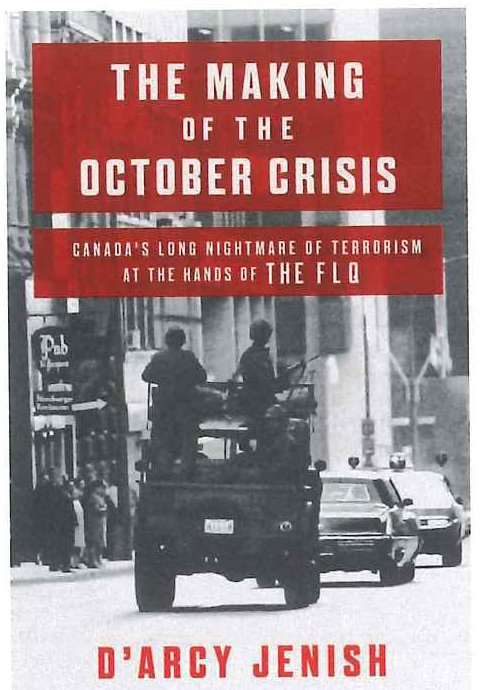
JENISH HAS WRITTEN A VERY READABLE popular history of the October Crisis. He approaches the story from a human interest angle, with stories of many of the protagonists, great and small, detailing what happened to them and how events impacted on them.
A positive element of the book is that Jenish starts with a background of what led to the events. He does not limit his focus just to the narrow October Crisis but begins his historical run up to the events of October by recounting the bombing and propaganda campaign which began early in the 1960s. He touches lightly on the various ideological positions as Quebec society emerged from the Quiet Revolution with some elements seeking a more revolutionary path.
For the reader interested in the human dimension of events, this book is clearly of interest. Jenish succeeds in providing dynamic insights into the actors on both sides of the story. For readers seeking understanding and insights into the various political forces at play, this book falls short by providing limited analysis of events, little in-depth exploration of the existing circumstances, and few details on the dynamics driving or influencing a perilous and rather unusual moment in Canadian history.
This is a descriptive story of events from the perspective of participants and provides a genuine feel for the motivation and emotions of some of those affected by or perpetrating the events. But the book does not provide an interpretation of the history of those dangerous days. There is no exploration of what makes all the protagonists tick.
There is no evidence that Jenish consulted government files relevant to the events, whether at the local, provincial or federal level. He has clearly used the many memoirs of the story’s central characters which emerged in the years following the October crisis. His primary resource for the book has been the public record as provided by the media. This he has augmented with interviews conducted with some of the key police figures involved as well as with some politicians. But no interviews were carried out with any of the felquistes who drove the historical events. This is a shortcoming. Views of these key actors from the perspective of time would have added a very important dimension to the book.
The book should not be dismissed by those more used to reading detailed analyses of events. The book seeks to capture details of some of the historical voices which are often muted in the heavier tomes on important historical events. Of particular interest is the story of Robert Côté, of the Montreal police bomb squad, who is a regular participant in the unfolding events.
While the approach which Jenish has employed provides only a single dimensional insight into a complex story, the book offers a good portrait of the October Crisis from a perspective seldom available.
Originally published in bout de papier, Vol. 30, No. 4 (2019), p. 38. Read the rest of this issue →


