
bout de papier, Vol. 15, No. 2 (1998) — Summer 1998 // Été 1998, pp. 10–14
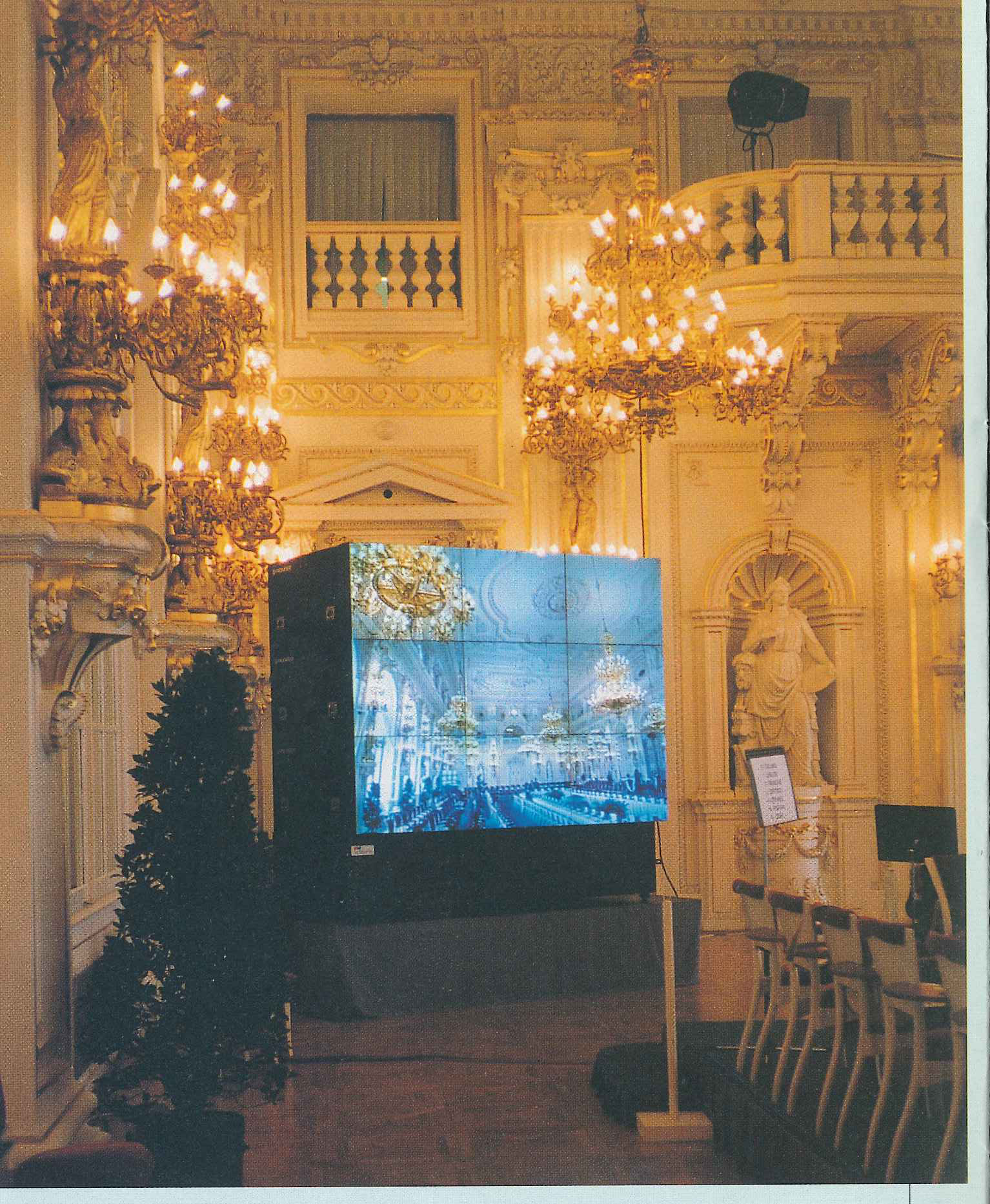
It was a warm and sultry evening in Prague as I ran across the flag-stones and through the inner courtyards of the Castle. I was late for what was going to be one of Vaclav Havel’s most interesting forays into what could only be described as transcendental diplomacy. He had decided to invite the greatest minds of the age to Prague to discuss nothing less than the fate of the Earth. This was to be a major Havelian happening, and I was late.
The opening ceremony was taking place in Vladislav Hall inside the Royal Palace. This vast hall rose into vaulted gothic arches unchanged from the days when knights attended assemblies here by riding into the hall on horseback. This was the same hall where Bohemian kings were traditionally crowned, and where Havel had first been installed as President of Czechoslovakia on December 29, 1989. How much had happened in the years since, not least the disappearance of Czechoslovakia.
Now, as I showed my pass to the palace guards and was ushered into the waiting assembly, I could not help reflecting on my luck: not only to have lived through a revolution, but to be present at what would be Havel’s attempt to sow the seeds of a new, global revolution. But before a minute had passed inside Vladislav Hall, heralds and coronets trumpeted the arrival of the President and there was an expectant hush in the crowd. Havel entered from a side door and strolled down the centre aisle. He looked very serious and very Presidential. As he passed by, somehow I could not summon up the requisite amount of deference. I still remembered our talks in his apartment, glasses of Jack Daniels in front of us, and Havel crawling under his desk, looking for a cigarette.
Havel was followed into the hall by Elie Wiesel and a procession of the great and the good. Over the next few days, Havel and Wiesel (a winner of the Nobel Peace Prize) would co-chair “Forum 2000”. This Forum, a global version of Havel’s 1989 Civic Forum, was made up of Nobel Prize winners and well-known thinkers, writers, scientists, politicians, religious leaders and artists. The opening ceremony in Vladislav Hall was replete with solemn statements from Havel and Wiesel and music by Czech composers, including an ethereal performance by the Prague Children’s Choir. But the highlight for me was the end. After Havel walked back out of the hall, the participants in the Forum followed. That was when I saw the Dalai Lama, dressed in a saffron robe and sandals. He was walking down the aisle with this fantastic smile on his face, looking at everybody as he went by. It was both child-like and infectious. You couldn’t help smiling back. He had written somewhere about the importance of smiling as crucial to instilling peace of mind. Then suddenly he seemed to be looking for someone: he turned around and, seeing Shimon Peres, went over to him to take his hand. Peres and the Dalai Lama walked up the aisle, hand in hand, smiling all the way, to the delight of the crowd.
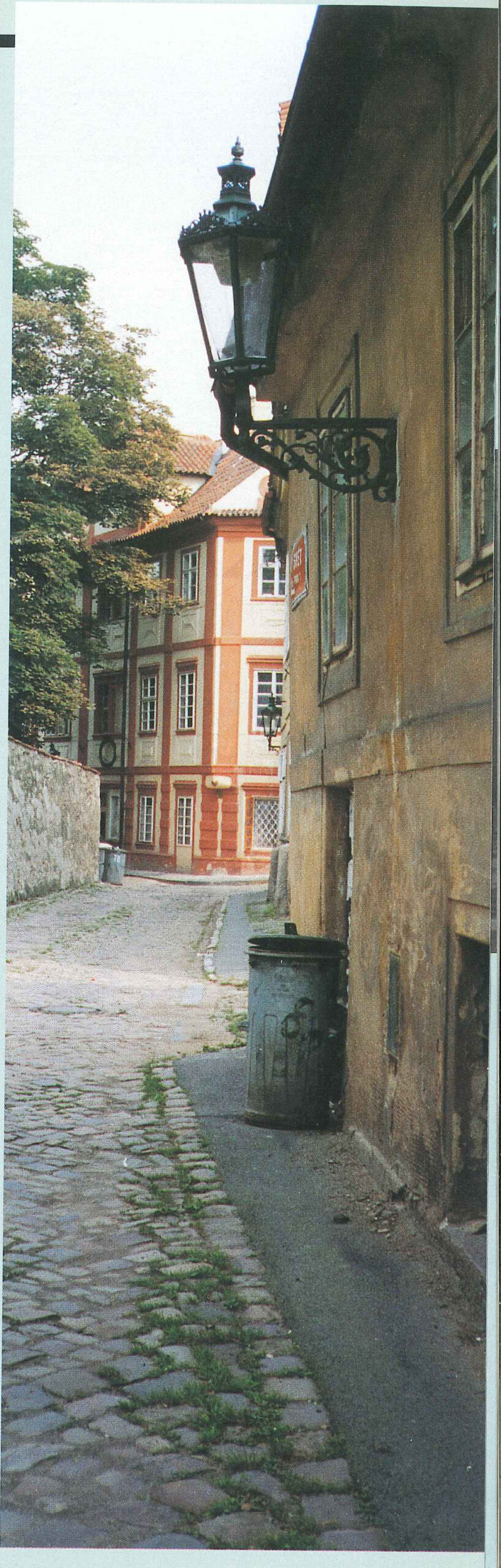
The next morning, Havel convened Forum 2000 in another of the Castle’s spectacular halls, a gold-and-white baroque fantasy called the Spanish Hall. On just one stretch of the round table in the centre was Helmut Schmidt, Shimon Peres, Jordan’s Crown Prince Talal, the Dalai Lama, and Bosnia’s Haris Silajdzic. In fact the whole table was crowded with well-known figures from all walks of life.
A number of themes emerged during the following three days of debate, all of which reflected a profound preoccupation with “globalisation and its discontents”. But there was also time for a little intellectual tourism. During one of the evening events, a concert of avant-garde Czech theatre and music, I chatted at length with Thor Heyerdahl. I had read “Kon Tiki” as a young lad, and Heyerdahl remained for me one of the great adventurers of the 20th century. He was ancient now, but still full of his own iconoclastic theories, including one about the migration of oceanic peoples from the Pacific Islands to the West Coast of Canada. There even seemed to be a plan to build boats to prove it!
Havel opened the Forum by sharing his concerns about globalisation, concerns which had been growing as he travelled the world in his official capacity. He had witnessed first-hand the increasing polarisation of rich and poor, the human impact of unending population growth, the poison of ethnic hatred, the physical deterioration of the environment, the insidious spread of weapons of mass destruction, and the emergence of huge cities that destroyed natural communities and bonds. “I see a large, yet typical paradox for our era, in the fact that though contemporary humanity has been aware of these dangers, it does almost nothing to confront or avert them. It is my deep conviction that the only option is for something to change in the sphere of the spirit, in the sphere of human conscience, in the actual attitude of man towards the world and his understanding of himself and his place in the overall order of existence” Havel’s hope was that such an understanding would lead to the development of what he called new models of behaviour, new values and new life objectives, which would imbue existing institutions and laws with a new spirit.
Havel said that when he asked why humanity was confronted with such threats, he always came to the same conclusion: a lack of accountability to the world and responsibility for it. But where did that lack of responsibility come from? Havel believed that our social organisation seemed to legitimise the pursuit of particular interests as something healthy and as a contribution to the national good. Yet those who pursued what he called “universal” interests, such as the environment or inter-generational equity, were marginalised as impractical idealists. This erosion of idealism was particularly worrying at a time when many people were playing up the differences between the great religious systems, differences that were feeding political and armed conflict from the Middle East to Africa, South Asia and the Balkans. Tribalism had become the flip-side of globalisation.
The paradox was that the first truly global civilisation was atheistic, in fact the first atheistic civilisation in the history of mankind. It fuelled the pursuit of individual interests and short-sighted calculations, having lost any rootedness in the transcendent. But this anonymous global civilisation not only encompassed increasingly fractious religious beliefs, it inspired reaction. Global integration had forced the world’s religions into uncomfortably close quarters. In Havel’s view, this mix of rootless globalisation and religious intolerance was generating global irresponsibility.
Havel asked “whether the way out of the current bleak situation could not be found in the search for what unites the various religions and cultures, in the search for common sources, principles, certitudes, aspirations, and imperatives”. He believed that the only way to stop what appeared to be the perpetual motion of contemporary civilisation was an existential “prise de conscience” which revealed the spiritual and moral roots common to all cultures. Havel hoped that this existential revolution would come about of our own will, rather than be provoked by some unprecedented disaster.
Havel then asked the Nobel Laureates whether his prognosis and prescription were correct. The assembled leaders and thinkers responded with three days of sparkling debate, circling around the following key themes:
The Clash of Civilisations: There was a heated discussion about Samuel Huntington’s book of this name, with virtually everyone disagreeing both with the analysis and with the conservative, seemingly xenophobic, nature of Huntington’s conclusions. The consensus of the Forum was that there was in fact a set of core values that were common to all religions, and that the challenge was to build understanding between religions. Jordan’s Crown Prince Talal argued forcefully to the effect that Huntington’s thesis seemed to legitimise the creation of destructive cultural blocs, when this was precisely the time to show generosity of spirit and work toward a new international humanitarian order. But the Prince went on to remind the group that if we were to focus on the core values enunciated by Havel as a way of overcoming religious and cultural differences, we would have to recognise that being contemporary was not necessarily synonymous with being Western. Core values would have to emerge from the reality of an increasingly multilateral and multicultural future.
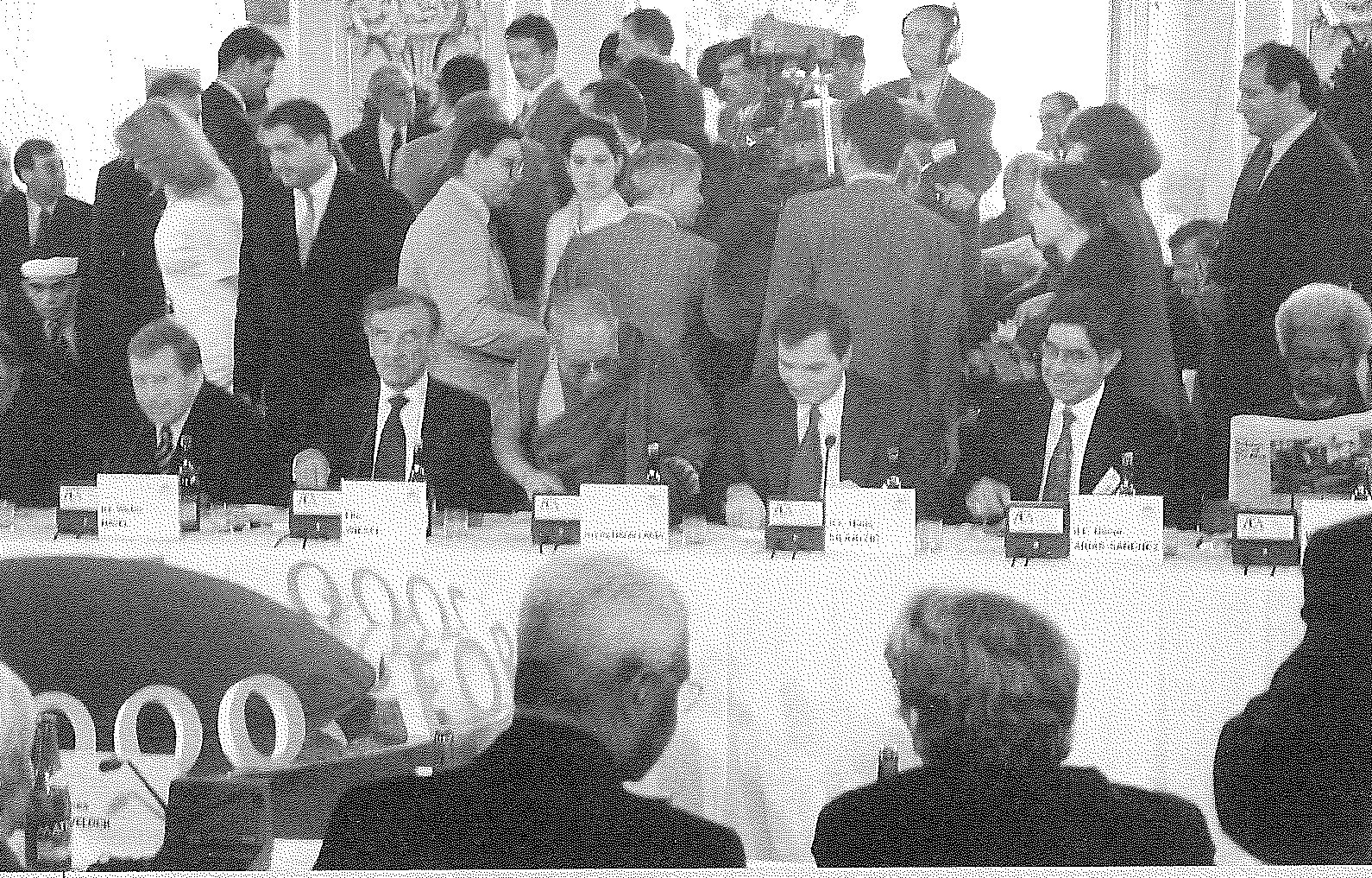
The Dalai Lama said that we would only be able to overcome the threats described by Havel if we possessed sufficient self-confidence and peace of mind, for which motivation was key. The Dalai Lama believed that the right motivation was not so difficult to attain: human nature was instinctively compassionate. Education could play an important role, and it was the Dalai Lama’s view that education should seek to develop an awareness of values, not simply focus on developing intelligence. (At a “Multi-religious Reflection” in St Vitus Cathedral later on, the Dalai Lama spoke movingly about compassion, the heart, and the right motivation, in a way that linked values, actions, and Havel’s concept of responsibility. Listening to this Buddhist leader from Tibet speaking in a medieval cathedral, “shared values” became tangible.)
Health and Quality of Life: Claude Jasmin claimed that the growing concern for health issues everywhere was a newly integrating factor globally. The aids epidemic had forged bonds of solidarity between medical practitioners around the world. As for future trends, what was new and becoming a major preoccupation in the medical community was the importance of quality of life considerations, especially in the West. Quality of life was increasingly taking priority over the prolongation of life at any price. Jasmin said that quality of life years lost due to premature death, and due to disability (both mental and physical). In 2020, the three principal causes of disability in the West would be cardio-vascular illness, mental illness, and car accidents. Jasmin was convinced that quality of life interests were going to generate another medical revolution. This would reveal the extent to which the environment played a key role. As the health-environment nexus (and by health, Jasmin meant both physical and mental health) became more clear to the public as a major factor affecting quality of life, tolerance for unhealthy and stressful environments would plummet, leading to a new and qualitatively different kind of environmental revolution.
Joshua Lederberg (Nobel Prize for Medicine) countered that the post-WWII generation had taken it for granted that communicable diseases were the scourge of impoverished societies, not of the West. But now our confidence in the victory over microbes had been shaken by the HIV pandemic, Hantavirus, Ebola, and antibiotic-resistant tuberculosis. Lederberg said that humans were engaged in a global struggle with microbial competitors, which were armed with every imaginable trick of genetic adaptation. The influenza epidemic of 1918-19 was the single biggest demographic event of this century: it killed 25 million people in one year. Yet there has been no preparation for the inevitable return of this strain. Indeed we were more vulnerable today due to crowding in cities and the speed of contact.
The Use and Misuse of Politics: Shimon Peres warned the Forum that politics was for politicians, who always sought glory, blinding people with old stories. Economic development, however, benefited people, since it provided the means for them to achieve their personal goals. Today, there were new opportunities to learn and lead productive lives, regardless of religion and class. Hazel Henderson (futurist, Worldwatch Institute) criticised this view, arguing that the new “economism” had become the leading ideology of the age. The shift from politics to economics was often, just as much as in politics, about power and greed and wealth. The major concern of the next ten years was how to check the power of the new global operators, the global companies and financial players that gambled with our futures in “the global casino”. Haris Silajdzic (co-Prime Minister of Bosnia-Hercegovina) spoke eloquently about the fact that, though there was an increased awareness of human rights, these were violated every day around the world. What was needed to help prevent such violations was a global political consensus and shared ethics, the ingredients for which had to come from different cultures. Bosnia was a test case as to whether this could be done.
The Future of the International System: Serguey Kovalyov (Russian human rights activist) claimed that reform of the UN would fail, since what was lacking was a new global ideal. Kovalyov believed that the ideal of a global government was the key to progress, because it would make the UN more relevant to our publics. This ideal would be informed by the over-riding importance of human rights, reflected in a world parliament and international criminal court. Richard von Weizsacker (former German President) agreed that the UN today was totally out-moded. It had simply not been designed to deal with today’s problems, such as civil war, migration, population growth, environmental degradation, pandemics, etc. Willy de Klerk pointed out that through globalisation we were all becoming citizens of the world, one way or the other. The challenge was not to force people to chose between the many dimensions that made up their identity, but to create enough space for people to be individuals and citizens of states, regions, and of the global commons.
The Key Importance of Education: This theme, first introduced by the Dalai Lama, was picked up by many speakers. Jack Lang (chairman of the Foreign Affairs Committee, French National Assembly) said that the innate limits of the political process emphasised the importance of culture and education for the future. Raimon Panikkar (University of California) made a similar point, but with a twist. He said that the West was always talking about development in the Third World. Was this not an overly materialistic view of life? Perhaps in addition to material development, more attention could be devoted to the development of ethics and principles, and to enlightenment. Fritjof Capra (“the Tao of Physics”) called for a revolution in the educational system Young people should be taught how to look at the world in a more integrated way. James Lovelock (originator of the “Gaia” theory) agreed: the West was changing the chemistry of the planet in ways we did not understand. Ecological change would be sudden.
The Role of the West: Though most participants in the Forum agreed that the way to overcome religious and cultural differences was to reintorce shared values, Cornelius Castoriadis (former Director of “T’École des Hautes Etudes”) pointed out that while many religions shared the same principles, only the West had embodied these norms in secular life. The West had given them institutional sanction. It was now crucial that this impulse be re-animated, in the West itself. The negative by-products of capitalism were worse today than in the 19th century. There were two options: either to recover the creativity of Western culture, or be enslaved to economic growth for growth’s sake.
There were many other issues discussed, and lots of conversations over dinner. Havel concluded Forum 2000 by describing how the many themes that animated discussion were interconnected. It was these interconnections that had been most useful in beginning to think how the threats facing mankind might be overcome. He wanted in the future to engage more women and young people in this dialogue, and suggested that the Forum might become an annual event for the next few years, each highlighting some of the individual themes that emerged in this one.
The last evening’s “concert” consisted of selections from the works of Havel and Wiesel read by Lynn Redgrave, Gregory Peck and James Earl Jones. There were musical interludes by some of the greatest classical performers alive today, including such artists as Barbara Hendricks, backed up by the Czech Philharmonic and a 100-strong choir. While there was lots of Dvorak and Smetana, the last movement of Beethoven’s Ninth blew the roof off the house.
After the concert, I met Havel for a chat. He was pleased with the way the discussion had gone, having deepened his own thinking about the enormous challenges that faced us. I think it also confirmed his belief in the need for a “revolution of the spirit”, as the prerequisite for so many of the other proposals made in the last three days. We then talked a little about my book, as his new wife hovered rather protectively nearby. He spoke in that same, rather direct way I first experenced ten years ago. I appreciated his solicitude. He was never one to stand on ceremony, or be impressed by status or title. But I have to admit I was now worried about his health: he seemed to have difficulty breathing, and I noticed during the conference that he tired more easily than before. Most Czechs share my worries these days, seeing his Presidency as a beacon not only of stability, but of a humane republic. The rest of us should be pulling for Havel too, given his profound insights into global change and his advocacy of radical action, in the true sense of that word.
It would have been easy to have been cynical about Forum 2000, and indeed some in the Czech press described it as so much pie in the sky at a time when the Czech Republic had more pressing demands. But it was precisely this mentality, forever captivated by the urgent at the expense of the important, that Havel wished to counter. The idea had been to bring together great minds and personalities, opinion leaders all, to think through the complex set of challenges that faced the globe. What lay behind this initiative was the conviction that present day practitioners were not up to the task: incremental change would not be able to avert the worst. Hence the rather dramatic idea (befitting a playwright) of tapping into the scientific, artistic, intellectual, and spiritual capacity of Planet Earth to illuminate the horizontal linkages between the various strands of our predicament and, just possibly, to synthesise a solution or two. There was reflected in this approach the belief that ideas and words mattered, that words are more powerful than the sword.
The jury is still out on that one, but it is consistent with Havel’s view, expressed at various points during his career, that changes in society and the world are prefigured in the realm of language. revolutions, even on a global scale, had of necessity to include a revolution of ideas, and ideals.
As to how to generate the ideals in question, Havel turned to the same kind of heterogeneous mix of personalities that had characterised Civic Forum in 1989. challenge, of course, is rather different this time around. Havel is not alone in his disquiet about the future of humanity, but he is uniquely in a position to engage people from all over the world in finding solutions. With Forum 2000, he has taken the first step.
But the question remains, as Havel noted in his opening remarks, whether attitudinal change will be possible without some kind of disaster to spur it on. In the meantime, most of the participants agreed that much could be done, through the re-orientation of education to engender values and eco-literacy, through intercultural dialogue, and through the development of an international humanitarian code. Immune from the periodic attacks on his idealism that has accompanied his career as both dissident and President, Havel intends to hold a series of Forums on global issues over the next few years. But it will be difficult to match the intellectual fireworks of this all-star founding session.
View the original scanned pages →
Originally published in bout de papier, Vol. 15, No. 2 (1998) — Summer 1998 // Été 1998, pp. 10–14. Read the rest of this issue →



