
bout de papier, Vol. 17, No. 2 (2000) — Summer 2000 // Été 2000, pp. 8–13
It is absolutely no surprise that most Americans don’t have a clue about Canada. The findings of pollsters commissioned by the federal government are dismal indeed — although I wonder whether those who couldn’t name Prime Minister Jean Chrétien were asked if they even knew Canada has a Prime Minister rather than a president. This is dismal, because we make all sorts of brave noises about increasing our exports, increasing our visibility and profile on the world stage. Yet if our closest neighbours and trading partners have no idea about what our country stands for, what its “brand identity” might be, how can Canada proceed to “brand” itself, let alone make a larger impression on the world? The survey is no surprise, because we have little presence in US mass media, and the image we do project is a national embarrassment. Our biggest exposure in the US market comes in a highly popular medium more widely ingested than any other mass-entertainment outlet in North America. We have prime exposure as one of the permanent installations at Epcot Centre, part of the complex of Central Florida theme parks comprising Walt Disney World. Before you pause for a discussion about whether a theme park constitutes a medium of communications per se, consider that Canada is one of only 10 foreign countries given a permanent display, and that 50 million to 60 million visits are recorded at the park every year. What they see in the Canadian presence does indeed communicate something about Canada, and what it communicates is one big Hoser joke. It bears no resemblance to modern Canada, reflects nothing of the diverse and cosmopolitan Canada of today. A first time visitor may well take away a bizarre impression of Canada from the display. From the exhibit, they can justly describe Canada as a country of people who wear lumberjack shirts and Australian bush pants, and eat fried dough rolled in cinnamon sugar. They have a castle that looks a lot like France, sell Anne of Green Gables dolls and little else in one of the premier retail locations in the continental United States, and if you want really fancy Canadian food, there’s a steakhouse.
Mass media depictions are by definition caricatures, yet the image of our country projected at Epcot will perhaps be the strongest expression of Canada and Canadianism in US mass culture. Compare this to the national caricature in which another country, France is presented at Epcot. You can buy Guerlain perfume from French girls dressed in Beauty and the Beast period costumes, at prices below duty free. There is exquisite bread and pastry at the boulangerie and patisserie. The wine store has a fine selection of French vintages. France’s three top chefs collaborate to run the restaurant, and there is a lower-priced café where many of the delicacies are available for casual fare. There is a street where Belle and La Bete sign autographs. Even the berets and scarves in the souvenir shop have a certain panache. It all cries: you will find an alluring country if you come to France. Delivering that message is all that counts in having an Epcot pavilion. As for Canada, the demi-chateau with “Canadian National Hotels” on it looks too ungainly for the extremely modest souvenir shop housed therein. The 18-minute movie they run shows the country is a big and empty wilderness; you’ve bought the Anne doll and eaten a beavertail and what else is there to do if you ever go to Canada? Perhaps go see Niagara Falls one morning and drive to the Rockies for supper.
It is a national shame that our premier exposure in the United States should present so sad a pastiche, which looks as though it must have been cobbled together by a particularly vapid and anserine committee. We might have done better to hand the task of designing our Epcot presence to a dozen raucous guffins plucked from the nearest sports bar as they cheered the Joe Canadian beer commercial.
Many of you are diplomats, and the very nature of your profession brings you an intimate acquaintance with countries and cultures that your compatriots will never know. You often describe those countries and cultures to other Canadians. What are the images, the resonance, and the illuminations you bring when you tell another Canadian of your most recent posting? Where do you begin? The official data you have acquired? The contacts you have made? Or are your descriptions entirely impressionistic? When you are projecting an image of a country, how far do you stray from the stereotypes or preconceived imagery your Canadian audience may have?
More importantly, how do you describe your own country? Let me give you an impressionistic account of a country some of you may know. It is renowned for its cuisine. Its chefs have won the gold medal at three out of the last four Culinary Olympics. The hallmark of its modern cookery is a fidelity to the innate tastes and textures of ingredients, each spiced or presented to make a harmonious whole. There are sumptuous wines to match the inventive cooking — the finest are so prized that they fetch $300 a bottle in the top international retail market, and they have earned their fame in competitions from Bordeaux to Verona, London to Hong Kong. Its writers are acclaimed the world over, translated into all the world’s major tongues. The breathtaking style of its film-makers; its audacious presence in television, video and new media; build on an artistic legacy already renowned for dance, classical music, painting and the plastic arts. It is one of the world’s most sought after tourist destinations, entertaining more visitors than its entire population every year.
It is a clever country. The information superhighway runs strong and swift, travelled by an astonishingly learned workforce – most school-leavers continue with some form of post-secondary training, and its proportion of university or technical college graduates is the highest in the world. This cleverness is not squandered. It ranks with Singapore, Taiwan and Hong Kong as one of the five most competitive countries in the world, measured by the World Competitiveness Index. It is able to offer its citizens an estimable standard of civilisation, as measured by the Human Development Index of the United Nations Development Programme. It is one of the safest countries in the world, with a stable democracy that emerged from a chaotic past of war, rebellion and invasion. Its population is surprisingly cosmopolitan, particularly in its major cities, where it is possible to function in any major world language.
It has a strong manufacturing base, and sells much of what it makes abroad. It is committed to open markets and open trade, and to the maintenance of a compassionate state. It has superb transportation and communications links by world standards, superb universities, and a civility to everyday life that is one of its most engaging features. Its citizens have the confidence and skill to flourish in any country in the world, and are equally confident in welcoming the world to their country.
Its geography is varied enough to cater to every taste, from maritime to mountainous. There is ample opportunity to escape a robust metropolitan life for the less hurried pleasures of the countryside. Indeed, it is said of this country that the land indelibly shaped its citizens’ lives, though more and more urban dwellers seem unaware of this once-intimate bond. There are places to find solitude, and places to find frenetic engagement. It is in many ways a model for the world, the epitome of a civil society built on a culture of peace. It is also a country abundant in resources, the world’s largest exporter of wheat and sulphur and the second largest exporter of natural gas, and will become one of the world’s top eight petroleum producers once its abundant offshore reserves are fully exploited.
You will of course have recognized this country by now, and all you need to confirm your answer is a reminder that its third largest metropolis enjoys daily newspapers published in Cantonese and English.
Among the people you meet the world over, would many remain indifferent at such a description? It is surely more likely that your interlocutors would at least be curious to find out more, if not to actually visit or invest or engage in trade or in socio-cultural links. Yet in your dealings abroad, particularly those of you who are trade commissioners, how often do you describe Canada as I did?
If the answer is frequently, I say bravo. Now, do the majority of your colleagues describe Canada by giving a sense of a country whose future is still being built?
If we are to make the notion of “projecting Canadian values” in our international relations more than a comforting slogan, we will need to muster an image and an identity that captures the strengths and dynamism of modern Canada. Let’s start with Epcot as an example of what we are not, and consider what we have to offer in our necessary engagement with the world. We’re next door to the largest market in the world, which is also the greatest magnet for investment and jobs in the world. We also have free and open access to the market, which are both a blessing and a curse. A curse, because it makes us harder to be seen — and it’s a blessing, because we are an ideal location for investments aimed at doing business within North American Free Trade Area.
Clearly, we need more investment, to further diversify our economy. We need outside investment, because the relatively low levels of investment in diversification fail to take advantage of our natural strengths. These are abundant land, skilled and value-priced labour, the cultural diversity that enables us to comfortably accommodate people from any background as investors or employees, health security, a high standard of education, low energy costs, and above all a stable and peaceable country.
Moreover, Canada establishes the benchmark of civil society. It is perhaps the first post-modern nation: one in which relatively open immigration and the largely benevolent application of knowledge and scientific discoveries have created a society that can draw from many strands of human experience. A homogenous population does not limit us, nor do old traditions that stifle new thinking. We are blessedly free of sectarian strife, and the sort of insularity that leads largely similar populations (Ulster, for instance) to dwell on their differences to a debilitating degree.
Most vitally, our national character was shaped in the earliest decades of our young history. The notion of celebrating cultural diversity may be a phenomenon of the last three decades, yet its genesis lies in a defining moment for Canada, the War of 1812.
We still see the physical evidence of the Canadian founding mythology along the Niagara Parkway, at the monument to Major General Isaac Brock, who on 13 October 1812, died while repelling the American invaders who sought to claim this escarpment as their own. On this riverbank, from the lakeshore to Queenston Heights, that pivotal act of resistance gave birth to our country.
It was the act of national bonding that made Confederation possible; the first time Canada became something other than a patchwork of colonial settlement. To look across that ribbon of water now is to marvel that Canada ever came to be, that the notion of such an unlikely country, spreading east and west above the United States, fired the imagination of generations of settlers and immigrants.
We have all the statistics of trade and economic worth; we have every trade commissioner’s laptop crammed with information on doing business in Canada. The more appealing Canada, the more enduring nation, is the Canada of immigrant dreams, repeated and reshaped with every new arrival.
What is our country, if not an act of imagination? What is it rooted in, but a shared resolve to create and sustain something larger than the sum of us? From anywhere on the riverside vineyards of the Inniskillin estate, indeed anywhere on that stretch of the parkway, the perspective is the same: the vivid green of the riverbank, the becalmed downstream flow of the Niagara River, and another country on the opposite shore.
From this vantage, so near that it is merely another neighbourhood in this pastoral landscape, all the eye sees is the country of American nostalgia. The neat houses, the flags, lawns running to the very edge of the bluffs: the America Walt Whitman sang 125 years ago. It is irresistible, its very placidity a magnet. How then did we resist the pull? It would be so easy even now, so very easy, to abandon all pretence of our differences, to cross the river for good, to join our fate to theirs once and for all.
Yet we don’t. Nor did all those Canadians who lived before us, who for generations nurtured and shaped the idea of a country that would grow to become today’s Canada. What was the impulse that drove Upper Canadians and Lower Canadians, feuding and divided as they were by language and sectarianism, to band together as one to resist the American invasion? What was it that made anglophone Canadians feel closer to francophone Canadians than to the anglophone Americans who sought by force to join our country to theirs?
From Brock’s act of resistance on the banks of the Niagara River emerged to the notion of a country, of the Canada that was at last created in 1867.
The most remarkable achievement, on our side of the river, was to sow the dream that travelled the world: to make Canada a place that people of all origins yearned to settle.
Yet still the wonder endures: for immigrants, America was at least as compelling a destination as Canada. Both shores of the river, the New York bluffs and the Canadian flats have their share of citizens whose origins lie in far-off lands. How is it that this intimately shared geography, each shaped by generations of newcomers, yielded such different countries? Perhaps Canada is an act of faith, a belief not so much spoken as held in our hearts, that our country is a mighty human accomplishment, an idea compelling enough to resist the natural pull of geography.
To follow the meander of the Niagara River from the falls to the lake is to understand all too vividly that history might have taken a different turn. Had Brock failed, Upper Canada might have become part of the muscular expansion of the United States, a successful chapter of Manifest Destiny. It would have been so very easy to fail, and it is a marvel that the Americans did not keep on trying to seize the territory that lay within their sight, if not their grasp.
You understand, too, that our country remains a fragile creation. We see the pressures and the fissures daily, the fault-lines of nation building. Not just separatism in Quebec, but resentment in every part of the land. There are even some Canadians who genuinely believe the country is finished that we might be better off were Canada to break into smaller, more efficient parts. It is the strength of our democracy that such views are accommodated and entertained. Our unresolved national question has its ebbs and flows, yet it is the very vigour of our polity that enables us to proclaim a confidence that we Canadians shall always find an accommodation. A country that cannot take its existence for granted will never yield to a sclerotic national life — we will be a country that is always being made, and that in itself sets us apart. And we know as we present ourselves to the world, that the Canada of immigrant dreams will endure, no matter what form it takes at any particular time in its evolution. Standing at Brock’s monument, we can recall the resolve of those Canadians from a bygone age who fought to build a country here.
A few kilometres upstream, the Niagara River tumbles across glistening rocks in a thunder of spray and foam: but on this bank, there is no sign of the violent journey of so placid a stream. And you wonder: can the idea and ideals of Canada be so readily quelled by those who want our country diminished or even sundered?
In a vital sense, we have to prove the value of our country to ourselves time and again, every time a group of Canadians in a particular part of the country questions why our country should exist.
We do not merely exist, we flourish, and this is a message that must be at the core of the Canadian identity we project to the world, and the Canadian values we seek to export. We should reflect on the meaning of Canada’s ranking, for six years in a row now, as the top country in the United Nations Human Development Index. Among all the statistics in the world, among all the ways of measuring a country’s worth, this is the only one that looks at the quality and standard of civilisation nations have achieved. Devised by the economics Nobelist Professor Amartya Kumar Sen, the human development index was meant to replace traditional measures like national income. If you use the purchasing power parity model of economic output, for instance, Sen’s native India has the fifth largest economy in the world. On the human development index,
– its economic wealth has yet to reach the lives of the poor. Although it doesn’t say so, the index measures something else: how faithfully a country follows the Universal Declaration of Human
Rights (UDHR). It is not a coincidence that when we speak of projecting
Canadian values, we are also speaking of projecting universal values. Ours is not the prickly individualism of the United States, where the triumph of individualism over a sense of community is a cause for celebration. The “western values” we represent can find much closer cognates with the community-and collectivity-based values of many other countries, particularly the Asian ones that recoil from the cult of the individual, mistakenly labelling this aberration as “western values.”
When you look at the UDHR and its covenants covering political, civil, social, economic, cultural rights, it is easy to conclude persistent violation of any of these rights would harm a country’s ranking in the human development index.
Almost by default, the country that tops the development index is the one that comes closest to achieving the ideal set out 50 years ago, when the world’s nations came together in Paris to protect the fundamental rights of every human. This is not to say we are perfect, or that we are close to perfect. No country is. And the Universal Declaration sets such a standard that it might be a very long time before anyone comes to fulfilling all the ideals therein. We should recognise, however, that our top ranking gives us the validity and legitimacy to make the projection of Canadian values abroad something other than an act of presumption and arrogance.
We should not downplay what Canada’s standing means: our model of civil society is the highest standard of civilisation achieved by any nation in the world. Perhaps it is no surprise Canada comes closest to meeting the standards of the Universal Declaration. In developing a “marketing” or “branding” identity for Canada, we should not be shy about pointing out that the UDHR was drafted by John Humphrey, the Canadian who was for two decades director of the human rights division in the United Nations. Humphrey instinctively produced a Canadian vision of what rights the whole world ought to embrace, as did Lester Pearson when he laid the foundations for what would become United Nations peacekeeping.

In this context, we should do more than simply accept Canada’s top ranking. Instead of merely trying to project Canadian values abroad, why not export Canada’s model of civil society to countries that need it and can make use of it by adapting it to their own cultural and societal experience? Our traders would rather export wheat or oil or technology; and as a nation it sometimes appears that we would rather sell nuclear reactors than civil rights. Yet if we are to develop a comprehensive brand-image to sell Canada with all its strengths, to help our international trade and commerce, we need to get beyond the business-first mindset, to describe our country warts and all. A clearsighted examination of our past will make the Canadian story all the more remarkable.
We can explain to our international partners that Canada’s civil society is special because we have had our share of wrongdoing and injustice. Our present-day accommodation of cultural and racial diversity is all the more remarkable given our past of head taxes, forced internment and the cultural genocide of First Nations. Our ability to build consensus; to find an evolving national identity; to establish a context for peace, order and good government to flourish; have all evolved from a shameful and horrific past. That’s why the great Canadian experiment — the task of building a nation from every imaginable stream of human experience — can be a fine model for the world. We are coming to terms with the injustice once bred in the bone; we are addressing past wrongs and present shortcomings. Many countries in the world haven’t yet come to the point where they can admit they have terrible wrongs that need to be fixed.
Amnesty International’s current campaign to highlight human rights abuses in the United States is meeting both indignation and denial. Yet most Canadians can see there are social and racial issues in the US that might better be addressed using Canada’s social model. Racial tensions in Britain and France – the two principal sources of Canada’s non-aboriginal identity — have not been overcome despite many well-intentioned interventions, largely because neither of those countries is willing to expand its national identity enough to accommodate newcomers.
The help our democratic allies need is of course minimal compared with many of the nastier countries of the world. Canada is a pioneer in the new frontier territory of peace building, of creating civil society where none exists. We share a common agenda with United Nations Secretary General Kofi Annan, one that has evolved in a continuum in the Canadian foreign service from Joe Clark to Lloyd Axworthy – and this is a pioneering endeavour in which we can justly take some satisfaction, notwithstanding the enormity of the task.
We are perhaps better placed to be the Secretary General’s leading partners in this vital human endeavour because of our national character. Canada’s unique strength, the ability to accommodate many streams of culture and human experience within a dynamic and evolving national identity, will gain more importance as the world becomes ever more interlinked. and ideals ot Canadianism, the real and imagined country we have become, represent a powerful force. These ideas and ideal capture the abiding strength of Canadianism — our country is always a work in progress.
The building of Canada is never done. So long as there are homeless people among us, so long as our historic commitments to Canada’s First Nations lie unfulfilled, so long as there are children living in dire need, we know that our ranking merely says we are the best of a bad lot.
That’s why we should talk about the ideas and ideals, because the kind of Canada we are building is a collection of individual and collective visions and dreams, expressed in a country that accommodates every human origin, and nearly all of the world’s languages and cultures. This singular strength is what may yet give credence to Sir Wilfrid Laurier’s prediction that Canada would come to fill the 20th century, albeit with a small twist. It is not so much that the future belongs to Canada, but that Canada belongs to the future.
In shaping a brand identity, a national image to sell internationally, we can give full value to our momentous human experiment – the convergence of the world’s constituent human origins within a single geographic and political boundary. We can speak with the assurance that our model will surely come to influence the future of a world where commerce and communications are abolishing old boundaries.
The Canadian model of coexistence is the most persuasive antidote to the pervasive human experience that strife and violence are an indelible part of human nature. When the bloodiest century in history offers its own deadly evidence that thirsting for war is more alluring than questing for peace, the very existence of Canada shows that there is another way, a more civil way, a more harmonious way of living together.
Lest this be seen as an Utopian exercise of self-congratulation, reflect on the message brought by Manmohan Singh when he received an honorary degree from the University of Alberta three years ago, explaining why he thinks Canada will be the superstar of the globalized world. It’s not just the wealth of Canada’s natural resources, he said: Canada will flourish because it is “a model of cultural pluralism.” In Singh’s view, we are entering a borderless economy: protectionism isn’t an option for anyone. Unless countries can learn to work well within a multilateral trading system, economic opportunity will pass them by.

The easy flow of capital goods and services is at the heart of the new global economy. But the factors economists don’t usually measure — cultural and social ones — are just as critical to success. Central to this is the ability to accommodate differences, to have respect for people from other backgrounds; to create reliable partnerships with people raised in a range of diverse countries and cultures.
Since Canada is a culturally diverse coun try, said Singh, we have a natural advantage over countries that discourage or cut off immigration. Perhaps it takes an eminent economist to evoke the real signiticance of a policy that many Canadians embrace instinctively. Yet the more one thinks about it, the more truth one finds in Singh’s observation.
If the future of the world is going to lie in a borderless economy, if globalization is going to create a single world market, then those who thrive are the ones who are able to form new alliances and partnerships: to get along with people from different cultures and origins. Notions like “unity in diversity” and “strength in diversity” have become slogans. Yet how many people really think about the implications, particularly when it comes to trade and economic relationships? In Singh’s view, Canada’s high international reputation is built on its ability to understand other cultures, to create relationships rather than trying to push its way in.
One of the disadvantages of the diplomatic life might be that you know Canada as the country you see in between postings, perhaps grounded in your own experience of growing up or becoming Canadian. Yet the advantage might be that these sporadic impressions give you a clearer idea of how much our country changes between your postings.
Someone who had left Canada on a new posting after the 1993 election, which saw the rise of the Reform party, might have had difficulty recognizing the transformation in the House of Commons in 1997. As that last federal election of the 20th century showed, we have finally arrived at the day when the real face of Canada, shaped from all the nations in the world, is accepted by every one of our institutions and political movements. The Reform Party, the last bastion for those who believed in exclusion, now reflects Canadian reality. Despite a campaign in which one of its candidates said non-Christians can’t represent Christians, the Reform benches in the post 1997 House of Commons included Canadians of Muslim, Sikh and Hindu heritage. The candidate who argued that immigration policies are racially biased against people of European heritage was not elected to Parliament.
Look around the Alberta legislature, a province that sometimes is stereotyped as the last frontier, and you will once again see the face of Canada: it includes first-generation immigrants. The fact that relative newcomers to this country, that Canadians who were born elsewhere, take a rightful place in the national and provincial parliaments is a striking example of Canadians’ ability not just to coexist, but to affirm that diversity is strength.
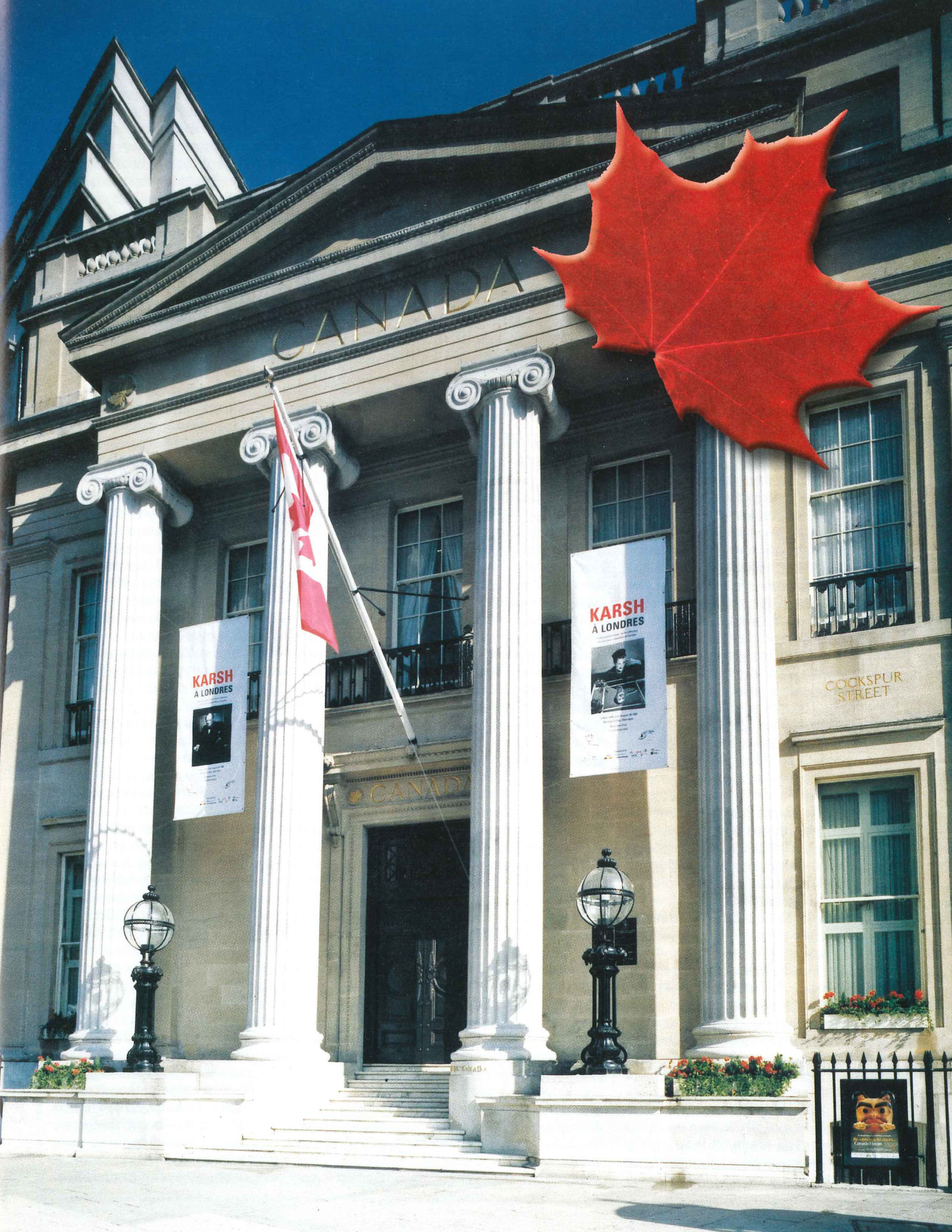
These are selling points in the global economy. No matter what country Canada deals with, it can present a familiar face: there will always be a Canadian who was either born in that country, or has roots there. How then do we take this country to market? How do we make the brand name Canada something more than a slogan, or a recitation of ideals? Perhaps we need to begin by creating a physical space that will showcase and reflect Canada, in all of our key markets. It is after all easier to show the diversity, strength, modernity and resilience of our country than to merely talk about it. One way to proceed might be to begin with what we might consider Canada’s 20 most important international partners, and use each of them as locations for a permanent installation and presence called Canada House. Canada House in London already gives us an admirable and easily identifiable brand name, yet we have only begun to explore the possibilities of what a Canada House might represent. Our singular fortune in having the newly refurbished premises on Trafalgar Square gives us a remarkable presence in establishing Canada House in our 20 most important economic, social and cultural markets. Each Canada House would be a showplace – housing everything from products, to displays, to Internet access to Canada and all things Canadian, a place to learn about Canada and interact with Canadians live or on line, to enjoy Canadian wines and cuisine. Canada House might offer a multi-media lending library, a multi-media retail space, a location for visiting Canadians to bring their partners and show their wares, a place where passport and visa applications can be picked up and dropped off. It could be a place for Canadian colleges and universities to recruit students, a space to show Canadian art and film, to host visiting authors and cultural figures. Some programming and displays might be permanent and structured, the rest left fluid to be filled by the needs and imagination of Canadians who want to use the space.
We could place the first Canada Houses with our largest trading partners, or with countries that already have a natural interest in Canada because they are leading sources of immigration, or with countries that we believe might be particularly receptive to the projection of Canadian values.
The very first one, though, ought to be built at the Epcot site in Lake Buena Vista, Florida. We should raze the present Canadian installation and build a Canada House that will capture and reflect our country — start with a design competition, and invite imaginative ideas for content, send our award winning vintners and chefs. At least we’ll have something other than a beer commercial to prove that Canada really is a country with a singular identity, and one that has much to offer the world.
View the original scanned pages →
Originally published in bout de papier, Vol. 17, No. 2 (2000) — Summer 2000 // Été 2000, pp. 8–13. Read the rest of this issue →



