
bout de papier, Vol. 13, No. 2 (1996) — Summer 1996 // Été 1996, pp. 6–9
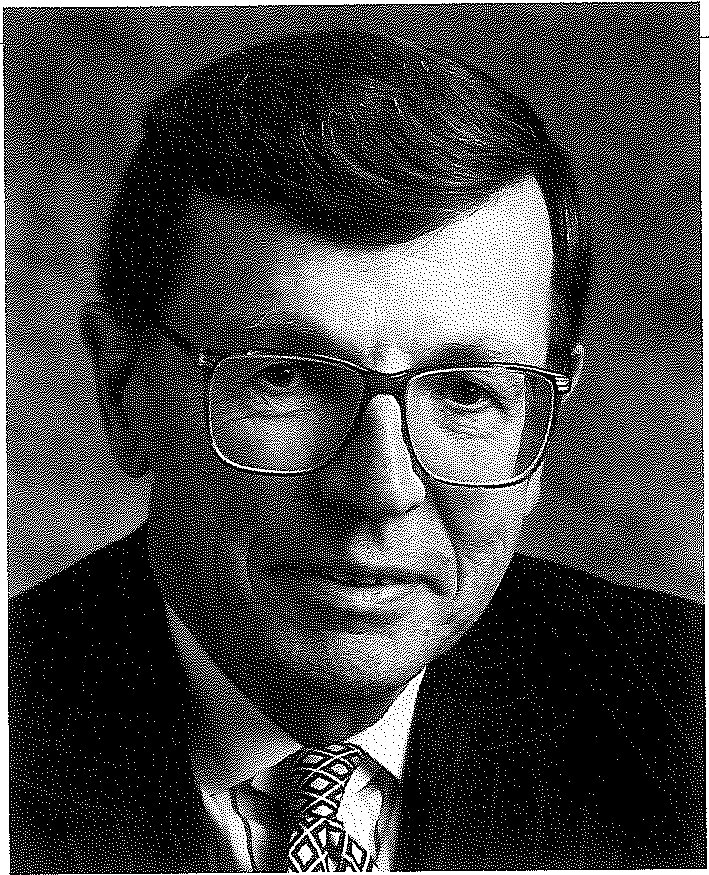
The Honourable Roy MacLaren, a graduate of Cambridge University (U.K.), is a former Foreign Service officer and the author of several books, including Canadians behind enemy lines: 1939-45. His distinguished career in politics culminated in his nomination as Minister for International Trade (1993-96). bout de papier caught up with Mr. MacLaren in Ottawa on the eve of the annual Oxford-Cambridge Boat Race, as he was beginning his preparations for his next post: Canada’s High Commissioner to London.
bdp: Before entering politics, you served for twelve years as a Foreign Service officer…
MacL: Yes, I served in Hanoi and Saigon followed by Prague, the UN in New York and Geneva for a period.
bdp: When you came back to the Department as Minister, did you find that having served as a Foreign Service officer influenced in any way your perspective on the job?
MacL: I would like to think that I was better equipped to hit the deck running. So much of life is to know the vocabulary. I knew the jargon. All institutions have a certain personality. I think I knew the personality of the Department.
bdp: Are there any particular lessons you learned from those twelve years in the Service?
MacL: The lessons were many. Most important, I learned that foreign policy and domestic policy are inextricably intertwined. One can no longer have, as did the British Foreign Office in the 19th century, a separate Foreign Service distinct from the Foreign Office. Our rotational system, I thought, was right. It meant that Canadians serving abroad had a much better idea of what the priorities of the government of the day were, what the domestic priorities were. That’s common, I suppose, to all foreign services today, but our foreign service has to be particularly sensitive to domestic issues.
bdp: Such as?
MacL: Obviously national unity is at the top of the list. But we must also be sensitive to the interests of Canada as a major trading country — on a per caput basis we are one of the leading trading countries, dependent to a degree on foreign investment for our development.
bdp: Did you learn any more practical lessons?
MacL: Having served abroad myself in several posts meant that when I began my tenure as Minister I had some idea of the strains, demands and challenges of the Foreign Service. It wasn’t as if I had come to the job with no experience of what representing one’s country abroad is like.
bdp: Hanoi shortly after Dien Ben Phu must have been particularly interesting.
MacL: Yes, it was three years after, and the Geneva Accords of 1954 had established the tripartite international control commission —India, Poland and Canada. There was still very little foreign representation in Hanoi. There was a French Commission; the British had a consulate, Sweden also had a mission and, of course, the Eastern Bloc was represented. That was the total corps. As was my experience later in Prague, we tended to be isolated from the local people.
bdp: Why was that?
MacL: They were frightened of having much contact with us. But I did see Ho Chi Minh often enough. Curiously, he had been a plongeur (dishwasher) in a restaurant in Paris — a dubious distinction that I share with him. In any event, he quite enjoyed coming to Western parties. I think it was a sort of nostalgia for the West. Despite his very real and deep-seated commitment to communism and to the harsh realities of Marxism, he did occasionally like a glass of champagne. He would shake hands with these little claw-like hands. He appeared to weigh about 98 pounds.
bdp: What adventures did you have in Hanoi?
MacL: What I did enjoy very much was the opportunity to go out on the patrols with our military people. The Canadian, Indian and Polish military would often do a four or five day trek from one post to the next either along the Chinese border or elsewhere in the hinterland. I would do the trek with them. It was simply a way of getting out of the sometimes sterile and artificial atmosphere of Hanoi and seeing something of the more remote Vietnam.
bdp: What eventually drove you to politics!
MacL: I had been in business in Toronto for some years and I had enjoyed that. I had acquired my own company and it was flourishing. I recognized that others could run it as least as well as I could. And for my part, I had an interest in being back in public policy. I have always had an interest in the formulation of public policy, the factors that make for public policy, the analysis of public policy. I began to miss that a little and thought the time was right to take the plunge into politics. So I held my breath and away we went. In 1979 I won the then new constituency of Etobicoke North. In 1980, we swept the board. But in 1984 I was invited to take myself off somewhere else by an ungrateful electorate so I had a four year furlough from 1984-1988. I went back to my business in Toronto and told my president the bad news, that he was going to have to move over: I was back. I won again in 1993.
bdp: Had there been any inspirational figure in your youth? Why did you become a Liberal?
MacL: I suppose there were two factors. One was that my family were generic Liberals. They had been Liberals for generations. In fact, I remember being taken as a child to our ancestral province of PEI just at the end of the Second World War. I was playing with some children and my Aunt said “you shouldn’t play with those children,” as if they had some dreaded disease. They were Tories you see. The other element is a real conviction that the Liberal party is a party of reform. In Laurier’s phrase: a party that is always willing to reconsider the question, search for better policies. I have always found that the party follows the doctrine that the state has a role to enable an individual to make the maximum of himself or herself. Having done that, the individual then is on his or her own.
bdp: You were thrown out once by the electorate…
MacL: When it comes to elections, the fact is that an individual member of Parliament, in my view, can make a difference of maybe 5% in his or her own result. No matter how many doorbells you ring and how much effort you make, how many signs you put up and how many brochures you deliver, 90% of the votes that are cast are for the leader or for the party. Any poll or survey will indicate that most people decide primarily on the leader. It they are going to turn out a prime minister, it doesn’t matter what party you belong to as a local member of parliament — out you go. This is what happened in 1980 when Joe Clark was turned out. The same with Mulroney in 1993 and with Trudeau in 1984. The Canadian people had that love/hate affair with Pierre Trudeau over a couple of decades. 1984 was the hate period: out he went and out I went. Individuals necessarily must work hard as candidates, but in the end most votes that are cast are either for or against the leader or the party.
bdp: Was it difficult to reconcile your duties as Minister for International Trade with your work in your riding?
MacL: Yes, to a degree. I had been Minister of State for Finance, a domestic portfolio. I had been briefly Minister of National Revenue, another domestic portfolio. This allowed me to go to my riding office almost every Saturday morning and see constituents. I had my surgery hours, as it were. In the more recent job I did a lot of travel and therefore had to rely more on my local staff. A Minister has one additional local person, for a total of three. They were excellent and did a good job of ensuring that the constituents felt they were well served. You know, as a Minister you do wear a lot of hats. You wear the hat of constituency MP. You wear the hat of a Minister. You wear the hat of a member of the caucus formulating or contributing to Liberal policy across a broad spectrum. It is a many facetted job.
bdp: As Minister for International Trade, the media like to call you Mr. Free Trade. Would you like that to be your epitaph?
MacL: I would be perfectly content with that. I believe, and believe deeply, that Canada’s economic future is best secured on the one hand by the elimination globally of trade barriers matched with, on the other hand, a rules-based trading structure.
bdp: But in opposition the Liberals had opposed Free Trade?
MacL: It is true that the Liberal party for a period gave the impression that it was against freer trade. But I think any observer would acknowledge that, even during that period – during the debate about the US/Canada Free Trade Agreement — the Liberal Party continued to advocate freer trade multilaterally. What gave concern was the sense that the Conservative free trade agreement was tying Canada into a continental arrangement rather than giving Canada free play in a larger global trade agreement — the Uruguay round of the GATT. We were concerned that we were tying ourselves too closely to the United States.
bdp: But once the FTA was concluded…
MacL: Once the Free Trade Agreement had been concluded and indeed NAFTA was pending, it seemed idle for Canada to withdraw from either agreement. Whether one liked the agreement or not, the fact was that it was too late. Business was making its adjustments. Market opportunities were open. It was a challenge for the incoming Liberal government to adapt to those circumstances. My approach has always been — and has continued to be — that we should seek every occasion bilaterally, regionally, multilaterally and globally — even unilaterally — to help bring down trade barriers. I would advocate that we seriously consider a review of whether we shouldn’t proceed with unilateral reduction and elimination of our industrial barriers over a five year period.
bap: In the last two or three months of your tenure we were starting to see discussions concerning a transatlantic Free Trade arrangement with the EU. Why the EU rather than the two areas we have identified as our target markets — Latin America and the Asia Pacific? Isn’t negotiating with the EU going to be extremely difficult?
MacL: Yes, I think it is. But in a sense the rewards may be greater given the level of sophistication of the economic relationship. We have committed ourselves in Canada to Free Trade in the Asia Pacific region by not later than 2020, indeed 2010 in the case of developed countries. We have made a similar commitment for 2005 in the Western hemisphere – only nine years from now. I asked myself if we can make commitments to Transpacific and Hemispheric Free Trade, can we not make equal commitments across the Atlantic? Looking at the Atlantic, I also had in mind Canada’s traditional ties with Europe. After the Second World War Canada’s ties with Europe had been underpinned by security concerns. Since the end of the cold war, those concerns were no longer there. Nor are the military and security linkages. Should we not see whether enhanced economic links can provide the underpinning that the military once did? The economic relationship with Europe is much more complex and sophisticated and already has — in tariffs — a fairly open market. But the range of non-tariff barriers is larger. Accordingly, the opportunities to enhance our economic relationships are real. Examples of areas we could look at are mutual recognition of standards and common rules for investment.
bdp: Should these processes — Transatlantic, Latin America, the Asia Pacific — move simultaneously, without any particular priority?
MacL: What we have is a rather awkward, shambling sort of progress. I wouldn’t pretend that it is particularly symmetrical. I would certainly argue that the momentum towards freer trade that we have sensed in Asia Pacific and the Western Hemisphere — and I hope transatlantically — can all be building blocks on the way to global free trade. Surely our ultimate goal must be global free trade. Period. How we best get there is a matter for continuing debate. There are some who say that the world is dividing itself into regional blocs. I don’t accept that for a moment. The world is still groping forward to global free trade, but through the kindergarten, if you wish, of regional arrangements.
do: you are not concerned abou ot Ruchanan and his like, south o the border?
MacL: No. Dole has sewn up the nomination. Obviously he has trimmed his sails in recent months, but Dole by tradition has been an outward-looking trade liberal. Whoever wins the election, and certainly if Clinton wins and then is without another term open to him, we can expect a more liberal trading regime to emerge in the USA. I don’t mean a flabby trading regime. It will continue to be alert to the trade interests of’ the United States but it will enact a more outward going or dynamic trade policy than we are seeing during this campaign period.
bdp: How serious, for Free Trade, is the Helms/Burton bill?
MacL: The passing of this bill is symptomatic of a campaign year when both administration and the Republicans are eyeing the support of South Miami and are willing to set aside their commitment to the World Trade Organization or NAFTA for the sake of seeking votes domestically. It’s not good news to see the United States utilizing, in what are quite inappropriate ways, self-proclaimed trade rules that violate the more liberal trade regimes that we have agreed upon globally.
bdp: As Minister, were you at all troubled by the trade vs. human rights debate? Do you think we have the balance about right at this time?
MacL: Probably we have it right in broad terms — unless you can demonstrate to me that, in the case of human rights abuses, the world is capable of agreeing upon the isolation and boycott of a single country and of making such a boycott effective. We haven’t seen much evidence of that in the past. The much preferred way is to engage with offending countries. For Canada to break off its trade relations with country X doesn’t achieve anything if countries A, B, C and D rush in to fill in any gap we leave behind.
bdp: You don’t detect a recent shift in world opinion?
MacL: It is undeniable that, despite the real misgivings of some European and developing countries in particular, there is a certain movement to relate trade and human rights issues or social issues. The obvious tip of the iceberg is child labour. It remains to be seen whether we can adequately address such concerns in international organizations without triggering the use of trade restrictions as a means of attempting to change social practices. There are a lot of countries out there, protectionist countries that I won’t name, that would be only too happy to have rules of this kind, rules that would allow country X to say “We don’t want any products of country Y,” and for whom this would be a marvellous way of saying “Well, you engage in inappropriate labour practices so we are going to keep your products out” and thereby mask their protectionist inclinations.
bdp: Do you think trade sanctions worked in South Africa?
MacL: I don’t know. I am told that what really turned the tide of white opinion in South Africa was the flood of weapons coming in from Angola and Mozambique. Certainly South Africa withstood the so-called economic boycott for an extraordinarily long time.
bdp: You will shortly move to the UK as High Commissioner. Does the fact that you went to Cambridge mean that you have a special attachment to Britain and that you have followed British affairs particularly closely?
MacL: Yes, I have a particular affection for Britain for a whole variety of reasons, not the least of which is the sheer richness of its history. On the other hand, I suppose I have good reason to be a little sceptical about my own attachment to Britain when I recall that the MacLarens were driven out by the English 200 years ago. Fortunately, as sometimes happens, it was the best thing that ever happened to us. Instead of scratching out a miserable existence in the Highlands of Scotland, we came to Canada two centuries ago. In a perverse sense I am grateful to the Butcher Cumberland whom we faced in the first line at the Battle of Culloden.
bdp: Does this translate into some sympathy for Scottish separatism?
MacL: It contributes to an enormous sympathy for Scotland. I was reading a statistie the other day which I hadn’t realized. Someone did an analysis of leave requests and passes in the Canadian Army in the First and Second World War and overwhelmingly, by a margin of 4 or 5 times, the passes were requested for Scotland. I don’t think that it was merely that off-duty soldiers wanted to be as far away as possible from the action or that the licensing hours were longer in Scotland. I think it was that many Canadian soldiers had a special regard and affection for Scotland. My younger son (who is now in law school at University of Toronto) and I, when he was 18, we walked together from Land’s End to John O’Groats. It took us 51 days. We went a slightly circuitous way, so it was about 1,500 kilometres. We had a great walk. We averaged 20-25 miles a day. It rained, of course, 90% of the time. In Scotland it rained 100% of the time. I first developed my affection for Britain when I was in the Navy in 1953 and went to the Coronation. My son must have developed a similar affection in that long walk because he subsequently went to Oxford. The black sheep of a Cantabrigian family…
bdp: And the Special Relationship?
MacL: When Britain decided, after a couple of false starts, to go into the European Community, there was much concern in Canada that the Special Relationship would erode and disappear. I don’t believe this has happened. The common practices of our two nations mean that we have, in the UK, an interlocutor in Brussels who can be especially valuable. We certainly saw this during the recent “fish war,” but that is only the tip of the iceberg. There is a whole range of ways in which the fact that we share a common history has enabled us not so much to lose from Britain’s membership in the European Community but rather to gain from it, by making ourselves better heard in Brussels through London.
bdp: But doesn’t Britain’s own ambivalence about Europe mean that in fact Britain is less useful to us than ever in Brussels?
MacL: One could make that argument to some degree, but you can not carry it very far. This is in part a generational thing in Britain: any poll would indicate that support for membership or participation in Europe is greater amongst those 30 years
• or younger than it is amongst those 50 years and older. This holds promise for the future of Britain playing its full role in Brussels as time passes. I once appeared, years ago, on a platform in London with (former Liberal Party leader) Jeremy Thorpe, advocating British membership in the European Community. I argued then – and I think it is a valid argument – that Britain, if it had gone in promptly and enthusiastically, could have had an enormous impact on the shape and nature of the European Community. Giving the impression that Britain is only in Europe with one foot does indeed, as you suggest, reduce her impact in Brussels. I hope that will change.
bdp: Do you have any particular plans for your first few months, either vis-à-vis Canada-UK relations or the running of the High Commission?
MacL: On the one hand, I very much want to work with the British in attempting to advance the transatlantic nexus which we have already spoken of: its evolution from what is essentially a security relationship to an economic relationship. There is a lot more that we can be develop. The British, for reasons of their own, are particularly eager to develop the transatlantic ties. We have advocates in Brussels for the idea.
bdp: And on the other hand?
MacL: My more tangible and immediate task is to get our Canada House renovated and fully functioning again. It served as a symbol of Canada for more than 60 years, including through the Second World War. For most Canadians visiting London, Canada House is the center of the universe. We must get it back in working order and I am sure that we shall.
bdp: Do you have any regrets on leaving the Minister’s office?
MacL: Yes. Whenever a Minister leaves there are things left undone. I would have liked to deepen our free trade commitments and to advance the transatlantic relationship more than I was able to do. We are on the eve of an action agenda with Brussels. I shall follow that prospect from London with the liveliest of interest. I would also have liked to have seen the completion of the bilateral free trade agreement with Chile as an indication that we were willing to liberalize faster than the United States. But look, If I’d left 50 years from now there would still have been a whole agenda of things that I would have wanted to complete.
bdp: And a prediction of this year’s Boat Race winner?
MacL: Cambridge of course, once again. I’ll bet you a pint on it….d
Note: The editor, an Oxford man, is now in Mr. MacLaren’s debt — but only until April 1997.
View the original scanned pages →
Originally published in bout de papier, Vol. 13, No. 2 (1996) — Summer 1996 // Été 1996, pp. 6–9. Read the rest of this issue →



