
bout de papier, Vol. 25, No. 1 (2010) — Spring 2010 // Printemps 2010, pp. 21–27
In the first decade of the 6th century the successor states to the former western Roman empire became embroiled in a political crisis which threatened to undo the security architecture which had been put in place by the region’s most powerful ruler, Theoderic the Great, king of the Ostrogoths and ruler of Italy (plus much of modern Austria, Slovenia and Croatia). Thanks to surviving documents left by one of Theoderic’s senior officials, we are able to form a reasonably clear picture of how Theoderic met this crisis and, despite initial set-backs, improved his position by the skillful combination of diplomacy and force.
The crisis arose from the ambitions of Clovis, king of the Salian Franks, who controlled most of northern France. Succeeding his father Childeric in 481, he had steadily expanded his realm by encroaching on neighbouring tribes and states, until it encompassed most of Gaul west of the Rhine and north of the Loire. In 506 his aggression was aimed at Alaric II, king of the Visigoths, who ruled most of Spain and Gaul south of the Loire.
The Romans had left Gaul, rather as Julius Caesar had found it 500 years earlier, “divided into three parts.” However the Aquitanians, Belgae and Celts of Caesar’s day had long since been Romanized. Over the Sth century, three Germanic kingdoms had taken over Gaul. Besides the Franks and the Visigoths, were the Burgundians who controlled the Rhone valley. In addition, the Alemanni had infiltrated west across the upper Rhine to occupy what is now Alsace and Switzerland, while Armorica (Brittany) had lapsed into Celtic twilight.
The Franks had first appeared in the mid-3rd century, as a loose confederation of German tribes along the lower Rhine. While a murderous nuisance to the peoples of then Roman Gaul, they also became a major source of manpower for the western Roman armies, and many Frankish nobles rose to the highest ranks in the Roman army. Some Franks were allowed to settle in depopulated areas west of the Rhine. As the western Empire collapsed, Franks had remained largely loyal to what was left of Roman authority in Gaul, to the extent that the distinction between Frankish chiefs and war-bands and Roman officers and regular army units, had become increasingly blurred. Typical was Clovis’ father, Childeric, who was buried in Tournai, in the uniform and regalia of a Roman general but with 10 sacrificed horses to see him to Valhalla. According to his contemporaries, Childeric had been appointed (exactly by whom, is uncertain) Dux (commander) of the province of Belgica II (roughly modern Belgium and the Pas de Calais).
Childeric’s son Chlodovech, known to us as Clovis (over time the name morphed into Louis), succeeded his father as King and Dux in 481. In the last two decades of the 5th century he extended his control — by fair means or (indeed mainly) foul — over the entire region north of the Loire and west of the Rhine, absorbing most of the other Frankish groups in northern Gaul.
In recognition of Clovis’ growing importance, Theoderic married Clovis’ sister Audofleda in 493 while Clovis married Clotilde, the daughter of Gundobad, king of the Burgundians. Theoderic also fostered two of Clovis’ sons.
Even by the standards of 6th century Barbaricum, Clovis’ reputation was a dubious one. He would ally himself with other warlords, then bribe their retinues to assassinate them and join his Salian Franks — some of these victims were his own relatives. Clovis’ style of personnel management is typified by the fate of a warrior who had objected to Clovis’ expropriating a plundered chalice for himself. Booty was to be divided equally. To prove the point the warrior split the chalice with an axe. To prove his point, Clovis split the warrior’s head with an axe.
Theoderic clearly grew to dislike him. He sent a harpist to Clovis as a diplomatic gift, in hope that he would “go forth like another Orpheus to charm the feral hearts of the tribesmen.” As well, he was likely referring to Clovis, when praising Senarius, one of his diplomats, for facing down “those who, in their base obstinacy, were barely able to understand reason…”

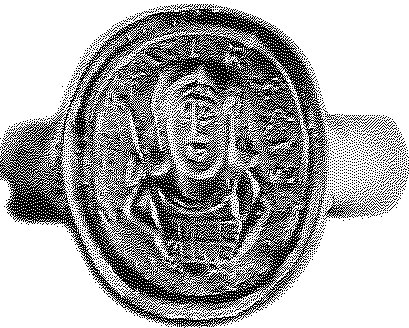
Posterity has, until recently, been kinder. Later ages saw him as France’s founding father. In his own day, the Gallo-Roman clergy gave him their seal of approval when he embraced Catholic Christianity, her than the Arian sect preferred by other German rulers. Whether this reflected careful political calculation, or simply happenstance (his Burgundian wife liked to flit from one religious allegiance to another), it allowed him to legitimize his wars as ones for the liberation of Catholic Gauls from their heretic masters.
In 486 Clovis took Soissons near Paris, eliminating Syagrius, the last commander of an ostensibly Roman army in the West. Syagrius sought asylum with the Visigoths. Alaric, at the time, was preoccupied in Spain and deemed it prudent to hand him over to Clovis rather than risk war. Clovis had Syagrius executed and was soon raiding deep into Visigothic territory, sacking Bordeaux in 496. The Visigoths however were able to check Clovis’ depredations. In 502 Clovis and Alaric held a peace conference on an island in the Loire and solemnly swore eternal friendship — this eternity would stretch for half a decade.
In the meantime, Clovis carried on his depredations elsewhere. In 481 he crossed the Rhine and defeated the Thuringians. In 496 he inflicted a major defeat on the Alemanni. In 500 he intervened in a civil war between his Burgundian father-in-law Gundobad and Gundobad’s brother Godegisel. While at the time these campaigns won no permanent territorial gains, they did set the stage for more lasting Frankish conquests.
Frankish expansion was beginning to attract attention further abroad. Clovis’ father Childeric had reportedly visited Constantinople, and one can be fairly certain that the East Roman government saw in Clovis an instrument for maintaining their influence in the West and as a potential counterweight to the Goths. Theoderic, for his part, had no desire to see Frankish power expand any further to the east or south. Around 500 he married his niece to the king of the Thuringians, a tribe in what is now central Germany. More disturbing to Theoderic was Clovis’ renewed campaign against the Alemanni in 504. Their King was killed and many refugees driven into Rhaetia (modern Bavaria), territory the Ostrogoths claimed.
Theoderic sent an embassy to Clovis (along with the above mentioned harpist, Theoderic wrote to sing of Clovis’ “… power and glory”). Alluding to their ties by marriage he congratulated Clovis on his victory but entreated him to spare the refugees, who had fled to his territory.
“Tt is a memorable triumph that the impetuous Alemannt should be struck with such terror … it suffice that their King, with all the pride of his race, has fallen; let it suffice that an innumerable people has been doomed either to the sword or to slavery … from my own experience, wars which have the happiest outcome are those which are ended with moderation.”
Neither these entreaties, nor the harpist, seem to have had much effect. Theoderic soon had to move the refugees further east to Noricum (modern Austria) where they were resettled. Orders were sent to the Noricans that they swap their cattle for Alemanni cattle:
“It is an admirable arrangement when a favour can be granted where both the giver and receiver are beneficiaries. We therefore decree that you exchange your oxen for those of the Alamanni. Theirs is the finer and larger breed of cattle, but they are worn out by their long journey. Thus will they get ‘fresh beasts, capable of doing the work which is required of them, while you will permanently improve your breed of cattle, and so be able to till your fields better.”
Frankish-Visigothic relations soon deteriorated again, until, in 506, war again threatened. It would seem that a Frankish embassy had gone home unsatisfied on some issue, and Clovis threatened to escalate. Alerted to this development, and hoping to avert the looming conflict, Theoderic proposed that Clovis’ neighbours join him in a démarche to Clovis, sending the signal that an attack on Alaric was an attack on all of them. Theoderic sent his ambassadors out on a round of shuttle diplomacy. First they visited Alaric, promising support, but urging Alaric to avoid getting drawn into a war he might not win:
“While you are surrounded by an innumerable multitude of subjects, strong in the memory that they turned back Attila … the long peace may have softened the hearts of your people, and from want of practice, your soldiers may have lost the habit of working together on the battlefield… War ts a terrible thing, and a terrible risk. Draw back if possible, before blood is shed. We are sending ambassadors to the King of the Franks to try to prevent war between our relatives; while the ambassadors whom we are sending to you will go on to Gundobad, King of the Burgundians, to get him to intervene on behalf of peace. Your enemy will also be mine.”
Next Theoderic’s ambassadors went to Gundobad the Burgundian. Expounding on the woes of their mutual kin going to war, the ambassadors asked him to join Theoderic in
(es moderating the angry impulses of these youthful kings…t becomes them to reverence older heads [i.e. Theodoric and Gundobad], although they are themselves in the balmy vigour of the flower of their age.”
Gundobad was asked to reflect on this message and send an ambassador of his own to join Theoderic’s to entreat Clovis to show restraint.
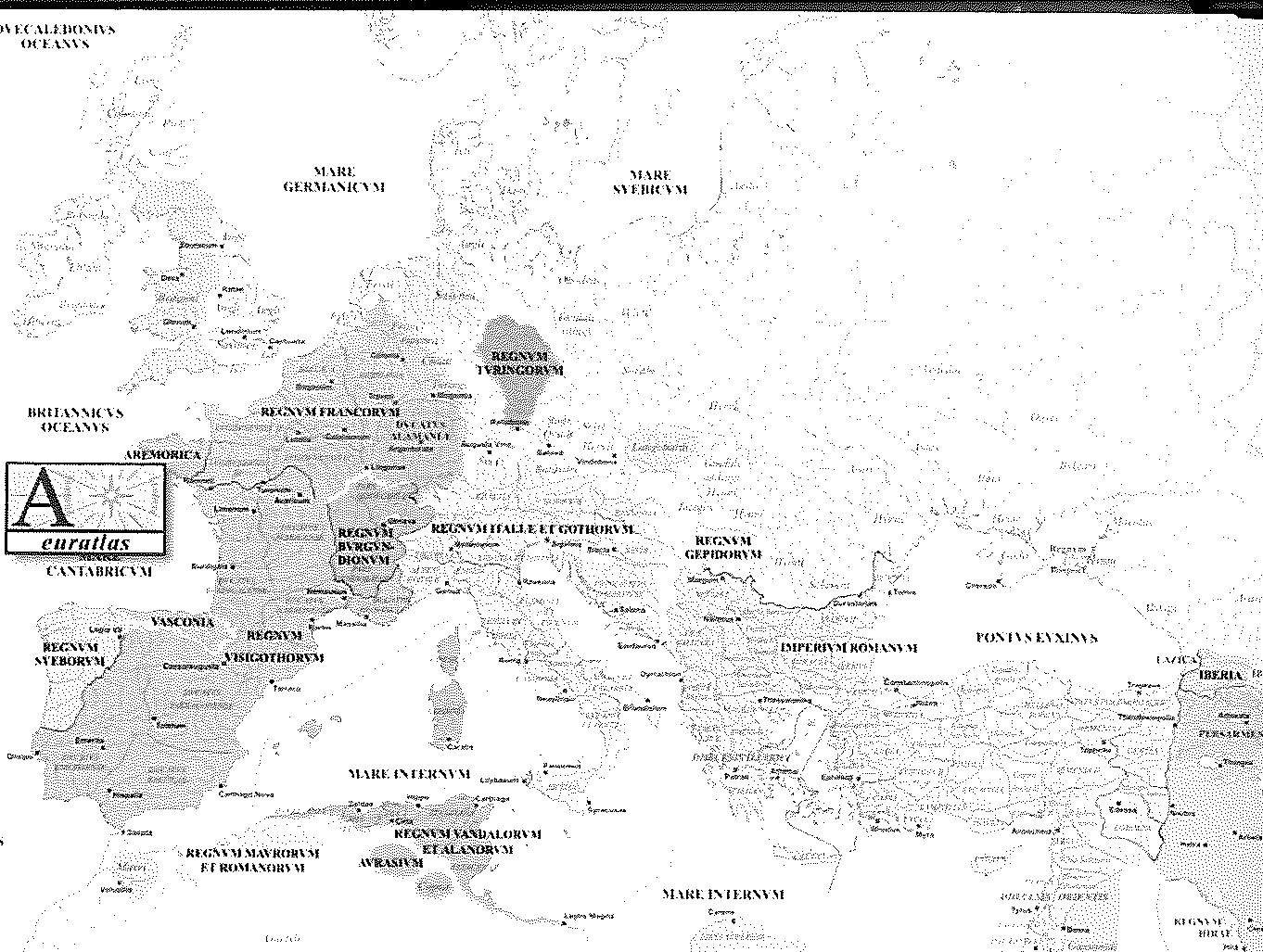
Theoderic’s ambassadors did not go on directly to Clovis. Instead they turned east and north to visit in turn the kings of the Heruli (on the upper Danube), Warni and Thuringians (both to the east of the Rhine). The Herul king had been adopted by Theoderic as a “son-in-arms” while the Thuringian had married Theoderic’s niece. All three peoples had been threatened by Clovis and Theoderic called on them to join a defensive alliance against Frankish aggression.
They were reminded of their past obligations to the Goths, and that Alaric’s father “
“.… gave you presents and staved off war from your borders. Repay his son for the kindness of his father. We have sent you two ambassadors, and we want you to join your representations to mine and Gundobad’s, in calling on Clovis to desist from his attacks on Alaric and to seek redress under the law of nations. Otherwise he should else expect a combined attack from of all of us, for this quarrel is really the quarrel of us all.”
Finally, a very strong démarche, supported by all of Clovis’ neighbours, was presented to the Frankish king, offering mediation but threatening intervention:
“We are grieved to hear of the paltry causes which are giving rise to rumours of war between you and our son Alaric. Such rumours gladden the hearts of your common enemies. … It is an impatient man who mobilizes his troops after the first embassy he sends. Instead, refer the matter to our arbitration. We would be delighted to choose men capable of mediating between the two of you. What would either of you think if we were unmoved by your murderous intentions towards each other? Away with this conflict, in which one of you will probably be utterly destroyed. … He who would despise our advice will have to reckon us and our friends as his adversaries. We have sent two ambassadors to you, as we have to our son Alaric. We hope that they may be able to arrange matters so no alien malignity will be able to sow the seeds of dissension between you … We order that your nations, which under your fathers long enjoyed the blessings of peace, will not now be laid waste by this sudden colliston.”
The “alien malignity” probably refers to Constantinople. As events were to show, Clovis enjoyed the backing of Anastasius, the eastern Emperor. If, as it seems, Theoderic was aware of this (his intelligence seems to have been quite good, as shown by the early warning he had received of the impending breakdown of Frankish-Visigothic relations), his diplomatic offensive would have included sending a delegation to Constantinople. If so, 506 may have been the year that Theoderic’s diplomat 41° MARE ENTERNVSE
Senarius had, in the course of one year, twice travelled to both Constantinople and to western Europe
“Twice saw the shores of the [Atlantic] Ocean, and twice the Pontic [Black] Sea, traversing both Europe and Asta, the two limits of the World.”
A further indication that Senarius was involved comes from a correspondent who wrote to him late that year congratulating him on his safe return from a long and dangerous mission.
We do not know the outcome of Theoderic’s joint démarche. Clovis reaction may have been very hostile. Theoderic’s references to Senarius standing up to “base obstinacy” and “enraged authority” do not sound encouraging. However if there is any truth (however fleeting) in Senarius’ claim that his missions “never failed in their task,” perhaps Clovis did initially promise to back down in the face of Theoderic’s coalition. If so, he did not keep his promise for long, nor did his erstwhile ally, Gundobad the Burgundian, keep faith with Theoderic.
Sometime in course of the following year, 507, Clovis crossed the Loire and — confirming Theoderic’s worst fears — rapidly defeated the Visigoths and killed Alaric. Seizing an opportunity for gain, Gundobad changed sides and rushed to the aid of the victor, ravaging Visigothic territories in southern Gaul, and plundering as far south as Barcelona. For all his promises to Alaric, Theoderic could not intervene, to help the beleaguered Visigoths. As a diversion, Anastasius had sent 100 ships and 8,000 soldiers to harry the coast of Italy, forcing Theoderic to keep his army at home. Anastasius also signalled his disfavour by withholding recognition from the West’s consular nominee for 507. At the same time his ambassadors ostentatiously congratulated Clovis for his victory over the heretic Visigoths and conferred on him the insignia of an honourary Consul.
The investiture of gaudy regalia was a common Roman mark of favour for loyal client king. We know of similar instances from this period to chieftains in what is now Georgia and in North Africa. Gundobad the Burgundian was also favoured, being honoured with the post of Magister Militum per Gallias (commander-in-chief of the long-defunct Roman Army in Gaul). Clovis flounced about in his new finery, distributing largesse, the distinction between an actual and an honourary Consul being carefully blurred. His clerical cheerleaders hailed him as a new Constantine (forgetting the original Constantine had fed Frankish chiefs to the lions in the Trier arena).
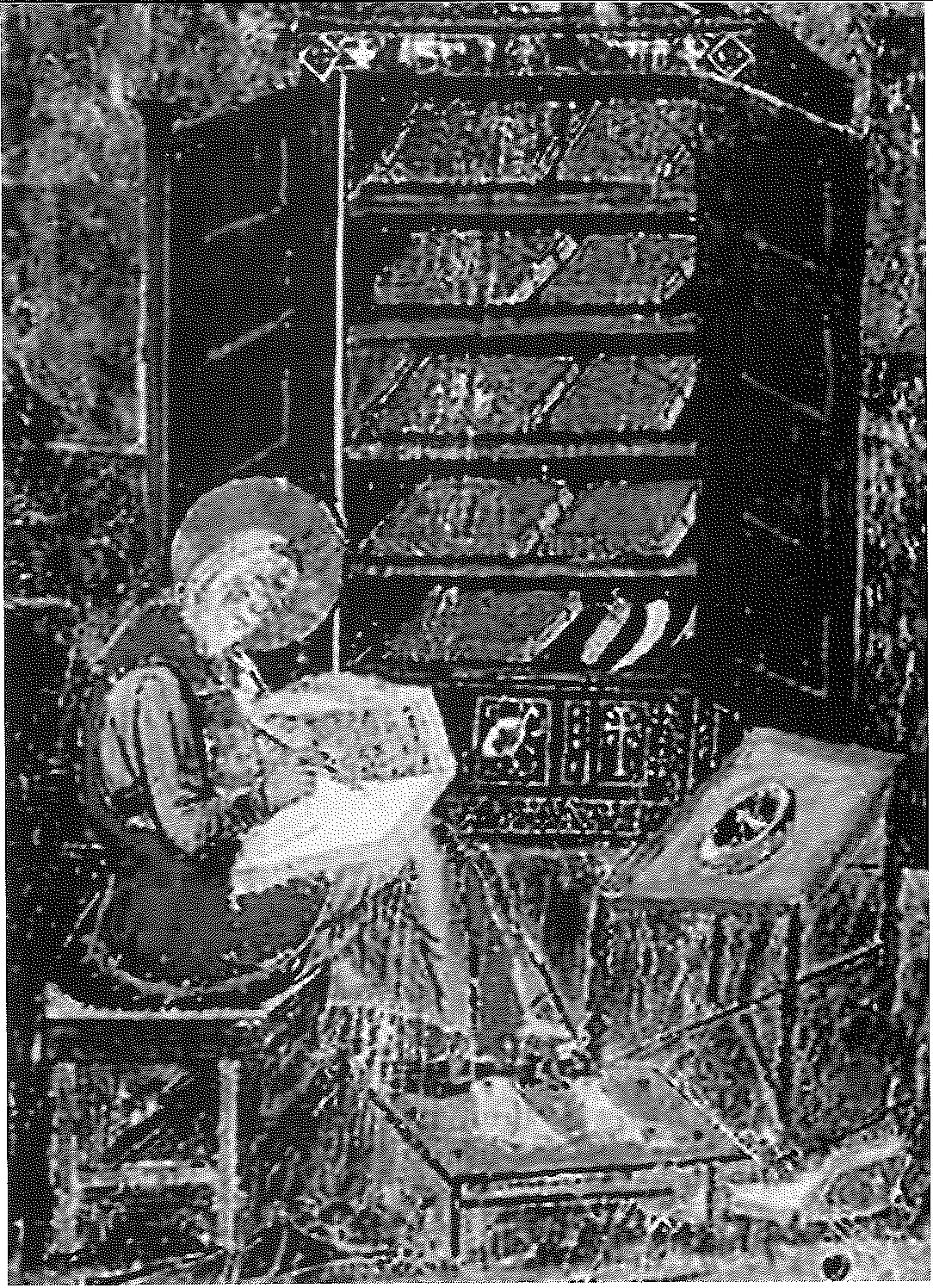
As that unsung American philosopher Donald Rumsfeld noted, there are “known knowns” and “known unknowns.” One of the “known unknowns” is what exactly motivated Anastasius to intervene on the side of the Franks. There was one clear area dispute between Theoderic and Constantinople. Sirmium (Smrska Mitrovica in modern Serbia), the principle city in Pannonia TI, was nominally part of the eastern Empire. It was in fact held by the Gepids, ancient enemies of Goths. One of Theoderic’s generals had recently expelled them from the city and annexed it. He then defeated a nominally east Roman army of barbarian mercenaries, that had been sent to show the flag in the region (the regular Imperial field army was tied up with a war against Iran). The Ostrogoths now seemed intent on penetrating deeper into the eastern Balkans, their old stamping grounds. This was a little too close to home for Constantinople. By intervening, Anastasius had shown Theoderic just how far his reach could stretch. Moreover Clovis was a perfect client — well positioned to threaten the Goths, but too far away to pose a threat to imperial interests.
Unable to respond militarily, Theoderic again turned to diplomacy. He sent an embassy to Anastasius with a very humble letter behooving “…us, most clement Emperor, to seek for peace, since there are no causes for anger between us…” He entrusted the letter to a senior official, Agapitus, who was warned that
“… You will fave to dispute against the most subtle persons — artificers of words, who think they can foresee every
possible answer to their arguments.”
Assuring Anastasius that
“Our royalty is an imitation of yours, modelled on your good purpose, a copy of the only Empire; and in so far as
we follow you do we excel all other nations…”
Theoderic asked that
“Peace, which has been broken, through a variety of causes, may, by the removal of all matters of dispute, be firmly restored between us … Let there be always one will, one purpose, in the Roman Empire.”
Good relations were thus restored, and Constantinople recognized the western Consul for 508. Anastasius had made his point; moreover, sending the Roman fleet to ravage Italy had proven unpopular at home. As a quid pro quo there seems to have been a Gothic undertaking that they would not penetrate deeper into the Balkans (although Sirmium stayed in Gothic hands). Theoderic was now given a free hand in the West, and took full advantage of it.
In June 508, Theoderic’s armies massively intervened against Clovis’ Franks in southern Gaul. The besieged cities of Arles and Carcassonne were relieved and the Franks suffered a devastating defeat, allegedly losing 30,000 men. The Burgundians were also chastised and Theoderic took the Provence from them. The happy Provencals were told to rejoice at their liberation and to:
“Obey ‘Roman customs, You are now by God’s blessing restored to your ancient freedom; put off the barbarian, clothe yourselves with the morals of the toga; unlearn cruelty, that Yyou may not be unworthy to be our subjects.”
Theoderic now turned his attention to restoring the wreckage of the Visigothic kingdom. Alaric had two sons. The elder, Gesalic, while illegitimate, had been proclaimed king by the Visigothic nobility. Theoderic, however backed his infant grandson Amalaric, Alaric’s legitimate son by Theodegotho. The Visigoths were in no position to contest this, and Gesalic was forced to seek refuge with the Vandals in North Africa, who gave him funds and sent him back to try to reclaim his throne. Theoderic now made strong representations to the Vandal king Thrasamund:
“Having given you our sister, that singular ornament of the Amal race, in marriage, in order to knit the bonds of friendship between us, we are amazed that you should have given protection and support to our enemy Gesalic. If it was out of mere pity and as an outcast that you received him into your realm, you ought to have kept him there; whereas you have sent him forth furnished with large supplies of money to disturb the peace of our Gallic provinces. This is not the conduct of a friend, much less of a relative.”
Thrasamund was very contrite, sending rich presents to Theoderic and more importantly disowning Gesalic, who, after a failed attempt to make a comeback in Spain, died under murky circumstances in Burgundia. Theoderic’s response to his brother-in-law was suitably gracious:
“You have shown, most prudent of ‘Kings, that wise men know how to amend their faults, instead of persisting in them … In a noble and truly kingly manner you have humbled yourself to confess your fault with respect to your reception of Gesalic … We thank you and praise you, and accept your contrition for this offence, with all our heart. As for the presents by your ambassadors, we accept them with our minds, but not with our hands. Let them be returned to your Treasury, so it may be seen that it was simply the love of justice, not destre for gain, which In 511, Theoderic sent one of his generals, Theudis, to Spain to act as Amalaric’s “tutor” — a task he fulfilled for the next 15 years. In effect, he became Theoderic’s viceroy in Spain. The Visigothic treasury was sent to Italy for “safe-keeping,” and Theudis ensured that a substantial tribute was remitted every year.
By his (and his diplomats’) skillful exercise of (as Kofi Annan so aptly put it) “diplomacy backed by firmness and force,” Theoderic had salvaged much from Alaric’s disaster. The Vandals had been cowed, the Burgundians chastised, and the Franks held at bay. By adding the Provence and most of Spain to his domains, Theoderic now ruled almost half the territory of the former western Empire. To commemorate his victory he issued a large gold coin showing himself dressed
View the original scanned pages →
Originally published in bout de papier, Vol. 25, No. 1 (2010) — Spring 2010 // Printemps 2010, pp. 21–27. Read the rest of this issue →



