
bout de papier, Vol. 25, No. 4 (2011) — Winter/Spring 2011 // Hiver/Printemps 2011, pp. 15–17
The year is 2013. The players are the eight Arctic states and six indigenous permanent participant organizations. Canada has just resumed the Chair of the Arctic Council and has decided to host its first meeting on board Canada’s newly minted icebreaker while sailing through the Northeast Passage. The question for debate at this inaugural meeting is — should the Arctic Council be expanded to include new members, namely the European Union?
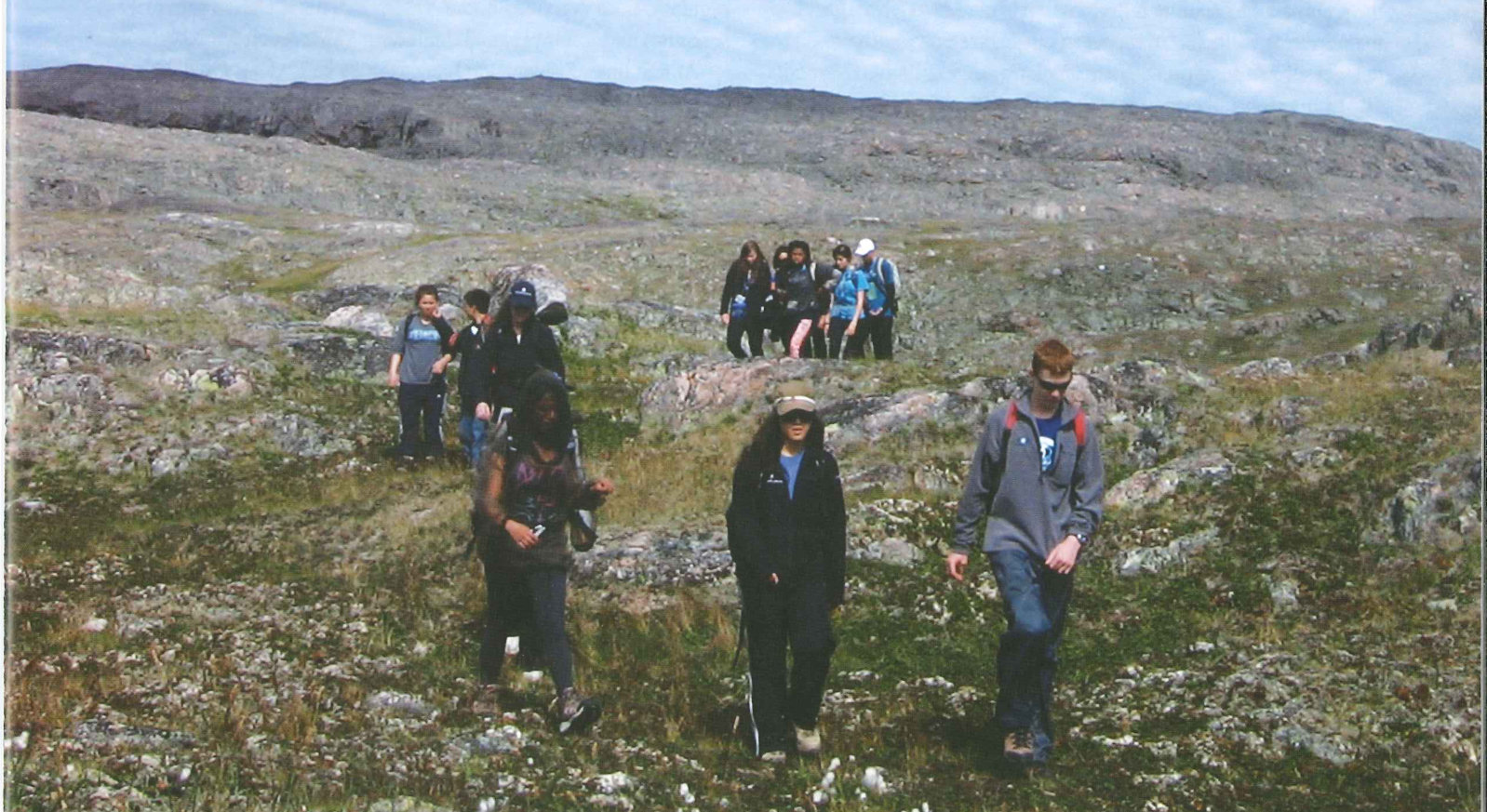
While this scenario could be true, the year is in fact 2010, the icebreaker is actually a Russian ship (the M/V Orlova), and the players — while international in origin, are not your typical delegates in dark suits. They are students ranging in age from 14—18 in jeans and hoodies.
These students are among a group of 78 participating in an educational expedition called “Students on Ice”. They come from across Canada (from Bell Island, Newfoundland to London, Ontario to Pond Inlet, Nunavut to Ulukhaktok, NWT to Nanaimo, B.C. and many stops in between!) as well as from China, France, Monaco, Norway and the United States. They are accompanied by an equally diverse group of scientists, educators and chaperones — including a landscape artist, a wildlife biologist, a performer, an author, a Native elder, an explorer and Peter Mansbridge, news anchor, participating in his role as a dad.
For the past 10 years, Students on Ice has taken more than 1,500 young people on educational expeditions to the polar regions to expose them to the environmental, social and political changes taking place. Without internet, cell phones, televisions or iPods, the expeditions are filled with creative workshops, lectures, hands-on experiments, wildlife sightings, historic hikes as well as daily discussions on emerging issues between students and staff.
My own personal foray into this organization began in 2002 when I was a new recruit working in the Aboriginal and Circumpolar Affairs Division. I had been tasked with coordinating the department’s input into a Ministerial process that would result in the creation of Bill C-32 — the ratification of the Madrid Protocol to the Antarctic Treaty. This was my first Cabinet Memo, and I guess I took the section on “stakeholder engagement” rather seriously. I set out and organized face-to-face meetings with individuals and organizations that would be directly affected by Canadian legislation imposing environmental regulations on activities in the Antarctic. This included primarily scientists and tour operators, including Students on Ice.
At that time, Students on Ice was in its early days. Created in 2000, founder Geoff Green was looking for ways to give youth a heightened understanding and respect for the planet’s ecosystem, and the inspiration required to protect it. He decided that taking young people to the poles was the best way to have a lasting impact. To date, he has led 79 expeditions to the Antarctic and 34 expeditions to the Arctic.
Fast-forward to 2010 and again I found myself working on circumpolar affairs — this time working on Arctic issues, one of the Government’s priority areas. Although assignments in between included a posting in Ankara and other non-polar pursuits, my holidays were spent basking in the subarctic sun at -50° C in Inuvik and cycling around windy Iceland. Apparently I am drawn to the cold.
My decision to spend my summer holidays with 78 high school students on board an ice-strengthened vessel in the Canadian Arctic was an easy one. I had always wanted to see more of the Canadian North. (Two stints in the circumpolar world had afforded me much travel, but almost all of it international.) I had also become increasingly convinced of the need to expose young people to the work that we do at Foreign Affairs. While I did not have the cool apparatus of a scientist or the easel of an artist, I did have the skills needed to facilitate a lively discussion on current issues. Diplomats can bring something special to the table; as it turned out, the mock debate was the highlight for at least one student:
As part of his travels, Mr. Powell got to hear from a variety of guest speakers spanning many professions. They included CBC news anchor Peter Mansbridge, former Minister of Fisheries and Aquaculture Trevor Taylor, migratory birds conservation biologist Garry Donaldson, Arctic biologist, historian and documentary filmmaker David Gray, adventure photographer Lee Narraway, and Inuit elder David Serkoak, amongst others.
His favourite speaker was Jeannette Menzies, a foreign service officer with the Department of Foreign Affairs and International Trade. “They discuss issues within the Arctic Circle,” he said, adding interested parties also include Scandinavian countries, Russia, and United States. With Ms. Menzies, he said the students took part in debates as part of a mock-Arctic Council. — From the Gander Beacon, “Eastport Youth Enjoys
Another student elaborated on the mock debate in her online journal:
August 10, 2010 (Leaving Walrus Island and Sailing Toward Cape Dorset)
For our mock debate, Olivia and I represented Iceland, the only Arctic country that does not have indigenous peoples. We were representing the only country the ban was not actually affecting, since the seal trade is not part of their culture and is not central to their economy. The publicity of the ban caused most Europeans to form opinions against all seal products, even those exported by the Inuit, as the propaganda tarnished the image and made all seal hunting look like a cruel practice. In fact, it was not the Inuit who practiced inhumane seal hunting, so that is why the ban does not apply to them, but the damage has been done to their image, and therefore their industry, as this differentiation was not made clear to the public. The EU has done nothing to help boost Inuit economy, which they had basically destroyed. I learned that Iceland wanted the EU to be granted observer status, since they are hoping that by siding with the EU they will get financial support to help them through their recession. It was a lot of fun and really interesting to see the debate play out, but in the end we could not reach a consensus, just as the real Arctic Council was unable to do, and no decision was made.
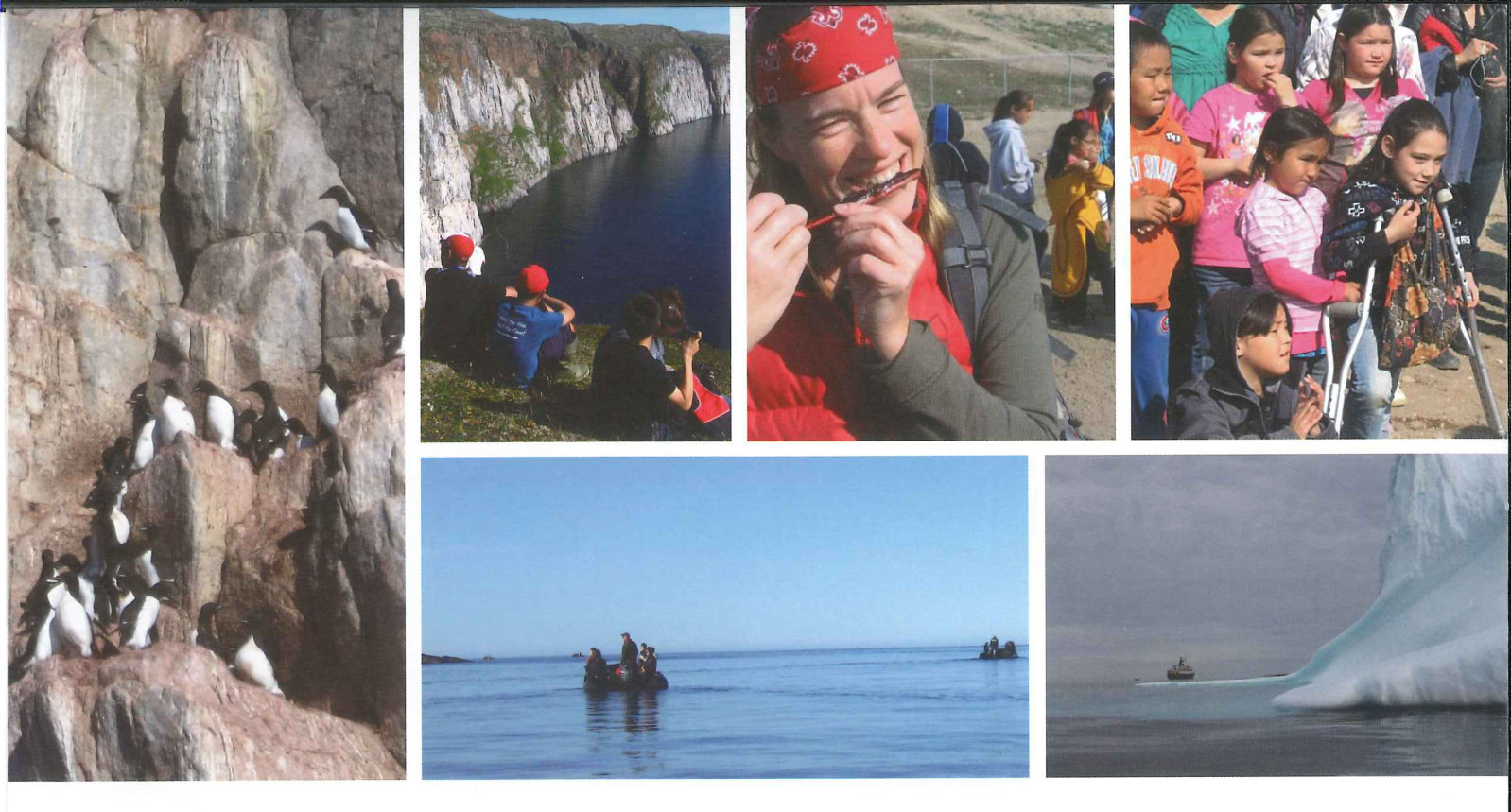
The mock debate was just one of the many workshops that students participated in during the two-week trip. Transported by Zodiaks, students spent time on shore doing blubber insulation experiments, exploring historic whaling graves, learning about glaciology, climate change, caribou behaviour, photography, navigation and art. Students were exposed to awe-inspiring scenery at every turn, including towering icebergs and some of the most incredible northern lights I have ever seen. Wildlife was also in abundance. We watched over a thousand walrus tripping over each other on Walrus Island, hundreds of thousands of thick-billed murres nesting on the narrow ledges of a 300-metre cliff, and over 20 polar bear sightings in one day.
We also visited three communities in the North — Kuujjuagq, Cape Dorset and Pangnirtung. These stops were a highlight for me, as we had the opportunity to interact with locals, to watch the students try their hand at Inuit games and to enjoy one of the North’s delicacies — seal meat. Our day in Cape Dorset was incredibly warm, so the seal had been lying on a piece of cardboard in the sun for hours before the ritual began. The Students on Ice group watched in awe as an elder cut through the meat and local children, hands covered in blood, pulled pieces directly from the seal. Slowly, some of the students joined in, reaching for a piece and devouring it quickly. My preferred approach was nibbling the seal meat off a rib. Perhaps this was a way to minimize the blood on my hands and to liken it to chicken satay on a stick. The experience was memorable. It was an unplanned workshop, but for many, possibly the most educational.
The last community visit was Pangnirtung. This also happened to be where I departed the ship — to return to my desk in Ottawa to help launch Canada’s Arctic Foreign policy. The Orlova was continuing for a few more days with its Russian crew and 78 students, so it was with some sadness that I said my farewells to my new-found friends on the ship. I was dropped on the shore with my duffel bag — and sat there for what felt like a long time watching the Orlova sail away. It was at that moment that time stood still. My flight did not leave Pangirtung until the next morning and my BlackBerry continued to have no signal.
Alas, I had an entire evening to reflect.
Every Canadian has the importance of the Arctic drummed into his or her head, but few of us have the opportunity to see it or to understand its history and the dynamics of the region today. My trip to the Arctic taught me many things — I developed a deeper appreciation for those that live in Canada’s northern communities, and the challenges associated with such isolation. I developed a greater understanding of the fragility of the North’s eco-system. I also recognized the important contribution that young people have to make in the world. The mock debate reassured me that if these are the individuals making tomorrow’s decisions, then our Arctic is in good hands.
View the original scanned pages →
Originally published in bout de papier, Vol. 25, No. 4 (2011) — Winter/Spring 2011 // Hiver/Printemps 2011, pp. 15–17. Read the rest of this issue →



