
bout de papier, Vol. 14, No. 2 (1997) — Summer 1997 // Été 1997, pp. 28–31
story and photos by Geoff Gartshore
The dialectic of grocery shopping in Markale Market “I’d like half a kilo of peaches and some yoghurt please,” I say to an elderly vendor in Sarajevo’s most infamous open market. He smiles, turns to his wife as he puts my fruit on the scale, and observes: “Hey, the man speaks normally”!
“What’s normal?” I counter with a smile, as little is in Sarajevo. They laugh in return, and ask: “Where did you learn to speak our language?”
I query further: “What is ’our’ language?” “Bosnian, of course” they reply, as if ’our’ Bosnian language had been around for decades.
“Where did you learn Bosnian?” they repeat. “Two years in Serbia, in Belgrade,” I say with a smile, accenting the Serbian pronunciation of the word “two”. bout de papier Vol.
“It’s all the same,” they say with more laughter, and a shrug.
I nod in agreement but say to myself: if it’s all the same then why the War?
Election Day, September 24th, in Herzegevina Driving south of Sarajevo to the Adriatic coast, you drop from the high Bosnian mountains down into Herzegovina — the southern third of the country. A hot and arid region, Yugoslavs looked down on Herzegovinian brethren and, depending on whether the speaker was Serb or Croat, dismissed the land as a place inhabited by “ustasha / cetniks and rattlesnakes”
Near Stolac, Herzegovina The road turns to gravel then dirt, the sun beats down on the dry valley floor, and in the distance looms the remains of a bombed out gas station. The polling station in the village of Poplat is our goal, a formerly mixed Moslem-Croat hamlet on the western edge of a wide, barren valley only one mountain ridge away — but historic light years — from the more verdant, cultured Dalmatian coast. In this part of the country, the Moslems lost. Approaching the gas pumps, an arrow on a nearby burned-out overturned car points to a tent, indicating our destination: polling station 45. The tent is the only structure now standing in this village formerly of 600 residents. We enter the sweltering darkness: two rows of people on chairs face each other, eyes stare at us in silence. The OSCE have found equal numbers of Moslem and Croats to staff the booth, busing the former Moslem residents here from their new homes many hours away.
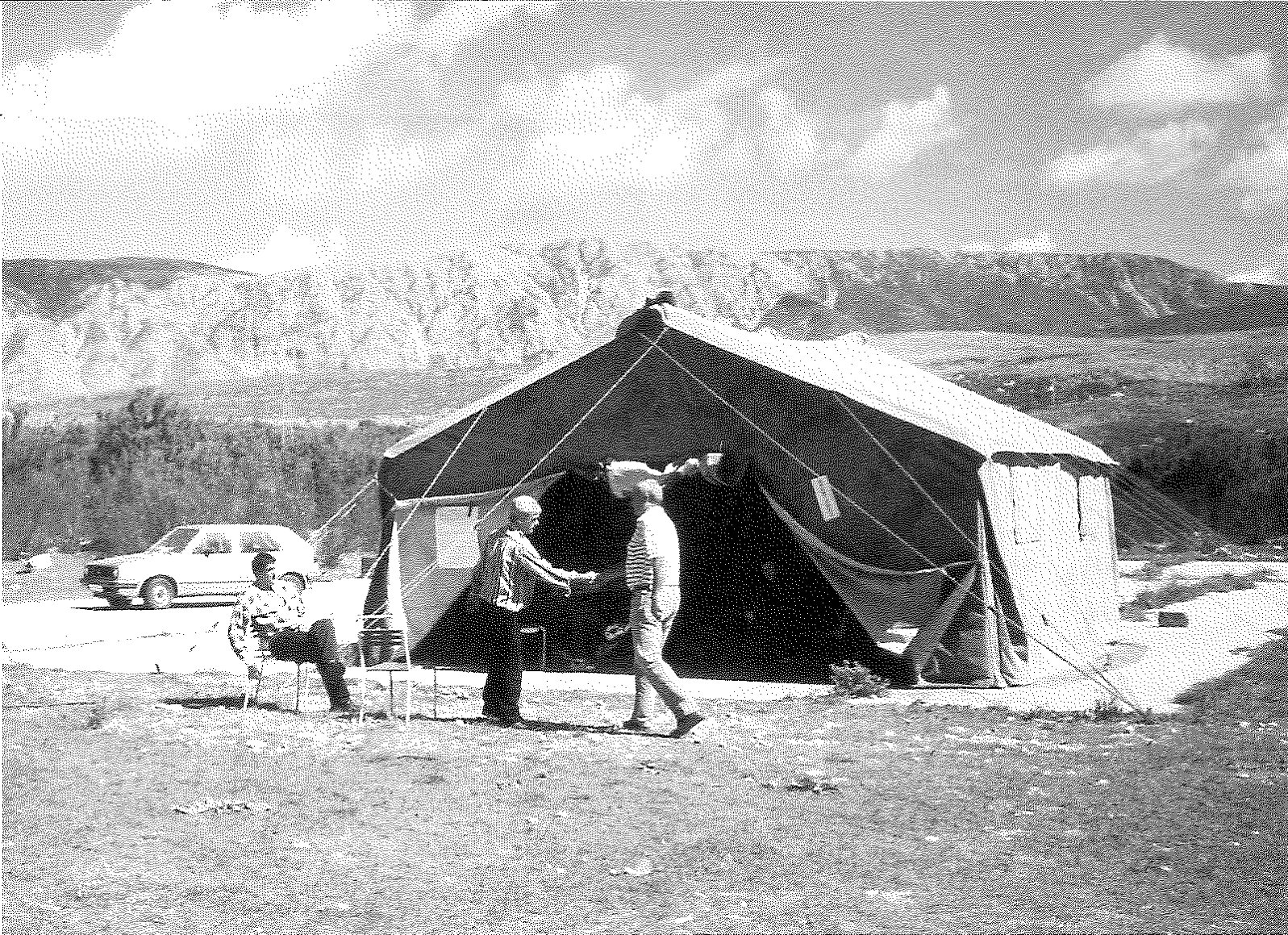
I start a conversation with the two local heads of the polling station (one Moslem, one Croat) under the watchful eyes of two huge Croat policemen: a tangible reminder that this is Croat territory now. I ask whether anyone has yet come back to vote. The Moslem head of the polling station looks around and says that 24 people have voted so far, then glances again at the two huge Croat policemen standing by at each polling station to offer ’protection’. Continuing, he prudently adds that he does not know from which nationality the voters are. I turn to his Croat counterpart to take another tack, and ask: Have there been any buses through here today? Moslems were bused back to vote. “No buses,” he smiles. “No Moslems,” I write in my notes. After a few more pleas antries, I ask if I can take a picture of the polling tent, erected by the local Portuguese IFOR battalion. The picture of them shaking hands — even this once — is worth more than the voting that has gone on there that day.
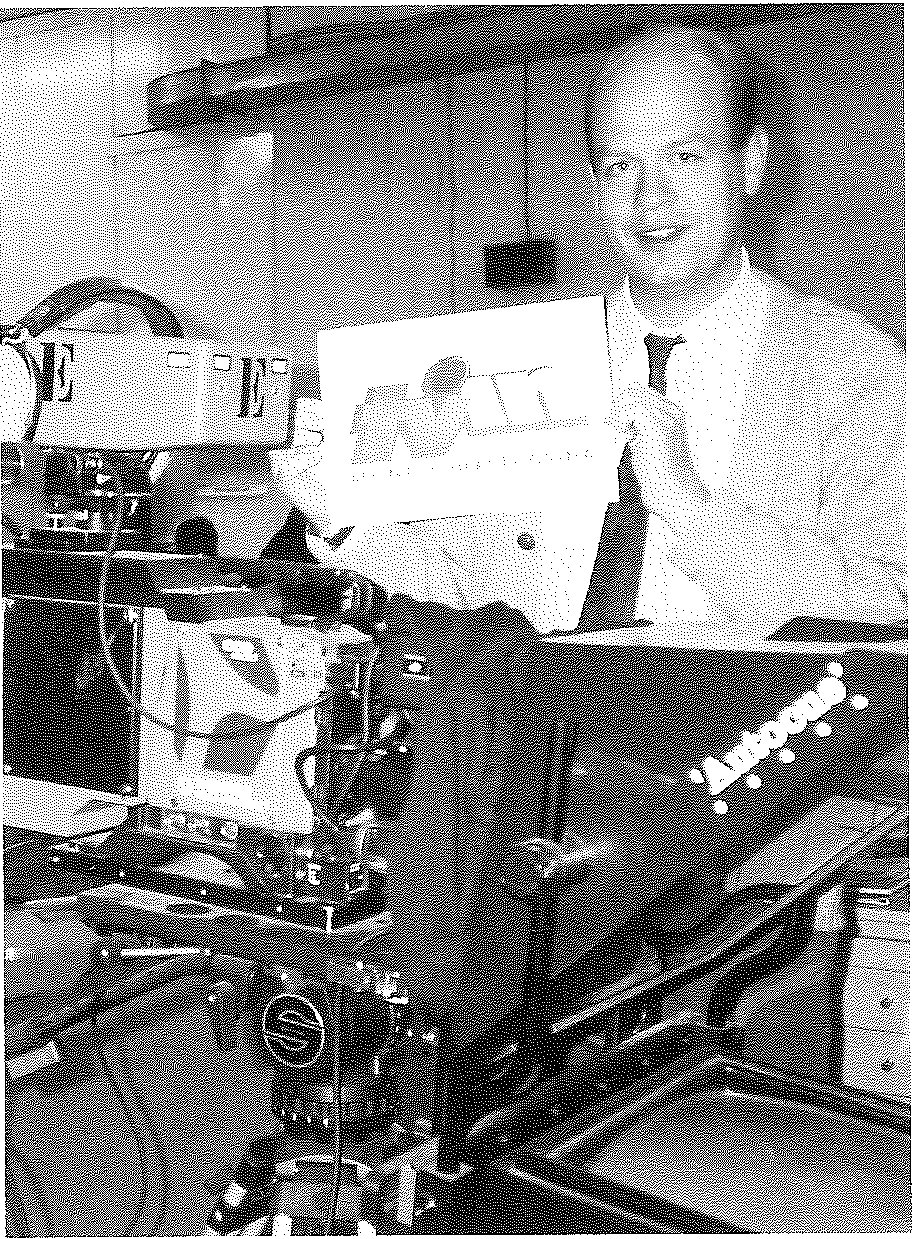
A transit bus with out of town plates pulls up outside polling station 13 in this small town, just five minutes before the polls close. How odd: 50 young males with very short haircuts have decided to charter a bus to come and vote together. “Odakle ste-vi” Task one coming off the bus, wearing track pants, “Where are you from?” No answer. Could it be my Serb accent, I wonder? They present their documents: all carry OSCE voter registration forms. We look at the first few. Names are of one nationality, originating from all parts of the country, but each stamped in one place, nearby Stolac. Okay, maybe refugees coming back to vote. Birthdates: 1947, 1962, 1956, 1951… Benefit of the doubt exhausted, we summon the joint polling station heads, but opt for the soft approach. “Some of these 40 year olds don’t look like they’re shaving yet” I observe, with a ’puzzled foreigner’ look. The officials shrug their shoulders, but thus confronted the ’bus driver’ suddenly hustles his very mature kids back on the bus. In our report to the OSCE, we later find that this bus has made several – successtul — stops along the way. These army drattees have voted enough times today to make up for years of one-party rule under Tito. TV-IN’ and Tina Turner Manipulation of state-controlled media having been used to foment the Balkan wars, the Office of the High Representative wanted to find ways of making television a force for democracy and pluralism. Within a week of my arrival, I was tasked with finding a way to link up five fledgling local TV stations to form a non-governmental network, and to bring in Serb counterparts in Republika Srpska to join. $10 million and 6 months later, we had located, upgraded and trained staff at regional stations in Sarajevo, Mostar, Tuzla and Zenica, and had found people to work for us in Banja Luka — but we still lacked an ’event’ to mark our on-air day, a fortnight before September national elections. We had lots of election material already in the can, but people were tiring of that. One of our consultants, a network type brought in by the Soros Foundation from NBC, called up his friend Tina Turner. It was arranged. For a fee of one dollar, we had exclusive Balkan rights to go “live” with Tina in concert from Amsterdam. The mood in the studio was electric that night, as we brought something new and different into houses throughout Bosnia on August 31st, followed by news from our central studio in Sarajevo at 11. Offering a real option for viewers, the first commercial network in the Balkans was born that night. TV-IN still lives, coming from Sarajevo live to major centres throughout Bosnia.
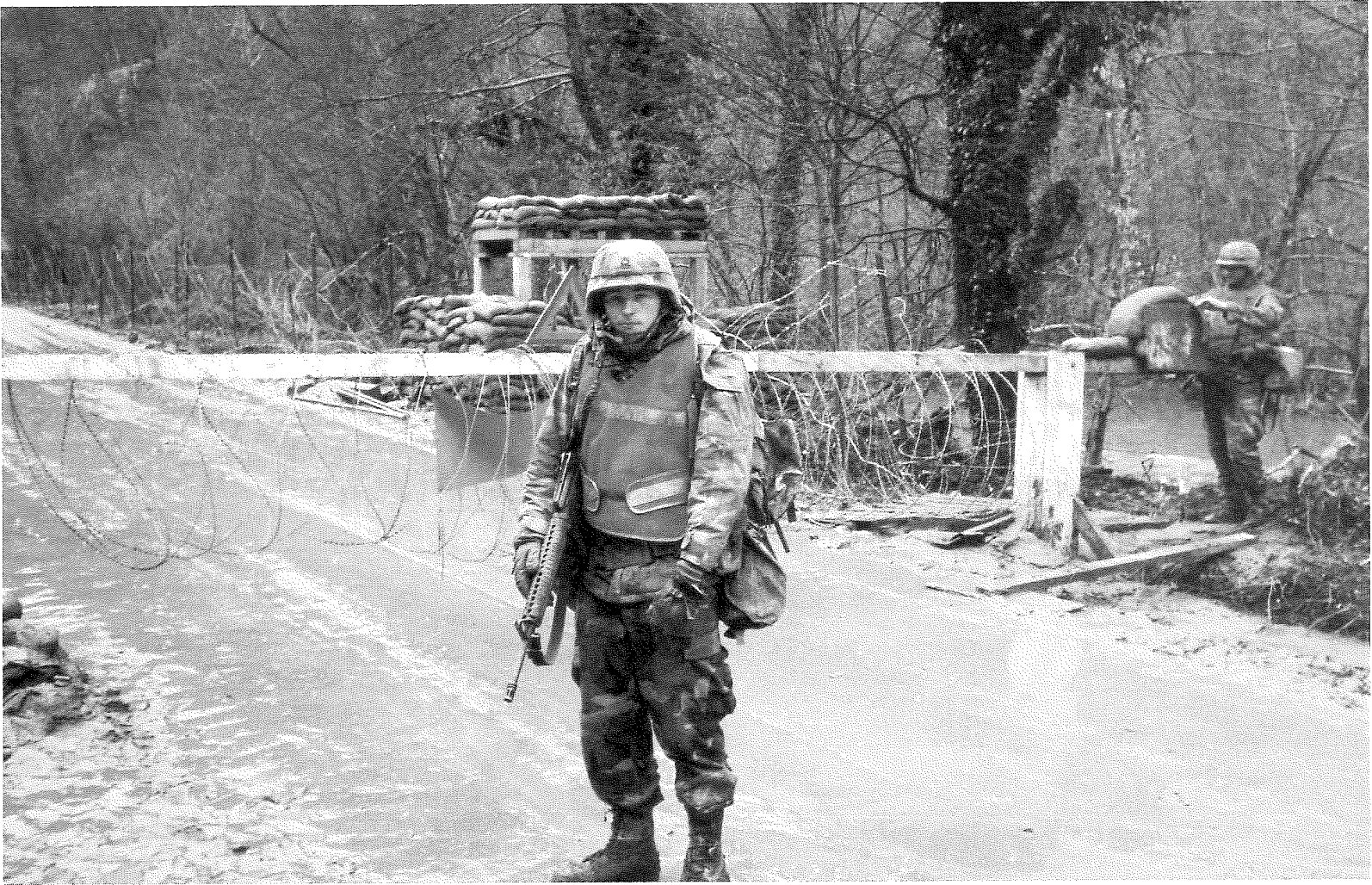
The Inter-Entity Boundary Line: we’re not in Nebraska now The road from Belgrade to Sarajevo is well paved, but near the Inter-Entity Boundary Line shell holes make slow going out of the stretch between Zvornik (Srpska) and Kladanj (Federation). It’s raining, this stretch of road is empty, and mud covers up the headlights of the office Range Rover. Razor wire begins to appear at the side of the road and suddenly a battle tank swings a spotlight on me. I’ve arrived at the old frontline. I am almost happy to stop at the checkpoint, half thinking myself lost, now in hour six of what was to be an eight hour trip from Belgrade back to Sarajevo. A soldier approaches from the barrier, in full body armour with rifle slung forward to greet me. I see his Hum- Vee truck, and realize now this crossing point is manned by Americans. Good. I want directions in a language I can understand. We chat. He’s from Nebraska, had no problem today on the line, been here six months, never seen such mud anywhere in his life. Behind him are hills denuded of all vegetation, of all life. My ID okay, he waves me forward. “One question,” I say. “At the T-junction ahead, which way do I turn for Sarajevo?” He pauses to reflect. “Sorry-hive-owe? Sorry Sir, never heard of it, but have a nice day.” I drive on slowly in order to stop the next person I see, anyone who speaks ’our language’; they will know what and where the capital city is.
A February evening at the ’People’s Theatré’ The Sarajevo Symphony tonight has guests from exotic locales like Buenos Aires, Vienna and Mostar, but it is only the conductor who is drawn back to the stage for a third ovation. Teodor Romanic, age 70, has stayed at his podium through four years of war, keeping concerts going and spirits alive. In the audience, people wear everything from dinner jackets to old jeans. High culture here is open to all for one DM a ticket. Sarajevo’s success in keeping its Symphony Orchestra going since 1923 puts the travails of my hometown’s Vancouver Symphony Orchestra — with ten times the population base – into bleak perspective.
30 bout de papier Vol.
At a village polling station in East
Mostar, local election day June 30tt The old school house is already crowded with voters at 9 a.m. when balloting begins — ’queue’ does not exist as a concept in the Balkans. Older women in this once mixed village now generally wear the shamija, or Moslem headscarf. A hush falls when a bus arrives with Croatian, West Mostar license plates. These are the Croats coming back over from “their” side of the Neretva river — many for the first time in three years — to vote in their old place of residence. Emotion is high. The men look uncomfortable, and some women break down as they greet or alternately confront old ’friends’.. Men in small groups go back to look at their old farm houses, some rebuilt, others as bombed out as when they left them in a hurry over the past 4 years. Finally the buses leave: a first move toward reconciliation has been attempted. Peace in Bosnia and Herzegovina will be made one valley, one village, one step at a time.
Cafe culture and the food of empires past and present Famous for their cafes, the ’Sarajlie’ are enjoying their first home-town summer in five years at re-opened cafes on the sidewalks and squares. At one of them a translator from our office, Vedrana age 25, has been listening to accents around us and turns to tell us that only about half of the patrons are from Sarajevo, the others are ’displaced’ Bosnjiaks — largely villagers – from areas now under Serb or Croat control. Returned recently herself, she says that only nine of thirty-five classmates from her high-school in Sarajevo remained during the siege, and few have since come back since Dayton brought peace in Winter 95/96. Sarajevo’s spirit is forever changed, she adds. Also in the cafe are American IFOR soldiers conspicuously enjoying a day’s leave. We reflect on what occupation forces bring as our sachertorte and turkish coffee “sa shlagom’ — with cream — arrive: the cake looks exactly like what could be had today in Vienna, but the flavour has been lost over the 80 years since Austro-Hungarians ruled this place. If the grainy coffee is Ottoman, the cake is faux Hapsburg. What tasty treat will IFOR leave behind on the long smorgasbord of Balkan culinary history?
Road works for Alija It’s one month before the September ’95 elections. Travelling down to Mostar, I’m glad to see a highway crew beginning to paint road-markings for the first time in years. Perfect timing for me: rain is expected for our evening return the following day to Sarajevo, and the road up through the Dinaric mountains is inky black and hard to follow. Tomorrow night comes with rain and darkness, but no road-markings for us. Instead, from Mostar to Sarajevo, the road-workers have painted the acronym SDA (the ruling Bosnjiak political party) on the road in huge letters every few kilometres up the highway. Back in Sarajevo, we find the same thing has happened on the main streets, and the police have been mounting SDA flags on lamp standards. The OSCE protests: ’Misuse of civil service by ruling party,’ and a $40,000 fine is levied against the 1 SDA. No Government reaction except to = say ’why the fuss?’ IFOR gets black paint mixed, and the same road crews shuffle out to paint over their work.
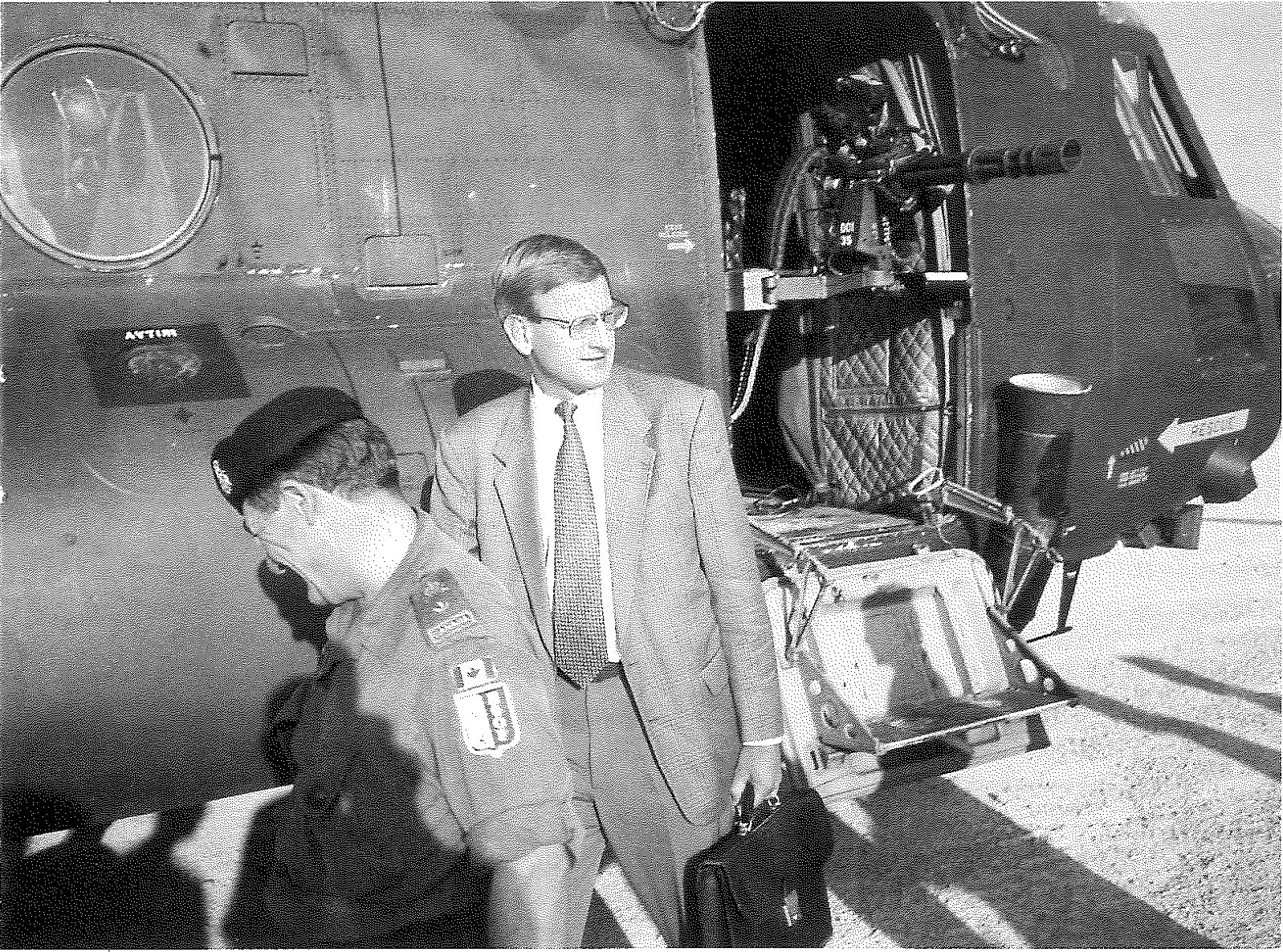
Balkan politics and car insurance It’s February 1996, three months into the Dayton Peace process and Carl Bildt gathers for the first time the Ministers of Interior and Transport from the Bosnian Serb, Croat and Bosniac sides. The mood is relaxed; these politicians from the ’former warring factions’ have known each other most s of their lives. Today’s issue is freedom of vehicle movement. As each of the Bosnian sides issued their own license plates, every driver was “marked” and nobody dared to cross over to the “other side”. The desired outcome today is for each faction to allow cars with other types of Bosnian license plates to travel freely through their territory. Bildt sets out the requirement — freedom of movement is an important part of Dayton. The Balkan types quickly huddle together — a small victory, we think — they are talking at least. The Serbs, Croats and Bosniaks return to the table. Victory short lived, the Balkan politicians have convened among each other only to decide who among them will say no, and how best to say no, to Carl Bildt and the International Community.
Insurance is the obstacle. None of the entities recognize each other’s insurance policies. Until this is resolved at the highest level, each minister regrets that their can be no freedom of movement by locally registered vehicles (though foreign registration, oddly, is fine). Bildt explains how things work in Europe, an eternity away, what with transferable policies, out of country coverage. Another huddle, then a new line emerges, one closer to the truth: control will be lost. Such loss of control will be unacceptable at this time. The meeting breaks up, diplomats plot among themselves for the next go-around: the mood is dark.
A European diplomat notes that at least Hobbes wrote that the people had the possibility to end Leviathan’s rule — could that happen here? Another colleague suggests that a State of Nature would certainly be better than a Bosnia governed by such politicians.
We have all underestimated the role in Balkan politics of ’inat’ ’, the Balkan word for extreme stubbornness, to the point of absolute obduracy. September comes with elections, bringing lots of foreign registered cars to Sarajevo’s streets, but not one from Republika Srpska, with the border only 15km away.
Postscript — May 1997 In High Representative Carl Bildt’s own words, the work of the Office of the High Representative focused primarily on pressing the Parties to comply with the undertakings they made at Dayton, Paris and at so many other venues since November 1995. For those of us who arrived in Sarajevo in the weeks and months following Dayton, the challenges were immediate and the humour necessary to keep spirits up was often fairly black. A Germany diplomat and I modified a office poster to read:
Confused? Frustrated? Bang head here and Say: “I am wrong, I am wrong, Dayton is not failing”. (Repeat if necessary.)
We posted this in Carl’s office (where it remained) three months after Dayton — and its message has even more resonance today. The General Framework Agreement for Peace, as Dayton is officially know, was drafted in the best spirit of Mid-West optimism. Dayton concluded that in postbellum Bosnia people would wake up to a new dawn. Looking back, it is clear that none of us, even with NATO and Russian armies alongside, could have undone Tito’s legacy of repressed anger over the course of the one year we were originally given.
So much has been achieved – peace, above all. So much more will be up to the Bosnians themselves, if ethnic separation is not to take hold. If obdurate (and now legitimate) nationalist Balkan leaders force Richard Holbrook’s Dayton Agreement to fail, Bosnia may well end up partitioned: it was fellow American Robert Frost who wrote “Good Fences Make Good Neighbours”. Options are still open in Bosnia — 18 months into the peace process.
View the original scanned pages →
Originally published in bout de papier, Vol. 14, No. 2 (1997) — Summer 1997 // Été 1997, pp. 28–31. Read the rest of this issue →



