
bout de papier, Vol. 11, No. 2 (1994) — Summer 1994 // Été 1994, pp. 25–26
Re-engineering means starting with a blank piece of paper and designing your organization from scratch. How would DFAIT fare?
Last August the Economist carried an article about the newest management re-engineering means starting with a blank piece of paper and designing your company or production process from scratch. The idea is to break free from inherited processes and structures and look anew at how one does business. The object is to find more efficient and effective ways to conduct business at a healthy profit.
The thought crossed my mind: What would happen if we applied re-engineering to Canadian diplomacy and the Department of Foreign Affairs and International Trade? And what unit of currency would we use to evaluate our success in meeting our objectives — furthering Canadian interests? Promoting Canadian values? Or both?
The Dilemma
We have all mused at various times about how global interdependence and the increased complexity of government to government relations affected the conduct of diplomacy. Or about the impact of the airplane, the computer, fax, and satellite TV We all know the great impact these have had on aid or economic cooperation, environmental policy, or the growing importance of non-tariff issues in trade policy, investment regimes, and the triumph of market economics.
Have these new forces so overwhelmed the traditional diplomat as to make him or her irrelevant? Should the conduct of diplomacy change or should we keep to our traditional role? What is the role of a diplomat in dealing with specialized functional departments and issues? What is the role of an Embassy in the conduct of multilateral diplomacy? And equally important, what is the impact of declining financial and human resources on how we define that role? Can we afford to continue with more of the same?
We should perhaps look at ways reengineering might affect the conduct of bilateral diplomacy. The answers proposed below have two assumptions. First, our power and influence on the world stage has peaked and will continue to fall, especially as many developing countries emerge as significant regional and international actors. Second, we are a department which has lost its sense of direction and purpose. We are an unwieldy bureaucracy too siow to shift resources to new areas and we are over-managed.
We cannot continue as we have been. We have insufficient resources in our Embassies and our geographical desk officers are spread too thinly. The advent of modern communications may give us an opportunity to do things differently.
Post Versus Headquarters
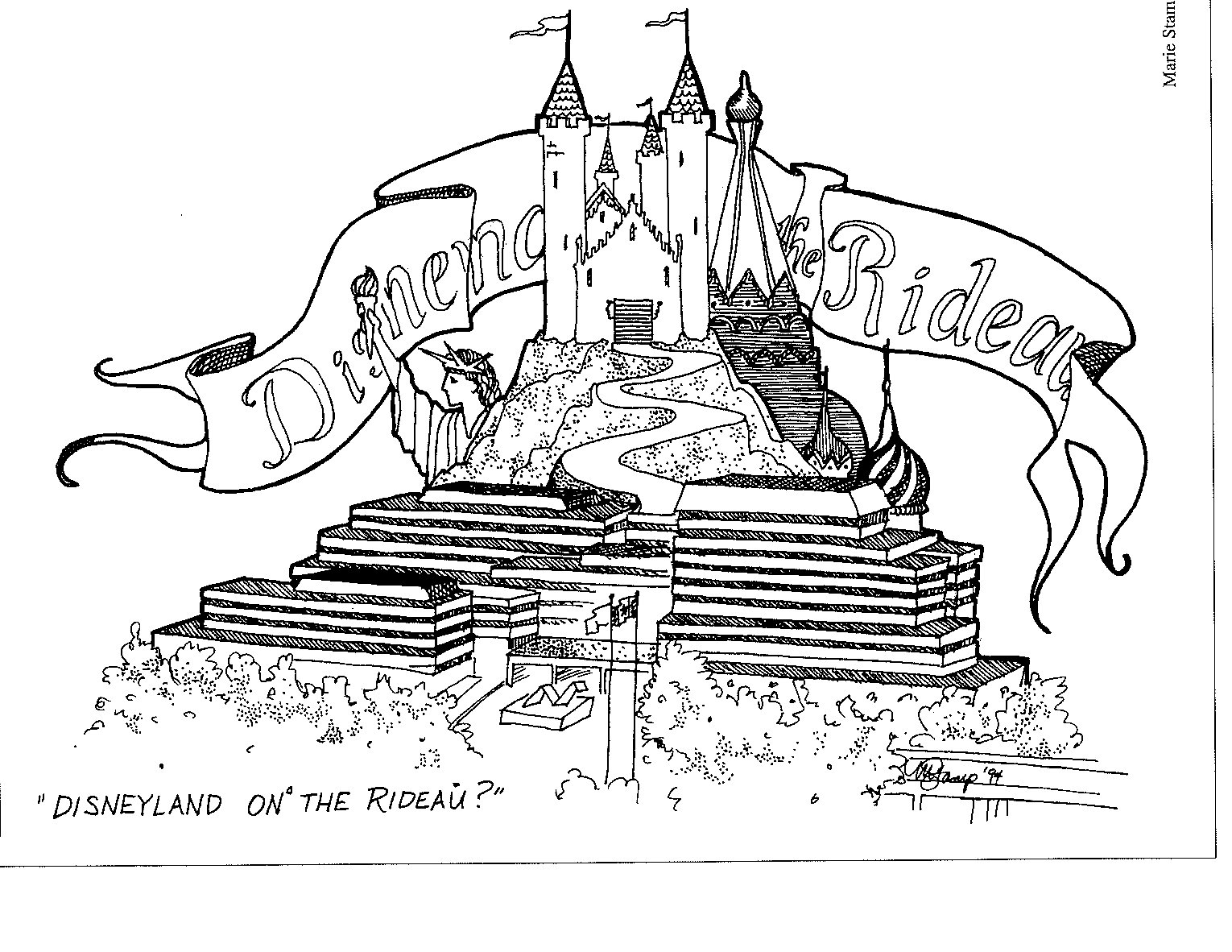
a) Value added from Disneyland on the Rideau?
One option would be to reduce most of our Embassies to mini-posts and expand the geographic desks in Ottawa where costs are lower. The savings in Foreign Service Directives costs alone would be significant. Desk officers who now rarely get outside of the L. B. Pearson Building would travel frequently to their country of accreditation and in between the fax and telephone could suffice. Is there a difference between a desk officer in Ottawa phoning the Ministry of Foreign Affairs for an appointment and a phone call from the local Embassy? Why not have multilateral desks in Ottawa organize their own trips as they often know who they want to meet? We could do away with multiple accreditation and have non-resident accreditation handled by the geographic desks in Ottawa.
b) Post as the centre of the Universe? A second option might be to do away with the geographic divisions in Ottawa and place more people in the field. Many of the tasks done by desk officers in Ottawa could be done in the Embassy with E-mail/fax/phone/ video conferencing, etc. Why do we send telegrams (do we have telegrams any more?) from post to be recast as a memo to the Minister in Ottawa when the memo can be drafted and finalized at post and sent by SIGNET directly to the Minister via senior management?). Embassy activity in countries of non-resident accreditation would be reduced to a minimum.
While we would be foolish to be unaware of the dangers of localitis, the fact remains that the knowledge and skills which make the department unique are those that come from our local knowledge of other countries and our ability to use that knowledge to advance or protect Canadian interests. Any further emasculation of our posts without redefining our role would undermine the very effectiveness of the department.
Multilateral Diplomacy and Bilateral Posts
Another avenue of questioning leads to the role of the Embassy in the conduct of multilateral diplomacy. Can a general relations officer be a specialist in domestic politics, foreign policy, events in Canada, and Canadian policies in 30 or more multilateral agencies? How many times have we asked Embassy officers to make representations on multilateral issues in capitals when the decisions are being made in New York, Geneva, Vienna or elsewhere? Or worse, our candidacy was agreed in WEOC and we had lobbied in 150 countries around the world needlessly? How much time do we spend translating or simple re-typing diplomatic notes and talking points? Would it be simpler to send our Embassies information copies of notes delivered to representatives to multilateral agencies and ask them to intervene only if a problem arises.
Maybe we should face reality and acknowledge that we should diminish the role of the Embassy in multilateral diplomacy except where major Canadian interests are involved and where there is reason to doubt that lobbying through the multilateral channels on key issues will not be effective. We can no longer afford to duplicate efforts through both channels in this era of scarce resources: we need to re-examine when the Embassy really provides “value added” in multilateral organizations.
The General Relations Program: Myth or Reality?
The third avenue to explore is the nature of a general relations program and how it serves Canadian interests. Is our priority cogent analysis of the domestic scene or effective lobby in the MFA on UN elections or access to ministers and influential parliamentarians. Where does public affairs fit: Are we to be skilled drafter of press releases or have an extensive list of influential columnists and editors? Is success measured by column inches of news printed on Canada or a couple of good editorials? Do we really expect posts to mount effective public affairs programs with minuscule Public Affairs Initiative Funds (PIF) of $5-$10,000 per post and non-existent HQ funds?
The general relations program is so broad and unfocussed that it has nearly collapsed of its own weight. Its raison d’être desperately needs to be rethought. Central to this must be a definition of the general relations program as series of activities, projects and expenditures which advance specific interests. Cultural events, sports, visits of high profile speakers or public figures need to be examined in the light of how they raise Canada’s profile and advance specific interests. Academic cooperation should be focused on specific sectors of interest. Canadian speakers tours should be organized to ensure the Canadian view is heard at major international conferences on trade, foreign investment, social policy. To do so requires a fundamental shift in the perception of the department and the general relations stream as one of program management rather than policy advisers. It means expanding the scope of our activities while focusing more on interests. It means freeing up financial resources. As a small start we could establish a General Relations program fund (like CIDA’s Canada Fund) in every Embassy so that general relations managers can actually allocate funds to priority programs. Isn’t this what delegation of authority to Heads of Post and managers is really about?
26 bout de papier Vol.
International Cooperation in Support of Canadian Interests!
Finally there is the issue of international cooperation – development assistance, economic cooperation, police training, technical assistance, technology transfer or cultural and academic exchanges.
In the decades of the 70s and 80s, we focused all of Canada’s expenditures on cooperation into the development program, with small pots of money allocated to cultural programs, media relations, or academic programs. On the trade side, the focus was on trade promotion and more recently on business cooperation including investment or technology transfer to foster trade and strengthen Canadian companies.
CIDA has responded to the development crisis of the 1980s initially by re-allocating funds from infrastructure projects to policy-based lending. Gradually there was a second shift to new activities such as industrial cooperation and policy-related activities such as economic management, good governance, public administration. In many cases however, CIDA funding for these cooperation programs has such a wide scope that it has a direct impact on areas which can affect bilateral relations or activities of multilateral agencies. CIDA funding for industrial cooperation for example, far exceeds PEMD or trade fair funding and is barely distinguishable in content from our trade development programs. CIDA and IDRC funding of universities in developing countries dwarfs any impact that a meagre academic relations program might have.
The recent growth of significant programs in Eastern Europe, the transformation of many ASEAN and now Latin American economies is further blurring distinctions. International cooperation is becoming a seamless web in which actions in one sector bolster Canadian interests in another.
If we started over again it is unlikely that 90 percent of the $2.8 billion in International Assistance Envelope (IAE) would be allocated to Official Development Assistance and hence mostly to CIDA. EDC might not exist — trade finance and insurance is after all a private sector activity — or it would have a much smaller mandate more directly linked to DFAIT programs and priorities. Geographic branches would likely manage larger resources and programs and many activities. CIDA’s activities would be more focussed on the poorer developing countries where Canada’s objectives are more related to our values than our interest. International cooperation with more advanced developing countries and Eastern Europe could be channelled through new mechanisms in which Canada’s more diverse interests are reflected.
Most of the questions I have raised are by no means new or original. Most of you will have many different ideas about how to answer them. But of three things I am sure: a) we can only expect further cuts in funding for the department and its programs in the foreseeable future; b) we cannot sustain further budget cuts without rethinking how we conduct our business; and c) the way we do business at present is an increasingly inadequate response to how to advance Canadian interest in our global village.
View the original scanned pages →
Originally published in bout de papier, Vol. 11, No. 2 (1994) — Summer 1994 // Été 1994, pp. 25–26. Read the rest of this issue →



