
bout de papier, Vol. 25, No. 4 (2011) — Winter/Spring 2011 // Hiver/Printemps 2011, pp. 10–11
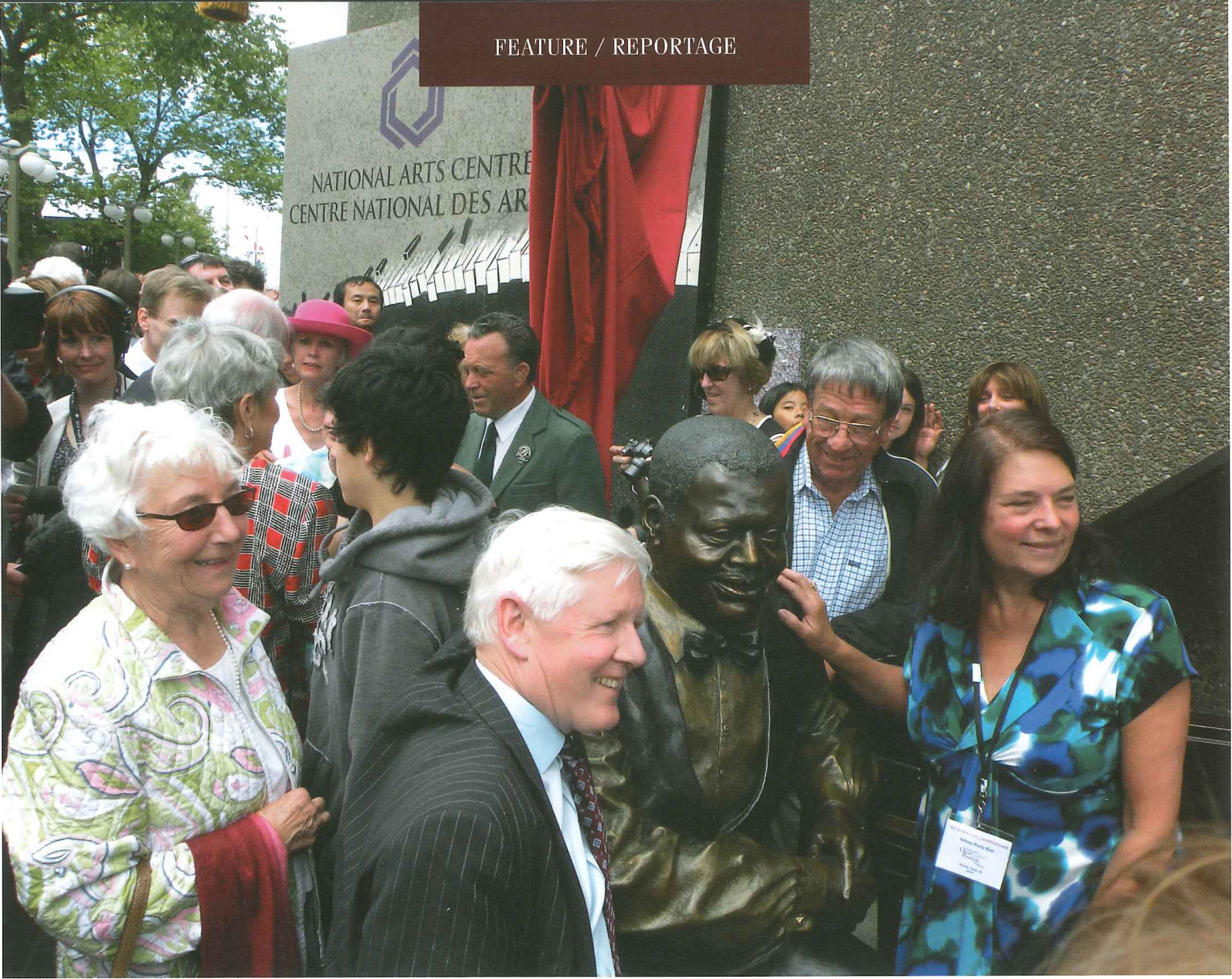
Editor’s Note: Bob Rae’s new book, Exporting Democracy: The Risks and Rewards of Pursuing a Good Idea, has been reviewed extensively and well, perhaps most notably by Andrew Preston of Cambridge University in The Globe and Mail on November 12, 2010. bout readers may wish to delve into the web and read it before proceeding to the two related feature articles that follow: an interview with Bob Rae and a personal narrative by Sheila Fruman on how Canadian political leaders have contributed to democracy and peace-building in Pakistan (with Canadian support and through the good offices of the U.S.-based National Democratic Institute, NDI).
Member for Toronto Centre, Rhodes scholar, former Premier of Ontario and now foreign affairs critic for the Liberal Party, Bob Rae also helped found the International Forum of Federations. His latest book, published by McClelland and Stewart last November, is ambitiously entitled: Exporting Democracy: The Risks and Rewards of Pursuing a Good Idea. Writing in The Globe and Mail, Andrew Preston of Cambridge University says that Rae has produced a volume that is “erudite, judicious and lively”, advocating the virtues of “tolerant pluralism, patient federalism, and good governance”. All that is predicated on democracy rooted in the “acceptance of the rule of law…on the principles of equality and utility, on a shared humanity, and what will work in practice”. Preston claims the book offers “a future for Canadian foreign policy”; bout wanted to know more.
bout: People said you were born in a diplomatic log cabin; what impact did your parents’ remarkable diplomatic life have on your world view and political career?
BR: The joke actually originated with me — “I was born in a log embassy”. I’m delighted if others have now adopted it. Of course my upbringing had a huge impact on me — as I described in “From Protest to Power” — as did my high school experience at the International School in Geneva. Canada’s mission to prevent and reduce conflict and to extend the rule of law were values I ate with my breakfast. In addition to a love of music, jokes, and an ironic view of life I think the other main thing I imbibed at home was a powerful sense of public service.
bout: You cite Edmund Burke to the effect that “There is nothing more dangerous than governing in the name of a theory”. Pol Pot comes to mind, but do you really mean that we must surrender idealism to pragmatism?
BR: Burke believed strongly in values, as I argue in the book. What he fought against were dangerous ideologies, which is a very different thing. Certainly Pol Pot comes to mind as a revolutionary inheritor of the Jacobins. There are tragically too many others. But Burke was no valueless “fixer”.
bout: Canada’s diplomats have promoted “Canadian” values for years, but as public servants in the Westminster model we tend to eschew ideology (of whatever persuasion); where do you draw the line between the two and how should that affect our own “export” of democracy?
BR: We shouldn’t be “exporting” anything — the Bush experience is a good example of how and why that doesn’t work. It’s not about exporting, it’s about sharing experience as an equal and a partner, which is ve different. Democracy can’t be export off the shelf, nor can it successfully t imposed at the end of a barrel of a gu Another theme of the book is that the first requirement of a stable state is n democracy, but order.
DOUt: The U.S. established the National Endowment for Democracy, the National Democratic Institute and others to promote democracy worldwide, should Canada follow their example?
BR: An umbrella agency to help all the many ways we’re promoting human rights, the rule of law, pluralism, federalism, and democracy would be a good idea.
bout: if “democracy” means holding politicians and public servants accountable to citizens they are meant to serve, how central should that be to Canada’s policy toward emerging economic powers like the BRIC (Brazil, Russia, India and China)?
BR: Our engagement with the world, and all the states in it, will always have a rights and good governance component, not in a preachy way, but because it’s part of our international obligation. We can’t walk away from it. That includes big countries as well as small ones.
bout: You cite Daryl Copeland’s call for an activist “guerilla diplomacy”; has our specialized Foreign Service cadre, which came into being in your father’s day, become an anachronism?
BR: The practice of diplomacy will change, but the professionalism that was at the heart of the tiny department my father joined in 1940 is as needed today as it ever was. When my dad went to Algeria in 1942 or in Hanoi for over a year in 1955 as part of the International Control Commission conditions were not easy. His political reports would have been among few pieces of information available. Very different today when we are awash in information. But information is not knowledge, let alone wisdom. There will always be a premium on good judgment, because its supply is sadly limited. Living and working in a more open, and flatter world isn’t easy, but for very different reasons from the challenges of the past. But figuring out what is really happening in the world, and intervening constructively to advance Canada’s interests and values is still a valuable mission.
bout: Thank you.
View the original scanned pages →
Originally published in bout de papier, Vol. 25, No. 4 (2011) — Winter/Spring 2011 // Hiver/Printemps 2011, pp. 10–11. Read the rest of this issue →



