
bout de papier, Vol. 27, No. 3 (2013) — Autumn 2013 // Automne 2013, pp. 16–19
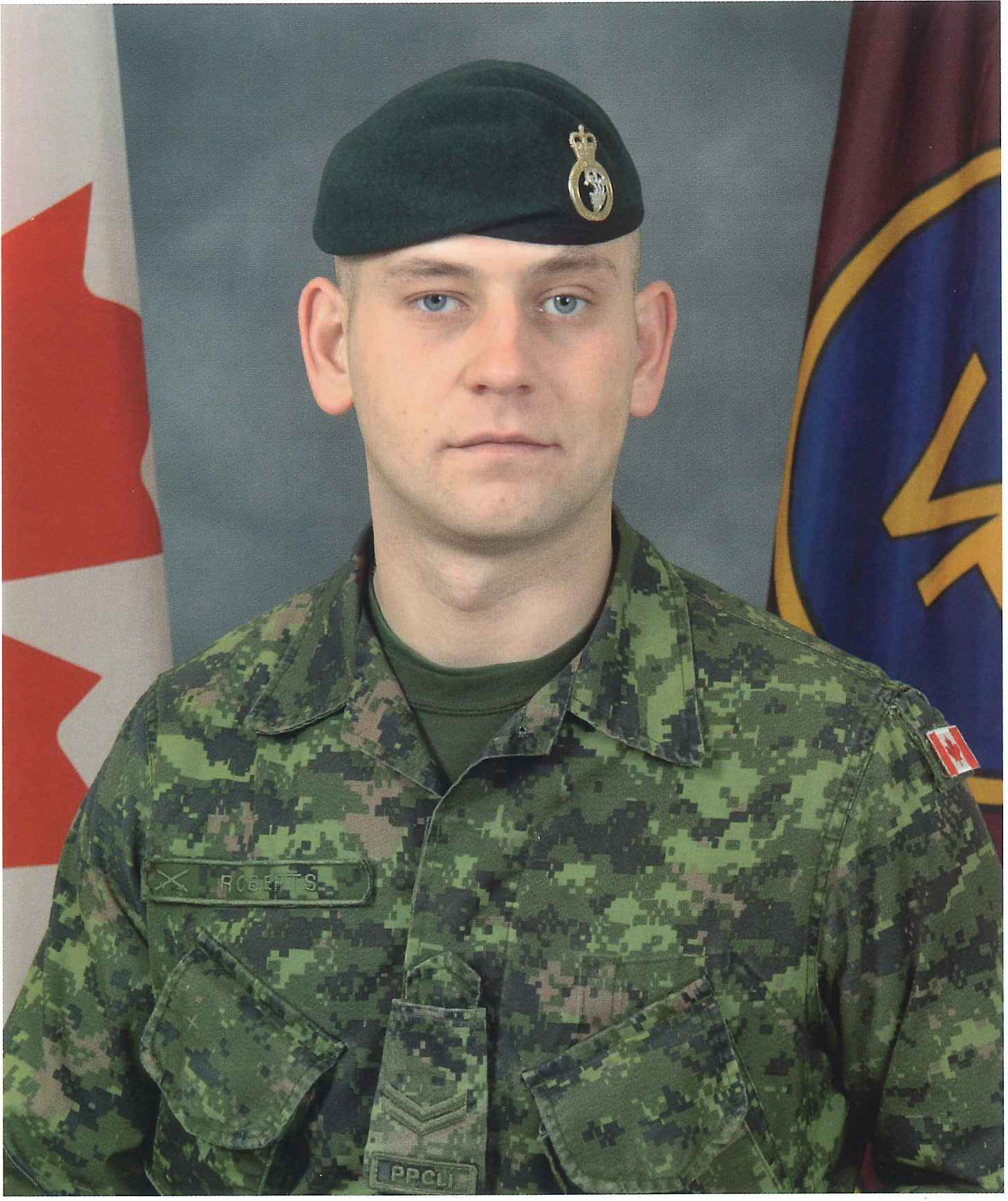
When Canadian Master Corporal Josh Roberts was killed in Afghanistan in August 2008, he was reported to have been the victim of fire from a US-contracted Private Military Company (PMC). He died in chaotic circumstances involving coalition, Afghan security forces, members of a PMC, and insurgent groups.
With bullets flying in all directions, it is not surprising that perplexing questions would emerge with respect to who was responsible. An American commander, who arrived on the scene after the event, threatened to arrest all PMC personnel involved. An official DND inquiry subsequently concluded that although PMC personnel were on the scene, Roberts’ death was the result of insurgent fire. No explanation for this conclusion was offered, despite media reports at the time that the concerns of Roberts’ family were not met by the official DND report.
Whether Cpl Roberts was killed by PMC fire or not, his case is a dramatic illustration of the complications arising from the presence of PMCs in Afghanistan and Iraq. Their role has expanded to the point that their activities (duties that include the protection of diplomats) are almost indistinguishable from those of regular soldiers. Yet PMCs are not clearly accountable under national and international law. Should PMCs operate outside international law? Apparently so: research indicates that the Government of Canada has no coherent policy for dealing with PMCs in such volatile, armed conflict situations.
Developing coherent policy
A discussion of “coherent policy” requires a little background on International Humanitarian Law (IHL). The goal of IHL’s founders was to expand the scope of humanitarian protection rather than simply protect the sovereign interests of states.
Thus legal status or legitimacy has been conferred by IHL on some non-state actors (NSAs) involved in armed conflict, specifically resistance fighters and national liberation movements. However, uncertainties surrounding the meaning of “combatants” (as the designation of those who may lawfully participate in hostilities) led to a proliferation of terms, particularly in the US. These seek to exclude or stigmatize certain types of fighter — terms like: “rogue civilian”; “war criminal”; “unlawful combatant”; “unlawful enemy combatant”; or, “unprivileged combatant”.
US and international usage sometimes diverge. The term “mercenary”, as a 9 category of fighter, basically has been criminalized as a result of recent developments in IHL while the US position is that mercenaries can be considered lawful combatants entitled to prisoner of war status. To complicate matters, in light of experience in Iraq and Afghanistan, US jurisprudence minted a separate classification of “unlawful” combatants. These fighters effectively fall outside the scope of application of the law and are deprived of both civilian and military protection. This divergence supports the argument of one eminent IHL authority that it is up to each state to decide which fighters, beyond members of the regular armed forces, will receive recognition as combatants and prisoners of war.
A key problem with creative but ambiguous designations for insurgents such as “unlawful enemy combatants” is that although they are intended to criminalize the actions of certain combatants, (or put them beyond the reach of the law altogether), they can also be applied to other non-state actors whose legal status is dogged by definitional problems, notably PMCs. While the latter are deemed legitimately and lawfully engaged by the governments that hire them, what law applies to them is not always clear. Only two international bodies have attempted to fill the void and define the legal status of PMCs, a Working Group of the UN and — predictably — a Red Cross Experts Group.
Beyond definitional issues, there are serious practical problems associated with the involvement of PMCs in contemporary armed conflict. Their status is necessarily confusing as they substitute for regular forces that cannot meet all of the security demands placed on them in dangerous places like Afghanistan and Iraq. Their real status is further confused by the lack of oversight or control of PMCs by the military or civilian branches of the governments that hire them. Some may see an advantage to such ambiguity offering “plausible deniability” to governments when the use of real troops may be contentious. However, the adverse consequences of this uncertainty include a lack of accountability for the actions of PMCs when things go wrong — especially when national or international law is violated.
Despite these uncertainties, governments have become increasing reliant on PMCs having them take on roles traditionally carried out by regular military forces, notably in the US war effort in Afghanistan and Iraq. A kind of “mission creep” has evolved: PMCs now assume responsibilities formerly considered properly part of military functions including interrogation and guarding of prisoners, protection of diplomats (as mentioned) and of senior military commanders and, training and intelligence-gathering.
Observers argue that the role of PMCs has become indistinguishable from that of regular soldiers. The numbers would suggest as much: a US Congressional Research Services study found that, as of March 2010, there were 95,461 contractor personnel in Iraq compared to approximately 95,900 uniformed personnel in-country. Over 12 per cent of the contractor contingent performed security functions which most observers characterized as combat-related. In Afghanistan, the figures were even more striking: 112,092 Department of Defense contractors (like PMCs) compared to 79,100 uniforms, i.e. 58 per cent.
On the downside, numerous official US inquiries have identified a range of problems related to the use of PMCs (documented in official reports and in the media). They focused on the lack of contract oversight, a chain of command separated from that of the military, and the misuse and lack of accountability of funds. It seems very likely that legal and other problems associated with the use of PMCs will persist and grow more contentious if two incidents that received sensational media coverage in 2004 and 2007 are any indication:
In March 2004, four Blackwater
employees were ambushed by insurgents and killed. Their bodies were burned and strung up from the beams of a bridge in Falluja, Iraq. The ensuing domestic outcry triggered a US military response described as the First Battle of Falluja. As such, the US military reacted as if the PMC dead were fellow combatants. Meanwhile, the families of the deceased contractors sued the company for wrongful death, something
obviously reserved for civilians. On 16 September 2007, five Blackwater
contractors providing security for US government personnel were called to Nisour Square in Baghdad. An improvised explosive device detonated close to a compound where US officials were meeting with Iraqi counterparts. Gunfire erupted with 14 civilian deaths and 20 wounded. The US government contended that the victims were unarmed civilians and the Blackwater defendants were charged with voluntary manslaughter and firearms violations; they were held to account as civilian actors.
Civil claims against PMCs are growing (with at least one criminal prosecution in US Courts). In civil cases, US Courts have been sympathetic to claims that PMC personnel are entitled to immunity from legal process equivalent to that of US soldiers. This runs counter to the preference of the US government and others for maintaining an arms-length relationship with PMCs (presumably to avoid liability for PMC actions). With highly negative US media coverage, PMCs also have had much congressional attention.
Canada’s military see PMCs as an asset. A military spokesman in Afghanistan said that Canadian troops could not do their jobs without the help of private security firms; PMCs have played a vital role in the Canadian military and post-conflict effort in Afghanistan. Nothing suggests that reliance on PMCs will decrease; their continuing or enhanced presence will undoubtedly have an impact on future deployment of Canadian forces operating as part of military coalitions — which is the most likely scenario for our involvement in future conflicts.
Canadian expenditure on private security is comparatively modest ($41 million over the five-year period 2006-10), but as the Roberts case has shown, Canadian interests can be directly and adversely affected by the actions of PMCs in conflict situations — whether or not Canada hired them. However, the Canadian Government Pallbearers carry their fallen comrade.
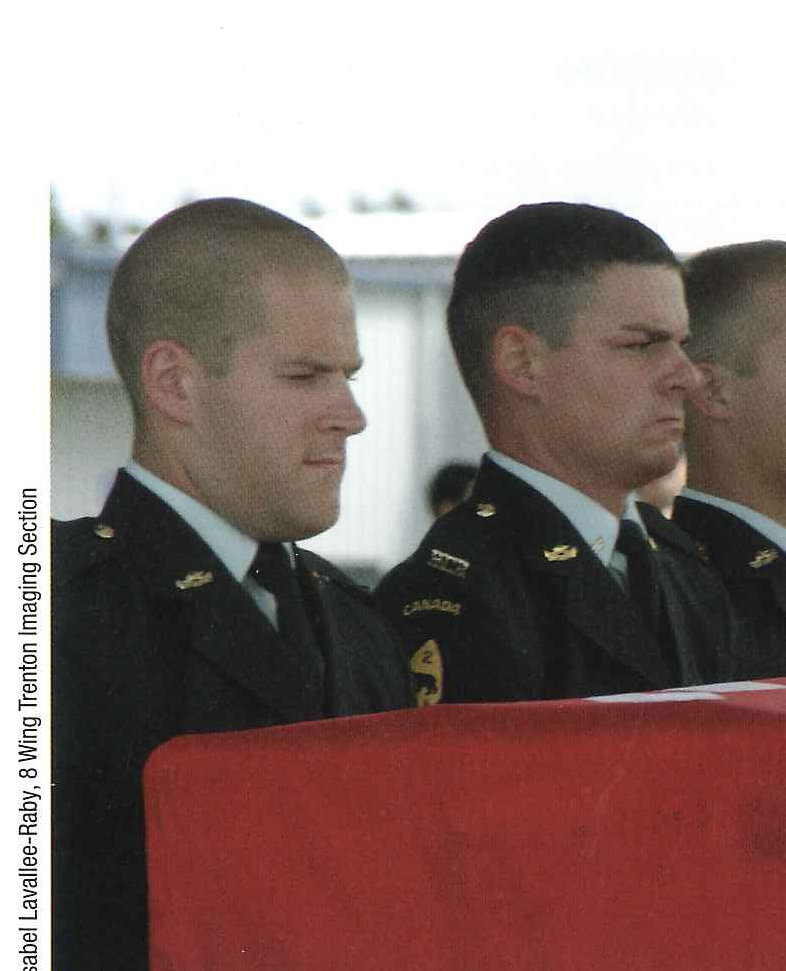
has nowhere acknowledged the existence of a problem in using PMCs, nor seen the need to develop policy to govern the practice of using PMCs in conflict situations. That needs to change: as the West comes to rely more and more on non-state actors (NSAs) like PMCs to support or substitute for their armed forces, it is obvious that Roberts will not be the last Canadian to die in engagements involving PMCs.
Dimensions of the legal problem
In layman’s terms, the code of conduct for international armed conflict is set out in International Humanitarian Law, as articulated in the four Geneva Conventions and their Protocols. The main focus is the protection of persons “hors de combat” as the titles of the Conventions themselves suggest. These distinguish between different categories of actors, notably combatants and civilians. The latter helps determine the legality of actions undertaken in the course of armed conflict and sets out who may participate directly in hostilities — civilians are forbidden from doing so.
Any inquiry into accountability for the actions of PMCs in wartime immediately raises the question of their status under IHL. That is likely to affect the evaluation of the legal consequences of their actions which, in turn, also raises the question of whether PMCs should be considered “combatants”. Naturally, the answer is not simple.
Despite its widespread usage, the term “combatants” does not appear in the Geneva Conventions. What is generally understood to constitute the relevant definition actually consists of elements borrowed from the provisions on the qualifications necessary for the designation of prisoner of war status. However, the Conventions do contain provisions that allow for the integration into the armed forces of “militias” and “volunteer corps”. These would seem to be categories applicable to PMCs, but there is no official record as yet of any government taking this essentially procedural step or currently contemplating it.
Very few governments have issued public policy positions on the status of PMCs, despite the prevalence of their use. For its part, the ICRC argues that there can be no vacuum in IHL: those involved in armed conflict situations are either civilians or combatants — it sees no intermediate categories. Consistent with this “either-or” approach, the US argues that PMCs are contract employees and therefore civilians. DND has not issued an official statement on the subject.
In the real world, PMCs do not act as civilians and are not treated as such by the governments that hire them. Civilians are normally subject to local law, but in the conflicts in Afghanistan and Iraq, American PMCs were given immunity from local jurisdiction. The only sanction for violations has been to pull PMCs out and send them home where some have been subject to the civil and criminal jurisdiction of American courts. In Canadian parlance it is a case of “combatants if necessary but not necessarily combatants”.
Access to information requests did not identify any stated policy on the part of the Canadian government, although they revealed elements of a position reflected in internal documentation. The question of which legal regime controls the activities of PMCs seems to have been specifically avoided. DND documentation provided no comments on the legality of PMC activities other than to say that they do not encompass offensive (as opposed to defensive) operations — a distinction that has no legal basis in international law. In short, research confirms that we have no coherent policy, stated or implied.
What to do
PMCs are here to stay as governments contract out services and seek cost-efficient ways to fight wars. Governments may well see economic advantage in the “privatization” of war by contracting professional fighters — PMCs — rather than recruit conscripts or volunteers. PMCs also provide services more broadly: to governments, governments-in-waiting, international organizations, NGOs and transnational corporations.
Given the scope of their activities (which might soon extend to peace keeping), PMCs should be receptive to regularizing their status, improving licensing and training requirements, and otherwise facilitating their growth. Similarly, to exclude such increasingly significant players from the application of IHL undermines the rule of law and weakens accountability for violations of the law in life-and-death situations. It could risk relegating international law to irrelevance, a worst case scenario for those genuinely committed to the rule of law.
Facts on the ground tell us that [IHL needs renewal. The state-centric model of warfare began to break down by the middle of the 20th century following wars of national liberation and post-colonial power struggles. The privatization of war and growing role of NSAs in modern conflict reflects the now asymmetrical nature of warfare, the de-territorialization of networks of insurgents and terrorists, and the non-hierarchical organization of violence. Yet the regulation of and accountability for the acts of NSAs still depend on an international system created and controlled by states; governments must address this dilemma for their own sakes.
International law offers two solutions to the problem of PMCs operating outside its scope. One is to make use of the mechanism provided in the Geneva Conventions and Protocols and integrate PMCs as militias into the regular armed forces of states. From a legal point of view this would represent the easiest solution. Surprisingly, there is no precedent or state practice to refer to in this regard perhaps because there are practical, political or administrative reasons precluding this option for many governments.
A second option is to treat PMCs as combatant, non-state actors subject to international law, like resistance groups or national liberation movements. That change of status could require amendments to IHL. Or, short of formal legal status as combatants for PMCs, states could consider them “de facto” lawful combatants in conflict-specific situations. That would be compatible with the views of the ICRC and some IHL experts. Such recognition could be granted by states unilaterally or collectively. In keeping with the Hague Regulations, these scenarios would require PMCs to abide by the law of armed conflict, and I suspect that most security companies should see their interests as best served with just such an undertaking.
To conclude, while the classic law of war no longer responds to today’s circumstances, the humanitarian concerns that inspired the development of IHL remain real. While strengthening the regime for the protection of the victims of armed conflict calls for constructive and informed engagement with the international community, there is also a pressing need to put our own legal house in order so justice can be done — and be seen to be done.
If Canada’s reputation as a leader in the development of international law seems a fading memory, we remain well placed to help solve the PMC dilemma. We played an important part in the development of IHL in the negotiation of the Additional Protocols to the Geneva Conventions and need only pick up where we left off. Canada should exercise a little moral leadership, fill its own policy vacuum, reinforce the rule of international law, and help ensure that PMCs are held accountable under international law wherever they operate. What we will have learned from Josh Roberts can only benefit those who follow.
Peter McRae is a retired Foreign Service officer. Posted to Vienna, Havana and Geneva, he was seconded to the Comprehensive Nuclear Test-Ban Treaty Organization in Vienna from 1997 to 2003 as its Legal Adviser. International Humanitarian Law was an area of concentration throughout his years with the Legal Bureau and formed the basis for his 2012 University of Ottawa LLM thesis (Unaccountable Soldiers: Private Military Companies and the Law of Armed Conflict). This article draws on that thesis.
View the original scanned pages →
Originally published in bout de papier, Vol. 27, No. 3 (2013) — Autumn 2013 // Automne 2013, pp. 16–19. Read the rest of this issue →


