
bout de papier, Vol. 30, No. 4 (2019), pp. 6–10
Canada has had diplomatic relations with North Korea since 2001, managed through the Canadian Embassy in South Korea. While directing the political/economic program in Seoul, I was cross-accredited as the Political Counsellor to North Korea. I led four Canadian diplomatic missions to North Korea in 2015 and 2016, where I was the first Canadian diplomat to visit since 2010.
NORTH KOREA, 10AM, DECEMBER 16, 2015. On a chilly sunny day, I attend the criminal trial of Reverend Hyeon Soo Lim, a Canadian citizen imprisoned since his arrest the previous February. He comes into the courtroom escorted by two tall uniformed state security officers, dressed in the winter jacket I provided him on a visit in October. He appears calm, if resigned.
Though held in a modern courtroom with the familiar set-up of judge, prosecutor and defence counsel, this trial is anything but conventional.
First, I was notified of the trial late the previous evening in a cryptic message delivered to my Pyongyang hotel from the North Korean Ministry of Foreign Affairs (MFA). The message advised that the trial would occur the following morning at an undisclosed location and that our delegation would be picked up at 9am and brought to the court.
Second, we are the first diplomats — and, in my case, the first lawyer — and among the few foreigners ever to attend a trial in North Korea. From their dress and demeanour, most people in the courtroom appear to be North Korean state security officers.
Third, the stakes could not be higher. The defendant is charged with “crimes against the state” and the prosecutor is asking for a death sentence. The defence counsel offers no evidence, admits his client’s guilt and joins in the condemnation… but proposes a life sentence instead.
After testimony by three witnesses, a video lifted from the internet of a speech by the defendant in Philadelphia presented in evidence, an aggressive cross-examination by both the prosecutor and the judge, a one-hour trial and a three-minute deliberation, the judge finds the defendant guilty and sentences him to life at hard labour.
Immediately after the trial, I hurry to the Swedish Embassy and report to Ottawa. Events unfold quickly. By the time I return for separate meetings with North Korean officials and the defendant, the North Korean side is aware of Prime Minister Trudeau’s statement expressing concern about the trial and Reverend Lim’s well-being.
I have a very animated discussion with North Korean security officials. They ask me what I think of the trial and they respond vigorously to the Prime Minister’s statement, slamming the table to emphasize points. Yet they remove their overcoats, which seems to indicate an intention to remain and continue our discussion. I reiterate the Prime Minister’s concerns and urge my interlocutors to resolve this case.
In my meeting with Reverend Lim, I am impressed by his stoic dignity and his resilience. I assure him of Canada’s absolute commitment to resolving his case.
These visits and discussions were significant steps in an ultimately successful effort to free Reverend Lim. On later visits, my colleagues and I continued to press North Korean officials regarding his well-being and release. He was returned to Canada in August 2017, after serving 32 months at hard labour. This case was resolved after a relatively short but arduous period of imprisonment, a pattern that is the norm for foreign prisoners in North Korea. However, the tragic case of Otto Warmbier — a young American who died in June 2017 shortly after being handed over in a coma by North Korean authorities to US officials — was a sad reminder of what can go wrong in such situations.
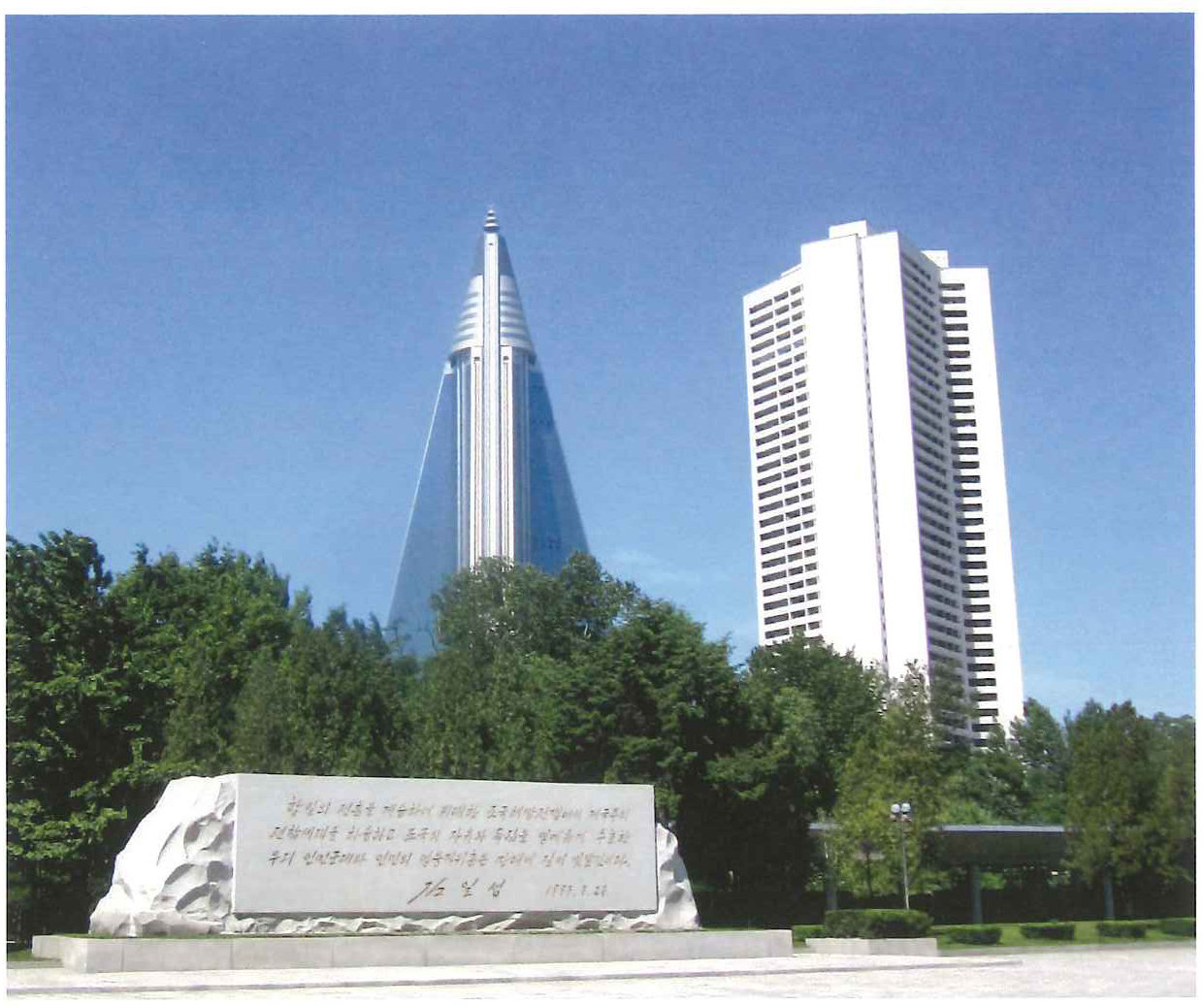
contrast to foreign prisoners, North Koreans are routinely punished without trial and imprisoned indefinitely.
Fellow passengers on the Air China flight from Beijing to Pyongyang include tourists going on group tours organized by companies from inside China (including one headed by a Canadian who facilitated former NBA basketball player Dennis Rodman’s visits). A voice on the intercom announces: “Welcome to Pyongyang and thank you for flying Star Alliance. We hope you have enjoyed your flight.” Aeroplan points are earned for travel into Pyongyang but, curiously, not for travel out.
Although a direct flight between Seoul and Pyongyang would take one hour, access to Pyongyang is through Beijing. Two airlines fly into Pyongyang: North Korea s own Air Koryo and China’s Air China. Visiting involved flying from Seoul to Beijing on Sunday, obtaining a visa from the North Korean Embassy in Beijing on Monday morning, and then flying to Pyongyang early that afternoon.
Each visit to North Korea entailed a lengthy process involving Global Affairs Canada, the Foreign Ministry in Pyongyang, our respective Permanent Missions to the UN in New York, and our embassies in Seoul and Beijing. Generally, we found out whether our visas were approved on Saturday at midnight. This meant either scrambling to make the flight on Sunday or cancelling our arrangements.
On landing at Pyongyang’s new airport, our delegation is whisked through customs unlike regular travellers who are subject to thorough examination, including for written material. Contraband goods can mean confiscation, expulsion or worse. Despite having diplomatic immunity, I have left in Seoul any written material that could be problematic, including a copy of The Economist which mentions North Korea.
We are met by our two MFA Liaison Officers (the “minders”) who will be a ubiquitous albeit courteous presence throughout our stay. They book themselves into our hotel for the duration of each visit and bring us to meetings. They also recommend restaurants and landmarks.
The minders take us to the vehicle and driver provided by the MFA. As we drive down the highway, there is light traffic with pedestrians and cyclists sometimes hurrying across the road. Agricultural workers toil in the fields along the highway. As we approach the capital, high-rise apartment buildings appear and there is increased traffic. Some people crouch in front of apartment blocks, trimming the grass; residents are responsible for maintaining the space in front of their building.
Our hotel, the Koryo, is located near the central railway station. There is a large screen in front, where people gather to watch the latest in North Korean cinema, including sentimental dramas, as well as footage of missile and nuclear tests. We check in and pay in advance in euros (other options are US dollars and Chinese yuan; non-resident foreigners are not allowed to possess North Korean currency). There is a DHL kiosk at the counter for sending or receiving packages.
On top of our hotel is a revolving bar which is notable for its friendly staff, smudged windows, absence of customers, lack of most of the drinks featured on its menu and pricey scotch.
Rooms are expensive, clean, simply furnished and so dimly lit that it is difficult to read in the evening. TV channels are local, with two exceptions: RT, Russia’s propaganda network, and, more surprisingly, the BBC World Service. No need for an alarm clock as loudspeakers throughout the city broadcast a loud and eerie ballad every morning at 6am. Musical ensembles serenade commuters outside the railway station and at key intersections.
Although there are a few guests in the cavernous lobby and the hotel restaurants, our floors are always eerily quiet. Agility and vigilance are required in elevators as the doors snap shut suddenly. A store adjoining the hotel has alcohol, food and clothing; the clerks do not allow photos of alcohol.
The Koryo is Pyongyang’s top hotel, used for official delegations. After my visit in 2015, there was a major fire; guests had to flee. North Korean authorities at first denied that a fire had occurred despite internet footage of billowing smoke. They instead focussed on apprehending those who photographed the fire.
At my request, our minders make arrangements for access to the diplomatic quarter, so I can meet with the Swedish Ambassador, one of several such meetings on each visit. We also consult with the British and German Ambassadors. The diplomatic quarter is not fortified, but authorization is required for entry. The minders explain our destination to bored sentries posted at key street corners; they check our credentials and itinerary and wave us through to the Swedish Embassy.
The Swedish, British and German Embassies share a building that formerly housed the East German Embassy. The building and its compound reflect Soviet-era East German architecture and design.
Sweden serves as Canada’s protecting power in North Korea. International law bestows upon Sweden the right and responsibility to intervene with local authorities to protect Canadian citizens. The concept is well-established under the Vienna Convention on Consular Relations, but some states purport not to understand it.
Foreigners usually come and go to North Korea without incident. Still, the Swedish Embassy remains especially vigilant during such events as the Pyongyang Marathon when several hundred foreigners visit.
In Pyongyang, we rent a mobile phone to set up meetings with embassies, UN agencies and foreign NGOs operating in North Korea. For obvious reasons it is not used for substantive or sensitive conversations. This phone cannot be used to contact any North Korean, including our minders or the driver, because it operates on a network restricted to foreigners. If I want to reach our driver, I call a resident diplomat who speaks to a North Korean staff member who then calls our driver.
A mobile phone is a status symbol for North Koreans. There are an estimated three million in use in the country. There are two parallel mobile telephone systems, one for locals and one for foreigners. Users on one network cannot reach users on the other.
On each visit, we left our electronic devices at the Canadian Embassy in Beijing. In addition to the obvious security reasons for doing so, our iPads and phones would not work in North Korea anyway. North Korea has its own intranet which is inaccessible to foreigners, whereas access to the world wide web is restricted to a tiny fraction of the population. Visiting foreigners have access to neither.
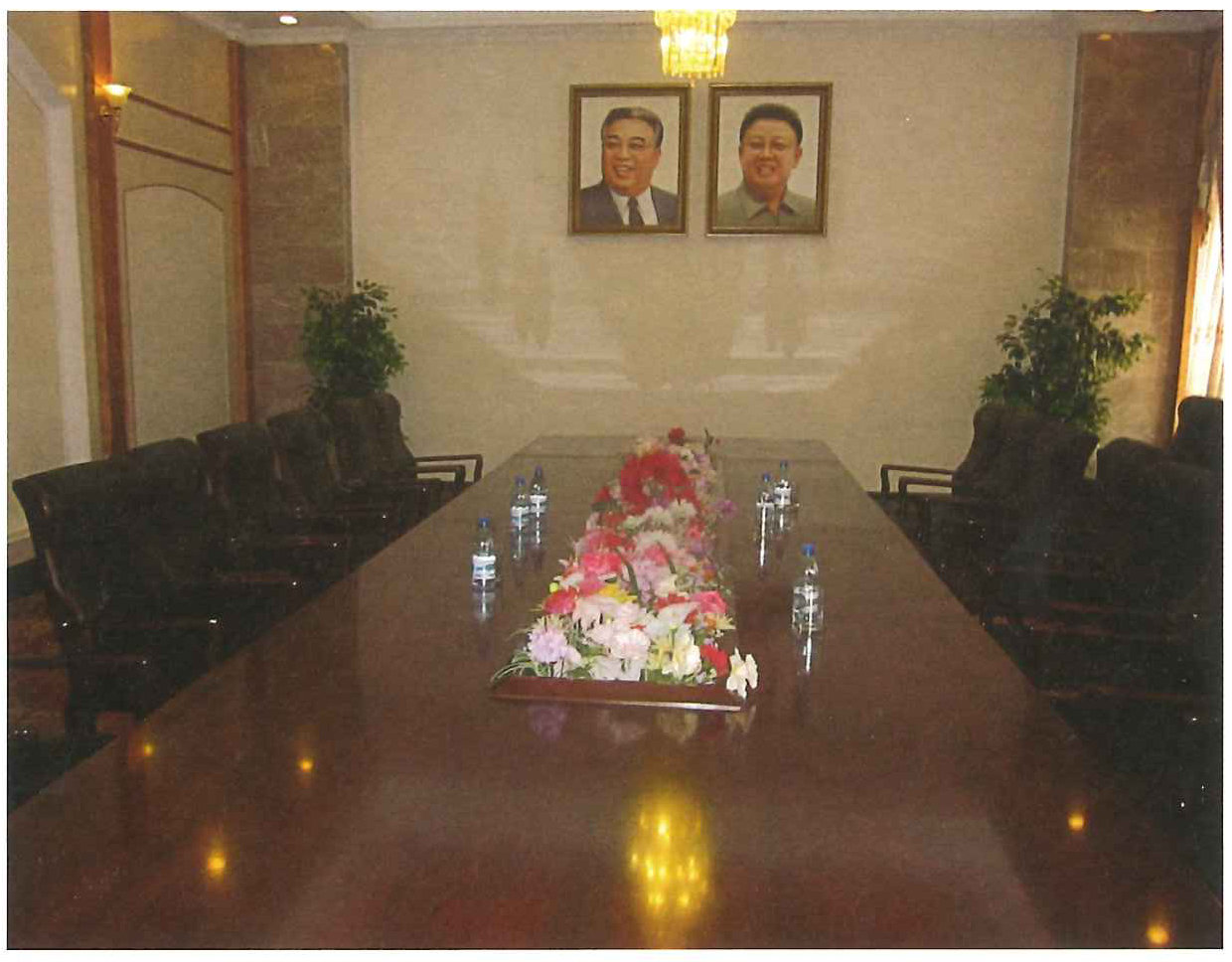
The morning after our arrival, we drive to the Foreign Ministry. We are escorted down an ornate corridor to a conference room adorned with photos of North Korea’s founding father, Kim Il-sung, and his son and successor, Kim Jong-il. Their images are ubiquitous in North Korea, including on badges worn by Party cadres. We meet for 2.5 hours. The meeting is conducted through interpreters, though our interlocutor speaks colloquial English. While exchanges deal frankly and fully with the range of contentious subjects that are of concern to Canada, discussions are civil. Some meetings occur over coffee and lunch at our hotel.
The MFA is located at a corner of the iconic Kim I-sung Square, the heart of the North Korean state. The square is dominated by images of Kim Il-sung and Kim Jong-il and is the setting for mass choreographed performances and military parades. Sometimes on our visits, the square would be filled with thousands of students and workers in colour-coded caps rehearsing future performances. The mood at these rehearsals can be quite relaxed, as opposed to that at the official performances themselves.
My meetings at the MFA were considerably longer than the norm for my meetings at foreign ministries in other capitals. This reflected North Korea’: interest in speaking directly to Canada after not having had diplomatic visits since 2010 — despite not relishing what we had to say.
On Friday, I attend the weekly meeting of embassies, UN agencies and NGOs held at the office of the UNDP representative who reminds participants that the weekly movie night will be held that evening at the Polish Embassy and that attendees should pay attention to parking rules, lest they be ticketed by the police. All are invited to attend and encouraged to bring samples of their national food. In Pyongyang, these social events are a welcome diversion for the foreign community.
There are six UN agencies operating in North Korea, including the World Food Programme and UNICEF, as well as a number of foreign NGOs. Canada and other countries provide funding for programs that feed infants, small children, pregnant women and nursing mothers. Though food security is considerably better than during the famines of the 1990s, malnutrition remains a serious issue in North Korea.
The Canadian delegation pays a visit to the Kumsusan Palace of the Sun. Formerly the official residence of Kim Il-sung, the 115,000 square-foot mausoleum now hosts the embalmed remains of Kim Il-sung and Kim Jong-il.
We are processed through an elaborate security protocol by North Korean officials in black suits armed with visible revolvers in shoulder holsters. The building is thronged with North Koreans coming to pay their respects. All visitors stand motionless on moving sidewalks that transport us slowly down long corridors, some a kilometre in length. Everyone is dressed in their best clothes, for this is a place of pilgrimage.
As we proceed down the hallways, our North Korean minders try to persuade us to bow at the statues and remains of the two leaders. I explain that we mean no disrespect but, in conformity with diplomatic practice and precedent, we will refrain from bowing.
We walk through a grand chamber with statues of the two leaders, through rooms equipped with giant dust-blowing machines meant to remove lint, and into the chambers housing the embalmed remains behind glass.
Kim Il-sung’s head rests on a Korean pillow and a Workers’ Party flag is draped over his body. All around us are solemn North Koreans and foreigners bowing; despite the social pressure, we hold our ground and stand erect. I remind myself of the Victorian era British envoy who respectfully declined to kowtow before the Chinese Emperor.
Being a diplomat in North Korea, as elsewhere, provides privileged access and glimpses of a reality screened from most foreigners. Diplomacy in North Korea is a mixture of the familiar, the unusual and the surreal.
In a world of hyper-communication, working as a diplomat in North Korea is also to be thrust into a different age — the ultimate digital detoxification. Visiting diplomats in North Korea have the rare luxury of being on their own, detached from day to day oversight from capitals and freed from the “administrivia” of a normal workday. In this respect, it is reminiscent of diplomacy of an earlier era. Paradoxically, such “freedom” occurs in the ultimate security state.
Originally published in bout de papier, Vol. 30, No. 4 (2019), pp. 6–10. Read the rest of this issue →


