
bout de papier, Vol. 23, No. 4 (2008) — Summer 2008 // Été 2008, pp. 5–8
Justinian (927-65) was arguably the last great emperor of the period we now call “late Antiquity” (the period between Constantine and Charlemagne, formerly known as the “dark ages”). His enduring monuments include architecturally innovative churches — in particular Hagia Sophia in Constantinople and his great legal code, the Corpus luns Civilis, still the basis of many of the world’s civil law systems, including Quebec’s. Glorious, but less enduring — and over-taxing the Empire’s resources — were his efforts to retake the Empire’s western provinces, lost in the Sth century. While he was an insomniac (some say demon-driven) workaholic, Justinian was skilled, nonetheless, in selecting effective (if often unlikable) subordinates, and delegating difficult tasks to them. If they got the job done, and did not ruffle too many feathers, many were left in office for extended periods (normally, senior Roman officials were shuffled after a year or two).
One example of these was Justinian’s premier diplomat, Peter of Thessalonica — more usually known, after receiving the Empire’s highest honour, as Peter the Patrician. For over 25 years, Peter served as Magister Officorum (Master of Offices), the most senior position in the Roman Civil Service, with particular responsibility for diplomatic affairs. Peter’s diplomatic reports, his revisions to the Protoco! Manual, and his history of Rome were still being cited as examples of best practices 400 years later. The mission which gained him this post, and his elevation to the Patriciate, is an interesting case study of late Roman diplomacy in action. Peter is described by Procopius, official historian of Justinian’s wars, “as one of the most highly trained rhetoricians in Constantinople … discreet and gentle and fitted by nature to persuade men.” While Procopius elsewhere accuses Peter, in later life, of abusing his power, and lining his own pockets at state expense, these are frequent accusations against senior officials of the time. Justinian valued effectiveness over ethics. Peter’s powers of persuasion were first put to the test in a diplomatic (and military) offensive aimed at reintegrating Italy into the Roman Empire.
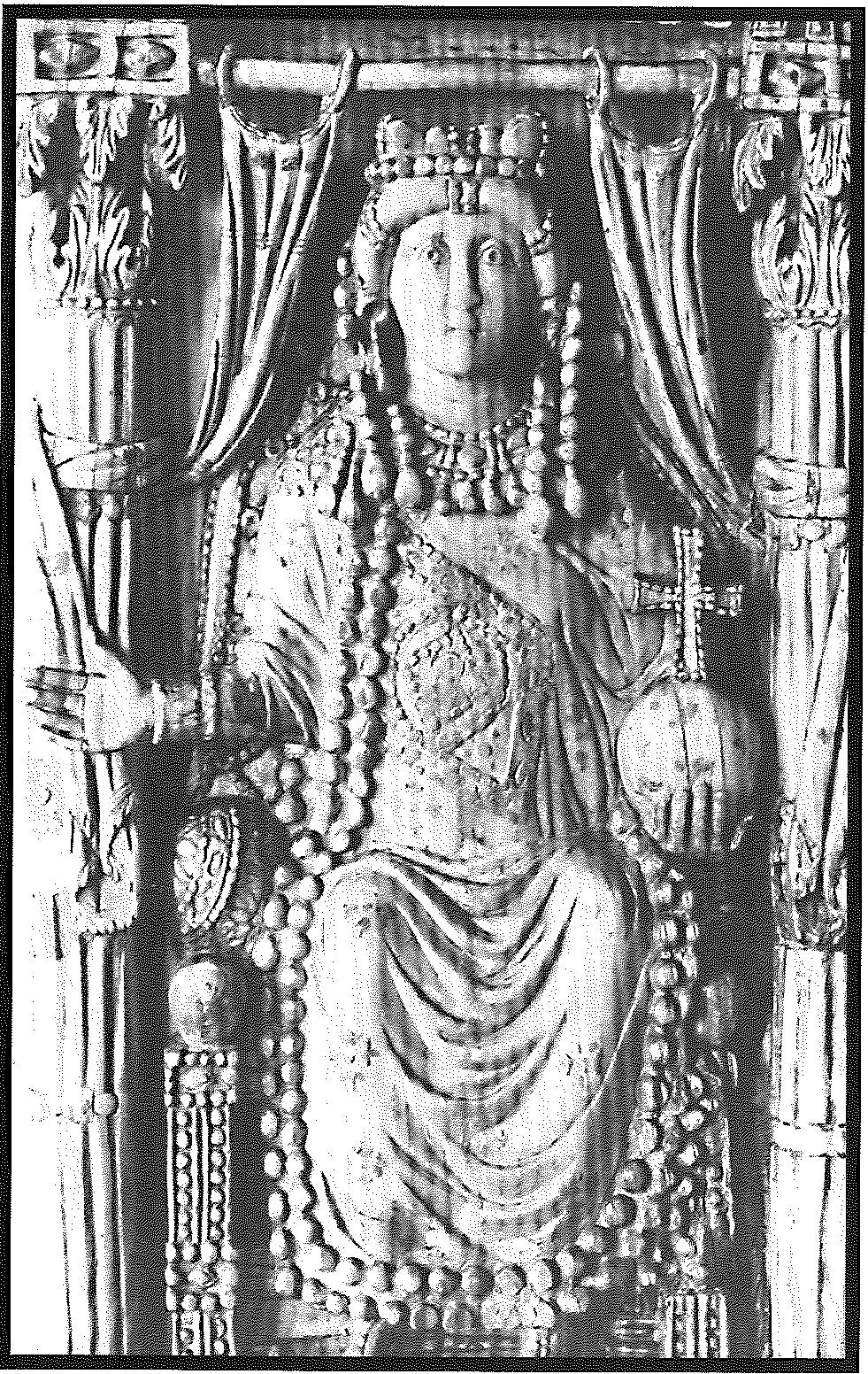
On or about 4 September 476, unnoticed at the time and almost by accident, Italy had passed out of direct Imperial control. The western Emperor had become a figure-head, to be set up or deposed at the whim of the Magister Militum (Master of Soldiers) who controlled what was left of the western Roman Army. The Magister Militum in 476 was Orestes, who placed his young son Romulus on the throne. His troops, a motley band of various barbarian tribes, elected one of their officers, Odovacar, to make representations about pay arrears. Odovacar suggested that Orestes settle these arrears by allotting lands to the troops in lieu of pay. When Orestes unwisely rejected this idea, Odovacar and his men marched on Ravenna, the western capital, and overthrew him. Romulus was invited to write a letter of abdication to Zeno, the eastern Emperor, and then was pensioned off, to live out his days in a villa in Campania. At the time, few took much notice. Ephemeral western Emperors had come and gone, often punctuated by interregna. Romulus was not even recognized in Constantinople, and besides, Zeno was preoccupied with fending off his mother-in-law Verina’s efforts to overthrow him.
Zeno finally sorted out Verina, but had another problem. Theodoric, king of the Ostrogoths, was ensconced in the Balkans with 30,000 warriors, seeking an official position in the imperial military hierarchy. In 488 Theodoric and Zeno came to an agreement. Theodoric would take his people to Italy, displace Odovacar (who had backed the wrong side in Zeno’s struggle with Verina) and rule Italy until the Emperor could “come in person.” Zeno never came, and Theodoric, having disposed of Odovacar, ruled Italy until 526, delivering peace, order and good government. While king of the Ostrogoths, and not above murdering opponents such as Odovacar with his own hand, Theodoric was no illiterate barbarian war-lord. While a political hostage in Constantinople in his youth, he had benefitted from a classical education, which he passed on to his off-spring. Theodoric saw himself as the preserver and restorer of the Roman world and took pride in restoring installations and institutions that the last western Emperors had let fail into decay. Thoeodoric scrupulously observed the fiction that Italy was still part of the Empire. But while the coinage might still display the Emperor’s portrait, Constantinople’s writ ran as far in 6th century Ravenna as Whitehall’s does in today’s Ottawa.
Theodoric’s death in 526 challenged this cosy modus vivendi. Theodoric left no male heirs. His successor, Athalaric, was a child, and a rather unhealthy child at that. The young king’s mother, Theodoric’s daughter Amalasuintha, acted as regent. By all accounts she did so more than competently, but some Gothic nobles thought they could do a better job. In late 532 a group of them demanded custody of Athalaric. They insisted he should receive a proper “Gothic” education (which placed a heavy emphasis on martial arts — coupled, it seems, with liberal exposure to wine, women and song). Amalasuintha had been giving the young king a Roman education (centred on rhetoric, philosophy and the classics — topics proper Goths deemed unmanly). Amalasuintha took the precaution of putting the state’s gold reserves (20 tonnes worth) on a ship which she sent to Dyrrhachium (Durres in modern Albania), and requesting political asylum from Justinian. He obliged, inviting her to come to Constantinople. In the end, Amalasuintha did not need to avail herself of his offer, turning the tables on her opponents who were despatched on one-way military adventures. Young Athalaric however continued to pursue his “Gothic” education, further undermining his delicate health. Amalasuintha summoned home her treasure ship and showed her gratitude to Justinian by allowing his invasion fleet — en route to retake North Africa from the Vandals to reprovision in Sicily. She did however reward herself by occupying Lilybaeum, a Vandal outpost in Sicily.
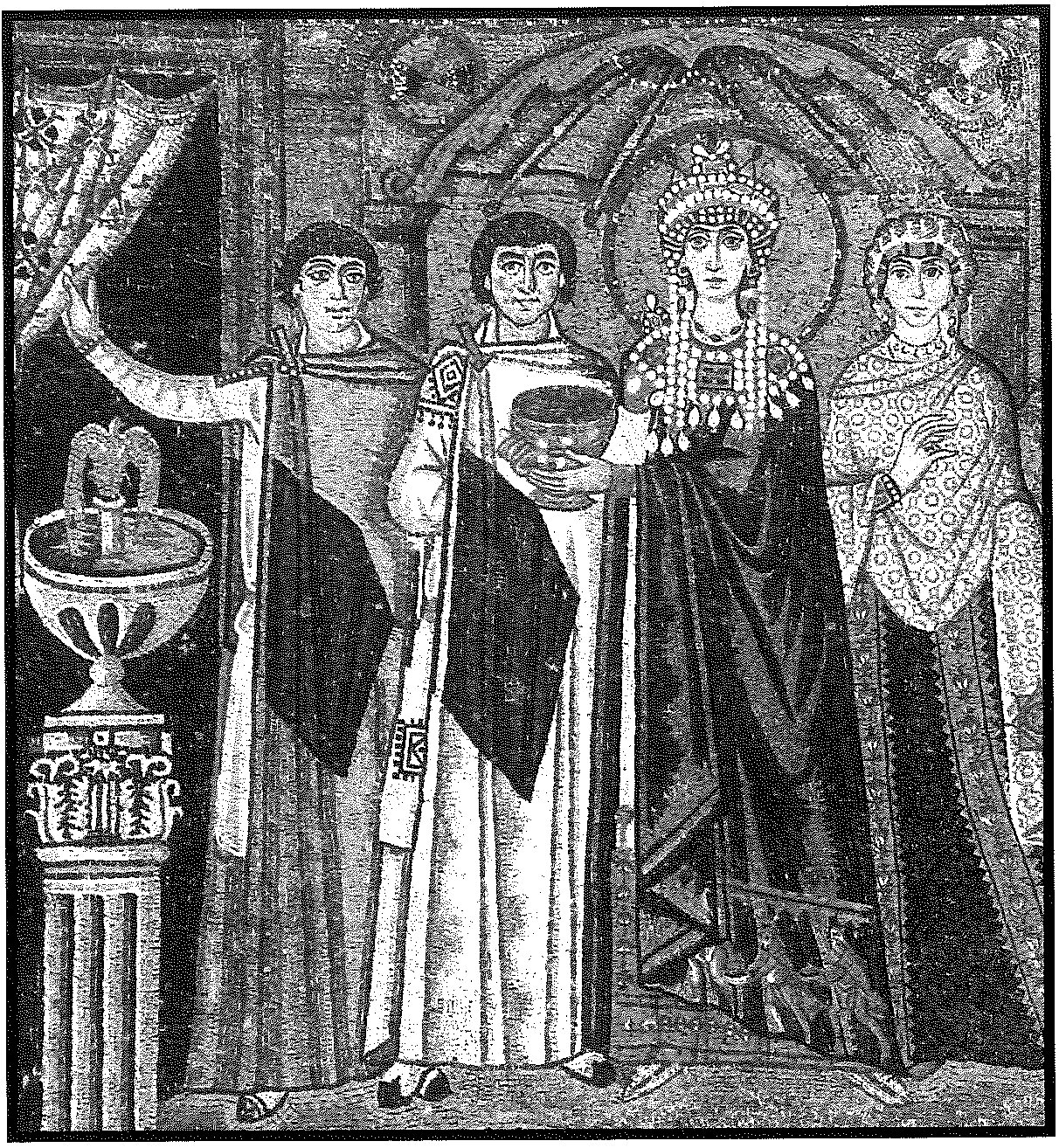
Amalasuintha was soon to learn that when dealing with a super-power, no good deed goes unpunished. The Vandal mission seemingly accomplished (against all expectations), Justinian began to consider the possibility of regaining Italy. While Theodoric and his successors had generally got on well with the Italian nobility, Constantinople harboured a colony of vocal Italian exiles clamouring for the restoration of “liberty.” They included the losers in various turf wars, as well as those who disliked the Arian version of Christianity that the Goths practised. Theodoric had encouraged religious tolerance, Justinian did not. Justinian began a diplomatic offensive with the aim of either extracting major concessions from the Goths or creating a plausible casus belli.
The opening démarche was delivered in late 533 by Alexander, a member of the Constantinople Senate. It demanded the return of Lilybaeum in Sicily; the handover of some deserters from the African expedition who were hiding in Naples; and a complaint that Gothic troops, campaigning in what is now Serbia, had committed hostile acts against a Roman border town. Publicly Amalasuintha offered a vigorous rebuttal to the Roman complaints: Lilybaeum had long been in Gothic hands, and besides she deserved a reward for the help she had given the Roman expedition against the Vandals. However, under the cover of this formal démarche, Alexander held back-channel discussions with Amalasuintha concerning the price of Justinian’s help to keep her in power, as well as possible contingency measures should she be overthrown. know the exact terms initially offered to Amalasuintha as the price for shoring up her regency. The package which eventually emerged included the cessation of Sicily; payment of an annual tribute of 300 Ibs. of gold; the provision — free of charge — of 3,000 Ostrogothic troops; the requirement to seek Justinian’s permission before making any senior appointments or executing or seizing the property of any Italian senator or priest; and giving Justinian’s name precedence in public proclamations and his statue precedence in public displays. In essence Justinian sought to reassert Constantinople’s sovereignty over Italy. Amalasuintha considered this price too high.
Members of Alexander’s delegation were also in touch with Amalasuintha’s cousin Theodahad. As nephew to the great Theodoric, Theodahad was — after the sickly Athalaric — the senior male scion of the ruling Amal clan. Living proof of Gothic concerns about the debilitating effects of a classical education, Theodahad’s main interests were poetry, Plato, and acquiring, by fair means or foul, as much of Tuscany as possible. He was prepared, however, to cede all his Tuscan holdings to Justinian, in exchange for a life of comfort in Constantinople.
Alexander’s mission returned to Constantinople in March 534, reporting on their discussions with Amalasuintha and Theodahad. Justinian charged Peter with returning to Italy to follow up. His official mission was to discuss Amalasuintha’s response on the question of Lilybaeum; in fact, his main task was to determine what concessions he could extract from her and follow up on Theodahad’s offer to surrender Tuscany. Unbeknownst to Constantinople, however, Amalasuintha had, after Alexander’s departure, forced Theodahad to disgorge his ill-gotten real estate. In late antiquity there were no permanent diplomatic missions to advise HQ of unexpected events. Instead, diplomacy revolved around the constant exchange of envoys and letters, ranging from the routine conveyance of messages announcing births, deaths, accessions and victories to the conduct of major negotiations.
More unexpected developments were to follow. In October 534, when Peter had hardly set forth, the young king Athalaric died. To retain her position, Amalasuintha made a deal with Theodahad whereby he would assume the crown but she would remain in control and be recognized as Queen. Amalasuintha must have hoped that Theodahad would continue to prefer philosophy over statecraft. Theodahad accepted the deal and an embassy was sent to Constantinople to announce their joint accession; Peter met up with it as he was passing through Thessalonica. Theodahad, however, resented the loss of his estates. Once on the throne, he had Amalasuintha arrested and exiled to an island on a Tuscan lake — entrusted to the care of relatives of the nobles she had eliminated. She was forced to write a letter to Justinian assuring him she was being well treated, while Theodahad wrote with similar assurances. The letters were entrusted to two Roman senators, Opilio and Liberius, who encountered Peter when they landed at Avalona (in modern Albania}. Peter sent back to Constantinople for new instructions. Justinian ordered him to proceed to Italy with a letter of support for Amalasuintha, making it clear to Theodahad that she should suffer no harm. In his official history, Procopius gives the impression that by the time Peter had crossed over to Italy, it was too late; Amalasuintha’s keepers had already ensured that she suffer a fatal accident in the bath.
However, Procopius also wrote a “Secret History” which did not come to light until almost 1,000 years later. According to this version of events, the Empress Theodora had no wish to see Amalasuintha come to Constantinople as she was well-born, very good looking and “… swift as lightning at finding a means to her ends.” Fearing that Justinian might be seduced by her charms (one could add that Amalasuintha was highly educated, while Theodora, the former actress, had truly graduated from the school of hard knocks), Theodora “…determined to ensnare the woman and bring her to her death,” She gave Peter “… a single secret command: to remove the lady from this world at the earliest possible moment.” When Peter reached Italy he assured Theodahad that he could safely do away with Amalasuintha. Theodahad happily obliged.
Relying on the “Secret History” is akin to using Frank Magazine as a source for Canadian politics, but in this case there is ample corroborating evidence. Firstly there is good reason to believe that Amalasuintha was not killed until late April 535, well after Peter’s arrival. Theodahad was a foolish and vacillating man, but to defy the Emperor’s professed wish that she suffer no harm seems almost inconceivable. Peter returned to Constantinople after Amalasuintha’s death bearing letters from Theodahad and the Roman Senate imploring Justinian to keep the peace; he also carried two letters for Theodora. One, from Theodahad, acknowledged Theodora’s wish that if he had any request to make of the Emperor, it be channeled through her via her envoy Peter. The other letter was from Theodahad’s wife Gudeleva who wrote, “While it is unseemly that there should be any discord between our Roman realms, an event has occurred whose nature should make us dearer to you.” This event, however, did not make them dearer to Justinian. Within a month of learning of Amalasuintha’s death, he opened hostilities against Theodahad, sending one army under Mundus into Dalmatia and another under Belisarius to occupy Sicily. He also wrote to the Kings of the Franks, citing their shared Orthodox faith and inviting them to attack the heretic Goths. If it seems strange that the Emperor and the Empress seemed to be pursuing separate foreign policies, it is not uncharacteristic of the way the Imperial couple operated. Theodora functioned, in her fashion, as Justinian’s “loyal opposition.” For example, in religious affairs, Justinian openly enforced strict Orthodoxy, but quietly tolerated Theodora’s allowing dissident clergy to proselytize from a wing of the palace.
The invasions went according to plan. Mundus occupied the Salona (modern Split), capital of Dalmatia, while Belisarius rapidly overran Sicily and was poised to cross the straits of Messina. These reverses concentrated Theodahad’s mind. When Peter returned to Italy to discuss terms, Theodahad was willing to accept a package similar to the one that Amalasuintha had turned down. Peter agreed to take this offer back to Constantinople, but when asked by Theodahad what would happen if Justinian did not accept these terms he replied, “You will have to wage war.” Theodahad asked if this was just. Peter said that it was indeed just. Each man should pursue whatever he was best suited to do. in Theodahad’s case, it was to philosophize, in Justinian’s case it was to be a strong Roman emperor. While it was unseemly for a philosopher-king to kill people — especially in large numbers; Plato would have deemed it quite appropriate for Justinian to seek to regain lost Roman territories. No Stoic, but a good Platonist, Theodahad accepted Peter’s argument and offered to abdicate in favour of Justinian, in exchange a seat in the Senate and lands yielding an annual income of 1,200 Ibs. of gold. Theodahad and Gudeleva then swore an oath to observe these terms, but required Peter to swear that he would not divulge this offer unless Justinian rejected the earlier terms. Theodahad sent a priest, Rusticus, back with Peter to represent his interests.
When Peter and Rusticus reached Constantinople, Justinian naturally rejected Theodahad’s first offer, but accepted his proffered abdication. Peter and another ambassador, Anastasius, returned to Italy with a letter to Theodahad assuring him of Justinian’s friendship, and informing him he would receive his lands and be enrolled in the Senate. Peter and Anastasius would stand surety for this arrangement, pending the arrival of Belisarius who would oversee the handover of Italy from Gothic to Roman control. Unfortunately for Peter and Anastasius, the tide of war had temporarily turned in the Goths’ favour. Mundus was killed in battle and his army had retreated from Dalmatia while Belisarius’ planned invasion of Italy was delayed by a mutiny of the Roman army who was suppressing a Berber rebellion in North Africa. Theodahad suddenly regained his nerve. When Peter and Anastasius arrived they were placed under house arrest. They were held hostage for the next four years, until exchanged for some Gothic envoys (intercepted returning from a mission which persuaded the Persians to open a second front against Justinian). By then Theodahad had been overthrown and replaced by a more martial king, Witigis. The Gothic war — waged up and down the length of Italy — dragged on for another 25 years until there were no Ostrogoths left to resist and Italy had been ravaged and depopulated. Within five years of Justinian’s death, the Lombards — a Germanic tribe from the middle Danube, whom the Romans had recruited to fight the Goths — having liked what they saw of Italy, came back and overran half the peninsula. Italy was not to be reunited for another 1,300 years.
Peter’s near diplomatic success in engineering Theodahad’s abdication, which could have averted this carnage, was compromised by military failure. But despite the ultimate failure of their mission, Theodora ensured that Anastasius and Peter were well rewarded. Anastasius was made Pretorian Prefect of Italy (in charge of governing the liberated areas) and Peter of Thessalonica became Peter the Patrician, Magister Officorum.
View the original scanned pages →
Originally published in bout de papier, Vol. 23, No. 4 (2008) — Summer 2008 // Été 2008, pp. 5–8. Read the rest of this issue →



