
bout de papier, Vol. 23, No. 4 (2008) — Summer 2008 // Été 2008, pp. 9–15
Malik Ata Muhammed Khan, Prince of the Awans, thinks that the running of the bulls in Pamplona, immortalized by Ernest Hemingway, is for pussies …
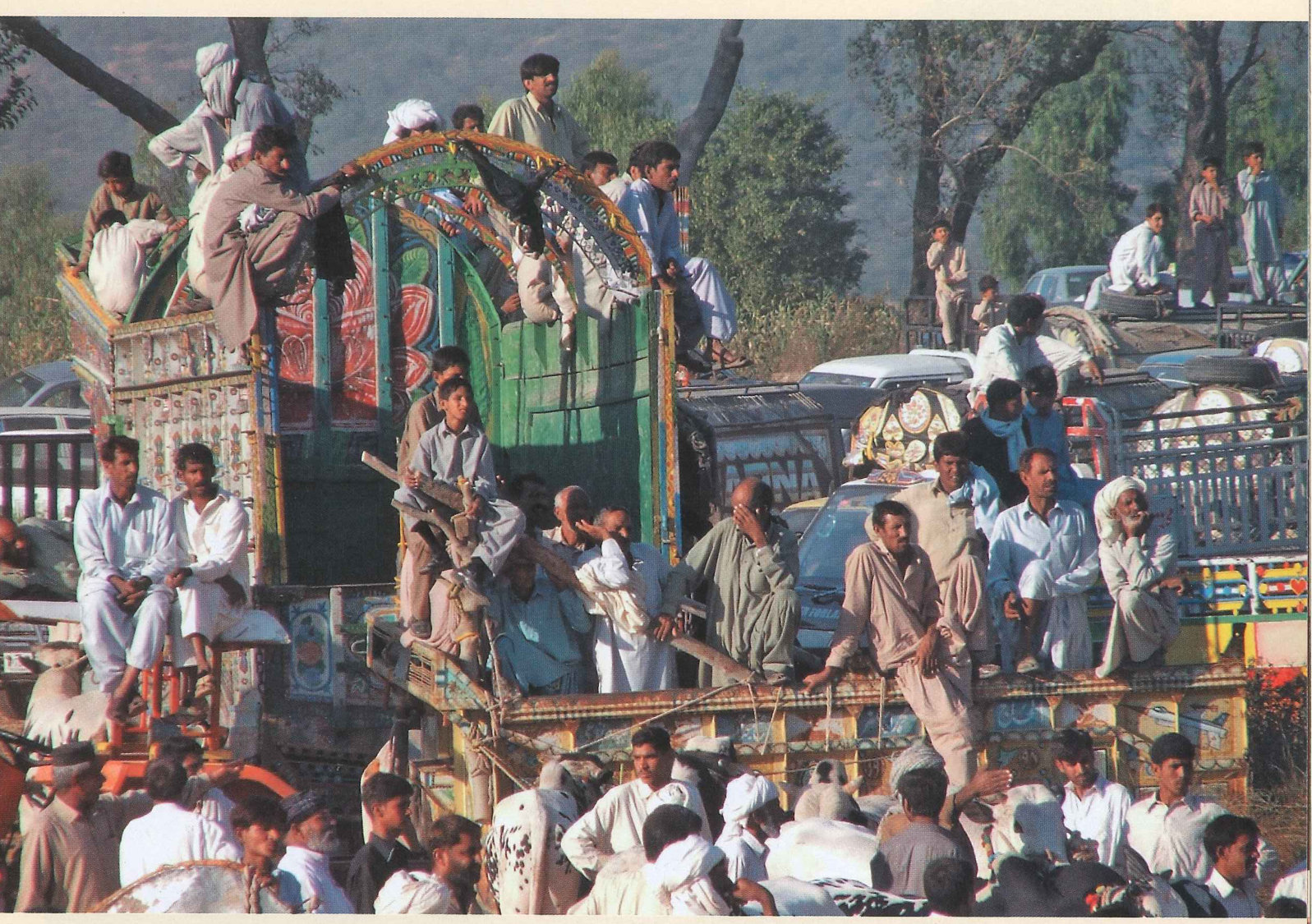
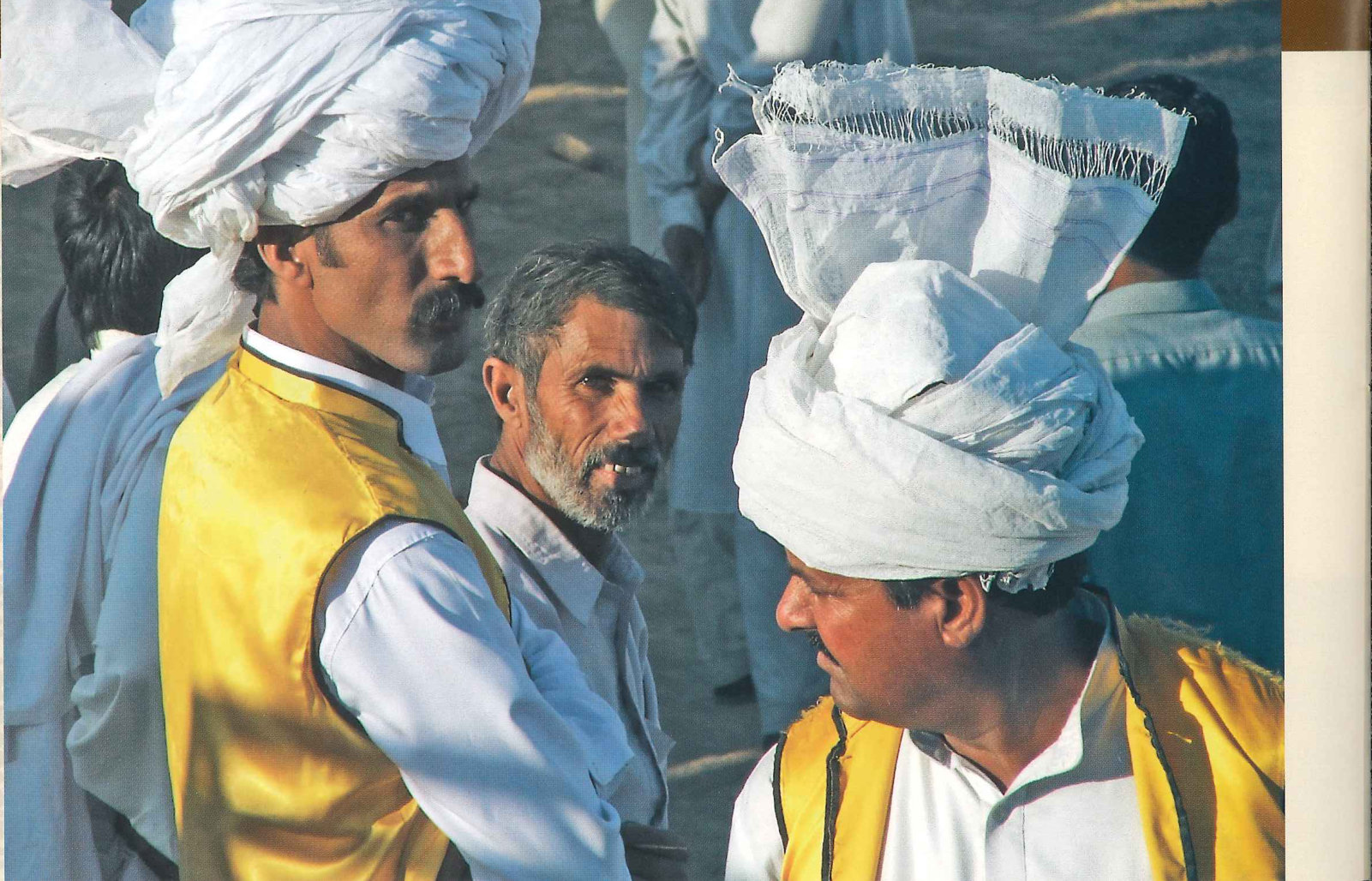
Following the complicated hand-drawn map he’s given us, we drive out one hot autumn afternoon into dusty plains west of Islamabad, where Alexander the Great once roamed and where, for at least the last 10 years, they’ve been planning a new airport. Tall, moustachioed sentinels in yellow silk waistcoats, with enormous white turbans and Kalashnikovs over their shoulders, guide us along a trampled-down track through a maize field to a makeshift grandstand of honour reserved for distinguished visitors: the roof of a bus. Prince Malik greets us solemnly as his guests of honour, clasping our hands in both of his, and directs his praetorian guard to keep us plied with hot milky tea.
“We are honoured by your presence and trust you will enjoy the proceedings,” he goes on, and bows.
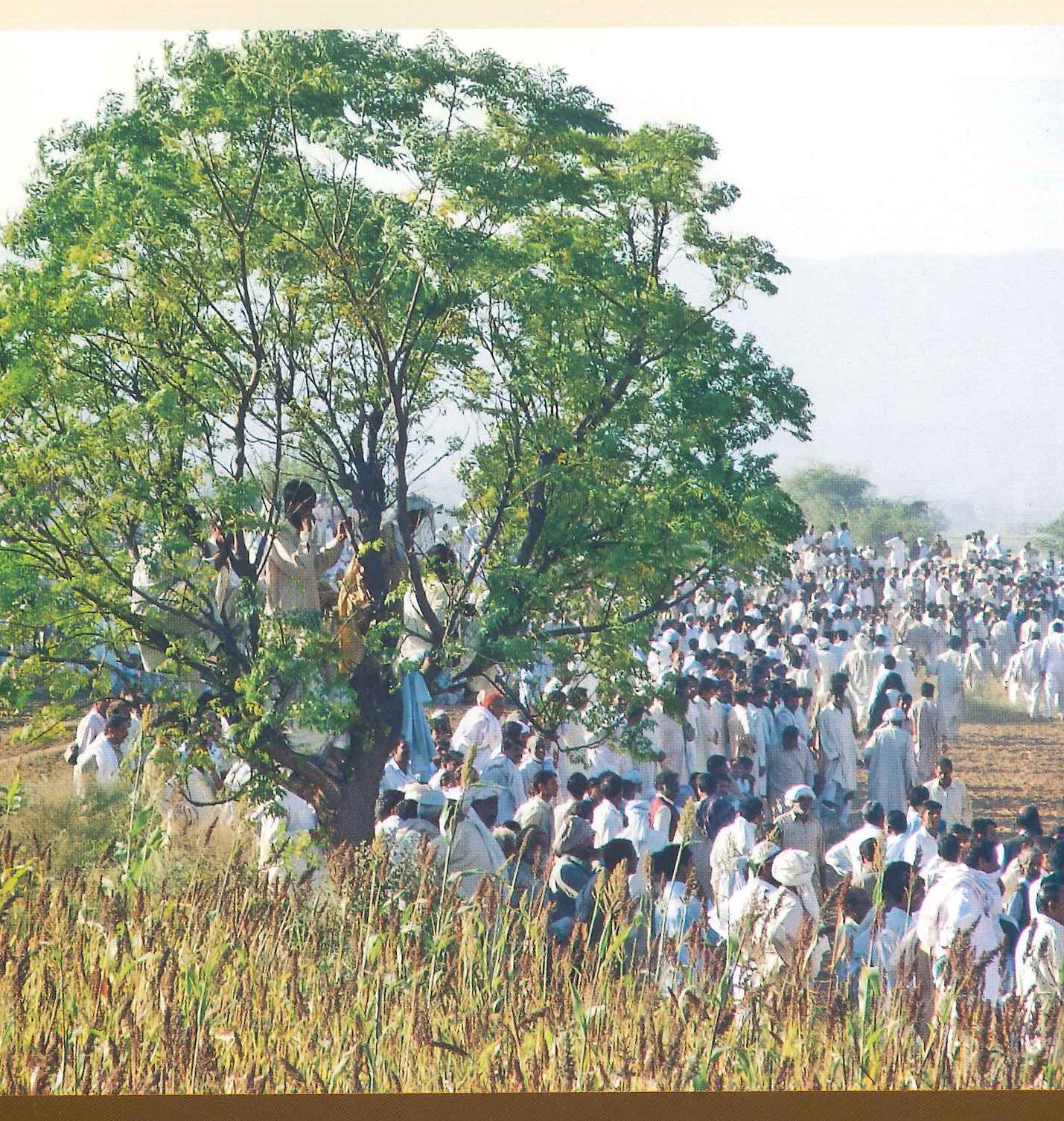
Either side of what could have been mistaken for a dirt landing strip are thousands of white-robed spectators, a few high in tree branches, many perched precariously atop colourful “jingle” trucks. Away to our left, in a milling mob, half a dozen men are attempting to subdue a pair of yoked and frisky Brahmin bulls, pulling at their horns to make them face down-track.
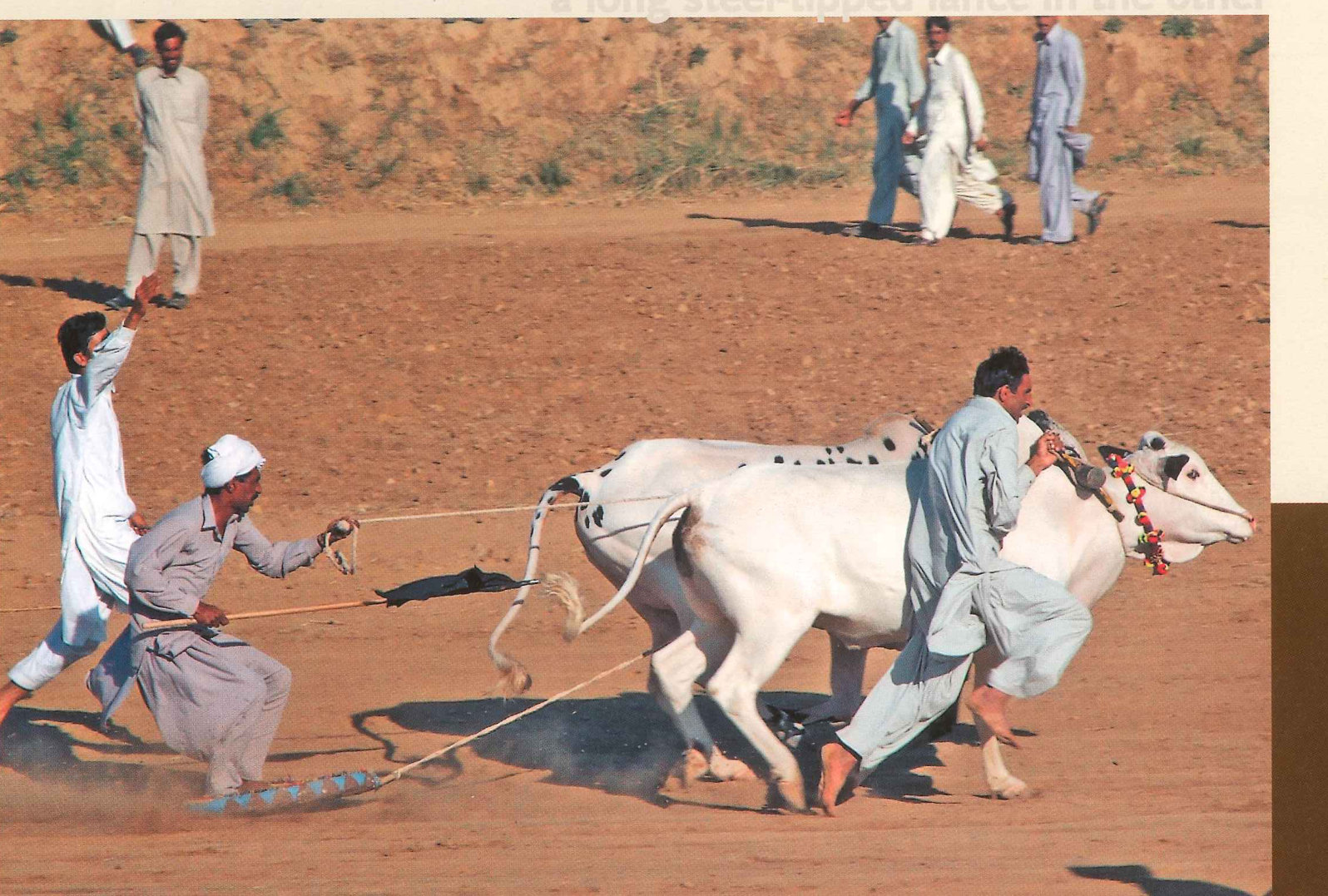
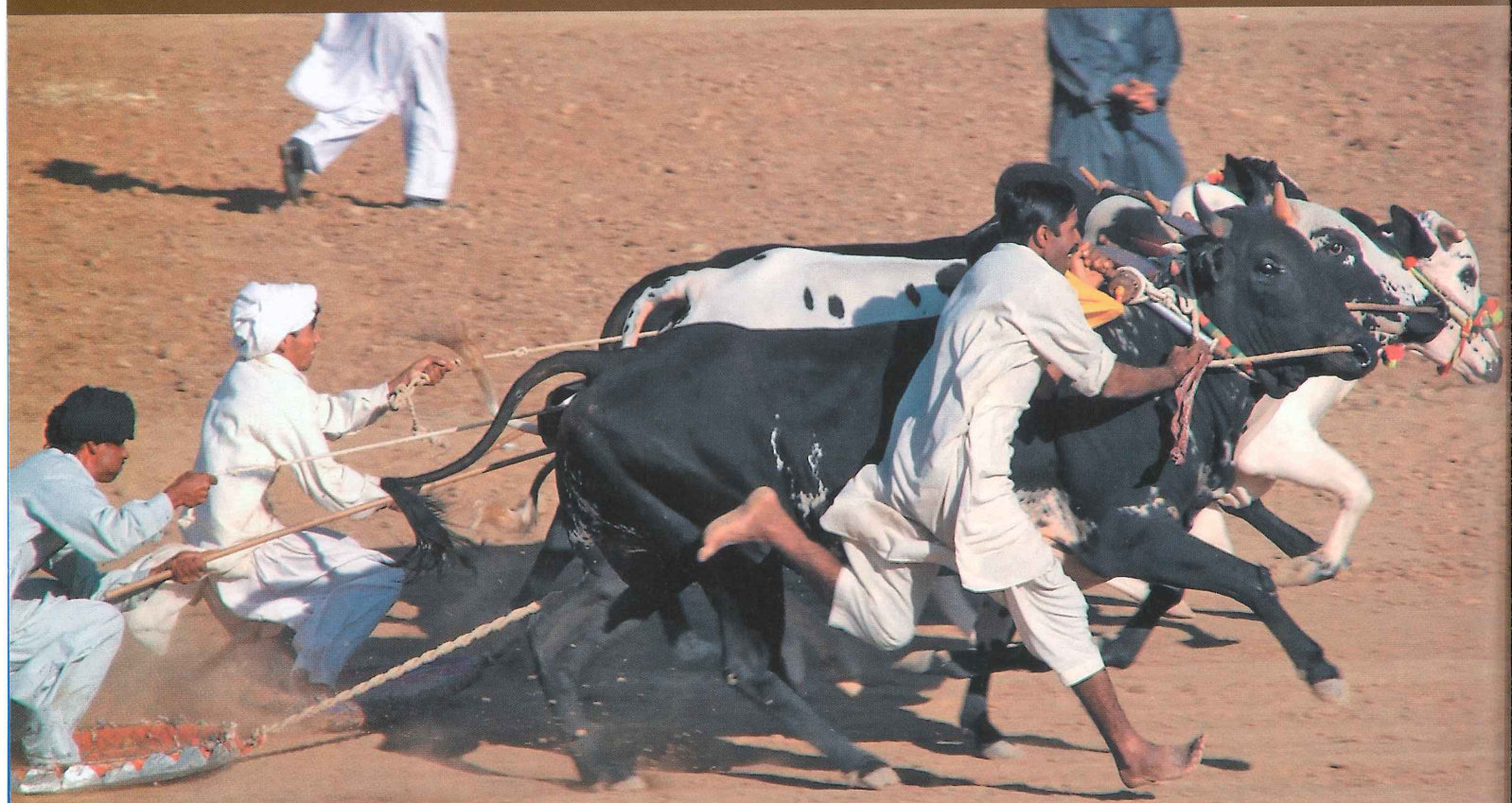
Suddenly a green flag sweeps down. The bulls burst out of the crowd. On each flank a young man is sprinting along, pushing and tugging the bulls’ horns to keep them on track. Behind, in a cloud of dust, riding a glorified tin tea-tray that drags on the ground, comes the “jockey,” makeshift reins in one hand, a long steel-tipped lance in the other, his robes flying in the air.
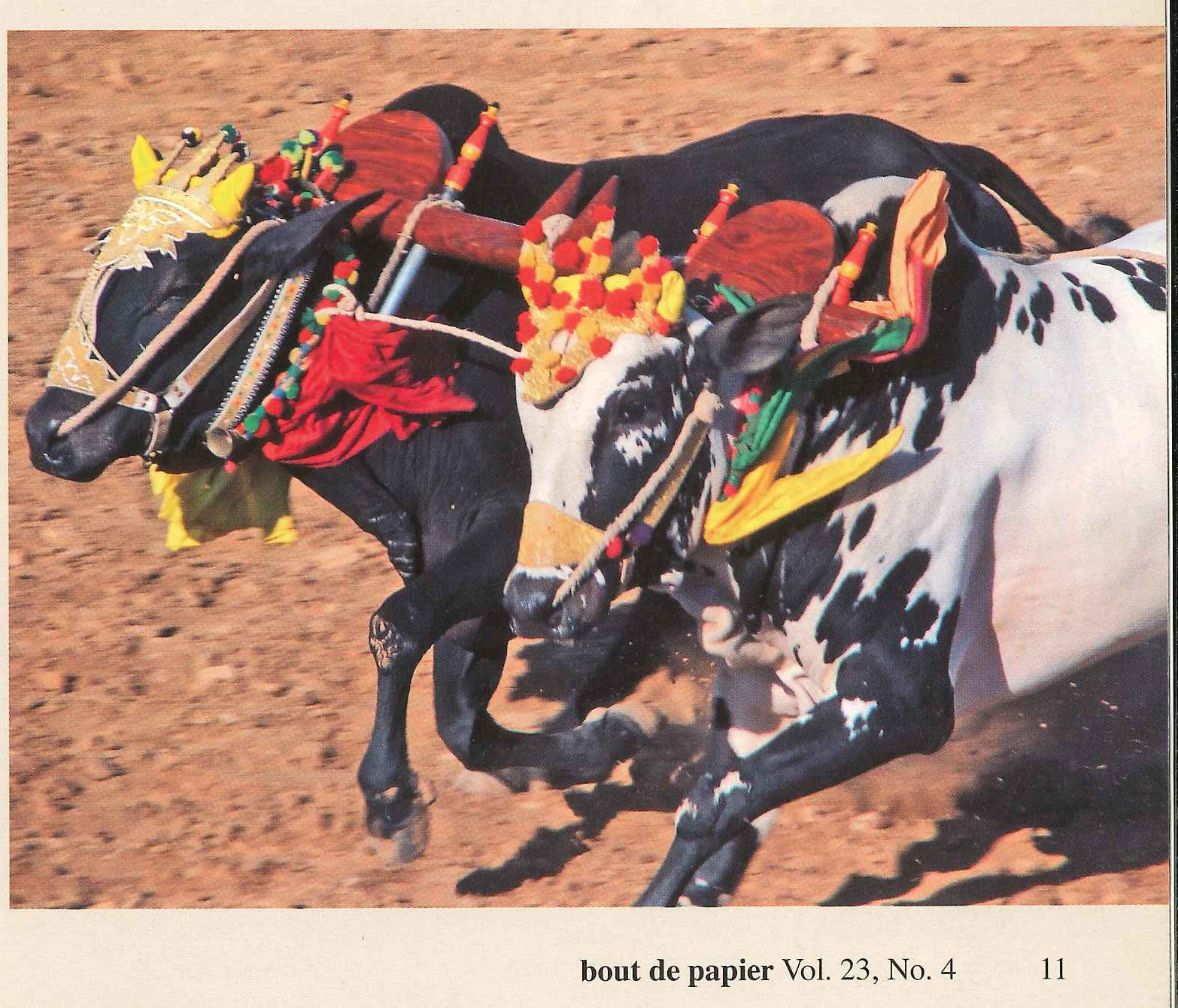
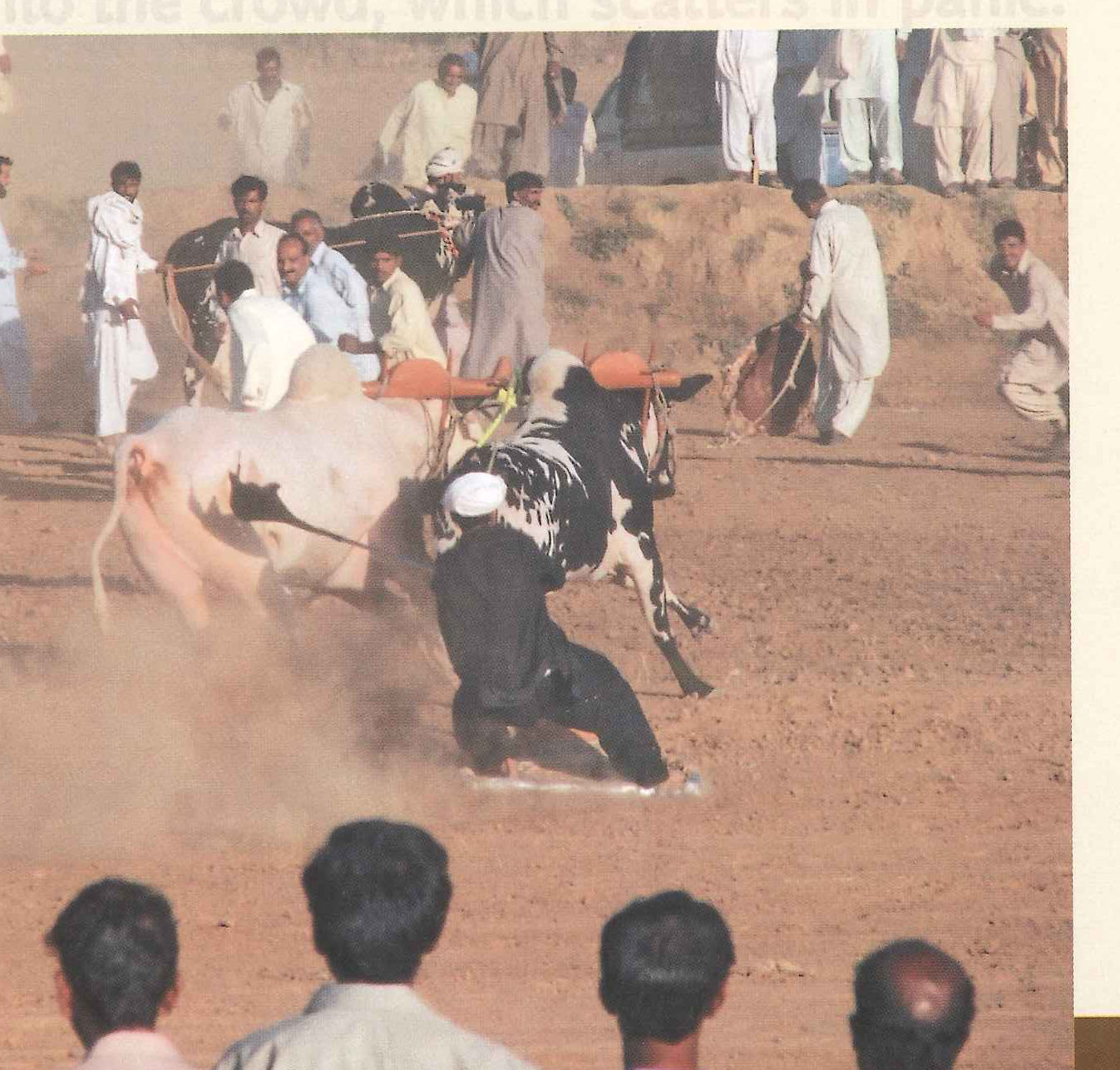
This is dragster racing, Punjabi style. Those bulls take off like rockets, faster than you would have thought possible until you see the spike that the would-be Ben Hurs are energetically poking into their rumps. Each run of about one kilometre is timed, but occasionally an especially daring pair of jockeys will race side-by-side, usually with disastrous results. Even the solo runs usually end up veering off into the crowd, which scatters in panic. One yoked pair ends up rampaging through the maize fields behind us and gores the sleek Toyota Prado 4X4, complete with red diplomatic plates, of our British friends.
There are generous cash prizes for the fastest times of the day, awarded ceremoniously by Prince Malik from his armchair. No one is concerned that a number of riders and spectators have been seriously injured in spectacular crashes, and the The Prince — quietly satisfied with our evident agreement that Hemingway was a wimp — invites us to his next spectacle.
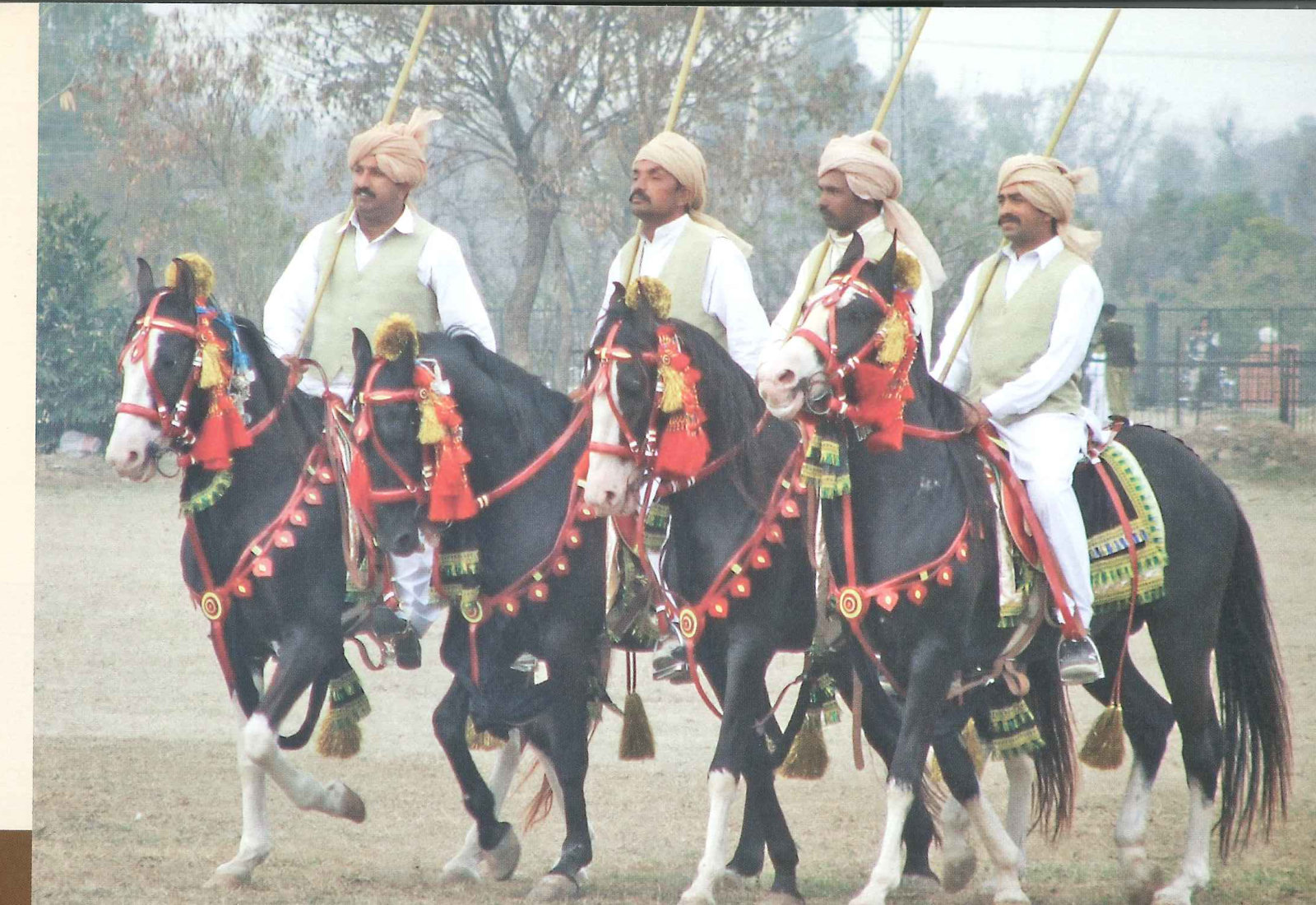
This time the venue is the vast, green-turfed expanse of the Rawalpindi Polo Club. The guards are all here again, but this time they are reinforced by less colourful flak-jacketed troops of the Pakistani army: it’s only two months since Benazir Bhutto was assassinated close by, and the city has seen more suicide bombings in the interval.
There are two theories on the origin of the peculiar equestrian pursuit known as tent-pegging. One has it that in Moghul India cavalry riders found that the only effective defence against elephants was to stab the highly sensitive flesh behind their toenails, causing the creatures to rear, unseat their mahouts and run amok. This required pinpoint accuracy with a lance, a lot of nerve from rider and horse, and hours of practice at striking tiny targets. The other, more prosaic, suggestion is that tent-pegging developed as a form of rehearsal for pre-dawn raids on enemy camps, in which the prime objective was to collapse the opposing army’s tents before they had time even to wake up.
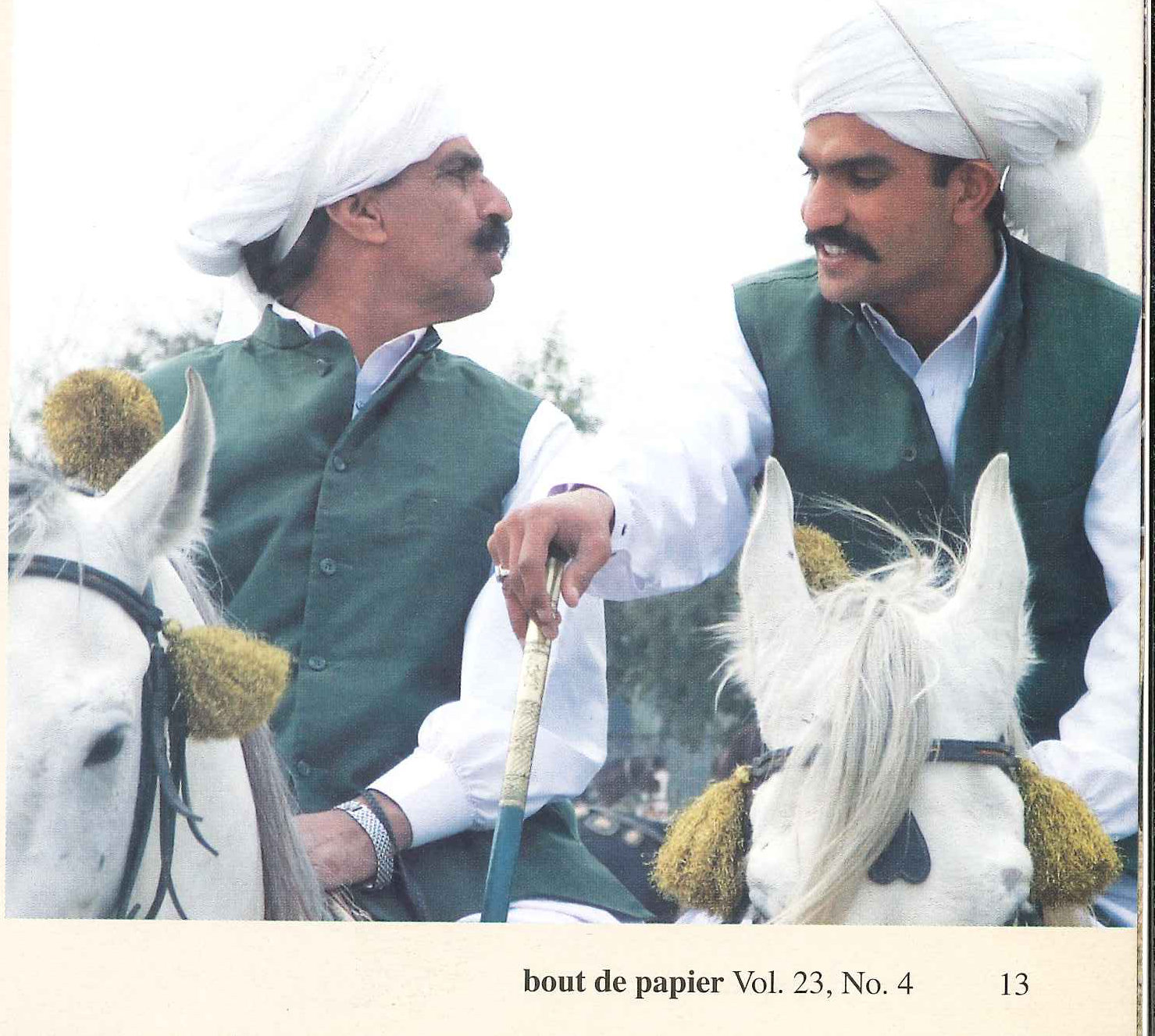
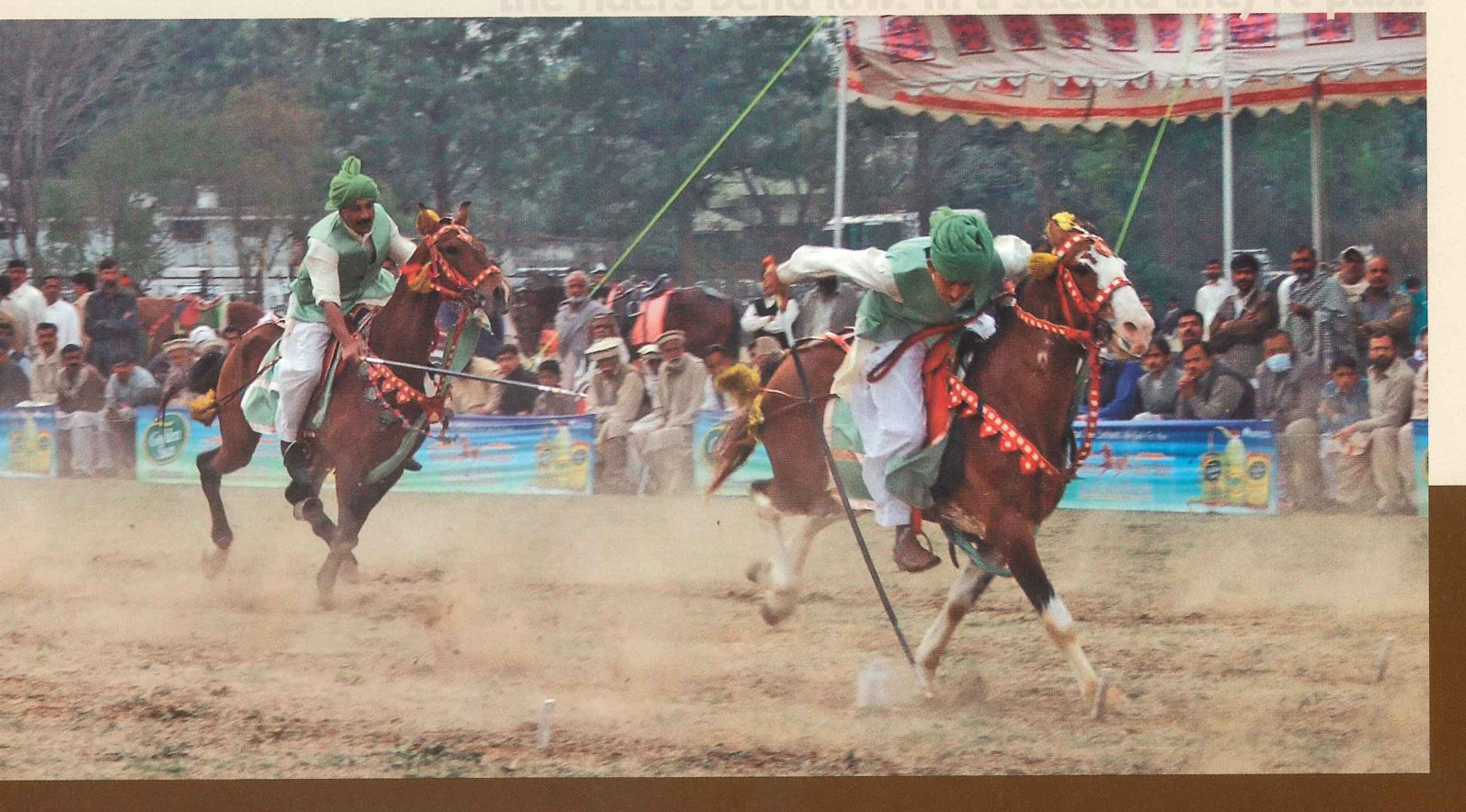
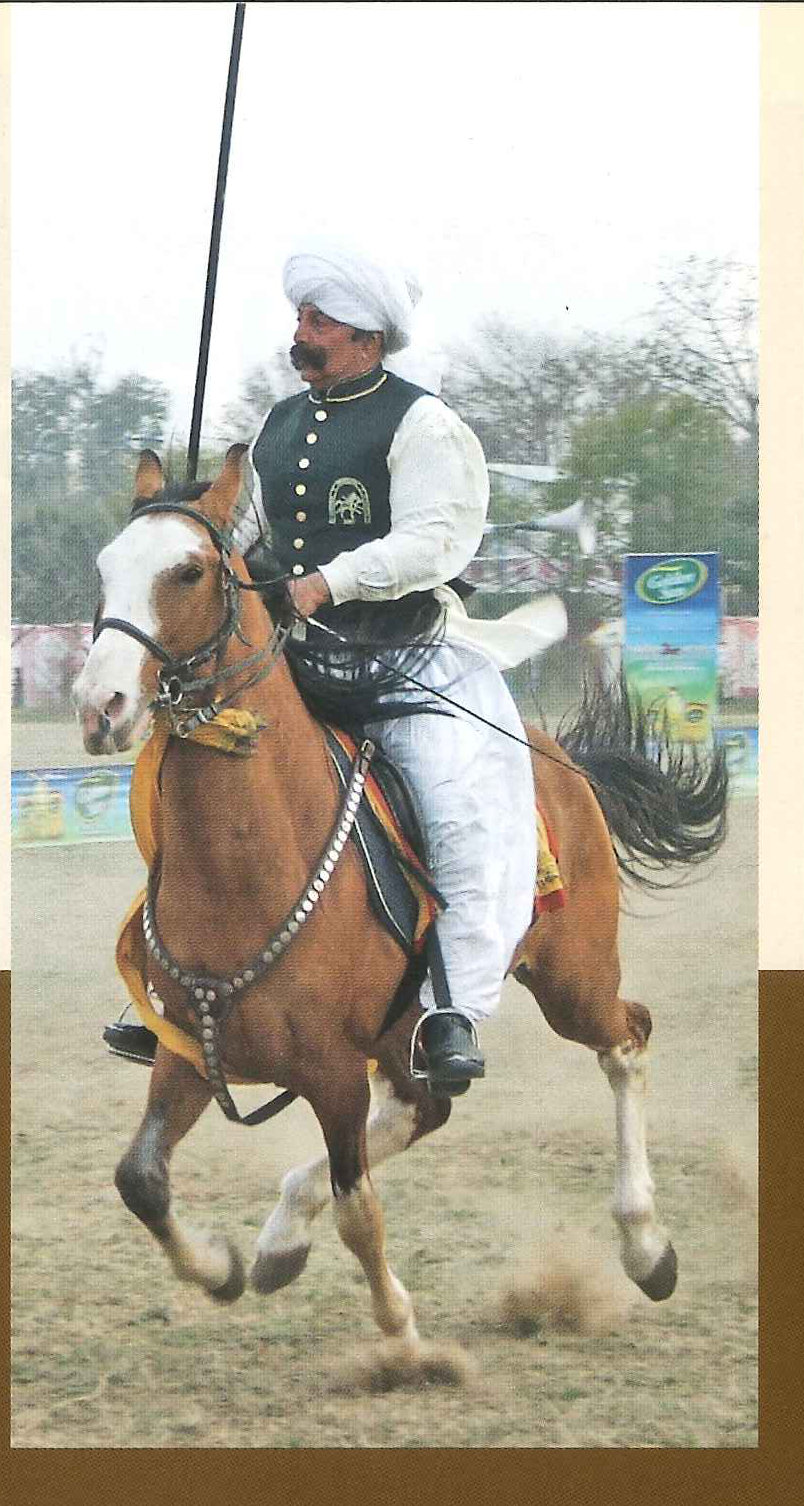
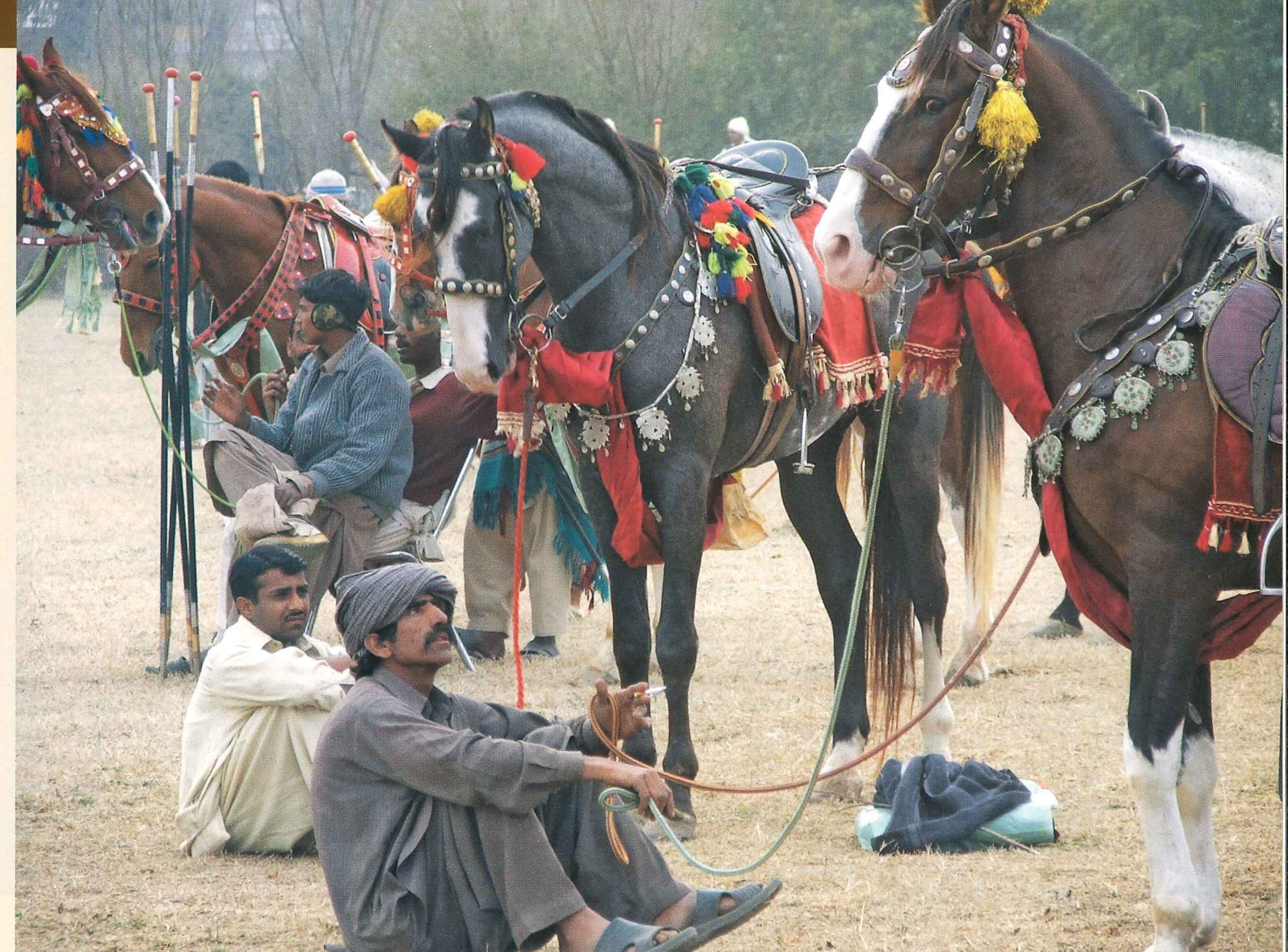
Whatever. Today the track is a one-kilometre stretch of turf, bordered more primly by marquees and deck chairs, with — three-quarters of the way along it — four small white stakes driven into the ground in a row, perpendicular to the track. Down at the start a quartet of magnificently-dressed riders, their waistcoats matching the bridles and finery of their horses, brilliantly-coloured headdresses shifting in the light breeze and lances held aloft, mill in a tight circle. At an invisible signal they form up in line, start to trot, then suddenly are galloping hell-for-leather. The thunder of hooves reaches us, four lances dip in unison, the riders bend low. In a second they’re past. There is an appreciative roar from the crowd and, as the horses slow, the lances are held aloft in triumph, a white tent-peg neatly speared on each one. It’s been a perfect 24-pointer run. As the team trots back from the finish line a band goes to greet them and young children swarm to pat the necks of the horses.
The spectacle is repeated again and again. As the afternoon proceeds the points are added up: six points for a peg perfectly speared, four for a peg knocked from the ground, two for one struck with a glancing blow; the entire team’s run is disqualified if the elapsed time of their charge goes over a certain threshold.
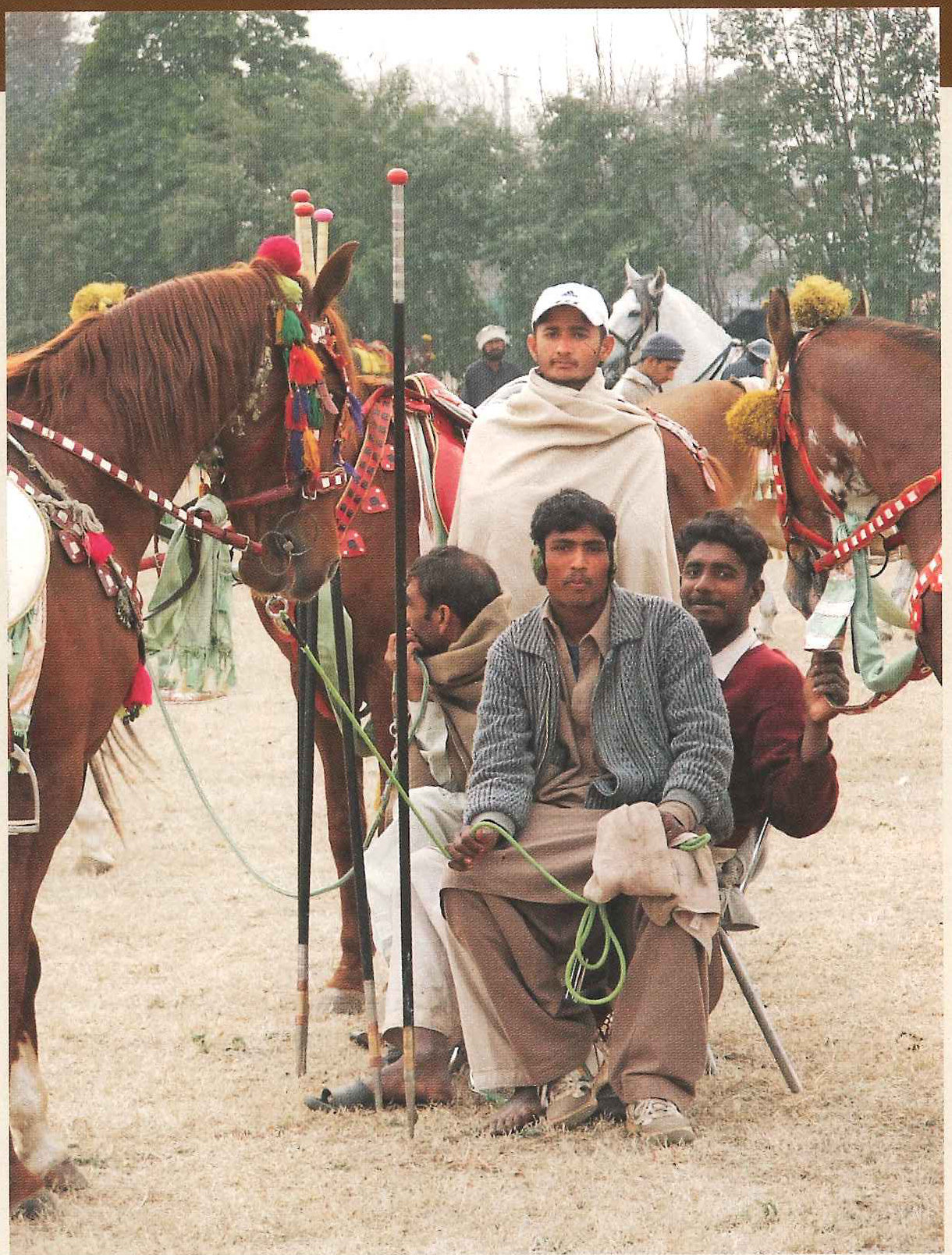
Behind the deckchairs young men from the countryside tend to their more gloriously-bedecked masters mounts, brushing them down, adjusting their bridles, or enjoying a smoke as the horse waits patiently, tethered to a lance planted in the ground. I’m touched as they pose shyly but proudly for photographs.
As we leave, the ever-courteous Prince Malik hurries over to be sure that we have enjoyed ourselves, and presses us not to miss next month’s dancing horses. The soldiers eye us impassively, a reminder of that other Pakistan.
View the original scanned pages →
Originally published in bout de papier, Vol. 23, No. 4 (2008) — Summer 2008 // Été 2008, pp. 9–15. Read the rest of this issue →



