
bout de papier, Vol. 18, No. 1 (2001) — Spring 2001 // Printemps 2001, pp. 16–20
WE ALWAYS ASKED
OURSELVES NOT ONLY ‘WHAT KIND OF A CANADA DO WE WANT?’ BUT ‘WHAT KIND OF A WORLD DO WE WANT?’”
Lester B. Pearson
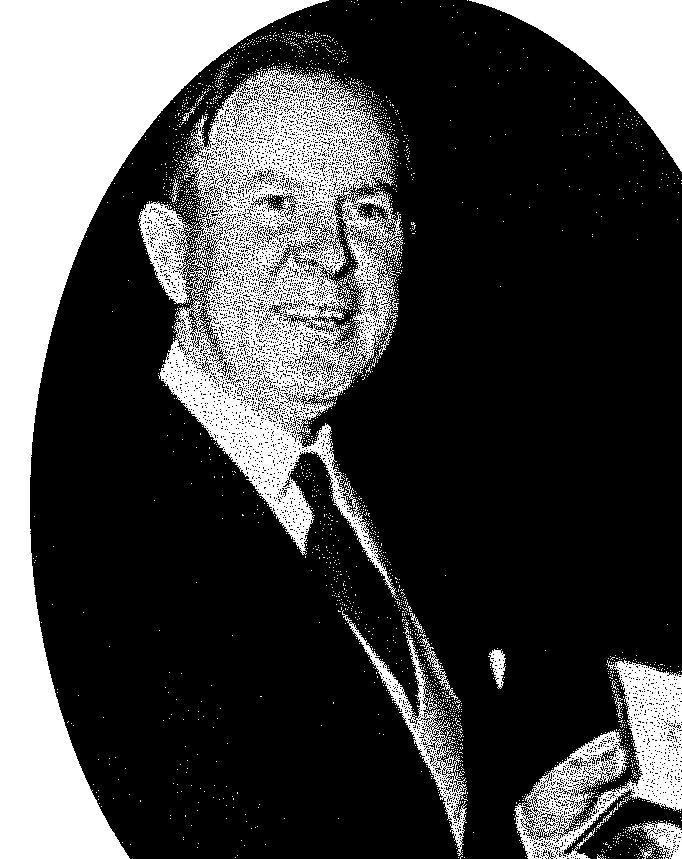
Few could have predicted the longevity of the peacekeeper when Canadian politician Lester B. Pearson conceived of the role — perhaps not even Pearson himself. Then secretary of state for external affairs and, as such, Canada’s representative to the United Nations, he had a goal that was more immediate in nature: to create a UN Emergency Force to maintain peace while diplomatic efforts were made to resolve the Suez Crisis of 1956.
Pearson went on to win the 1957 Nobel peace prize for his efforts; and, having entered public life as a diplomat, he subsequently became Canada’s prime minister from 1963 to 1968. The home-grown product of his vision — the Canadian peacekeeper — has similarly gone from strength to strength. Since 1956, close to 100,000 Canadian soldiers have participated in UN peacekeeping missions around the world. In the words of journalist Peter C. Newman, they have earned in the process “a well-deserved reputation as no-nonsense but fair intermediaries.”
Through the intervening years, however, the nature of conflict in the international arena has undergone significant change, most notably in the years following the end of the Cold War. Where interstate conflicts once dominated the international political agenda (and, often, public concern), in recent years intrastate conflicts have taken precedence. Examples of the trend are not hard to find — one need only look to Sierra Leone, Kosovo and East Timor for dramatic cases in point. As a result of the changing patterns in conflict, the roles of both peacekeeper and diplomat have changed as well.
Where the traditional mandate of the peacekeeper was to maintain security and defense objectives (with periodic assistance to civilian organizations), new requirements often place him or her within the sphere of humanitarian assistance. Indeed, one might even say that military peacekeeping forces have become quasi-humanitarian organizations in their own right. While such a statement stirs controversy, the reality is that peacekeepers now find themselves serving in a variety of nontraditional roles. Their responsibilities can range from managing the flow of hundreds of thousands of refugees, to organizing transportation, food and shelter, to carrying out myriad other tasks — all the while attempting to fulfil the traditional role of separating combatants and monitoring borders.
So, too, have foreign service practitioners increasingly found themselves in roles that, at first glance, appear to be somewhat removed from those of representing and defending the interests of their home country. Lloyd Axworthy, Canada’s most recent minister of foreign affairs, served as a vocal advocate of what has come to be known as “human security,” a phrase (first articulated in the 1994 UNDP Human Development Report) that has come to encompass a framework of human rights, humanitarian and refugee law.
“”The concept of human security,” notes a policy statement issued in April 1999 by Canada’s Department of Foreign Affairs and International Trade, “has increasingly centered on the human costs of violent conflict.”
The paper goes on to describe how such a concept might best be understood from a foreign policy perspective:
It is an alternative way of seeing the world, taking people as its point of reference, rather than focusing exclusively on the security of territory or governments. Like other security concepts — national security, economic security, food security — it is about protection. Human security entails taking preventive measures to reduce vulnerability and minimize risk, and taking remedial action where prevention fails.
Under Axworthy’s leadership, the Department of Foreign Affairs made it a priority to focus diplomatic energies on “the human costs of violent conflict.” This resulted in efforts such as the Ottawa Convention on Anti-personnel Landmines and the Rome Treaty creating an International Criminal Court. More recently, during the June 2000 meeting of the Organization of American States in Windsor, Ontario, Canada authored a resolution ordering an investigative mission to Peru, following the tainted elections in May which saw Alberto Fujimori re-elected as president.
Since then, political uncertainty has forced Fujimori himself to flee the country. Although the official has taken refuge in Japan, he insists that he will seek office again in Peru in the not-too-distant future. Of course, conflict has a way of erupting in places where democracy and human security are threatened or fragile, and this is not the first time (nor is it likely to be the last) that Peru has required “remedial action” from the diplomatic community. In fact, it was in Peru that a student of mine first saw such action at work.
Now a graduate student enrolled in the Conflict Analysis and Management master’s program at Royal Roads University (of which I am dean), in 1996 Julia Grossman was a Canadian foreign service officer posted to Bogota, Colombia. In addition to her duties as the embassy press spokesperson, she traveled extensively throughout much of the country, reporting to her superiors on human rights abuses, guerilla activities and the drug cartels. During one such foray into the Putumayo area around the Amazon River, she witnessed a “multi-sectoral” meeting in which anonymous representatives from all of those groups met to discuss yet another threat to human security in the region — that of paramilitary violence.
But on December 17, 1996, Grossman and her colleagues found their attention directed to an even more immediate concern. That evening, members of the Tupac Amaru Revolutionary Movement (MRTA) disguised themselves as waiters and seized the Japanese ambassador’s residence in Lima, Peru, while a holiday-season cocktail party was in progress. Hundreds of hostages were taken from the foreign service community in attendance (including Canadian ambassador Anthony Vincent), and the rebels threatened to kill their captives unless the Peruvian government released their jailed comrades. As a demonstration of their desire to enter into negotiations, however, the rebels soon released a number of hostages, one of whom was Vincent.
Attempts to initiate negotiations soon became mired in the complicated machinery of national and international policy and protocol. Three weeks into the crisis, in early 1997, the number of players had expanded to the point where communication itself began to seem under siege. First, there was the International Red Cross (designated as the agreed-upon intermediary between rebels and officials immediately following the hostage-taking). Then, in mid-January, there came the rebels’ agreement to participate in talks with the Peruvian government — provided Ambassador Vincent, along with representatives of the Roman Catholic church and the Red Cross, sat in on discussions as a three-member “guarantor commission.” On February 1, Fujimori agreed to talks with the rebels at a summit in Toronto with Japanese Prime Minister Ryutaro Hashimoto. Finally, on February 11, MRTA leader Nestor Cerpa and the government’s official negotiator, Domingo Palermo, began their discussions. Then, on March 3, Fujimori made a surprise trip to Cuba to secure Fidel Castro’s offer of asylum for the rebels if such an option became necessary to end the standoff.
And that’s approximately when Julia Grossman herself enters this scenario. “By early March, negotiations were starting to break down, and the guarantor commission members effectively became the go-betweens,” she recalls. “I was asked to go to Lima to assist the Canadian delegation. My job was to begin interviewing the jailed members of the MRTA and Shining Path in order to learn more about their prison conditions.”
Grossman, along with fellow representatives appointed by the commission, worked quickly to prepare a report on the prisoners’ welfare. “We actually went right into the cells and talked to them,” she adds. “All but the top member of the MRTA, who was being held in a naval prison under what were assumed to be difficult circumstances.” Stalked by a media starved for news concerning the hostages, the team did its best to keep the work confidential, managing to visit scores of prisoners before finalizing the report (which was presented while negotiations were still under way).
But on April 22, amid gunfire and explosions, a very different sort of resolution ended the 126-day crisis. On that day, Peruvian commando forces stormed the ambassador’s residence, rescuing the hostages and killing all 14 rebels in the process.
Soon after, Grossman returned to Bogota, where she remained posted for a total of three years. But her time in Peru stayed with her — so much so that it eventually played a role in her decision to return to university to study conflict management. The hostage crisis, she says, gave her one of those “aha!” moments that in some way forever change a person’s perspective. “It was while I was in a meeting at the Canadian embassy in Lima — a strategy session – and we were talking about the negotiating process,” she remembers. “I thought, ’This is just like one of those case studies we had during our training program in Ottawa.’ And then it hit me. ’This is not a case study, this is real life, and these negotiations will affect people’s lives.
Today, Grossman is pursuing her interest in conflict analysis and management from a very different corner of the world, but her desire to apply her knowledge and experience to real-life situations remains. “Conflict doesn’t just mean people shooting each other,” she adds. “It’s important to understand the areas of potential differences that might arise from cultural frameworks.” As an example, she returns to the MRTA prisoners she interviewed in Peru. “Their view of right and wrong was so different,” she says. “A better theoretical underpinning would have been helpful to us as we conducted those interviews and put things into context.”
The Royal Roads Story
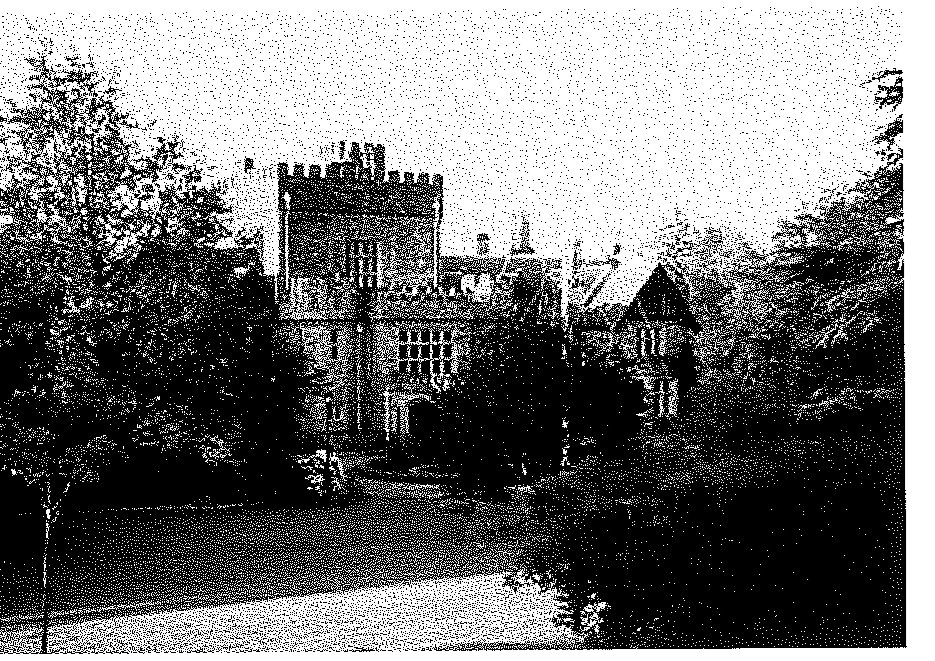
Royal Roads University sits on a 565-acre campus overlooking the Pacific Ocean, where it occupies the grounds of Hatley Park, the former estate of James Dunsmuir, an early British Columbia coal and railway baron (and later Lieutenant Governor of the province). From 1940 to 1995, Royal Roads was operated by the federal government as an officer/cadet training establishment, later known as Royal Roads Military College. The college was closed in 1995, only to reopen later in the year as the newly formed Royal Roads University. Created on June 21, 1995, by the Royal Roads University Act by the Government of British Columbia, the institution’s mandate is to be a special-purpose university offering market-driven, applied and professional programs developed in partnership with industry/workplace advisory boards.
This year (2000-2001), the university expects to accommodate the equivalent of nearly 1,200 full-time students enrolled in a variety of undergraduate and graduate programs, including master’s degrees in (1) environment and management; (2) leadership and training; (3) business administration; (4) conflict analysis and management; and (5) distributed learning. It plans to grow to more than 3,000 students by 2004-2005, and continues to develop new programs to meet the demands of the marketplace. Graduate programs at the university have been designed for mid-career professionals, many of whom undertake their degree requirements while remaining in the workforce. Courses are delivered by Internet-based distance learning, with one or more on-campus residency periods. Master’s programs typically entail six academic semesters delivered over two years of study.
In addition to the partnership already outlined between Royal Roads University and the Pearson Peacekeeping Center, the university’s Conflict Analysis and Management Program also has a visiting scholar arrangement with the Cooperative Monitoring Center at Sandia National Laboratory in Albuquerque, New Mexico. The objective of this arrangement is to stimulate multidisciplinary research on the application of technology to cooperative security in traditional and non-traditional settings. Research topics will be contemporary rather than historical in nature; and will be related to traditional security areas, such as arms control and peacekeeping, or to nontraditional security areas, such as trade, the environment or natural resource management.
The short sojourn in Peru also drove home another realization concerning the nature of conflict. “Cross-cultural communications can be fraught with misunderstanding, even among groups that appear to share the same objective,” notes Grossman. “In some cases, resolution must remain an impossibility. That’s where the ’management’ aspect takes over. In diplomacy, you don’t always get a clear-cut solution.”
Grossman’s decision to study at Royal Roads University (RRU) in Victoria, British Columbia, is fortuitous in at least one respect — that of timing. Until a few short years ago, conflict analysis and management was an area of study more or less restricted to the legal profession: investigations typically focused on issues such as dispute resolution, labour negotiations, global business dealings and bilateral and multilateral trade agreements. As it has become a recognized field for academic research, however, conflict analysis has also broadened its scope to encompass the spheres of diplomacy and peacekeeping.
The master’s program at RRU emphasizes the international as well as the domestic dimensions of alternative dispute management, enabling professionals to develop and apply innovative, multi-party solutions to various group conflict settings. Last year also marked the start of a new agreement designed to bring conflict studies under the peacekeeping umbrella — an appropriate debut, given that the UN chose the year 2000 to celebrate the culture of peace. A partnership between RRU and the Lester B. Pearson Canadian International Peacekeeping Training Center (PPC), based in Cornwallis Park in Clementsport, Nova Scotia, now enables students enrolled in RRU’s master’s program to complete an optional four-week ’Issues in Modern Peacekeeping” course as part of the new concentration.
Established by the Government of Canada in 1994 to provide research, education and training in peacekeeping in all its aspects, and to serve as a uniquely Canadian point of contact for such information, the PPC offers national and international participants the opportunity to update their knowledge of the latest peacekeeping practices. Participants come from all over the world: since 1995, approximately 125 countries have sent individuals to the center, and graduates of the PPC are actively involved in every peacekeeping mission currently in operation.
Alex Morrison, president of the Pearson center, characterizes the evolving coalition of players engaged in peacekeeping endeavors as “the new peacekeeping partnership.”
The term, he says, can be applied to those organizations and individuals that work together to improve the effectiveness of modern peacekeeping operations, and it includes the military, civil police, government and non-government agencies dealing with human rights and humanitarian assistance, diplomats, the media, and organizations sponsoring development and democratization programs.
This range of partners is reflected in the diversity of participants attending courses at the PPC, where the academic setting is designed for both civilians and military — a format not yet matched by any other organization in the world. At the PPC, participants attend classes, seminars and workshops covering topics such as negotiation and mediation, and modern issues in peacekeeping. Case studies are often used to support analysis and students are expected to participate in role-playing exercises and other simulations.
As Morrison points out, the structure is designed to ensure that participants stay focused when they encounter conflict in real-life peacekeeping missions. “In any dispute, diplomats help restore peace agreements and other settlements, and help to reestablish civil and political systems,” he adds. “But the truth is, while various parties may they may not necessarily share the same vision of how to achieve that goal. That’s why more research is needed, especially in areas concerning negotiation and mediation and how to use disparate resources in the theatre.”
The peacekeeping concentration, offered for the first time in October 2000, is to the best of my knowledge the only program of its kind in the world. The benefits attached to it can be expected to be profound and immediate. First-year courses (taken through RRU) examine all elements of conflict, including early detection, strategic management, avoidance, resolution and reconciliation. Before learners embark on the peacekeeping component of their studies, they gain a sound theoretical understanding, together with a range of practical skills for dealing with conflict in a variety of organizational and group settings. A holistic, cross-cultural approach to conflict analysis and management in the domestic and international arenas is one of the guiding principles of the program.
Whether students select the peacekeeping concentration or choose to investigate other avenues offered in the master’s program at Royal Roads, they must complete a major project involving applied, action-oriented research. Julia Grossman has not yet determined the focus of her major paper — that will come in her second year. She has, however, completed a thought-provoking assignment concerning the lack of peace in Colombia. In her paper, she applied various theorists’ perspectives on conflict to the diverse stakeholders involved in (or committed to demolishing) efforts to restore some level of human security in that country.
It seems clear to me that having students like Grossman, who bring their rich and varied professional experiences to the field of conflict analysis and management, can only benefit the realms of foreign policy and peacekeeping in the future. Indeed, as Canada and other countries now begin to redirect their focus from peacekeeping toward peacebuilding (based on the concept of human security and its relevance in the international arena), the value of such research can only become more apparent with each passing year. Lester B. Pearson would approve, I think — perhaps even applaud.
Royal Roads can be found on-line at
http://www.royalroads.ca
The Lester B. Pearson Canadian
International Peacekeeping Training
Center can be found on-line at
http://www.cdnpeacekeeping.ns.ca
View the original scanned pages →
Originally published in bout de papier, Vol. 18, No. 1 (2001) — Spring 2001 // Printemps 2001, pp. 16–20. Read the rest of this issue →



