
bout de papier, Vol. 19, No. 1 (2002) — Spring/Summer 2002 // Printemps/Été 2002, pp. 17–19
This is we wil trace romes a tale of mission creep.
Iyrian experience through its several phases. It began with the first engagement, a limited objectives punitive expedition, against a predatory barbarian tribe in the western Balkans. This did not achieve lasting results, but follow-up missions became embroiled in great power confrontation. Despite every effort to avoid it, Rome ended up in permanent occupation of the region. In due course, we see a process of “Illyrianization.” Disengagement was a drawn out process, but termination of the mission finally occurred — 1500 years after it all began.
First Engagement
By the middle of the 3rd century BC the Romans were masters of Italy and Sicily and the surrounding seas. Rome’s main foreign policy concerns were the Gauls in modern day France and northern Italy; and Carthage, a merchant republic centred in modern day Tunisia and Algeria. Rome therefore paid little attention to events across the Adriatic, although it was the key maritime trade route linking central Europe with the Mediterranean. Several merchant cities, some under Roman control, drew their wealth from the Adriatic trade; so did the Illyrian pirates. The Illyrians were an Indo- European people who inhabited modern day Former Yugoslavia and Albania — the Albanians of today are their descendants. With its mountainous landscape and deeply indented coast, Illyria bred a hardy and warlike people renowned both as mountaineers and seafolk. The coastal tribes developed a class of light nimble galleys, which could easily overpower a merchant vessel but outrun most warships. The hill tribes fielded formidable raiding forces of light infantry and cavalry.
Influenced by their more civilized neighbours, including several Greek colonies established along the coast, Illyrian culture had by the mid 3rd century BC reached the proto-urban stage, with several tribes coalescing into feudal kingdoms. As the Illyrians began to adopt the more sophisticated organization and tactics of their neighbours, they became less of a nuisance and more of a threat. In particular, they menaced Macedonia and Epirus, states with similar populations, but whose rulers had Hellenistic pretensions. That said, the civilized veneer they presented wore very thin as one moved up country and down the social scale.
IONS Epirus was overthrown BC, the monarchy of and a republic set up in its place. Its outlying regions began to secede, and the Aetolian League, a group of rustic, but warlike, Greek states located north of the Gulf of Corinth, moved in to pick up the pieces. Aetolia’s traditional foe, Macedonia, could not permit this to happen, but was preoccupied elsewhere. The Macedonian king invited the Illyrian Ardiaean tribe (centred along the coast and islands between what is now Split and Dubrovnik), to sort the Aetolians out, hoping to neutralise two enemies at once. The Ardiaeans’ success surpassed everyone’s expectations. The Aetolians suffered stunning defeats by land and sea and Ardiaean ships flooded into the Ionian and Aegean seas. Several Ionian island and mainland cities were overrun and it looked as if the Illyrians might expand into Greece proper. Italian cities, and their shipping, were among the victims of these raids, and complained to Rome. The Roman Senate had hitherto been fairly complacent about the odd act of piracy against their south Italian allies, but could not tolerate the closing of the Adriatic. A senatorial fact-finding mission was dispatched to the region and met the Ardiaean ruler, Queen Teuta. The senators were not particularly tactful and Teuta’s disclaimer of responsibility for the actions of individual pirate bands was not terribly convincing. Discussions became somewhat too free and frank, and, in rather obscure circumstances, a senator lost his life. Teuta continued her offensive, attacking Corfu.
Rome reacted, swiftly and with massive force, sending, in 229, a punitive force of 200 warships, 2,000 cavalry and 20,000 infantry. If the Illyrians’ success against Aetolia had come as a surprise, the speed, force and ferocity of the Roman response should have alerted the Hellenistic world of the nascent power that lay across the Adriatic. Illyrian resistance quickly crumbled. After relieving or recapturing the Greek and Epirot cities under Illyrian threat, and ensuring submission of the tribes in what is now the interior of Albania, the Roman fleet swept north. The Illyrian fleet was engaged and destroyed. Teuta and her remaining supporters fled inland. The following spring, she sued for peace. The Romans exacted a hefty war reparation and a requirement for annual tribute. Substantial chunks of Ardiaean territory were ceded to Demitrius of Pharos, a local Greek dynast. Illyrian ships were forbidden from sailing south of the Dvar river (approximately the present Albanian/ Montenegran border). While Teuta was not overthrown, she soon fell victim to a palace coup. The Romans withdrew, no garrisons were left behind, nor was any serious effort made to collect further instalments of the tribute levied on the Illyrians. Their mission seemed to be accomplished.
Great Power Confrontation
It took less than a decade for the lesson to wear off. The instigator this time was Demitrius of Pharos. Demitrius married one of Teuta’s daughters, and gained control of much of the Ardiaean territory. He was encouraged by King Phillip V of Macedonia, who welcomed a potential ally on the Adriatic and employed Demitrius on various missions to support his Adriatic ambitions. Soon Demitrius was flexing his seaborne muscle on his own, venturing, with his Illyrian in-law Scerdiliadas, into the Aegean, ignoring the Roman no-sail zone.
Following their defeat of Teuta, the Romans had mostly been engaged in subduing the Gallic tribes of the Po valley. As Roman control expanded into the head of the Adriatic, their sea lines of communication came under attack from another Illyrian pirate tribe, the Istrians. Two major campaigns in 221 and 220 brought the Istrians to heel, but brought Roman interests directly into confrontation with Demitrius of Pharos’ ambitions. In 219, the Romans decided it was time to eliminate Demitrius. In a short, swift and massive campaign, he was swept away. Scerdiliadas quickly changed sides, paid the Romans his tribute arrears and received, in return, much of Demitrius’ former territory. The Romans withdrew, and Demitrius (formerly) of Pharos found a new vocation as foreign policy advisor to Phillip V of Macedonia.
IN 1& Rome went to war with Carthage, beginning i struggle to control the western Mediterranean tha was to last 16 years. Rome was victorious, but only after enduring several defeats on Italian soil at the hands of the great Carthaginian general Hannibal. With the Romans seemingly preoccupied, Demitrius began to encourage Phillip to seek an outlet to the Adriatic. This would allow him to outflank the inland Illyrian tribes which threatened his borders and open a new front against the Atolians. Phillip’s first attempt, an expedition to expel Demitrius’ former ally and now rival, Scerdiliadas, was quickly thwarted. Scerdiliadas appealed to the Romans who, despite their preoccupations, sent a squadron of warships. Phillip immediately retreated.
In 215 Demiurus persuaded Philip to sign an allane, ’following the Romans’ massive defeat at Cannae, with Carthage. Promised Rome’s sphere of interest in Illyria should Carthage win, Phillip built a fleet of 120 light galleys, which he sent into the Adriatic. With southern Italy threatening to defect to Carthage, the Romans could not ignore this. Their fears seemed confirmed when they captured a ship carrying a Carthaginian delegation with a draft of the treaty with Phillip. The Romans mobilized 50 heavy warships and sent a force across the Adriatic to garrison key points along the coast. Phillip, besieging Appolonia (modern Vlores), took fright, burned his fleet and retreated across the mountains. The war dragged on until 205 with Macedonia gradually subduing the inland tribes, and Romans waging a guerre de corse around the Adriatic, in league with Macedonia’s Aetolian enemies. The war ended in 205 when the Aetolians concluded a separate peace with Phillip and the Romans withdrew their naval assets to invade Africa. The peace seemed mutually advantageous, the Roman protectorate over the coastal towns and tribes of Illyria was reaffirmed, while Macedonian encroachments on the inland tribes greatly strengthened Phillip’s western frontier.
The peace did not last. With Carthage defeated, war broke out again between Rome and Macedonia in 200 and ended with a decisive Roman victory at Cynoscephalae in 197. Scerdiliadas’ son Pleuratus maintained the alliance with Rome and, while he contributed little to the war effort beyond some harassing raids along the frontier, was nonetheless rewarded with some strategically important Macedonian territory. Pleuratus also helped harass the Aetolians when they fell out with Rome in 187. His successor, Genthius, was less enthusiastic about his father’s and grandfather’s patrons. Roman delegations investigating pirate attacks were rebuffed The Romans’ response, however, was confined to impounding a number of Illyrian ships caught red-handed, and conducting further operations against the Istrians; they took no other action to curb Genthius.
In 17 Macedenia imminent, both parties applied pars- with yet another war between Rome and sure to induce Genthius to join them. Genthius held aloof, until it seemed that the Macedonians were gaining the upper hand. A Macedonian promise of nine tons of silver — reneged on once the Illyrians were irrevocably on the Macedonian side — secured his allegiance. Unfortunately for Genthius, the Macedonian army was shortly after destroyed at Pydna, and Macedonia was broken up into four republics. Facing the Romans alone, Genthius was quickly crushed. Those Illyrians who could changed sides; the rest were plundered and enslaved. Out of the ruins the Romans created three new states, but once again withdrew, leaving the Illyrians to their own devices. Only after the fourth and final Macedonian War, which ended in 146 BC after an abortive attempt to reestablish the kingdom, did the Romans permanently occupy Macedonia, along with an enclave around Appolonia and Dyrrachium (modern Durres). A strategic road, the via Egnatia, was built to link Thessalonika on the Aegean coast of Macedonia with the Adriatic.
Permanent Occupation
As the Balkans were no longer a focus of great power rivalry, the Romans paid little attention to Illyria for the next century. Their permanent outposts on the coast of what is now Albania, and the settlers it attracted, needed protection and sporadic piracy remained a problem. Punitive expeditions were required every decade or so — when the piracy got out of hand, or Illyrian rulers showed disrespect to Roman delegations or simply when a Roman general needed a quick triumph. Roman success was assured, when overwhelming force was applied, but things did not always go their way. Several expeditions, including one led by one of Julius Caesar’s generals came to grief, as did one senator’s ill-fated (and unsanctioned) attempt to march his army overland from Italy to Macedonia.
Anthony. Octavian’s military reputation was shaky; his troops were unseasoned compared to Anthony’s veterans; and he wanted to secure his Adriatic flank (Macedonia and its Adriatic bridgehead fell under Anthony’s sphere of influence). Octavian launched a major invasion to occupy what is now Croatia. After his victory in 31 BC over Anthony and Cleopatra, Octavian continued the offensive towards the Danube, pursuing the poet Virgil’s vision of Rome’s right to Imperium sine fines (Imperialism without borders). The final culmination of his grand design would have had Roman armies advancing south up the Elbe and north from the Danube to occupy what is now Bohemia. This was thwarted by a massive revolt by the Illyrians in 6 AD. So serious was the revolt that there was panic in the streets of Rome and recruiting was opened to slaves. It took three years and ten legions to reconquer Illyria in what was virtually a war of extermination. Virgil saw Rome’s civilizing mission as one that “spared the vanquished and curbed the proud.” The historian Tacitus more accurately summed up the Roman approach to counter-insurgency: “They made a desert and called it peace.” It took two centuries for Illyria to recover; when it did, Rome’s relationship with the region had taken on a very new complexion.
“Illyrianization”
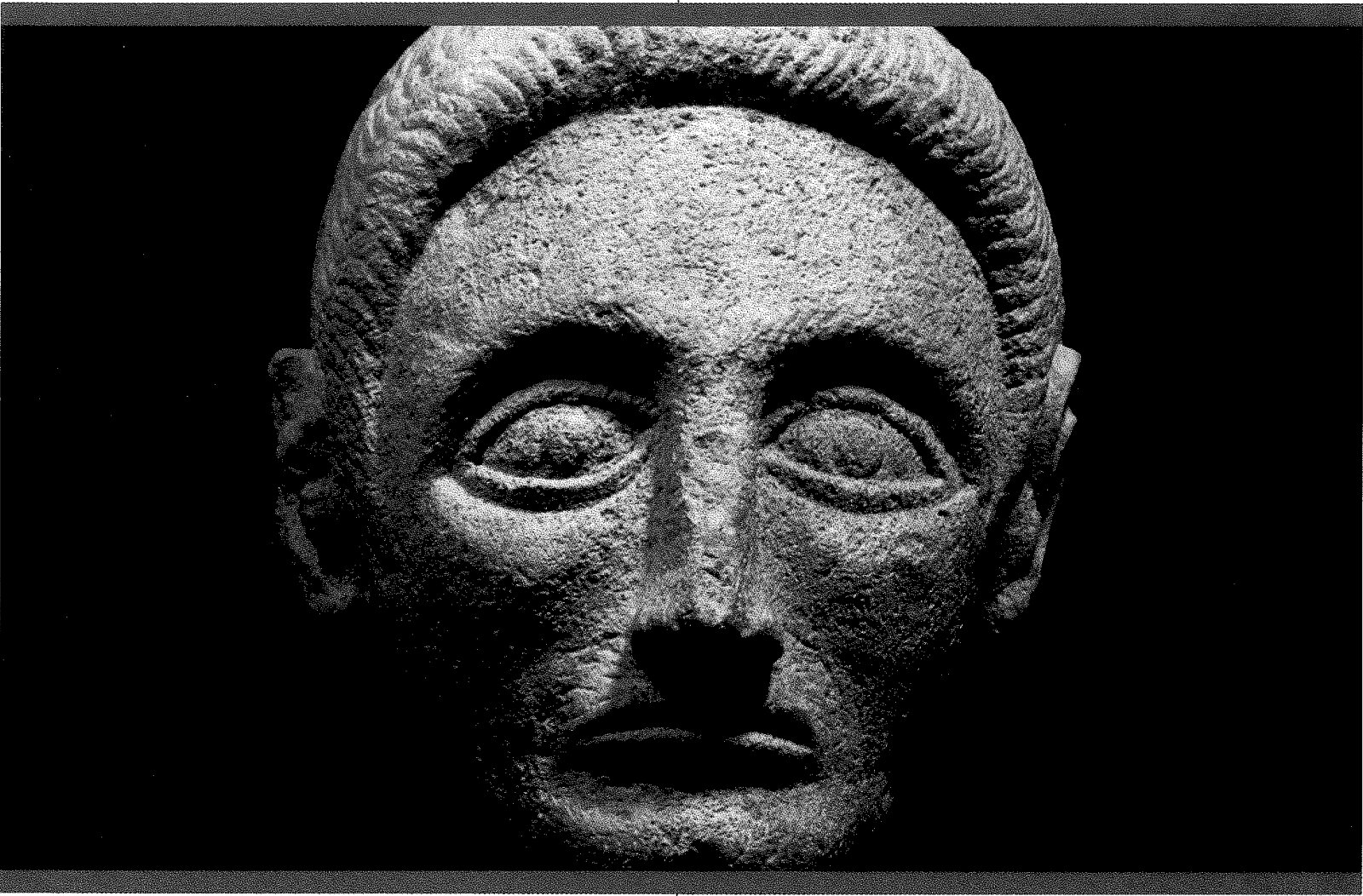
From the late 2nd Century AD, Rome’s most sensitive frontier was the middle Danube, the region from which barbarian invaders could most easily threaten Italy. The army of the Danube became the strongest and most experienced in the Roman order of battle, and as with the armies on other frontiers, was increasingly recruited locally. In addition, units of Illyrian troops were posted to virtually every frontier. The importance of the Danube army was reinforced in 196, when its commanding general, Septimus Severus, used his troops to become emperor. Romans were not amused by the uncouth Illyricani who now filled the ranks of the Praetorian Guard, but issued coins to glorify the “Army of Illyricum.” The Illyrians quickly discovered their power to decide who should rule the empire, changing emperors more frequently than their shirts. Needless to say they preferred to choose from their own, and from 268 to 602, the majority of Roman emperors had their origins on the Danube frontier. Horace’s famous epigram holds that “captive Greece took her savage captor, captive.” Three centuries later, the savage Illyrians had taken Rome herself captive.
Disengagement
Its frontier position, which made Illyria the cradle of the army and of emperors, was also its downfall. Continued barbarian attacks, not to mention frequent civil wars, drained its economic and demographic resources. Invaders, particularly the Slavic ancestors of the Bulgarians, Slovenians and Serbo-Croats, seeped in to settle vacant regions. In the 7th century, the Danube frontier finally collapsed. Roman rule and civilized life vanished from all but a few coastal and island enclaves along the Adriatic. It took the Romans (or, as we now call them, Byzantines) four centuries to move out of their coastal enclaves, reconquer the interior and restore the Danube frontier. Pockets of indigenous and Romanized inhabitants, ancestors the Albanians and Romanians, maintained a nomadic existence in the mountains, but the old Illyria was gone forever, and the armies were now mostly recruited in Anatolia.
Termination of the Mission
From the late 11th century, several of the states emerging in Italy began to look across the Adriatic, anxious to secure their sea lanes. The Romans, with much of their power now centred in what had once been Macedonia, found themselves contesting their holdings along the Adriatic with these Italians, and their inland frontiers with the Serbs and Albanians. The situation was a curious mirror image of the 2nd century BC. Byzantine power, however, was waning. The fourth Crusade in 1204 divided and fatally weakened the Empire. Anatolia was finally lost to the Turks in the early 14th century, and civil war sapped what little strength was left. The Serbian King, Stefan Dushan, exploited the vacuum and, between 1343 and 1347, overran most of what is now Albania. The last Roman garrisons in the region were lost, and the mission that had begun in 230 BC was finally wound down. Forty years later, the Serbs and Ottomans clashed at Kosovo and the stage was set for the next round of Balkan wars.
View the original scanned pages →
Originally published in bout de papier, Vol. 19, No. 1 (2002) — Spring/Summer 2002 // Printemps/Été 2002, pp. 17–19. Read the rest of this issue →



