
bout de papier, Vol. 11, No. 3 (1994) — Fall 1994 // Automne 1994, pp. 30–31
It was moving day at last. Sari, suit and salwar kameez were exchanged for jeans and T-shirts. It was difficult to believe that the years of negotiating and planning, setbacks and problems, anticipation and despair, were over. Well, almost over. It was July, the middle of the monsoon a perfect time to move), and seven months since the Chancery leave and license agreement, an anachronism of the Bombay real estate market, had been signed. The fit-up was nearly complete.
The process of negotiation for our new office had been a lengthy one that outlasted two Consuls and pitted the logic of headquarters against the essence of Bombay. Our landlords, an extended Muslim family, became our own family, living with us through weddings and illnesses, new demands accompanied by incredulity at the parsimony in Ottawa. Our real estate agent, an indefatigable Parsi lawyer, negotiated with both sides and was an endless source of confusion. Driving to look at properties with her in a decrepit Padmini, waving her hanky at the offending tratfic, was guaranteed to hasten one’s agreement. Anything to return to the safety of the office.
The rains swept in across Back Bay as we enjoyed our last day of the magnificent views from the Oberoi Hotel, home to the Consulate since it was re-opened in 1986. From the twenty-fourth floor, the coastline stretched in a sinuous curve to Malabar Hill and the green of the gardens surrounding the Governor’s Residence, Raj Bhavan. Our new home was an office block about six hundred metres away, a journey that would take us more than twenty-four hours! We reminisced about those who had come and gone, about the adventures, and about the successes and failures. We mused about storage space and the luxury of separate offices.
Through those months, we delivered all the programmes for which we were 30 bout de papier Vol. responsible, primarily trade and consular, as well as devoting time to the construction project. We all worked long hours; my knowledge of construction practices grew and I learnt the value of careful supervision. I often wondered whether this was what Trade Commissioners elsewhere in the world were doing as I set off for the site late at night to check on the last shift.
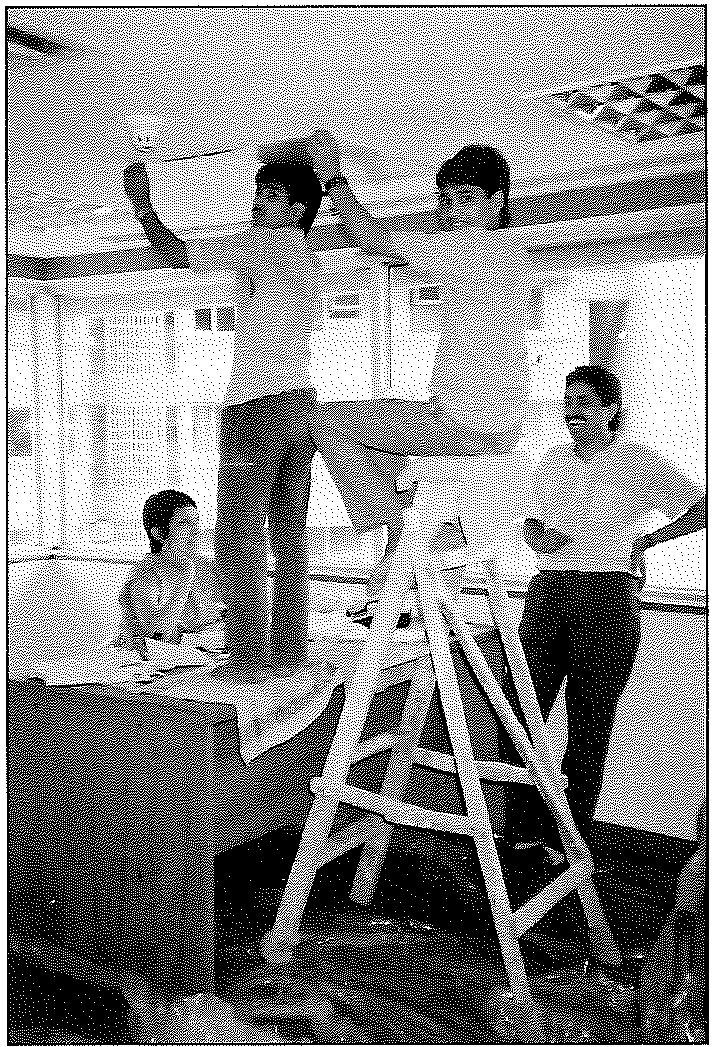
Once the leave and licence agreement was signed and the contractor and architect selected, the gang of workers moved in to the bare shell on the fourth floor of our new building. I now had to deliberate on whether the wiring should be ceiling or floor ducted, and on how the window hinges should be designed to withstand the force of the monsoon storms. The traditional skill set of a Trade Commissioner was not up to the job and I found myself wishing I had paid more attention to my father renovating our home. I did manage to notice that the door handles were all at the wrong height, that the door frames were not perpendicular and that the floor was not level. The contractor’s respect for women in the foreign service grew day by day. So did his fervent hope that I would suddenly be called away on business, or better still, that I would take my holidays during the monsoon atter all.
Fit-up was punctuated by a series of events that caused me to ponder whether we would ever make it to moving day. The carpet which had arrived in India on schedule but, because construction was not similarly well-timed, was stored by Air India in their warehouse. When it was delivered a month later, muddy water cascaded from it as the rolls were unloaded from the truck A monsoon flood in the warehouse had submerged our carpet and we had to try and find someone to dry three thousand square feet of it for us within a week. A day of frantic phone calls as the rolls lay steaming in the reception area. I had visions of an army equipped with hair dryers and, to this day, I have no idea how the dry cleaners managed to do it.
As the deadline for moving drew near, construction moved to three shifts and a check on the night shift, in person or through binoculars from our apartment across the bay, proved very useful. When the workers discovered that the latter was possible, it was amazing how quickly those interior walls went up.
One evening, on my way to bed, the binoculars revealed flames dancing cheerfully in the office. We threw on our clothes and drove over to find chapatis being cooked on the fire and lungis hung out to dry on string clotheslines, while soot darked the newly plastered ceilings. I did not have the heart to throw them out into the rainsoaked night, and set off home, resigned to watching the replastering the next day.
The call about the murder came while I was in bed with dysentery. Convinced the police would lock up the premises until their investigation was complete, they pleaded with me in sombre tones to come and negotiate. A carpenter, armed with a wood plane had decided to use it to settle an argument over a match. It had grown into a Hindu- Muslim dispute and closing the site seemed the surest way to diffuse the tension. Fortunately, the victim survived, the police were persuaded to allow work to continue, and I returned to bed.
Moving day was almost upon us and the office was still only half complete. We held a council of war and decided that the only way to hasten the process was to move anyway and supervise at close quarters. And so it was that we were all waiting for the movers that monsoon morning in July. And wait we did, until late in the afternoon when they arrived, a little sheepish at having forgotten the boxes and having had to return to the warehouse. As the dusk settled over the city and the lights of the Queen’s Necklace around Back Bay were beginning to be illuminated, the packing was almost complete. We had sent the day’s faxes before the machine was disconnected and an eerie silence descended over the mountain of boxes. The movers had disappeared, for dinner I was cheerfully informed by one of the drivers, left behind to guard the trucks. My enquiries about the tardiness of their start and the impending nightfall brought only a puzzled response. Dinner was clearly more important; for the move there was always tomorrow. On business.
Close to midnight we began our six hundred metre journey, four brightly decorated trucks bearing the rather ambiguous instruction for passing traffic to “horn OK please.” There was chaos at both the loading and unloading points. Lengthy negotiations were required at our new building to use the elevators long after our reservation had expired. Beer and pizza sent from home were consumed with alacrity at three in the morning. As other office workers began to arrive, our trucks were just departing, bearing valuable cargoes of discarded plywood and cardboard, and incredulous labourers who shook their heads at the demented memsahib who had shouted and carried boxes and made them work all night long.
We sat, exhausted, and contemplated our new home. Partly finished and piled high with boxes and equipment carefully wrapped in bed quilts. Unassembled furniture with instructions nowhere to be found. Contractors equipment and sheets of plastic, rolls of unlaid carpet and the smell of paint. I am sure we all longed for the cramped but familiar Oberoi, with files stored in the showers and baths, visitors waiting in the hallway and unreliable communications links.
Eventually, it was finished and in October, fourteen months after my arrival in Bombay, the High Commissioner formally opened the Consulate’s new premises. Architects and interior designers were still bringing clients in to admire them eighteen months later. The new space and equipment enabled us to deliver a greater range, and better quality, of services to our clients.
In retrospect, it was an achievement (on budget and on Indian Standard Time), but at the time, I must confess to wondering if this was what a Trade Commissioner did in this new age of information, technology and market intelligence! The answer, of course, is that in a small post you do all this and much more. It is an enriching and demanding experience, frustrating and deeply satisfying at the same time. I would not venture to say that I would do it all again, but I am proud of what we achieved together.
View the original scanned pages →
Originally published in bout de papier, Vol. 11, No. 3 (1994) — Fall 1994 // Automne 1994, pp. 30–31. Read the rest of this issue →



