
bout de papier, Vol. 14, No. 2 (1997) — Summer 1997 // Été 1997, pp. 17–18
In a series of three articles, bout de papier will be looking at how (and if) mini and micro missions really work. In this edition Martin Collacott describes his recent assignment as Our Man in Phnom Penh; in later editions, Jennifer Daubeny and Anne Collins will take us to the very different settings of “their” missions to Guadalajara (Mexico) and St. Petersburg (Russia).
A is me visitors visas le a Camboria n audience with King Sihanouk, ministerial delegation, speak at a Canada Fund project, open the incoming mail and close the diplomatic bag, meet with a Canadian business group and with an NGO representative from Canada, try to complete a report on a World Bank briefing and perhaps have another crack at the mission accounts. Sound like the normal work of a Canadian diplomatic mission abroad? It is — but with one exception: this is our Embassy in Phnom Penh and all of this is being done by the Ambassador, the only Canada-based (CB) staff member at the mission. Does the one-CB post really work? Perhaps up to a point — but are we getting the best return for our investment?
When offered the assignment of head of our first one-CB post at the ambassadorial level, I needed, in fact, little encouragement to go to Cambodia. I had always been intrigued and beguiled by that country and its people (I first went there in 1964) and, although it is hardly at the centre of the world stage, I knew there were few places that could offer such a varied and challenging diplomatic assignment. I went with few illusions about the demands I would have to face and knew that the pressures of the previous three years as Ambassador to Syria and Lebanon would only partly prepare me for the challenges of Phnom Penh.
Perhaps most daunting were the expectations which are inevitably aroused when you hand out your shingle as an embassy with an ambassador in charge. In the case of Cambodia, Canada is well remembered for the role we played on the old International Control Commission in the 1950s and 60s as well as for our active part in bringing about the 1991 Paris Peace accords which made possible the relative peace that now exists in Cambodia. Add to this the facts that we are fairly well known and well regarded because of the success of the Cambodian community in Canada, that, as in Cambodia, we speak both English and French and use both civil and common law and Cambodian interest in Canada and closer links does not take long to emerge. While this obviously pays dividends in good will and the promotion of Canadian interests, it also places heavy demands on a lone representative who cannot avoid at least hearing out a serious proposal from a minister or senior official who thinks Canada may be particularly well placed to help their ministry.
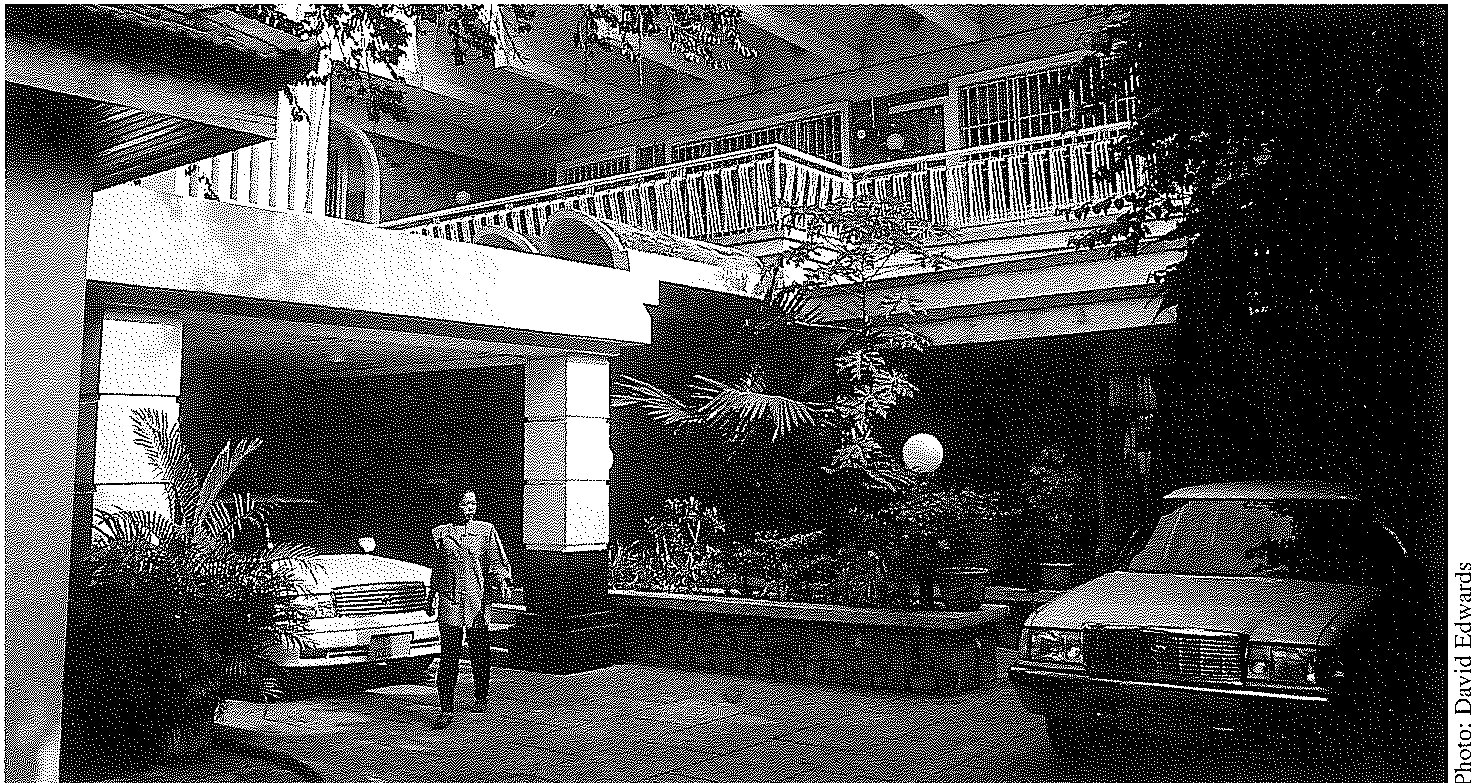
If the Cambodians are not particularly conscious of the fact that our embassy has far more limited resources than the other Western missions in Phnom Penh (the Australians, Americans, French and Japanese, for example, each have between 15 and 28 home-based staff), Canadians at home are even less aware of how restricted we are in our ability to respond to their requests and inquiries. While the entry for Cambodia in Canadian Representatives Abroad indicates that there is only an Ambassador at the post, this does not deter the public and other government departments and provinces from sending requests to the commercial counsellor, the political first secretary, administrative officer, cultural and scientific attachés, etc. on the assumption that anything that calls itself an somewhere on the premises just waiting for an opportunity to show their mettle.
The idea of having an embassy with only one home-based staff member has been driven largely by our shrinking resources combined with the increasing awareness that many opportunities to further Canadian interests can be pursued more effectively if we have someone permanently on the spot. In the case of Cambodia, an additional factor was that we recently concluded an agreement with Australia under which we can co-locate in each other’s missions. Under this arrangement, the Australians cover the Caribbean from offices in our High Commission in Barbados, while we operate from their Embassy in Phnom Penh. Although this colocation resulted in a substantial reduction of my administrative workload, there remained a very considerable amount of administration and support type functions that still had to be dealt with. The incumbent of a one-CB mission has to be reconciled to spending a good deal of time on duties of a clerical level, to the obvious detriment of being able to concentrate on head of mission tasks.
The problem is magnified in the case of relatively dysfunctional locations such as Phnom Penh, where services are unreliable, language can be a major problem and competent local help scarce to say the least. Indeed, even the Australians, who in my view operated one of the most effective diplomatic missions in Cambodia, were constantly struggling to keep a handle on administration and convince their headquarters that it could be almost unmanageable without sufficient home based staff. On a personal note I must add that I was particularly fortunate to be cloistered with the Aussies in Phnom Penh as they were a most enjoyable and supportive crew and arguably the best informed mission in town.
When I completed my posting in July 1996, I recommended a number of measures which the Department should take if one-CB posts were to have a reasonable chance of being viable. These included sending in an advance team to set up the essential logistical requirement for the chancery and residence including communications, equipment and furnishings as well as ensuring that posts in the area that provide program and administrative support (i.e. hub posts) are properly resourced to carry out these functions and do indeed deliver this support, including regular visits by program managers.
It is also important that the various units of the Department, other government departments and agencies as well as the Canadian public in general are aware of the fact that such missions are extremely limited in their resources and that requests to the post are filtered as much as possible through the Department. Having to spend a major part of one’s time explaining that we do not have the means to respond to a slew of detailed requests for information and assistance is obviously not the most effective way of using one’s time.
A question which has been raised in connection with how to make the one-CB post more effective is whether it is really a good idea to raise expectations by calling the incumbent an ambassador or high commissioner. Would it not make more sense simply to have a chargé d’affaires and thereby lower the ante somewhat? While this would probably take off some of the pressure, the downside would be that the incumbent would not enjoy the same access as a full fledged head of mission. In my view therefore we should stay with the ambassadorial level assignment and make it work as effectively as possible.
What therefore is the future of the one- CB post? My own assessment is that it is useful to a degree but that we would get better value for our money if we used a minimum of two Canada-based staff. This would allow the head of mission to concentrate the better part of his or her time on the duties of a HOM rather than to a much more limited extent when they are on their own. The addition of a good first or second secretary would more than double the effectiveness of the post and would still serve as a model which could make possible wider Canadian representation for a relatively modest price tag.
Having said this it should be added that, whether staffed by one-CB position or two, working in a micro-mission such as Phnom Penh has to be one of the most stimulating assignments the Department has to offer. The sheer variety of work and the sense of running your own show keeps the adrenaline flowing and leaves you in no doubt that you are earning your pay as well as making a useful contribution to the effective representation of Canada abroad.
View the original scanned pages →
Originally published in bout de papier, Vol. 14, No. 2 (1997) — Summer 1997 // Été 1997, pp. 17–18. Read the rest of this issue →



