
bout de papier, Vol. 26, No. 3 (2012) — Spring 2012 // Printemps 2012, pp. 17–20
Editor’s Note: In Part I of Ferry de Kerckhoy to Egypt, Pakistan and elsewhere focused on always the case elsewhere in the West). Howe also must accept accountability for their treat both sides his version of an old homily: do un misperceptions of “Muslim hostility” in the W for adversarial relations between the two.
Est-ce que l’Islam est hostile à l’Occident?
La question en elle-même n’a guère de sens en termes absolus puisque l’on contraste une religion à un concept géographique. Qu’à cela ne tienne! Creusons plus avant. Pour mieux comprendre, il faut prendre conscience de la spécificité de l’Islam dans notre monde multiculturel et planétaire. Dans certains pays musulmans, notamment ceux où la sharia forme l’ossature juridique de l’État, il existe un continuum entre l’État et la religion. On voit en Turquie combien la question de la séparation entre les deux demeure vibrante, parfois angoissante, avec des effets directs sur la perception négative des Européens envers la candidature turque à l’UE. D’où cela vient-il? D’une différence bien plus fondamentale, à savoir, l’absence dans l’Islam d’une véritable séparation entre la vie religieuse et la vie civique.
J’aurais tendance a dire que pour la majorité des musulmans, la religion musulmane définit encore les 24 heures de la vie quotidienne. Plus encore, l’Islam est la reference ultime de l’identité culturelle, sociale et politique dans les pays musulmans — encore davantage sans doute dans les pays en crise, où l’Islam est un refuge — indépendamment du degré de tolerance ou d’acceptation envers les valeurs et préceptes occidentaux. Cette reference identitaire lui vient de son histoire, comme Karen Armstrong l’a exprimé mieux que personne: was humiliated by apparently irreligious enemies, a Muslim could feel that his or her faith in life s ultimate purpose and value was in jeopardy. Every effort had to be expended to put Islamic history back on track, or the whole religious enterprise would fail, and life would be drained of meaning. Politics was, therefore, that Christians would call a sacrament: it was the arena in which Muslims experienced God and which enabled the divine to function effectively in the world. Consequently, the historical trials and tribulations of the Muslim community — political assassinations, civil wars, invasions, and the rise and fall of the ruling dynasties — were not divorced from the interior religious quest, but were the essence of the Islamic vision. A Muslim would meditate upon the current event of their time and upon past history as a Christian would contemplate an icon, using the
Editor’s Note: In Part I of Ferry de Kerckhove 5 essay on relations between the Muslim world and the West, our former Ambassador to Egypt, Pakistan and elsewhere focused on the largely favourable reception of the growing Muslim population in Canada (not always the case elsewhere in the West). However, while the West — Canada included — needs to shed its mistrust of Muslims, Muslims also must accept accountability for their treatment of religious minorities, including the millions of Copts in today’s Egypt. He offered both sides his version of an old homily: do unto others what you would have them do unto you. In Part II he explores perceptions and misperceptions of “Muslim hostility” in the West, the compatibility of Muslim and Western values, and sees no inherent justification for adversarial relations between the two. He focuses on what both should understand to move forward.
Faute de comprendre cette dimension en Occident, on continuera à confondre la vraie nature de l’Islam et ses déviations fondamentalistes, avec en prime la fascination pour Huntington et le choc des civilisations. Le schisme qu’a connu la Chrétienté, notamment au cours de la Renaissance, en réaction contre la sclérose intellectuelle et scientifique de l’Église, et qui a mené à la césure entre comportements séculiers et religieux, n’a pas eu de correspondance dans l’Islam ou encore il s’est produit plus tôt et différemment.
My own answer to the question about Islam as anti-West is a typical “no, but…” in that Islam’s doctrinal content is neither foreign nor hostile but Muslim fundamentalists have clearly pitted their Jihadist, political, vision of Islam against the West. That perception is reinforced by the overall economic backwardness of the former versus the economic prowess of the West.
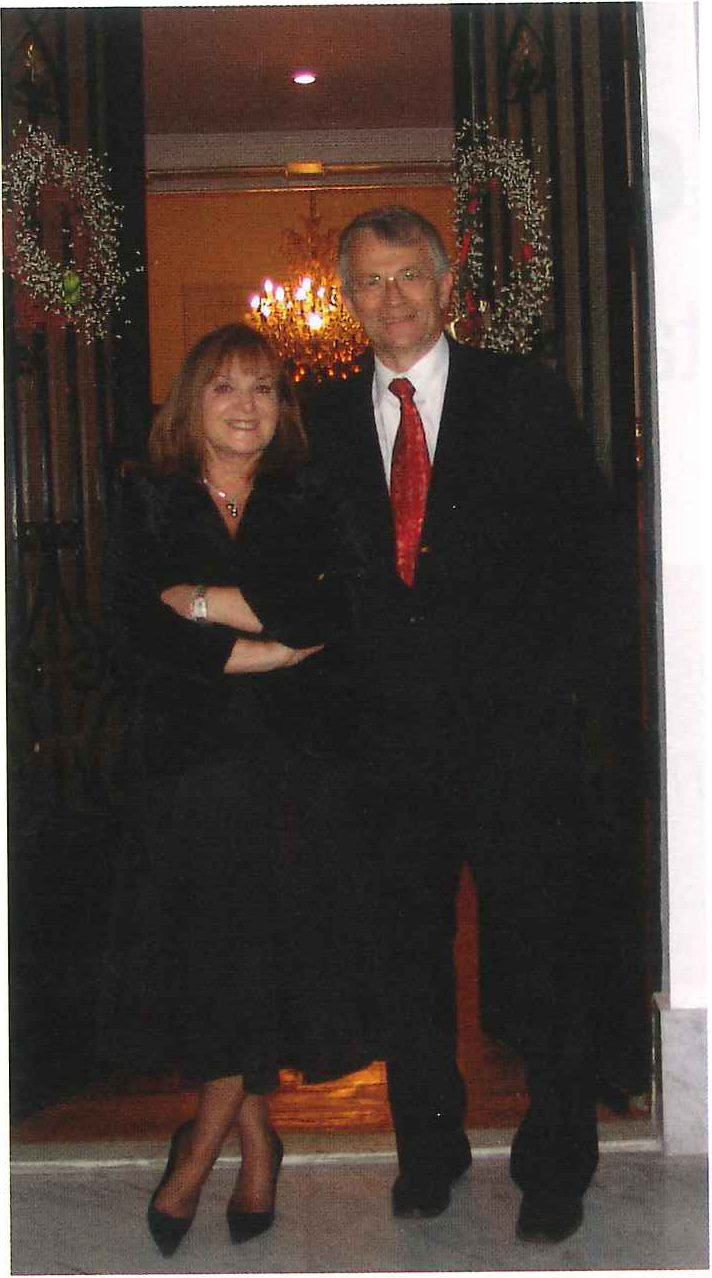
Are Islamic values compatible with the West’s? Are Islam’s values, ways of life, cultural emanations, philosophical outlook, all negations of Western or Christian values? It would be easy to point out just how many Muslims have blended successfully into Canadian society to debunk this myth. But I should be careful in drawing conclusions as the 2007 survey by the Leger Marketing firm “grande enquête sur la tolerance au Québec” established that “c’est envers la communauté a rabe que les Québécois expriment le plus fort degré de réprobation. Pourtant, l’enquête démontre qu’il s’agit d’une des communautés les mieux intégrées a la Société québécoise.” But even if one assumed that they did not integrate, that parallel lives are being led, and that a multicultural society is a utopia, it would still be hard not to recognize that our two religions have such a common heritage that there are Ferry de Kerckhove et Louise Côté, épouse et collègue.
likely more points of convergence than of estrangement.
My own view is that particular circumstances drive the social and political evolution of countries, nations and peoples. Historically, that almost inevitably leads to greater emphasis on superficial or even deeper differences amongst such societies rather than on their shared nature and other commonalities. Fundamentalists often prey on these “all important” differences to justify their conviction that their religious tenets, dogma, faiths or spiritual approaches are inherently superior to those of others.
Fundamentalists who see themselves as “victims” of the behaviour of others go farther. Factors such as gaps in levels of economic development, legacies of a colonial past, perceived injustice in the West’s handling of the Middle East, etc. are used to justify a presumably inescapable clash of values, if not physical violence. But is religious intolerance a product of faith or of history? Is faith manipulated by those who would use differences in faith to justify intolerance, to abuse the essential humanity of others? Many fundamentalists present themselves as the custodians of faith but behave like implacable politicians of their sect or tribe — and perhaps therein lies the real problem of interfaith relations.
Looking even more broadly, from a secular humanist or more Western perspective, there are related issues that need to be tackled. These include the propensity in some countries to allow religious injunctions to supersede temporal laws — fatwas are simply not understood in the West and unfortunately those that make the headlines are those that appear menacing when not bizarre. Long established secular traditions have led some Westerners to believe that there is a greater threat from the Muslim community than others in terms of the imposition of precedence of the religious over the temporal.
Il y a aussi des habitudes culturelles qui sont souvent définies en termes religieux alors que pour l’observateur extérieur, elles relèvent bien plus de traditions que d’autre chose mais qui mériteraient d’être expliquées et relativisées. Citons, par exemple, le hijab, les mariages arrangés, ou le sacrifice rituel d’un mouton à Eid-al-Adha. Le fait que pas tous les Musulmans de différents pays n’ont pas les mêmes habitudes rend difficile de les lier à des obligations religieuses. Et qu’il en aille de même pour les religions chrétienne et juive ne semble pas avoir d’importance pour ceux qui se complaisent à faire ressortir les différences dans une religion que le côté démonstratif dérange.
The myth would have Islam being allergic to modernity while Christianity, as embodied in the West, would define itself through the pursuit of scientific knowledge and adaptation to technological change, Galileo notwithstanding. I think the days are past when Syed Abul A’la Maududi maintained that “Islamic theology, unlike Christian theology, cannot be separated from temporal sciences”. I believe that great many in the Muslim world today would agree with what former Malaysian Prime Minister Mahatir said a few years ago in his speech on “Breaking the Muslim Mindset”: “Not only did we miss the Industrial Revolution, but we also missed subsequent developments which we also looked upon with suspicion… Together with the acquisition of knowledge, there must also be a change in attitude, a change in the mindset and values which always hold us back whenever we seek to empower ourselves.”
Nonetheless, within some quarters of the Islamic world there seems to be a problem of adaptation to modernity —which some too readily equate with ““Westernization”. The history of Islamic scholars’ contributions to science clearly shows that this problem is one of mindset and not of philosophy, possibly the result of an unduly protective and literal interpretation of the Holy Quran in contrast to its own underlying modernity.
A cette question l’ancien président indonésien et théologien plein d’humour à ses heures, Abdurrahman Wahid (autrement « Gus Dur ») a donné une réponse parfaite. En élevant le débat au niveau des valeurs, il proclame : « We need to Address the apparent contradictions between our understanding of Islamic law and the universal values that we not only endorse but also proclaim to be at the heart of our Faith ». Quel remarquable contraste par rapport aux milieux musulmans conservateurs anachroniques qui, au nom d’une interprétation littérale du Coran, ont réussi à exercer leur contrôle sur les masses musulmanes sans éducation tout en évitant de confronter les questions fondamentales de l’ère moderne. Gus Dur et l’Occident sont sur la même longueur d’onde!
Some scholars argue that Islam now plays a fundamental role in the ongoing restructuring of the international system. Just as domestic political and economic variables have become at least as important in foreign policy making as overarching international factors, “ethno-cultural” considerations (including belief systems) are playing a much greater role in the handling of today’s international crises. Islam is definitely one of the key variables in the conduct of contemporary international relations, and is certainly one of the most complex to handle. In fact, some analysts argue that by focusing strictly on defeating terrorism and on “imposing” democracy, we have cornered ourselves in the geopolitical realm: we have neglected the cultural and social essence of human relations. Such neglect does not make Islam an opponent in, or of, the international system. However, it does point up the need for a more comprehensive approach than our usual dialogue on common values (including human rights, freedom and democracy). We need to better understand the underlying social structures and the shared value systems of Muslim countries if we are to build more reliable foundations for mutual understanding.
Est-ce que l’homme de la rue en Occident est en mesure de faire la distinction entre l’Islam et les fondamentalistes ou encore entre une expression plus ostentatoire de la foi et un fondamentalisme politiquement inspiré? Un chercheur a défini « l’islamisme » comme « the movements and idéologies that claim Islam, as They interpret it, as the basis for restructuring contemporary States and societies according to an idealized image of Islam’s founding period 1400 years ago ». Mais l’objectif de « l’islamisme » (expression que je n’aime pas car elle corrompt le mot Islam) est la conquête du pouvoir. La dimension religieuse est un épiphénomène. D’où l’ambigüité fondamentale entre un « complot » politique sous le sceau d’une façade religieuse éculée et un engagement contemporain sincère envers une démarche plus conservatrice de l’Islam. C’est une ambiguïté que les dirigeants religieux musulmans devraient avoir à cœur de dénoncer. Pas étonnant qu’on soit confus, à l’Ouest!
Et le risque est clair: ce que l’on appelle à tort les « Islamistes », qui sont en fait des fondamentalistes qui revendiquent leur appartenance à l’Islam, mettent en cause l’insertion légitime de nombreux pays musulmans dans diverses communautés de nations qui serviraient de ponts plutôt que de crevasses, comme c’est le cas de la Turquie. Il est impératif de dissocier les manifestions violentes du fondamentalisme islamique et l’Islam comme phénomène social et religieux. Le sentiment mutuel de peur que l’Occident éprouve pour le militantisme islamique et que ressentent les musulmans envers les politiques, idées, réussites économiques, et projections de puissance occidentales, exige davantage de sensibilité que de déploiements militaires. Pour ce faire, il faut avoir le courage d’offrir de la place sur l’agora politique mondial et leur permettre de canaliser leurs frustrations au sein de l’ordre social, économique et politique existant.
In a discussion about themes in this essay, bout’s editor asked a question inspired by his own reading of Karen Armstrong: “The recent assassination of the Governor of Punjab” (who sought fairer treatment of a Christian woman under Pakistan’s draconian anti-blasphemy laws) “was not a political act in the western sense but an act of faith — likely to be rewarded in heaven in the mind of the perpetrator. The assassin is considered a hero by many religious conservatives, including many lawyers. They appear to reject any separation of church and state, would deny the primacy rule of law and citizenship, and recognize only the Quran, the Umma and the rule of those who sit in judgement on society’s conformity with Quranic norms as they choose to understand them. Would such an understanding of Islam not lead to war of wills with no end, as ‘God’s perfection’ on earth is impossible even under the Taliban in Afghanistan? How can the West best handle such differences over the rule of law in modern society?”
My preliminary answer to this one is that modernization is not strictly a matter of moving from a religious to a post religious order: the separation of church and state is much more complex than just some institutional arrangement. As Iain T. Benson put it, “the term secular is not a helpful term to describe the public sphere because, for most people, it means “non religious” and this acts as an overly broad exclusion of such things as the public place for the contributions of religion and religious believers in all walks of life and in many co-operative aspects with the state…. The State (law and politics) is not stripped of religious influence because law and politics are made up of citizens all of whom are “believers”. [But] ““The state must not coerce an individual to affirm a specific religious belief or to manifest a specific religious practice.” In my view, this is why religiously defined states such as Pakistan, or even George Bush’s America, can harbour serious dangers for themselves and their neighbours.
L’Islam est caractérisé autant par sa diversité humaine que pas son point de référence unique, le Coran. L’Islam n’est pas un monolithe et comme, contrairement a la hiérarchie de la religion catholique, il n’a pas de source unique de dogme, il n’est pas toujours facile de savoir qui parle au nom des musulmans. Le Grand Sheikh de Al Azhar est entendu par près de deux milliards de fidèles mais est-il écouté? D’où l’importance de cultiver des relations beaucoup plus étroites avec les organisations musulmanes pour prendre conscience des différents courants et réduire les conflits possible. Parmi les sociétés de l’Ouest ne serait-ce pas le Canada qui est le mieux placé pour entamer le processus d’adaptation nécessaire pour developer une relation de confiance et respect mutuelle entre musulmans et l’Ouest d’un nouveau siècle? A nous de répondre au défi?
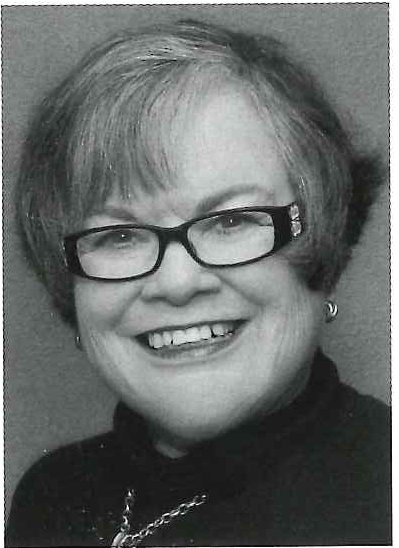
Ferry de Kerckhove recently retired from the Foreign Service after serving as Ambassador to Egypt (as well as to Indonesia in 2001-2003 and High Commissioner to Pakistan in 1998-2001).
Voir les pages numérisées d’origine →
Publié à l’origine dans bout de papier, Vol. 26, No. 3 (2012) — Spring 2012 // Printemps 2012, pp. 17–20. Lire le reste de ce numéro →



