
bout de papier, Vol. 25, No. 2 (2010) — Summer 2010 // Été 2010, pp. 21–23
bout: Tell us about the CIC.
CR: As our website (www canadianinternationalcouncil org) says, we’re a non-partisan, nationwide foreign policy council created to strengthen Canada’s foreign policy. We promote research and dialogue on international issues through a national network of 15 branches. The CIC rose phoenix-like from the venerated but cash strapped Canadian Institute of International Affairs. Research In Motion’s Jim Balsillie is founder and chair and the vice chairs are two former foreign ministers, Bill Graham and Perrin Beattie. Dr. Jennifer Jeffs, a Latin America scholar, is president.
Balsillie gave me two goals: raise the CIC profile in Ottawa and rejuvenate. We also do more with Parliament Hill. Most of our dinner events are now taped by CPAC for future broadcast, multiplying the number of eyeballs and increasing our reach across the country. We connect with young professionals and graduate students at Carleton and the University of Ottawa through events and speakers relevant to them. We did a career-orientation “speed date” evening at Carleton and planned Pub Nights around the World Cup. We recruit new blood and I hope junior officers will give us a try.
bout: What about the Ottawa branch?
CR: We’ve over 300 members, including serving and retired foreign service officers — Serge April, Craig MacDonald, Bruce Jutzi and Bernie Etzinger and I are on the volunteer executive. Our anchor events are monthly dinners at the Sheraton. We have autonomous units. Our Foreign Policy Initiative (headed by David Lee, Gerry Wright and Craig Hunter) hosted a two-day public conference, “The World in 2015: The Implications for Canada” in January. It drew 300 participants. Three study groups look at the Middle East, Latin America and Africa. This year our speakers included:
Author David Sanger on Obama’s foreign policy inheritance; Don Newman on foreign policy coverage throughout
his career;
Andrew Cohen on “Mike” Pearson’s legacy (the subject
of his short biography);
Copenhagen Climate Change conference dialogue with
British High Commissioner Anthony Cary, David McLaughlin of the National Roundtable on Energy
and the Environment, and Carleton’s Glen Toner; U.S. Ambassador David Jacobson spoke on Canada-U.S.
relations.
+ Lt. General Andy Leslie on Afghanistan and
Canadian Forces;
* Canadian Council of Chief Executives President and former deputy PM John Manley on our foreign policy and on trade and investment; and
* Former sherpas Si Taylor, Peter Harder and Jim Judd for a G8/20 roundtable.
bout: What about like-minded partners?
CR: They are critical to success! Fen Hampson of Carleton’s NPSIA gave us an office at the University and we regularly partner with them and Roland Paris at the University of Ottawa’s Centre for International Policy Studies (CIPS).
The Sanger event was in partnership with NPSIA and the Pearson Peacekeeping Centre, and we recently launched a study, “Reinventing CIDA”, at CIPS in collaboration with the Canadian Defence and Foreign Affairs Institute. That study was written by Gordon Smith and Barry Carin, former foreign service officers now directing the Centre for Global Studies at the University of Victoria. Their talk drew a standing room only audience. We later met with interdepartmental senior executives, hosted at CIDA. A panel on Afghanistan with parliamentarians was done with Germany’s Friedrich Ebert Foundation. We also partner with the Canadian Foundation for the Americas (FOCAL), the Retired Heads of Mission Association (RHOMA), and the Conference of Defence Associations Institute.
By exposing policy ideas through the media and debating them in public and private forums we have a positive influence on policy development. We also contribute to public education. Canadians across the country want to learn more about the wider world — getting context and facts from those who served abroad — and make up their own minds. We’ve become a nation of traders as well as a trading nation. We’re peopled by the world. Our livelihood increasingly depends on how we maximize these advantages.
bout: Do research and policy relevance matter?
CR: Absolutely. Take the recent launch in Ottawa of the “Global Positioning Strategy for Canada” — effectively a foreign policy review — led by former Globe and Mail editor Ed Greenspon. It involved a cross-section of dynamic leaders from Generation X and it’s lively, provocative and highly readable (www onlinecic org/opencanada).
CIC conducts ongoing research that includes an excellent report arguing for a new International Border Commission by Michael Kergin and Birgit Matthiesen, my former boss and colleague in Washington. The Ottawa branch has contributed to policy research with our work around the 2015 conference including a superb paper on water authored by a group led by Blair Seaborn. We collaborate with the international policy community in government departments and agencies, notably the IDRC. We aim to make our program interesting and policy relevant and their support helps make our conference activities possible. There is a lot of talent and knowledge among our members. We see opportunities for collaboration as federal and provincial governments seek independent perspectives and organizations that can organize arm’s-length conferences.
Retirement frees you to speak your mind. As baby boomers, who share an appetite for policy debate, leave government service, the community of like-minded people grows, benefiting groups like the CIC and RHOMA. The academic community contributes, but many academics don’t always see the importance of policy relevance. This presents an opportunity for those who served in the Foreign Service. We understand government. We have developed networks of contacts, nationally and internationally. We appreciate policy relevance and connect the dots. We learned how to write and present policy options. We make a valuable contribution on issues of public policy — as did a number of our former colleagues last fall on Afghanistan by defending the principle of independent reporting by officers in the field. Nothing is more debilitating for an organization as when the bosses are perceived as looking out for themselves leaving junior officers hanging.
bout: Is the CIC on TV and radio?
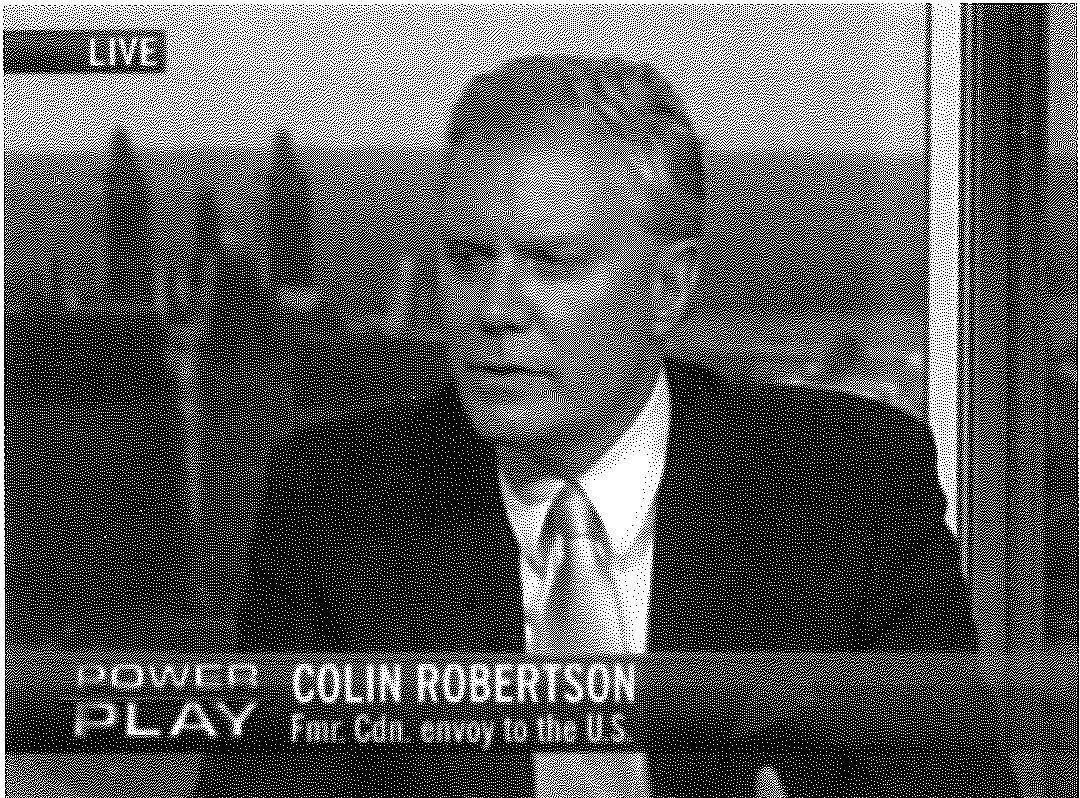
CR: The media seek informed perspectives. In a world of a thousand media outlets few have figured out a profitable business model. Just as government has hollowed out its policy development capacity, so the media have hollowed out their research staff, producers and reporters. This opens opportunities for those of us who serve the public interest by sharing our knowledge and experience. Mind you, one has to be comfortable sitting on a high chair in a dark room, speaking into a camera with no one behind it, and listening for your cue through an earpiece to someone who might be thousands of miles away. You find yourself speaking in 10—15 second bites to someone who may have no idea what you are talking about. Then you’ll be hustled out for the next guest. In short: Be Brief, Be Blunt, Be Gone. Briefing ministers was excellent training for that!
bout: Any personal reflections on the Foreign Service?
CR: Diplomacy matters more than ever. In a multi-centric world, geography and demography give Canada unique advantages. Our proximity to the United States, the “hyperpower” or the “default” power, matters. It wants the kind of intelligence we bring to the table as we belong to so many organizations. Thanks to intelligent immigration policy “we are the world” which includes the Indian and Chinese diaspora. We live pluralism. We have capacity and talent. Now we have to apply it — and that takes resources, vision and direction from management and our political leaders.
When I joined in 1977 we were like the Habs in their heyday. Bill Barton was our ambassador on the Security Council — like Scotty Bowman, his quiet diplomacy had real effect. Our under-secretary was Basil Robinson. Allan Gotlieb would soon follow. Marcel Cadieux and Klaus Goldschlag held forth in the Library where you were encouraged to spend time. Young Turks, like Bob Fowler and Jeremy Kinsman, had panache and ideas that questioned conventional wisdom. We were confident that we mattered and could leverage these ideas making a difference for Canada. Officers were encouraged to write for our respected in-house journal, /nternational Perspectives. Consorting with journalists and political staff (I would later marry one with both qualities) was encouraged as they brought intelligence and political nous into the equation.
Foreign service is about foreign policy. Ideas matter. Process and accountabilities are means, not ends. Bulking up on bean-counters and coaching staff doesn’t win games.
Returning to Ottaw
Heading to a new
“After four years, our DFAIT posting to another city v an end and we needed to quickly find a new home You had been recommended by a fellow Foreign Ser You need new talent every year. Adjustment at the ministerial and political level of “Canada’s New Government” accounted for some challenges but senior management also has much to explain. Throwing cultural funding and public diplomacy onto the sacrificial altar was wrong and when it was last attempted (1993) we fought it through PAFSO with the help of RHOMA. The Senate refused legislative passage. Cutting post operational budgets last summer because they couldn’t count — it’s no way to run an organization.
Proponents of “Transformation” or the “New Way Forward” might recall that “business process re-engineering” and Mao resulted, respectively, in Enron and the Cultural Revolution. Both were brave “new” worlds, but slogans are no substitute for the hard language of priorities, requirements, resources, trade-offs, and limitations. Know what you want, know what you are ready to give to make a deal, and then, as Derek Burney famously put it, it’s a matter of “getting it done”.
I’ve spent the last couple of years in university. The new generation is internationalist, green and believes in service. Really smart women and men. Give them ice time abroad to learn how to skate and play as a team and they’ll soon put the puck in the net for Canada.
bout: Merci, Colin.
View the original scanned pages →
Originally published in bout de papier, Vol. 25, No. 2 (2010) — Summer 2010 // Été 2010, pp. 21–23. Read the rest of this issue →



