
bout de papier, Vol. 13, No. 4 (1996) — Winter 1996 // Hiver 1996, pp. 5–8
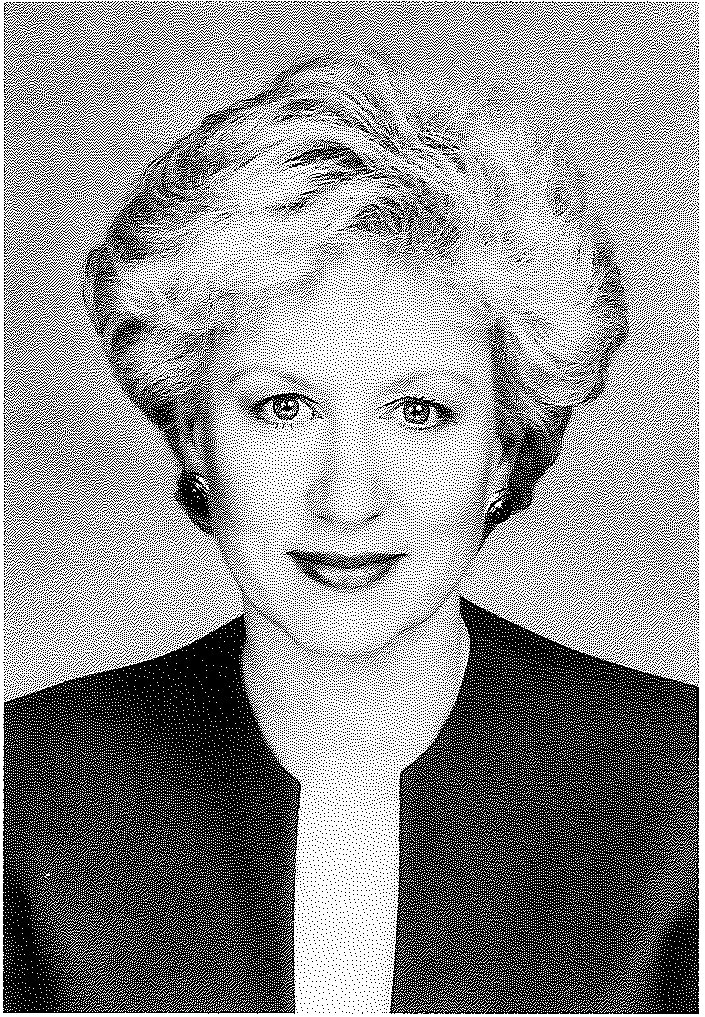
bdp: Growing up in BC, was this in any way a preparation for California?
Campbell: BC is the California of Canada. There are certain affinities that people up and down the West Coast have. Recently I saw an article in Harpers magazine by Richard Rodriguez., about the West. He talks about the concept of the West in America as an ephemeral concept. For some people it starts in Saint Louis, for some people Pittsburgh, for some people Wyoming, for some it’s California. He made the comment about California being a place that is in many way the oldest part of the country, because that’s the place that people came to understand that the land was finite. That really struck a chord with me in terms of British Columbia; just as in the United States, people have come west in Canada to find new adventures, new horizons. In fact, most of the immigration into BC is from Alberta and Ontario. But when you get there there is no place else to go. You are at the end of the line. That does give a different sensibility: the sense that the land is both wonderful but also finite, the environmental sensitivity. The kinds of things about BC that other people might see as flaky are in fact, in many ways, the result of a world view that comes from being at the end of the line as opposed to one of the way stations on the line.
bdp: Does this actually translate into any direct sense of community with BC?
Campbell: I don’t think that you have the same sense here as you sometimes find in the Pacific Northwest. It’s more an understanding that British Columbia and California are places that are both very serious, where people work hard, but also a little bit other worldly.
bdp: Some people would actually say that “other worldliness” in BC actually translates into politics at the highest level…
Campbell: From time to time BC certainly has been an entertaining place to be. I think that California is also a colourful place. Now the difference between California and British Columbia is, of course, that in the United States, California is hugely powerful because of its size. Its population is equivalent to that of Canada. Whereas British Columbia sometimes feels like the Rodney Dangerfield of Confederation — it gets no respect. There is a difference there. California has been the home of more than one president, Nixon and Reagan for example. It is clearly very significant in the strategy of both parties for the next national election here*. Bob Dole has been said not to have much chance here yet he is spending a great deal of time here because California electoral college votes are so significant. In that sense, California is a little different and, to the extent that the American empire is now a cultural empire, its capital is here in California.
bdp: You talk a lot in your political memoirs about your own love of the theatre.
Campbell: There is very little glitter in what we do here. Most of it is really hard slogging, dealing with the opportunities for Canadians to work, to invest, to be supported, dealing with the opinions that affect the integrity of our cultural policies. work that Canada does here is not very Hollywoodish at all: it’s very serious. For instance, yesterday I met with a gentleman from the Association of Canadian Television Radio Performers. They have interests here and are trying to encourage producers here to cast Canadians when they are shooting in Canada. From time to time we do get a little bit of the glitter, but it was not until Joan Winser was the Consul General here that she managed to have the Canadian Consulate invited to the Oscars when we had Canadian films in contention. Quite apart from the entertainment industry, there is bio technology, high-tech, San Diego and silicon valley and the huge financial market that has grown in San Francisco.
bdp: California has the 7th largest economy in the world…
Campbell: California would be in the G-7 if it were an independent country. The whole territory here is California, Utah, Nevada, Arizona, Hawaii, and Guam: we have a lot on our plate.
bdp: In spite of this, is there a particular personal appeal to living in the showbiz. atmosphere?
Campbell: There is wonderful live theatre here, and an interest in film that goes beyond what is being made. For instance, UCLA has a wonderful film series. I have always i been much more of a live theatre person but I’m really delighted to have the opportunity i to get to know film as a genre much better, as, well as getting to know the film business — which is something quite different.
California is fascinating because, yes, there is lots that is interesting happening in entertainment but there are also wonderful Universities here: interesting thinkers and ideas, wonderful places to visit and exciting business. Silicon Valley is of itself a revelation in terms of what’s happening there and the opportunity that this provides for Canadians. Samuel Johnson once said that the man who is tired of London is tired of life: if you can be bored in California you’re in serious trouble. bdp: You had an academic career largely in international relations. Is what you are doing now a fulfilment of that or are you still on another track?
Campbell: I think it is quite related. When Ileft Government, I spent 1994 at Harvard, at the Kennedy School, and while I was there I reconnected to this issue. I am now on the visiting committee at the Centre for International Affairs at Harvard and have been doing a lot of speaking, both in the United States and in Europe, on the challenges faced by democracies in the post-cold-war world. We are in a very interesting time. The old variables that have governed international politics for the fifty years of the cold war are gone now. We are all struggling to try to understand what the world is all about and what governments should be doing. Of course, for the United States as the only remaining super power, this is a major challenge. To be living in the United States at this time is fascinating.
I have already managed to connect with academics who are working in various areas, including my old area of the Soviet Union, now Russia. There is a group here led by Abe Lowenthal, University of Southern California, for example, whose Pacific Policy Council is interested in making sure that people from the western parts of Canada, United States and Mexico are fully involved in this foreign policy dialogue; his point is that in all three countries there tends to be a domination, particularly in Canada and the United States, of the central and eastern parts of the country.
bdp: In Ottawa, you began as a junior minister at Indian and Northern Affairs, then to Defence and Justice. As Prime Minister, your main intervention in foreign affairs would have been the G-7 Summit in Tokyo…
Campbell: There was an international dimension to all of my portfolios. When I was in Justice, I had the Commonwealth Justice Ministers’ meeting, and I hosted the European Ministers of Justice. As Defence Minister, I attended NATO meetings and major defence conferences in Europe. As Prime Minister, the G-7 was the big international meeting that took place in the summer of 1993.
bdp: What was your perception of External Affairs from your various portfolios?
Campbell: All departments tend to develop their own culture and their own perspective on the world. That’s why it is very important that ministers meet together around the cabinet table where they balance these things off. When I was Justice Minister, I had a very strong focus on the legal aspects of the issues we dealt with, the constitutionality of issues. Each minister in each department can’t help but become a separate little parish: you always have to work at tearing down those barriers. I expect that the same thing is true of the Department of Foreign Affairs & International Trade and I’ll become part of that culture here. Perhaps one of the advantages that I have is that, having been a minister, I have had the chance to see the operation of departments from the other side and to understand some of the things that policymakers need to know to move beyond the internal feedback that they get. It’s too soon for me to give a sense of the culture of the Department yet but I suspect, like every other department I have been in, that it has its unique cul-ture and tends to see the world from its perspective.
bdp: What initially took you to Ottawa was a passionate belief in the virtues of free trade. From what you are seeing in California, is free trade a battle that has now been won in the US?
Campbell: I think so. In Canada too, people are coming to see it as a fait accompli but that doesn’t mean that there aren’t difficulties. One the major cultural differences between Canada and the United States is that Canada has always believed in systems of international law and regulation. We are also very multilaterally linked. We seek to create the systems of international rule-making because we aren’t big enough to throw our weight around. Americans, on the other hand, are citizens of what is now the only remaining super power and there is a strong theme in American thinking and in their view of democracy to the effect that they don’t believe in any kind of supranational authority. Even when they are party to international agreements they don’t like to give up their right to politicize issues; this sometimes makes them a difficult partner. While Americans may support the notion of free trade and be very excited about it, there still are areas where they are reluctant to surrender their policy-making discretion to a set of rules or structures that is bigger than their own political institutions.
bdp: Is there a problem in that your mandate is to promote Canadian culture in Los Angeles and yet that is the one area where we sought most protection under the North American Free Trade Agreement?
Campbell: It is a problem. It is another example of profoundly different world views in our two countries. In the United States there has never been any problem posed by the importation of other countries’ cultural products: the American output is so enormous and so dominating. For Americans the entertainment industries are simply industries like any other. In Canada that hasn’t been the case. We have been extremely vulnerable to the domination of our industries by the American industries because of, first of all, the economies of scale. The American domestic market is so big that it can afford to sell into the Canadian market at much lower costs than those borne by Canadians. That is why cultural industries were exempted from the Canada-US Free Trade Agreement. That exemption was carried over into NAFTA because we need to make some space and to provide some opportunities for our own industries to articulate the Canadian reality in Canadian voices. We are becoming much more successful at that. I mention in my book that this was an issue that I raised with Bill Clinton, when I met him in the summer of 1993: I said I would like to explain to him why I was a cultural protectionist.
I was in Vancouver last week speaking at a conference of the North American Committee on this whole question of culture and why it isn’t just an industry, why it is an anomaly in otherwise liberalized trade. This is because it is absolutely fundamental for the creation and maintenance of the social capital that countries need to make their democratic institutions work. You cannot have a country with a functioning democracy if people don’t know themselves. In Canada, that is a real challenge for us. It is not a challenge for Americans.
bdp: Critics would say that in fact you cannot actually put up barriers against satellites, the internet…
Campbell: It may well be that changing t technology will make it more difficult. which case, we will be very grateful that we started our cultural protection as early as we did. Canadian industries have grown as a result of that early cossetting: cultural product as a proportion of our exports is growing quite dramatically. We are finding other markets and that helps to create economies of scale for us. We’ve certainly got the smarts.
What we don’t have is the big domestic market that the Americans have and a source of friction between us is that Americans have been very slow to accept Canadian cultural products. It is very difficult for Canadian films to get shown in the United States and yet the Americans control about 95% of our movie screens. So we still have problems in the feature films area, but we are doing well in the area of specialty TV channels and are exporting television into Europe and Britain.
The Canadian government is committed to continuing to protect, not to shut out other products, but to make space for Canadian products either on bookshelves or on the broadcast waves and on movie screens. If technology does begin to outstrip this protection, then we may have a problem.
bdp: When you go out into the market place in Los Angeles, what is the Canadian niche?
Campbell: One of the areas in which we are very successful, in terms of the export of our product, even to the United States, is children’s programming. We are internationally acclaimed for our children’s programming. Also, as more and more Americans are coming to Canada to shoot films, they are discovering the enormous strength of the Canadian film infrastructure. We are now trying to promote the greater casting of Canadians in major roles: there is real depth here. We are certainly establishing ourselves as the makers of good television programming, and Canadian authors are also doing extremely well. We are getting there, but it hasn’t been easy and it hasn’t been done without significant support from the people of Canada.
What I want to do is to help work on creating a cachet of excellence, so that people will associate “Canadian made” with excellence in all aspects of the entertainment industry.
There is a lot happening too in the high-tech sector. Recently the Bombardier water-bombers were credited with helping reduce the seriousness of the latest fires here. This time the loss of property and life was very much less than it was in 1993 and Canadian technology was an important part of that. bdp: What comments do you have on the Presidential campaign, vis-à-vis your own experiences in Canada?
Campbell: There are some similarities and some very significant differences. First, here it has boiled down to a Dole/Clinton fight; in 1993 in Canada, we had a five party contest (three or four parties usually in any particular region). That dynamic is different. Some of the issues are the same: balancing social programs with debt, for example. What is interesting is to see that the centre of gravity politically in the United States is very much to the right of what it is in Canada. What you also see in both countries is the volatility of politics at this time in history. There are a lot of things up for grabs: traditional party affiliations don’t necessarily mean anything. The importance of women here is something that hasn’t attracted the media coverage it ought. There is an enormous gender gap that goes a long way to explaining the lead of President Clinton over Bob Dole in the polls: the Republicans have a major gender gap problem.
bdp: You don’t attribute any of that lead to less-than-neutral media?
Campbell: One can certainly look at the role that the media play. There is no question that their role is very important and there is also what Tom Patterson has identified as a kind of self-fulfilling prophesy: if you are seen to be in free fall and seem to be losing then the media will write about all the negative qualities of the candidate or leader, whereas if you appear to be rising in popularity the media commentary will tend to be more positive. For Bob Dole the editorial cartoons, in particular, have been quite cruel and scathing, a reflection of the sense that he appears not to be winning. Were he to be winning, I think he would be portrayed quite differently. It’s a dynamic that is very difficult to turn around.
bdp: As Consul General in LA, have you set any specific goals for managing the mission and for your own mandate?
Campbell: First of all, the reason why I’m here is that the government recognized the value of having a Canadian of some prominence here to break through the lack of awareness of Canada. It is very difficult to get attention in Los Angeles. Celebrity is a currency. Americans, in the NAFTA context, are very focussed on Mexico and it is sometimes hard to get their attention on Canada. Using that profile and the doors that it opens constructively is a very important part of my strategy. It has a purpose.
I want to create an awareness of Canada as a different country, an awareness of Canada as a country where people do excellent things, where there are policy approaches that are valuable for Americans to look at and learn about.
The underlying objective is to defend and promote Canadian perspectives in policy where they differ from those of the United States, whether it is in trade disputes or in matters of the environment. The main political battles are fought in Washington but a lot of the opinion battles are fought in out here in California, so obviously a prime objective is to protect Canadian policy initiatives and positions and to promote Canadian jobs and promote trade and investment in Canada. The underlying goal of all of this is to put jobs in Canada.
bdp: Do you have any regrets about not having chosen a career in international relations from the beginning?
Campbell: No. I loved what I did but in terms of this job, my experience in government is valuable. For two reasons. One: the cachet of my former office will help to open doors and give me access to decision makers here who might not otherwise make themselves available to a consul general. My predecessor, Dennis Browne, made it very clear to me when I was appointed that it is difficult to get people’s attention. So in fact, the political side of my career will open doors in the international side of the career, which is very helpful. Two: I understand the political process. That is very important in trying to influence political opinion. I have a very deep understanding of how people who make public policy think: what they need to know, what kind of arguments are persuasive with them.
Aside from the fact that my political career gave me a very intimate knowledge of my own country (and I am finding that enormously helpful), I am surprised at how many people I know that have useful advice and are valuable in achieving the goals of this mission. It was also useful that I travelled the country to do my briefings before coming down; I have good relationships with many of the people at the provincial level in Canada, for example. I understand the Canadian economy. Not only have I travelled everywhere in the country and made policy in key areas related to the whole country but I worked on a daily basis with people who came from all parts of Canada. I heard over and over the concerns, problems, particular issues that dominate the various parts of the country. That is very valuable here. It’s wonderful to have an opportunity to use all that. bdp: Does that mean that if everything fell into place that you might be interested in continuing in this line of business?
Campbell: That remains to be seen; obviously that is the prerogative of the Government. I am not here as a career public servant. My main concern now is to do this job as well as I possibly can and be as useful as I can to Canadians. It certainly is enjoyable and I am always proud to be a representative of Canada outside of Canada. It is a labour of love to serve Canadians outside the country. It was a labour of love to serve them inside the country.
When people leave public office, whether they do it voluntarily or not, one of the things that is hard about leaving is that you take with you so much that you have learned. Sometimes it is frustrating that you don’t really have a chance to use it. I am delighted because this job gives me a chance to do that.
bdp: One final question. What are you going to be thinking as you sit and watch the TV coverage of the upcoming election in Canada?
Campbell: I will be thinking how interesting it will be to watch it and not to have to be a part of it. It will be the first time since 1988 that there will be a Federal Election that I won’t be involved in. When I took this job on, my commitment was not to become a member of the governing party but to be non-partisan. But I think that I am not alone among Canadians in hoping that another party will emerge as a genuine national alternative; obviously the Conservative party is the one best positioned to do that. It would be in Canada’s interest for them to re-emerge. It will take more than one election but that is certainly something I will be watching with interest – the fate of my own party in the next election. I have heard many Liberals make the same point, that they think it important for the Conservatives to re-emerge as a political force because they are a national party and do have a national vision.
bdp: You won’t miss the excitement?
Campbell: I don’t think so. I might feel it vicariously for people that I know who are running — but no. I love politics. I don’t for a moment regret it but I love what I am doing now too. It was great but it was also not without its price. We’ll see.
Ed. note: This interview was conducted immediately prior to the November 1996 elections in the USA.
View the original scanned pages →
Originally published in bout de papier, Vol. 13, No. 4 (1996) — Winter 1996 // Hiver 1996, pp. 5–8. Read the rest of this issue →



