
bout de papier, Vol. 15, No. 3 (1998) — Fall 1998 // Automne 1998, pp. 22–27
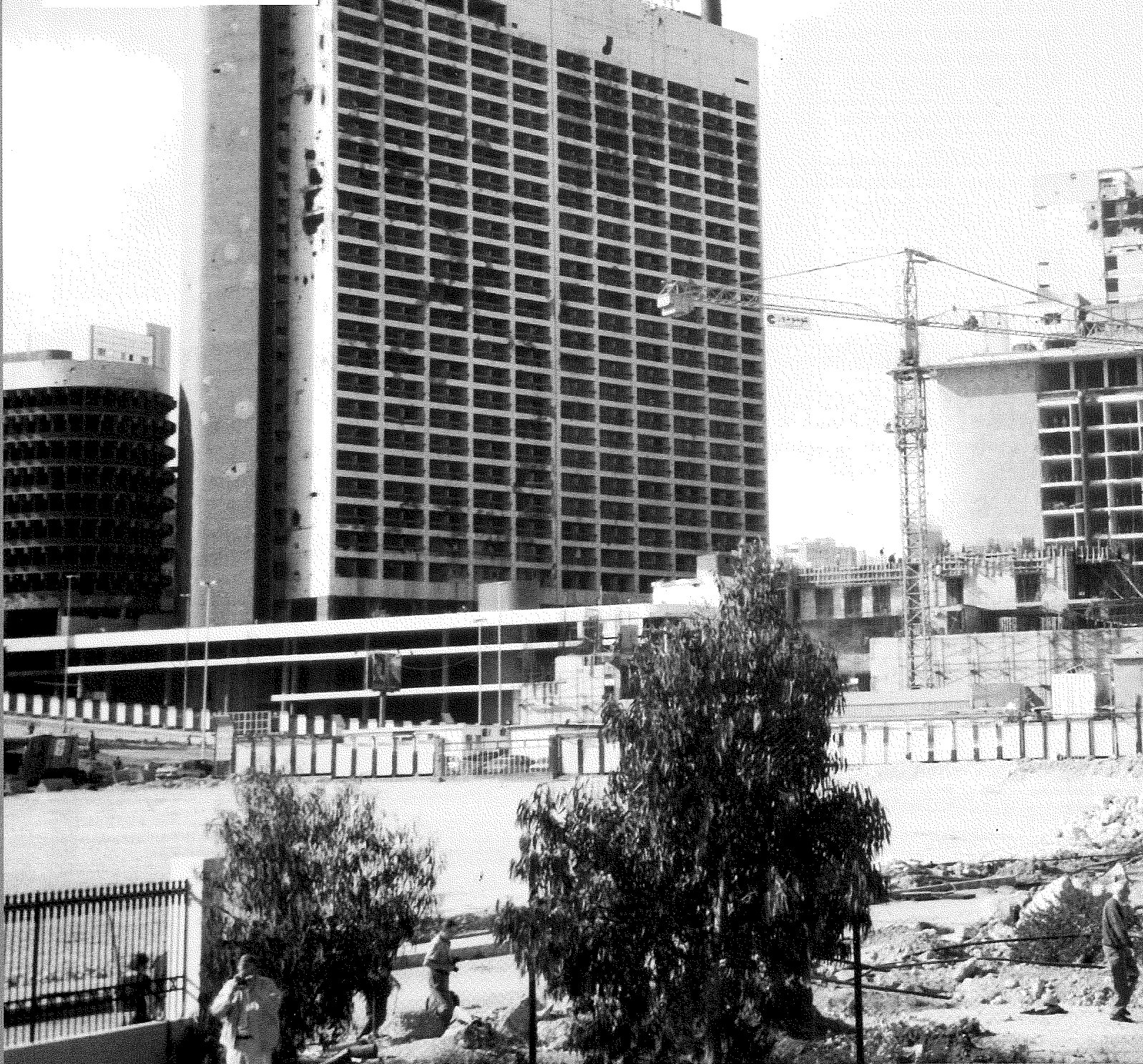
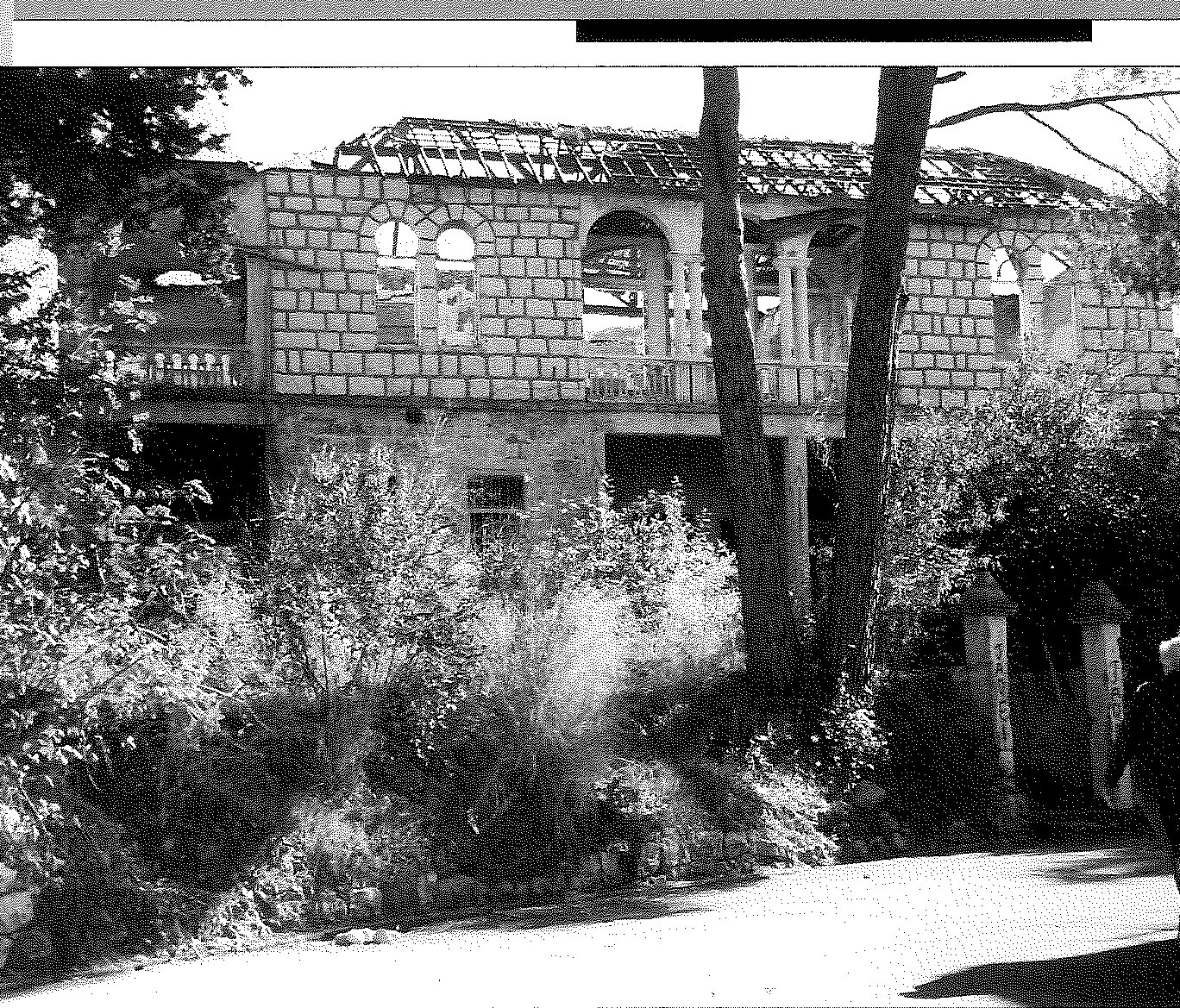
This time we arrived in Beirut by air. Darkness was setting in. The plane turned sharply in the lee of the mountains, and I looked down at the lights on the spit of land where Beirut is built, and at the still glimmering Mediterranean in the early dusk. As we landed the old familiar Middle East heat rushed up from the tarmac. A shiver of excitement ran down my spine. Memories flooded back. It was twenty-two years since I had last been to Lebanon – nineteen of which had seen a bloody civil war and a devastating invasion — and nearly forty-four years since I first came here as a young married woman.
What would be left of the old Lebanon I knew? The country that had been so beautiful? The people who had been so welcoming to our very new and very green diplomatic family? What differences between them had caused their catastrophe? Had these been resolved?
These thoughts were swirling through my head as we drove in from the airport. We made our way along a highway under heavy construction that passed through the sand dunes along the coast. It was here that we used to come out to archeological picnics: we and friends had discovered a little late-Roman pottery kiln and bits of mosaic floor from a summer villa of the same period. We had named our tiny pet turtle Shard to commemorate these excursions.
Then suddenly, still with the sand and the sea, we were on the old potted road I remembered. It was now lined on either side with miles of brightly-lit jerrybuilt shops, mostly empty of customers. There were electric generator wires strung every which way from building to building, uncollected bags of garbage and heaps of trash on the sides of the road. Outside clusters of dusty pedestrians dodged their way through old cars and carts, to the bawling of street vendors and the rhythmic insistent honking heard all over the Middle East. A giant tawdry souk had been created on the outskirts of the city.
“These are Shia villagers seeking safety from the bombing in the south,” I was told. “There are thousands of them, and they live in unspeakable conditions.”
Then just as suddenly we were out of it. Instead there was a traffic roundabout and a landscaped fountain and a traffic light that people actually stopped for, all new since the war. We were in Beirut proper, plunging into its narrow streets lit sporadically from the windows of designer boutiques and the street beckoned welcomingly, an oasis in the unknown landscape.
Just how much of an oasis was made clear the next morning. The street we were in was anything but luxurious, though the area — Ras Beirut, described in the war news as “mostly Muslim west Beirut” — had been famous before the war for its fashionable shops and apartments. Very cosmopolitan, with churches and mosques and a variety of religious communities, it was convenient to the older downtown. We had lived here and our Embassy here had suffered bomb damage during the Israeli invasion.
What we now saw when we stood on our hotel balcony was a sad urban landscape, a narrow five story apartment building pockmarked with bullet holes, and a lone painter who was replastering and repainting the inside rooms. Next door a lower building still had the vestige of what must have once been a rather lovely roof garden, and next door to that a bombed out corner was now occupied by a low tin-roofed shack housing “Oriental Souvenirs,” cheap brass trays and silver bracelets. These were not the lovely Damascus tablecloths or glorious oriental rugs we used to buy.
As we walked up the street, several women’s clothing shops, which had been shuttered the night before, revealed a tawdry stock of overpriced skirts and pants and tops, which belied the prosperous impression given by the lit boutique fronts of the night before. These last now seemed little more than brave beacons of hope amid the rubble.
And rubble there was, all over the city, not in heaps, but discreetly swept into corners between buildings, or piled into dumpsters resting on the curb, smelling dry and dusty like an unused attic. Tangles of private wires still spread across an occasional sidewalk. In the residential areas many landlords and tenants fleeing the fighting had not yet returned. The horror of the snipers practicing on pedestrians and the militia gangs prowling the streets for a kidnap victim were gone. At night the empty unlit streets were as safe as one’s own cottage.
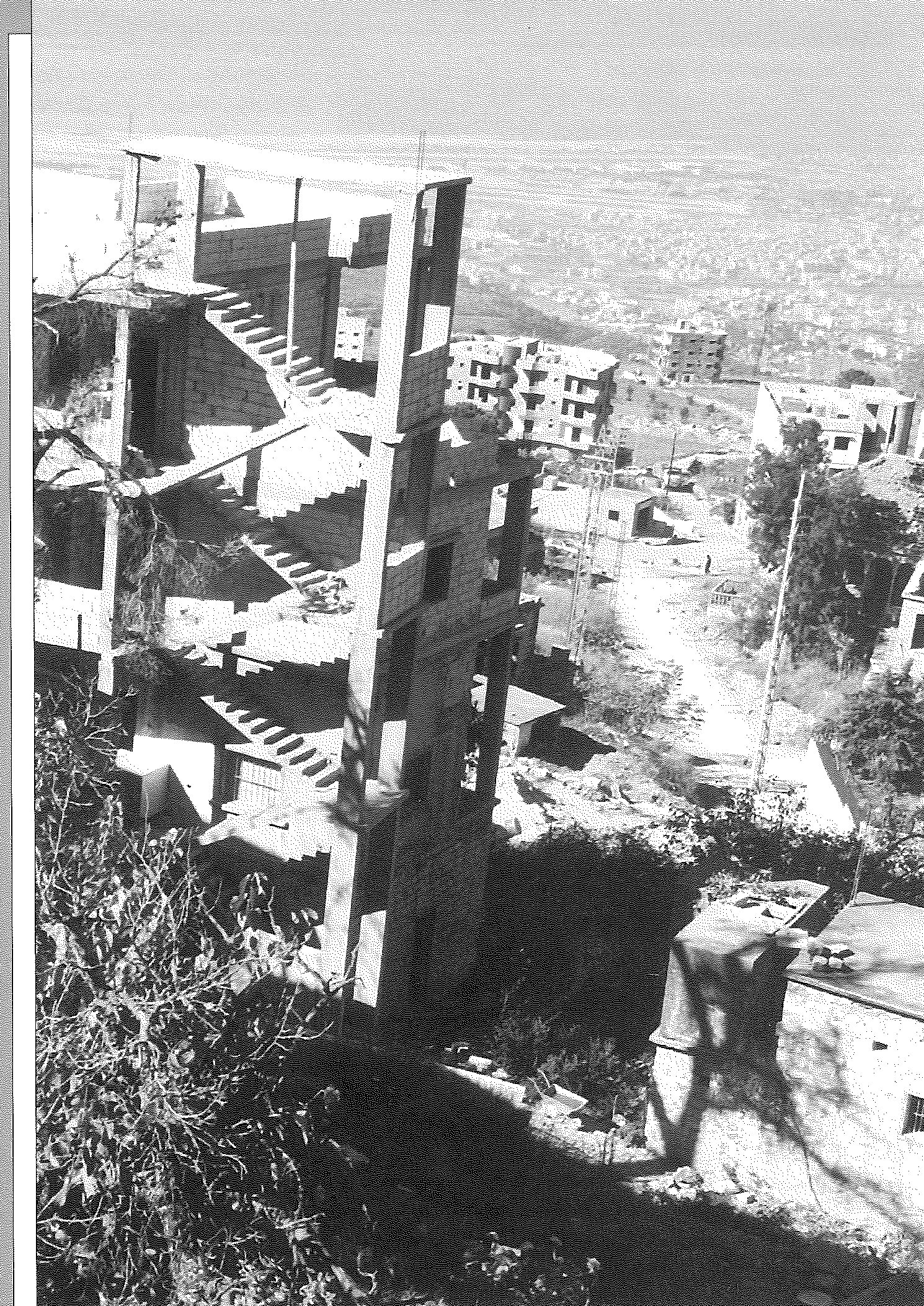
But in the flattened financial district and port area things were quite different. Here was frenetic rebuilding. The sound of bulldozers, wrecking balls and street drills was deafening. The air was choked with dust. Thanks to the initiative of the billionaire prime minister, Rafik Hariri, a building consortium, Solidaire, had devised a system of shares in damaged buildings to be exchanged for shares in restored replacements. The values of the old and new have been determined by an independent body. This venture has been wholly financed with Lebanese money, local and expatriate.
Old buildings of architectural merit are being restored, while unsalvageable ones are being crushed and rebuilt on modern models. We peered into a giant excavation, soon to be underground parking and shopping malls, with residential high rises above, and tried to find our bearings in the city we had known. The aim is to build a Mediterranean Hong Kong, I was told.
My first arrival in Beirut had been very different. It was noon, late January, 1954, and I had come by water. I had crossed the Atlantic and the Mediterranean in three weeks on a passenger ship. With me was our nine-month old son, our ten-year old terrier type dog, and an incipient sibling for our son. We were joining my husband at the British Middle East Centre for Arab Studies, situated in the little village of Shemlan, in the Shuf district, thirty kilometres above Beirut, where he had been sent by our Department of External Affairs to learn Arabic. After a three-month separation we were all terribly excited.
The city was much smaller then, and more treed. In the old city the shipping companies and large importers were housed in grand amber-coloured stone buildings dating from Turkish times. Along the sea front near the famous St. George Hotel, now standing gutted, the street was lined with tall palm trees; there was a tiny sward of green and the sea lashed the rocks just beyond. You could swim off the hotel terrace.
Shemlan was lovely and I thought I had come to Paradise. Typical of most villages in Lebanon, it consisted of low flat houses, built of the local buff-coloured stone, on the very steep terraced side of the mountain. These villas were set in gardens with grape vines, and chickens, and geraniums in pots, and the occasional rose. As I walked down our road to the bottom of the village, people sitting on their front stoops would call out in Arabic, “Welcome! Please come in. A cup of coffee?”
Our village was Maronite, the largest Christian sect in Lebanon. It has a Syriac- Aramaic liturgy, and a married priesthood, but is affiliated with Rome and recognizes the Pope as its head. Some historians believe that the Maronites may have been the last Christian tribe to emigrate from the Arabian peninsula before the birth of Islam.
Below us was a Druze village. Its people belonged to a secret offshoot of Shia Islam, dating from the eleventh century. They were recognizable by the white veil their women wore over their hair but seldom over their faces, and the white band wound around the fez that the men wore. These two communities had lived on the Shuf for three hundred years, sometimes at war, more often at peace.
To the north of us the main town was Greek Orthodox and to the west, down on the coast, the community was predominantly Sunni Muslim. Others throughout the country, particularly in the south, adhered to the Shiite Muslim sect that is the majority in Iran and Iraq. Among Christians there was also a great variety of sects, some upholding earlier creeds in opposition to the Eastern church, and some merely Western versions of the Eastern: Greek Catholic, Syrian Orthodox and Syrian Catholic. A man’s religious affiliation was his real identity, and each community looked after its own.
Shemlan was not a primitive village. It had electricity, and in our house enough to light bulbs and run one appliance at a time. We turned off the refrigerator to do the ironing. There was no piped water. Like everyone else, we collected ours during the winter rains — it rains there in three months as much as it does in Manchester in twelve – on our flat roof. From there the water drained into a cistern below the house, and was then pumped by hand to the roof again and came through our taps by gravity.
Drinking water was fetched from the village spring, in our case in a pot on the head of a Palestinian lad, named Suleyman. His widowed mother, Umm Suleyman, a refugee from the Huleh in present-day northern Israel, was a striking woman in her early thirties, tall and slim, her face blue with her tribal tattoo marks, still wearing her blue village dress. She did much of the village laundry, including ours, by hand of course.
And we loved it all. We were properly frightened when the gypsies rode into town with their donkeys and their tents, and we followed the villagers’ advice to bring in the baby and lock the doors and windows. We watched in awe as all the great from Beirut came up in huge cars to the funeral of the butcher’s wife, a Hitti, sister of a brilliant doctor and a world-renowned historian.
We accepted with gratitude the suggestions of our neighbour to give our toddler a banana and an extra toy when he wailed piteously when put to bed, sensing that they were also reassuring themselves that we were not beating him to a pulp. We were touched beyond measure when our elderly landlady insisted on babysitting this same toddler in the middle of the night when our second baby decided to be born, and even more so when our neighbours overwhelmed us with special dishes and sweets for the occasion, “even though” the baby was “only” a girl.
The Arabic language school was housed in two large red roofed buildings originally built as a silk factory — a lucrative industry in this region in the nineteenth century — and then bought by a philanthropic lady as an orphanage after World War I. The teachers were Palestinians who had been part of the original Centre in Palestine before partition into Israel in 1948. The director was from the British Foreign Office and the curriculum supervisor a distinguished British Arab scholar. The students, 13 bachelors and four married men, were mostly young Foreign Office officers, British army officers, one or two private individuals from oil companies, and one or two others like my husband from Commonwealth countries. Ten months later my husband was posted down to Beirut to help open a Canadian legation. From our Eden we were plunged into a Gomorrah of casinos, night clubs, and lavish parties.
We moved into a new apartment building near a minuscule public garden, where I naively thought I could bring my toddlers to play. But here the neighbourhood boys fantasized they were back in the mountains, and used to stalk with their 22 rifles, the little sparrows that sang in the trees. Older youths, accustomed to strict gender protocol in their own families, were delighted to engage our shy pretty nanny in distracting conversation, while the children raced about on their tricycles on the edge of an elegant treacherous pond, just deep enough to drown them should they capsize their vehicles. Nursery school at two and summers in our lovely Shemlan were the answer.
Beirut was a fascinating mixture of old and new. Like the other Phoenician cities of Biblical fame along this coast, its history dated from Neolithic times. Like them it had always been a port trading with the interior, becoming, in times of world peace, immensely prosperous as an entrepot for the exchange of goods and ideas between Europe and the Far East. Although the Byzantine emperor Justinian had founded a law school here, and the Crusaders in the eleventh century had built a Norman-style church, later converted to a mosque, most of the city’s ruins lay buried under the floors of nineteenth century Turkish buildings.
As a place to do business Beirut was a conglomeration of different souks. Each area had its specialty and each its clientele, as fascinating and colourful as the goods offered for sale. I learned to bargain with brio.
Economically and socially Beirut was changing before our eyes. In 1954 the city was emerging from a small port serving the Syrian hinterland to an international emporium for the whole Middle East, and the country with it. Although independent from the French in 1943, Lebanon exploded commercially through the port of Beirut with the creation of Israel in 1948 and Nasser’s take-over of power in Egypt in 1952. The port of Haifa in Palestine moved its Arab business to Beirut. Palestinian doctors, lawyers, teachers, merchants did the same. Nasser’s socialist policies and his distrust of the Christian Levantine population of Italians, Greeks, and Lebanese who had lived in Alexandria for hundreds of years, made them also take flight.
Unlike many third world countries, Lebanon had a high literacy rate of close to 85% in its population, and this included the girls. The Maronite element had maintained ties with the west since the eleventh century through the Crusaders, its adhesion to Rome and its many French Catholic schools. French was the second language spoken throughout the country, even in the tiniest village. There was a French-speaking university, St. Joseph’s, dating from 1875, which had evolved from a Jesuit seminary and boys’ school.
There was also a host of English-language schools founded by English-speaking Protestant missionaries, from England and particularly the United States, in the nineteenth century. One of these, the Syrian Protestant College, had become in 1866 the American University of Beirut, still possibly the most influential American university outside the United States. Intellectuals, both Muslim and Christian, from all over the Middle East were attracted to the city. As a result, Beirut, since the end of the nineteenth century, was already the leading centre for western education and ideas, both liberal and revolutionary, in the Arab world
For the educated Palestinians and Alexandrians, Beirut was the obvious refuge. With their arrival, Lebanon, almost overnight, was turned into what the Lebanese liked to call “the Switzerland of the Middle East.”
The city was booming with modern, concrete construction. New offices, new shops, new companies, new schools, new clinics and new apartment blocks were opening daily.
Making money was a game, like bridge. Money was a commodity, to be enjoyed of course, but above all to be traded where the real fun of the challenge was. Fortunes were made, lost and remade. Parties were given to show off how successful your business affairs were. As a young diplomatic couple we were scooped up by Lebanese hostesses, not because anyone thought we were important, but “as garnish,” it was explained, like the parsley on the fish. We had ringside seats to watch the human show.
Women were also caught up in the boom. There was suddenly a great demand for all sorts of female skills beyond baby sitting and house work. Not only girls who could sew, but also business assistants of every description, shop girls, office receptionists, stenographers, file clerks, office administrators, telephone operators, nurses, and teachers, were needed to support the influx of new activity. Lebanon had able bilingual and trilingual female high school graduates ready to fill the jobs, and only too delighted to earn their marriage dowry in this way. Women had leapt into the twentieth century.
When I last visited Beirut in 1975 there were even more buildings, even taller and packed more closely. Land values had risen so sharply that people were building shops on the sidewalks, while cars used them as a third lane. The oil boom was at its height and Beirut was the gateway from the west for the whole Arab world. The greed to make money had become ravenous.
There were also rumblings in those early months of 1975. An old friend warned, ’The Maronites are making all the money, and the Shias, who are so poor in the south, are getting nothing but bigger families. No census has been permitted since the 1930s. The Muslims now heavily outnumber the Christians, yet the constitution still gives the balance of power to the Christians, especially the Maronites. One of these days the Muslims are going to demand a better share of the goodies.” A few months later the prophecy had come true.
The first fighting in the civil war broke out between a Christian coalition headed by the Phalangists (a group of extreme nationalist Maronites), and a Muslim coalition made up of PLO fighters (expelled from Jordan in 1970), left-wing Druze and various Shia militias, with some Sunni participation. In 1982 the Israelis invaded Lebanon to expel the PLO, bombed Beirut, encouraged the Phalangists in a bloody massacre of two Palestinian refugee camps, and caused further devastation and suffering in the country. Was a game,
International attempts were made to halt the fighting but as time went on, with outside support in arms, money and men, more and more groups were fighting each other, including different factions of Christians, and different factions of Muslims, encouraged by foreign interests that often had little bearing on Lebanon. Finally peace was restored by an accord brokered in the Saudi Arabian summer capital of Taif, and enforced by Syrian military occupation.
The damage has been profound. In the first seven years of fighting even before the Israeli invasion and subsequent militia battles, an estimated 10% of Lebanon’s population of close to 3.5 million were killed or wounded. Civilians in the south, mostly Shias, are still being killed in clashes between the Hizbollah militia and Israeli forces.
In addition, the war has brought a flight of needed capital and the loss of traditional markets. Bankers, traders, tourists have found safer countries. Free trade with Syria — a price for stopping the fighting — has undercut Lebanese agriculture and labour. Sadly, Lebanon has been bypassed as an indispensable intermediary for Arabs further east.
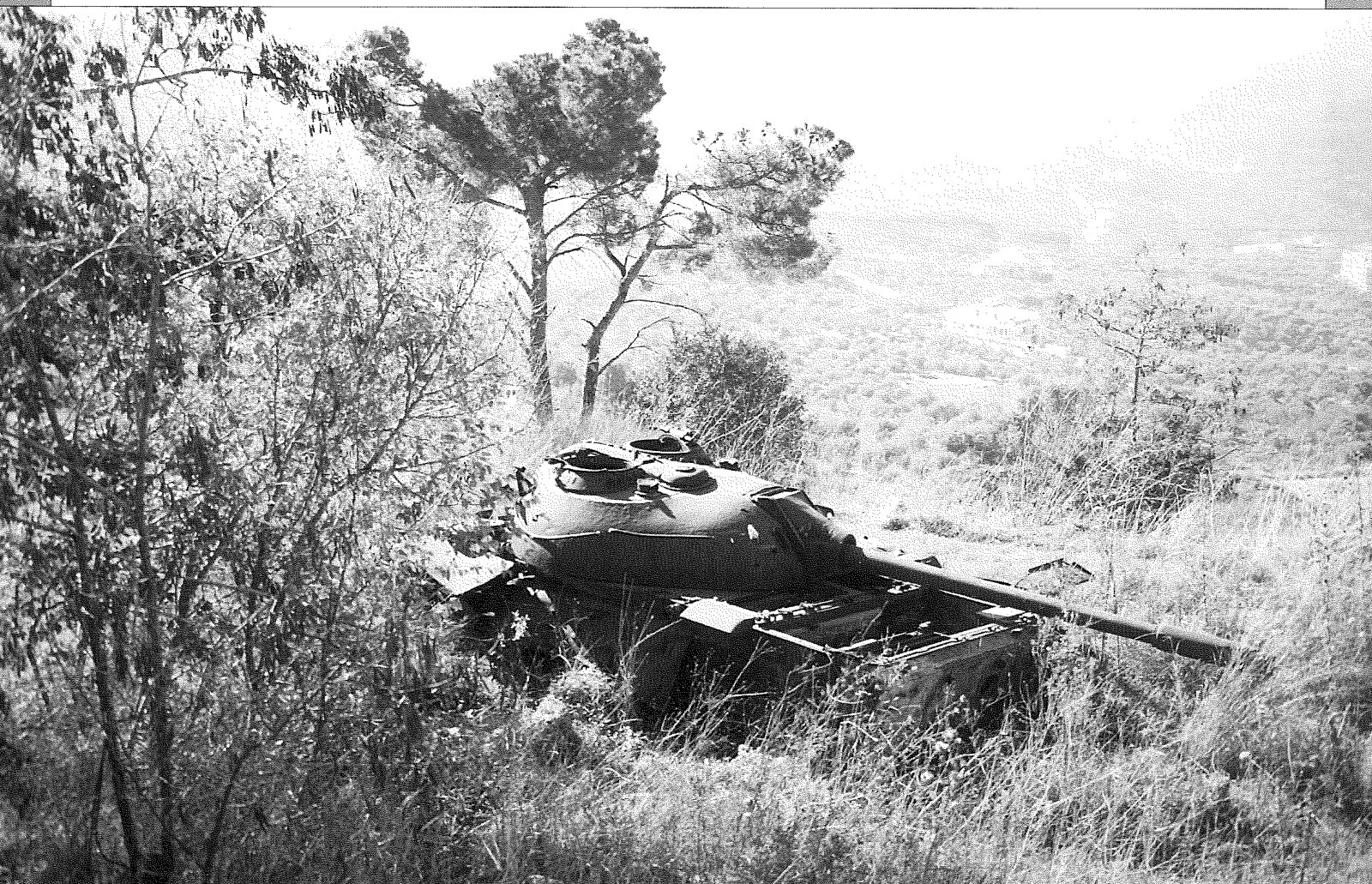
In Shemlan the spectacle that met us was devastating. After a bloody battle the Druze had wrested it from the Maronites. In a crumbling terrace at the top of the village weeds were growing over a rusty tank. Our house like all the others was a stone shell, roof, doors and windows all blown out. Inside the walls were pitted with bullet holes, the plaster blackened from fire, the floors littered with trash. Young men had crouched with their Kalashnikovs by the barred windows of what had been our babies’ bedroom. Gone were the roses and vines that had lined the stone pathway to the front door and the pillars on the front terrace where we had breakfasted on melons in the warm weather. The village was a ghost community, with only a handful of people returned.
Outside the capital within easy commuting distance, some of the reconstruction is almost as devastating as the destruction. The once lovely coastal resort of Junieh is now so densely built up that only the large hotels with their feet in the sea actually have the benefit of the Mediterranean. Small mountain villages are suffering from the same construction blight. Shemlan was spared this fate. With the re-establishment of a central government, new high rises outside big cities are no longer permitted and the great historic sites are once again being protected.
On this visit we saw old friends and met new ones. The warm generosity of people remains. Their kindness, their welcoming, their humanity, has not faded. They still give you the sense that you, the person they are with at the moment, are their most important concern. Those who were not sucked into the fighting who shared the wartime experience have become more open to other communities. Many inside and outside the country are also working together to rebuild the social fabric in a way that will be less partisan.
As for the position of women, it has, perhaps through necessity, continued to evolve. Educated women now routinely work at their professions as they do in Canada. We met one Shia Muslim family where the daughters and daughters-in-law included a pediatrician, a primary school teacher, and a store owner. A group of gifted women writers has emerged, able to recount the experiences of the civil war in Arabic in a way that goes beyond faction to the universal human tragedy they have suffered together. One of these, Emily Nasrallah, whose books have been translated into English, has extensive family in Prince Edward Island.
However, the fundamental political issues that would allow Lebanon to build a national, non-factional community, have not been resolved. The new constitution still allots the three most powerful posts to the Maronites. Parliamentary representation still fails to reflect the reality of the Muslim majority in the country.
Politicians, to secure their political power base, continue to play on factional differences. Lebanon is a modern state, with freedom of speech and movement, and a highly educated citizenry, but it is still ruled in practice by a group of jealous feudal leaders, each with his own warriors battle ready — in fact the same factional leaders who fought the civil war.
An armed Syrian presence is everywhere. No one dares touch the ubiquitous pictures of Syria’s super dictator Hafez el Assad, and his late son sporting his playboy dark glasses, that are to be seen at roadblocks and on lampposts and billboards. No important external decision is made without Syrian approval.
And if the hated Syrians were to leave, would fighting break out again?
“Yes,” was the sad unanimous reply. The peace within the country is so fragile that without the Syrian army any incident might trigger a return to anarchy. As one old friend told us, and many others repeated, “the leaders have not learned anything by this war.”
Let us pray that the benefits of peace will tempt them into lasting reconciliation.
View the original scanned pages →
Originally published in bout de papier, Vol. 15, No. 3 (1998) — Fall 1998 // Automne 1998, pp. 22–27. Read the rest of this issue →



