bout de papier, Vol. 14, No. 3 (1997) — Fall 1997 // Automne 1997, pp. 24–25
par Caroline Boivin
Le vieux cliché le dit bien : les jeunes sont la relève de demain. En désignant 1997 comme l’Année canadienne de l’Asie-Pacifique, le premier ministre Chrétien a choisi les jeunes comme groupe cible de participation aux activités de l’APEC 1997. Ainsi les générations de demain contribuent aujourd’hui aux politiques et aux programmes du Canada à l’égard de cette région. L’engagement du PM envers la jeunesse fut suivi d’une décision concrète: chacune des cinq réunions ministérielles de l’APEC qui se dérouleraient durant l’année, de même que la réunion du Groupe de travail sur le développement des ressources humaines, allait comporter une composante jeunesse. Le point culminant de ces événements sera la réunion des dirigeants économiques de l’APEC, dont le premier ministre sera l’hôte les 24 et 25 novembre à Vancouver.
Un bureau de coordination jeunesse de l’Asie-Pacifique a été mis sur pied pour organiser et coordonner ces activités. Fondé par «Développement des ressources humaines Canada» et dirigé par le Magazine TG (dont les activités d’édition et de programmation éducative sont réalisées par des jeunes et pour des jeunes), le Bureau de coordination jeunesse travaille aussi sur la conférence jeunesse «Cherchons l’Asie», qui aura lieu du 28 septembre au 5 octobre 1997. «Cherchons l’Asie» reliera de nombreuses conférences simultanées sur l’Asie-Pacifique à travers le Canada grâce à la technologie de l’apprentissage à distance.
La réunion ministérielle du commerce, tenue à Montréal les 9 et 10 mai 1997, a donné l’occasion à six étudiants canadiens de participer directement dans les activités de l’APEC. Cette équipe «jeunesse», constituée à partir d’une conférence électronique (où une vingtaine d’étudiants du niveau universitaire à travers le pays discutaient de leurs préoccupations concernant le commerce et l’économie dans la région de l’APEC), s’est rencontrée à Montréal pour produire un rapport de recommandations élaboré à partir des discussions électroniques. L’équipe a présenté ce rapport au ministre du Commerce international, l’honorable Art Eggleton. Le rapport, devenu un document officiel de l’APEC, fait état de recommandations spécifiques dont la formation d’un «Conseil canadien de la jeunesse pour l’Asie-Pacifique» et de : quelques programmes d’échanges éduca- •/ tionnels. Pour les intéressés, le rapport des
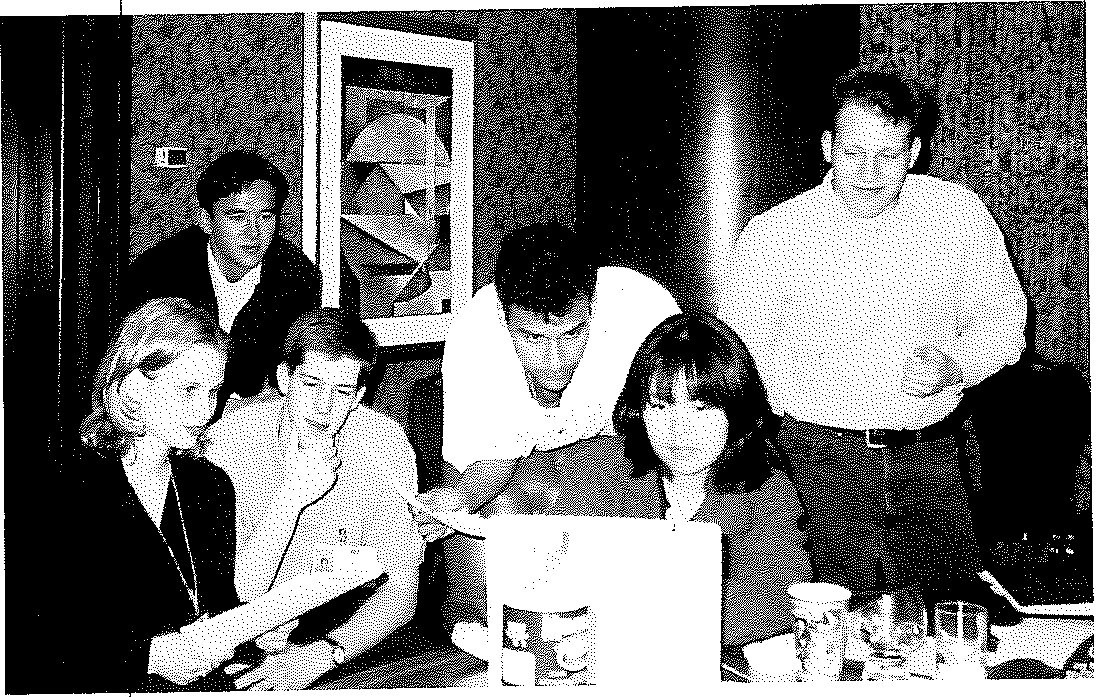
Jeunes est disponible sur la page web de l’APEC du ministère.
L’équipe jeunesse a aussi assisté à la réunion des ministres du Commerce ainsi qu’à d’autres activités organisées dans le cadre de la réunion ministérielle de l’APEC pour le Commerce. Il est à noter que certains ministres de l’économie de pays membres de l’APEC ont démontré un grand intérêt face à la participation des jeunes dans T’APEC et considèrent suivre les pas du Canada dans ce domaine pour de futures
– réunions ministérielles. Certains membres de l’équipe «jeunesse» témoignent de leur expérience à Montréal et expliquent l’importance d’inclure les jeunes dans l’APEC :
Julie Salgado, York University, Ontario :
Participating in the first Canadian Youth
APEC Delegation was an exciting and I tremendously enriching experience. It enabled me to learn first hand about the organizational structure and proceedings of an international conference, improved my teamwork skills, and enabled me to tial individuals. Also, it gave me the opportunity to meet other Canadian youth with similar interests, from throughout the country.
I felt quite honoured when Minister Art Eggleton demonstrated his interest and support for our recommendations. It feels tremendously rewarding to know that he believed in us enough to turn our report into an official document, and distribute it to the other Ministers. I believe that this is an excellent opportunity to enhance Canada’s profile, by leading through example. It is commendable for Canada to demonstrate that we believe in our young population, and are making efforts towards increasing their knowledge and experience.
Xavier Furtado, University of British Columbia, British Columbia :
In order to ensure that Canada is able to secure its economic interests in the Asia Pacific region, it is essential that Canadian policy makers take a comprehensive approach to raising Canada’s profile in the region and, in doing so, build the long-term relationships necessary for successful business. It is reassuring to see the Canadian government attempting to find ways to involve more young people in the APEC process.
As someone who has been studying! monitoring APEC and the international political economy of the Asia Pacific region for approximately three years, for me the opportunity to see the internal workings of the Trade Ministerial Meeting was an invaluable experience. Over the last few years, APEC has become the region’s principal international organization. As the region’s integration continues to evolve, APEC will continue to be of tremendous importance. Therefore, the need to continually involve young Canadians in APEC-related activities cannot be overstated. I can only hope that Canada will continue to engage young 1 Canadians in this way and that our APEC partners will consider establishing similar arrangements in their own economies.
Marcus Pistor, Queen’s University, Ontario:
APEC is primarily a forum for government and business leaders to foster economic integration and development. But Canada’s involvement in APEC has also to be seen as the main mechanism for broadening Canada’s economic, political, and cultural focus and identity so as to reflect the growing importance of Asia-Pacific cultures and economies to Canada… it is necessary to involve Canadian youth (and youth abroad) in APEC, to provide opportunities for their participation in the decisionmaking processes at home and to develop ly ties with youth across the region. Greater involvement of youth in APEC will also inject a different and refreshing kind of energy into its organization and decision-making processes.
Darryll Stratton, Memorial University, Newfoundland :
There is a need for students to become familiar with the Asia-Pacific region. Since youth are tomorrow’s leaders, I feel it is crucial to begin the training process now to prepare Canada to be able to become increasingly more competitive in the region. By having youth exposed and aware of the Asia-Pacific region, we will begin to build the relationships and awareness that are crucial when doing business in the Asia-Pacific region.
Young people also have many skills and qualities that make them different and often more marketable; I am thinking particularly of their relative open mindedness and their skills in the use of new technologies, which may qualify them especially well to work in businesses that focus on this region.
Youth has a lot to gain from initiatives of this kind, but we have a lot to contribute as well!
Caroline Boivin est Agent de communications dans la Direction de l’APEC au ministère des Affairs étrangères et du Commerce international. Your elderly family while you’re away?
CHAN
View the original scanned pages / Voir les pages numérisées →
Originally published in / Publié à l’origine dans bout de papier, Vol. 14, No. 3 (1997) — Fall 1997 // Automne 1997, pp. 24–25. Read the rest of this issue / Lire le reste de ce numéro →