
bout de papier, Vol. 17, No. 1 (2000) — Spring 2000 // Printemps 2000, pp. 44–45
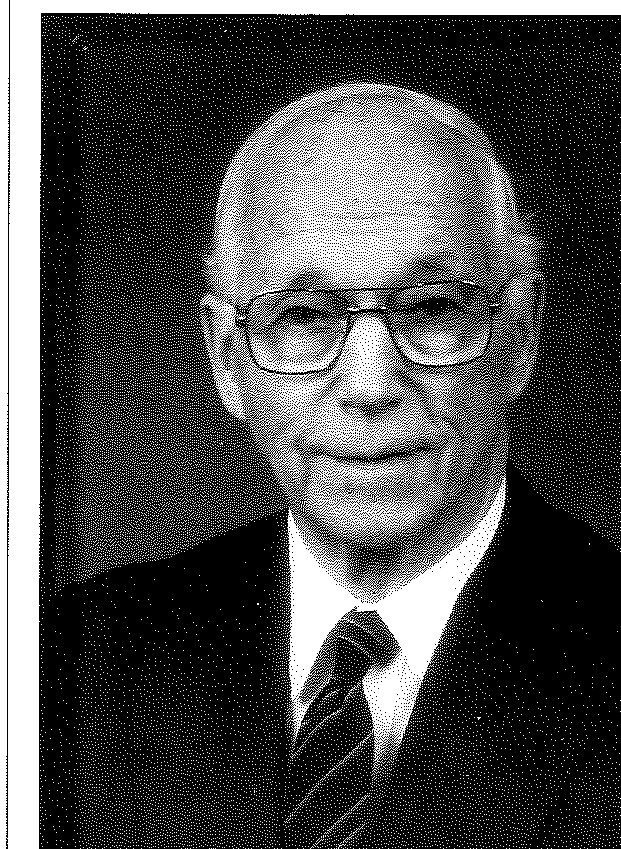
John Stiles, who died in Ottawa on January 9, just a few days short of his 82nd birthday, spent his entire adult life, one way or another, in the service of Canada, but still found time to be a devoted family man and a very generous friend and colleague. A native of Fredericton, John graduated from the University of Toronto in 1941 and took his new B. Comm. Degree into the Canadian Army for four years, spent mainly in Britain, Northwestern Europe and finally Germany.
On his discharge in 1945 he joined the Trade Commissioner Service and seven months later found himself in New York as Assistant Trade Commissioner and Vice Consul. There is no record of whether he was instrumental in landing any fat New York contracts for Canadian business but John obviously made a good impression at the other Canadian mission in town, the Delegation to the United Nations. He attracted the attention of a young lady named Margaret Buckley who was a member of Mr. Pearson’s staff, and in due course she gave up her foreign service career to make his “theirs.” That partnership endured for more than fifty years.
New York was followed by Caracas, an adventurous assignment in a country torn by political assassinations and revolution in the years after 1948 but also offering good business opportunities for Canada. John clearly made his mark because in 1954 he returned to Ottawa as Assistant Director of the Trade Commissioner Service. He is remembered during these years for the deep and abiding interest he showed in guiding “his” young officers, an interest he maintained throughout his and their careers. This key assignment was followed by successive postings as Commercial Counsellor in Bonn, Trade Commissioner in charge of the Office in Sydney and finally Minister (Commercial) in Tokyo.
I first met John in 1967 in Tokyo when he was already more than half way through his foreign service career and I was nearly half way through mine. In those days External Affairs and the Trade Commissioner Service were still separate organizations, separate departments in Ottawa and with an occasional touch of sibling rivalry abroad. My abiding recollection is that John was totally a team player who went out of his way to promote inter-departmental co-operation.
The Embassy in Tokyo was also accredited to Korea and John and I were both called upon to make regular visits to Seoul. Korea at that time was still a desperately poor country struggling to overcome the legacy of the past and the effects of a brutal three year war. John was quick to recognize that this was not just another Third World country mired in backwardness but one with real potential for economic development and hence a future important trading partner for Canada. He took great pride in the fact that together we were able to arrange a one million dollar loan from Canada for the purchase of Holstein cows, with the specification that they had to be pregnant! Canada and New Zealand co-operated in the training of Korean dairy men and advised on the conversion of rice fields into cow pastures, literally laying the foundations of today’s flourishing dairy industry in Korea.
John and Margaret left Japan in 1970. He transferred to External Affairs and was soon posted to Guyana as High Commissioner. Canada has important political economic relations with the Commonwealth Caribbean and in Guyana the single most important Canadian investment was the Demerara Bauxite Company, an ALCAN subsidiary. The Guyanese held it as an article of faith that they were not getting a fair return from bauxite, their primary natural resource, and were determined to nationalize DEMBA. John’s job was to persuade them not to or, if this was not possible, to ensure that there was no discrimination against Canada and that the owners received fair compensation. He failed on the first count but succeeded on the second and third; the matter was settled without acrimony and with no damage to bilateral relations.
There is not doubt that the crowning point of John’s professional career was his appointment in 1974 as Canada’s first resident Ambassador to the Republic of Korea. This was only four years after his previous non-resident assignment, during which he had developed a strong rapport with Korea and its people. During those four years the country’s economic progress had begun to confirm all his earlier optimism, even though the political and human rights situation still left something to be desired. Firmly believing in the necessity for careful preparation for his new assignment he persuaded a somewhat skeptical personnel branch to authorize two months of language training and cultural acclimatization at the East-West Centre of the University of Hawaii. Two months does not a fluent Korean speaker make but it enabled John and Margaret to arrive with a good foundation and a sensitivity to Korean culture that ensured a friendly reception wherever they went. Arthur Perron, the present Ambassador in Seoul, recalls meeting John and Margaret in Manila en route to Korea and being struck by their knowledge and enthusiasm for their new post; he also told me that John, after 22 years, is still remembered fondly. Despite obvious cultural differences he had an extraordinary readiness and ability to relate to Koreans in varied walks of life – schoolteachers and farmers as well as businessmen and politicians and to be respected by all. Perhaps respect is the key word here, a very Confucian and hence Korean virtue: John was respected by Koreans even when, as inevitably happened sometimes, there was disagreement.
On their return to Canada John and Margaret spent a year at Mount Allison University and the Canada Korea Society has inherited some of his lecture notes from that period. As a former Foreign Service Visitor myself I am impressed by the sheer volume and quality of the work he produced, much of which found its way into his book Developing Canada’s Relations Abroad. His final years in harness were spent with the Inspection Service of External Affairs and later with the Public Service Commission.
John Stiles’ involvement in foreign relations did not end with his retirement from the public service in 1983, after 38 years’ service. He was surely entitled to rest and play golf but when he was asked by the then Korean Ambassador, Kyoo Hyun Lee, to undertake the establishment of a Canada Korea Society in Ottawa he accepted cheerfully. As founding President he planned and organized meetings and recruited members while Margaret was drafted into service for typing minutes and licking envelopes. It is typical of John’s thoroughness that this small organization applied for and received Letters Patent from the then Department of Consumer Affairs and is registered as a corporation with Industry Canada.
John was a very persuasive man. He was kind and generous to a fault and quite adept at getting people to do what he wanted them to, usually for their own benefit or that of a third party. He served for nine years as President of the Canada Korea Society and had earned a second retirement but characteristically did not step down until he had found a replacement. Even then he was easily persuaded to stay on the executive as past president and continued to make a strong contribution until he finally withdrew at the end of last year
John Stiles was a man of many parts — soldier, trade commissioner, diplomat, scholar, academic and general fixer. It may not be fashionable nowadays to describe a man as a “boy scout” but I believe that John, who was deeply influenced by the boy scout movement in his youth, exemplified the finest aspects of scouting and practiced them and his Presbyterian Christian principles in his foreign service career and his private life. He was guided not only by the cautionary scout motto to “Be Prepared” but also by the broader injunction to “Do a good turn every day.” In his quiet and unassuming way he has left deep tracks and will be greatly missed.
View the original scanned pages →
Originally published in bout de papier, Vol. 17, No. 1 (2000) — Spring 2000 // Printemps 2000, pp. 44–45. Read the rest of this issue →



