
bout de papier, Vol. 22, No. 4 (2007) — Winter/Spring 2007 // Hiver/Printemps 2007, pp. 26–31
They are names synonymous with the ethnic conflict, terrorism and violence which exploded in the aftermath of the end of the Cold War – Nagorno-Karabakh, Abhkhazia, Chechnya, North and South Ossetia, Beslan. While the collapse of the Soviet Union was calamitous economically for people throughout the former empire, the Caucasus region was additionally burdened with divisive ethnic violence. This was particularly tragic since the Caucasus was famed during Soviet times as among the most favoured and beautiful corners of the Soviet Union.
When the USSR split asunder in 1991, three new countries were formed along the southern rim of the Caucasus mountain range – Georgia, Armenia and Azerbaijan. The northern autonomous republics still form part of the Russian Federation. Conflict and violence continues there episodically. To the south, although political problems still remain and there are serious and unresolved territorial disputes, active fighting is no longer significant. With stability has returned a certain level of economic growth. Democracy now flourishes in Georgia and Armenia, while dictatorship continues to flourish in Azerbaijan. A semblance of normality is returning and in each of the newly emerged countries of the southern Caucasus, there are signs of recovery. This recovery is most pronounced and obvious in the capital cities. Certain parts of Georgia, particularly in some mountainous valleys, have a reputation for danger to independent travellers. Crime is certainly a problem in Tbilisi. However, the rest of the area is a wonderful and safe area for travellers to explore. In the spring of 2005, I took a trip to the three republics.
My interest in the area was initially sparked during long conversations I had when taking the Trans-Siberian Express connecting Beijing with Moscow back in December 1992. I had met a couple of well-travelled Russians on the train and noted my interest in visiting the new countries in Central Asia. Both suggested that the Caucasus represented the most fascinating and dramatic part of the erstwhile USSR, even more so than the Central Asian republics. Twelve and a half years after those conversations, and three years after visiting the Central Asian republics, I decided to go to the Caucasus region to see if they were right.
Visa regimes were quite onerous and expensive when I travelled to Central Asia in 2002. Fortunately, obtaining visas to visit the three Caucasus republics was relatively straightforward and easy. The main logistical problem was that the border between Azerbaijan and Armenia is closed. Armenia’s land border with Turkey is also closed.
I thus decided to fly into the capital of Georgia — Tbilisi – from Istanbul. Tbilisi was to be my base. I went to Azerbaijan from Tbilisi by air and returned by train. There are no trains or flights between Georgia and Armenia. I went to Armenia and back by mashrutkah (small bus). I also travelled by mashrutkah into the heart of the Caucasus range to Kazbegi, close to the border with the Russian Republic of North Ossetia. Georgia is arguably the most diverse, scenic and interesting of the three new republics. Georgians themselves are famous for their joie de vivre and zest for life, without the touch of melancholy that seems to form part of the Russian character.
Travel throughout the former Soviet Union consists of an odd mixture of aging Soviet dinosaur hotels, often grossly overpriced and run down, new business hotels with prices similar to the most expensive European urban hotels, and an amalgam of new private homestays, often by far the best value for money in accommodation, but not always easy to find out about or to access. Nevertheless, I was able to stay in private guesthouses in Tbilisi, Yerevan and Kazbegi, and in a fairly inexpensive but reasonable hotel in Baku.
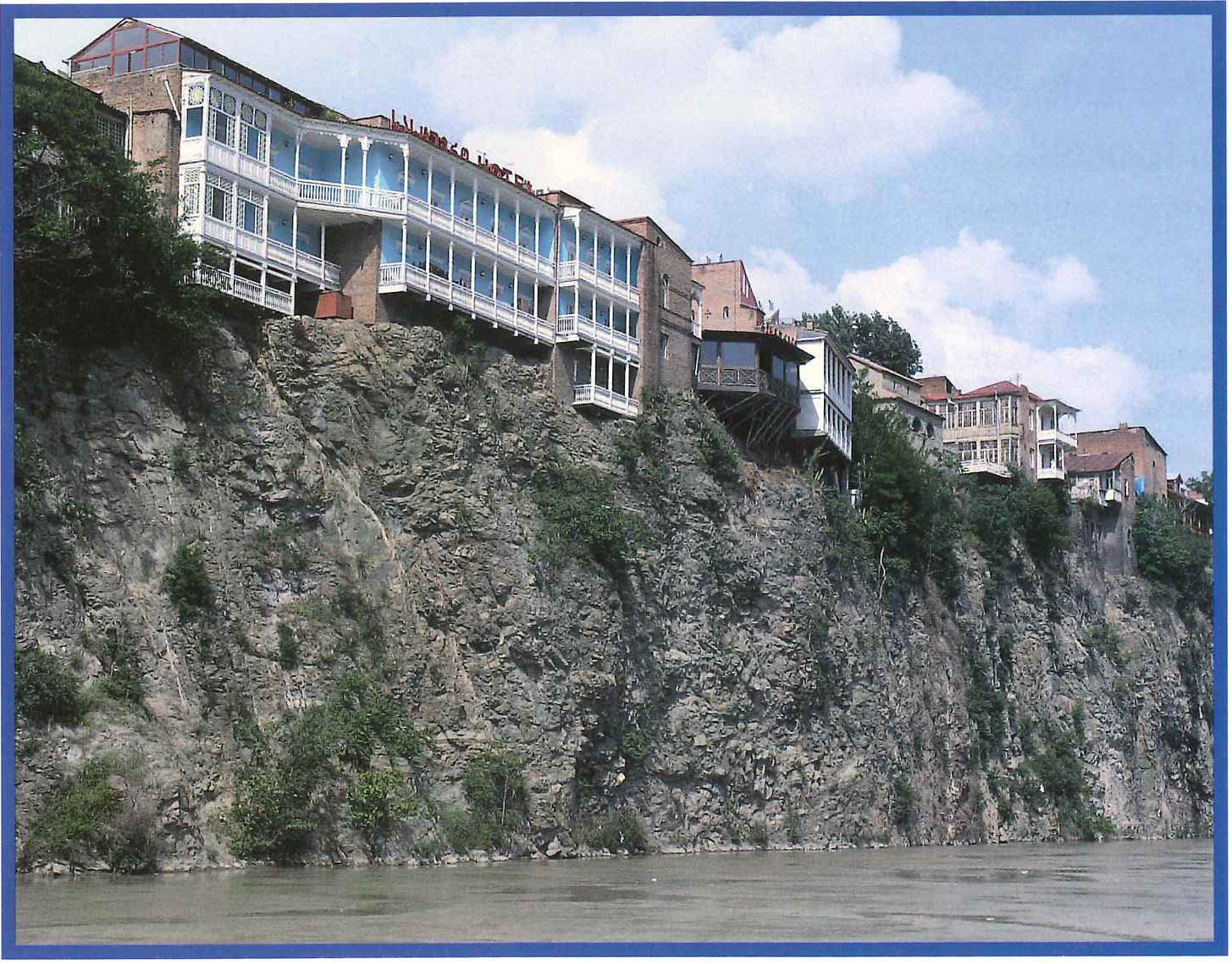
Tbilisi has a lovely setting, bisected by the Mtkvari river and surrounded by low mountains. It is home to an impressive array of Eastern Orthodox churches. These churches are also found throughout the country, often high in isolated fields above the valleys where the bulk of the Georgian population lives. I stayed with a local family in the downtown core of Tbilisi, based on information I had been able to glean checking the Lonely Planet Web site. Tbilisi was well served by restaurants. More often than not, a group of Georgians at a nearby table would insist on inviting me for a couple of toasts and also insist on paying for the meal I had already consumed. One day I hopped on local transport to go to Mitschketa, the ancient capital of Georgia and visited the vari church on a mountain high above the town proper. Options for accommodation and eating are much more limited, in all three republics, once one leaves the capital city. After a few days among the bucolic Georgians, I decided to head to the second republic – Azerbaijan.
I flew into Azerbaijan and returned by train. The flight from Tbilisi to Baku along the spine of the Caucasus range and then over the Abseron peninsula is quite scenic at first and becomes increasingly surreal nearing Baku. The peninsula from the air is actually quite striking. The dry peninsula juts out into the clear blue of the Caspian Sea. Then, almost as if you were looking down upon a painter’s easel, you can see the different coloured lakes or ponds — here one would be bright green, another yellow, another rust red. It was only as the plane descended to a lower elevation that you could see the oil derricks and discern that the lakes and ponds were actually toxic runoffs. The environmental devastation wreaked upon the Abseron peninsula is so complete and overwhelming (outside central Baku) that it has become a bit of a ghastly tourist site in its own right. Yet downtown Baku showed signs of prosperity well beyond what one saw in the other republics. Azerbaijan has oil and oil means money. While Georgia and Armenia are European in orientation, Azerbaijan is predominantly Muslim and definitely in a transition to the Middle East and Gulf.
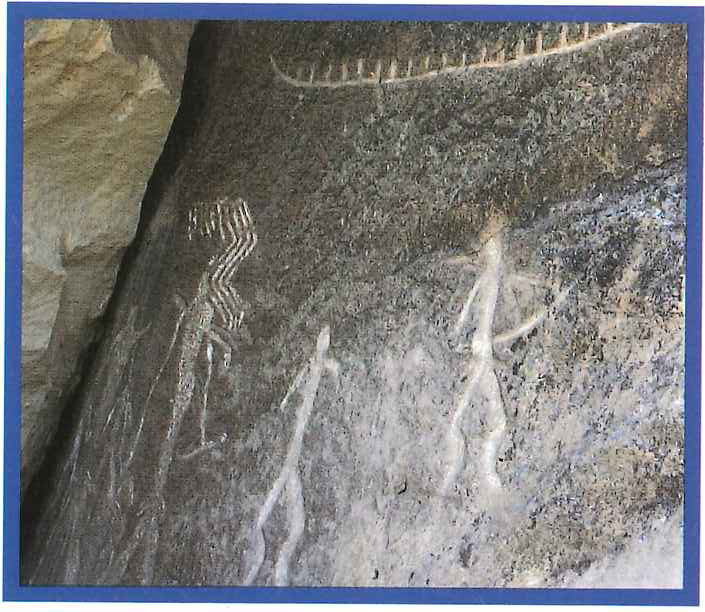
The cult of personality and adulation of the political leader of the country finds one of its most vibrant expressions in Azerbaijan. Posters of the visionary leader Heydar Aliyev were everywhere, taking credit for the construction of the $3 billion Baku-Ceyhan (Turkey) pipeline with its promise to bring much greater prosperity to the country. The expatriate community, overwhelmingly connected to the petroleum and construction sectors, is larger and far more visible in Baku than anywhere else I saw in the Caucasus. I toured around through the derelict oil derricks and slicks to see a few areas of interest, including the escaping “natural” natural gas flare of Yanar Dag, the ancient Zoroastrian site of Suraxani with the Atesgah Fire Temple and the extensive set of petroglyphs at Qobustan dating back 12,000 years, located some 60 kilometres south of Baku.
In a comparatively rare moment of financial indulgence in travel, I decided to engage in luxury and opted to return to Tbilisi by taking the Silk Road Express, a train specially designed and operated by American Express. I thought it might provide an opportunity to meet some expatriates and others knowledgeable about the area, in addition to being a bit intrigued by the romantic sounding name.
I arrived at the central train station in Baku just as the regular slower train to Tbilisi was departing replete with passengers and tearful relatives wishing them a safe trip. My train had not yet shown up. Shortly later, a shortened train with an engine, three carriages and a dining car pulled into the station. I handed my ticket to the conductor, who also took my passport, and was shown to my second-class cabin. I stretched out and waited. A few minutes after the scheduled departure time, the train departed. As I wandered around it became obvious that I was the sole passenger on the entire train! It remained light for the first 90 minutes as the Silk Road Express train left central Baku, then passed through Baku’s dreary suburbs. I looked out as the signs of urbanity and human population declined, fading to occasional abandoned or half-constructed buildings, oil derricks, and garbage strewn along both sides of the tracks in the desiccated semi-desert of the interior of the Abseron peninsula until darkness overcame the light. At around 0230 the train stopped for about an hour, presumably the Azeri-Georgian border. The bleak scenery which had characterized the evening hours was somewhat better as dawn broke in the softer countryside of Georgia. I arrived in Tbilisi’s train station and made my way back to my private homestay in the downtown core. Served me right for opting for luxury. If the train continues to operate, my suggestion to other travellers would be not to bother, since the train journey costs more than the airfare, and little additional value is added along this route by travelling through most of the territory at night.
There are no flights or trains connecting Tbilisi with Armenia’s capital of Yerevan. The route to Armenia is by “mashrutkah” or minibus. The journey takes seven to eight hours, including an hour to cross the border. Architecture changes completely the moment one crosses the border. Armenian villages tend to be constructed of large stones, either grey or slightly reddish colour. Buildings and houses appear sturdier and older than the equivalent found in Georgia.
Armenia was devastated by a catastrophic earthquake in 1988 which killed over 25,000 people. The country had not nearly recovered from that natural disaster when the USSR broke up, Armenia became involved in conflict with Azerbaijan over Nagorno- Karabakh, and Turkey firmly shut its border. Almost surrounded by hostile neighbours and the total collapse of economic support from the USSR, Armenia’s economy went into a disastrous tailspin.
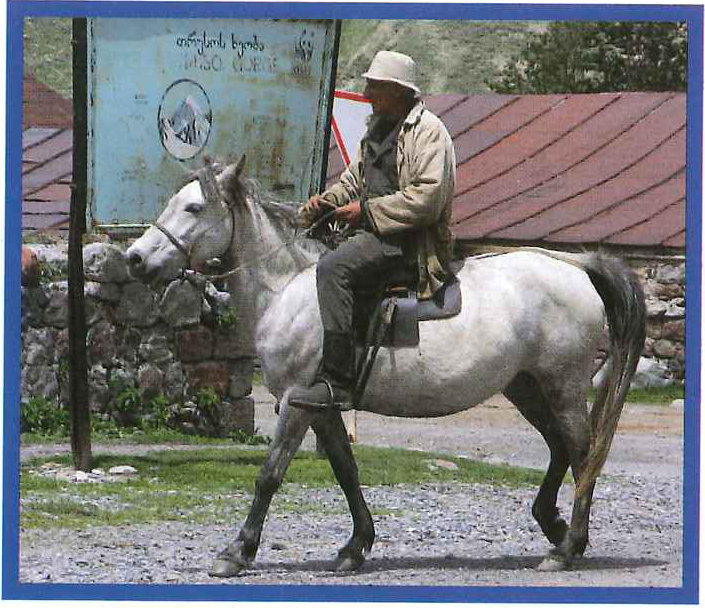
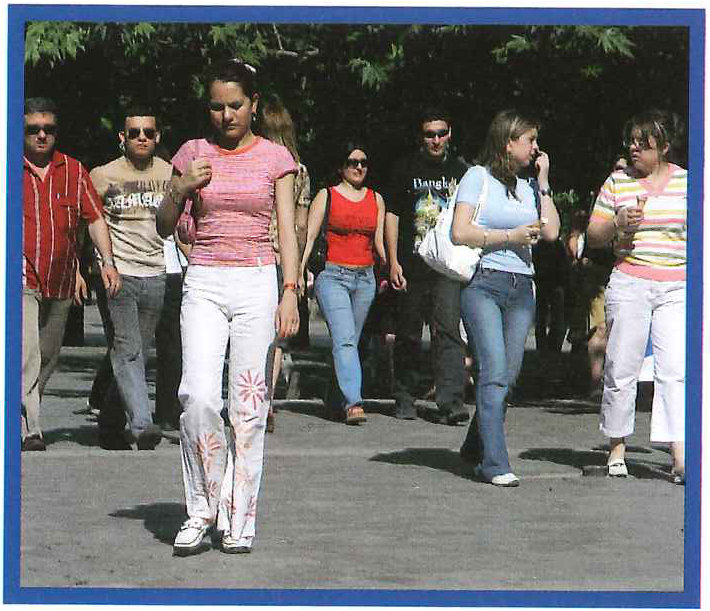
For the first 50 kilometres into Armenia, the mashrutkan travelled along the Debed River gorge, dramatic and memorable for a Dickensian-style factory pouring huge amounts of air pollution into the otherwise pristine canyon air. Later the bus climbed up to the high rolling plateau that marks much of the territory of Armenia. The bleakness of life in Vanadzor and other towns and villages along the way were obvious. Most small communities consisted of row upon row of shabby crumbling Soviet-style apartment buildings. Very little of the money and economic growth that has occurred since the bottoming out of Armenia’s economy in the early to mid-1990s was trickling into this part of the country. At one point, the looming snow-capped volcano of Mount Aragats at almost 4100 metres soars skywards on the left side of the road. Even though I was travelling in mid-May, there were patches of snow along the passes en route to Armenia’s capital. The road then begins a long descent off the high plateau and down into Yerevan. The looming peak of Mount Ararat in eastern Turkey dominates the horizon to the south. The downtown core of Yerevan is undergoing a dramatic renovation. This renovation was significantly more extensive than in the capitals of the other two republics. Several square blocks next to the Opera House had been completely knocked down. It would be the Ottawa equivalent of flattening everything between Wellington and Somerset, Bank and Elgin, and then rebuilding it from scratch.
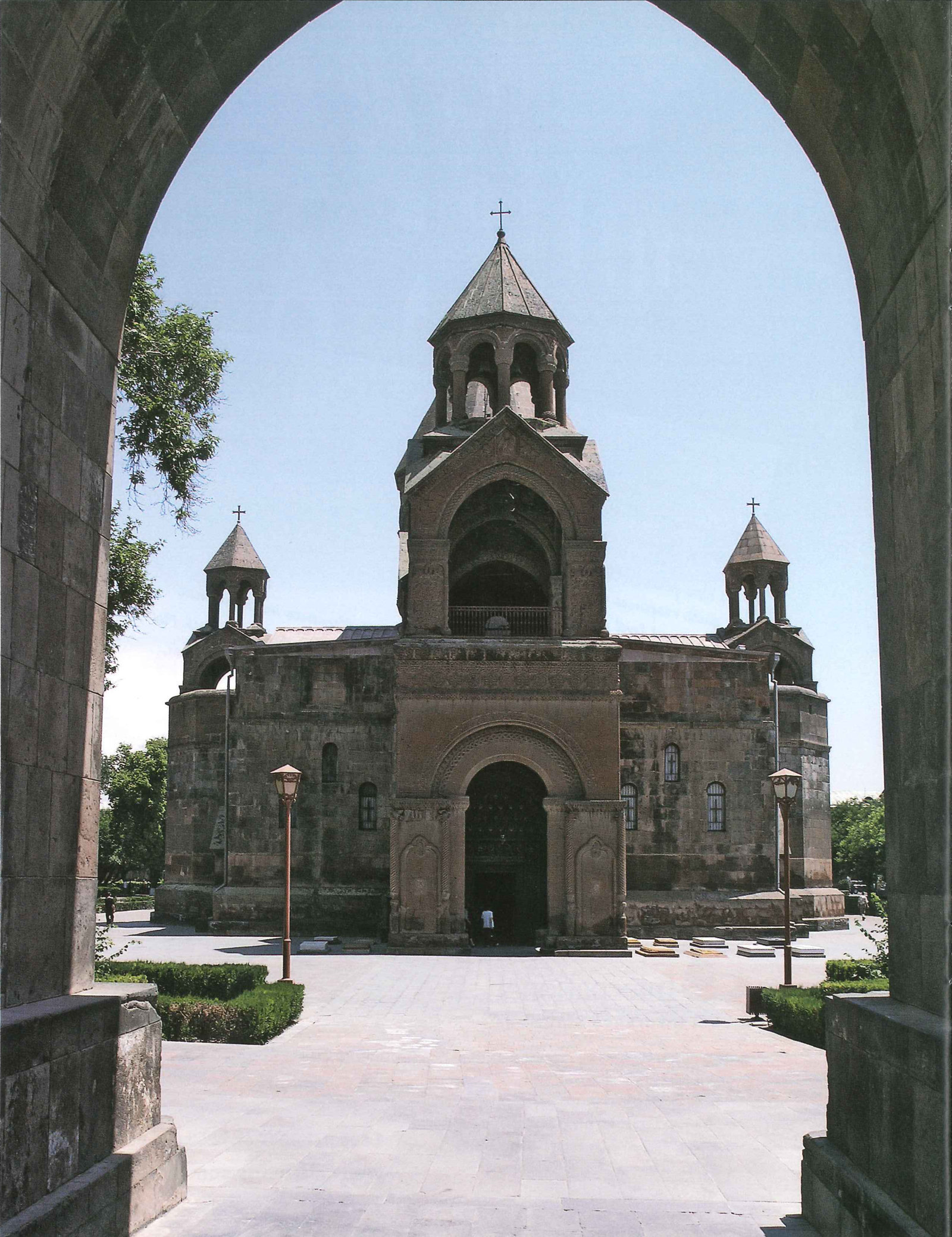
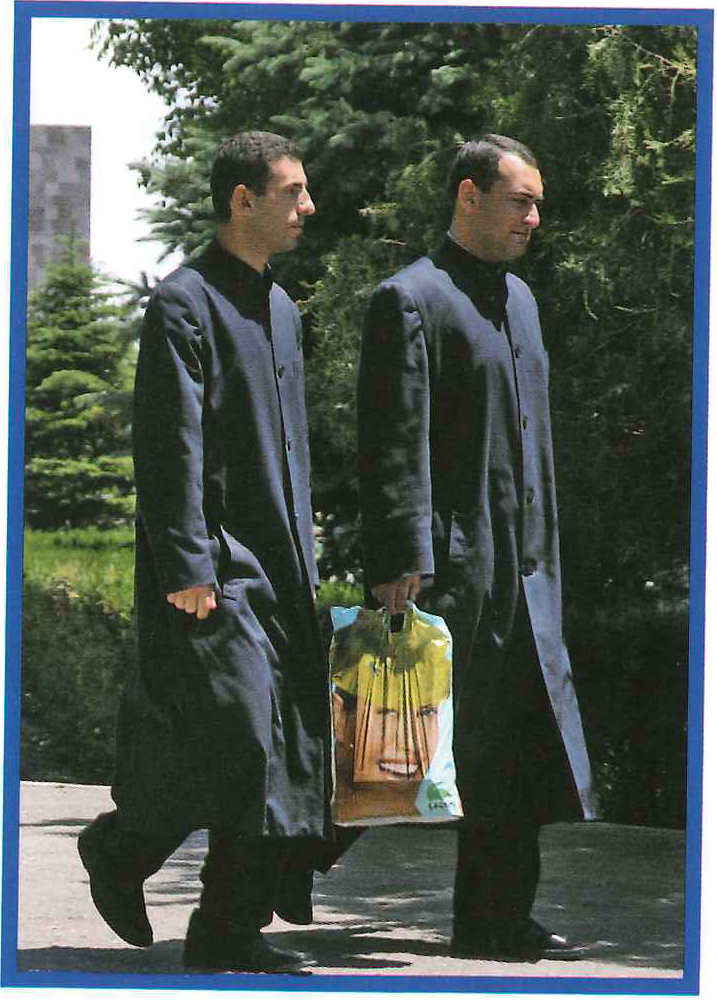
Yerevan is full of charming cafés. The one significant irritation is that almost none of them open before about 1000 hours. Armenia actually has a helpful tourist bureau, by far the best of any of the former Soviet republics that I have visited. Yet I was still frustrated in trying to travel outside Yerevan in that buses to other parts of the country all seem to leave from unmarked locations in various parts of the city. I was successful in tracking down the bus to Echmiadzin, but ended up so frustrated after several hours of searching for the location where buses left for Lake Sevan that I ultimately gave up. Echmiadzin, some 20 kilometres from Yerevan, is the heart of the Eastern Orthodox faith that binds Armenia together. Armenia adopted Christianity in the third and fourth century. There were hundreds of black robed monks wandering around the Echmiadzin church complex, the holiest of Armenian religious sites.
From Yerevan the imposing profile of Mount Ararat, now in Turkey, dominates the southern landscape. Of all the republics, it appeared to be the one making the most rapid strides. A colleague of mine who spent eight years in the Foreign Service before leaving for greener pastures described scenes of Armenia in 1993 and 1994 suggesting an almost total economic collapse. Much has recovered since then and the prosperity is only bound to increase — at least in Yerevan. Whether towns in the interior Will ever recover is a different question. Armenia’s population is approximately three million. Western Armenians, the name given to ethnic Armenians living abroad, total about seven to eight million. Much of the capital flowing into Yerevan comes from contributions from the diaspora.
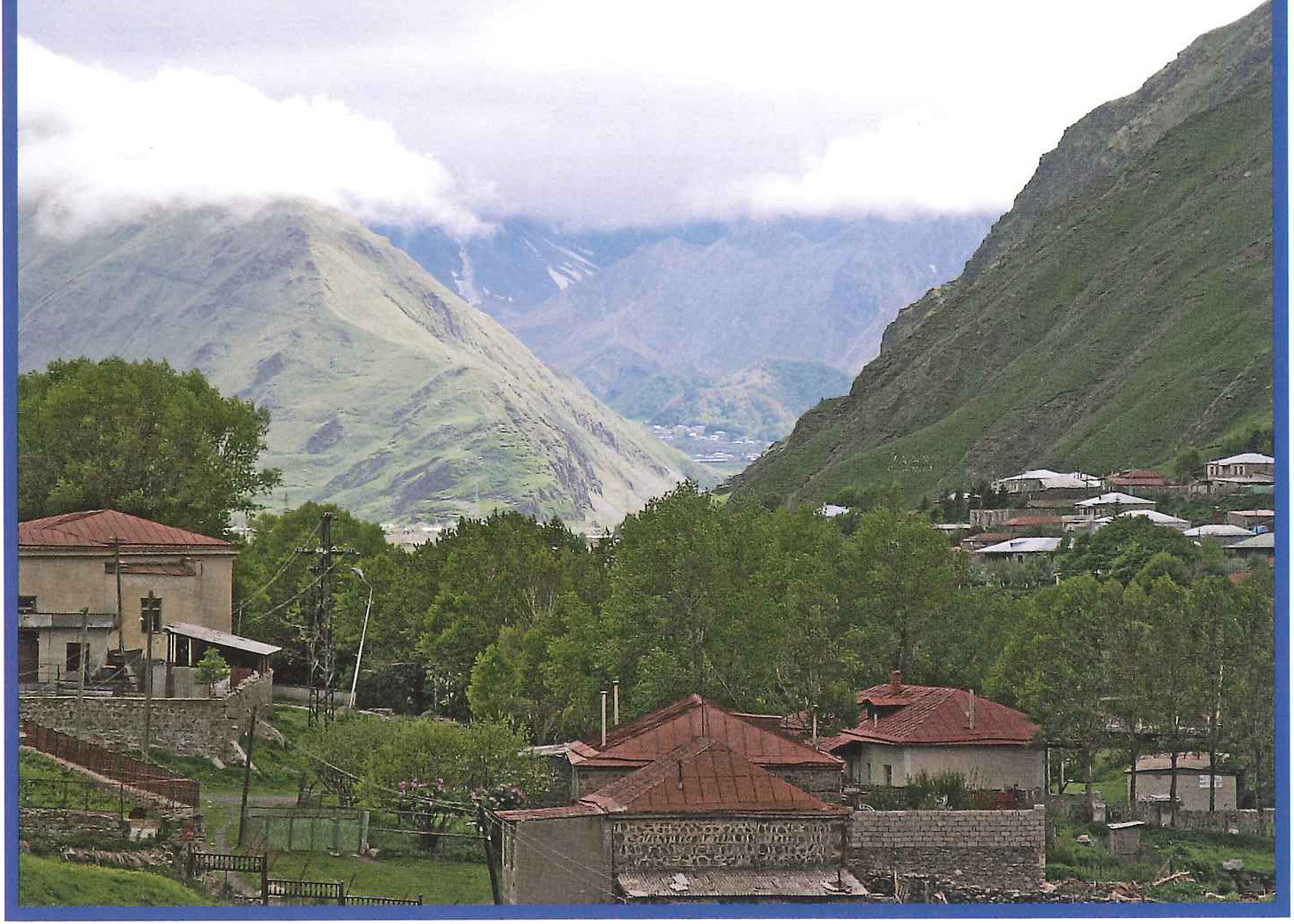
The Georgian Military Highway connects Tbilisi with the north Caucasus via the town of Kazbegi, the zone of turbulence and trouble. Its proximity to Chechnya and the custom of some of the inhabitants in valleys to engage in kidnappings, particularly in Svaneti and South Ossetia, renders travel in parts of the area risky. The route to Kazbegi, however, is considered about as secure as any route into the high Caucasus. In fact, the summit of the Caucasus range does not represent the boundary between Georgia and North Ossetia. We crossed the central spine of the Caucasus at the Jvari Pass at 2600 metres and were descending when we reached the town of Kazbegi at 1600 metres above sea level. The North Ossetian capital of Vladikavkaz was less than 30 kilometres away. Alas, just as I was arriving in Kazbegi, where the mountains were allegedly at their most spectacular, the weather turned and it remained wet, dreary and overcast for the next couple of days. I abandoned my plans for hiking around the Tsminda Tsameba church and the various mountain trails around Kazbegi. The rain continued as I returned to Tbilisi. It remained wet and soggy for the rest of my stay until I flew out of the Caucasus and back to Canada.
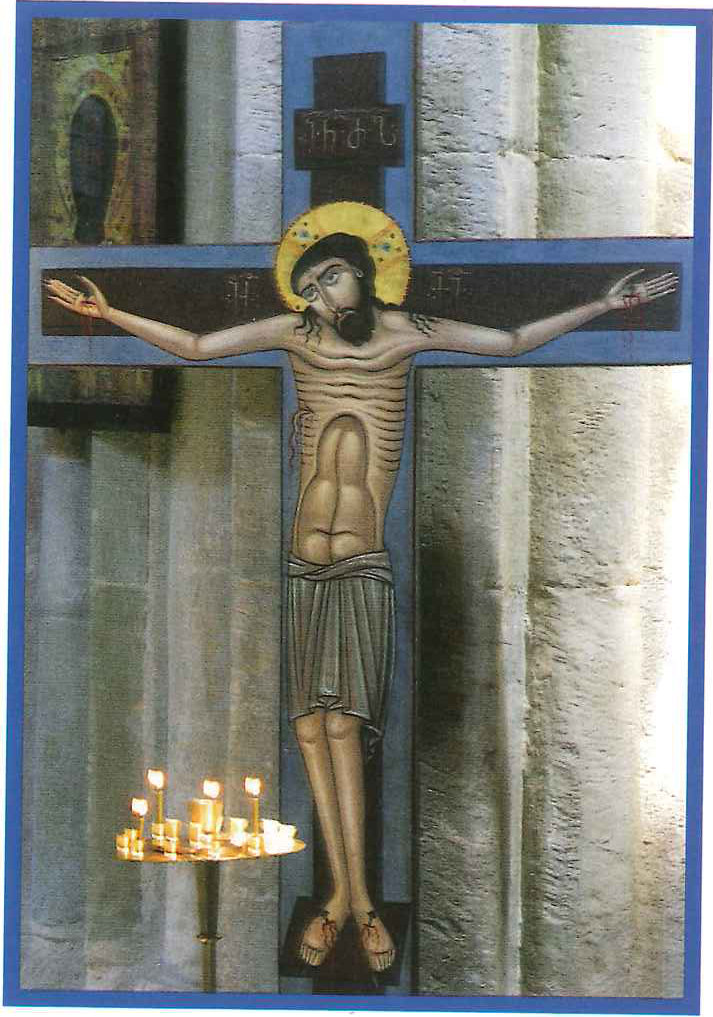
Despite my bad fortune with weather in the high mountains at the end of my trip, I felt fortunate in visiting them at this time. The three republics of the southern Caucasus provide the opportunity of visiting one of the most charming parts of the former Soviet Union. After a disastrous decade following independence, the republics now support a tourist infrastructure relatively well developed for travel without undue difficulty. It is sufficiently unencumbered by regulations to be logistically easy, and remains one of the world’s great travel bargains.
View the original scanned pages →
Originally published in bout de papier, Vol. 22, No. 4 (2007) — Winter/Spring 2007 // Hiver/Printemps 2007, pp. 26–31. Read the rest of this issue →



