
bout de papier, Vol. 17, No. 1 (2000) — Spring 2000 // Printemps 2000, pp. 37–39
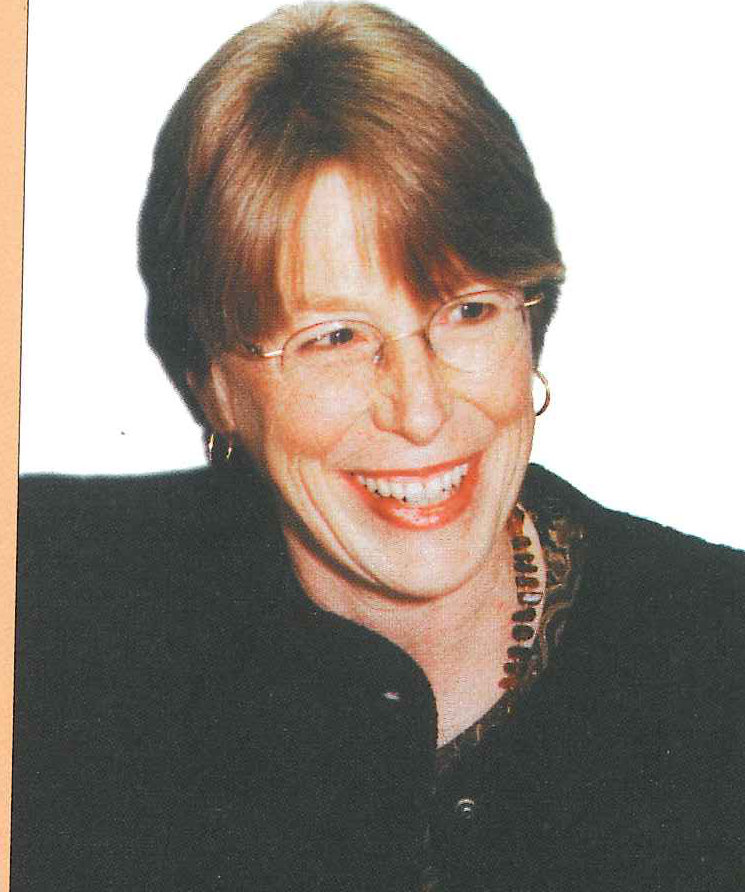
bout de papier Editor Robert Peck, and Lynda Joyce, member of the Editorial Board, interviewed Martha Nixon, Assistant Deputy Minister of Operations for Citizenship and Immigration Canada (CIC), in February in her office at the Jean Edmonds Building. Her responsibilities involve the management of citizenship and immigration operations for both overseas and domestic delivery. This encompasses the International Region, with 78 points of service; five regional offices in Canada and ports of entry; and delivery carried out centrally through three call centres, and three processing centres. A key national headquarters’ group handles case management and specific issues relating to litigation, war crimes and organized crime. Roughly two thirds of CIC staff are found in the Operations Sector.
bout de papier: What are the major challenges facing Citizenship and Immigration Canada today?
Ms. Martha Nixon: Our Minister’s priority is to put client service first and to challenge us by asking, how are you going to serve clients better? The first part of this challenge was to attack the backlogs, both domestic and overseas, and to look at service standards. From an immigration perspective, this means working hard to meet the targeted levels set on an annual basis. This work will continue in different ways over the next couple of years.
The second part of this challenge was to manage this while ensuring that the integrity of the Immigration program would not be compromised – indeed the challenges of today’s migration patterns demand increased vigilance. All of these issues have to be looked against our resource capability, which happily has just been increased in recognition of the pressures we face.
The third challenge for us is to look at some of the workforce issues that are very prevalent in many people’s minds. There are so many of them. If you look at the demographics of the department, part of it is how to seed the groups that need to come up and replace our current line of managers, many of whom are going to retire soon. How do we attract to enter the service and keep youth — a very difficult problem for us. The past five years have been rocky and we need to continue efforts to get people back up to that energy level, and to ensure they believe that the department values the work they do.
I think the last challenge surrounds the whole area of partnerships because we work so closely with others in this business, whether it is with the RCMP, CCRA and CSIS, or working with DFAIT, who, through Heads of Missions abroad, are very much engaged in managing our programs abroad. Increasingly, we work with provinces, with other countries, and with those who represent clients, lawyers and immigration consultants. A lot of the relationships require nurturing, which means that much of my time is spent trying to make those relationships stronger. bout de papier: What is the primary international role of CIC?
Ms. Nixon: The primary international vocation has to be our role on the immigration side in managing access to Canada and ensuring that the country benefits from the people from the risks that exist. Immigration issues who come here, while protecting Canada worldwide have taken on an increasingly critical role in foreign policy. Our role is increasingly important from an intelligence and enforcement perspective. I think that this is recognized increasingly by other government departments and by other countries.
Immigration reporting, and linkages with other countries, often through intelligence) functions, add to the thinking being done on foreign policy. Today, a key foreign policy issue is the movement of people and the pressures around the world from irregular movements. Many countries are rushing to i change their laws so that they can respond.
We can point to the role immigration plays when you have a real crisis in the political world, such as Kosovo. Our ability to move people is a critical part of the response to a crisis. I think that we also play an important role through the decisions about visas and how that impacts on the relationship that we have with a given country. We also contribute multilaterally through agencies such as the UNHCR, IATA-CAWG, and many of the other agencies dealing with protocols on the trafficking of human beings. bout de papier: What does having a foreign service in your department contribute overall to CIC?
Ms. Nixon: Having a rotational foreign service contributes a huge amount. There has always been an ongoing discussion between the domestic and the foreign service side of the operation, and I think we have to look at both of them as valued-added, both sides. And in talking about one, it need not take away from the other.
Foreign service personnel have been chosen because of their stated desire to work in a rotational environment, to be flexible, to learn from situations that they are going to face in another country. They start off with a willingness to put themselves in a continuous learning environment. So they offer all kinds of really positive learning attributes right from the start.
Once they have served abroad and gained understanding of a different culture, and have worked in different cultures making selection decisions, they gain a perspective which they contribute as they rotate back into Ottawa or into other assignments. Increasingly I hope that will include rotations to many domestic assignments.
But FSOs offer a perspective that is unique and very important, because they will make choices about future Canadians, and what will be the “face” of Canada as a result of their decisions. Foreign service officers really offer a unique view of both what other countries have to offer and what Canada could become. This is useful background for roles in policy development and operational practice.
It is important to mention the flexibility of foreign service officers. Many have spent whole careers shifting from one country to another, and from one assignment to another. This can ultimately enrich policy development and other important operational jobs here in headquarters. They make a huge contribution and it is good to see the recent Auditor General’s Report make particular praiseworthy mention of how impressive was their dedication and professionalism. bout de papier: As you know, many foreign service officers have publicly expressed their concerns about their conditions of work and the future of their profession. How is senior management at CIC responding to these issues?
Ms. Nixon: There are a number of issues that appear to be very serious and very deeply felt. Some of these have been dealt with in this department through the middle managers’ process we have been engaged in which, although a difficult process, has been a healthy one. And it’s not over. We have been working at the senior management level to put in place a human resource plan for the department, which is looking at the demographics and the issues of recruitment and retention. The Auditor General has certainly told us that we haven’t been sufficiently focussed on the training that we need, and I think that increased training on an as-need basis is increasingly important. We have to put in place the resources that we need to do that. Technology again will help in resolving some of the issues and we are moving to build a new technology foundation.
As far as the foreign service is concerned, these include making sure that the foreign service feels valued, that we are taking into account the real demands of a rotational lifestyle, and working with DFAIT on foreign service directives. But I think there is a fairly complex web of issues and we need to be sure that we are working with PAFSO and working with DFAIT and our own working groups to put the issues on the table and make sure we are prioritizing those adequately. bout de papier: Increasingly, foreign service officers are starting to question their commitment to the rotational lifestyle. What words of encouragement could you offer to them?
Ms. Nixon: I marvel that people continue to do this. In fact, I have had grown men begging me to leave them out on a posting, as opposed to bringing them back. have, às always, a kind of a mixed reaction to today’s realities. It’s true that there is a lot more pressure in today’s world, in terms of lifestyle, and what people are willing to put up with. There is just a lot less security in many of the posts overseas. Frankly, I think that people with young families are going to just start saying, I don’t want to go to that place because it’s not safe. I think some of them have already and that is a valid concern. Increasingly, I think we have to allow people to have some time out, to have longer times in Canada, perhaps when their children are at critical stages.
But I think that no matter how you look at it, we have to help people who choose the foreign service deal with the reality. I think some of this involves looking at where are the less secure postings, and ensuring that the people going there are prepared to deal with the situations they find. We need to be sure that we are properly counselling people when they first join.
Some of it is probably being a bit more flexible in how we look at the foreign service directives. We are working with DFAIT, for instance, on the spousal task force to look at the kinds of things that need to be adjusted to make today’s reality more manageable for people.
There is a need to work with DFAIT and our foreign service cadre to wrestle through some of these issues, and to make sure that we are listening to the people who are out there who have suggestions. To me it’s an ongoing process. bout de papier: The immigration foreign service still is responsible for the majority of overseas processing, with assistance from officers in the domestic service. There have been various initiatives to increase processing in Canada, for example, the single portal concept, which establishes a central processing office in Canada. Do you see a continued role for FSOs in delivering the program overseas?
Ms. Nixon: I definitely see a continuing, very critical role for foreign service officers. I think it is important that FSOs recognize that their role is one which will not easily be replaced, no matter how the job may shift or change. And I’m not sure that it’s going to change immediately. There will be a need to have Canadian officers abroad who can give us the intelligence, the perspective and the ability to know what local conditions are, and how that affects our selection of people. I really believe this role will continue.
I think that we have to recognize that we have a professional and dedicated cadre of people who we have trained carefully, who have shown extreme flexibility in how they do their jobs, and we don’t want to lose that.
I believe, however, that if we want to maintain public confidence in our service, we are going to have to make some changes and we are going to have to be able to reassure the Canadian public that we care about service. We have found ourselves in a challenging position, with downsizing and with changing world situations. I don’t think that anyone has found it easy to produce increased numbers, both on the immigrant and the non-immigrant side. At the same time, we have had to work in a context of dramatically increased organized crime and fraudulent activity in the immigration business. Yet, we have responded well to humanitarian crises, such as Kosovo.
It is easy to see why there has been some discouragement and some questioning of what the future holds. We have engaged many of our Immigration Program Managers and officers in discussions about client service in the past year. We will try to increase our capability to work productively through a variety of changes and pilot projects. The “single portal” concept is certainly one that people have been very concerned about, but I think it is only one of many things that we need to try. We have engaged many experienced FSOs in the design phase of a centralized processing pilot and expect to see this in action soon.
We have to be very serious about fitting an evaluation framework around the project and giving it as good and as fair an assessment as we possibly can, to see if this will be part of our direction for the future.
I think equally important will be client service initiatives. For instance, to deal with many unanswered representations, the call centre business will expand to include international calls on a limited basis. We need to be able to deal with representations and examine the usefulness of “government-on-line” projects to allow people to access the information they need
We are launched to achieve overall client service improvement. We will evaluate and assess, so that we can make informed decisions about how to go forward. We are involving foreign service officers to do this; they must design the change. I would like to think that our FOs will feel that their role is indeed valued and will continue. No matter how many changes, there will be a role for them. bout de papier: What can be done to bridge the distinct cultures of the foreign service at CIC and the domestic service?
Ms. Nixon: I guess there is only so much you can do because there are cultures and there are cultures, but I think that there is increasingly movement between them. Canada-based officers have a lot of opportunity to serve abroad in single assignments. This really helps. If you talk to someone who has done a single assignment, he/she will come back with all kinds of insights about what that job really is, both the really positive sides of it and also the negative sides of it. We more and more need people who have had both experiences. We can point to a few examples of FS Managers who have moved into regional positions in Canada. Our manager in the processing centre in Vegreville is a senior FS manager. As well, a senior domestic manager is assistant manager in New Delhi.
Discussion of the “tensions” must happen. Since the 1998 Cornwall Conference of Middle Managers, we have had a middle managers working group, a PM-FS group, to have this discussion. They are trying to work through how can we bridge the double reality, how can we broaden the understanding, and what are the kinds of things that they can do at the middle managers’ level that will help.
Some of it is mapping out a little bit of the reality here. How are people assigned on the domestic side compared to how employees are staffed on the foreign side? How easy is it to advance on the foreign service side, and is it really all that easy on the domestic side? Some of it is breaking down myths.
There is a need to create a management climate that encourages those discussions and celebrates both cultures. The more you get people who have worked on both sides, the more I think you can pass the message that like everything in life, there are pluses and minuses. bout de papier: There are some perceived barriers to foreign service officers’ career development at CIC that appear not to apply to other categories, namely that foreign service officers are not able to participate fully in opportunities that are available in the department. Would you care to comment?
Ms. Nixon: To my way of thinking, the barriers, whether real or perceived, have to be dealt with. Foreign service officers have chosen a rotational career and have, in my view, a greater opportunity to discuss their careers with an assignment officer, who takes them on as a kind of personal charge and speaks to them on a fairly regular basis; certainly, if they are in the throes of decision-making, or if they are having any difficulties.
You certainly don’t get that on the domestic side in terms of your career development.
Foreign service officers don’t necessarily have a whole lot of choices as to where they go next, but certainly do have a chance to have a discussion with someone about what would be helpful or what wouldn’t be helpful to their career.
Hopefully, the opportunities that we are offering increasingly in CIC are going to be ones that will be open to foreign service officers, as well as to domestic personnel. But I think that when I look at the future, we certainly don’t want people to feel that there are barriers that are specific to the foreign service personnel as opposed to others.
We would have to spend a little bit more time talking about the perceived barriers. We get more complaints on the domestic side that foreign service officers take assignments that to them would be promotional opportunities, and they think foreign service officers have greater access to those positions. So you have the perspective from both sides. Until we sit down and do a real analysis of a few years’ experience of who actually got what positions, it’s hard to know which perception is actually right. But if there are barriers there, I think it is something we should pursue. bout de papier: Many thanks for your time.
View the original scanned pages →
Originally published in bout de papier, Vol. 17, No. 1 (2000) — Spring 2000 // Printemps 2000, pp. 37–39. Read the rest of this issue →



