
On the one hand, it was generally agreed to be a member of President Bush’s Junior Axis of Evil; it had been on the wrong side in the last Gulf War; it was the ancestral home of the bin Laden family and half of the 9/11 hijackers; a group of four British tourists had recently been kidnapped, then killed in a botched rescue attempt there; and it had the highest gun per capita ratio of any country in the world. On the other, it was a mere two hours’ flight away…
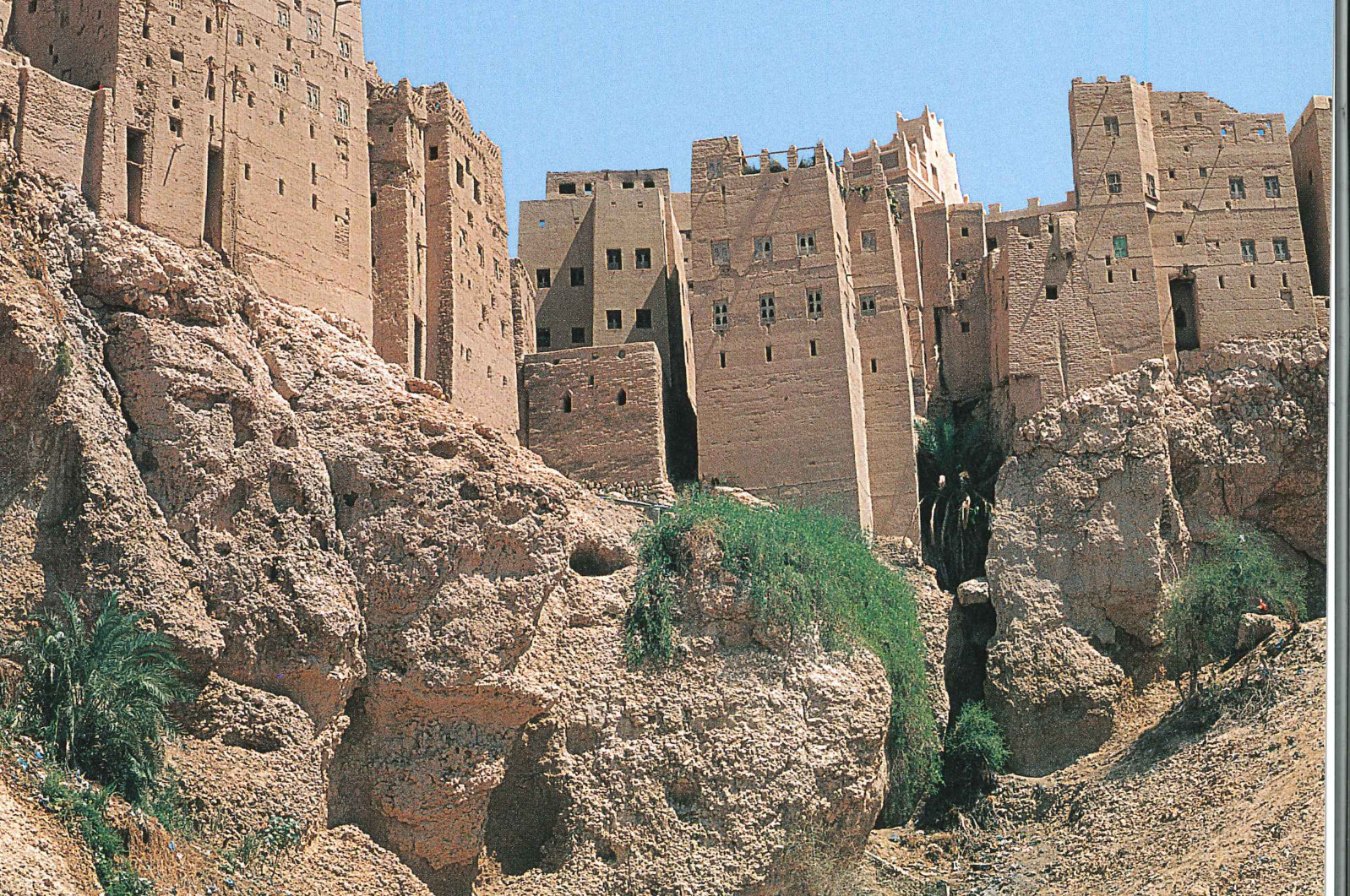
I could easily swing a visa from the local embassy; it was reported to have some of the most spectacular mountain scenery in the world, scattered
with mediaeval villages that could have been used as sets for Lord of the Rings. And, the clincher, when the next Gulf War started the place would surely close down again.
All in all Yemen shaped up to be an interesting if not entirely relaxing break from our posting in Khartoum.
Sana’a, the ancestral home of the Queen of Sheba, was tranquil enough and, though alcohol-free, seemed positively first-world after the dusty and rundown Sudanese capital. We were the only guests in the seven-storey thirteenth-century Palace Hotel in the old city; we slept on thin mattresses on the floor; there was a mosque with a peculiarly powerful loudspeaker next door and, rather strangely, the hotel reception seemed to be functioning as a registration station for upcoming elections; it was consequently guarded 24 hours a day by swarthy but friendly police with automatic weapons.
Someone had told me that the women of Yemen were the most beautiful in the Arab world, but after a couple of days here I found myself asking: “How could anyone tell?” They all wore black chadors with full veils and it was only by looking at their feet that you could even tell which way they were facing.
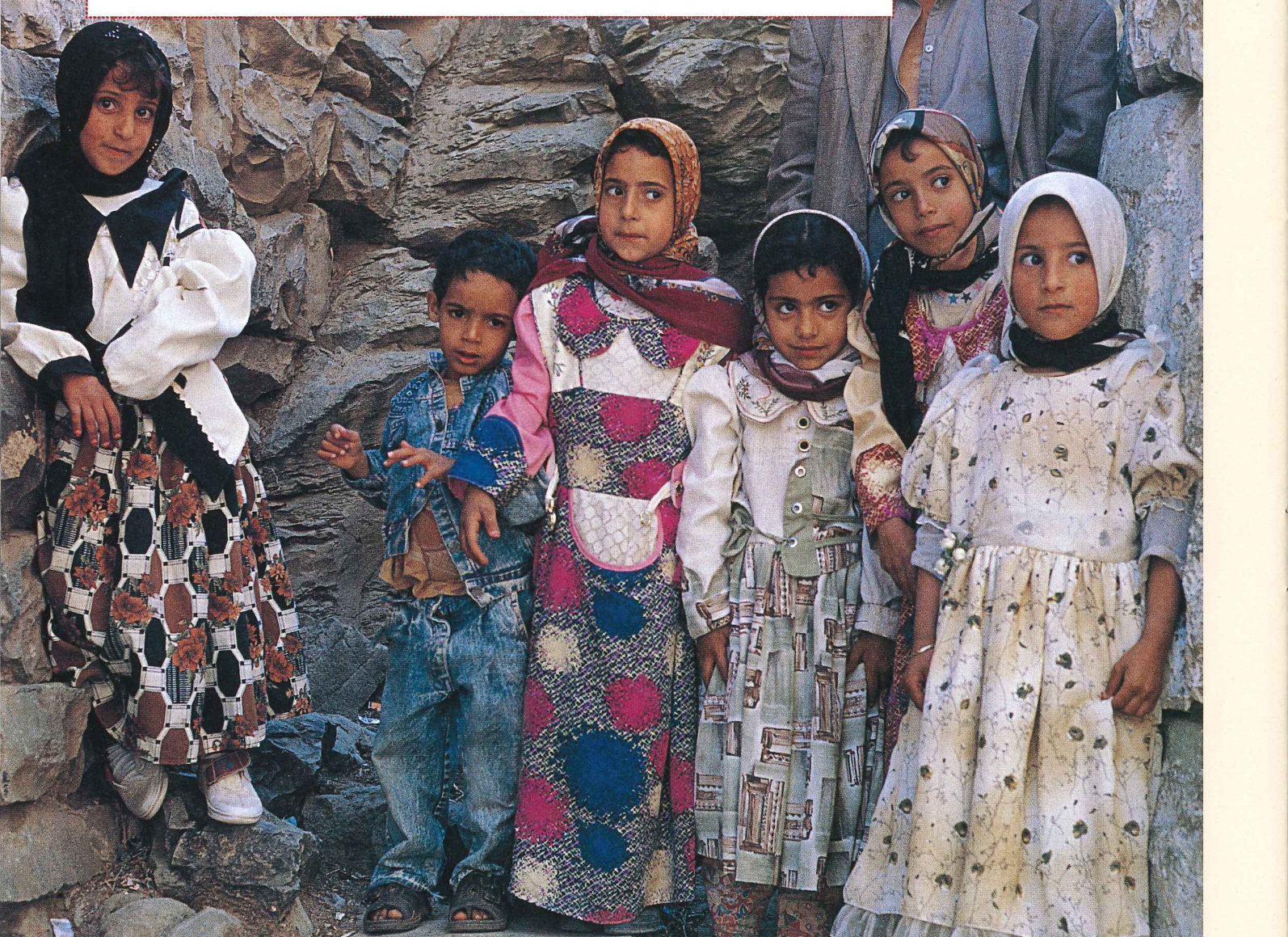
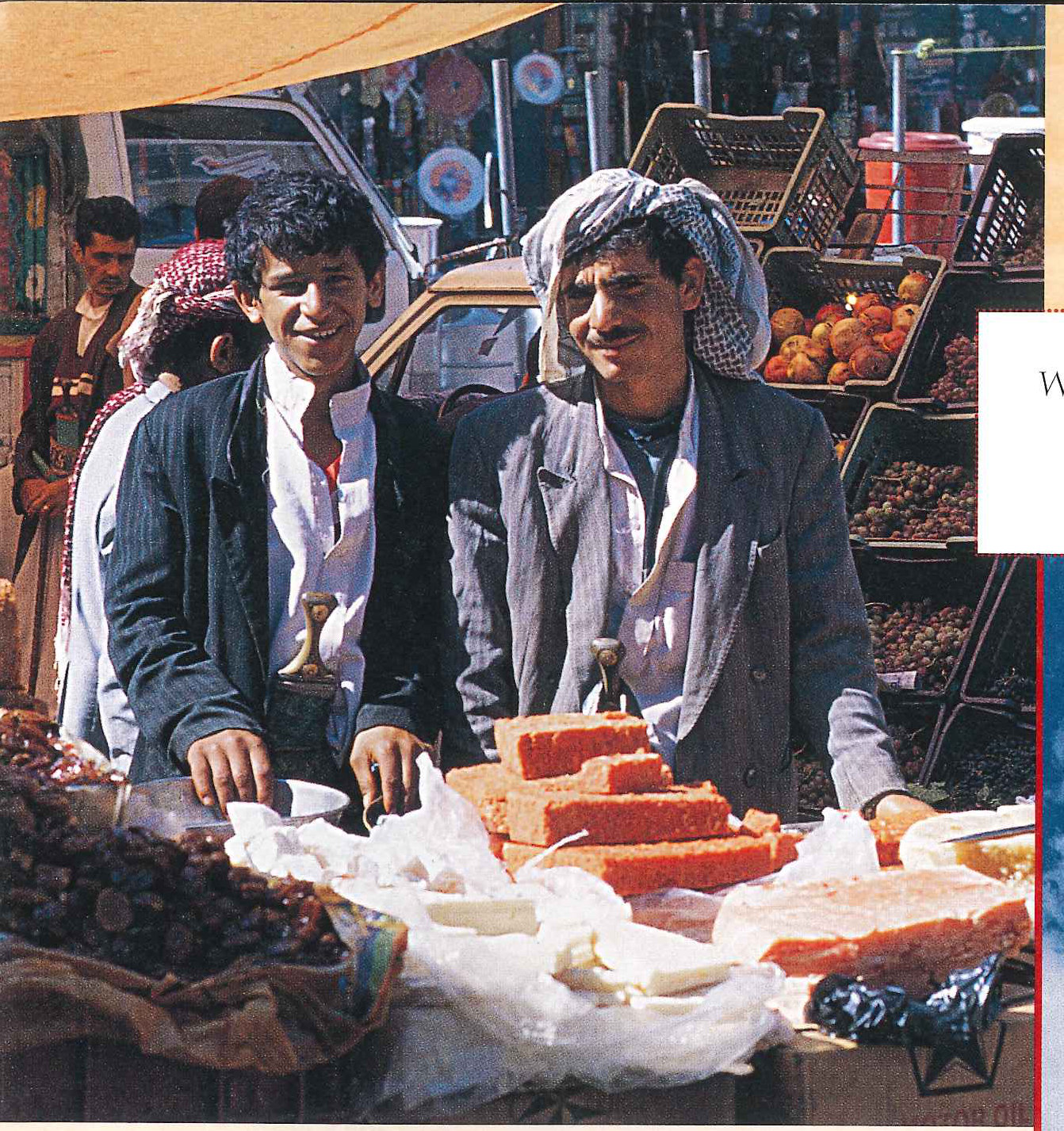
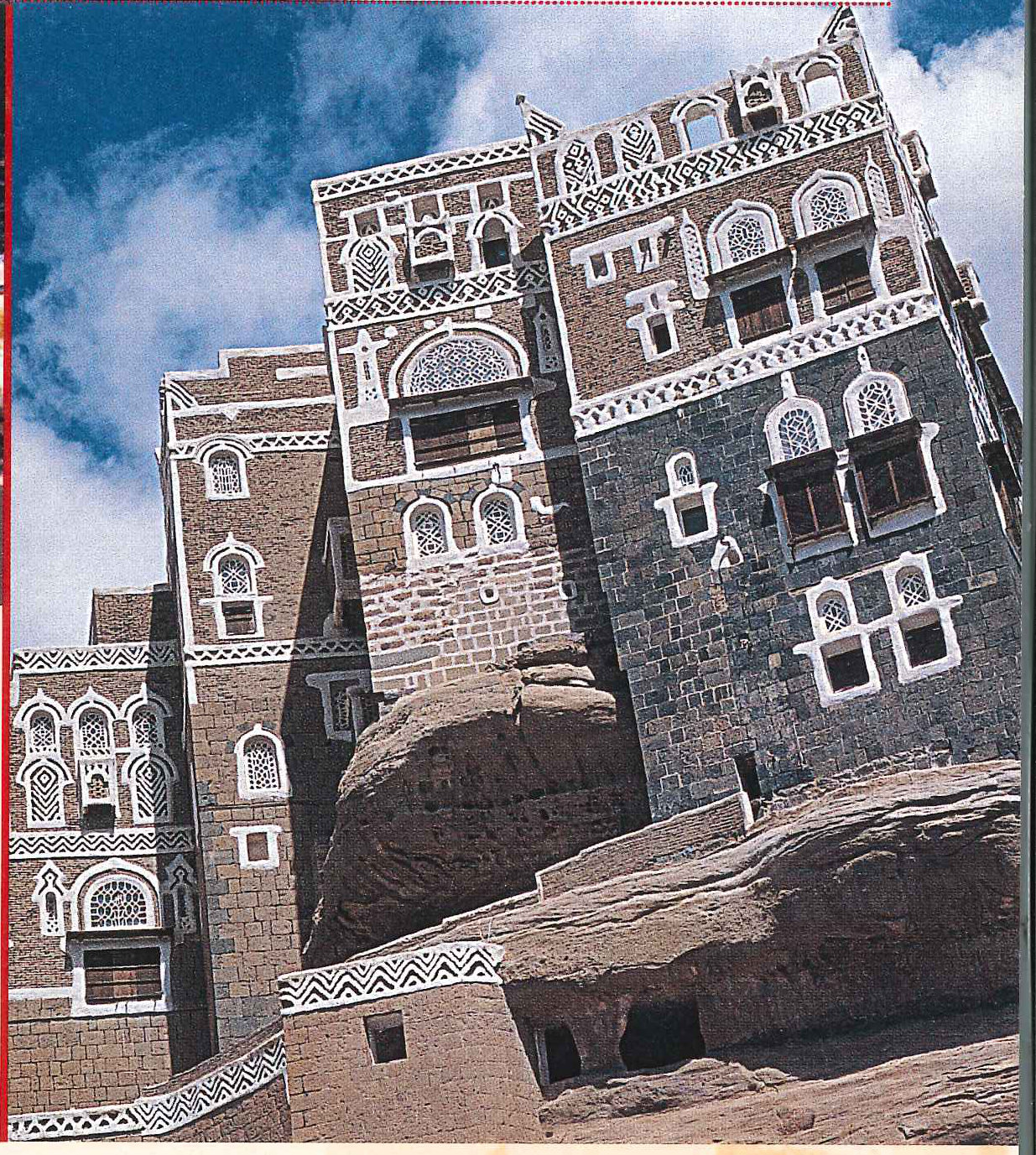
We headed to the hills, to the West of Sana’a, dodging the awkward official requirement to have an armed guard with us at all times by squeezing into already-full Peugeot 504 route taxis whose passengers, most of them armed themselves, would breezily brush aside worried officials at road blocks, assuring them we were in good hands and calmly ordering our qat-chewing driver to drive on.
An early stop was the town of Shibam. Who could resist a town that was actually featured in The Thousand and One Nights? In the story in question, a man wrecks his own wedding ceremony by emitting a stupendous fart at the climactic moment; utterly shamed, he flees to India and only when he is an old man does he decide to venture back to the village of his birth. On the outskirts of the village, he dismounts from his horse and happens to overhear a conversation through an open window. A middle-aged woman is asking her ancient mother about the day she was born. The mother replies “It was on the day of Hussein’s great fart.”; the man flees and rides away from Shibam, this time forever.
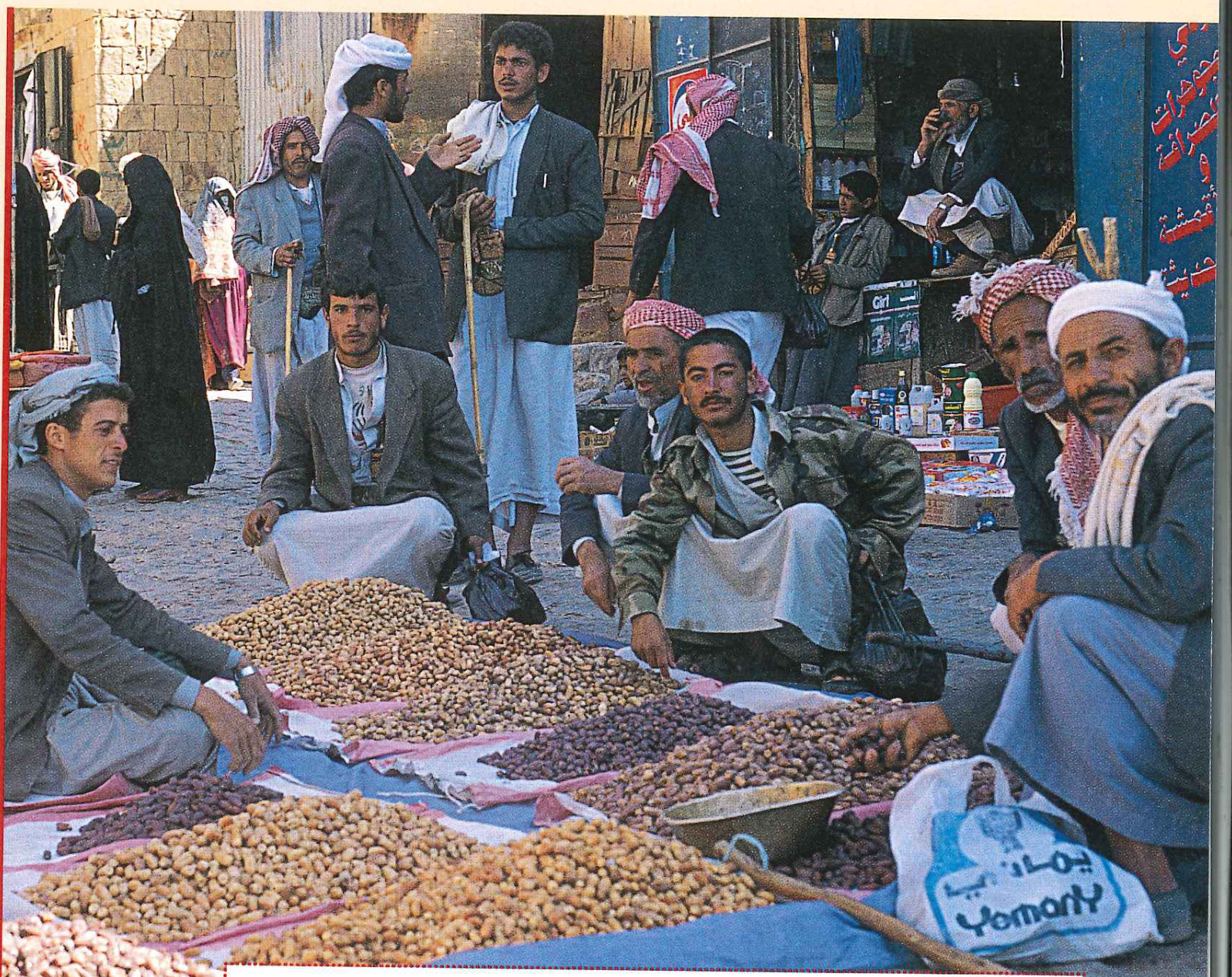
Then on to the mountain eyrie of Kawkaban, perched on a high volcanic plug and accessible only through the narrowest and darkest of gullies. From here we walked nearly forty kilometres across the plain, past the great abandoned fortress of Bukkur to At-Tawila, where in the marketplace they sold gold, frankincense and myrrh. At Bukkur, a horde of a hundred children or more plagued us with calls of “Gollum! Gollum!”: disappointingly, they were not actually warning us of a monster speaking in riddles on some dark lakeshore ahead, but asking for ballpoint pens.
At Manakha, our Arabic was sorely tested by a complex negotiation for the services of a guide, for a more ambitious four-day walk in the mountains. Just when we thought we had lined up a pleasant and apparently knowledgeable young man, we were taken to one side in the soug by one of his rivals, Gaga, who told us that our man was a bad man, whom on no account should we trust; if in doubt, we had only to check with the village policeman. Although it was now eleven o’clock at night, this we did; the policeman, who was resting a broken ankle on a blue velvet cushion in the opulence of his top-floor mafraj, told us that, indeed, our man had “behaved badly” with a female Japanese tourist Chis hand gestures left us in no doubt as to what he meant) and that instead we should take Gaga – in fact he ordered us to go with Gaga.
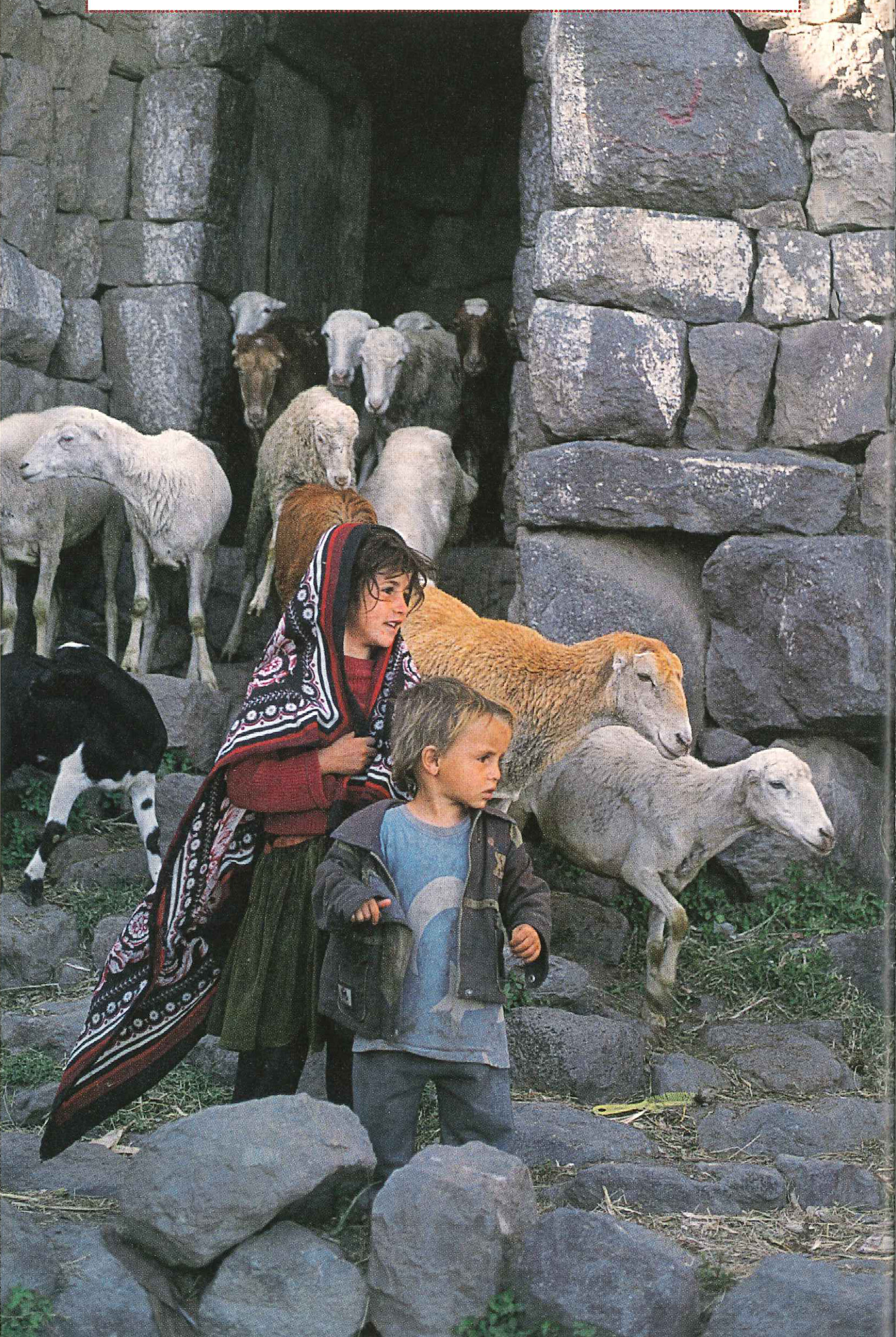
Gaga was fine, and led us up and down precipitous paths to tiny fortified villages where at night they took in all the animals and closed the gates with a great bang. As we wandered along man-wide alleys that never caught the sun, occasionally we would glimpse a veiled face peering out, then flitting away; I was reminded of the movie “Don’t Look Now”. At night we occasionally heard gunfire, but Gaga was blasé: “Just high spirits, he said.
We passed back through Sana’a on our way to Wadi Hadramawt, in the desert East of Yemen; I saw a newspaper headline in English that blared “It was terrorism!”, but decided it was best not to read the article for now (a French tanker had just been the subject of a suicide bombing off the Yemeni coast)
In another Peugeot 504 in Wadi Hadramawt, a man who looked like a candidate for Hijacker Number Twenty pressed himself up close to my wife and suggested in a whisper that Osama bin-Laden was “a beautiful man”. We declined to be drawn into a lengthy debate on this matter and were glad when we reached our hotel.
The Qasr al-Qubba in Tarim was described in an old guide book as “in the Neo-Javan Baroque style”, and indeed it was redolent of the East: Wadi Hadramawt has long had historical connections with Indonesia and India. Again, we were the only guests, and thus had the luxury of one of the two 1920s era swimming pools for each of us; but at night things were rather too quiet, and I found myself thinking of Paul Scott’s Bibighar Gardens and the mysterious things that had occurred there. Freya Stark and Harry St John Philby (Kim’s father) stayed here, and it looked as though the place had not been renovated since.
One day we rented a taxi (a 504, of course) and rattled off to the remote Wadi Diwan. As we were wandering around one apparently ruined and abandoned medieval village on foot, a man suddenly leapt out from the shadows, one hand on the ornate curved jambiya or dagger that is part of the national dress. We recoiled, but he only wanted us to visit his “museum”, a dusty upstairs room full of junk that had obviously been purloined from collapsing old houses. After we had feigned interest for fifteen minutes and were politely edging our way out, he disarmingly informed us that all exhibits were for sale; he asked about ten dollars for a brass pot of dubious antiquity, and accepted with alacrity when I offered fifty cents.
Back in Khartoum, the news was all of the French tanker and of the astounding missile attack in the Yemeni desert on what was what purportedly a car full of Al-Quaeda leaders, launched from a pilotless drone controlled by remote control from Djibouti; I was not surprised to find that the car in question was a Peugeot 504.
View the original scanned pages →
Originally published in bout de papier, Vol. 19, No. 4 (2003) — Winter/Spring 2002/2003 // Hiver/Printemps 2002/2003, pp. 29–33. Read the rest of this issue →



