bout de papier, Vol. 12, No. 3 (1995) — Fall 1995 // Automne 1995, pp. 30–35
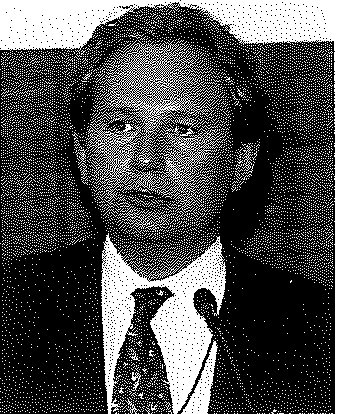
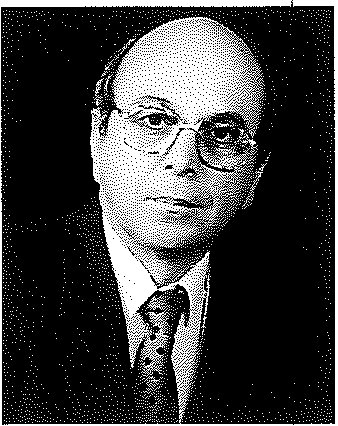
Interviews with Peter Harder, Deputy Minister and Raphael Girard, ADM, International Service
Peter Harder, DM
bdp: I don’t know how philosophical you are feeling this morning. We could start by talking about current immigration policy and then go on to the global migration issue.
PH: Let me perhaps give a bit of context to the immigration program. The immigration program over the last 126 years has been delivered in various configurations. It was in the Department of Agriculture at one time; it was in the Interior at one time. The most bizarre configuration was the Department of Mines and Indian Affairs. And it has been Citizenship and Immigration; it’s been Manpower and Immigration; we have had the foreign service in the program; and we have had it out and we have had it back together. All that is to say, the program is the kind of program that links to other government programs or public policy issues, depending on its time. Citizenship & Immigration today is delivering the same program but it is delivering it in a different context.
There are only four countries in the world that have an immigration program. We are doing it in a world that has fundamentally changed in the last 10-15 years, one in which people are on the move. The globalization of the movement of people poses a different environment for Canada’s Immigration Refugee and Citizenship program. The department is trying to focus on what is the public policy space to attach the issues of immigration and citizenship. And I think that they have both a domestic and international expression.
Domestically there continues to be political consensus for immigration and refugee
30 bout de papier Vol. issues but it is a difficult consensus. We are not like California, nor do we have the attitudes of some of the western European countries. We have a public that is increasingly concerned about what are the implications of immigration for the rights and responsibilities of citizenship, for the changing face of parts of urban Canada. For example, immigration is very much viewed by British Columbians as having contributed to their economic well being, particularly with respect to the Asia-Pacific Rim. But I am sure that there is an element that says “What are the implications?”. We have a responsibility to moderate and integrate the issues.
On the international side, if we are pursuing an Immigration and Refugee program in a world which has fundamentally changed in terms of globalization, we have to both deliver our program in that context and also provide a new context for public policy thinking.
Let me just list a few of the implications. The 1976 Act, which is the fundamental Act of the Immigration Program, came into force at a time when we had 1200 refugee claimants in Canada a year. And they were all fleeing communism. It was pre-Charter (of Human Rights) so you didn’t need a lot of rules to say yes or no. There was a lot of discretion in the system. Since then the world is people on the move. The collapse of communism means that the sorting out of good guys and bad guys in a refugee sense is complex and non-ideological. It is human rights based, not ideology based. The numbers are greater. With the Charter, it is a more litigious atmosphere in which we manage the program. It means that we have to have more Charter-proof and Charter-sensitive procedures. You need legislation to say “no” and to pursue that in a meaningful way. “No” has to have some finality and there has to be some ability for the program to manage the consequences of a negative decision both here and abroad. We have had to adapt the law and our frame of reference significantly in the last number of years. And it is not just what we have to do but the numbers. We have had highs of 40,000- 43,000 asylum seekers; we have been as low as 21,000. Managing those numbers has been challenging but that is not really the face of the refugee movement. It’s the nature of the movement, the unpredictability; it’s the mix of illegal and irregular movements; it’s the need to have an ability to sort out those in Canada and abroad.
The globalization of the movement of people has accompanied the globalization of the economy or the globalization of the movement of money. It has had tremendous benefits for the world. We should celebrate that. But it has also globalized money laundering, globalized organized crime, globalized terrorism — those sorts of activities. Who would have thought that we would be investing to the extent that we are in our intelligence on triads and organized crime ten years ago or even five years ago?
Another point is that the movement of peoples does not happen in isolation.
There are 120 million people on the move, 120 million people who are not resident in their country of nationality. That is a phenomenon that is directly related to some of the other challenges of the world. North- South, East-East, East-West, Islamic fundamentalism, birth rates. So that we have to clarify what is it in our experience and expertise that we can bring to bear. Not in the sense of arrogance, but in the sense of really trying to find solutions to some of these problems. People move, not just because they happen to fit into the 1951 Geneva Convention. People move for a lot more sophisticated reasons than are found in the definition. It has a lot to do with human rights, and it has a lot to do with economic well-being.
We are going to require better coordination both at the national and international levels in terms of using all of our public policy instruments.
Look at a couple of facts — the demography of the Maghreb and the demography of Europe. It doesn’t take long to extrapolate a certain challenge that the Europeans will face. Take the fact that Western industrialized countries have received in the last couple of years about one million to 1.3 million asylum seekers. We are spending as a Western world between 7 and 8 billion dollars a year on asylum systems. Those are huge numbers of people and resources. They create pressures. Look at Austria, the campaign in France, Belgium’s national elections. The Dutch have gone to an identity card because of immigration. Look at all of these various manifestations. Our issues have turned into real politics — probably some of the most challenging issues of public policy.
bdp: You mention on the domestic levels the link between foreign policy and immigration and everybody working together. How do you see that working now?
PH: We have got to focus on some real practical steps here. For example, we have and we have had in the past years real problems dealing with the return to certain countries of people who have no legal status in Canada. We have benefited greatly from the kind of support we are receiving from Foreign Affairs where there is a greater recognition today of the issue than there has been in the past. If we are not going to be able to return to the People’s Republic of China Chinese nationals who have no legal status in Canada, that is going to be a barrier to normalization of our relationships. A normal bilateral relationship includes the return of nationals.
Another example is Sri Lanka, which has been a major source country of refugee claimants in Canada and many other countries. We have yet to find what is the right kind of policy intervention to mitigate this or at least try to deal with this more effectively. It probably includes some of the projects that are underway now, where we are seeking to invest in the human rights infrastructure rather than in some of the big development plans. That probably makes some sense. It’s the trying to bring to bear the consequences of all of our public policy initiatives in a more coherent way to reflect the interests of Canada which are not necessarily narrow or equidistant.
One illustration of this is the kind of work that we are doing with the Americans. With the help of Foreign Affairs and our mission in Washington we are negotiating an agreement with the Americans on border facilitation and also a memorandum of understanding on asylum. We have also discussed our respective visa policies in a more coordinated fashion. Not that we are going to give to the Americans our sovereign right to decide on visa policy, but we are prepared to discuss our mutual interests and the impact of our decisions between our two countries. I think that makes good sense. That’s building some of the practical infrastructure of bilateral and multilateral National Archives of Canada co-operation that the issues of migration require.
bdp: Could you tell us a bit about how you see immigration and domestic economic policies complementing each other?
PH: The immigration program in Canada is no longer linked to specific job demands. That was the rationale for Manpower and Immigration and then Employment and Immigration. Immigration is linked to a more generally stated objective that “we are in the immigration business for the economic interest of Canada.” The framework that was announced in November 1994 very clearly committed the program to try to increase the mix to ensure more economic contributions over the ten year framework period. The program should, in a deliberate manner, demonstrate to Canadians that it continues to make an enhanced economic contribution. The family component of the program — family class immigrants — contributes to the economy also. It is the element of the immigration program that has its basis in family linkages. Spouses and dependent children are the fundamental core of this movement and then there are parents and grandparents. We need to concentrate on providing the opportunities for sponsorship without incurring some of the public expenditures of sponsorship failure which we have had in the past. That is the balance and the challenge.

We, as a country, pursue our refugee mandate not because of our economy, but because of our international obligations and our particular stance on human rights. We also have other international obligations apart from the Geneva Convention, such as human rights instruments. However, they are circumscribed by our ability to pay — a financial capacity issue that we are recognizing more and speaking about more clearly. The humanitarian work that we do in this program is very important but it is limited by our ability to pay for it. We need to be creative with the resources that we have. We need to demonstrate to the interested community in Canada that there is a relationship between our ability to afford a domestic refugee determination system and our ability to sponsor and support overseas convention refugees for resettlement. In the past, we have not made those linkages as clearly as we are making them now — we are making them because there is an affordability test here.
The third element of the economic issue is that immigrants themselves are increasingly bearing the burden and contributing to the cost of the program. We generate in cost recovery about 130 to 150 million dollars. Together, the landing fee and the citizenship fee will generate about another $150- 170 million. That is a very significant economic contribution.
I believe the final and most profound economic benefit is the work that immigrants do over their contributing years. All of the studies — C.D. Howe, the Economic Council of Canada, and our own work in the department – demonstrate that immigrants outperform Canadians in terms of their economic contributions as a group. What we want to do is to enhance the continuation of that type of contribution wherever possible.
bdp: The link with trade?
PH: Yes, there is a significant linkage. Human capital that has come to Canada in the past is now increasingly entrepreneurial and from parts of the world which are themselves growing rapidly. That is contributing to our trade relationships. I don’t think it’s simply a coincidence that Canada has experienced trade growth in the Asia-Pacific and significant growth in our immigration relationship with the Asia-Pacific region. The Prime Minister, during his Asia-Pacific trip, frequently referred to the incorporation of immigrants from Asia-Pacific into Canadian society.
I am a little chagrined when I sometimes hear foreign service officers or trade commissioners say “Oh that’s all coincidental.” I don’t believe that you can be in Hong Kong and speak to Canadians of Hong Kong origin who are active in the economy there or in south China and not think that their relationship is of benefit to Canada. I am delighted to see some of the events where trade commissioners and the immigration officers have marketed the advantages of Canada together — using the immigration program to make Canada attractive and create jobs in Canada for Canadians as a result of the investments. We need to do more targeting of that nature. Realistically, people in Asia-Pacific don’t choose Canada because of our comparatively buoyant economy. That is not the truth. They choose Canada for our comparative advantages in certain other areas.
I casually mentioned earlier the whole business of selection. There has been a profound change for our front lines. We no longer want to simply put up a shingle saying “Immigration Canada” and process a line-up. We want to use the expertise that we have in the field to identify targeted areas and clientele for immigration to Canada, which means working with our trade colleagues. Whether it’s developing immigration opportunities potential in south-east India or whether it’s dealing with what we know is a substantial demand for emigration in Taiwan. A study last November showed 23% of university graduates in Taiwan believed that emigration was in their personal future. Canada was the (number one) point of destination followed by Australia and then the United States. There are opportunities for us to focus on and in a way which benefits Canada.
bdp: Do you have any comments on the imposition of visas and the impact on our bilateral relations?
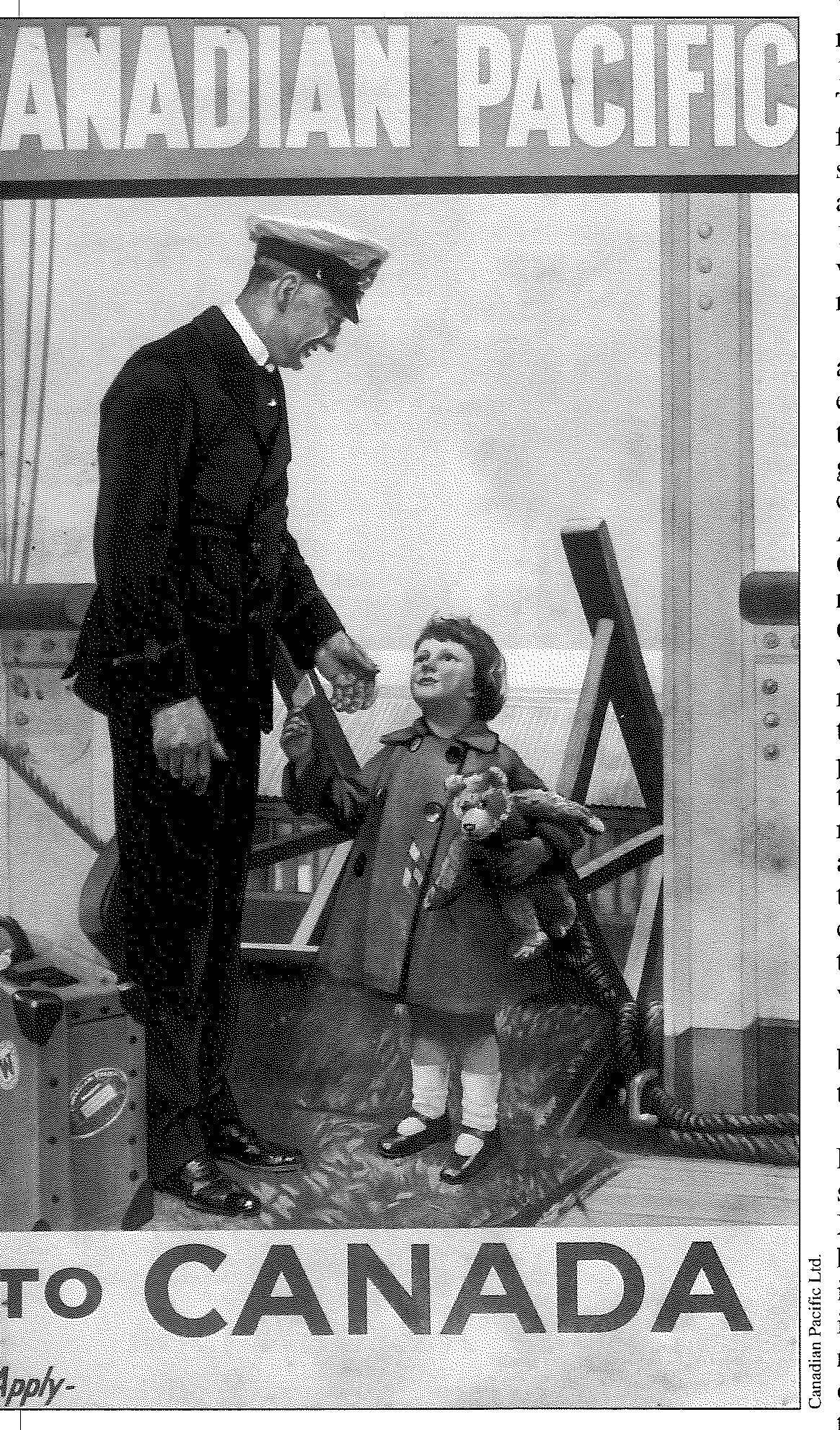
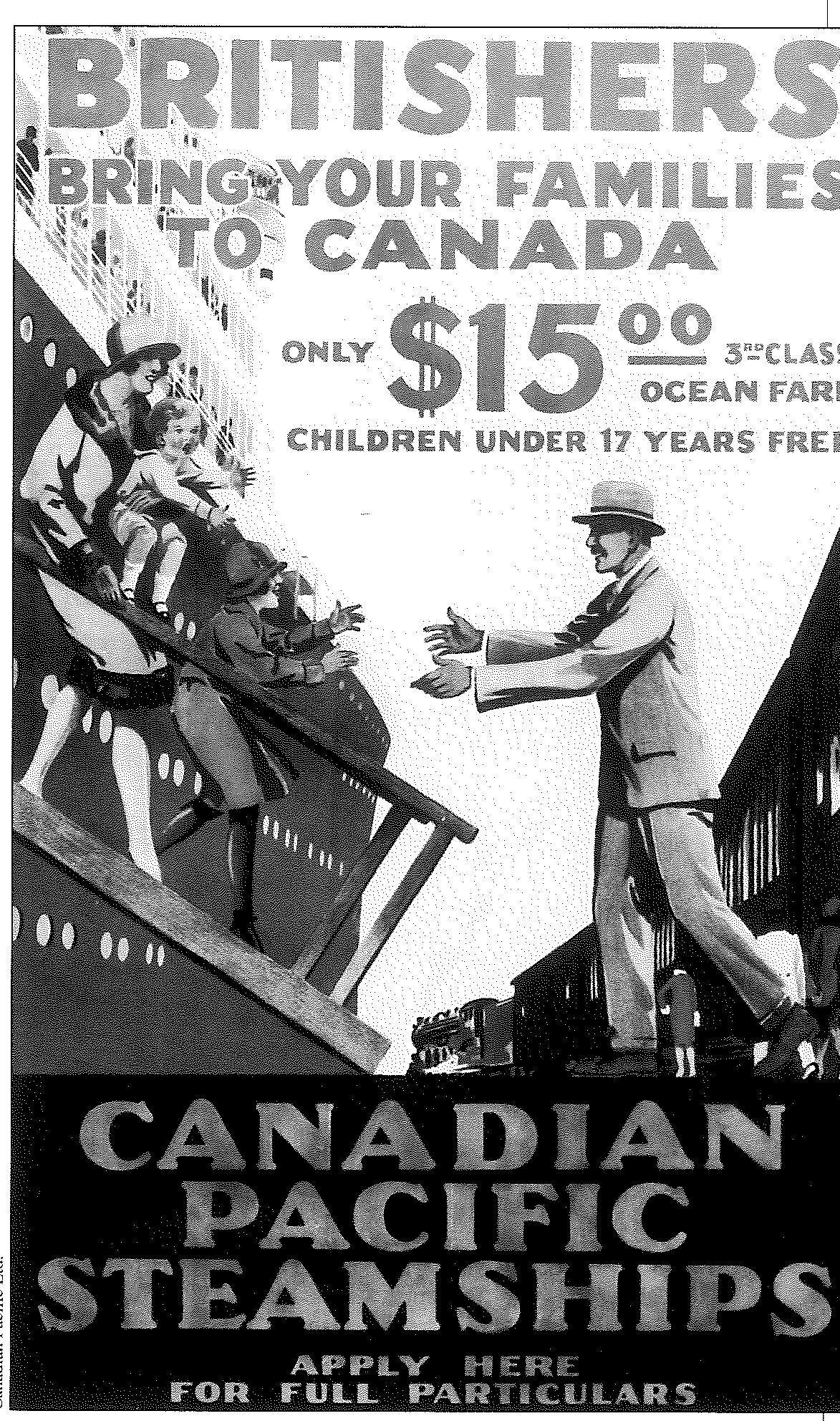
PH: Visas are a tool of immigration control. Visas are not an expression of affection or disaffection. They are an instrument by which Canada exercises its sovereign responsibilities to control its borders. We work very closely with Foreign Affairs on visa issues and are very much supported by the responsible geographic divisions. To the best of my knowledge, there have not been issues on which we have disagreed. Certainly some countries for which we impose visas would construe visas as an expression of Canada’s political bilateral relationship. I think it is useful for the Foreign Affairs Department to be able to say, “It was a decision by the Immigration Department.” When officials of these countries visit here, we then articulate the rationale for the visa. The rationale can be anything from our concerns with the integrity of their passport documentation, the irregular movement of other nationalities through their country, their lack of cooperation at major airports or the historic experience of the absence of the visas causing illegal migration to Canada (Portugal, for example, a few years ago).
bdp: When we are not dealing with bilateral issues what would you say is our major policy thrust?
PH: I would say that our major policy thrust is to pursue the need for multilateral approaches to the migration issue. This is not a unidimensional issue. To simply approach migration as something that can be mitigated through good enforcement is naive. To assume that it’s only development and that if only development worked we wouldn’t have people on the move is equally naive. To assume that you can preach to the Europeans that immigration is good is naive. We have to have a multifaceted approach to the challenge of migration. We have to demonstrate that migration has a benefit and remind people of that. I can link this up with citizenship. In Canada we have not equated ethnicity with the nation state; citizenship is not defined by ethnicity but by values that we share. We have been a bit shy in articulating these values and we have been pursuing this in the last year.
That is something to tell our international colleagues. The former Yugoslavia is probably the best European example for that. There is some very exciting work being done in the former Soviet Union as well on the whole notion of what is dual citizenship and what is non-ethnic based citizenship. We and the TOM are working together on some citizenship projects helping countries come to erms with mod ern progressive citizenship legislation. Canada leads in the developing of the ICO (Immigration Control Officer) network and now we want to cooperate with other countries.
I am delighted to see the development of the globalization theme within the Department of Foreign Affairs because I think we can work together on this. We are not building competing empires and we are not poaching. I think we are integrating our capacity.
The foreign service in this department is bigger than the International Service Group. In an era where globalization issues are increasingly having an impact on domestic policy, a department that has both a foreign service and a domestic service is an inspiration. It allows us to build a knowledge base, an intelligence base, to be a learning organization that is international and that can have career development opportunities with a national and international dimension. It will make program delivery better but also our contribution to the tough work of thinking about these issues more focused. It is not a threat to the foreign service.
bdp: So you see this as something that is likely to grow and expand?
PH: Yes. For example, I can’t think of a better contribution than somebody coming out of Delhi on a first or second posting than spending their Canada-based time as an appeals officer or a case presenting officer. They have the richness of experience to articulate a particular approach before an independent decision maker. By using those gifts and trading them as well, we should have appeals officers and Case Presenting Officers (CPO’s) abroad and do it in a deliberate way. Just as we have decided we are going to have an international migration policy section that has a foreign service core but others as well. We should have almost the reverse on the appeals unit. Its core is the domestic service but we should have some international participants. There are really exciting opportunities for doing that type of planning. We are only beginning to appreciate that after three years of living together. I am really quite excited about this because I think it provides the foreign service officer with the real links to the domestic program and the reality of delivering a domestic program that general foreign service policy doesn’t. It’s for the best objectives of good public policy that we need to do some of this.

Raphael Girard, ADM International Service
bdp: How do you view the many changes in the Immigration Service, based upon your experience in the past 25 years?
RG: There certainly has been a pronounced evolution of the Service since I joined. I came in with a group of 12 people in 1963. We were, I think, the first university graduates who were hired to work as career Foreign Service officers in Immigration. Our group was made up of people recruited with the same qualifications as the other streams of the Foreign Service.
The early years were quite significant in that we were different from most leagues, some of whom regarded us as elitist. Our colleagues at most offices abroad came from Immigration stations at the borders, from the airports and from the inland Immigration offices. They served abroad on single assignments for one or two tours. With our arrival that regime came to an end. Similarly when we arrived at missions abroad we were not seen as full-fledged Foreign Service officers; we were a new breed of people. We worked for another Department. We, as a group, found ourselves in a camp having broken one tradition and aspiring to another. Over the years this has changed dramatically. I think we now have a Social Affairs stream with a clear identity, a clear place in the Foreign Service of Canada. We have a record of achievement not only in terms of the Immigration program but also in international affairs that relates to immigration and refugee issues affecting Canada both internally and in its relation to other countries. The men and women joining today compete very well on a whole range of different functions both in the Foreign Service and domestically. Their commitment to the Foreign Service is as great as those of us who joined in the early years. We have our place in Citizenship and Immigration and in the Foreign Service as a whole.
bdp: Now a new emphasis is being placed on training and development. How does all this training and development today compare to what was given yesterday?
RG: There are favourable and unfavourable comparisons. When we joined we had an intensive training course that lasted as long as two years before we were turned loose on the world to perform as a visa officer abroad We had to learn the basics in Canada, to see how the Immigration Department functioned in Canada before applying the rules and systems overseas. But it was a much narrower focus. Immigration in the 60s was a very different business from Immigration in the 90s. We didn’t have as formal an enforcement role abroad, we didn’t have a well defined role in reporting and liaison and representation. We didn’t have as many specialized functions. The money we now invest in enhancing the management skills of officers, in doing specialized functions such as the Immigration Control Function abroad, in the selection and promotion of business migration … training has dramatically improved over what we had before. I hope we can recapture some of the old basic training without losing the better part of the intensive specialized training.
bdp: This year we are embarking on an Immigration promotion and recruitment campaign in selected foreign markets after a hiatus of 25 years. Can you tell us how this new campaign is different from the previous efforts of the 1960s?
RG: The basic difference is the market. We are in the global market. We weren’t in the 60s. In the 60s independent migration was sought after in Europe and in the United States. We had very few points of service anywhere else. There was no effort to attract independent migrants to Canada from other than the traditional sources. In the 90s Europe’s population is ageing and there is not a great deal of interest among Americans in coming to Canada, although there is certainly a large number of foreign students and other visitors in the United States who would like to come.
The new promotion activities will go into places where there are well trained people who are willing to give Canada a try. It’s now mainly in Asia, in the Middle East, in some of the developing democracies in Eastern Europe and to some extent in North Africa. Our advertising therefore has to be much more specific. We are not interested in volume, we are interested in quality people who are self-starters, who can arrive here and find their way into the labour market without financial assistance. In the old days we sought people with a sense of adventure and an ability to settle without an awful lot of resources behind them. Today, independent migration is seen as a premium program for self-starters and if you need tinancial help you are going to have to tind it elsewhere, not from the Federal or Provincial Governments.
bdp: In the next ten years, let’s say until the year 2005, how will the role of the International Service change in Canada and abroad? We have been through a lot of change in the last two or three years.
RG: Well the rate of change is accelerating, it’s not slowing down. The recent budget and program review has introduced a fundamental change in how Canada thinks about immigration. We now think of immigration in terms of a system that largely pays for itself, driven by the fiscal reality. The function of the visa officer will continue to change and the involvement of officers early in their career in actually doing the processing and making processing decisions will continue to shift towards managing the process using more locally engaged staff and having technology do the work of screening and documenting people who want to come here. The functions that have matured over the years are strategic enforcement, recruitment and promotion, reporting and analysis. They will continue to grow and will have an impact on our policies. Overall, the job package will be richer and will be more challenging. It will require even better use of the skills of our officers. bdp: There is another question I’d like to ask you about the IRB and the role of visa officers. There is a debate in Canada about refugees who are selected by the IRB and refugees who are selected abroad by our visa officers. Could the visa officers play a role in supplying information to the IRB on conditions in certain countries, on selection decisions, or maybe give information on refugee movements?
RG: Yes indeed. This is where we will invest some of the savings we make. There are limitations. Obviously we can’t do intensive case research on 20,000 cases a year, but we can be instrumental in clarifying questions such as whether certain minorities are vulnerable in certain places as is alleged by a number of claimants or whether the documents that are being presented are valid ones. We’ll probably invest in this kind of enterprise before this year is out, because there is much interest in enhancing the quality of decision-making at the IRB. With a little more effective coordination between us and the board, I think we can provide the information that will enable better decisions to be made.
bdp: On a more personal note, can you the high point of your a tell us what would be career so far?
RG: The events that have occurred in my career and that give me the most satisfaction are normally related to situations where we’ve gone out of our way to help people. None of them are terribly dramatic. I was managing our Rome office during the Italian earthquake — with the cooperation of talented support staff and Canadian visa officers on the team, we landed 1500 earthquake victims in Canada in a very short period of time, over Christmas and the New Year’s period of 1979 to 1980. We organized the immigration process down to three hours. A typical day would mean that a number of people from the devastated area would gather at our front door first thing in the morning. We would document them, arrange accommodation, airfare, and a seat on an aircraft the next day. It worked like a charm. This gave me a great deal of satisfaction. It was a remarkable example of the progress you can make when people are positively motivated to achieve a clear objective. Similarly, we worked on some refugee protection programs in El Salvador where we successfully brought 200 political prisoners out of the local jails while I was director of Refugee Affairs. These kinds of activities have given me a great deal of satisfaction.

View the original scanned pages →
Originally published in bout de papier, Vol. 12, No. 3 (1995) — Fall 1995 // Automne 1995, pp. 30–35. Read the rest of this issue →