
bout de papier, Vol. 22, No. 2 (2006) — Summer 2006 // Été 2006, pp. 9–12
I’d always wanted to go back. In the late seventies, I’d spent three years teaching at a very British boarding school in Buenos Aires. My pupils were a colourful lot, including the son of a deposed Bolivian dictator, a nephew of Argentina’s very own military despot, rustic children from farms in Patagonia and the Falklands, sophisticated pampas heiresses that could have stepped from the set of Miss Mary and who ordered their graduation ball gowns direct from Christian Dior, and a girl who taught me more about the short stories of Borges than I could ever teach her, and who went on to become a prime-time anchor on CNN. In those days you could be arrested for wearing shorts in downtown BA; helicopters overflew the school grounds at night heading for the River Plate to dump the bodies of torture victims; the school chaplain was deported from the country when he let slip to a pupil that he was a member of Amnesty International; we held air raid practices when it looked as though there would be a war with Chile over three uninhabited islands in the Beagle Channel; and we wondered what would happen if the Generals ever got serious about those other cold and windswept islands about three hundred miles to the east.
But, like most teachers, I lived for the long holidays: three months in the summer, and another three weeks in July. My wife and I always went south: one year we climbed Lanin volcano and didn’t see another human being for a month; another we bushwhacked all the way around the then-unknown Towers of Paine in Chile; we hitchhiked to Lapataia Bay, the end of Argentina’s Route 3 and 3000 km from Buenos Aires, and looked across the Beagle Channel to Navarino Island; we took the Rio Baker, an ancient rust-bucket of a freighter, from Punta Arenas through 1000 miles of the Chilean Channels and had to turn back in the face of a Force 12 storm in the Golfo de Peñas. The days seemed endless (actually, In Punta Arenas or Ushuaia, in December, they were …) and were illuminated with a startling clarity you only ever find in the highest latitudes. Over the subsequent years, time did nothing to diminish my fascination with the region: my favourite books became W.H. Hudson’s Far Away and Long Ago and Idle Days In Patagonia (if only for their evocative titles) and, of course, Bruce Chatwin’s In Patagonia.
MAILER REAR So when I started to find my posting as SHORE Consul General in Cape Town a little quiet (South Africa’s fabled crime rate was a poor substitute for indigenous uprisings, drug wars and mediaeval politics in Mexico; kidnappings, more drugs and a civil war in Colombia; fundamentalism and no less than two simultaneous wars in Sudan
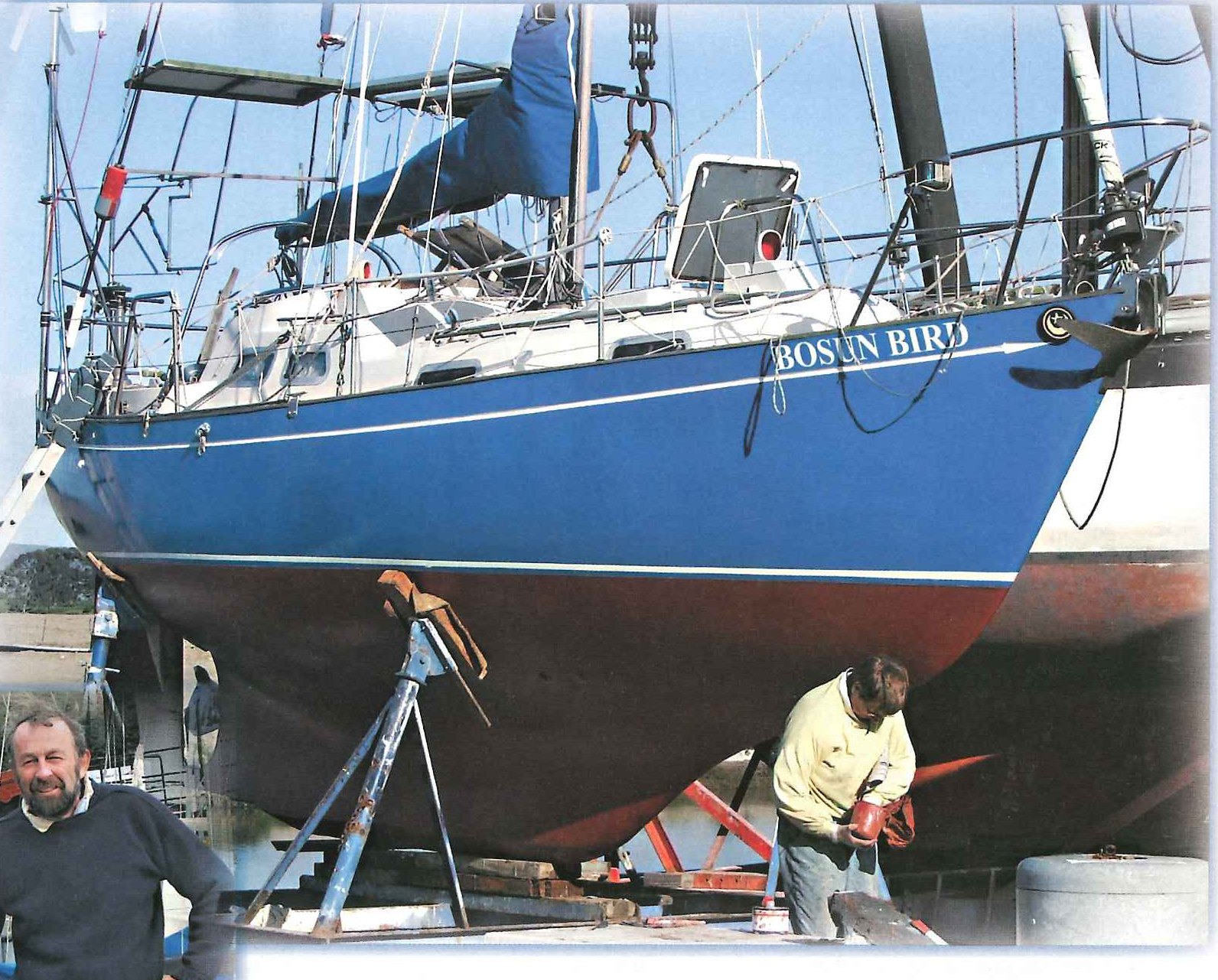
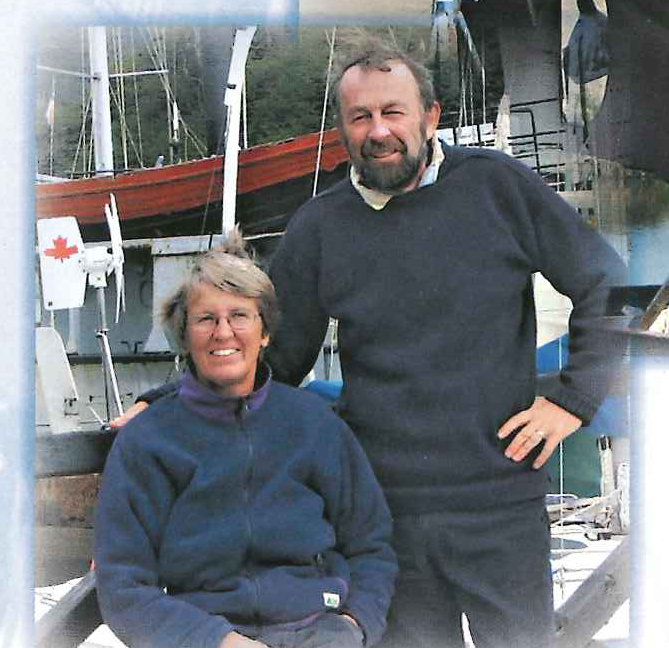
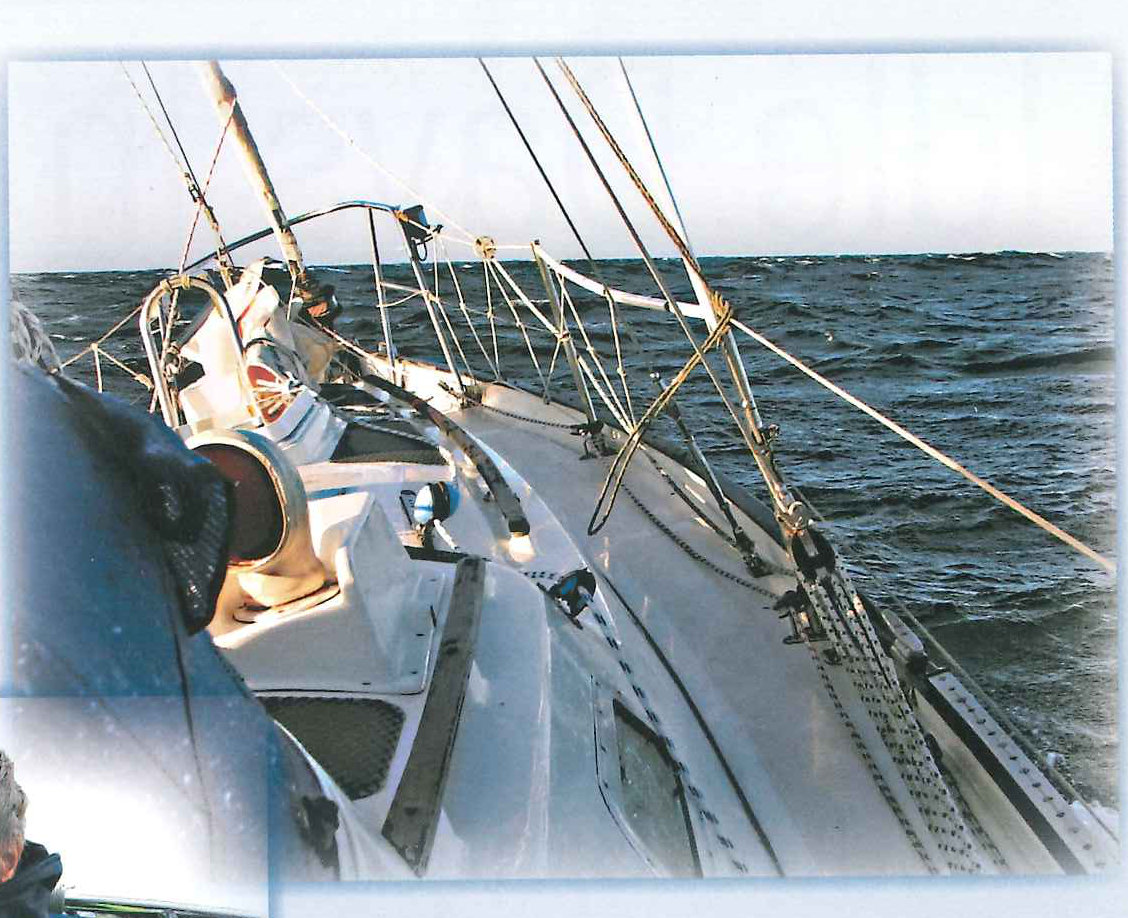
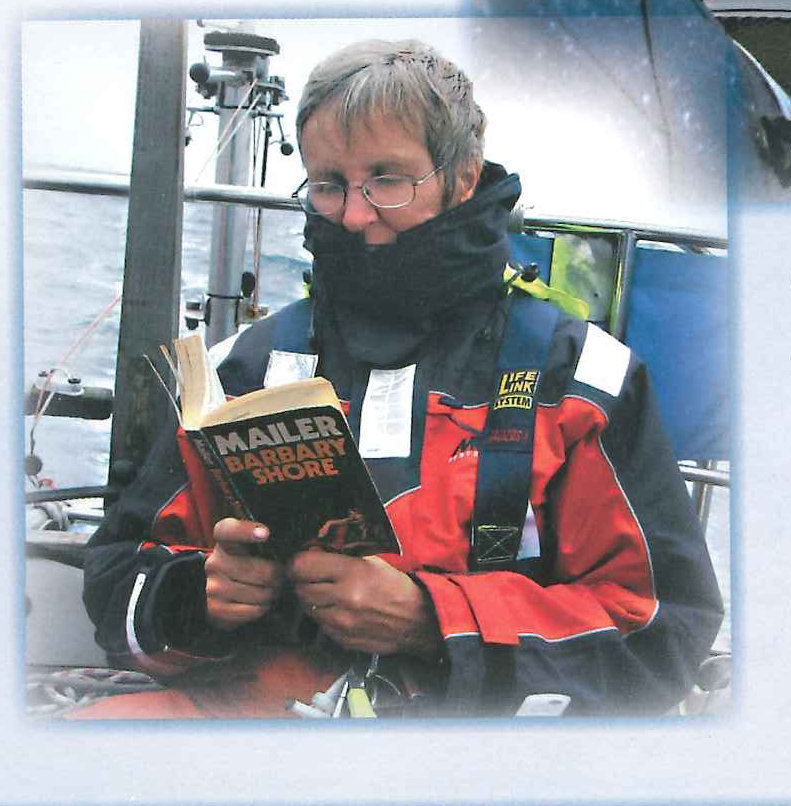
– my three previous posts) and promotion prospects rather hazy, it seemed like a good moment to take a little time off and the southern tip of the Americas beckoned once again. This time, we’d go by boat. Conveniently, we already had one: a small but rugged 27-footer with a full keel, Canadian designed, and named Bosun Bird We set off one morning in early September 2005, with the Cape still in the grip of late winter. It was a cold, wet and rough sail north up the fog-bound and encouragingly named Skeleton Coast. We’d sailed these waters in the eighties but hadn’t put in anywhere because, not to put too fine a point on it, with only sextant and compass to go on, we never knew exactly where we were. This time we had the luxury of a Geographical Positioning System (GPS) so that, notwithstanding a gale that almost blew us past Diaz Point we were able to make a precise landfall, four days out, on the old diamond town of Luderitz, Namibia. We drank German beer, ate kuchen, trekked to a ghost town in the desert and observed that the Luderitz Yacht Club, while hospitable, seemed to have no black members. In 1987 the 1700-mile haul from Cape Town to the tiny British dependency of St. Helena, in mid-South Atlantic, had been our favourite passage on a four-year circumnavigation of the world: gentle following winds, sunshine, warm seas; several times when becalmed we had gone swimming in 2000 fathoms. This time around we didn’t see the sun for two weeks, the winds rarely dropped below 20 knots and we wore our bright red foul weather CTORIA B.C. Gear the whole time. The rugged outline of the island, 13 days out, was accordingly very welcome.
This is a unique place, not just because of its fascinating history – for centuries a fiefdom of the East India Company, a prison for Napoleon and, later, Boer generals, a WWII coaling station – but for its continuing isolation. There is talk of building an airstrip, but in the meantime the island is connected to the outside world by the last designated mail ship in the world, the RMS St. Helena, and there are many “Saints” who have never seen an aeroplane, a train or a traffic light and who have not been more than eight kilometres from the place of their birth (the island is 16 km long …). The island is ruled by a Governor who is, as in the case of the Falklands, usually a career diplomat; he has a palatial SQ called Plantation House, but must share his large garden with five others: Jonathan, David, Fredericka, Myrtle and Speedy. Jonathan is 175 years old and, like his friends, is a giant Aldabra Tortoise.
In 1987 the Number I hit on Radio St. Helena was Benny Hill’s Trigger: He Pulled the Fastest Milkcart in the West. Musical tastes have not changed much; in late 2005 top of the playlist was It’s Hard to Kiss the Lips at Night that Chew Your Ass Out All Day Long.
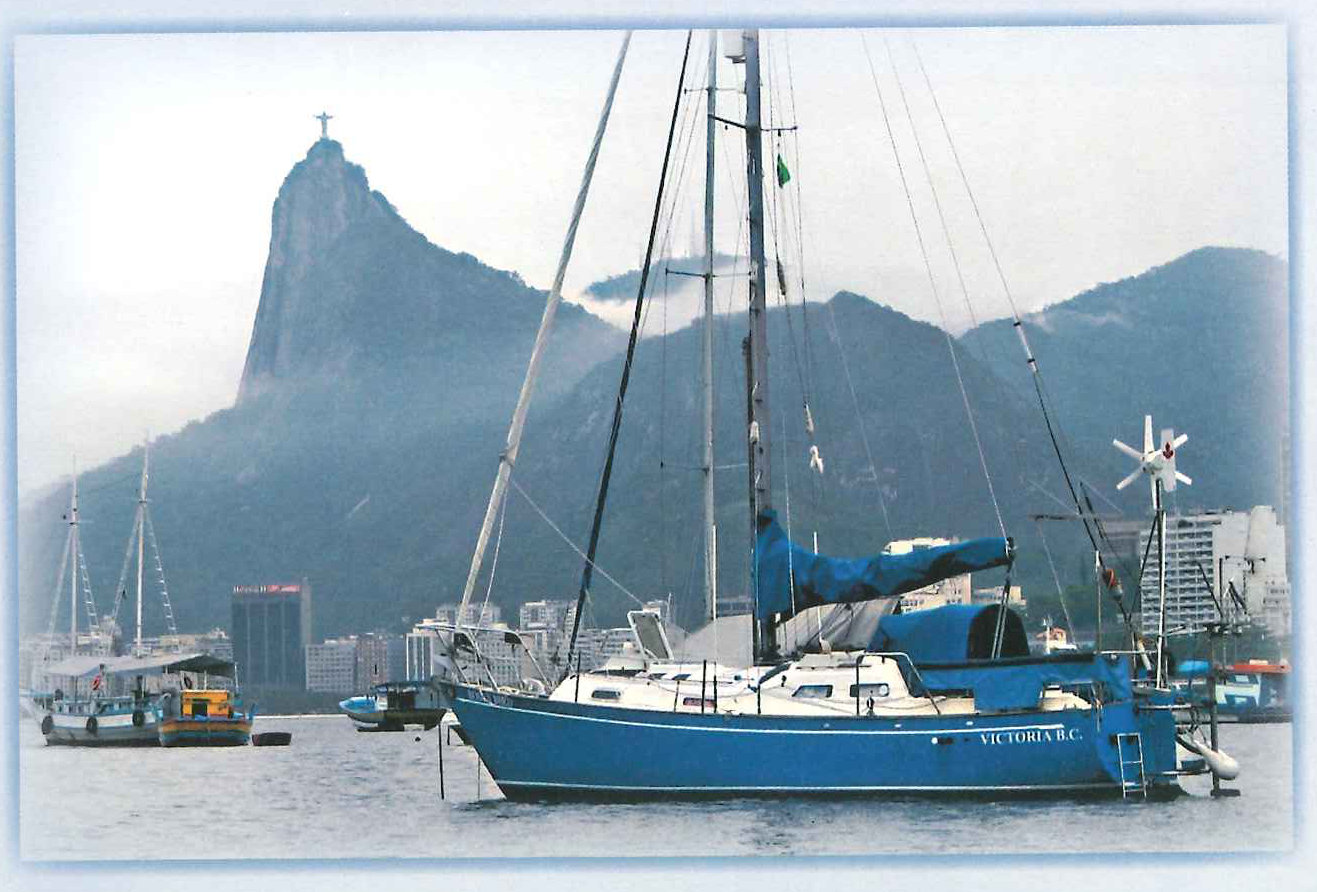
2200 miles to Rio. It was supposed to be the most spectacular landfall imaginable: samba (not country…) the soundtrack, the Sugarloaf and the Corcovado catching the first rays of the dawn sun, blah blah blah. In fact as we approached Guanabara Bay we were having one of our perennial engine crises: that pleasant smell of wood burning was not wafting over from the fresh green hills of our Brazilian landfall but was the result of the water pump shaft deciding to quit cooling the engine and instead attempt to bore its way out of the teak engine casing and into the cabin. Crisis over, we did get to anchor under the Sugarloaf but, unable to lock our dinghy oars up when we went ashore, had to take them everywhere (awkward in bus turnstiles), including to the cinema; they were useful as a weapon when four youths attempted to mug the crew in Flamengo.
Mar del Plata, 1300 miles down the coast, was more relaxing, if less exotic; notwithstanding the recent economic crisis and the self-flagellating pessimism of Argentines today (in contrast with their insufferable arrogance in the seventies) this is also a safe place. We rediscovered the forgotten delight of Dulce de Leche and spent Christmas with four or five other cruising boats, telling each other scary sea stories. Ron, a 50-year-old red-blooded Australian divorcé cruising on Sula, had been rolled and dismasted 400 miles west of the Horn and had chilling photos to prove it. But he was much more shaken up, indeed traumatized, by an incident in the Mar del Plata Sheraton (which last November played host to George W. Bush for the Summit of the Americas; there are still tattered anti-American posters in the streets, portraying him as Hitler). Ron had invested three hours and the cost of several exotic drinks in a sensational-looking young Argentine señorita only for the barman to lean over and whisper in his ear, when the lady had gone to the washroom for a moment, “Esa señorita no es señorita, es un señor … ; Ron told the story at least six times during Christmas Day. We also made a nostalgic visit to St. George’s, Buenos Aires; sitting with the now Deputy Head, who had come out here as a fresh-faced rookie from Huddersfield 27 years ago, a year after us, was strangely unsettling, like revisiting an earlier lifetime. Like everywhere else you revisit after a long absence, we found the trains much more run down and inefficient than they used to be.
But you couldn’t really relax. The problem was that Mar del Plata is at 38 degrees south and our next destination, the Beagle Channel, at 55. The next 1200 miles would take us due south through the Roaring Forties and well into the Furious Fifties: the windiest waters in the world. Twice a day, sometimes three times, we would scrutinize weather charts, satellite photos and wind models on the Internet; initially we said we would leave as soon as there opened up a three-day window of winds from a tavourable direction, to be followed by contrary winds of no more than 30 knots. After about three weeks, we realized we would be waiting forever: we’d have to make do with two days from the right direction, and thereafter take whatever was coming. Soon after Christmas, we set off. But it was a false start. Only a few hours out, the wind shifted against us, and we ran for cover to an obscure grain-loading port called Quequen. At the tiny Vito Dumas Yacht Club we were treated like royalty; it had been years since they had last seen a foreign yacht. More nail-biting in the Internet café, which was decorated with movie posters; we always seemed to get the booth with the poster for The Day After, showing New York being overwhelmed by a tidal wave and hurricane-force winds.
Friday January 13th, and the forecast looked good again. Too bad about the date. 700 miles out we had weathered a couple of severe fronts and had spent several hours under bare poles (sailing jargon for running before the wind with no sails up at all and were off the tiny Patagonian outpost of Puerto Deseado, disproportionately famous as (a) the place where penguins were first seen by Europeans (Welshmen, in fact; Pen Gwyn = White Head); (b) a stopping place for Magellan, Drake and Cavendish; and (c) the place where the otherwise phenomenally skilled and careful navigator Captain Robert Fitzroy of HMS Beagle, with one Charles Darwin aboard, twice hit the same rock in mid-channel (marked on our chart as Beagle Rock).
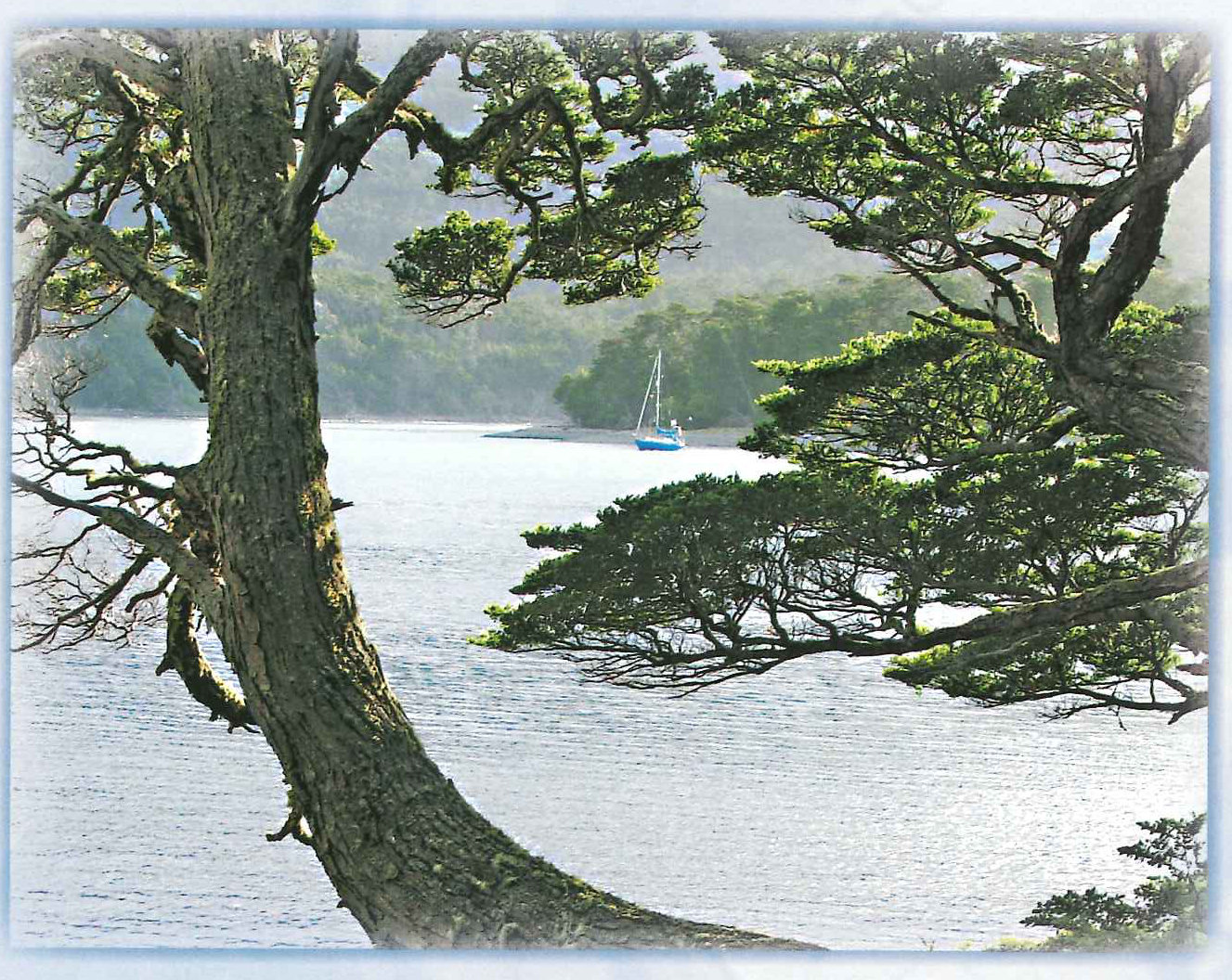
Here our engine started vibrating alarmingly —time for another pitstop. Fortunately, Coco the mechanic was on hand. In a month’s time, the 70-year-old Coco would be leaving for BA for heart bypass surgery, “ so we’d better get to work right now,” he said. Coco generally arrived at his workshop about noon, by which time there would be four or five people, complete with broken-down cars, awaiting him. Much of the rest of the day would be spent drinking mate and discussing the football results or politics. But eventually we did get things fixed – the day before Coco was due to get the bus out. The Furious Fifties were actually quite calm, not that we were too disappointed about this. We also successfully negotiated the dreaded Straits of Le Maire (or Straits of Nightmare, as The first snowfall of winter, Puerto Williams, Chile I found myself calling them) between the eastern tip of Tierra del Fuego and Staten Island. This short stretch of water is reckoned to have sent more ships to the bottom than Cape Horn, 70 miles to the southwest, the reason being that when the wind is opposed to the tide then, as the British Admiralty Pilot soberly warns, “ Vessels may here encounter standing waves of 10 m to 12 m.” There was a long period when, just out of the Straits, it looked as though wind and tide would wash us back in again (the crew was heard briefly to wonder whether we had enough drinking water to reach South Africa again, only 4500 miles east and dead downwind…) but we were able to edge our way around the toe of the big island and, at 1:30 on a rainy, cold and very dark night, let the anchor down in Spaniard Harbour, on the north shore of the Beagle Channel.
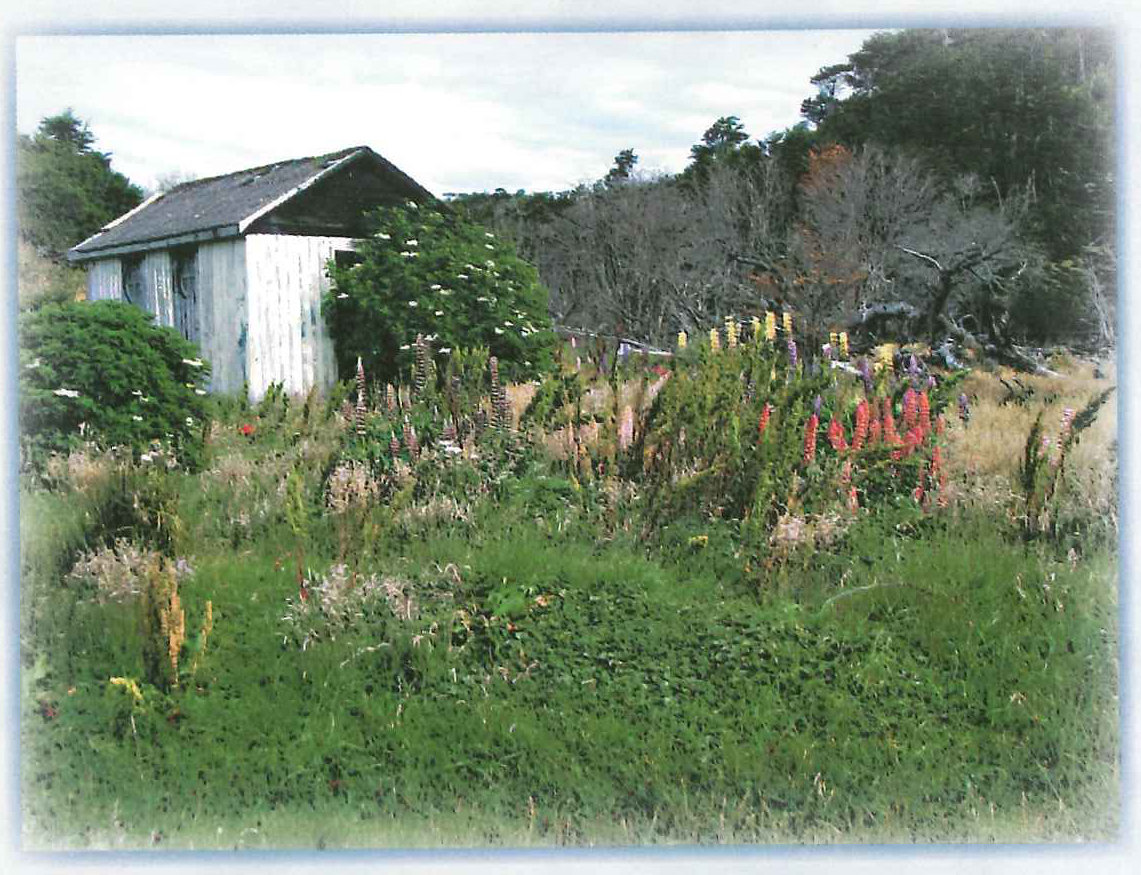
Spaniard Harbour has a macabre past: in the early nineteenth century, an Anglican missionary determined to bring God’s word to the people Charles Darwin described (inaccurately and unfairly) as the most miserable specimens of humanity on Earth, the fierce Yaghans, Ona and Aush, was driven here by his intended converts and died of starvation and exposure in a cave on the beach, in a state of mystical exaltation. It is still an evocative place. On shore there is only an abandoned estancia, where lupins run wild; when I landed through the surf a pair of stallions rushed towards me out of nowhere, then stood stock motionless a few feet in front of me; they vaguely remembered humans but were perplexed, still. For five days the wind blew hard out of the west and we hung tenuously on our anchor; when it shifted a few degrees to the north we moved on again.
We’re now at Puerto Williams, a tiny Chilean naval base 80 miles west up the Channel. Notwithstanding the claims of Ushuaia, this truly is the southernmost permanent human settlement in the world (discounting Antarctic bases); there are three shops, one restaurant and an Internet café. We’ll spend the winter around here, before heading North up the Chilean channels in the (southern) spring or summer. Our eventual destination is our home on Vancouver Island. The scenery here is as spectacular as we remembered: like BC or Alaska, with views going on forever, but with condors circling the jagged peaks of Navarino, and a lot more wind.
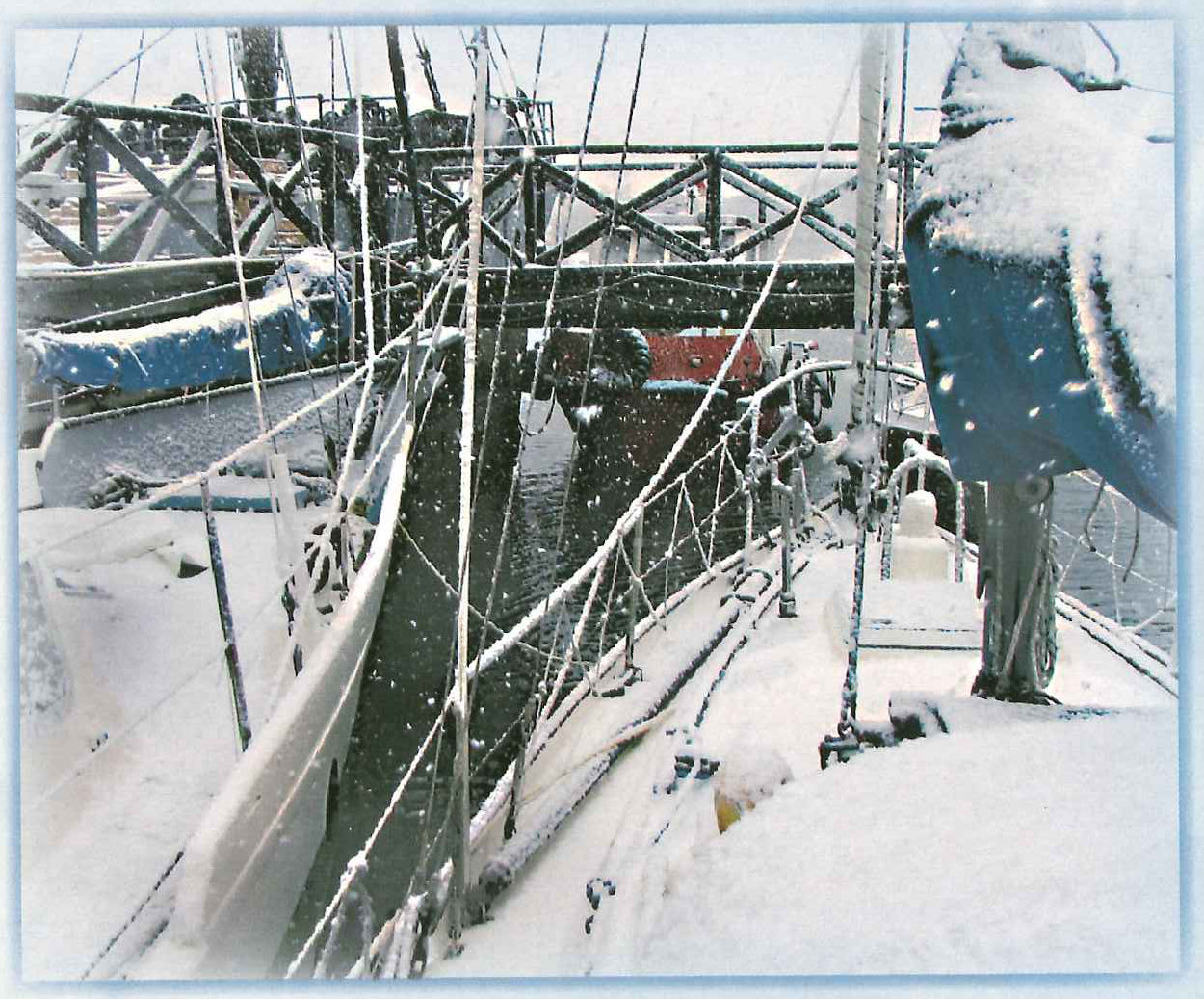
It’s only early fall but there is already snow in the wind; the forecast calls for 60 knots tonight. And we shiver too when we hear on the cruisers’ grapevine this week the news about Antoine, the friendly young French singlehander we met at Christmas in Mar del Plata, aboard his tiny Mini Transat 21, Moustique. Sailing together with another French boat, Agur, Antoine ran into a gale off the eastern entrance of the Straits of Magellan. Agur was rolled and dismasted but limped into Puerto Deseado under engine power. Neither Antoine nor his boat have been seen for five weeks now; he cannot have survived.
View the original scanned pages →
Originally published in bout de papier, Vol. 22, No. 2 (2006) — Summer 2006 // Été 2006, pp. 9–12. Read the rest of this issue →



