
bout de papier, Vol. 17, No. 4 (2000-2001) — Winter 2000/2001 // Hiver 2000/2001, pp. 25–28
Editor’s Note: bout de papier is pleased to present Notional Unity, a column about Canadian indentity as seen from the outside. Ben Rowswell, who has recently returned to DFAIT from Oxford, inaugurates this space with his thoughts on Canada as a post-modern nation, adapting to the changing natures of institutions and identities in a technological age. Ben presently serves as a policy advisor in the Federal-Provincial Relations Division at the Department of Foreign Affairs and International Trade. To submit an article for this column, please write to notionalunity@bout.ca.
Lucien Bouchard’s resignation in January ended one of the most turbulent decades in Canadian politics. Just more than 10 years ago, his departure from Cabinet and the death of the Meech Lake Accord signalled the beginning of an upheaval that many thought would spell the end for the country as we knew it.
Well, here we are a decade later, still in one piece. Given how gut-wrenching the national unity debate was throughout the previous decade, that should come as some surprise.
We’ve survived a second failed round of constitutional talks, the election of a sovereigntist party as Her Majesty’s Loyal Opposition, and six years of tension between a government in Quebec City determined to leave Canada and a government in Ottawa trying to prevent that from happening.
We’ve witnessed the unprecedented spectacles of the nation’s highest court pondering the process of secession, and of Parliament passing legislation governing how the country would go about dismantling itself.
Worst of all, we’ve lived through a referendum which produced no winner. Sovereigntists failed to convince a majority of Quebecers to loosen their ties to Canada. Federalists were left with a province in which almost half the population had declared they no longer wanted to be part of the federation.
The nineties were one calamity after another on the constitutional front. How did we survive them? How has Canada defied the odds and stayed together?
The answer may be as startling as it is obvious. Canada survived the nineties because most Quebecers continue to consider themselves Canadian. To be more precise, most Quebecers have two national identities. At last count, in September 1999, more than 75 percent of francophone Quebecers said they felt a sense of personal attachment to both Quebec and Canada.
That Quebecers have more than one identity is not much of a surprise. Everyone has more than one identity — as a member of their family, their religion, their town, their profession, and so on. At the end of the day, however, you’re only supposed to have one national identity. Nations are commonly understood as groups that either are or aspire to be independent. For an individual to feel attachment to two groups that both aspire to independence sounds like the political equivalent of multiple personality disorder.
God knows leaders on both sides have tried to convince Quebecers to shed one of their national identities in favour of the other. Ottawa tried through official bilingualism. Improve the lot of individual Quebecers within Canada and they would no longer feel compelled to press their collective demands as Quebecers. Or allow them to press their collective demands, as multiculturalism would have it, but only in the cultural field, so that the only legitimate collective political goals are those of Canadians as a whole.
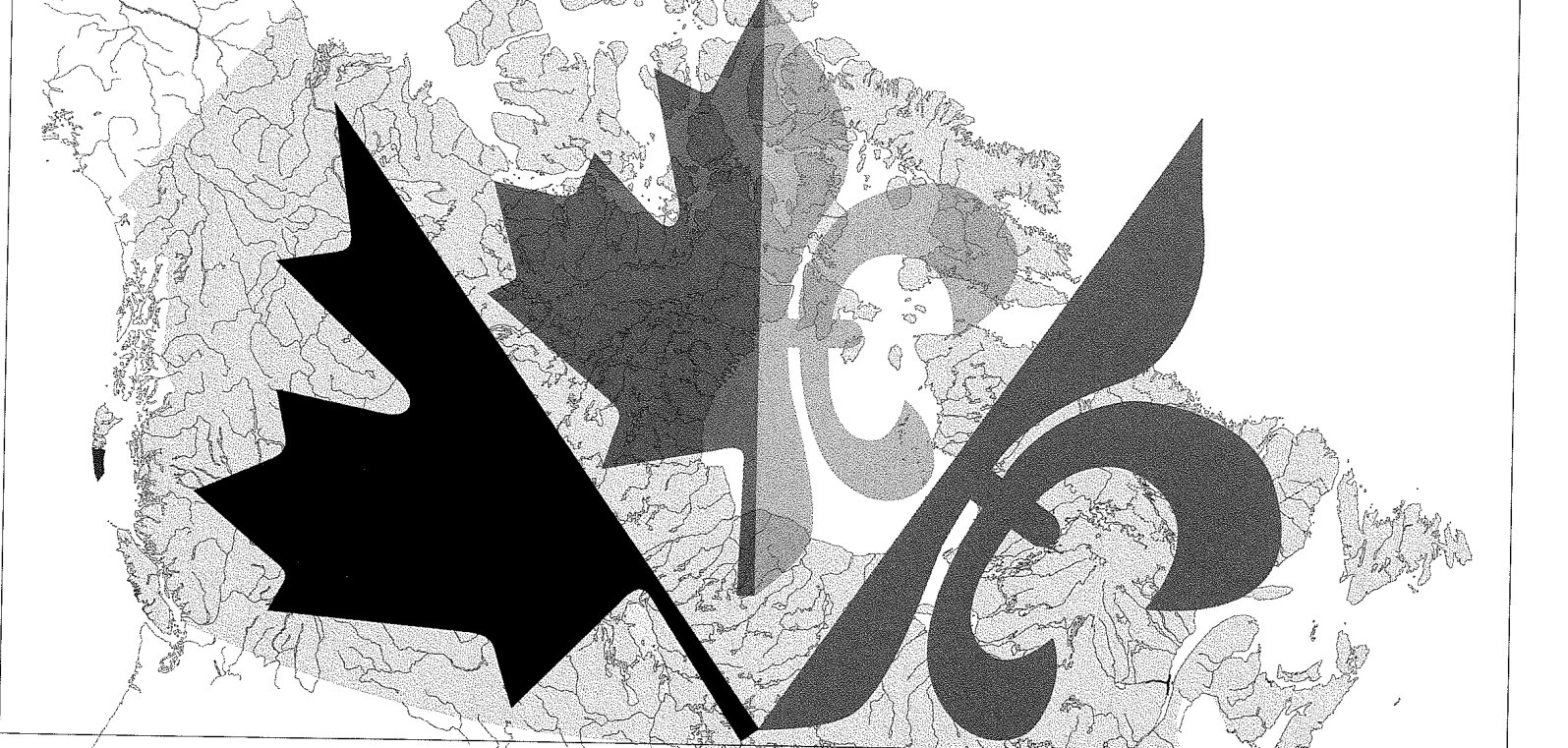
Quebec City tried to do the same by dwelling on the precarious state of the only French-speaking jurisdiction in North America, and by suggesting the only way to protect it was to jettison Canadian identity.
Both strategies failed to induce Quebecers to adopt a single national identity.
These twin failures bookended the last decade. Meech Lake may have been the last chance to forge a single conception of what Canada stands for in the minds of all of its citizens. Bouchard’s resignation was an open admission that the most charismatic leader in Quebec politics couldn’t foster a solitary Quebec identity. As he explained during his resignation speech, “Je me résous a ouvrir aux membres du Parti Quebecois la possibilité de se donner un chef qui saura mieux que moi… intensifier le sens identitaire du peuple québécois…” If the most charismatic leader in a generation could not convince Quebecers to abandon their Canadian identity, it’s hard to imagine who can.
The efforts to reduce the identity of Quebecers to a single attachment to either Quebec or to Canada flowed from the assumption that to have one national identity is to betray the other. This fear arises from accepting the central tenet of nationalism, that each nation is entitled to a state.
Suspend that assumption – something that is far easier to do in an age marked by the declining relevance of states — and it’s possible to understand how individuals can belong to more than one nation. If what nations aspire to is not necessarily independence but the right to pursue their own collective political goals, then to have more than one national identity is to aspire to the goals of different groups.
This is perfectly feasible as long as collective goals do not contradict one another. Let’s say, for argument’s sake, that the primary collective aspiration of Quebecers is to preserve the use of the French language in their public life, and that the primary collective aspiration of Canadians is the co-existence of many different cultural and linguistic groups within an harmonious whole. One goal need not contradict the other.
If there is a lesson to all the constitutional pain we lived through in the 1990s, it’s that plural national identities are here to stay.
Fortunately for us, that doesn’t seem to be the end of the story.
Sovereigntists failed to convince a ¿le national identity, leaders on both side Jnable to make Quebecers choose a sin-identity into account. Faced with lack of are slowly being forced to take the other support for independence, Quebec’s government is obliged to find ways of protecting the French language within the context of confederation. Faced with a population in Quebec that identifies strongly with Quebec City, the federal government is obliged to allow considerable leeway to provincial governments as it pursues goals sought by all Canadians.
As leaders adjust to the reality of plural national identities, they are pushing Canada’s longstanding experiment in group co-existence one step further.
First, with the Quebec Act of 1774 and the British North America Act of 1867, we learned how to tolerate different group identities. Then, with the advent of bilingualism and multiculturalism, we learned how to celebrate them as long as a single national identity prevailed. When it became clear that no single national identity was emerging, we had to go beyond multiculturalism to learn how to reconcile the collective political demands of different nations within the state.
It is the constitutional stalemate of the nineties that has forced this learning process on us. In passing the Clarity Act, Parliament implicitly accepted that the collective demands of Canadians do not necessarily trump the collective demands of Quebecers, if a clear majority choose (in a Haute couture
Vêtements sur mesure
Made to measure
Prêt-à-porter moyen et haut de gamme Tailles 4à 22 et “Petites” Quality ready-to-wear in sizes 4 to 22 and “Datitan” referendum based on a clear question) to leave Canada.
Likewise, as the goal of independence recedes sovereigntists are forced to accept that Quebecers continue to express collective political demands not only as Quebecers but as Canadians as well.
In surviving the nineties, Canada has somehow found a way to have two national identities co-exist in the same political system. We cannot ignore the national goals of Quebecers because they are an important part of what Canada is. And Quebec cannot ignore the national goals of Canadians because Canada is an important part of who they are.
All this is little comfort to Canadians weary of the struggle of the past decade. It is nevertheless of increasing interest to outsiders facing similar challenges. This is unfamiliar territory for us Canadians. Others interested in our political problems?
Yet countries writing new constitutions are seeking out Canadian constitutional lawyers to tap into our experience in reconciling group demands. Others are poring over the 1998 Supreme Court ruling. Federal governments have taken to the Canadian-sponsored Forum of Federations to share their experiences with similar problems.
Canada, after all, is not alone in seeking to preserve its existence as a nation as other nations within make competing demands on individual identities. Many nations are under threat from below as secessionist movements proliferate. Nations in Europe are under threat from above as European Union integration generates a new, continental identity. And everyone worries that the global spread of American culture will homogenize identities the world over.
In the age of globalization, countries search for ways their national identities can co-exist with other demands on individual loyalties. Having survived an advanced case of plural national identity, Canada is a test case for the political dynamics of globalization.
What is it that has allowed Canada to maintain a single political system with at least two national identities? Granting each national group its own government with substantial powers to protect identity? A mutual commitment to avoid violence and the polarization it causes? A common language of democratic rights? A cultural predisposition to group co-existence, that element that Quebec historian Jocelyn Létourneau calls “canadianité?”
The jury is out, but one thing is clear: the lesson of the past decade’s constitutional crisis is that plural national identities are here to stay. That Canada has survived suggests that it is possible for one political system to accommodate them.
The reference to Dr. Strangelove in the title may be facetious. There is not much to love in the national unity debate, but at least something useful may come from all the worrying.
View the original scanned pages →
Originally published in bout de papier, Vol. 17, No. 4 (2000-2001) — Winter 2000/2001 // Hiver 2000/2001, pp. 25–28. Read the rest of this issue →



