
bout de papier, Vol. 25, No. 3 (2010) — Fall 2010 // Automne 2010, pp. 13–15
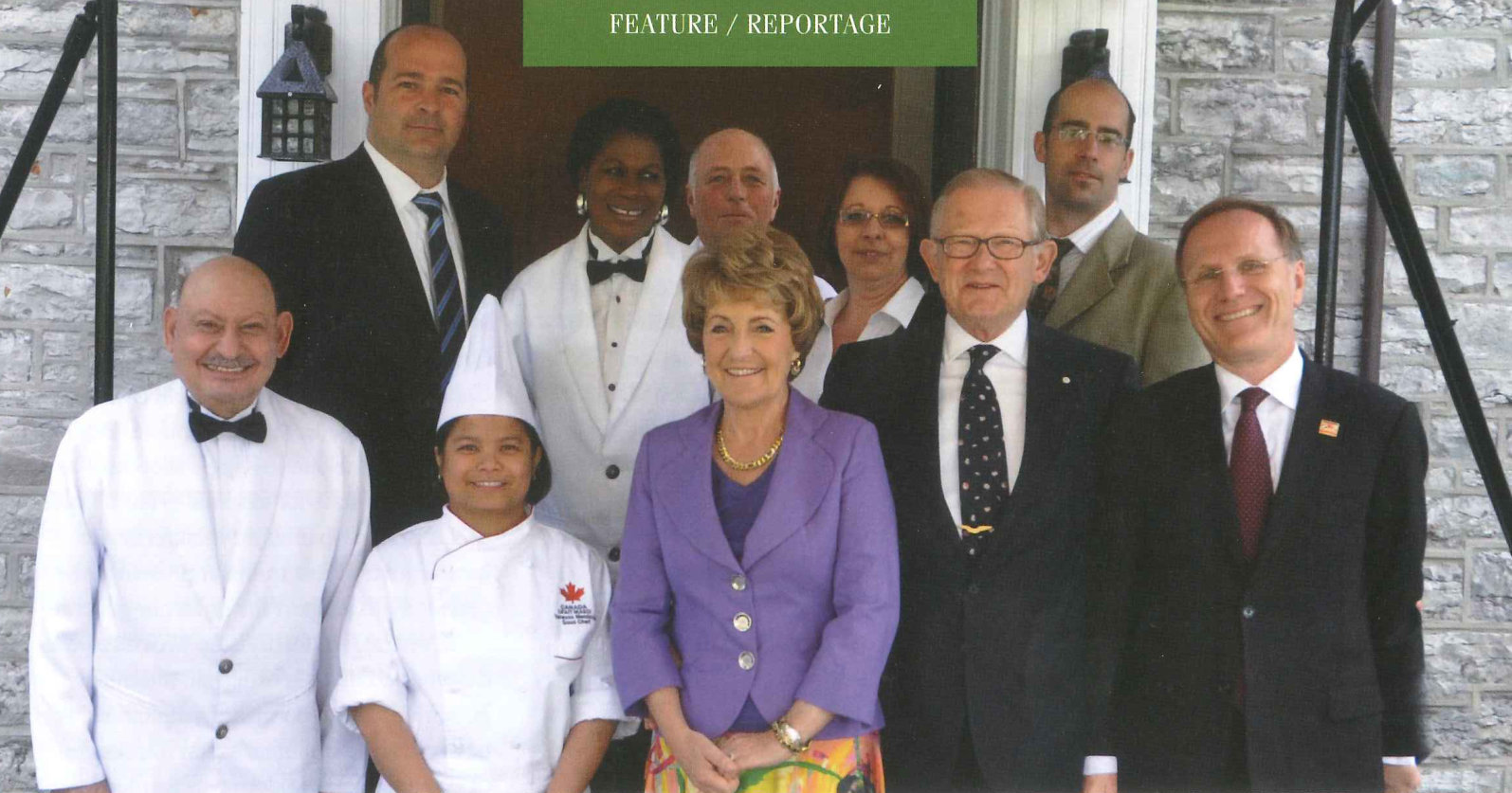
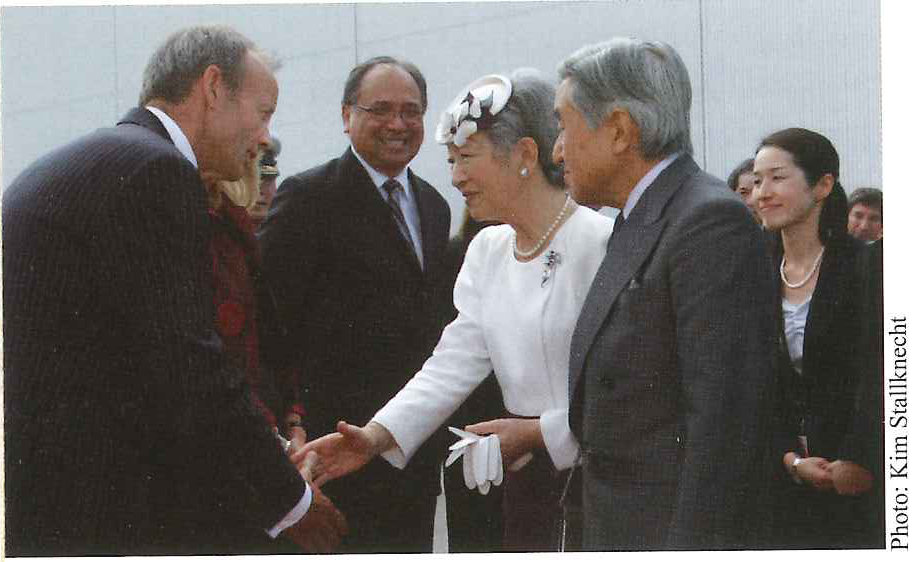
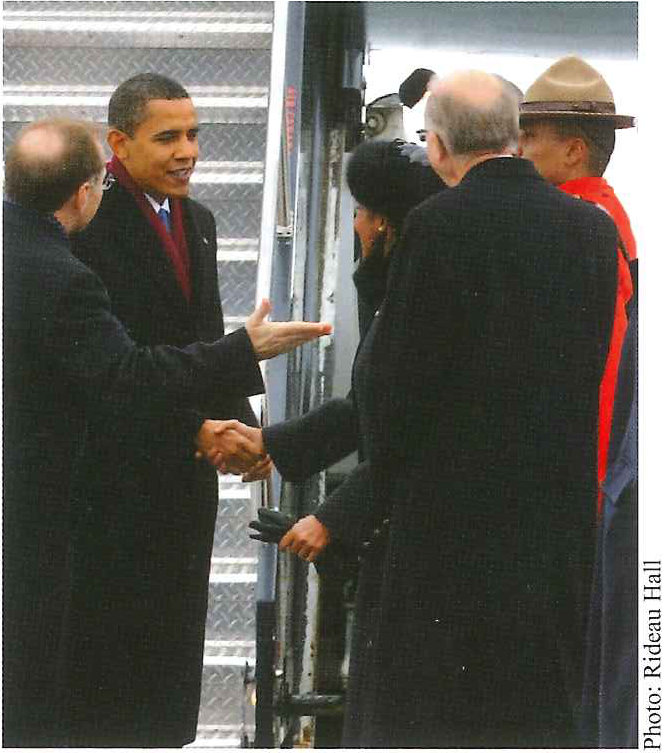
bout de papier is pleased to adapt and reprint an extract from Habits of Hospitality: A Short History of the Origins of the Protocol Division by Fred McEvoy, an Ottawa-based historian and writer, and Greg Donaghy, the Head of the Historical Section at DFAIT. The original pamphlet was released in April 2010 to mark DFAIT’s centenary and the renewal of the hospitality facilities of the ninth floor of the L.B. Pearson Building. Extract and photos are courtesy of the authors and of Robert Peck, a former Editor of bout. Robert Peck was our 22nd Chief of Protocol, an office that — inter alia — has a proud tradition of shaping those critical first and last impressions of Canada for many notable foreign visitors and countless diplomats. Protocol matters fundamentally, says our former Chief of Protocol: it is the welcoming face we turn to the world.
The outbreak of the Second World War had greatly increased the workload at External Affairs, which one contemporary observer described as a “beehive of unorganized activity”. Under-Secretary of State Norman Robertson reorganized External Affairs in 1941 creating a new unit, the Diplomatic and Economic Division. Howard Measures was in charge of protocol in this clumsy entity, reporting to Assistant Under- Secretary Laurent Beaudry.
A statement of duties prepared in September 1942 reveals the broad range of Measures’ responsibilities: he was the formal point of contact for foreign heads of mission, and supervised their privileges, immunities and tax exemptions; prepared the Diplomatic List; issued various identity cards and certificates; established the precedence of the diplomatic corps and other officials; and, managed official calls by foreign diplomats and departmental officers. Measures was also responsible for determining titles, anthems, toasts, decorations and medals, and the pedigree of the Royal Family, and for sending messages of condolence to foreign governments. His duties on the ceremonial side included the inauguration of the governor general, the presentation of letters of credence by foreign diplomats and the marshalling of the diplomatic corps at ceremonies. In addition, he organized the reception and hospitality for foreign visitors and delegates to conferences, met official visitors on arrival, and arranged banquets in their honour.
The most delicate issue that Measures confronted was the pregnancy of Princess Juliana of the Netherlands, who was given safe haven in Ottawa while her country was occupied by Nazi Germany during the Second World War. “A most capable and meticulous official,” in the opinion of his colleague Hugh Keenleyside, Measures “was also quite properly a man who performed his duties with the greatest gravity.” In order to ensure that the baby was born on Dutch territory, and so entitled to succeed to the throne, Measures arranged for the Princess’s residence, her hospital room, and even the car that would take her to Ottawa’s Civic Hospital, to be temporarily declared Dutch territory. As the pregnancy advanced, Measures became obviously nervous, to the amusement of his colleagues. When informed that Princess Juliana had given birth to a healthy daughter and that both were well, Prime Minister Mackenzie King reportedly replied, “Good, good; but how is Measures?”
En janvier 1945, une réorganisation du Ministère débouche sur la scission de la Division en deux entités distinctes, la nouvelle Division diplomatique relevant toujours de Beaudry. En octobre 1946, Beaudry étant encore une fois malade et peu susceptible de reprendre ses fonctions, le sous-secrétaire associé, Hume Wrong, saisit cette occasion pour réorganiser la Division diplomatique. « A mon avis, écrit-il, il existe une ligne de démarcation naturelle entre les aspects de ses fonctions qui concernent les cérémonies, le protocole, accueil, etc., et celles qui traitent des passeports, des visas, des déplacements et de questions connexes. » La Division du protocole est mise sur pied sous la direction de Measures. En sa qualité de « chef du protocole », ce dernier est responsable des missions étrangères et du Commonwealth à Ottawa, et des missions consulaires étrangères au Canada; des consulats canadiens à l’étranger, de l’accueil et des réceptions pour les visiteurs éminents, de la préséance, de la liste diplomatique, des visas diplomatiques, des messages de félicitations et de condoléances; des honneurs et des prix. L’ancienne Division diplomatique est abolie en janvier 1947 et remplacée par deux nouvelles entités : la Division du protocole et la Division consulaire.
Les réalisations économiques et militaires du Canada pendant la guerre et sa notoriété croissante sur la scène mondiale d’après-guerre ont engendré un fort sentiment de nationalisme à l’échelle du pays et aux Affaires extérieures. Measures, qui partage ce nouveau sentiment de fierté nationale, fait valoir que « le temps est venu de se demander si les usages protocolaires canadiens…conviennent au Canada d’après-guerre, compte tenu de la multiplication des ambassades — une représentation de niveau plus élevé — et de l’importance et des responsabilités du Canada à l’approche de la seconde moitié du XX siècle ». Bien que le nombre de missions étrangères et du Commonwealth à Ottawa ait passé de 6, en 1938, à 26, en 1946, la pratique protocolaire canadienne, une adaptation de la pratique britannique, n’a pas suivi l’évolution du pays. Measures propose de comparer les usages protocolaires en vigueur à Ottawa à la pratique britannique, américaine, française et, peut-être, belge ou néerlandaise d’après-guerre. Le but n’était pas de faire adopter par le Canada les pratiques du « vieux monde », mais de doter Ottawa d’un protocole ayant son « caractère canadien » propre.
Measures headed to Europe in the summer of 1947, visiting London, Paris, Rome, Vatican City, Brussels, The Hague and Berne. This was no junket: the trip through war-ravaged Europe was characterized by “the headlong speed of the itinerary, the exhausting heat, the lack of safe drinking water, and the general discomfort of European travel.” Measures himself was exasperated by “the leisurely habits of European officials,” who studiously avoided morning appointments. He devised a detailed written questionnaire to short-circuit “the tendency of European officials to expound in a grand manner on subjects of interest to them.” Despite these problems, he found the tour of great value. He was particularly struck by the informality of King George’s reception of credentials from foreign diplomats; he did not sit on a dais, and held a brief, informal conversation with his visitor. Neither gave a prepared speech. Canadian practice was stiffer and much more formal, and Measures recommended that the more relaxed British style be adopted. This was done in January 1948.
Later that year Measures considered the related question of whether a Canadian Cabinet minister needed to be present when credentials were presented. This was the case in most of the European capitals he had visited. Conscious that Canada’s governor general was still British, Measures argued that the presence of a Cabinet minister would emphasize “the Canadian character of an occasion on which the diplomat brings a Letter of Credence addressed, not to the King of Canada but to the King of Great Britain, Ireland, and the British Dominions Beyond the Seas.” Mackenzie King’s successor as secretary of state for external affairs, Louis St. Laurent, also thought it important to have a government minister present at the ceremony to support the governor general.
In setting up his division Measures was determined that his office should make a good impression on visiting diplomats. A newly arrived diplomat’s first impression of Canadian officialdom was formed at the meeting with the chief of protocol. Measures insisted that his reception room be “easily accessible and well furnished.” Moreover, it should be close to the offices of the minister and under-secretary, on whom the diplomat would also call. Insisting that a wall in his office be repaired, Measures underlined that this was “the first room that these foreign Diplomats will enter in a Canadian Government building. First impressions as you know are most important, and I must confess that the wall of this room will give a false notion to these Diplomats of the conditions in which Canada does its business.” Protocol offices he had visited when abroad “were housed in handsome and well appointed rooms,” with good furnishings and artwork. He wanted to acquire paintings from the National Gallery but feared the gallery’s director “might balk if he saw room 101 in its present state.”
Measures s’inquiète aussi du niveau de dotation de la nouvelle division. Il se voyait comme « une sorte d’agent de terrain que ses fonctions obligent à s’éloigner fréquemment des activités courantes de la division pour avoir des entretiens avec des chefs de missions diplomatiques, [et] organiser des événements d’hospitalité et y assister ». En son absence, il doit compter sur un second compétent, appuyé par un effectif adéquat. Confronté à la pénurie de personnel, Measures écrit dans une note datée de mai 1947 qu’il vit « dans la crainte quotidienne que la Division du protocole ne soit pas en mesure de s’acquitter convenablement de ses taches actuelles et de se préparer pour ses responsabilités futures. Nous faisons de notre mieux, mais j’appréhende l’omission ou l’exécution défaillante d’une tâche qui pourrait attirer à la division ou au sous-secrétaire des commentaires ou des critiques défavorables.
À la fin des années 1940, Measures et la Division du protocole sont bien établis. En fait, avec la publication, en 1947, de son guide à succès, Styles of Address (dans lequel toute une génération de jeunes diplomates ont puisé le bon usage pour toute occasion), Measures est à l’apogée de son influence. Son principal casse-tête demeure le partage flou des responsabilités entre le ministère des Affaires extérieures et le Secrétariat d’État.
Serious trouble finally erupted in July 1950 over Mackenzie King’s state funeral, which was the secretary of state’s responsibility. That department, however, lacked an officer with the capability and experience to manage the funeral, and Measures was summoned from vacation to take charge of the arrangements. The under-secretary of state for external affairs, Arnold Heeney, recommended the transfer of Measures and some of his responsibilities to the secretary of state’s department in an effort to resolve the lingering jurisdictional difficulties. This step would relieve External Affairs of some, but not all, ceremonial and hospitality duties.
Endorsed by the minister, Lester B. Pearson, the proposal sped through Cabinet and came into effect in January 1951. A new unit, Special Division, was created in the department of the secretary of state, which now took charge formally of precedence, state functions and ceremonies, conferences and formal government meetings. These would now be the sole responsibility of the department of the secretary of state but “without prejudice” to the protocol role of External Affairs in the field of international relations.
This was clearly a recipe for further jurisdictional strife. “Close and continuing liaison between our two Departments,”
Heeney wrote the deputy minister in the secretary of state’s department, “will be necessary in the whole field which we have been discussing.” Nevertheless, the Cabinet’s decision established a better-defined and more mature institutional framework for the government’s protocol operations, inside and outside the department of external affairs.
Un autre fonctionnaire d’expérience, H.F. Feaver, que ses collègues appelaient « Temp », un surnom remontant à l’époque de ses études secondaires, succède à Measures à titre de chef du protocole. Avocat de formation, Feaver entre au Ministère en 1930. C’est l’un des premiers agents du service extérieur. Selon l’opinion de Keenleyside, Feaver a géré « l’épineux dossier » du protocole « avec une touche de génie ». Feaver est du même avis que Measures : comme la pratique diplomatique a évolué au fil des ans et qu’elle varie d’un pays à l’autre, il n’est pas nécessaire que le Canada suive l’exemple de qui que ce soit. Le protocole canadien doit plutôt « être élaboré de façon à exprimer, dans la mesure du possible, les caractéristiques canadiennes…la simplicité et l’amabilité du peuple canadien.
Feaver aussi doit composer avec le partage vague des rôles entre les Affaires extérieures et le ministère du Secrétariat d’État. I notera, en avril 1953, que « l’expérience de cet arrangement a mécontenté le sous-secrétaire (maintenant Dana Wilgress). Il a donc confié le gros de cette responsabilité a la Division du protocole, laquelle n’a tout simplement pas un effectif suffisant pour assumer ce fardeau. » Le ministre Pearson partage ces préoccupations et, en août 1954, il propose de mettre sur pied un comité interministériel sur l’hospitalité gouvernementale, dont le travail serait coordonné par un secrétaire puisé parmi les collaborateurs de Feaver à la Division du protocole.
En février 1955, un mémoire au Cabinet justifie la création de ce nouveau comité. Notant le manque de coordination en ce qui concerne les invitations aux visiteurs étrangers et aux membres de la famille royale, il est recommandé que le nouveau comité supervise et coordonne l’hospitalité, tout en surveillant de près les dépenses. Les Affaires extérieures se voient confier un rôle influant au sein de ce comité, puisque celui-ci relève de son ministre et est présidé par son chef du protocole. De plus, le secrétaire du comité provient également du Ministère. Parmi les autres membres du comité, certains sont détachés du bureau du gouverneur général, du cabinet du premier ministre ou du Bureau du Conseil privé, ainsi que du ministère du Secrétariat d’État.
A half-century after its creation, Canada’s department of external affairs was finally equipped to assume fully the nation’s protocol duties. The new arrangement was not perfect. Disputes over jurisdiction continued to plague relations between the department of the secretary of state and the foreign ministry. Staff shortages too were a frequent problem, once prompting the chief of protocol to complain that his division had been reduced to “a sweat shop.”
Still, the basic and essential infrastructure for meeting Canada’s protocol obligations was now in place. External Affairs had a functioning protocol office, and there was an agreed division of labour with the secretary of state’s department and an established interdepartmental mechanism for resolving conflicts and coordinating activities. External Affairs was ready, in the words of a future undersecretary, Marcel Cadieux, to assume the “habits of hospitality and of kindness characteristic of a new country.”
View the original scanned pages / Voir les pages numérisées →
Originally published in / Publié à l’origine dans bout de papier, Vol. 25, No. 3 (2010) — Fall 2010 // Automne 2010, pp. 13–15. Read the rest of this issue / Lire le reste de ce numéro →



