
bout de papier, Vol. 11, No. 4 / Vol. 12, No. 1 (1995) — Spring 1995 // Printemps 1995, pp. 33–43
Le sous-ministre adjoint consulte sa montre. Il attend toujours les nouvelles du Haut Commissariat à Kenya sur les soeurs disparues au Rwanda. Il est quatorze trente dans la plupart des postes de sa région. Les priorités canadiennes dans la région sont au nombre de quatre :
• appuyer le processus de paix au Moyen Orient;
• la promotion des droits de la personne, la promotion du développement démocratique et la résolution pacifique des conflits dans la région de l’Afrique occidentale, de l’Afrique centrale et l’Afrique du Nord.
• appuyer le processus de transition et la reprise des relations commerciales avec l’Afrique du sud.
• l’expansion du commerce en Afrique et au Moyen Orient.
Le 2 juin se déroule…
••. « Oui, nous sommes en train de mettre à jour des Questions et Réponses sur le Rwanda. Nous avons eu la confirmation que les forces gouvernementales ont tiré sur notre Hercule C-130 qui a immédiatement redécollé sans dommage. Une nouvelle trêve devra être renégociée avant la reprise du pont aérien. bout de papier •.• Le Bureau de presse veut une ligne de presse sur les affrontements de la nuit dernière entre Israel et le Hezbollah qui ont fait 50 morts.
… “We better get a hold of our High Commissioner and tell him that Prime Minister Chrétien has signed the letter to President Mandela inviting him to the Commonweath Games in Victoria. The PMO and the Minister have agreed that we should release the letter as a press release. Our mission will want to inform the South African government.”
… Ily a une discussion avec le Président du National Council on Canada Arab Relations pour convenir de la suite à donner à la réunion de la veille entre le Ministre et la communauté canado-arabe. •.. Le vice-président de Canadian Occidental Petroleum discute des opérations de sa compagnie au Yémen à la lumière des derniers développements de la guerre civile dans ce pays.
•.• Nairobi requests additional funds to meet the extra costs associated with the Office of the Honorary Consul in Burundi. The closure of the office in Rwanda has increased the demand for services in Bujumbura.
… Algiers updates earlier reports on the security situation and the attacks on foreigners. The one hundred resident Canadians are still safe. sentant d’attaires ismaélien vient discuter la situation au Zaire.
••• Dar-es-Salaam reports they will run out of passport supplies by July as the influx of Canadian aid workers to assist with Rwandan refugees has increased demand significantly.
… The Immigration Services meets to discuss plans for the reopening of our mission in Beirut.
… The Finance Minister of Ghana is in Ottawa for discussion on Ghana’s economic reform program and how Canadian assistance can best play a role.
… Il y a une reunion de stratégie avec l’ACDI pour discuter du rôle du Canada dans le processus du paix au Moyen Orient, en particulier l’assistance canadienne en matière de logement d’urgence pour les sans-abris au Liban et l’assistance électorale dans les territoires palestiniens. •.. The Special Advisor on Middle East Refugees meets with the ADM to discuss the follow-up to the Multilateral Working Group on Refugees. Canada is the chairman and is active in trying to make progress on the issue.
… Les ministres approuvent la négociation d’un accord du Libre Échange avec Israel. Ottawa donne à la mission à Tel Aviv l’instruction d’inviter une équipe israélienne au Canada pour un premier échange de vues.
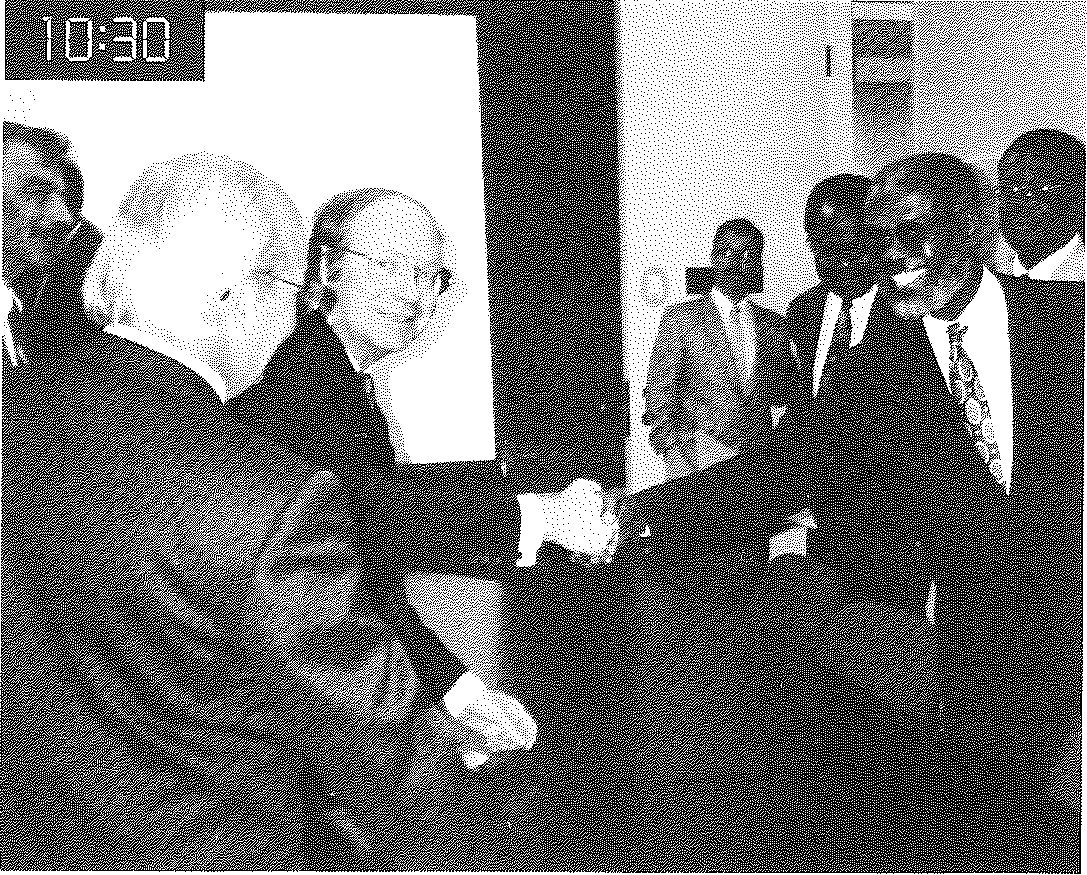
The Graduation Ceremony for the new Foreign Service Officers
… L’Ambassadeur du Niger sollicite et obtient une audience au cours de laquelle il fait part d’une démarche du corps diplomatique africain concernant la tragédie rwandaise. L’ambassadeur du Rwanda passe deux heures au ministère pour discuter la situation au Rwanda.
••• Voyageur Assistance seeks verification that a health clinic in Cameroon exists.
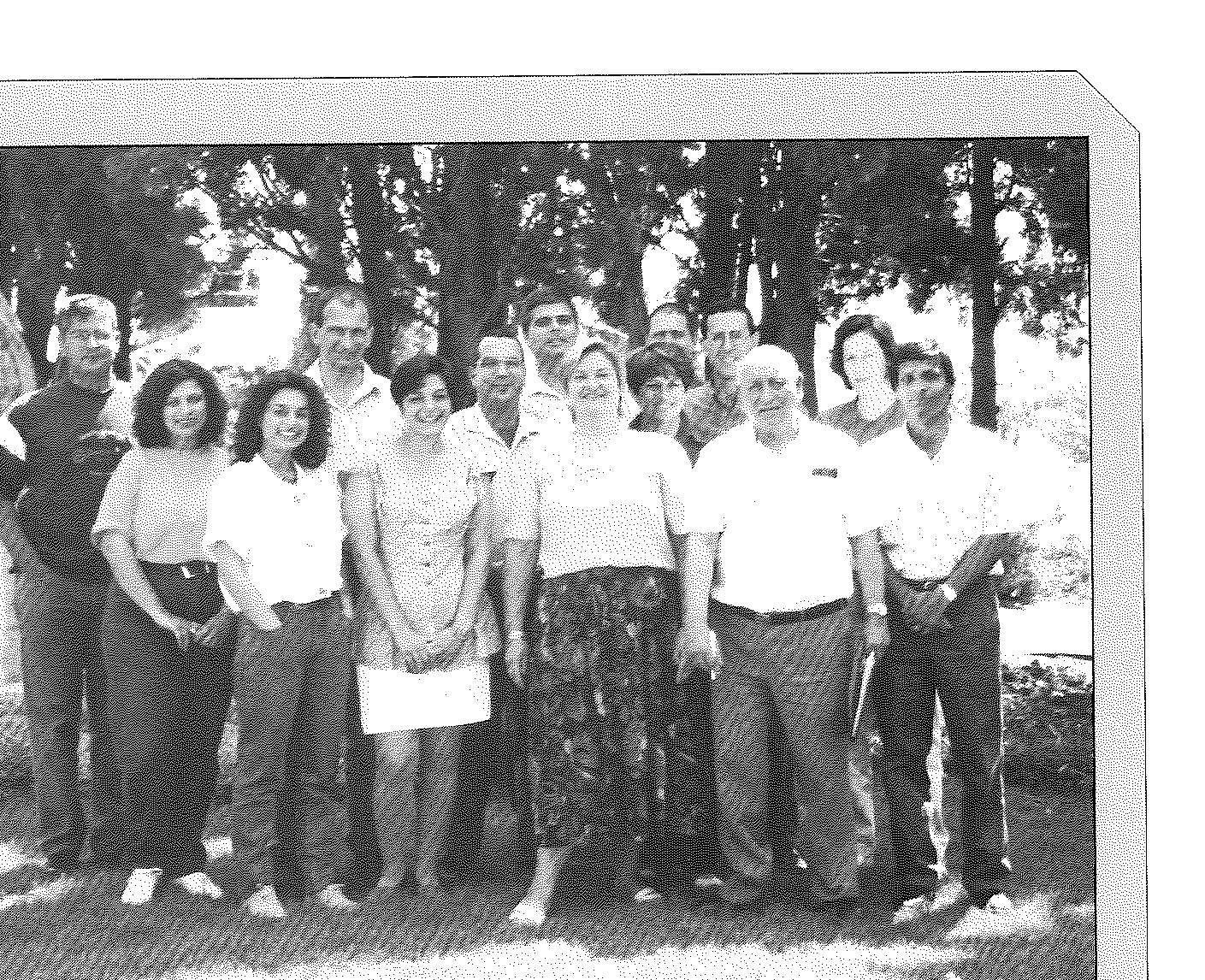
The senior management of the 19:00 two departments of the foreign service attend the graduation ceremony for the first graduates of the Canadian Foreign Service Institute. Created in 1992, the CFSI has the mandate to provide professional training to members of the departments of the foreign service. The Deputy Minister of Foreign Affairs speaks, “Your training is a manifestation of the need for a deeper and stronger set of professional tools at the outset of a foreign service career. A historical transformation is changing the role played by national states in international affairs. It will be a challenge to develop policies that balance domestic and international factors.” The Deputy Minister of International Trade and the ADM International Services Sector of Citizenship and Immigration also congratulate the graduates.
Certificates are presented to the thirty five new officers. They had spent a year in the classroom and on the job. Some had also travelled to other regions of the country or served in foreign missions. They will now start work in their respective streams (political/economic; commercial/economic; management/consular; and immigration).
A Picnic with the Prince
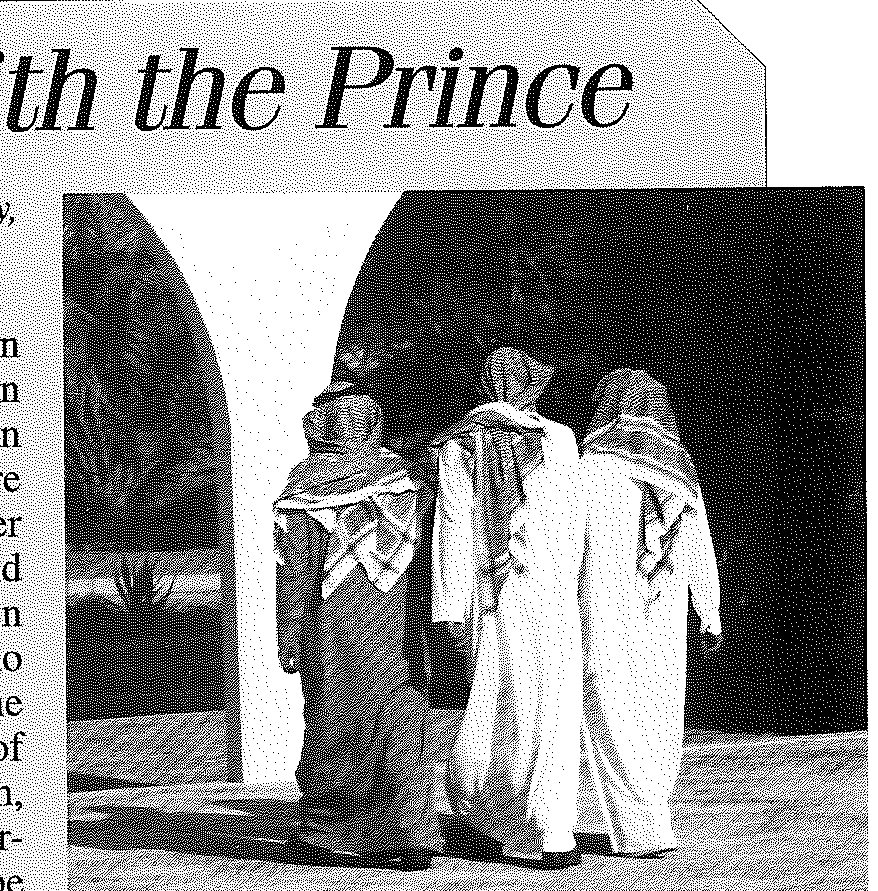
by Hartmuth Kroll, Canadian Embassy, Saudi Arabia he first day of the weekend in Saudi Arabia dawns better than expected. Temperatures are in the low 40s with bright sunshine. There had been some fear that the hot weather and blowing sand of the last week would continue, but things have settled down nicely, much to the relief of those who had accepted the invitation to visit the farm of Prince Faisal. Given the lack of variety in weekend activities in Riyadh, a Saudi picnic promised a pleasant diversion, and now it looks as if it will not be spoiled by the need to pick sand out of the hummus.
The convoy gathers at the Chancery around ten. We will be on paved, well-travelled road the whole way so four-wheel drive vehicles are optional, although the standard safety gear of water supplies and basic tools are not. Breakdowns outside the cities are not to be taken lightly in Saudi Arabia. The two and a half hour trip proceeds without incident, and we arrive to the warm greetings of our host and his sons. The Prince’s wife and daughters, as expected, are not present. We go for a walk to see the Prince’s racing camels, followed by a picnic lunch. In deference to our Western sensibilities, we sit at tables with cutlery, rather than in traditional Saudi style on rugs, using pita bread and fingers. The food is a mix of Middle Eastern – hummus, tabouli, and babaganoush with barbecued lamb, quail and goat – and Western – tomatoes and lettuce (all local produce) and steak. Dessert is the vartous kinds of fruit and sticky sweets. There are dates and melons, but also locally grown apples and grapes. Conversation ranges from the finer points of camel racing and the economics of farming in a desert climate to Québec and, among Canadians only, how long can a salad be left out in 40 degree weather without suffering irreparable harm. The heat of the day breaks by the late afternoon. We make a more extended tour of the farm. Centre pivot irrigation creates one kilometre circles of green alfalfa, barley and wheat scattered across expanses of desiccated grey-brown hardpan. It is becoming more difficult to pump the water necessary to grow crops. Wells that previously went down 100 metres to tap the aquifer now sink to depths of 1600 metres before striking water. The Prince expects that he will be forced to abandon the present farming methods within ten years. Dry as it is, the farm area is still more hospitable than the sandy wasteland which forms one border of the Prince’s holdings. It is very much the conventional western conception of the desert. Before the discovery of water and oil, the Prince’s family lived and prospered in this seemingly desolate and totally inhospitable expanse of sand by controlling trading routes.
As we walk up the nearest dunes, the Prince shows us the burrows of some of the desert creatures. Mice, scorpions and snakes huddle in the inadequate shade of the sere and seemingly lifeless brambles. Some of the more energetic, and younger, among us go a bit further, climbing to the next sandy ridge. They report that there are only more and bigger dunes to be seen with even less vegetation. For this group, cartwheels are the only appropriate means of descent. The rest of us, with sand in our shoes, watch only in amazement as they twirl their way down the slopes. What our hosts must have thought of this, is beyond imagining.
Rebirth of the Commonwealth in New South Africa
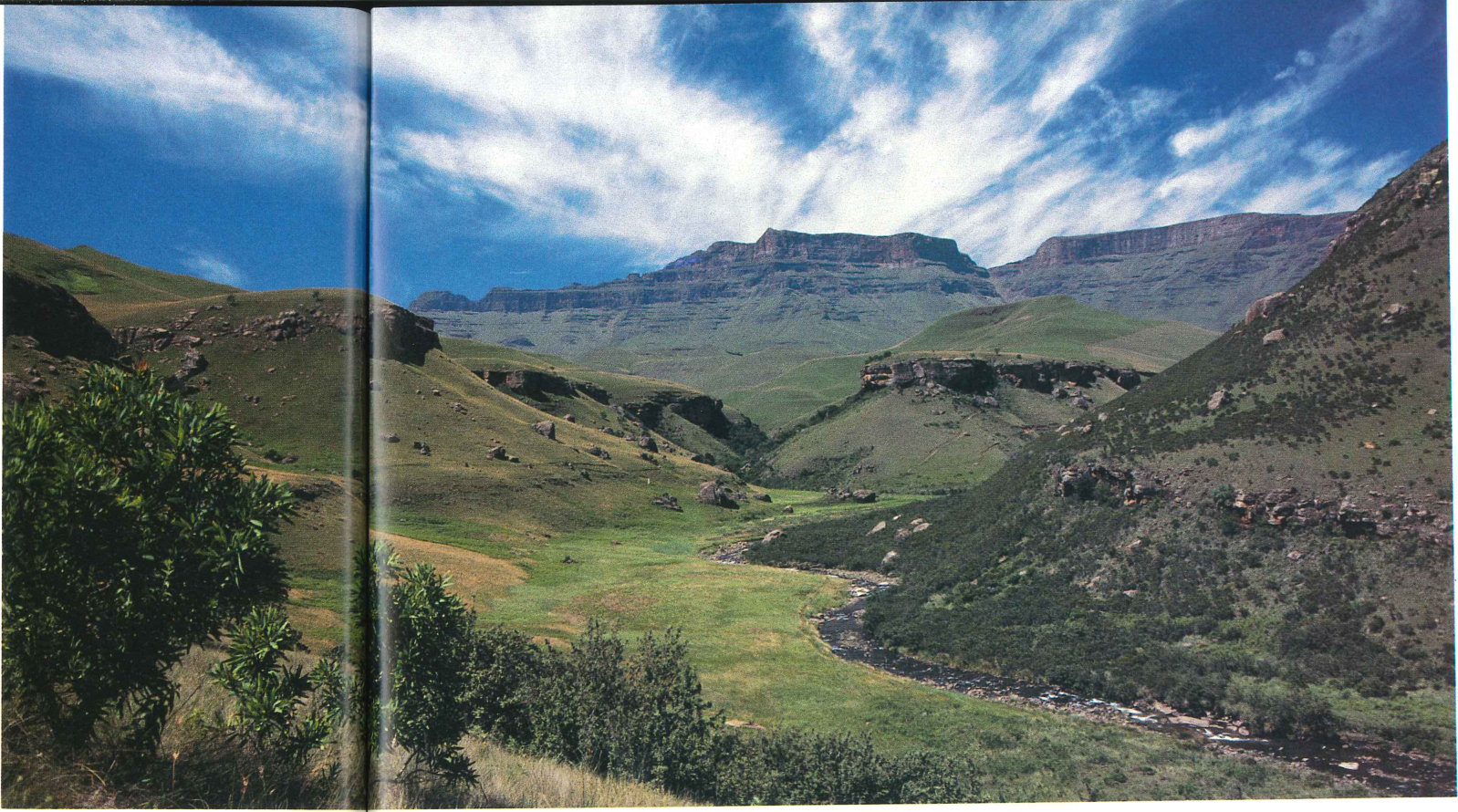
by Gary Pringle, Canadian High Commission, South Africa
South Africa changed its name.
June 1, a newly democratic South Africa rejoined the Commonwealth. Overnight, we have become a Canadian High Commission.
A journalist calling around Commonwealth missions on June 2 assures us that our receptionist is the first to get it right, “Good Morning. Canadian High Commission, may I help you?”. This reaffirms Prime Minister Diefenbaker’s seriousness when he promised that Canada would bout de papier always hold a candle at the window to help South Africa back out of the cold and into the fold!
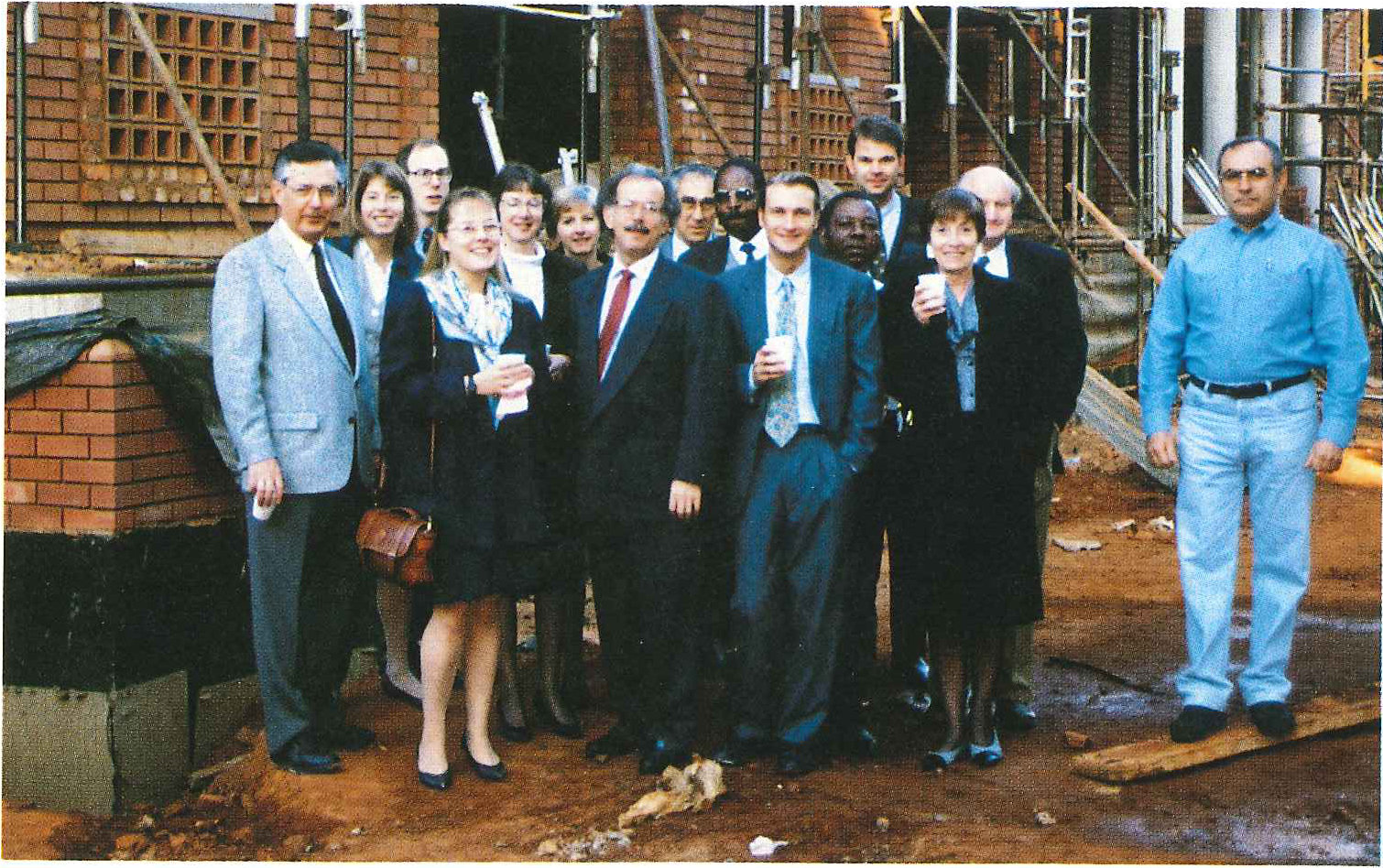
Rebirth of the Commonwealth and Birth of the Chancery June 2 starts with an early breakfast visit to our new stand-alone chancery, or rather its construction site. The new chancery is rising as a fitting testament to Canada’s confidence in the future of the new South Africa, this beautiful but still troubled land. However, such vaunted thoughts are far from the minds of those of us gathered among the jacarandas of a leafy suburb in the chill of another crystal-clear Transvaal winter morning. We are reassured that, despite appearances, we will move into our new premises on July 22. We return to the fourth and fifth floors of a neglected city-centre office block which we still call home. The Ambassador, er, High Commissioner, still getting used to his new appellation, has a meeting with the new Minister of Sports to discuss South Africa’s long awaited and much-anticipated participation in the Commonwealth Games, in Victoria in August. On behalf of the Commonwealth Secretariat and member countries, invitations are extended to a reception a few days later to celebrate South Africa’s return to the fold. The reception will be a great success. The Speaker of the National Assembly, the President of the Senate, the Deputy Foreign Minister, and Commonwealth Heads of Mission attend.
In the early evening, the High Commissioner alerts the South African DFA to a letter from Prime Minister Chrétien to President Mandela inviting him to attend the Commonwealth Games. We are hopeful Mr. Mandela will accept and return to Canada for the first time since his memorable visit in June 1990, this time in his capacity as President of South Africa.
The High Commissioner spends a large part of the day on administrative questions raised by the imminent, annual move to Cape Town for Parliament and on economic reporting. He examines the implications of the new government’s Reconstruction and Development Programme and drafts a report on eventual economic integration in Southern Africa from a South African perspective, a hot topic since the demise of apartheid. A lunch-time visit to the Italian Embassy for their National Day Reception and a surprise visit from the former acting-Secretary General of the National Union of Mineworkers and now a neophyte African National Congress MP provides an occasion to discuss the labour implications of the government’s economic programme and a possible visit to Canada.
An Embassy’s, er, High Commission’s Day The disbanding of the National Peacekeeping Force (to which Canada had provided four officers under Commonwealth auspices), and South Africa’s possible contribution to humanitarian relief in Rwanda are the hot topics of political reporting. An official of the University of the Orange Free State calls to express her thanks for Canadian support under the Dialogue Fund, a special fund geared to South Africa’s peculiar political circumstances (now discontinued) for a project on language policy. This is a sensitive issue also in South Africa, now with eleven official languages! A visit to the Nokuthula School in Alexandra Township starts the day of the development counsellor. A Canada Fund contribution has helped this school for the learning-impaired. Alexandra, ironically surrounded by some of Johannesburg’s wealthiest suburbs, is one of the townships most devastated by the pre-electoral political violence. It is a great relief to see signs of renewal and regeneration taking hold there now.
Back in the office in the afternoon, the development section assesses a proposal by the Canadian Association of University Teachers to provide assistance to the South African Union of Democratic Staff Associations. Payments are made for the Canadian Electoral Assistance Program under which 200 Canadian observers and technical advisers monitored the South African election. The government’s Reconstruction and Development Programme is discussed with the National Institute for Economic Policy. This discussion will assist in pointing to future directions of the Canadian aid program in South Africa under the vastly changed circumstances.
Canada has a sizeable immigration program in South Africa. The May to August period is the peak season for visitor visa applicants, and, on June 2, almost one hundred applications are received and processed. A report is prepared on various refugee issues in Southern Africa. There is another report on fraudulent documentation trends and developments in Southern Africa. Preparations are made for receiving applications from the 120 South African athletes, trainers and sports officials expected at the Victoria Commonwealth Games. Meanwhile, in Johannesburg, 50 kilometres from Pretoria, the Trade Office of the Canadian High Commission is beavering away promoting trade between Canada and South Africa. The office was opened in October 1993 by Minister MacLaren, following the lifting of Commonwealth economic sanctions. It has been flooded since then with enquiries.
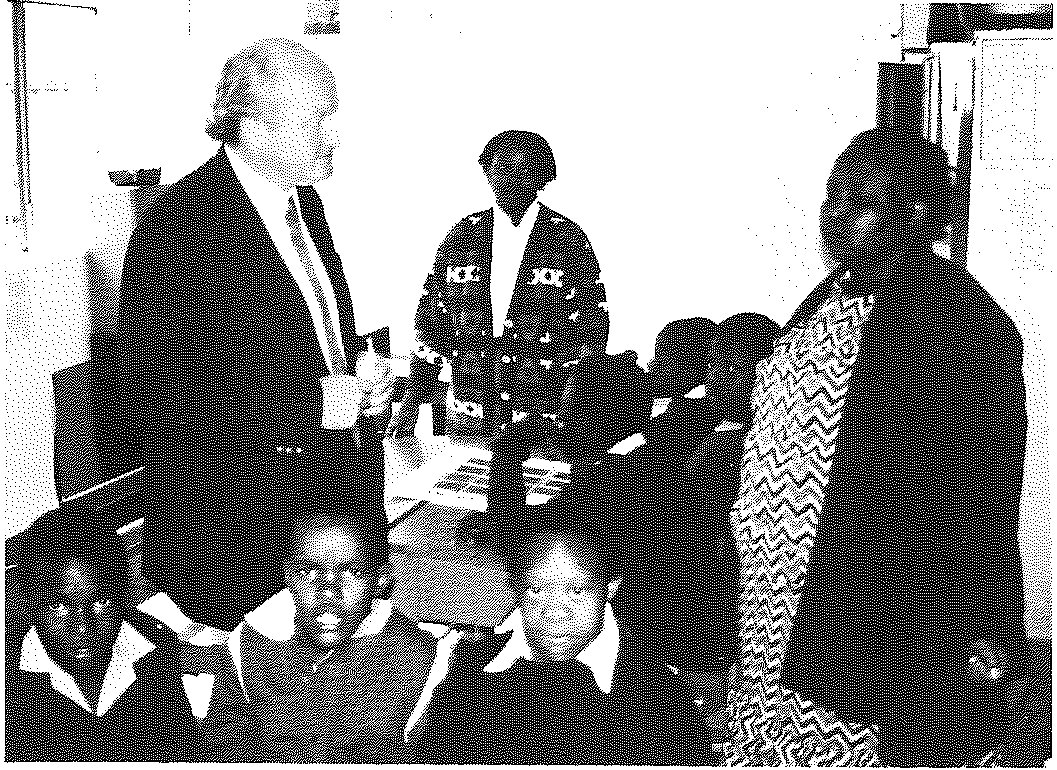
The morning starts with a breakfast presentation by Motorola, which is announcing their relaunch in South Africa after an absence of many years due to sanctions. However, it is the housing, not the telecommunications, industry which is tying up the Trade Office’s phone and fax lines on June 2. In the wake of the new South African government’s widely-reported promise of one million low cost houses in the next five years, every Canadian company from Vancouver Island to the Rock is eager to penetrate the market. The Trade Office tries to inject some realism into overheated expectations by explaining that while there should be some niches for Canadian companies, the South Africans themselves have not yet come up with a plan. All callers are promised that the Office will do its best to ensure Canadian companies gain access to the market. Steering our companies through South Africa’s highly politicised housing sector will take considerable diplomatic skills!
A trade commissioner spends her day accompanying officials from the Ontario Ministry of Agriculture, Food and Rural Affairs on a full program of calls on market opportunities. As the day progresses and South Africa’s first world veneer slips, she handles a variety of emergencies — such as a no-show car and driver – with aplomb.
The South African mission is complex – with its main cery in Pretoria, a trade office in inesburg and another chancery in Cape
1. It is an administrative nightmare. administration staff is fortunately up : challenge. Today, the mission adminive officer spends most of her day in ings with contractors, architects and ity surveyors ensuring proper buildontrol. If her administrative duties were not gh, she is also our consul. She finds to call the Attorney General’s office tain a progress report on an applica- ›y a Canadian prisoner’s spouse for sportation of her husband on com-paste grounds. There is no extradition “ between Canada and South Africa. pplication is going forward. The priswho has already served the greater if his sentence, may soon be reunited nis family in Canada. Liet Night in the New South Africa ligh Commissioner attends a business i in Johannesburg in honour of the ng Ontario agricultural mission. As priate for an agricultural mission, there tir sampling of South African wines, y with a view to international trade, Irse. Other day in the life of the Canadian natic mission comes to a chilly end : winter highveldt. Tomorrow will be is diverse or interesting. It, however, e one less fraught with violence than he case before South Africa’s many ins stood with infinite patience and y for their long-awaited chance to cast rote for justice and reconciliation. The or ward will be long, but South Africa’s reat Trek has finally begun.
Flight from Yemen
Two Somali families fleeing Yemen, two women and 14 children, arrive in Addis Ababa on Thursday, June 2. They had been accepted under Canada’s
“Women At Risk” program. They had arrived safely in the Eritrean port of Asab the day before; however, the Embassy had only verbal agreement that they would be allowed to depart Eritrea for Addis.
They are to leave for Canada in two groups via Lufthansa, one travelling straight through on Thursday, the other to follow on Saturday. There is a mad scramble to have Lufthansa inspect the documents. The German Embassy is closed for a holiday and there are fears that the German Border Police at Frankfurt Airport will not allow the refugees to board the plane for Toronto.
By the end of the day, their escort assures us that all is well. When I arrive at the hotel to meet the families prior to departing for the airport, the escort now informs me that he is in deep trouble. He has left the relevant documents at the Lufthansa office! A hurried call to Lufthansa. A representative notices them and will bring them to the airport.
I enter the airport through a different entrance than the group. When we meet up, the escort assures me again that all is in order. However, as we stand in line, he admits that he is becoming worried about their documents. “Worrying” is an inadequate response since he is supposed to have the documents. I rush to the parking lot and search for the Lufthansa representative. Ultimately, I get the papers and the group board their flight. The little ones, over tired and over excited, hide behind their mothers and older siblings, afraid to do more than stare at their first Canadian. Monday we receive a telegram from the sponsors, The Church of St. Clement, Eglinton. The two families have arrived safely in Canada.
Day 58 of the Rwandan Crisis
by Lucie Edwards, Canadian High Commissioner, Kenya tis one minute past midnight in Ottawa. It is eight o’clock in the morning in Kigali, Rwanda.
In Kigali…
The Deputy High Commissioner has been up for four hours. A particularly noisy mortar barrage and the crackling of machine guns have shaken him out of an uneasy sleep in three United Nations Armed Mission in Rwanda’s (UNAMIR) headquarters. The noise provides counterpoint to the eerie howls of the packs of dogs that prowl the deserted streets of Kigali and feast on the corpses. Following a rooftop briefing from the UN Commander, Canadian Major-General Romeo Dallaire, it is on to Faisal Hospital, where hundreds of Rwandan refugees shelter under UNAMIR protection. The closed Armoured Personnel Carrier does not give much of a view to the visiting Canadian contingent which includes the Deputy Minister of National Defence, the Deputy Chief of Defence Staff, and their aides. Theirs is a view through a periscope. For those who knew the city from before the civil war, Kigali has a surreal air. There is practically no one on the streets or in the green African fields surrounding the city. Abandoned vehicles, with their windows shot out, litter the approaches to the city centre. It is a city silenced, a silence periodically shattered by the sounds of mortars and machine guns.
At the hospital located close to the dividing line between government and rebel forces, the displaced cut up furniture for fuel wood to boil their meagre supplies of maize and lentils supplied by relief agencies. The adults seem resigned and apathetic. The many children who aren’t injured bounce boisterously around the wazungu VIPs.
Meanwhile back in Nairobi… The High Commissioner begins her day, as usual, with a briefing by the Commander of the Canadian air force unit on the situation at Kigali Airport. Yesterday the Canadian Hercules had been fired upon. There is a breakthrough this morning: for the first time since the crisis began, the airplane has been cleared to land at Kigali Airport for the entire day. Usually the clearance is only received a half an hour before the plane departs. There is a heads-up that a substantial number of wounded children will be evacuated in a few days.
This is an exceptionally busy day for the military contingent, who operate out of a conference room in the mission. A new unit had arrived the day before and the old 48-person crew will be leaving for Canada. Briefings at the mission and the airfield are scheduled for the entire day. In addition, there are three other military units in town: a military police team, investigating security in Nairobi; an administration team, looking for ways to improve living conditions and make some savings on the cost of the airlift operation; and a signals team. Our administration and security officers with the office manager work with the visiting missions all day, showing them the ropes at the airfield, the hotel, the bank, and the office. The immigration officer working on refugee cases for Rwanda receives some bad news about the convent of the Sours du Bon Pasteur in Kigali. At the request of the mother house in Canada, we had agreed to issue Minister’s permits for all the sisters to be evacuated to Canada. Unfortunately, due to fighting near the convent, the United Nations forces have been unable to carry out the evacuation. UNAMIR has now confirmed a report that the Interhamwe militia had invaded the convent and ordered all the nuns to leave for Western Rwanda. At a roadblock outside the city, all the Tutsi nuns had been separated and killed. We urgently try to find out the whereabouts of the surviving nuns.
The political officer has an appointment to meet the local representative of the Rwanda Patriotic Front (RPF) at nine o’clock. There are a number of issues on the agenda: the RPF battle plans and the prospects for a ceasefire; their attitude to the deployment of an expanded United Nations contingent; humanitarian assistance for displaced people; and Kenyan President Moi’s call for a regional summit on Rwanda on June 6. The RPF representative becomes very emotional and angry when he discusses the killing of civilians by the Hutu militia. The RPF had repeatedly warned the world community that the Hutu militia were plotting the massacre of the Tutsi population. As far as he is concerned, the UN intervention is too little, too late. The case of a Canadian nun, working in Northern Rwanda, whom we have been told has been denied permission to leave Rwanda, is raised. We warn him that Canada is deeply concerned and wants her exit facilitated as soon as possible.
In Kigali Mid-morning, the Canadian defence team sits down to a meeting with the Commander of the Rwandan government forces in the deserted Hotel des Diplomates. A few minutes into the discussion, a mortar round lands a hundred yards away. The whoosh sound of the secondary splatter effect injects a pause in the conversation.
And in Nairobi The development section working on humanitarian aid for Rwanda and Burundi is able to reach two Canadian nuns in Kabale, Uganda, who have recently visited the sister in Northern Rwanda. They confirm that she attempted to leave Rwanda for Uganda, accompanied by a number of Rwandan nuns and two infants who are destined for adoption in Canada. The entire party was blocked from leaving Rwanda. The RPF reportedly wants the Canadian nun to remain in order to run a large orphanage for victims of the civil war which they are setting up. The nuns further report that their colleague is sick. The High Commission immediately calls the International Red Cross office to arrange for a doctor to visit the missing Canadian sister. Advice is sought on the easiest means to evacuate her from Rwanda. An officer may have to go to Northern Rwanda next week to escort her to Uganda.
At noon, the High Commissioner hosts a lunch for the outgoing head of the CARE office in Nairobi. CARE is involved in the Ngare refugee camp in Tanzania, which has received nearly 300,000 Rwandan refugees. The Rwandans are still streaming into Tanzania at a rate of 5,000 a day. CARE is also considering beginning operations with Rwandan refugees in Burundi and in Zaire. The major topic of discussion is logistics: how to get food and medical supplies to remote localities along Lake Victoria and Lake Kivu. The conversation turns to the sanitation problems in large refugee camps. There are 40,000 bodies floating in Lake Victoria.
Lunch in Kigali The Canadian defence team is hosted by the Ghanaian contingent of UNAMIR at a deserted hangar on a silent airfield. From a motley collection of charcoal braziers and earthenware pots, a delicious meal of rice and chicken in Ghanaian peanut sauce is served. It is General Dallaire’s third hot meal since the crisis began on April 6. A large hole in the roof, a product of a direct mortar hit a few days before, provides a pleasant ventilation in the hangar.
Back to Nairobi By mid-afternoon the rush is on for the daily sitrep on Rwanda and Burundi. It is now going on to six thirty in the morning in Ottawa. Over lunch, the High Commission gets through to the UN Secretary General’s special representative in Burundi to get his assessment of the security situation in Northern Burundi and the state of play in the negotiations on the election of a new President.
The mission secretaries prepare themselves to “fly solo” on our communications equipment. Nairobi is soon to lose its only communicator and the two secretaries have been receiving training in taking over the communications function. The communicator is away today, and they are on their own. The tension rises in the office: will we successfully send the sitrep and all the other traffic to Ottawa? All systems are go. A sigh of relief goes up throughout the mission.
The Canadian Hercules touches down at Kenyatta Airport. The flight back from Kigali is relatively uneventful although, as usual, the Here spends the first 15 minutes on stomach-churning, tree-hugging evasive flying. The local bureau chief for Time grabs the Deputy High Commissioner’s helmet for a quick up-chuck, mercifully avoiding the flak jackets. The Canadian Deputy Minister of Defence and his colleagues are bundled into cars and taken directly to the Tanzanian High Commission. In the rush of departure, they had neglected to obtain visas for Tanzania. As a former Chief of Defence Staff of the Tanzanian Army, the Tanzanian High Commissioner retains a soft spot for Canada. He agrees to keep his mission open late and issue the visas on the spot. His military attache greets them on arrival, and he too proudly informs them he is a graduate of a training program in Chilliwack, B. C. They are on their way within minutes. Thank God for the Military Training Assistance Program! Five in the afternoon in Nairobi, nine in the morning in Ottawa, and the second shift begins. Ottawa is now awake, and clamouring for information. The High Commissioner fields a conference call from the Consular Division about the Canadian nun in Northern Rwanda. She also discusses the Deputy Minister’s visit with the Africa Branch. At the Official Residence, the kitchen puts on an extra effort for dinner, warned in advance that the military contingent has been subsisting on cold German army rations in Kigali. Tribute is paid to the outgoing Commander for his work during the consular evacuation and humanitarian airlift. Eleven o’clock, at the end of a long day, Nairobi goes to bed. It is three o’clock in the afternoon in Ottawa.
At five in the morning of the next day and nine o’clock in the evening in Ottawa on June 2, a development officer and the DND delegation are on their way to Wilson Airport, to catch the Federation of Red Cross airplane to Ngara refugee camp in Western Tanzania. The new air crew is also at the airfield in the pre-dawn chill, preparing for their first flight into Kigali. Another day in the life of the Rwandan crisis begins.
Accra by Day and Night
The Morning Drive Pulling out of the drive at seven in the morning, I notice that the Posts and Telecommunications work crews are still set up across the street. Not a good sign. They had confidently predicted on Tuesday night that the previous day’s theft of underground phone cable would soon be put right. The lead and copper stolen by the thieves is apparently transformed into fishing sinkers and jewellery. Final score: Small-scale industry and entrepreneurial spirit 2 Twentieth century 0.
Four out of five of the private buses I pass on the way to work bear homilies inspired by the Scriptures. I notice that the High Time Night Club behind the Police flats has been converted into The Tabernacle of Praise. Perhaps the moral high road is proving the more compelling after all.
It Happened One Night Four o’clock in the afternoon. The heat and humidity are at their usual high. As we drive our sweaty selves home, thoughts of cold beer and icy lemonade float in our minds. We arrive to find that there is no electricity and the battery of the generator is dead We wait patiently. As the night comes down, we settle for a romantic dinner of warm milk and peanut butter sandwiches by candlelight. By nine o’clock hopes for electricity have vanished. I decide on a cold bubble bath instead.
I put my candle on the bottom glass shelf and put one foot into the tub. Crack! Crash! The heat from the candle explodes the top glass shelf. It dumps its load of lotions and potions into the tub, smashes the water pipe which breaks and starts spewing water all over the bathroom. My husband rushes to my rescue, cuts his feet on the glass and tries to stop the water with a handful of towels. He yells at me get the night guard to turn off the water main. I search the dark for a scrap of cloth to cover my naked body.
A wet silence falls on the house, and we start mopping the floor — a pinch of African flavour for our dreams. And a note on the night table to buy flashlights and extra batteries.
Fin d’un premier voyage en Libye
par Caroline Guimond, l’Ambassade du Canada, Tunisie
DÉCORS : Hôtel El Méhari, Tripoli. Hôtel moderne à la « Intourist » des années soviétiques où le personnel a certainement été formé par un des Comités révolutionnaires du peuple. Chambre spacieuse où les traces du dernier occupant sont omniprésentes mais où, heureusement cette fois, l’air climatisé fonctionne car les vents du Sahara ont amené sur la ville une chaleur accablante de plus de 40 Celsius.
Il est sept heures. Je paresse un peu au lit, à tout ce que j’ai fait au cours des derniers profitant de ce moment de paix pour repenser six jours passés en Libye. Moi qui craignais un peu cette visite au pays de Kadhafi, me voici conquise par le charme de ce grand peuple du désert. Tandis que je rêvasse, mes collègues de Tunis entament leur journée à l’ambassade. Leur matinée se passera probablement avec le train-train habituel Dernier coup d’oeil par la fenêtre de ma chambre sur cette belle ville baignée par les eaux turquoises de la Méditerranée. Dans le port, une des principales voies d’accès depuis l’embargo aérien-pétrolier, cargos et traversiers continuent leur va-et-vient. Pour un instant j’oublie les tas d’ordures au coin des rues, les édifices décrépits et les portraits décolorés du « Grand Chef de la Grande Jamahiriya arabe libyenne du Peuple Socialiste », et imagine l’arrivée en rade des navires phéniciens, grecs, romains, égyptiens, turcs, italiens puis britanniques. Dès l’antiquité, l’ancienne Oea et ses villes-soeurs de Sabrata et Leipsis Magnus étaient de grands centres de commerce méditerranéens d’où partaient des bateaux pleins de et d’huile d’olive puis d’or et d’esclaves. : trois villes (« tripolis ») fondées par Phéniciens puis rebâties par les Romains, le Tripoli a survécu jusqu’à nos jours et bateaux qui quittent maintenant son port t pleins de pétrole, cet or noir qui permet pays de survivre économiquement.
ÉCORS : Ambassade des Pays-Bas où se ouve la Section des intérêts canadiens. l’entrée s’agglutinent des jeunes de toutes is contrées du continent venus chercher ne demande de visa pour les Pays-Bas ou : Canada: bout de papier sans valeur mais symbolisant l’espoir d’une vie meilleure, “une vie ailleurs. Au premier étage se trouve ? bureau de Fatima, une dame extraordiaire qui s’occupe depuis près de quinze ans ’es intérêts canadiens en Libye.
Pendant la matinée, je discute avec Fatima les nouvelles procédures pour les demandes de visas, les examens médicaux que doivent faire les étudiants libyens et les Ives à suivre pour l’émission des passe-aux quelque deux mille Canadiens Illant sur place. Nous finalisons les ers papiers concernant le rapatrie-de la dépouille d’un Canadien. Nous ons un peu le fil de nos idées car surs Canadiens, profitant de la présence représentant officiel de l’ambassade inis, téléphonent ou viennent en per-e pour des questions de visa ou de port ou simplement se rassurer qu’à : Chargé d’affaires et le Consul des s on ne les oublie pas.
-Bas viennent également nous saluer. ’amuse intérieurement à comparer mes essions du pays avec les leurs: encore le charme de la découverte ma vision aturellement plus rose que celle un peu busée des habitués.
CORS : Un petit salon dans les bureaux iervice protocolaire du Ministère des ires étrangères avec quelques sofas fortables et l’éternel café de bienvenue. qui retient surtout mon attention c’est grande carte de la Libye sur le mur. : qui en ai cherché une en vain, je peux n mieux saisir l’immensité du pays. St midi. Nous sommes cinq dans le petit in: Fatima et moi qui attendons ma carte créditation diplomatique, deux jeunes nmes et une dame qui semblent simple-it attendre que le temps passe. Après quel-is instants, nous lions conversation avec te dame qui s’avère être une diplomate yenne en poste au Rwanda. Rapatriée suis un mois, elle attend impatiemment 1 retour dans ce pays qu’elle décrit avec leur et attachement.
Après à peine vingt minutes d’attente, le recteur du services des immunités diplotiques m’apporte ma carte diplo. Après un préambule de mise pour ce type de rencontre, la conversation devient vite beaucoup plus animée et personnelle et, une heure plus tard, c’est avec regret que nous devons nous quitter. Comme avec nos autres interlocuteurs libyens, il aura simplement suffit d’exprimer une curiosité sincère envers leurs pays pour que la conversation s’anime, qu’on nous parle de la famille, des études que font les enfants, de l’histoire et la géographie du pays.
Nous voici sur la route de retour. À prime abord le paysage est plutôt monotone: une très bonne route traversant de vastes espaces désertiques jonchés ici et là de carcasses de chameaux et de voitures, et quelques Mercedes noires qui nous dépassent en coup de vent. Nous passons par quelques villes et villages où arbres et fleurs se font rares et où tous les bâtiments sont de couleur sable. Outre les abords des villes modernes de Tripoli et Benghazi, nous n’avons vu que désolation le long de la côte libyenne et pourtant au cours de l’Antiquité cette côte était riche et verdoyante de vignes, d’oliviers et de blé. Les Arabes, craignant à juste titre une invasion maritime, ont préféré s’établir à l’intérieur du pays, abandonnant ainsi presque toutes les anciennes ville côtières. Profitant des derniers moments de clarté vers dix-huit heures, nous nous arrêtons en chemin pour visiter le site de l’antique ville de Sabrata. Dans le stationnement, transformé en un grand marché de voitures usagées, des jeunes négocient avec ferveur le prix d’une vieille Peugeot 1950 ou d’une petite japonaise de l’année. Le reste du site est envahi par des étudiants qui viennent fêter la fin de l’année scolaire. Certains cassent la croûte adossés aux colonnes du Temple de Saturne surplombant la mer, d’autres chantent en choeur sur la scène de l’impressionnant théâtre à trois étages datant de l’ère romaine, tandis que de jeunes couples cherchent un coin tranquille parmi les ruines des maisons. Nous reprenons la route en nous dépêchant pour passer la frontière avant la tombée de la nuit.
42 bout de papier P.O. Box 26127, Suite 204, 3754 Richmond Rc (613) 820-2100 Fax (613)
Malgré le désordre qui règne, les formalités frontalières du coté libyen vont assez vite, pour nous du moins. Rangées sur plus d’un kilomètre, les autres voitures devront attendre plusieurs heures, sinon la nuit, avant de passer les contrôles. Les passagers proviennent non seulement de tout le Maghreb, mais de tous les coins du monde : jeunes Marocains et Algériens cherchant du travail; Tunisiens en quête d’équipement audio-visuel à bon marché; Libyens obligés de sortir du pays pour prendre un avion vers l’étranger ou encore des contractuels tchèques, russes, ukrainiens et philippins retournant dans leur pays passer quelque temps avec la famille.
Du coté tunisien, les contrôles sont des plus ordonnés. Nos papiers enfin en main, nous partons en direction de la magnifique Île de Djerba où nous passerons la nuit. Cette immense île où Ulysse se serait arrêté au cours de son Odyssée, ne sera malheureusement pour nous qu’un point de chute où se dégourdir les jambes et se reposer quelques heures.
Il est vingt-et-une heures trente. Enfin arrivée à l’hôtel… Bien installée dans ma chambre avec des victuailles, je révise quelques notes puis sombre dans le sommeil : le sommeil agité du voyageur qui doit reprendre sa route avant la levée du jour.
Good Press in Kuwait
by Ambassador J. Christopher Poole, Canadian Embassy, Kuwait
The Arab Times covered a press conference organized by the Canadian Embassy to highlight the many dimensions of Canada’s relationship with Kuwait. Some excerpts:
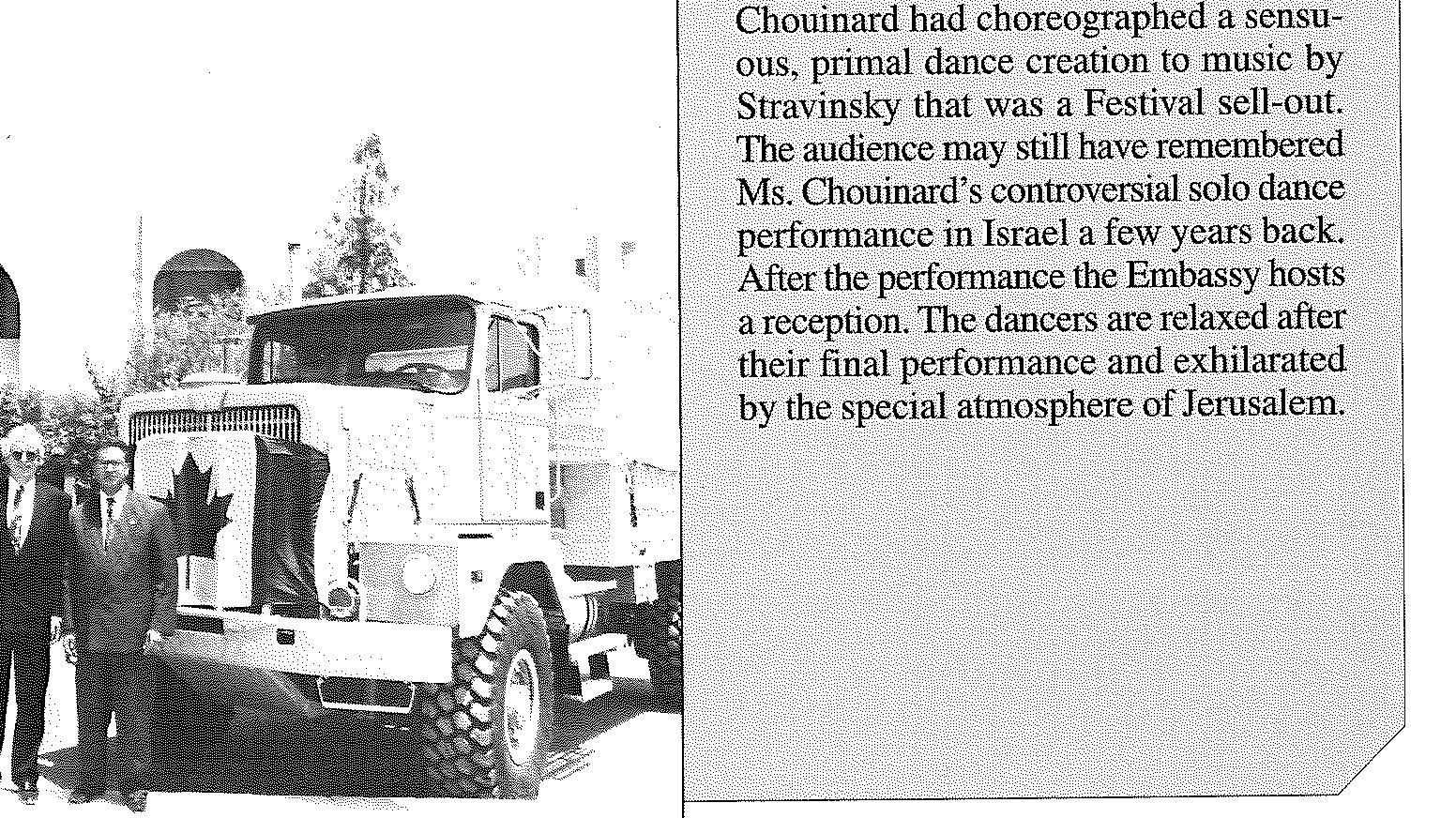
Ambassador Poole spoke to the Kuwait press at his residence in Jabriya. Poole had arranged a display of Western Star trucks which have been designed and produced specifically for use by the military in Kuwait. Western Star is competing with over ten major US and European companies for a Kuwaiti defence vehicles contract. Poole said, “the value of Canadian exports to Kuwait in 1993 was $34.2 million…. We hope to see a significant growth in 1994”
There are currently about 700 Canadians in Kuwait with the greatest concentration in the oil, gas and petrochemical industries. More than 100 Canadian companies have established agents or representatives here.
“With a vibrant political and security relationship between Canada and Kuwait it is just not possible that the Canadian Embassy pull out of Kuwait” Poole pointed out. “Canada was the fourth largest contributor to the coalition that liberated Kuwait.”
Trade Commissioners and Ballerinas in Jerusalem
by Sara Hradecky, Atalia Hausvater, Avi Goldstein, Sharon Peres, Denise Dahan, Canadian Embassy, Israel start the day at a kibbutz near Jerusalem at the Training Academy of the Israeli Ministry of Trade. I make a speech to the new “Class of 93” Israeli Trade Commissioners. They are anxious to hear about a day in the life of a typical Canadian Trade Commissioner and about the types of services we provide to the business community. Many would be serving in countries that up until recently had no diplomatic relations with Israel.
At the end of the day, the Canadian dance company, Ballet Marie Chouinard, performs in Jerusalem. It is one of the Canadian entries in the Israel Festival, an annual event showcasing some of the world’s best theatre, dance and music. (This year, the Embassy also sponsors the participation of the National Ballet of Canada and the Canadian Brass). Marie Chouinard had choreographed a sensuous, primal dance creation to music by Stravinsky that was a Festival sell-out. The audience may still have remembered Ms. Chouinard’s controversial solo dance performance in Israel a few years back. After the performance the Embassy hosts a reception. The dancers are relaxed after their final performance and exhilarated by the special atmosphere of Jerusalem.
View the original scanned pages / Voir les pages numérisées →
Originally published in / Publié à l’origine dans bout de papier, Vol. 11, No. 4 / Vol. 12, No. 1 (1995) — Spring 1995 // Printemps 1995, pp. 33–43. Read the rest of this issue / Lire le reste de ce numéro →



