
bout de papier, Vol. 22, No. 1 (2006) — Spring 2006 // Printemps 2006, pp. 29–31
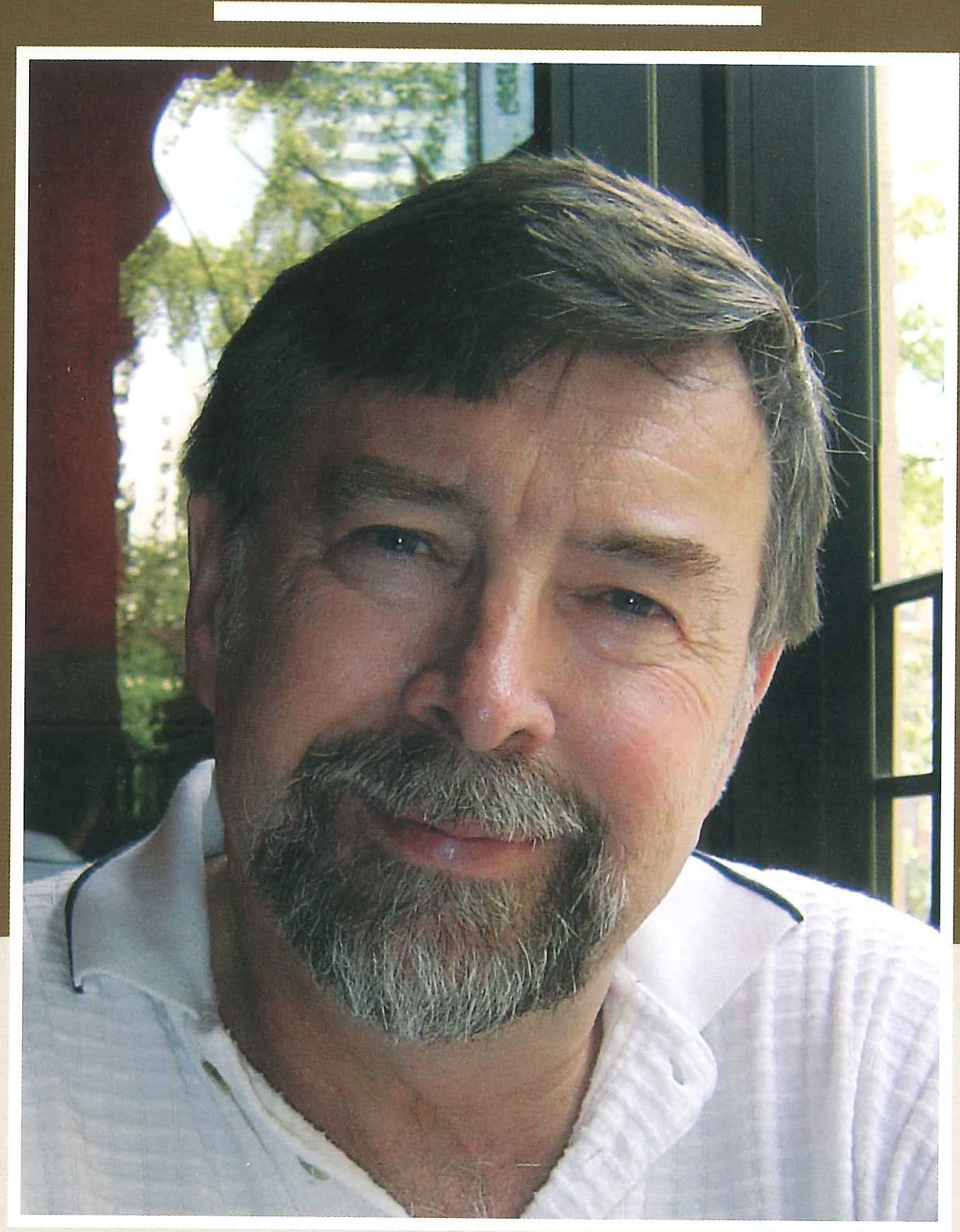
We all know that the profession of diplomacy can be a very dangerous occupation, but our worst fears were realized in January. Glyn Berry, a career foreign service officer, was killed in Kandahar, Afghanistan on January 14, 2006 by a suicide bomb attack on the convoy in which he was travelling. Glyn had been serving as the Political Director of the Kandahar Provincial Reconstruction Team since August 2005.
Glyn was a foreign service officer of the highest calibre, dedicated to his work, to his profession and his family. Born in 1948 in Wales, Glyn joined the then Department of External Affairs in 1977. He served abroad in Oslo, Washington, Havana, London, Islamabad and New York (Permanent Mission to the UN). Glyn held a B.A. in Political Science from the University of Swansea in Wales, an M.A. in Political Science from McMaster University, and a Ph.D. in Political Science from Dalhousie University.
Glyn was a family man, proud of and devoted to those sharing his life with him. Our deepest sympathy goes out to his wife Valerie and two sons, Gareth and Rhys and to his many friends and colleagues around the world. We will sincerely miss Glyn and the remarkable contribution he has made to our profession and to Canada. bout de papier has gathered the following excerpts from some of the many poignant eulogies that are a reflection of the high esteem in which Glyn was held. We thank those who delivered them and for allowing us to share their expressions of Glyn’s life.
MICHAEL SEMPLE (KABUL, UN Regional Coordinator in Afghanistan)
We should remember our friend for his enthusiasm, his dry humour, and that hint of childishness, innocence, his delight in helping to cast those colourful Afghan characters who so quickly, unexpectedly would come together to sweep aside the failed Islamic Emirate. Afghanistan’s tribal leaders, intellectuals commanders, bemused bureaucrats; Glyn plunged into his post September I role of ensuring that all would be heard, a cacophony of Afghan voices speaking of their newly awakened vision for a country beyond the Taliban… in the noblest traditions of humane diplomacy, Glyn plotted with them, seeking ways that the transformation should be led by community, shura and tribe, rather than just by armies and bombs.
Our friend had helped to hatch the plot. How natural, that he should return, volunteering for Kandahar, his enthusiasm undimmed. The task was to realize the hopes that he had helped to crystallize in the first Fall. Those of us who accompanied Glyn in Kandahar and Kabul found him still full of wonder and humour, unpretentious as ever.
But I think that in his work he was happier. Because now he was at the forefront, practically striving for peace, holding us all to the promises we had made. We should remember him joking, laughing, listening, querying, straining to do right. I am sure that if he had met the suicide bomber whose fate was bound to him, Glyn would have greeted him, quizzed him, tried to find out where that misguided man had gone wrong. It seems uncanny that our friend is not here, striving to make sense of it all.
PETER HARDER (LONDON, Sous-ministre des Affaires étrangères, Affaires étrangères Canada)
Le service extérieur constitue aussi une grande famille Nous pleurons non seulement un collègue et un ami, mais également un membre de notre famille. En tant qu’agents du service extérieur, nous travaillons et nous vivons ensemble. Nos enfants grandissent ensemble, tandis que nous vieillissons ensemble. Aujourd’hui, le service extérieur est déployé dans des endroits de plus en plus dangereux, et la mort de Glyn vient nous rappeler que les obligations familiales exigent de nous que nous fassions tout ce qui est en notre pouvoir pour veiller sur notre sécurité a tous.
Glyn had a distinguished career, but it did not follow the normal trajectory; for most of us, the time of greatest adventure comes at the beginning of our professional lives.
Not so with Glyn. Although he enjoyed all his assignments, it was really in his later postings that Glyn came into his own, when he discovered a subject equal to his great passion. We have a whole new lexicon to describe what we mean: fragile states; failing states; war-shattered societies trying to rebuild themselves.
Glyn saw the people behind the labels, the faces behind the slogans.
Glyn was instrumental in spreading the idea that, in today’s world, the principa challenge is not peacekeeping, it is peace-building, the painstaking task of helping war-torn countries rebuild their economies and strengthen vital state institutions such as the courts and police forces. It is complex and difficult work, and we cannot succeed unless we have people on the ground who can deliver the goods.
Ces personnes — diplomates, soldats et travailleurs de l’aide — se trouvent sur la nouvelle ligne de front dans la lutte engagée pour aider les plus vulnérables et les plus déshérités de la planète. Elles travaillent dans des conditions extrêmes, souvent très dangereuses, et il leur faut d’immenses réserves de compassion, de volonté et de courage.
Glyn Berry incarnait ces qualités. Les dernières années de sa vie ont été marquées par la compassion dont il faisait preuve envers les gens qu’il rencontrait au Pakistan et en Afghanistan. Il s’était porté volontaire pour l’équipe de reconstruction provinciale du Canada à Kandahar parce qu’il était profondément convaincu que le peuple afghan méritait une vie meilleure.
Comprendre, c’est ce qui éclaire le mieux, dit en substance un vieux proverbe gallois. Glyn savait que chacun de nous a une contribution a apporter, et sa vie éclairera désormais le service extérieur canadien et, en particulier, ses jeunes collègues. Il nous a montré que le service extérieur n’est pas seulement un emploi et que nos efforts individuels conjugués peuvent donner quelque chose de valable, de noble, quelque chose qui change des vies en mieux et qui apporte honneur et distinction au pays que nous avons le privilège de servir.
PETER MACKAY (OTTAWA, Minister of Foreign Affairs)
I am long familiar with the great service to Canada which our diplomats have exhibited over the years. Glyn Berry’s untimely death reminds us of a harsh truth: life in the Foreign Service is growing more difficult. In addition to the many problems that a nomadic life can impose on individuals and their families. there are also increased risks from conflict and disease. We can try to mitigate some of these risks, but we cannot remove every danger.
Through the support of a number of Glyn’s colleagues, the Department of Foreign Affairs will soon be placing a commemorative plaque and a book of remembrance in the foyer of the Pearson Building. This will give all of his colleagues, whether in active service or retired, an opportunity to honour Glyn’s memory and the memory of all of those who have died under tragic circumstances while serving Canada abroad
We are fortunate. The Canadian Foreign Service today still attracts people like Glyn, people who believe that, in serving Canada abroad, they also serve the highest aspirations of all of us for a world at peace, where every human being is able to live a life of freedom and dignity.
DAVID SPROULE (KABUL, Canada’s Ambassador to Afghanistan)
Glyn loved his family dearly. For some reason, he always talked about them when we rode together in one of the convoy vehicles on our way to a meeting or other function in Kandahar. It was as if at those times when he was most vulnerable, he focussed on the important things – his beloved wife and his two fine sons that he was so proud of. As Gareth said yesterday, he was first and foremost a family man.
I knew Glyn as a very capable and committed foreign service officer. He clearly loved his job and was utterly dedicated. He threw himself into his work, thereby setting an example for all those around him. Blessed with a keen analytical mind, he was a thorough researcher and gifted observer – always trying to understand the issue completely and thereby provide Ottawa with the best possible policy advice. Glyn had a special love for Afghanistan and its people and was determined to do what he could to make their lives better. He demonstrated his commitment every day, even at the cost of everyday comforts and at the risk to his own security and well-being. Glyn was determined to make a difference for Afghans — and he did.
By Glyn’s sacrifice, he has brought home to Canadians the commitment we in the foreign service maintain and the risks we face in the service of our country. I believe there has been a new recognition of this among Canadians as evidenced by the outpouring of sympathy and grief we have seen since Glyn’s death.
JIM WRIGHT (OTTAWA, Sous-ministre adjoint, Affaires étrangères Canada)
Glyn et mol sommes entrés au Service extérieur à peu près en même temps, lui en 1977, moi en 1976. Je me souviens que Glyn se distinguait des autres recrues. D’abord, il était plus âgé, marié et avait déjà deux enfants. Et puis il avait ce curieux accent gallois. Et contrairement a tous les autres, qui étaient nés au Canada, Glyn avait choisi, encore jeune homme, de prendre maison ici.
Au moment d’entrer a Pearson, plusieurs d’entre nous venions à peine de terminer nos études de premier cycle universitaire. Ce n’était pas le cas de Glyn. Il était déjà bardé de diplômes, dont un impressionnant doctorat de ’Université Dalhousie. Et il avait aussi a son actif une collection fort variée de publications et de prix.
Je pourrais raconter de nombreuses anecdotes pour illustrer le côté original de Glyn. Son bureau en désordre. Des papiers et des tasses de café vides partout. Et les éternels souliers de jogging dans un coin. Et puis il y avait la bière et la camaraderie au Salon du Canada, dans les locaux du Haut-Commissariat, où Glyn débattait avec les gens du pays des mérites de l’équipe de rugby galloise
Glyn attended an important international conference in Prague and had to deliver a keynote speech for Canada. Always the mentor, Glyn took the young FS officer travelling with him to a local pub to work on it. Typically, he found a back alley local Czech drinking hole, and only after numerous pints of fine Pilsner, did he start to scratch out the speech on the back of a beer coaster. And the writing was constantly interrupted with stories of his family and his travels around the world. The next morning, on cue, Glyn pulled out his beer soaked statement and delivered a tour de force. Typical. And a lesson for the junior officer that she never forgot.
I had a chance to go back over some of Glyn’s dispatches from Pakistan. He was prolific. But you had to make time to read his reporting. If he could say something in 50 or 100 words, he would say it in 10,000. Or more. In small print. Single spaced. And no summary. But it was always worth the read. Six years later, his reporting stands the test of time. Glyn probably was one of the best connected diplomats in Pakistan. Whether talking about Kashmir or the political fortunes of President Musharraf, he had his finger on the pulse of that nation.
He wrote in a classic style. He did not just report, he spoke to you in his dispatches. Those of us from the old school have always been told about the importance of detail, context, the odd fact and a bit of humour to help readers make sense of far away places and obscure issues. Glyn did just that. Visiting Kabul from Pakistan in 2000, he described in great detail the shocking state of the Taliban government, including the state of the meeting rooms, the lunch and even the temperature outside. It was minus 10 degrees centigrade.
À travers tout cela, Glyn était aussi dévoué à sa famille, qui a toujours, toujours, été au centre de sa vie et de sa carrière. Il arrivait souvent que Valerie et les enfants viennent le voir à son bureau, et chague fois i les accueillait resplendissant d’une immense fierté
On dit que la vie est un voyage. Mesurée à cette aune, la sienne aura été une odyssée, non seulement géographique, mais aussi intellectuelle. Son inclination pour les nouveaux lieux et les nouvelles idées a nourri son imagination et façonné ses trente-trois années de carrière dans le Service extérieur. Ce fut aussi un voyage moral. Les causes qu’il défendait étaient justes. Les gens qu’il a aidés étaient ceux qui en avaient le plus besoin. Il a marqué de nombreuses vies, et je parie certainement au nom de tous ceux qui sont ici aujourd hul en disant qu’il nous a enrichis de son amitié, qu’il nous a fait rire et qu’il mérite notre éternelle admiration. Il nous manque énormément.
RICHARD ARBEITER (OTTAWA, Senior Policy Advisor — Afghanistan)
I knew Gilyn a relatively short time. No more than two or three years. Glyn visited Ottawa for a series of preparatory briefings prior to his departure for Kandahar… he insisted that we chat, separately, one on one. He even suggested we do so over beers or dinner. He wanted to talk shop about Afghanistan…. he listened attentively to everything I had to say. However dry and bureaucratic, he soaked it all up. Gyn was not waiting for his turn to speak. He was listening actively, and on many occasions, pressed me for answers that I did not have. He simply wanted to provoke deeper thinking, to stimulate an intellectual discourse.
On a daily basis, Glyn pushed for me, and for us all, to delve deeper. To think through what we were doing in a more profound way. While Glyn was no doubt an intellectual, he wasn’t boorishly high brow. He was gregarious but grounded and genuine at the same time. He was humble, he was human. Glyn sought to disentangle Kandahar’s complexities for us, to ensure that we truly understood the enormity of the challenge and the gravity of the risk. So that we too would approach Afghanistan with humility.
…. our discussions were always a dialogue; there was never a diatribe from Glyn. He made me feel as though he valued what I had to say, no matter my age, or my inexperience, or the low rung occupy on the chain of command. Put simply he treated me with respect.
I am grateful for the many lessons I learned from Glyn. I learned that policy has to be practical to be meaningful. That something you say has to translate into something you do. learned that while the devil is in the details, God is there too. We just need to learn how to look. But most of all, I learned that resolve is more important than resolutions. And so I am resolved to try to honour Glyn’s humility and his humanity — to pursue knowledge as empowerment; to realize that individuals matter; to presume that answers exist; and to listen, very carefully, for them.
View the original scanned pages / Voir les pages numérisées →
Originally published in / Publié à l’origine dans bout de papier, Vol. 22, No. 1 (2006) — Spring 2006 // Printemps 2006, pp. 29–31. Read the rest of this issue / Lire le reste de ce numéro →



