
bout de papier, Vol. 25, No. 4 (2011) — Winter/Spring 2011 // Hiver/Printemps 2011, p. 41
GETTING BACK IN THE GAME: A
FOREIGN POLICY PLAYBOOK FOR
CANADA, by Paul Heinbecker, Key Porter
Books, 2010, 312 pp, $34.95.
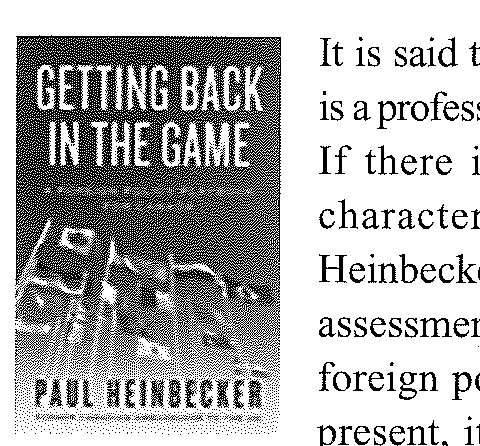
It is said that a diplomat is a professional optimist. If there is one salient characteristic in Paul Heinbecker’s refreshing assessment of Canada’s foreign policy past and present, it is optimism. His analysis radiates an essential optimism about the capacity of Canada and Canadians and about the potential of this country to make a positive difference on the international scene. Not for Heinbecker, the “pinched vision and curtailed ambition” that has prevented this country from engaging abroad in a manner commensurate with its assets and traditions. Nor is he interested in seeing a foreign policy of pandering to domestic groups which does not consider the implications for Canada’s reputation and its dealing with real world problems. Heinbecker’s book is a call to foreign policy action that should inspire both students and practitioners of Canadian diplomacy.
As a distinguished Canadian diplomat who has served under Prime Ministers from Pearson to Martin and who was foreign policy adviser to Brian Mulroney from 1989-92, Heinbecker brings vast experience and well-balanced judgment to bear in evaluating the foreign policy strengths and weaknesses of successive governments. He clearly approves of those Canadian leaders who had a belief in this country’s role as a force for good in the world and an instinctive recognition that international engagement promoted both our values and our interests. He is particularly insightful in dissecting our complex relationship with the United States and the need for Canada to sustain an independent foreign policy even as it navigates around the treacherous shoals of American exceptionalism. His chapter on “American National Security: the Quest for Invulnerability” is a perceptive account of how the exploitation of a mood of insecurity in the wake of 9/11 led to military adventures and the distortion of core American values at great cost to U.S. authority and reputation internationally. He views the advent of the Obama Administration as effecting a crucial correction to American foreign policy, but stresses the need for Canada and other friends “to support his (Obama’s) efforts to return to the law-abiding, treaty respecting, international law-developing America of old”.
Heinbecker has little time for those critics of Canadian foreign relations who equate occasional policy disagreements with anti- Americanism, noting that “what is labelled in Canada as anti-Americanism is sometimes, in reality, pro-Canadianism”. He suggests a potent symbiotic relationship between Canadian activism in the world and garnering respect in Washington. We gain stature and influence by doing, not by whining about our limitations on the sidelines. “A purposeful, independent foreign policy is a virtuous circle”, Heinbecker concludes. Regardless of the political complexion of the administration of the day in Washington, this is sound guidance for Canada to follow in steering a true course in the swift currents of the bilateral relationship.
An independent foreign policy however cannot be had for nothing, or by free-loading off others. In reviewing some of the major foreign policy challenges for Canada of the last half century, Heinbecker stresses the importance of possessing a correct understanding of the global landscape and devising our own diplomatic strategies. In a globalized world, the well-being of Canadians is increasingly a function of our capacity to accurately interpret international events and effectively intervene to influence outcomes. Heinbecker cites the bitter lessons of the Iraq war and the dishonest marketing campaign launched to sell it, to underscore the need for Canada to maintain its own assessment capability and not just rely on Washington or London to do our thinking for us.
The current management of Canada’s foreign policy is clearly found wanting in Heinbecker’s judgment. A government that appoints Foreign Ministers on an annual basis, that views foreign policy through a narrow and partisan domestic focus and seems “to equate ‘declaring’ with doing” is not likely to get Canada back “into the game” or restore our damaged reputation in the international arena. Although his book was written prior to last fall’s rejection by the UN of Canada’s bid for a seat on the Security Council, this outcome was prefigured in Heinbecker’s critique of recent departures from well-founded Canadian foreign policy positions and the negative implications of these deviations for our image in UN circles. Relevant to this concern with our fading international standing, Heinbecker laments the demise of DFAIT’s public diplomacy, a realm in which the U.S. outspends us by a ratio of 28:1. He decries the chronic underfunding of DFAIT and the current trend to “outsource” our functional diplomacy to domestic “line” departments. In his view, these tendencies undermine DFAIT’s capacity to properly manage external relationships to the detriment of foreign policy coherence and effectiveness.
Ever the conscientious public servant, Heinbecker provides practical policy advice to overcome the challenges he identifies, from Afghanistan to global governance, arms control to climate change, he proposes the “plays” to get us back into the game. We can only hope that eventually the coach of Team Canada will heed his good counsel.
View the original scanned pages →
Originally published in bout de papier, Vol. 25, No. 4 (2011) — Winter/Spring 2011 // Hiver/Printemps 2011, p. 41. Read the rest of this issue →



