
bout de papier, Vol. 28, No. 2 (2014) — Summer 2014 // Été 2014, pp. 11–15
Editor’s Note: Western media is saturated with news and analysis of events in Ukraine following Russia’s annexation of Crimea and the downing of MH-17 over Eastern Ukraine. However, little attention has been paid to Russia’s war with Georgia in 2008 that foreshadowed virtually everything we witness today in Ukraine, or the lessons learned by Georgia — before and after — in maintaining its independence in the face of Russia’s political displeasure and its resurgent territorial ambitions. bout de papier invited former Georgian Ambassador to the U.K., Giorgi Badrizde, to explain why Russian behaviour should have been predictable and how Georgia has coped thus far with its own struggles with its vast northern neighbour. Georgia’s unfinished business with Russia may hold key lessons for the West’s handling of the crisis in Ukraine.
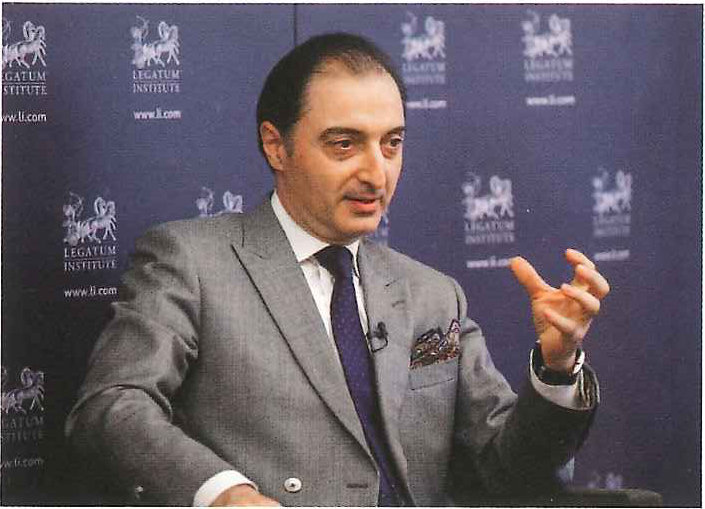
Giorgi Badridze When I became a history student at Tbilisi State University in 1985, my native Georgia was hopelessly stuck under the Soviet rule. Not in my wildest dreams did I imagine that, by the time I graduated, Georgia would be an independent state and I would join its newly created diplomatic service. But, as I had learned, history is rarely random or illogical. Even though the collapse of the Soviet Union caught many by surprise, it was clearly the result of its own economic incompetence and internal contradictions.
Georgia’s independence had its own logic too. Contrary to the widespread cliché, Georgia was not some “newly independent state” that was born in 1991 out of the collapse of the USSR. Rather, that was the year when the Georgian people regained their independence which had been taken from us twice by our giant northern neighbour. To understand how Georgia has sustained its independence since then one needs to reach much farther back, to the origins of the country itself and to the taproot of our national identity.
Georgians are tenacious. They have outlived great empires of the past and preserved their own identity and statehood, their unique culture, religion, language and alphabet (unrelated to other living languages). Georgia was also one of the world’s oldest Christian kingdoms ruled by Europe’s longest serving dynasty (575-1810) and had two distinct components, eastern and western.
Georgia’s western part was known to the Greeks of the 2nd millennium BC as the Kingdom of Colchis, where Jason and his hero friends sailed on the Argo in the quest for the Golden Fleece. Eastern Georgians formed their own kingdom in the 4th century BC which Greeks and Romans called Iberia (not to be confused with the Iberian Peninsula comprising Spain and Portugal). Our Iberia soon became the dominant power in the South Caucasus (and was closely allied with Rome), proclaimed Christianity as a state religion in the early 300s, and by the early 13th century was established as a major regional power. By that time Western nations called our country — “Georgia”, perhaps reflecting the near cult status of our country’s patron saint — St. George (still strongly present in everyday life and on our flag).
In the centuries that followed, Georgia survived Mongol, Persian, and Ottoman invasions and periods of domination but, ironically, finally lost its statehood to fellow Orthodox Christian Russia. Annexed by the Russian Empire in the first half of the 19th century, the Russians went further than other invaders: they abolished the ancient Royal House of Bagrations, all forms of our national autonomy, and even Georgia’s ancient Apostolic Church.
When the Russian Empire collapsed at the end of the WWI, Georgia proclaimed its independence again and was recognized by a large number of world powers, including Bolshevik Russia itself. Its rebirth also inspired hope well beyond its modest borders. In the words of Prof. Stephen Jones: “/The Democratic Republic of Georgia] was, at the time, a genuine beacon of hope (a beacon of liberty too) among social democrats such as Emile Vandervelde, Karl Kautsky and Ramsay MacDonald, all of whom visited the republic and wrote about it as a viable democratic alternative to other authoritarian and more statist models.”
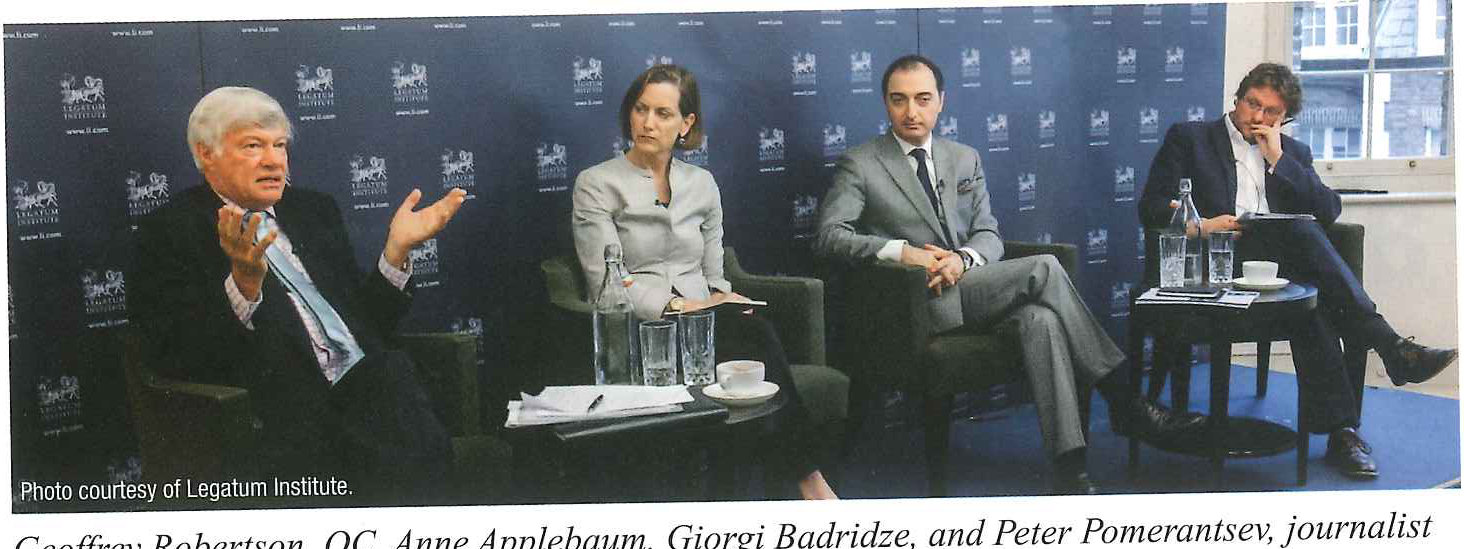
This democratic experiment, still in its infancy, ended abruptly in 1921 with the unprovoked Bolshevik invasion and subsequent annexation. Georgia was thus condemned to 70 years of Soviet rule. Those who know little or nothing about our history may think Georgia is just a “breakaway” Russian province and that Russia is entitled to an exclusive sphere of influence that includes Georgia. However, the Georgian Photo courtesy of Legatum institu TT Geoffrey Robertson, QC, Anne Applebaum, Giorgi Badridze, and Peter Pomerantsev, journalist and author of Revolutionary Tactics, from Georgia to Ukraine.
people have three millennia-long history of ‘pragmatism’ of Edward Shevardnadze ( statehood and a strong tradition of fighting use inverted commas for both radicalisn for their freedom. We are not a “breakaway” and pragmatism because they reflect th state, but a state reborn. That is the main widespread perception of the time rathe reason why we took the first opportunity to than the real substance of their respectiv get out from under a crumbling Soviet policies). The “Silver Fox” — the forme Union and have never looked back. Soviet foreign minister — returned fror
However, the end of the USSR did not Moscow to create a new and presumabl mean Georgia (and other post-Soviet pro-Kremlin regime. However, the wa republics) were free to build a democratic Russia treated Georgia under this goverr and prosperous future for themselves. What ment demonstrated the full extent of ou many experts failed to understand was that problem: despite accepting Russia most Russian politicians considered the nominees as the ministers of security, inte defeat in the Cold War and the dissolution ior and defence, Russia continued to ar of USSR as a temporary setback. No one and entice the separatists resulting in a fu has made the Russian mindset clearer than scale war. As a consequence, Georgia lo President Putin himself when he said control over two regions (20 per cent of o1 that the collapse of the Soviet Union was territory) and received hundreds of thor “the greatest geopolitical catastrophe of sands of refugees, ethnically cleansed fro their homes in Abkhazia and South Osset the 20th century”.
From the early 90s Russia left little with the help of the Russian military. room for illusions about its intentions vis- Unlike Gamsakhurdia, Shevardnad: à-vis Georgia. In 1990 Georgians elected gave in to Russia’s ultimatum of joini a staunchly pro-independence (some called the CIS in exchange for keeping his dimi it nationalist) government led by Zviad ished power. He also legalized the Russi: Gamsakhurdia and by the end of 1991 military bases and gave Russia the stat Georgia was the only non-Baltic Republic of “peacekeepers” in a conflict to whi that refused to join the Russian-led Russia was a party, but pretended to be Commonwealth of Independent States mediator. As someone wittily observed (CIS). The punishment was swift and the time — “the Russian ‘peacekeepe: brutal — after rejecting Boris Yeltsin’s ultiwere there to keep the pieces of the Sov matum to join, Georgia’s first democra- Union, not the peace”.
tically elected government was deposed by One might have thought Yeltsin’s Rus a Russian-backed coup and separatists in would be happy with a weak Georgia tl Abkhazia and South Ossetia received had been brought back into the Russi Russia’s full military and political support. orbit. But Shevardnadze started putting.
All that ensured a very difficult start house in order by ridding our streets to our newly regained independence. The uncontrolled militias (that earlier helr West was busy with propping up Yeltsin’s him oust Gamsakhurdia), by implement: regime and did not consider the Russian economic reforms, and by introducin, behavior in their neighbourhood as a new constitution in 1995 to consolidate st symptom of the true nature of the new institutions. Russian reaction was shocki Russia. We were on our own. Igor Giorgadze, the Minister of Securit
The “radicalism” of Gamsakhuria’s KGB officer seconded from Mosc deposed government was replaced by the organized an attempt on Shevardnadz ‘pragmatism’ of Edward Shevardnadze (I use inverted commas for both radicalism and pragmatism because they reflect the widespread perception of the time rather than the real substance of their respective policies). The “Silver Fox” — the former Soviet foreign minister — returned from Moscow to create a new and presumably pro-Kremlin regime. However, the way Russia treated Georgia under this government demonstrated the full extent of our problem: despite accepting Russian nominees as the ministers of security, interior and defence, Russia continued to arm and entice the separatists resulting in a full scale war. As a consequence, Georgia lost control over two regions (20 per cent of our territory) and received hundreds of thousands of refugees, ethnically cleansed from their homes in Abkhazia and South Ossetia with the help of the Russian military.
Unlike Gamsakhurdia, Shevardnadze gave in to Russia’s ultimatum of joining the CIS in exchange for keeping his diminished power. He also legalized the Russian military bases and gave Russia the status of “peacekeepers” in a conflict to which Russia was a party, but pretended to be a mediator. As someone wittily observed at the time — “the Russian ‘peacekeepers’ were there to keep the pieces of the Soviet Union, not the peace”.
One might have thought Yeltsin’s Russia would be happy with a weak Georgia that had been brought back into the Russian orbit. But Shevardnadze started putting his house in order by ridding our streets of uncontrolled militias (that earlier helped him oust Gamsakhurdia), by implementing economic reforms, and by introducing a new constitution in 1995 to consolidate state institutions. Russian reaction was shocking: Igor Giorgadze, the Minister of Security, a KGB officer seconded from Moscow, organized an attempt on Shevardnadze’s life (which he barely escaped). Moscow did not do much to cover the trail — Giorgadze fled to Moscow where he lives to this day (he reportedly visits Syria and Belarus regularly). Georgian requests for his extradition have been ignored.
There was another attempt on Shevardnadze’s life three years later, in 1998, during the most successful period of his rule. By that time the political situation in Georgia had stabilized and the economy had improved somewhat. The Baku-Supsa pipeline was built delivering the first Azerbaijani oil to international markets via Georgia’s Black Sea coast, bypassing Russia. More importantly, negotiations on the major Baku-Tbilisi-Ceyhan main pipeline (BTC) had entered the active phase and Russia did not hide its hostility to the project.
After surviving a second attempted assassination, Shevardnadze more or less gave up serious reforms. As a result, Georgia sunk into corruption and soon became what many described as a failing state. However, there was good news on one front at least — the BTC project was finalized and the agreement to begin operations was signed by the leaders of Azerbaijan, Georgia, Turkey and the United States. I was serving at the Georgian Embassy in Ankara at the time, participated in the negotiations, and was fortunate enough to witness the signing ceremony in Istanbul in November 1999. Georgia was back on the geopolitical map.
At the end of 2003 Shevardnadze was forced to resign after his government’s unsuccessful attempt to rig the parliamentary election. The Rose Revolution government that came to power returned to what many described as “radical” policies. But the so-called radicalism was inevitable if Georgia was to survive: state coffers were empty, our infrastructure destroyed, over 80 per cent of what remained of the economy had moved into the shadow sector, and the country was effectively run by organized crime.
Newly elected President Mikheil Saakashvili and his team of Western-educated young reformers received a very strong mandate. They did not waste much time. Saakashvili started his presidency by trying to launch a dialogue with Putin. Even if he were to have taken Putin’s “advice” and kept some ministers from Shevardnadze’s government (particularly the minister of security), that dialogue was doomed. Russian anger over what was to come was all but guaranteed. Saakashvili was determined to rebuild the economy and state institutions, to consolidate state authority, curb corruption, end mafia rule, and most importantly — revitalize Georgia’s ties with the United States, NATO and the EU. By then it was already clear that Putin had his own agenda and any economic or political progress in the “near abroad” (which includes Georgia in Russian minds) was in conflict with his plans.
On June 23, 2014 the Legatum Institute, a respected London-based public policy organization, launched a research paper on aspects of the Rose Revolution government legacy. Called “Revolutionary Tactics: from Georgia to Ukraine?”, it demonstrated that even the harshest critics of Saakashvili’s presidency recognized that after nine years in office he had left a transformed country with its GDP nearly doubled, infrastructure rebuilt, and state institutions consolidated. Georgia’s public service reforms are being discussed and copied in several countries. I am far from saying that Georgia suddenly turned into Switzerland (major problems with poverty, human rights and rule of law remained), but the contrast with where Saakashvili’s government first started is staggering.
It needs to be said that Russia made us pay a huge price for our success. Our main “crime” was our desire to be an independent and democratic nation with a market economy, which Russian leaders consider a dangerous alternative to its own model. In 2006 the arrest of four Russian GRU officers (caught red-handed in espionage activities) prompted a wild reaction from Putin. He closed down all road, air and maritime connections and even postal services with Georgia and opened a hunting season on ethnic Georgians in Russia. Thousands were rounded up, abused and later put on cargo planes like cattle to be expelled to Georgia. Some died in the process. On July 3, 2014 the European Court of Human Rights ruled that “Russia violated rights of Georgians with a coordinated campaign of arrests and expulsions ahead of the 2008 war between the two neighbouring countries”.
The war with Russia in August 2008 was the hardest test for Georgia. Russia mounted an all-out campaign using tactical ballistic rockets and strategic bombers in addition to ground forces. The Soviet-style propaganda war, based on a campaign of lies, was waged even before the actual invasion. Georgia fought back and we managed to survive.
The war exposed many things, including the West’s skewed, if not naive, perception of Putin’s Russia. By late 2007 Georgian government officials and diplomats warned about Russian plans, but it fell on deaf ears; EU and US intelligence slept through clear signs of the looming war. Some Western analysts and politicians felt it was more convenient to blame the victim — Georgia — for “poking the bear”, or tried to spread the blame on both sides. It took Russia’s annexation of Crimea to get people in the West to see things as they are in Ukraine — and as they were in Georgia’s case.
The period following the war with Russia was used to pursue further reforms. Georgia distinguished itself by efficient use of international financial aid and rapidly rebuilt infrastructure destroyed during the war. The overall results were gratifying: the World Bank gave Georgia the title of the “Top Reformer” twice and, between 2004 and 2013, moved our rating for “Ease of Doing Business” from the mid-100s to 9th position; we currently rank 8th.
But the most important legacy of the Saakashvili government is probably not the stronger state that it left behind but the way in which it left the scene in October 2012. The government held a free and fair election and, after losing it, organized a democratic and orderly transfer of power to the winning coalition. It was the first of its kind in Georgian history.
With the accession to power of the “Georgian Dream” coalition (GD), we witnessed the second full circle made by Georgia on its path between “radicalism” and “pragmatism”. The GD government maintained the strategy on EU and NATO integration but said they would repair Georgia’s ties with Russia as well, by “changing the rhetoric”. This implied that the problems in bilateral relations were caused by the “aggressive tone” of its predecessors. Such statements are still heard from the top officials, including Prime Minister Garibashvili. He told BBC World News that his government had achieved considerable progress in relations with Russia and assured viewers that Russia had no intention of annexing Abkhazia or South Ossetia, as it did with Crimea.
Does Prime Minister Garibashvili indulge in wishful thinking? The expectation of a thaw by the GD was based partly on the fact that it had defeated the political force led by Mikheil Saakashvili (whom Putin personally loathed) and, after coming to power, many of Saakashvili’s close associates were sent to jail. In reality, apart from re-opening its market for some Georgian goods such as wine and mineral water (Russia was required to do so after joining the WTO), there is no progress to report despite the “change of tone”. To the contrary, Russian troops moved the line of occupation deeper inside Georgian territory grabbing more land and property, and regularly abduct Georgians from their orchards and vineyards (under the noses of the EU Monitors) for “border violation”.
Despite unilateral concessions on the part of Georgia and attempts to sweeten diplomatic language, the fundamentals of Russian policy toward Georgia have not changed. Russia continues its occupation of one fifth of Georgia’s territory and spares no effort to derail Georgia’s westward movement, as well as any internal progress. Russia did not make us wait long to register its reaction to the Association Agreement and the Free Trade Deal signed on June 27 by Georgia, Moldova and Ukraine with the European Union.
There are many reasons why the West got Russia wrong for so long. One reason is perhaps simple ignorance on the part of some experts, coupled with arrogance. The fact that the Russian aggression in Ukraine came as a surprise to many illustrates the point. There were many warning signs and direct predictions — I myself made one back in August 2008, when in a TV interview IJ said that — “Russia is on a collision course with the West and the longer it takes for the Europeans to respond, the deeper inside European territory this collision will occur and the more painful it will be.” And there were many and more authoritative voices than mine directly warning the West that if Russia had not paid the price for its aggression against Georgia, its next target would be Ukraine.
Edward Lucas, the Senior Editor of The Economist was one such voice. He said that “we are ignoring views of the people who’ve been comprehensively and systematically vindicated in their analysis and listening to views of people who’ve been comprehensively and systematically wrong”. An analyst from a respected French think-tank illustrated the point perfectly when he spoke about the chances of the Polish Foreign Minister Radek Sikorski replacing Catharine Ashton as the Chief of the EU Foreign Policy. He cast doubt about the eligibility of Sikorski, who has been vindicated many times about Russia, based on the fact that “… the Polish people are still marked by their tragic history of Soviet oppression”. In other words, instead of Sikorski he would rather have someone with no historical knowledge of what it means to be Russia’s neighbour and thus one easily duped by Moscow (to borrow again from Ed Lucas).
There is a little black humour in all this. When the US announced its “Reset” policy with Russia, Secretary Clinton was made to push a symbolic button together with Russian Foreign Minister Lavrov. This gesture, shortly after the Russian war in Georgia, not only signaled that the US was ready to ignore Russian aggression toward her neighbours but was botched on a symbolic level: the “reset” button was mispelt in Russian. Instead of “Ilepe3arpy3ka” it read “Tleperpy3xa” — which means “overload”!
[…] Russia wants to be surrounded by poor, corrupt, authoritarian and virtually failed states, to make sure that the West loses all interest in cooperating with them.
Unintended humour aside, I think we can all agree it is time to listen to those who have deeper knowledge and experience of Russia and of Europe’s Eastern neighbours. Here is what in my humble opinion we should have learned in the course of recent months.
If there was any real question about what Russia wanted after 2008, the developments in Ukraine offer a comprehensive answer. Until last year it had everything to be Russia’s perfect partner. The two nations have close historic and cultural ties. Ukraine had a pro-Russian leader who terminated cooperation with NATO. He also was deeply corrupt and easily manageable by Moscow… his only “crime” against Russia was that he tried to make a trade deal with the EU and sign largely a symbolic Association Agreement (which does not imply potential candidacy status, let alone membership in the EU). In a nutshell this deal would facilitate Ukraine’s trade with the EU and improve the investment climate.
What happened next exposed Putin’s own neighbourhood policy: in contrast with the EU (whose Eastern Partnership aims at creating a stable, democratic and prosperous neighborhood for Europe), Russia wants to be surrounded by poor, corrupt, authoritarian and virtually failed states, to make sure that the West loses all interest in cooperating with them. While the EU integration process requires aspiring countries to meet a multitude of criteria (and the EU will respect your choice if you decide to head the other way), Russia is prepared to use force against those who will try to “escape” from its sphere of influence.
If this surprises some Western analysts, they have only themselves to blame. There is nothing new in current Russian policy. Putin’s Russia does what Yeltsin did, only more aggressively, heartened by the billions of petro-dollars that were largely unavailable to his predecessor. The Western view of Yeltsin’s Russia was at best naive: they thought democracy would take root in Russia if only they supplied more IMF money to support it. Of course, in the Russia of the 1990s there was a greater degree of political freedom, but Yeltsin’s rule also ensured that the oligarchy gained control and effected a virtual merger of the state and organized crime. By the end of the 1990s Russians were convinced that poverty and rampant crime were a direct result of democracy; they embraced “strongman” Putin — another legacy of Yeltsin — as a messiah.
As for the policy toward former colonies — Putin did not have to invent anything — he simply continued the bullying and the pressure. A complacent West should have heard the first wake-up calls when Russian strategic bombers started flying over their heads once Russia could afford fuel for their antiquated TU 95s — the “Bears”. The West also chose to look the other way when Putin was flattening Grozny and committing countless war crimes against his own citizens in Chechnya (in reality Chechnya and other parts of the Russian Caucasus were always treated as conquered land).
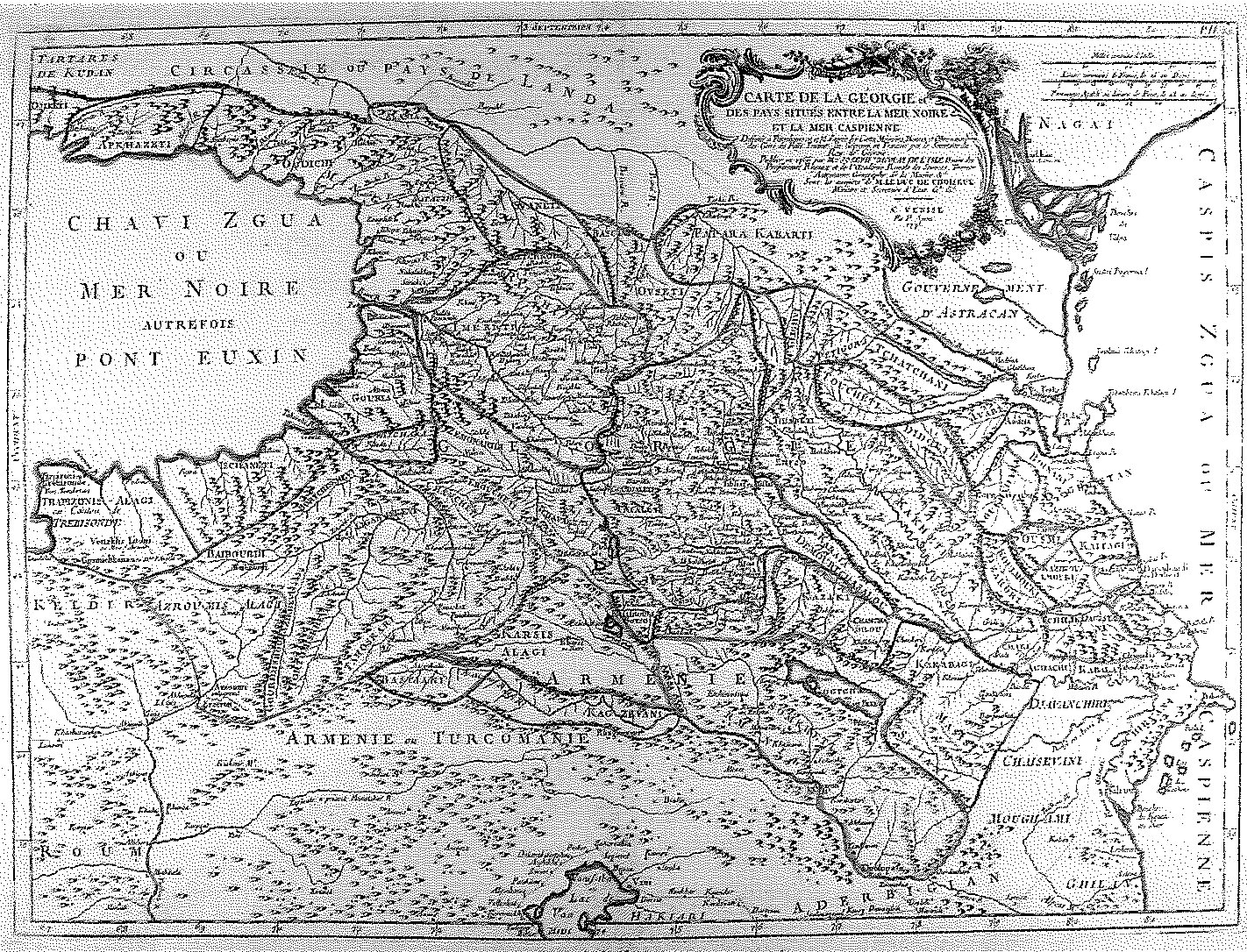
The choice of Georgia and Ukraine as primary targets also shows Russia’s geopolitical approach to its undeclared goal of rebuilding the empire it lost. What makes Georgia Russia’s priority is its strategic location: who controls Georgia will control the Caucasus and access to Caspian energy. That is one reason why Russia thus far has not been openly hostile toward Azerbaijan — Georgia’s oil-rich eastern neighbour — the moment Georgia falls or succumbs to Russian pressure, Azerbaijan will follow. As for Ukraine, without it Russia will never regain great power status.
The same can be said about the timing of Russian attacks on Georgia and Ukraine. In both cases the goal was to prevent development that would strengthen the independence and stability of these countries. In Georgia’s case, Russia viewed its successful reforms as a threat to its own authoritarian model (in 2007 Georgian GDP grew by 12 per cent). Today Putin will do almost anything to prevent Ukraine’s democratic transformation and economic reform.
So what can Georgia and Ukraine do to survive as independent states? The leaders of both countries must know that Russia will back off only if it sees us determined to fight for our freedom and democracy. We must continue building democratic institutions and deepening economic transformation. Russia has been doing a good job of mobilizing support in the West, often using questionable means. That’s why we need to work harder with our Western partners, and we need to wrest the “narrative” of this conflict from the Russians by raising Western public awareness about us.
Does Ukraine have anything to learn from Georgia’s experience? I believe so. We learned that Putin’s Russia will exploit your every weakness and internal contradiction. Do not waste time, start reforming your economy and build stronger democratic institutions now. Finally, war with Russia and its surrogates is no reason to delay — if Georgia pursued much needed reforms while we faced Russian guns, so too can Ukraine.
Giorgi Badridze is Senior Fellow at the Georgian Foundation for Strategic and International Studies, and former Georgian Ambassador to the United Kingdom and Ireland.
On separatism in Georgia
The issue is complex and a few paragraphs hardly do it justice. While I accept that in conflicts usually neither side is entirely to blame, the truth is not always in the middle.
Igniting ethnic conflicts was part of the Soviet policy of deterring pro-independence movements among the “restive peoples” like Georgians, Lithuanians and others. When the USSR collapsed, Russia continued to use conflicts as leverage for preventing ex-Soviet nations from “escaping” from its orbit.
Yes, Georgians made mistakes and probably are guilty of some crimes. However, the current conflict in both Abkhazia and South Ossetia originates in the late 80s when — with a little help from the KGB — local ethnic leaders, often Communists, declared that if Georgia seceded from the USSR — Abkhazia and South Ossetia would break away from Georgia. Yet, on March 31, 1991 Georgia’s democratically elected and legitimate government held a referendum in which over 90 per cent voted for independence. The referendum also was held in Abkhazia and the Tskhinvali region (South Ossetia) and the overwhelming majority supported independence. All the later “referendums” and “elections” held by self-proclaimed Russian-supported authorities in the two provinces were devoid of any legitimacy and fairness because by that time the majority of the local population was ethnically cleansed.
Those who cite the “will of the Abkhaz people” should be aware of this fact, unless they support the idea of ethnic cleansing as a policy tool. Prior to the ethnic cleansing of Abkhazia, ethnic Georgians constituted half of the region’s population and, as noted, in the 1991 referendum a huge majority of the local population voted for the independence of Georgia. What some observers often refer to as “the Abkhaz people” is less than a third of the original population (17 per cent, to be precise) prior to the expulsion of ethnic Georgians. To say now that people that constituted a minority of the region’s original population are the “people of Abkhazia” is a political statement that ignores the rights of the forcibly expelled majority.
How legitimate were the “grievances” of the separatist minority? The Gamsakhurdia (“nationalist”) government of Georgia affirmed a near- “apartheid” arrangement in favour of the Abkhaz minority. The constitution enshrined that ethnic Abkhaz had a reserved majority both in parliament and in the government, and that the President of the autonomous republic had to be an ethnic Abkhaz while the Chairman of the Cabinet of Ministers position was reserved for a Georgian. As for “South Ossetia” (established in 1920 by the Bolsheviks), its autonomy was abolished by Georgia only after the “supreme council” of the separatists proclaimed independence from Georgia. This may have been a mistake on the part of the Gamsakhurdia government, but it was a consequence of the actions by the separatists, not the cause.
While ethnic conflict in Georgia did become a reality (and today the removal of Russian occupation troops from Abkhazia and South Ossetia would not automatically bring peace and harmony), the origin of both separatist wars lies in the scheme created in the Kremlin — “you try to break away from us — we’ I give you trouble”.
In Ukraine, the scenario is almost identical, the Russian propaganda machine has been calling Ukrainians “fascists” and making up horror stories to justify the need to “protect Russians”. If Western analysts now see the Russian narrative on Ukraine as an exercise in divide and conquer, the Russian narrative on Georgia and its “separatists” also should be given a fresh, hard look.
View the original scanned pages →
Originally published in bout de papier, Vol. 28, No. 2 (2014) — Summer 2014 // Été 2014, pp. 11–15. Read the rest of this issue →



