
bout de papier, Vol. 18, No. 1 (2001) — Spring 2001 // Printemps 2001, pp. 30–33
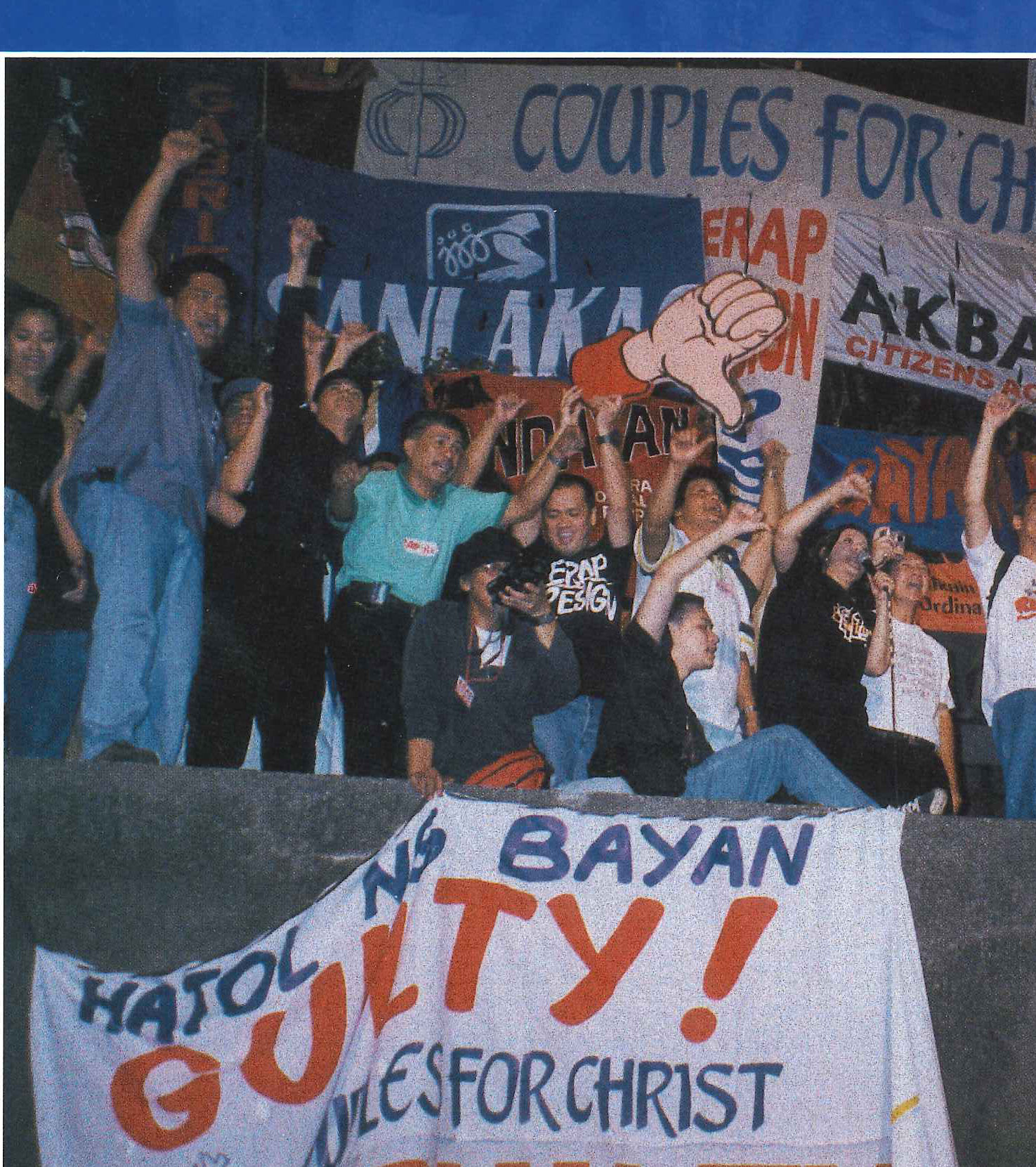
t was part EDSA (Epifanio de los Santos Avenue) 1986, part Woodstock. Most of the hundreds of thousands at the EDSA Shrine were too young to have taken part in the toppling of Marcos, but they knew its songs. None of them had been at Max Yasgur’s farm, but they were determined to sing and dance their way to a new system.
This was Friday at 9 p.m., 70 hours into a vigil that had begun spontaneously when Estrada and his cohorts subverted the impeachment trial that had gripped the nation. All hope of rendering justice through the constitutional process had been cynically squashed, and the people were not prepared to take it. In 1986, the colour of People Power was Cory Aquino’s yellow. This time all were dressed in black, including our locally engaged, who had to be in the office. The nation was in mourning “for the death of truth and justice.”
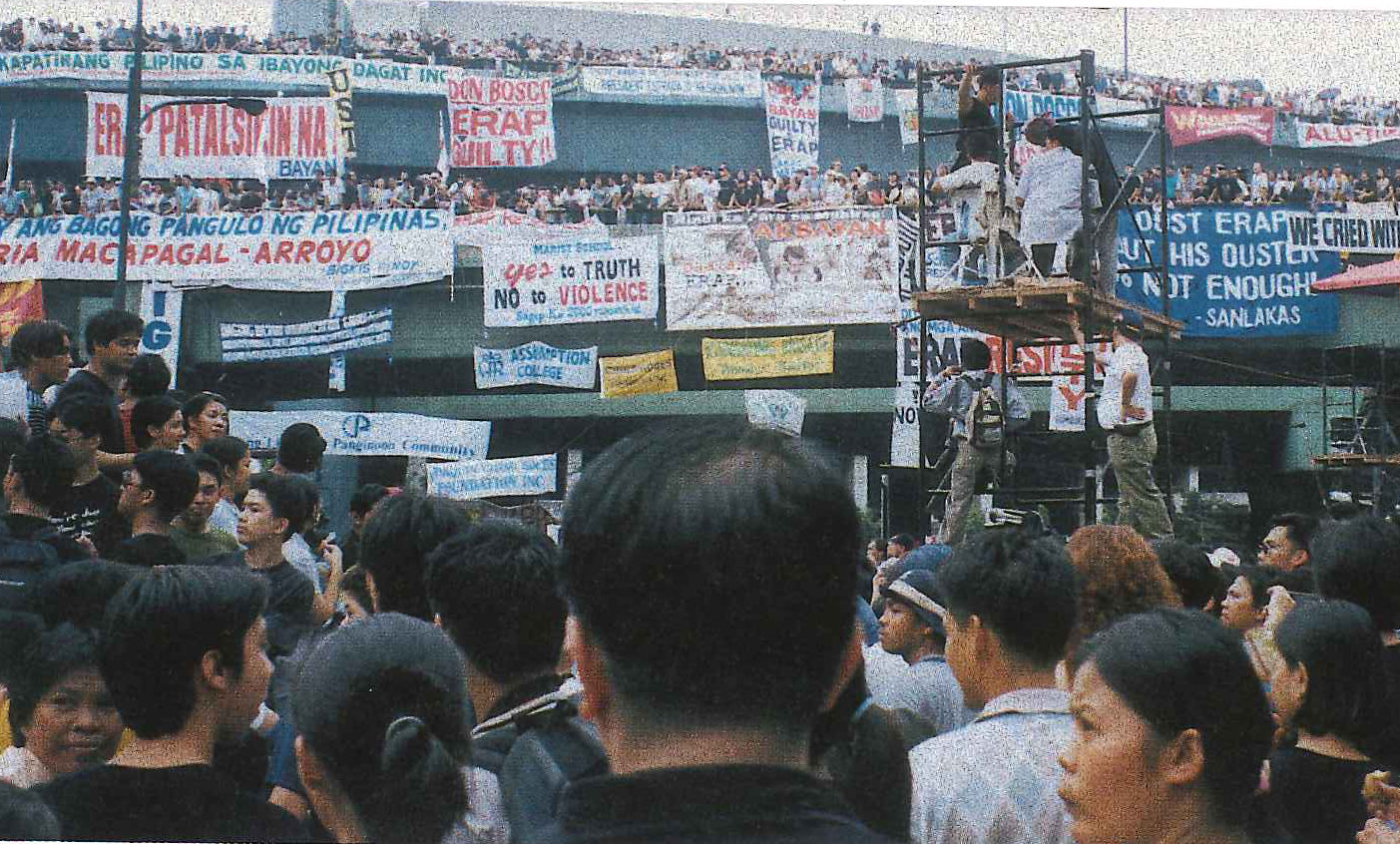
That afternoon, the military and police had withdrawn support from Estrada. Much of his Cabinet was already gone. While his downfall was apparent to all, he was holding on as long as he could. Some in the crowd said it was to buy time to ship his millions out of Malacanang Palace; others speculated that he was waiting for a green light from the USA on asylum. An announcement let us know that Estrada – known as “Erap” — was seeking another five to seven days in Malacanang. The crowd’s response: “Resign NOW!”
Politicians and civil society leaders took turns with popular entertainers. Songs of EDSA ’86 mixed with other patriotic songs and current favourites. Lyrics from Beatles classics to rap had been rewritten to protest Erap. Many had been there all day, and some overnight, but the energy level was amazing. Good humour mixed with serious intent. An MC repeated the words of Estrada’s spokesperson: “These rallies will be all over in five days,” and then added “He’s right!” to a roar of approval. In honour of Tessie Oreta, the senator-judge who danced and punched the air in triumph after the 11-10 vote that killed the trial, a group performed “Dancing Queen.” Half a million danced with them, then chanted “Oreta pok-pok” (a profanity denouncing her “political prostitution”).
People Power II was also part New Year’s Eve, part evangelical prayer rally. Preachers called on the Lord for guidance and help. At midnight, after the fireworks, came a series of announcements. Delegations from this municipality, that diocese, or the other college had made their way by bus, plane or ferry to be on EDSA. Police estimated 1.8 million people in the crowd. The pro-Erap rally at Mendiola was dissipating. A team was at Malacanang negotiating Erap’s resignation. To chants of “Resign Now,” the speaker continued on to say that Estrada would get a call each hour to see if he was ready to go.
The refrain then became “Mendiola.” Mendiola is the nearest large open area to the Palace, and has historic significance as the stage for frequent clashes between demonstrators and Marcos’s constabulary. A charismatic governor belonging to the United Opposition took the microphone to remind all to remain peaceful, and succeeded in getting the impatient crowd to join in a round of “Disiplina.”
At 2 a.m., it was time to lighten up and the Ousters Band took the stage. This mix of musicians had come together during the Senate Blue Ribbon hearings into corruption allegations against the President. It produced an album that leapt to the top of the charts and is still there, months later. Sold at cost and marked “duplication highly encouraged” on the cover, it quickly became the soundtrack of the revolution. It’s first track – “Huling Huli” (You’ve been caught) to the tune of Wooly Bully by Sam the Sham and the Pharaohs — set the crowd back to dancing. They knew all the words, and also those of “Contra-Vida Loco” (Crazy Villain) which are far better than Ricky Martin’s version.
About 2:30, while my fiancée-cum-interpreter and I were resting our weary legs, a tremendous roar went up. We were on our feet in a flash, thinking the moment had finally come. It was instead a rapper much in vogue with the – by this stage – young crowd. Like the music, the mood started becoming a bit uglier as patience with the plundering president frayed. The chant shifted from “Erap Resign” to “Sumuko ka na”: Surrender!
The radical groups had warned the previous evening that they were marching to Mendiola at 6 a.m., and there were just over three hours left. Fearful of violence, Cardinal Sin issued an appeal to the protesters to stay on EDSA. Gina and I figured this was a good time to call it a morning. Not that the return home meant sleep: from 3:30 to 4:30 was spent on the phone reporting and advising PSE on how to prepare for an inevitable transition of power.
A brief two hours later, I was checking the Philippine all-news channel and coordinating with my ambassador and junior political officer. Ambassador Collette was consulting other ambassadors and was poised for the new inauguration at a yet to be determined time. Robert Burley was heading to the embassy to review draft talking points and notes for PCO. He would be the quarterback, maintaining the flow of information and advice to HQ.
About 40,000 mostly left-wing NGO members and students had ignored Cardinal Sin and left on time for Mendiola, so Gina and I headed straight to their destination.
We were thus on hand to see the final 200 pro-Erap supporters, many of them paid thugs. It was they who were responsible for the only violence. The only shot fired through this whole four-day period was a police warning shot in the air to end rock throwing, directed at an isolated group of anti-Erap students who had made their own way to Mendiola via a route not blocked by police. The main march had stopped at police request about a kilometre short.
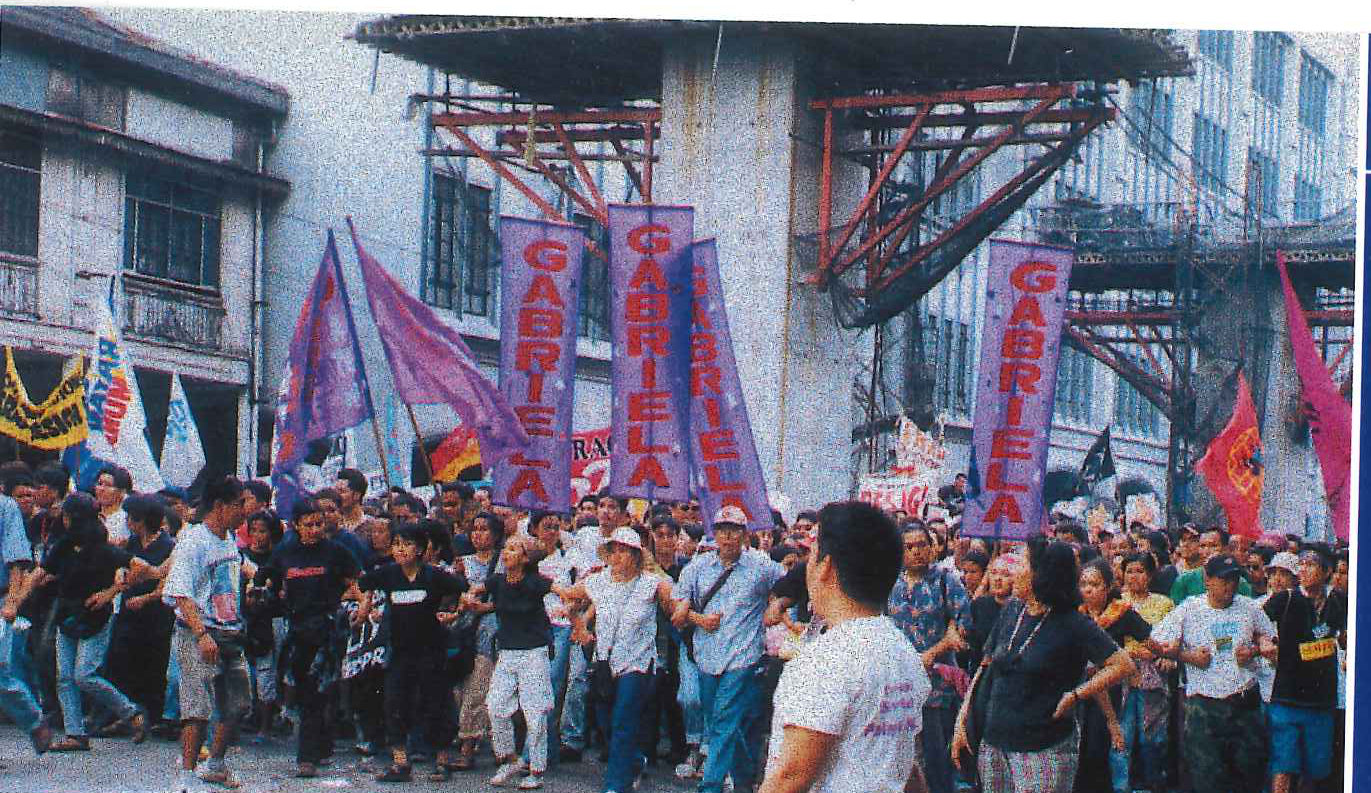
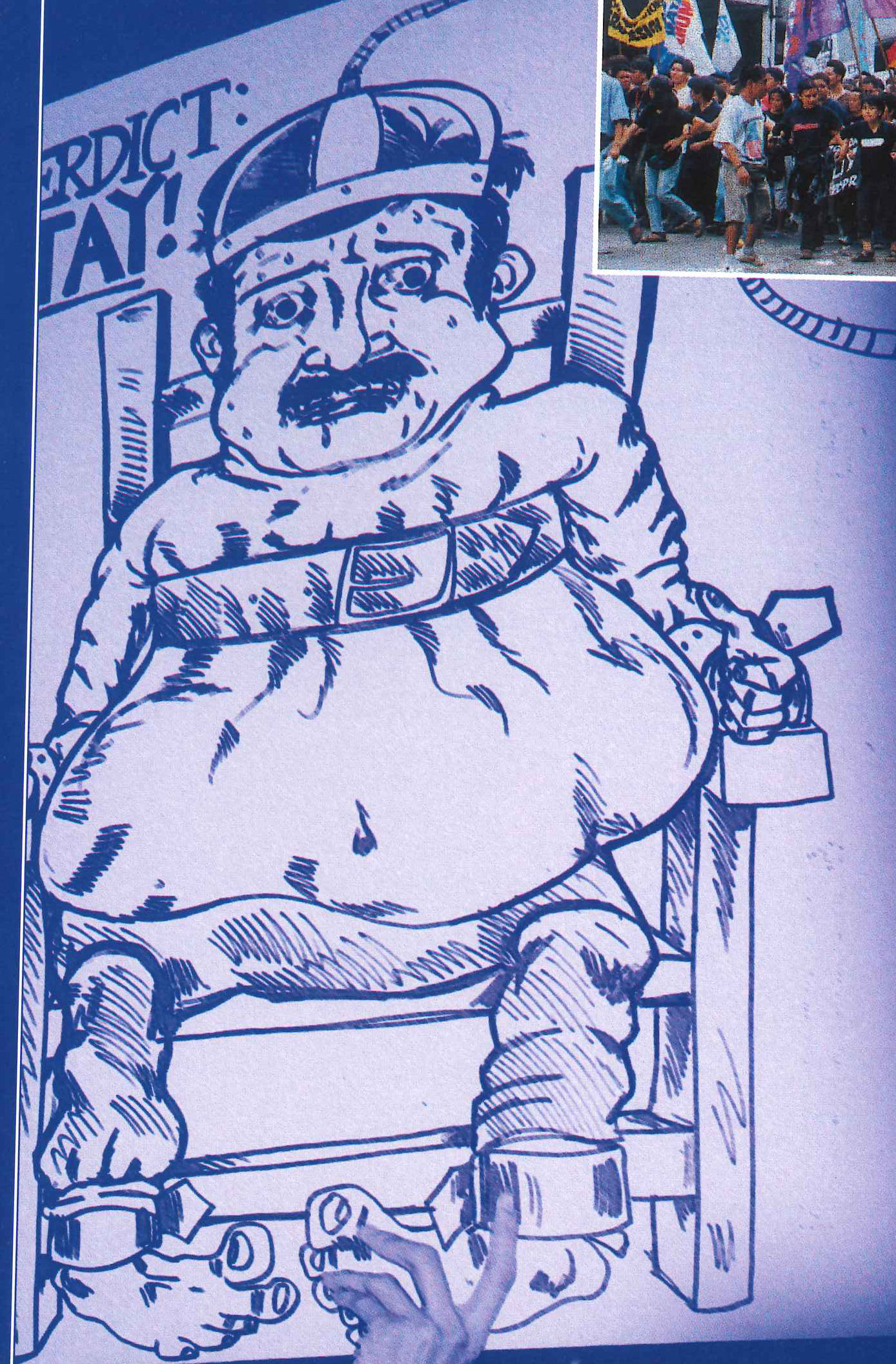
When we got to the impromptu rally site, it was like EDSA on a smaller scale. More hoarse denunciations of corruption and, of course, more dancing to Huling Huli. There were veterans of martial law years who did not know how to react when a formation of helicopters buzzed the crowd. In ’86, such overpasses were designed to sow fear. This time, the first thought was that it was Estrada fleeing in the face of the marchers, and a roar went up. But then the helicopters came back, lower this time, with doors open and pilots waving to the crowd. The people responded with cheers and the thumbs down sign, signalling the popular verdict on Estrada: Guilty!
At 10, the march resumed, following more invocations to peaceful means and discipline, and another dance to Huling Huli. It took a long way around, to skirt police barricades and to give the pro-Erap nucleus a last chance to disperse.
It stopped within sight of Mendiola, behind a final police barricade. The police had not moved away the last counter-demonstrators. Instead of taunting the vanquished, the marchers called out “We love you. Join us. We are poor too.” With the way clear, the marchers raised their fists as they sang a moving rendition of the national anthem. They linked arms and advanced in disciplined fashion to reclaim their traditional protest spot near the gates of the Palace. More speeches, more songs, and then elation as news spread that Estrada had resigned.

A quick cellphone conversation with the Ambassador and we were both racing to the inauguration at EDSA Shrine, he in Canada 1000 and me in a taxi that had seen better decades. He made it in time to congratulate new President Gloria Macapagal-Arroyo, while Gina and I made it in time to see the celebrations. And what a party it was! Huling huli is still playing in my ears.
View the original scanned pages →
Originally published in bout de papier, Vol. 18, No. 1 (2001) — Spring 2001 // Printemps 2001, pp. 30–33. Read the rest of this issue →



